The funeral was on a Thursday in early May. My father had been killed in Afghanistan eleven days earlier, in a country I could not find on the map at school the year before, in a place whose name the news anchors said in three different ways depending on which channel my grandmother had left on in the kitchen.
I was twelve years old. My name is Daniel Kovach. My father’s name was Sergeant First Class Michael Kovach, United States Army, Ranger Battalion, and he had been in the service for nineteen years, which was longer than I had been alive, which was a math problem I had thought about every birthday for as long as I could remember.
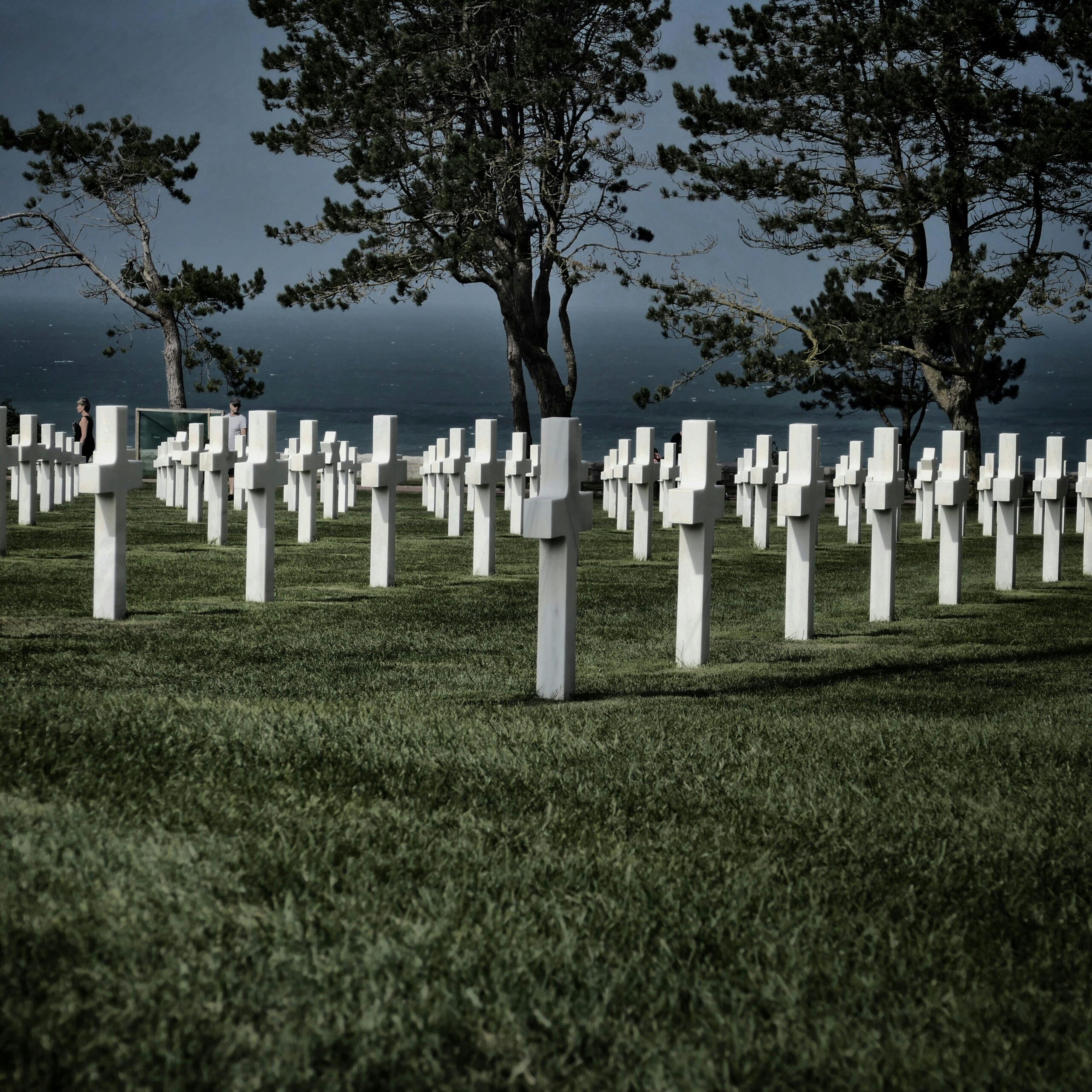
The funeral was held at the small Catholic cemetery on the edge of the town where my father had grown up in eastern Pennsylvania. It was the cemetery where my grandfather was buried, and my great-grandfather before him, and where my father had told my mother, before each of his last three deployments, that he wanted to be buried if something happened. My mother had told me this on the drive back from the funeral home the previous Saturday, sitting in the front passenger seat of my Uncle Ray’s pickup truck with her sunglasses on even though it was cloudy, because she had not wanted me to see her face.
I had not, at twelve years old, ever been to a military funeral. I had been to two regular funerals, one for my great-aunt Helen when I was eight, and one for the neighbor across the street the previous fall. The regular funerals had been quiet in a way that had felt manageable, the way church services felt manageable, with the priest saying things you were supposed to listen to but not necessarily understand.
A military funeral was different. There were men in uniform. There was an honor guard. There was a folded flag. There was a bugler standing about twenty yards from the grave, holding his bugle at his side, waiting for the moment when he would play the song that I knew the name of but had not, until that morning, ever heard played for somebody I loved.
I stood in the front row beside my mother. She held my hand. She did not cry until the bugler played, and when she cried, it was the way she cried when she did not want anyone to hear, which I knew because I had heard her cry that way at night through the wall of my bedroom for the eleven days between when the two soldiers had knocked on our front door and when we drove to Pennsylvania for the service.
Behind us, in the second row, was my father’s family.
My father had been the second of four children. He had an older sister named Patricia, who lived in Ohio and worked in insurance. He had a younger brother named Raymond, my Uncle Ray, who was a contractor and who had driven my mother and me from our house in North Carolina to Pennsylvania the previous Saturday because my mother had been in no condition to drive and I was too young. He had a younger sister named Diane, who lived two towns over and had not, in my entire life, spoken more than four sentences to me that I could remember.
My father’s parents were both dead. My grandmother had died the previous summer of a stroke. My grandfather had died when my father was nineteen, which was, I had been told, part of the reason my father had joined the Army at twenty.
So in the second row, behind my mother and me, were three adults: my Aunt Patricia, my Uncle Ray, and my Aunt Diane.
They were arguing during the funeral.
They were not arguing loudly. They were arguing in the low, controlled voices that adults use when they are trying not to make a scene in front of other people but have not yet found the willingness to stop. My Aunt Patricia was doing most of the talking. My Aunt Diane was responding in short clipped sentences. My Uncle Ray, who had driven us up, was, as far as I could tell, trying to get them to stop.
I could hear most of it. The seats in the front and second rows were close together, and the priest had not yet started speaking, and the morning was very still, and the words came forward to me whether I wanted them to or not.
They were arguing about the money.
I had learned about the money the previous Tuesday. My mother had been sitting at the kitchen table with a stack of papers in front of her and a man from the Army’s casualty assistance office on the phone. After she hung up, she had told me that there was a thing called SGLI, which stood for Servicemembers’ Group Life Insurance, and that my father had four hundred thousand dollars of it, and that the money would be paid out to the beneficiary he had listed on the form he had filled out when he reenlisted in 2018.
I had asked her who the beneficiary was. She had looked at me for a long moment. She had said: “Your father did something that I want you to remember, but I don’t want you to think about it today. I want you to think about it on a day that isn’t this one. Is that all right?”
I had said yes. I had not asked her any more questions.
But sitting in the front row of the cemetery on Thursday morning with my Aunt Patricia and my Aunt Diane arguing in the row behind me, I understood, in the way that twelve-year-olds sometimes understand things, that the conversation my mother had wanted to delay was the conversation that the second row of seats was already having.
“…not what Michael would have wanted,” my Aunt Patricia was saying, in the controlled voice. “He would have wanted his siblings to be included.”
“He had a wife,” my Aunt Diane said. “And a son.”
“He also had a family before he had a wife.”
“For God’s sake, Patty. Today?”
“I’m not saying today. I’m saying when we sit down to discuss this, the four hundred thousand was not just for them. There were other people Michael cared about. There were debts. There were—”
“Stop it. Stop it. Both of you.”
That was my Uncle Ray. His voice was lower than my aunts’ voices, but it carried more weight, and the conversation stopped.
I did not turn around. I sat very still beside my mother and held her hand and watched the bugler standing twenty yards away in his dress uniform with the bugle at his side, and I tried to make my face look like the face I had seen my father make in photographs, the face of a man who was paying attention to something that mattered and was not going to let anyone see what he was thinking.
The priest began to speak. He said the words you say at a Catholic funeral. He said my father’s name. He said the dates. He said the place where my father had died.
The honor guard moved into position. They lifted the flag from the casket. They began to fold it, the slow, careful folding that I had seen in videos at school but had never seen in person, the kind of folding that takes a long time and that the men doing it perform with the deliberate attention that I now understand is part of the gift they are giving you, the gift of doing this one thing slowly and correctly because nothing else can be done at all.
The bugler raised his bugle.
He played Taps.
My mother cried. I did not. I had decided, sometime during the eleven days between the knock on the door and the drive to Pennsylvania, that I was not going to cry at my father’s funeral. I had not decided this for any noble reason. I had decided it because my father, the last time he had come home, the previous October, had told me that I was the man of the house when he was deployed, and I had decided, with the literal and not entirely correct interpretation that twelve-year-olds bring to such instructions, that the man of the house did not cry at funerals.
I was wrong about that. I know now that men of the house cry at funerals, and that some of the strongest men I have ever known are the ones who cried hardest at the funerals of the people they loved.
But I was twelve. I did not yet know what I did not yet know. So I stood beside my mother and held her hand and listened to Taps, and I did not cry, and behind me, very quietly, I heard my Aunt Patricia start the argument again.
“All I’m saying is that when the will is read—”
“There isn’t a will, Patty. There’s an SGLI form. They’re different things.”
“There is a will.”
“From when?”
“From 2009. Before he was married.”
“That doesn’t matter. The SGLI form is what controls. Whatever he put on that form is what the money does. And we know who he put on that form.”
“Maybe.”
I closed my eyes.
The bugler finished. The last note of Taps held in the still air over the small Catholic cemetery in eastern Pennsylvania, and then it ended, and the silence that followed it was the silence that follows Taps everywhere it is played, which is not really silence at all but the sound of every person within hearing distance not yet being ready to make a noise.
The honor guard finished folding the flag.
There were seven of them. They moved as a single unit. The flag had been folded into the careful triangle that I had seen in photographs my whole life but had never imagined being folded for somebody I knew. One of them, the man in the center, stepped forward holding the triangle in his white-gloved hands.
He approached my mother.
He knelt in front of her. He spoke the words that the Army has trained its representatives to speak at this moment, the words about the gratitude of a grateful nation, the words I had read about in books and seen in movies but had not, until that moment, understood were words that real men said to real women on real Thursday mornings in real cemeteries.
He placed the folded flag in my mother’s hands.
She held it. She did not look at it. She looked at the man who had given it to her.
“Thank you,” she said.
The man stood. He saluted her. She nodded.
He stepped back.
And then a second man in uniform stepped forward.
I had not noticed him before. He had been standing about ten feet behind the honor guard, slightly off to the side, in the same dress uniform but with different insignia on the shoulder, the insignia that I now know designated him as my father’s senior NCO from the unit my father had served with for the last seven years of his career. His name, I would learn later, was Sergeant Major Eddie Briggs.
He approached the front row. He walked past my mother. He walked past my Aunt Patricia, who had stopped talking the moment she saw him coming, and past my Uncle Ray, who had straightened in his seat, and past my Aunt Diane, who had folded her hands in her lap with the small, embarrassed gesture of a woman who had just realized she had been overheard.
Sergeant Major Briggs walked all the way past the second row.
He stopped in front of me.
He was tall. Taller than my father had been. He had dark skin and gray at his temples and the kind of face that has spent twenty-five years not letting other people see what it is thinking. He had a small white envelope in his right hand.
He knelt down on one knee. He was at my eye level now.
“Daniel,” he said.
I did not know how he knew my name. I would learn later that my father had spoken to him about me many times.
“Yes, sir,” I said.
“I served with your father for seven years. He was the best man I ever served with. I want you to know that.”
“Thank you, sir.”
“Your father left something with me before this last deployment. He left it with me, and not with anyone else, because he asked me to give it to you, and only to you, if he didn’t come home.”
He held out the envelope.
I looked at it. It was a plain white business envelope, sealed. On the front, in my father’s handwriting, were two words.
For Daniel.
That was all.
I took the envelope from Sergeant Major Briggs.
“Your father also left something else with me,” he said. “He left paperwork. Paperwork that he asked me to make sure was filed correctly with the casualty assistance office if anything happened. I have copies in my truck. I will give them to your mother today. But I wanted you to have this part first.”
He glanced briefly past me, at the second row. He did not say anything about the second row.
He looked back at me.
“Your father designated you, Daniel. Not your mother. Not his siblings. You. The full amount. He set it up in a trust because you are twelve years old. The trust is administered by the bank he chose in Charlotte. Your mother is the trustee until you are twenty-five. After that, the trust dissolves and the remainder is yours.”
I did not say anything. I held the envelope in my hands.
“Your aunts and your uncle will have questions about this,” Sergeant Major Briggs said, quietly enough that only I could hear. “Your mother has the documentation. The Army will confirm everything. The form your father filled out is on file. There is no ambiguity.”
He paused.
“Your father told me, the night before we deployed, that he had done it this way because he wanted to make sure you were taken care of. He said he wanted you to know that he had been thinking about you when he made that decision. He said he wanted me to tell you that, if I ever had to.”
He looked at me for a long moment.
“He was thinking about you, Daniel.”
I held the envelope.
“Thank you, sir.”
He nodded. He stood. He saluted my mother. He stepped back.
I sat in the folding chair beside my mother with my father’s envelope in my hands and listened to the second row behind me, which had gone completely silent.
The graveside service ended. The priest said the last words. The honor guard departed. Sergeant Major Briggs walked over to my mother and spoke to her for a few minutes in a low voice, and my mother nodded, and she handed him a phone number written on the back of a card, and he put the card in his pocket. He saluted her one more time. He walked to his truck at the far end of the cemetery and he drove away.
The second row of my family stood up.
My Aunt Patricia did not look at my mother. She walked to her car. My Aunt Diane followed her. Neither of them spoke to me. Neither of them said goodbye.
My Uncle Ray was the one who stayed. He came over to my mother. He hugged her. He hugged her for a long time. He said something I could not hear.
He came over to me. He looked at the envelope in my hands.
“You hang on to that, buddy.”
“Yes, sir.”
“Whatever’s in it. That’s between you and your dad.”
“Yes, sir.”
He looked at the envelope. He looked at me. He put his hand on top of my head, the way my father used to.
“I’m sorry about your aunts,” he said, quietly. “They aren’t who they wish they were.”
“It’s okay.”
“It isn’t, but you’re a good boy for saying so.”
He hugged me. He went to find my mother.
My mother and I drove home that afternoon, the long drive back to North Carolina, in my Uncle Ray’s pickup truck because he had decided to drive us home too. He let us sit in the front cab together. He sat in the back seat with the folded flag in his lap, holding it the careful way you hold a thing that has just been given to a person you love.
I held the envelope the whole way.
I did not open it until I got home.
I waited until my mother had gone to bed. I waited until the house was quiet. I went into my room. I closed the door. I sat on the floor beside my bed with the small lamp on my nightstand turned on.
I opened the envelope.
It was a letter. My father had written it before he deployed, eight months before he was killed. The handwriting was his. The paper was the lined paper from the small notebook he had carried in his pack on every deployment, the notebook he had let me look at sometimes when he was home, the notebook he had told me was where he wrote down the things he did not want to forget.
I will not write the letter here. The letter belongs to me, and to my father, and to the small chamber of myself where I keep the things that are between the two of us.
But I will write what he wrote at the end. He wrote:
Danny, I want you to remember that I thought about you every day. Not just on the days I called. Every day. When you grow up, you may meet people who tell you that your father did not love you enough, or that the choices he made meant he loved his country more than he loved his family. Those people will be wrong. I made the choices I made because I wanted to make sure that when I left, I left right. Whatever happens, whatever they say at the funeral, whatever they argue about, whatever they tell you about who I was: you are the one I left for. You. I love you, kiddo. Be good to your mother. Be good to yourself. I am very proud of you.
I sat on the floor of my bedroom and I read the letter four times.
I am thirty-one years old now. I am a captain in the United States Army. I serve in the same Ranger battalion my father served in, in the same unit, under some of the same officers who served with him. Sergeant Major Briggs is retired. He came to my commissioning ceremony six years ago. He is the closest thing I have to my father, in the world that came after.
I have not seen my Aunt Patricia or my Aunt Diane since the day of the funeral. I have not, in nineteen years, received a card from either of them. I have not, in nineteen years, sent one.
My Uncle Ray died last year. He was sixty-four. He had a stroke. I flew home for the funeral. I gave the eulogy.
My mother is sixty-three. She lives in the same house in North Carolina. She has not remarried. She still has the folded flag in a triangle case on the mantel above the fireplace, in the same spot where my Uncle Ray placed it the afternoon we drove home from Pennsylvania.
The letter from my father is in the top drawer of the desk in my room at her house. It has been there for nineteen years. The paper has yellowed at the edges. The handwriting has not changed.
The trust dissolved on my twenty-fifth birthday. The money is in the bank in Charlotte. Some of it has been spent on my education and on a down payment on a small house I bought in Georgia. Most of it has not been spent. I do not need most of it.
I have, in the years since the funeral, thought a great deal about what my father did. About the form he filled out in 2018, when he reenlisted, when he sat down with a piece of paperwork and made a decision that he could have made any of a dozen ways but chose to make one specific way. He could have left it to my mother. He could have left it split among his siblings, the way his SGLI had been split among them after my grandmother’s death the year before. He could have left it to the church. He could have left it to a charity. He could have left it to my mother and to me jointly.
He left it to me.
He left it to me because he had been thinking, sometime in 2018, about the possibility that he would not come home from one of the deployments he still had ahead of him. And he had thought about what would happen if his siblings, who had been arguing about money since their parents’ estates were settled, found themselves in a room with a four-hundred-thousand-dollar life insurance payout and a twelve-year-old boy who would have no voice in how it was used.
He had decided, eight years before he was killed, that the twelve-year-old boy would have a voice.
He had decided that the twelve-year-old boy would have the only voice.
That is what the form said. That is what Sergeant Major Briggs explained to me at the graveside. That is what the trust documents confirmed when my mother sat down with the bank in Charlotte two weeks after the funeral.
My father had been thinking about me when he made that decision.
He had been thinking about me when he was killed.
He had been thinking about me when he handed Sergeant Major Briggs a sealed envelope, eight months before he died, and asked him to give it to me, and only to me, if he did not come home.
I think about that, sometimes, when I am sitting in the kind of meeting where adults are arguing about money. I think about it when I am at a wedding where a family is dividing itself over an inheritance. I think about it when I am watching the news and a story comes on about a will being contested, about siblings suing each other, about families ending themselves over money that the dead did not leave behind for the living to fight about.
My father did not give us a fight to have.
He gave me an envelope.
He gave my mother a flag.
He gave my Uncle Ray the chance to drive us home.
The math of what he gave each of us is not the kind of math that gets argued about at funerals. It is the kind of math that gets understood, eventually, by the people who were paying attention.
Sergeant Major Briggs called me last month. He calls me every May, the week before Memorial Day, the way he has called me every May for nineteen years. He wanted to know if I would be home this weekend, and if I would be at the cemetery in Pennsylvania, and if I needed anything.
I told him I would be there. I told him I did not need anything.
I will be at the cemetery this Memorial Day. I will stand at my father’s grave. I will be in my own uniform now. I will be the man my father was when he was killed, the age my father was, the rank my father had not yet reached.
I will think about the second row of seats behind me at his funeral.
I will think about the envelope.
I will think about what my father gave me, and what he gave my mother, and what he gave my Uncle Ray, and what he did not give my aunts, and why.
The math comes out, eventually. It comes out at funerals and at weddings and in the rooms where wills are read and the rooms where they are not. It comes out in who shows up. It comes out in what is left behind. It comes out in the names on the forms.
My father knew what he was doing in 2018 when he filled out that form.
He was telling me something. He was telling me, in the only way he could, that he had been thinking about me.
I have not, in nineteen years, ever doubted it.
Not once.

Adrian Hawthorne is a celebrated author and dedicated archivist who finds inspiration in the hidden stories of the past. Educated at Oxford, he now works at the National Archives, where preserving history fuels his evocative writing. Balancing archival precision with creative storytelling, Adrian founded the Hawthorne Institute of Literary Arts to mentor emerging writers and honor the timeless art of narrative.