The phone call that changed everything came on a gray Tuesday afternoon.
I was at the kitchen table helping my son Ethan with his math homework, just weeks before his tenth birthday, when my phone buzzed with my mother’s name on the screen.
“Allison,” she began, her voice perfectly calm, the way it always was when she was delivering an order rather than an opinion. “You can’t throw a party for Ethan this year.”
The words landed like a punch.
“What? Mom, it’s his tenth birthday.”
“It’s a family decision,” she said, as if that settled it. “Your brother’s kids already feel left out. Patrick and Jessica had to postpone their Disney trip. A party right now would be insensitive.”
My brother’s children, with their private school and dance recitals and endless privileges, felt left out by the idea of my son’s simple backyard party. Ethan just wanted a homemade cake, a new soccer ball, and a few friends. He just wanted to feel seen for one day.
“You’re being selfish,” she continued. “You only think about yourself. Family is about sacrifice.”
I glanced over at Ethan. He was trying to pretend he wasn’t listening, but his face had crumpled, his eyes shiny with unshed tears.
He understood. He knew his place in the family hierarchy.
The fight drained out of me completely.
“Okay, Mom,” I whispered.
After I hung up, he looked at me.
“She doesn’t like me very much, does she?”
As I pulled him into a hug, I finally admitted a truth I’d been avoiding for years. In this family, my son’s happiness wasn’t a joy to be celebrated. It was a threat to be managed.
To understand why a phone call about a birthday party could be a breaking point, you’d need to know the system I grew up in.
My brother Patrick was two years older than me and the golden child from the beginning. Straight A’s, football captain, partial scholarship, picture-perfect wife, gated community, beautiful children on a precise schedule, and a real estate career built on easy charm. He was my mother’s pride. Everything about his life gave her a story to tell at her bridge club.
I was the cautionary tale. The quiet, artistic one who had to work for her grades, who went to community college because we couldn’t afford two university tuitions after Patrick’s. I met Ethan’s father there. He was charming until I was six months pregnant, and then he left. I dropped out, got a receptionist job, raised my son alone, and worked my way up slowly by taking online bookkeeping courses after Ethan was asleep.
My mother once told me, during a moment of brutal honesty in her kitchen: “Patrick gives me pride. I can go to my bridge club and talk about his sales record, the kids’ private school. You give me worry.”
Her love was tied to her image. Patrick’s success reflected well on her. My struggles were a stain on her reputation as a mother with a perfect family.
This accounting extended to the next generation. Patrick’s children, Lily and Noah, were assets. Beautiful, well-behaved, enrolled in all the right activities. Ethan was a liability from the start, a reminder of my failure, the broken relationship, the life I was supposed to have. When Lily sang off-key, my mother called her a little songbird. When Ethan proudly showed her a drawing, she said, “That’s nice, dear. Don’t get crayon on the sofa.”
The pattern repeated at every holiday. Christmas was the worst. After I once bought Ethan a large Lego castle he had desperately wanted, my mother pulled me aside to say it made it look like I was competing. Competing. I wasn’t competing. I was trying to give my son a magical Christmas with the limited resources I had. But my attempt to create joy for my son was, in her eyes, an act of aggression against my brother.
I learned the lesson. After that, I would buy Ethan one or two genuinely nice presents for us to open alone on Christmas morning, and bring a separate smaller, duller gift to open at my mother’s house. The year I gave him a beautiful illustrated Narnia set at home, I brought a pair of winter gloves to the family gathering. My nephew Noah unwrapped a top-of-the-line drone. Ethan opened his box, pulled out the gloves, looked at them, looked at me, and said, “Thank you,” in a small voice.
He didn’t complain. But I could feel his disappointment like a physical presence in the room.
Easter was no different. When Ethan was seven, he was faster than his cousins and found the golden egg, the one with a twenty-dollar bill inside. He ran to me glowing with pride, holding it up for me to see. My niece Lily burst into tears. She hadn’t found a single egg yet.
My mother rushed over, knelt in front of Lily, and then looked up at Ethan.
“You have so many eggs. Why don’t you give Lily half your candy? And you should let her have the golden egg. You’re older. Do you understand?”
I wanted to scream. I wanted to tell her that wasn’t sharing, that was just taking. That the point of a game is that sometimes you win and sometimes you lose. That you don’t undo someone’s legitimate victory because someone else feels bad about it.
But Patrick was already walking over with thunder on his face, and the whole family was watching from lawn chairs and porch steps.
So I did what I always did. I shrank.
“Go on, Ethan,” I said softly. “Give the egg to Lily.”
He looked at me with wide eyes full of confusion and betrayal. His lower lip trembled. But he was a good boy, and he did what he was told. He walked over to his crying cousin and placed the golden egg gently in her basket.
My mother praised him for being such a good, sweet boy.
The light had gone out of his eyes. He didn’t look for any more eggs after that. He just sat on the porch steps by himself until it was time to go home.
His cousins never, ever had to share their candy with him.
The same pattern played out at every holiday, in a hundred different versions. I gave my brother and his family more careful consideration than they ever extended to us. At my own promotion, which I had worked for through years of late nights and online coursework and careful, disciplined effort, my mother’s first reaction had been to warn me not to flaunt it around Patrick because he was having a slow quarter.
A slow quarter. While I was celebrating the first real professional milestone of my adult life, a life I had built entirely without any of her help, her first thought was to manage my joy so it didn’t inconvenience her other child.
I stood in my kitchen holding the phone, the excitement draining out of me, and I said, “Okay, Mom.”
Okay.
I had been saying that word my entire life.
So when my mother banned Ethan’s tenth birthday party, it wasn’t a new betrayal. It was just the final, clearest statement of the policy that had governed our lives for years. Your child does not deserve joy unless it benefits someone else. Your life must be lived in the shadows so that others can stand in the sun.
After the phone call, I sat in the quiet kitchen for a long time.
Eventually my eyes drifted to the refrigerator door, where a piece of paper was held up by a sunflower magnet. Ethan’s birthday list. He had made it last week, spending almost an hour on it. His printing was still a little clumsy, the letters big and round. At the top, he had drawn a lopsided cake with ten candles.
Pizza, pepperoni. Soccer ball, a real one. Balloons. Friends.
He had circled the word friends twice.
He was a shy kid, and making friends hadn’t always been easy. The fact that he felt confident enough to want a party, to invite kids into his space, was a huge step. A victory. And my mother had crushed it with a few calmly spoken sentences.
I went to check on him. He was already in bed, staring at the ceiling.
“Mom,” he whispered into the darkness.
“Yeah, honey.”
“Can we still have cake? Just us?”
I smoothed his hair back from his forehead.
“Of course we can,” I said, my voice thick. “We will have the best cake in the world.”
He drifted off to sleep. I stood in the doorway watching the gentle rise and fall of his chest and felt something clarify inside me that had been blurred for thirty-four years.
He deserved to have his joy protected, not negotiated. I was teaching him to accept disrespect as a form of love. I was teaching him to apologize for his own existence.
I decided that night that I was done. Done trying to balance a ledger that was rigged from the start. Done saying okay. Done shrinking.
I was not going to tell my son that his tenth birthday didn’t matter.
When my alarm went off at six the next morning, I got up without hesitation. I walked into the kitchen, opened the pantry, and pulled out a box of chocolate cake mix.
I started making Ethan’s birthday cake.
Each stir of the whisk was a choice. I’m choosing my son. I’m choosing his joy. I’m choosing us.
A little while later, Ethan appeared in the kitchen doorway, rubbing the sleep from his eyes. He saw the bowl, the cake mix, the chocolate on the counter. His face was a mixture of confusion and hope.
“I thought Grandma said we couldn’t,” he whispered.
I knelt down so I was at his eye level.
“We’re doing it anyway,” I said. “You turn ten once. We are celebrating.”
His face broke into a smile so bright it felt like the sun had risen in our tiny kitchen.
We baked the cake together, getting chocolate batter on our pajamas. While it cooled, we planned the party. I sent a group text to the mothers of six of his closest friends from school: pizza, cake, and soccer, Saturday afternoon, no gifts necessary, just come celebrate Ethan turning ten. Within an hour, all six had replied yes.
I found a secondhand soccer net for twenty dollars on a local marketplace site. We went to the dollar store and bought bright blue balloons and a plastic tablecloth printed with soccer balls. Ethan picked out the candles, a big one and a zero. It was the opposite of everything my mother and brother valued. Nothing impressive, nothing expensive, a cake from a box, kids running around in the yard. But it was born entirely out of love, not obligation, not the desire to impress anyone.
For the first time, their opinion didn’t matter to me.
On the morning of the party, Ethan woke me up by jumping on my bed, his face alive with excitement I hadn’t seen in him for a long time.
We finished decorating, tied the cheap balloons to the fence posts, set up the soccer net. The sun was shining.
Then the side gate clicked.
I recognized the sound before I turned around. The cold dread was a physical thing, familiar deep in my bones. My mother was walking across the lawn. Patrick was right behind her. Jessica trailed after him like a shadow. None of them were smiling. They moved through the party like a dark cloud, dressed in their pressed khakis and expensive sweaters, completely out of place in our little world of noise and joy.
For a heartbeat, the old Allison surfaced. The one who would have rushed over apologizing, trying to smooth things over, trying to manage their feelings.
Then I looked at Ethan.
He had stopped playing and was staring at them, the bright light in his eyes already dimming. The confident, happy boy had been replaced by the child who knew he was about to get in trouble for being happy.
That was all it took.
My mother reached me on the porch steps without saying hello.
“We talked about this, Allison,” she said, her voice low and sharp. “You went behind my back. You’re being selfish.”
“I’m celebrating my son’s birthday,” I said. My voice was steady.
Patrick stepped up beside her. He gestured at the laughing children. “You’re making my kids feel unimportant again. Jessica had to spend all morning explaining to Lily why Ethan gets a party and she doesn’t.”
Lily had a birthday party every year more elaborate than most weddings. Pony rides, bouncy castles, catered food. The idea that my son’s humble backyard gathering could somehow erase all of that wasn’t about Lily’s feelings. It was about Patrick’s. He couldn’t stand for me to have something that wasn’t filtered through him, approved by the family committee. He couldn’t stand for me to be happy on my own terms.
I looked past them, past their angry faces. I looked at the party.
One of the boys had just tripped over the soccer ball and the rest had piled on top of him in a fit of giggles. Ethan was in the middle of the pile, laughing so hard he could barely breathe. They were messy, loud, gloriously uncomplicatedly happy. They were everything my family was not.
I looked my brother directly in the eye.
“If your kids need someone else’s birthday to feel important,” I said, my voice quiet and clear and without a trace of anger, “that’s not my problem to fix.”
The silence that followed was absolute.
My mother’s mouth opened, then closed. Patrick stared at me with the disbelief of a man whose script had just been taken away from him. He was so accustomed to me backing down, to me apologizing for my own existence, that he had no response for this version of me.
My mother’s shock curdled into a cold, trembling rage.
“After everything we have done for you,” she whispered, her voice shaking. “We help you. We worry about you. And this is how you thank us. You choose strangers over your own family.”
I felt the old hook of guilt. The instinctual pull to apologize, to restore the peace at any cost. I could feel the lifetime of training trying to reassert itself.
I looked at Ethan.
He was watching us from the lawn, his friends forgotten. His face was full of nervous hope. He was watching to see what I would do. He was watching to see if I would fight for him or fold, like all the times before.
I walked down the porch steps and back into the party.
“Okay, buddy,” I called out. “Time for cake.”
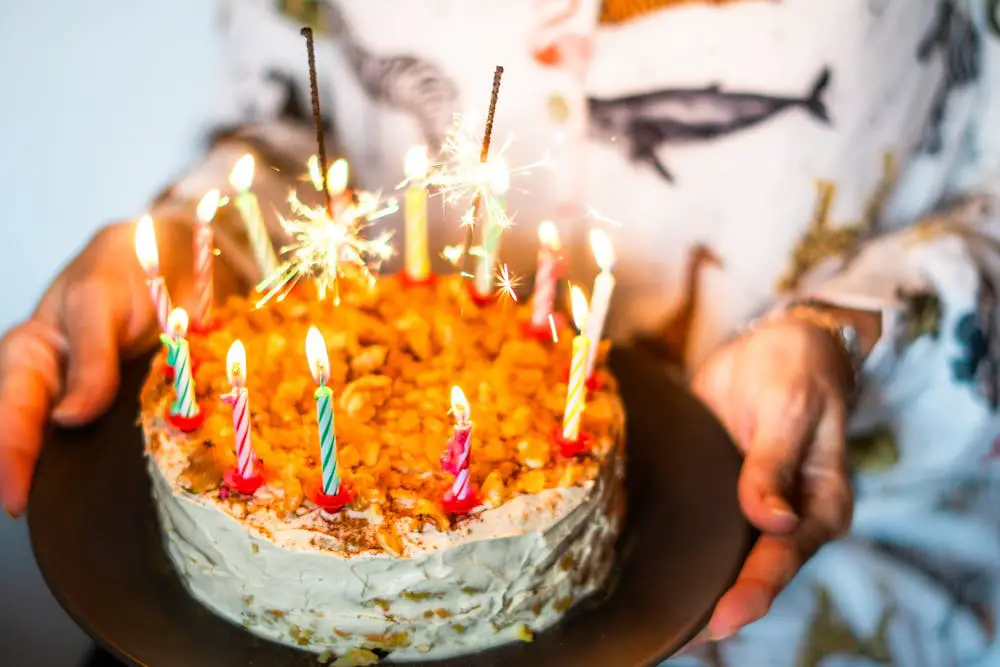
A huge grin spread across Ethan’s face. He and his friends swarmed the table. I struck a match and began lighting the ten candles, one by one, the tiny flames flickering to life.
I could feel my mother’s eyes on my back. I knew she was still there waiting for me to turn around and crumble.
I focused on the candles. I focused on the circle of happy, expectant faces around the table. I focused on my son, his eyes dancing in the candlelight.
His friends started singing happy birthday. Loud, off-key, utterly beautiful.
“Make a wish, honey,” I said.
He closed his eyes, took a deep breath, and blew. All ten candles out in one puff.
The kids cheered.
I felt something happen in my chest in that moment: a lightness, a feeling of chains I had worn so long I had forgotten they were there, simply falling away.
I had chosen my son’s joy over their drama. I had let my mother glare from the porch.
And I had lit the candles anyway.
They left before the cake was cut. I heard the side gate click shut, a small sound swallowed immediately by the kids clamoring for the biggest slice.
That night, after Ethan was asleep, I checked my phone. Three texts.
My mother: I have never been so disappointed and humiliated in my entire life. You have divided this family with your selfishness.
Patrick: You owe Mom an apology. I hope you’re proud of yourself.
And from Jessica: Patrick told me you might be having some trouble making rent next month. After today’s display, we’re reconsidering helping you out. Actions have consequences, Allison.
A year ago, those messages would have destroyed me. The rent threat was their trump card, the ultimate instrument of control. They had helped me a few times when things were tight, and it had always been held over my head, another entry in the family ledger I could never zero out.
Instead, I felt something strange and beautiful happen as I read the words on the screen.
I didn’t flinch.
I felt a ghost of the old fear, but it was weak and distant. It had no power over me.
I saw the messages for exactly what they were: desperate, clumsy attempts to pull me back into the cage. Guilt. Anger. Financial blackmail. It was all they had.
My friend Anna showed up that evening with a bottle of wine. She was a single mother too, and we had a standing agreement to be each other’s emergency support system.
I told her everything. When I finished, she was quiet for a moment, then said: “I’ve known you for three years, and I have never seen you like this. You look lighter.”
Lighter.
That was exactly it. The weight of their expectations, their constant silent disapproval, was gone.
We spent the next hour not drinking wine but looking at apartment listings.
The rent threat had been designed as their ultimate weapon. Instead, it had given me the final push I needed. By Monday, I had found a tiny clean one-bedroom two towns over, affordable on my salary alone. It would be tight. We would manage.
We wouldn’t need their help. We wouldn’t need anything from them.
That night, Ethan and I started packing. Books into boxes, dishes wrapped in newspaper, pictures off the walls. Each box I taped shut felt like sealing away a piece of the past. I wasn’t just packing our belongings. I was packing up the old rules, the old shame, the old life where I was a secondary character in my own story.
The tiny apartment with its slightly crooked floors became our sanctuary. The first place that felt entirely ours, with no shadow of anyone else’s judgment overhead.
The change in Ethan was almost immediate. The anxious little line that had always seemed etched between his eyebrows disappeared. He started sleeping through the night without the nightmares where he woke crying because he had been in trouble for being too loud. In our new home, there was no one to get in trouble with.
He made friends at his new school easily. Kids who knew him simply as Ethan, the boy who was good at soccer and told funny jokes. He blossomed, becoming the person he had always been meant to be, away from the toxic soil my family had planted him in.
I changed too. Without the constant low-level stress of anticipating my mother’s next criticism or my brother’s next demand, I felt my own shoulders relax. I took on a few new bookkeeping clients and found that the modest extra income was more than enough to cover our expenses. We weren’t rich. We were independent. That self-reliance was worth more than any amount of money my brother could have offered.
A year passed in a quiet, peaceful rhythm.
Before I knew it, Ethan’s eleventh birthday was approaching. We planned it together, openly and joyfully: a party at a local park, his entire class invited, a store-bought cake he picked out himself, dozens of balloons. I took pictures and posted them online without a second thought. There was Ethan surrounded by a huge group of smiling friends, his face smeared with blue frosting, looking radiant.
A few days later I was frosting cupcakes for his school bake sale when there was a hard knock on the door.
Patrick.
He looked terrible. Dark circles, wrinkled polo shirt, the stress showing in his face in a way his carefully curated social media never revealed.
He pushed past me into my living room and looked around with a sneer.
“This is what you left us for? A shoe box?”
“It’s home,” I said. “What do you want?”
He turned and his voice rose. “I want you to see what you’ve done. Mom saw the pictures from his party. She cried for hours. You’ve ruined her image in the community. People ask about you, and she has to lie because the truth is too embarrassing.”
After a whole year, that was what he had come to say.
Not how I was doing. Not how his nephew was. His concern was his mother’s image. The story she told her friends. The perfect family facade that had developed a crack it couldn’t close.
He wasn’t there because he missed me. He was there because my happiness was an inconvenience, a stain on their reputation.
I let him finish his tirade. When he finally ran out of steam, I looked at him calmly.
“Her image?” I asked. “That’s what this is about?”
“Of course,” he sputtered. “Family is about loyalty. Protecting each other.”
I shook my head slowly.
“Maybe she should stop worrying about her image,” I said, “and start worrying about her reflection.”
He stared at me. His mouth opened. He had no response. His weapons, guilt and anger and financial leverage, were useless against that kind of truth. He left without another word, his face tight with something that was either anger or shame.
I closed the door behind him. I went back to the kitchen, picked up the piping bag, and went back to frosting the cupcakes for my son’s bake sale.
The war was over. I hadn’t even realized I had won until that very moment.
My mother still hasn’t apologized. She probably never will. She sends occasional texts about family unity and how much she misses how things used to be. She means she misses when I was controllable. I reply when I feel like it with polite, distant sentences. The conversation is on my terms now.
Ethan is twelve. Tall and lanky, on the verge of becoming a teenager. Kind and funny and confident. When he laughs, it is a full-bodied, uninhibited sound that fills whatever room we are in.
It sounds like freedom.
I used to think forgiveness meant going back, pretending things were okay, allowing the people who hurt you to do it again. Now I understand that forgiveness is something you do for yourself. It means moving forward without bitterness. It means accepting that you cannot change people, but you can change whether or not you let them hurt you. It means finding peace, even if you have to find it entirely on your own terms.
The night of Ethan’s tenth birthday, after the party, after the angry texts, sitting at my kitchen table with Anna and a bottle of wine and a pile of apartment listings, something she said stayed with me.
“You look lighter.”
I have thought about that word many times since then.
What she was seeing was a woman who had finally decided that her child’s joy was not up for negotiation. Not with anyone. Not even with the people who were supposed to love her most.
That decision costs something. I will not pretend it doesn’t. There is grief in it, the grief of accepting that the family you wanted is not the family you have, that the love you spent thirty years trying to earn was never really available to you in the first place.
But the lightness is real, and it is better than any approval I ever received from them.
Peace isn’t the absence of family. It’s the presence of love that doesn’t require permission.
I lit the candles anyway.
That was enough. That was everything.
I have thought many times about the specific quality of that silence after I said: if your kids need someone else’s birthday to feel important, that’s not my problem to fix.
Patrick was a man who had spent forty years being the most important person in every room he entered. He had been confirmed in that importance by our parents, by his wife, by the steady approval of people who needed something from him. He had also spent forty years watching me back down whenever he pushed. He had no script for a version of me that didn’t apologize.
My mother’s silence was different. I had said something in front of witnesses that named the thing she had spent years carefully leaving unnamed. The whole arrangement depended on the arrangement being invisible, on everyone agreeing to pretend that the rules were fair. I had just said out loud that the rules were not fair and that I was no longer following them.
That was the thing neither of them could absorb. Not my anger, which they knew how to manage. Not my tears, which they knew how to dismiss. My calm. My clarity. The fact that I turned my back on them and walked toward the table where my son was waiting and started lighting candles.
I have wondered sometimes whether they stood there for a long time or left almost immediately. I genuinely don’t know. I didn’t look back. I had made a decision, standing in the doorway of my son’s room the night before, watching him sleep, and that decision had not changed and was not going to change based on how long my mother stood on the porch glaring at my back.
Ethan blew out his candles and cheered with his friends and ate two large slices of chocolate cake with blue frosting on his cheeks. He scored three goals in the second half of the backyard soccer game. One of his friends’ mothers, a woman I had met only a couple of times at school pickup, stopped me before she left and said, “Ethan is such a great kid. He looked so happy today.”
She saw him.
Those four words were everything my own family had refused to say for ten years.
When the last guest had gone and Ethan and I were cleaning up together in comfortable silence, he said: “That was the best birthday ever. Ever.”
He meant it. I could hear it in his voice.
So could I.
Some decisions take years to make and only moments to execute. The moment I lit those candles was the culmination of everything I had been slowly understanding for a decade: that I could not earn love that had been withheld from the beginning, that my son was watching how I handled my own erasure, and that if I kept accepting it, I was teaching him to accept it too.
I lit the candles anyway.
Everything else followed from that.

Adrian Hawthorne is a celebrated author and dedicated archivist who finds inspiration in the hidden stories of the past. Educated at Oxford, he now works at the National Archives, where preserving history fuels his evocative writing. Balancing archival precision with creative storytelling, Adrian founded the Hawthorne Institute of Literary Arts to mentor emerging writers and honor the timeless art of narrative.