His name was John Basilone. He was twenty-seven years old. He was the most famous enlisted Marine in America. His face had been on the cover of Life magazine. He had been driven through Times Square in an open car while ticker tape fell on his shoulders. He had shaken hands with the President of the United States, who had placed a Medal of Honor around his neck on the White House lawn.
He had a wife named Lena. He had married her seven months before.
He had a future.
And in the late summer of 1944, at Camp Pendleton, California, he walked into the office of a senior Marine officer and asked for the only thing he had been asking for since the day he came home from Guadalcanal.
He asked to be sent back to the Pacific.
The officer behind the desk looked at him for a long moment. He had seen John Basilone’s name on three previous requests. The same answer had been given each time. The answer was no. The country needed Manila John Basilone alive. The country needed his face on bond posters, his voice on the radio, his story in the newspapers, his hand at every banquet table in America.
The country did not need him dead on a beach.
“You don’t have to go back, John,” the officer said quietly. “You’ve done enough.”
Basilone shook his head.
“My boys are still over there, sir,” he said. “I belong with my boys.”
Six months later, on the morning of February 19, 1945, John Basilone stepped off a landing craft onto a strip of black volcanic sand on a small island in the Pacific called Iwo Jima.
Within ninety minutes, he was dead.
He had known, as well as any man could know such a thing, that he was not going to come back.
He had gone anyway.
This is the story of why.
John Basilone was born on November 4, 1916, in Buffalo, New York, to two Italian immigrants named Salvatore and Dora Basilone. His father was a tailor. His mother kept the house and raised the children. There would eventually be ten of them. Money was tight. There was always another mouth to feed and another pair of shoes to find. The family moved when John was small to a town in central New Jersey called Raritan, in a parish where the priests still gave their sermons in Italian and the men gathered on Sundays after Mass to argue about the home country.
John was the sixth child. He was the one who could never sit still.
He quit school after one year of high school. He went to work as a golf caddy at a country club in nearby Somerville, carrying bags for men whose lives he could not imagine living. He turned the money over to his mother. He kept what was left for himself, which was not very much.
In 1934, when he was seventeen years old, he walked into a U.S. Army recruiting office and enlisted.
He was sent to the Philippines. He served three years there, mostly in and around Manila, where he picked up the nickname that would follow him for the rest of his short life. The men in his unit started calling him Manila John, partly for the city and partly because he had taken up boxing and was beating most of the men he climbed into the ring with. He had a face that could absorb a punch and a temperament that did not seem to register pain. He won a service boxing title. The nickname stuck.
He came home in 1937. He worked for a while as a truck driver in Reisterstown, Maryland. He did not like it. He missed the Pacific. He missed the men. He missed the structure of a life that knew what it was for.
In July of 1940, with the country still officially at peace but the world clearly tipping toward another war, John Basilone walked into a recruiting office for a second time.
This time he joined the Marines.
He was assigned to a heavy machine gun section. He learned every part of the water-cooled .30 caliber Browning. He could break one down blindfolded. He could clear a jam in the dark. He could fire one with two fingers if the situation demanded it. By the time the war broke open, he was a sergeant with the 1st Marine Division, and the men around him already knew that whatever was coming, they wanted to be in the same unit as Manila John.
What was coming was an island called Guadalcanal.
In August of 1942, the 1st Marine Division landed on Guadalcanal in the Solomon Islands, capturing a half-built Japanese airfield they renamed Henderson Field. The Marines were under-supplied, exhausted, and far from any meaningful support. The Japanese intended to take the airfield back. They sent thousands of troops to do it.
On the night of October 24, 1942, the attack came.
Three thousand Japanese soldiers moved through the jungle toward a thin line of Marine machine gun positions on a ridge above Henderson Field. They came in waves. They came at night. They came in numbers that nobody on the American side had expected, and they kept coming.
The Marines had a few dozen men holding the line.
John Basilone commanded two sections of heavy machine guns at the center of it.
What happened over the next two days and nights is what the Medal of Honor citation would later try to describe in language that knew it was failing.
He fired his guns until the barrels glowed red. When one gun broke, he repaired it in the dark with his bare hands while bullets cut through the air around him. When a second gun was knocked out, he carried it on his back through enemy fire to a different position and got it firing again. When his ammunition ran out, he ran through enemy-infiltrated lines to an ammunition dump and back, alone, in the dark, with his pistol in one hand. When his men began to fall, he kept firing for them.
By the second night, all but two of his men were dead or wounded.
He kept firing.
When the morning of October 26 came, hundreds of Japanese soldiers lay dead in the kunai grass below the ridge. The American line had held. The airfield had been saved. The course of the campaign for the South Pacific had bent in a direction that would matter for the rest of the war.
In the center of it, John Basilone sat slumped behind a smoking machine gun, his uniform black with sweat and burned at the edges, his eyes red, his face streaked with dirt and powder.
He had not slept in nearly three days.
He had not eaten in almost as long.
When his commanding officer came to find him, Basilone looked up and asked if anyone had brought any cigarettes.
For his actions on Guadalcanal, John Basilone was awarded the Medal of Honor. The medal was placed around his neck by President Franklin D. Roosevelt at the White House. He was the first enlisted Marine of the Second World War to receive it.
And then America discovered him.
The Marine Corps brought him home to sell war bonds.
He was put on a train and sent on a national tour. He was paraded through Times Square in an open car with ticker tape falling around him. He was photographed with movie stars. He was photographed with senators. He was photographed kissing the cheeks of grandmothers in church halls in Iowa and shaking the hands of factory workers in Detroit. Life magazine put him on the cover. Newspapers ran his picture above the fold for weeks.
The boy from Raritan who had quit high school after one year was suddenly one of the most recognized men in America.
He hated it.
He stood in front of crowds and gave speeches he had been told to give. He shook hands with men who looked at him as a symbol rather than a person. He sold over a million dollars in war bonds in a single appearance, which was a sum that Raritan, New Jersey, had not previously known existed in one place. He smiled for the cameras.
At night, in the hotel rooms the Marine Corps put him in, he would sit on the edge of the bed and not move for a long time.
He told one fellow Marine, quietly, that he felt like a fraud.
His boys were still dying in the Pacific.
He was selling bonds in Cleveland.
He requested combat duty.
The request was denied. The Corps explained, gently but firmly, that he was more valuable to the war effort at home. They offered him a commission. They offered to send him to officer school. They offered to make him an instructor at a training base, where he could stay in uniform without going back into the fight.
He turned all of it down.
He requested combat duty again.
He was denied again.
He requested it a third time.
He was finally given an assignment that the Corps must have hoped would feel like enough. He was sent to Camp Pendleton, California, as a machine gun instructor for the new 5th Marine Division. He would still be training men. He would still be wearing the uniform. He would not be selling bonds anymore.
He would also not be in combat.
He accepted the assignment. He moved to California. And he began, almost immediately, to put in new requests to be transferred to a combat unit attached to the same division.
It was at Camp Pendleton that he met Lena Riggi.
Lena was a sergeant in the Marine Corps Women’s Reserve. She was a few years older than he was. She was the daughter of Italian-American onion farmers from Oregon. She was not impressed by famous men, which was the first thing John Basilone liked about her. She was the only woman in the mess hall who would actually argue with him about whether the chow was edible.
He asked her out. She said yes.
They were married on July 10, 1944, in a small Catholic ceremony at St. Mary’s Star of the Sea Church in Oceanside, California. Lena wore her uniform. John wore his. They went to her parents’ onion farm in Oregon for a brief honeymoon.
Then he came back to Camp Pendleton.
Then he put in another transfer request.
In the late summer of 1944, the Marine Corps finally said yes.
He was assigned to C Company, 1st Battalion, 27th Marine Regiment, 5th Marine Division. He was given the rank of Gunnery Sergeant. He was going back to the Pacific.
The men in his new platoon could not believe their luck. They had heard the name. They had read the magazines. They had grown up tracing the line of his Medal of Honor citation in the newspaper. And now the most famous enlisted Marine in America was standing in front of them at a chalkboard at Camp Pendleton, teaching them how to clear a machine gun jam with one hand.
He told them, in the months before they shipped out, only one thing about Guadalcanal that mattered.
“Don’t quit,” he said. “Whatever happens. Don’t quit on each other.”
In December of 1944, the 5th Marine Division shipped out for the Pacific. Lena drove him to the train station in San Diego. They held each other on the platform until the conductor called the last boarding. She had given him a small religious medal she had been carrying. He kissed her on the forehead.
She watched the train pull away.
She would never see him again.
The 5th Marine Division had been assigned to assault an eight-square-mile volcanic island in the Pacific that the maps called Iwo Jima.
Iwo Jima had been chosen as an objective for one reason. It had two airfields. American bombers flying from the Mariana Islands to attack the Japanese home islands desperately needed an emergency landing strip halfway across the route. Iwo Jima was that strip. The Japanese knew it. They had been preparing the island for months.
They had built sixteen miles of tunnels through the volcanic rock. They had carved bunkers, blockhouses, machine gun nests, and mortar positions into the cliffs. They had moved over twenty thousand soldiers onto the island, and they had ordered them, by direct command of their general, Tadamichi Kuribayashi, not to die for the Emperor in suicide charges, but to live as long as possible and kill as many Americans as they could before they fell.
Every Japanese soldier on the island had been ordered to kill ten Americans before dying.
The Marines were briefed on this.
They were told to expect resistance.
They were told the operation would take five days.
It took thirty-six.
On the morning of February 19, 1945, John Basilone climbed into a landing craft with the men of C Company, 1st Battalion, 27th Marines.
The ramp went down on Red Beach 2.
He stepped onto the black sand.
Within minutes, the beach was chaos. Japanese mortars dropped in patterns that walked across the sand like marching feet. Machine gun fire raked the surf. Marines were falling before they had cleared the water. Equipment was burning. Officers were shouting and not being heard. The first wave was pinned down on the sand.
John Basilone did not stay pinned down.
He stood up.
He moved alone toward a Japanese blockhouse that was raking his men with machine gun fire from above. He carried a satchel charge and a knife. He moved through fire that should have killed any man crossing it. He reached the base of the blockhouse, set the charge, and destroyed it.
He turned around.
He moved back toward his men.
A Marine tank was caught in a Japanese minefield in his path, taking fire and unable to move. He walked out into the open in front of the tank, exposed to enemy fire from three sides, and guided the tank backward and around the minefield by hand signals until it reached the protection of a ridge.
He kept moving.
He led his men off the beach and inland toward an airfield they had been ordered to take.
It was somewhere in that movement, at approximately ten in the morning on the first day of the battle, that a Japanese mortar shell landed in the position John Basilone had just reached.
It killed him.
It killed four other Marines with him.
He had been on Iwo Jima for ninety minutes.
His body was recovered by Marines who knew exactly who he was. They carried him off the field that afternoon. He was buried in the 5th Marine Division cemetery on the island. After the war, his remains were brought home and reinterred at Arlington National Cemetery.
For his actions on Iwo Jima, John Basilone was posthumously awarded the Navy Cross. He became the only enlisted Marine of the Second World War to receive both the Medal of Honor and the Navy Cross.
The town of Raritan, New Jersey, named a street for him. A bridge. A school. They put up a statue of him in the town park, in full Marine uniform, looking back toward the family church.
Lena Basilone was twenty-nine years old when she was widowed.
She lived to the age of eighty-six.
She never remarried.
She wore his Navy Cross pinned to her clothing for the rest of her life. She kept his letters in a box on the top shelf of her closet. She visited his grave at Arlington when she could. She refused, every time it was offered, to sell her story or to participate in any film treatment of his life while she was alive.
A reporter asked her once, late in her life, why she had not married again.
She thought about it for a moment. Then she answered the way she had answered every other version of the same question.
“I was married once,” she said. “That was enough.”
She died in 1999.
She is buried at Riverside National Cemetery in California, on the opposite side of the country from her husband, because the Marines did not bring her home and she did not ask them to.
She had said her goodbye in a train station in 1944.
There is a part of this story that does not usually make it onto the memorial plaques.
It is not the part about Guadalcanal. It is not the part about the ticker tape in Times Square or the Medal of Honor from Roosevelt’s hand or the bond rally in Cleveland or the wedding in Oceanside or the satchel charge on Red Beach 2.
It is the part about the choice.
John Basilone had a choice that most men in his uniform never get. He had a Medal of Honor and a famous name and a guaranteed safe assignment in California and a wife he had just married. He had a future. The Marine Corps had told him three times that he did not have to go.
He went anyway.
He went because his boys were still over there.
He went because he could not live with the picture of himself shaking hands at banquets while other men were dying on islands he could have been on.
He went knowing what going meant.
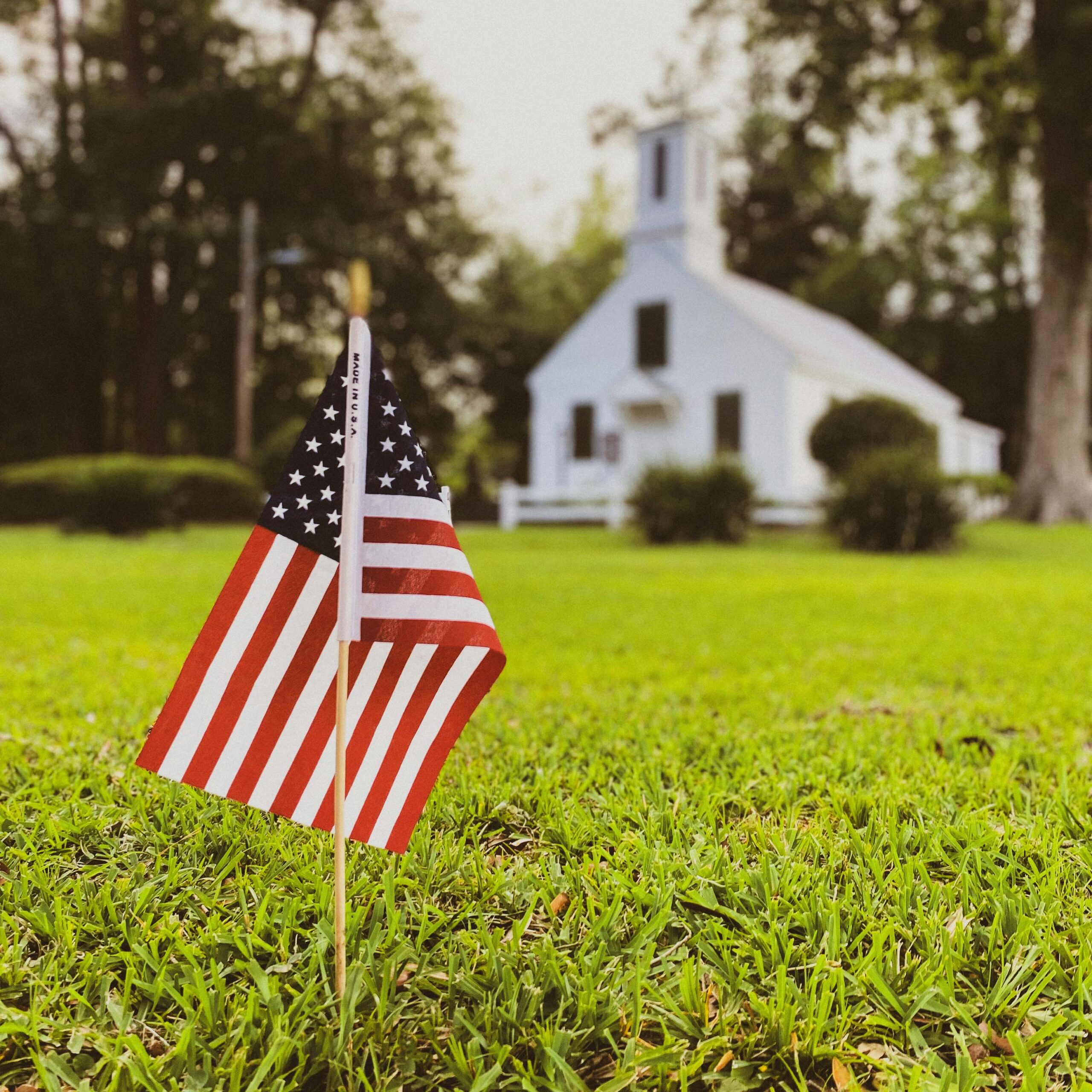
That is what Memorial Day is for.
Not the parades. Not the speeches. Not the flags hung from the porches of houses whose owners may or may not know who they are flying them for.
Memorial Day is for the men and women who had the option not to go, and went. Who had the option not to stand up on the beach, and stood up. Who had the option to go home to their wives, their children, their farms, their parishes, their towns, and instead got on a train, or a plane, or a landing craft, and shipped out toward something they were not sure they would survive.
John Basilone shipped out twice.
The second time, he knew.
His wife knew, too. She knew it as she watched the train pull out of the station in San Diego with a small religious medal in his pocket. She knew it for the fifty-five years she lived after he was killed.
She did not remarry.
She kept the medal.
She wore the Navy Cross.
She told the reporter that she had been married once, and that had been enough.
This is what we remember today.
A boy from Raritan, New Jersey. A son of immigrants. A Marine. A husband. A man who knew exactly what he was walking back into and walked back in anyway, because he had told some boys on a ridge in Guadalcanal that he would not quit on them.
And he didn’t.

Adrian Hawthorne is a celebrated author and dedicated archivist who finds inspiration in the hidden stories of the past. Educated at Oxford, he now works at the National Archives, where preserving history fuels his evocative writing. Balancing archival precision with creative storytelling, Adrian founded the Hawthorne Institute of Literary Arts to mentor emerging writers and honor the timeless art of narrative.