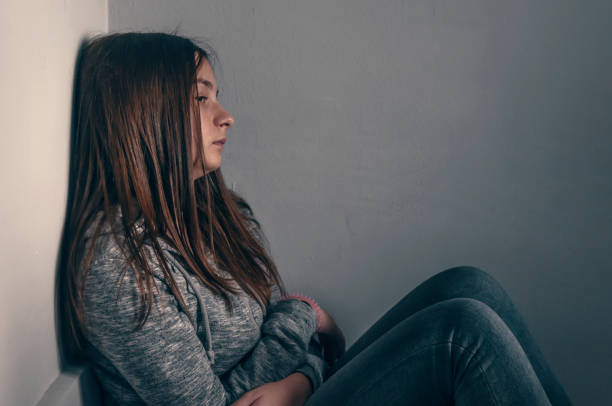
When I called my parents from the hospital chapel, my hands were still stained with ash from the accident scene.
My husband, Ethan Miller, and our two children, Lily who was seven and Noah who was four, had been killed that morning on Interstate 95 outside Richmond. A truck driver had fallen asleep, crossed the median, and crushed their SUV before Ethan could swerve.
I survived because I was not with them.
That sentence kept cutting through my mind like broken glass, and it still does, and I think it always will.
I called my father first.
“Dad,” I whispered. “There’s been an accident.”
Behind his voice, I heard music. Laughter. Plates. My sister Melissa calling something about candles.
“What happened?” he asked. Calm. Almost bored.
“Ethan is gone.” My throat closed around the words. “Lily and Noah too.”
Silence.
My mother came on the line. “What do you mean, gone?”
“They died this morning. The funeral is Friday. Please. I need you.”
My father took the phone back.
“Friday?” he asked.
“Yes.”
He exhaled slowly. “Claire, Friday is your sister’s birthday dinner. The reservation has been booked for weeks.”
I thought grief had already emptied me completely. I was wrong.
“Dad,” I said. “My husband and my children are dead.”
“I understand,” he replied. The same voice he used when discussing weather. “But today is your sister’s birthday. We can’t come.”
The call ended before I could beg.
I stood in the hospital chapel with the phone in my hand and the ash on my fingers and the sound of the call ending, that quiet finality, and I understood something that I would spend the next six months trying to unlearn: that I had never been the daughter who mattered in that house. I had always been the other one, the useful one, the one whose needs could be managed into something smaller.
I had simply not needed them badly enough before to discover the limit.
At the funeral, I stood between three coffins while Ethan’s parents held me upright. His mother Margaret sobbed so hard her whole body shook. His father kept one hand on my shoulder the entire time like he was afraid I would dissolve into the floor if he let go for even a moment.
My side of the church was nearly empty.
No parents. No sister. No cousins. Only my Aunt Ruth, who had driven six hours after hearing from a neighbor, not from my family, and who had appeared at the chapel door with her hands clasped and her face the color of someone who has driven through something terrible to arrive at something worse.
Three days after the funeral, my mother sent a text.
Hope you’re managing. Melissa felt hurt you didn’t call her on her birthday.
I stared at the message until my vision blurred.
I did not answer.
Something in me went quiet that day, not empty, not defeated. Quiet in the specific way of a decision being made so deep down that it barely makes a sound on its way to becoming permanent.
For six months, I did not answer their calls. They sent holiday photos and group messages and one invitation to Melissa’s engagement party, which I held in my hands for a long time before putting it in the drawer where I kept things I was not ready to throw away but could not look at directly.
I spent those six months doing the work grief requires, which is both enormous and mundane, identifying personal belongings and writing thank-you notes and sitting with Margaret on Tuesday afternoons because we were the two people who missed them in the same specific way. I found Noah’s dinosaur hidden in my left shoe on a Wednesday in October and sat down on the kitchen floor and did not get up for a long time.
I also spent those months making decisions.
Six weeks after the funeral, I changed my will and removed my parents as emergency contacts. I revoked every medical authorization that bore their names. I transferred the house into a trust named after Ethan and the children. I created the Miller Memorial Road Safety Foundation with Ethan’s parents and Aunt Ruth on the board.
And I filed a formal statement explaining plainly why no member of the Harper family was to receive control, authority, or benefit from anything tied to me, my husband, or my children.
My parents refused to attend the funeral of my husband and two minor children because it conflicted with my sister’s birthday dinner.
That sentence, written plainly, became part of the foundation’s background documents. Journalists found it when the settlement was finalized.
On a cold Tuesday morning in January, my name appeared in a headline.
WIDOW OF I-95 CRASH VICTIMS AWARDED $18.7 MILLION IN SETTLEMENT; ANNOUNCES CHILD SAFETY FOUNDATION.
And beneath it, because journalists do thorough work when the story warrants it, the sentence about the funeral and the birthday dinner.
By noon my entire family was calling.
By evening my father was outside my house pounding on the door hard enough to rattle the stained glass window Ethan had installed three summers earlier.
“Claire!” he shouted. “Open this door right now!”
I stood in the hallway barefoot, holding my phone and Ethan’s old college sweatshirt. The house smelled of cedar and cold coffee and the specific silence of rooms where children used to make noise. Lily had taped drawings to the refrigerator. Noah had hidden toy dinosaurs in my shoes every single week without ever explaining why or stopping.
I did not open the door.
On the camera, I could see my mother beside him in an expensive cream coat, her lips pressed into a hard line. Melissa stood slightly behind her, wearing sunglasses in the gray winter afternoon.
“Claire,” my mother called. “We saw the news. We need to talk as a family.”
Family.
My phone buzzed. Aunt Ruth.
Don’t open the door. I’m ten minutes away. I called your attorney.
Daniel Price had warned me this might happen after the settlement went public. The trucking company had fought hard. The evidence was clear. Ethan had done nothing wrong. The driver had ignored required rest periods. The company had falsified maintenance logs. The case settled before trial, and the amount became public through court filings.
I had not celebrated. No amount of money could return Ethan’s laugh or Lily’s missing front tooth or Noah’s habit of whispering secrets to the dog as if the dog was the only one he fully trusted. But the money gave me something my family had never allowed me to have.
Protection.
My father’s voice at the door dropped into the tone he used when he wanted to sound reasonable.
“Claire, we’re not here to fight. We’re concerned about you.”
I pressed the speaker button. “You were not concerned when I stood beside three coffins.”
My mother’s face tightened on the camera. “That is unfair. We were in shock.”
“You told me Melissa’s dinner reservation mattered more than my children’s funeral.”
Melissa pulled off her sunglasses. Her eyes were dry.
“I didn’t know you’d make it into a public scandal,” she said sharply. “My friends are sending me articles. Brandon’s parents saw it. Do you have any idea how humiliating this is before my wedding?”
Behind me, on the mantel, sat three urns.
I looked at them. Then back at the camera.
“I’m not punishing anyone,” I said. “I’m just done pretending you didn’t choose.”
Aunt Ruth arrived before my father could decide whether to keep shouting. Her blue Subaru pulled into the driveway behind their car, blocking them in. She got out wearing jeans and a heavy navy coat with the expression of a woman who has spent sixty-two years being underestimated and has grown entirely tired of it.
“Step away from the door, Richard,” she said.
My father turned. “This is family business, Ruth.”
“No,” she replied. “This is trespassing.”
My mother straightened. “How dare you speak to your brother that way.”
Aunt Ruth looked at her with quiet disgust. “I drove alone through a storm to bury Claire’s husband and babies while you were eating birthday cake. Don’t lecture me about manners.”
For the first time, my father had no quick answer.
He was not embarrassed because he felt regret. He was embarrassed because Ruth had said it outside, loudly enough for the neighbor across the street to hear. That had always been my family’s true religion. Not love. Not loyalty. Appearances. If Melissa screamed at me, I was told not to upset her. If she ruined my graduation dress wanting attention, I was told to be gracious. My parents had never asked whether something hurt. They had always asked who saw it.
Funerals reveal people. So does money.
My father turned back toward the doorbell camera. “Claire, we’re not here about the money.”
“Then what took you six months?” I asked.
He had no answer for that either.
My mother stepped closer to the camera. “Nobody said anything about money.”
Aunt Ruth crossed her arms. “You drove here after seeing the settlement amount.”
“We drove here because she’s isolating herself,” my mother said.
“No,” I said. “I’m protecting myself.”
Daniel Price arrived at the curb in a black sedan. He walked up the driveway wearing a charcoal overcoat with a folder under his arm and the same expression he wore in depositions, which was no particular expression at all.
“Mr. and Mrs. Harper,” he said. “You’ve been notified in writing not to come to this property uninvited.”
My father said she was his daughter.
“She is a thirty-four-year-old adult,” Daniel replied. “Who has made her wishes clear.”
“She’s grieving and being manipulated,” my mother said, looking at Aunt Ruth.
Daniel opened the folder. “Your daughter executed her estate documents with full capacity, in my office, in the presence of two witnesses and a notary. She also provided a written record of the estrangement, including messages sent after the funeral.”
Melissa’s mouth fell open. “You kept screenshots?”
“Yes,” I said through the speaker. “Especially the one where Mom said you were hurt I missed your birthday call.”
My mother went pale.
The neighbor across the street, Mrs. Alvarez, was standing openly on her porch now with her arms folded. She had brought casseroles after the funeral. She had planted lilies near my mailbox because Lily had loved her name flower.
My mother noticed her and lowered her voice. “Claire. Please. Let’s not do this outside.”
I opened the front door.
Everyone froze.
I stepped onto the porch in Ethan’s sweatshirt, hair tied back, face bare. For months I had imagined this moment. In every version, I was shaking. In every version, I either screamed or dissolved.
When I saw them standing there, they looked smaller than my memory had made them.
“You want privacy now?” I said. “You should have offered dignity then.”
My mother’s eyes filled with tears on command, the precise and practiced tears of a woman who has learned which emotions get results.
“I lost them too, Claire.”
“No,” I said. “You lost the role of grieving grandmother when you chose not to attend their funeral.”
Her tears stopped.
Melissa said that was cruel.
I turned to her. “Cruel was asking me why I didn’t call you on your birthday while my children were being buried.”
She flinched, but only because Daniel and Ruth had heard it.
My father pointed at me. “You’re tearing this family apart.”
I looked past him to the bare maple tree in the yard, where the rope from Lily’s swing had hung until I could no longer stand to watch it move. I had taken it down after the accident. The hook was still there, a small piece of iron in the bark, the only thing remaining.
“This family was already broken,” I said. “I just stopped standing in the middle holding the pieces together.”
My mother whispered, “What do you want from us?”
It sounded almost like a real question. Almost. But it came six months too late and surrounded by the wrong context to be anything but strategy.
“I wanted you at the funeral,” I said. “I wanted you to hold my hand when I buried my husband. I wanted you to cry over Lily’s pink casket and Noah’s blue one. I wanted my parents.”
The porch went quiet except for wind moving dead leaves across the steps.
“Now,” I said, “I want you to leave.”
My father’s jaw hardened. “You’ll regret this.”
Daniel immediately lifted his phone. “Please repeat that clearly.”
My father glared at him. Then he turned away.
My mother hesitated. For one fragile second I thought she might say something real. Not a performed apology. Not a social apology. The actual words from the actual place where she understood what she had done.
Instead she said, “Melissa’s wedding is in April. I hope you don’t make this worse.”
The last thread snapped so quietly I almost missed it.
“I won’t be there,” I said.
Melissa laughed bitterly. “Good. Nobody wants that energy at my wedding.”
Aunt Ruth stepped forward. “Then everyone has what they want.”
Daniel said, “Leave now.”
They got in their car and backed out of my driveway and drove away like people leaving a restaurant after a disappointing meal. No final speech. No dramatic pause. Just a car reversing and then a quiet street.
I realized I was breathing normally.
Ruth touched my shoulder. “You okay?”
I looked at the door, the porch, the lilies at the mailbox, the hook in the maple tree.
“No,” I said. “But I’m free.”
The headline changed everything, but not in the way people assumed when they read about the money. The money only illuminated what had always been there. My parents did not panic because they had hurt me. They panicked because everyone could see it.
In the months that followed, I moved forward in pieces.
The foundation held its first fundraiser in May. Ethan’s parents spoke about truck safety regulations and the legislative gaps that allowed drivers to falsify rest logs. I spoke for four minutes exactly, and my voice shook when I said Lily and Noah’s names, but I said them.
Reporters asked about my family when they could.
I gave the same answer every time. “My focus is honoring my husband and children.”
That was true. It was also the cleanest way to close a door.
Melissa’s wedding happened in April without me. Aunt Ruth heard through someone that my mother had insisted on placing an empty chair near the front of the venue. I did not ask to see the photograph that someone sent Ruth. I did not need to.
On the anniversary of the accident, I drove to the cemetery at sunrise. I brought yellow tulips for Ethan, daisies for Lily, a small red toy truck for Noah because he would have wanted something to play with even there. I sat in the grass between them and told them about the foundation, about Margaret learning to smile at something other than a memory, about Ruth taking me to Maine because I had never seen the winter ocean.
Then I told them the truth.
I miss you every minute, I whispered. But I’m still here.
The wind moved softly through the cemetery trees.
No answer. Of course no answer. Just morning light and cold air and my hand resting on the names carved in stone, the names that were theirs and always would be.
For the first time since the funeral, I did not feel abandoned.
I felt accompanied by the people who had actually loved me, the ones whose love had not come with conditions or calculations or a billing system that compared the cost of my grief against the inconvenience of changing a restaurant reservation.
Ethan had always said that my family taught me to apologize for bleeding on the floor after they cut me. He had said it gently, the way he said things he needed me to hear but did not want to land like accusations.
He was right.
It took losing him to understand how right.
I stood up from the grass and walked back to my car in the January light.
The living keep going. That is the whole instruction and the whole difficulty of it. You keep going, you carry them with you, and you stop letting people tell you that your grief should be smaller so their comfort can be larger.
I drove home.
I made coffee.
I kept living.

Ethan Blake is a skilled Creative Content Specialist with a talent for crafting engaging and thought-provoking narratives. With a strong background in storytelling and digital content creation, Ethan brings a unique perspective to his role at TheArchivists, where he curates and produces captivating content for a global audience.
Ethan holds a degree in Communications from Zurich University, where he developed his expertise in storytelling, media strategy, and audience engagement. Known for his ability to blend creativity with analytical precision, he excels at creating content that not only entertains but also connects deeply with readers.
At TheArchivists, Ethan specializes in uncovering compelling stories that reflect a wide range of human experiences. His work is celebrated for its authenticity, creativity, and ability to spark meaningful conversations, earning him recognition among peers and readers alike.
Passionate about the art of storytelling, Ethan enjoys exploring themes of culture, history, and personal growth, aiming to inspire and inform with every piece he creates. Dedicated to making a lasting impact, Ethan continues to push boundaries in the ever-evolving world of digital content.