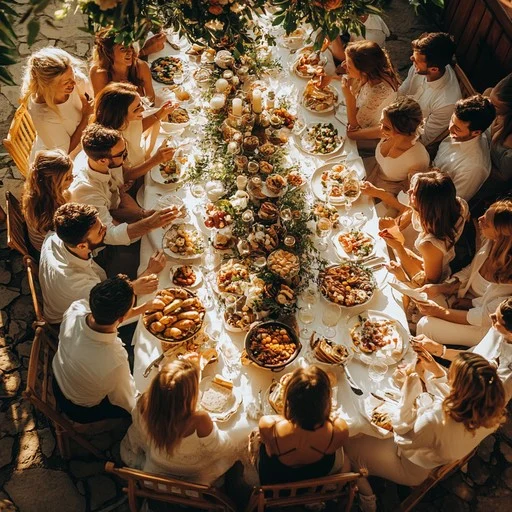
My sister smiled at the rehearsal dinner and said, “Tell everyone your Navy nickname.”
She said it the way she always said things designed to land, bright and casual, like an observation rather than a weapon. The room was warm with candlelight and wine and the particular ease of a wedding weekend that believed itself to be going well. Two hundred guests arranged across white linen tables, Brianna at the center of all of it, exactly where she had always needed to be.
I looked at her across the table.
“Riptide,” I said.
One word. No explanation. No drama.
For half a second, the room processed it as sound rather than meaning.
Then Frank Whitmore, Derek’s uncle, set down his water glass.
Not hard. Just deliberate. The soft clean sound of a man making a decision.
His hands went still on either side of the glass. His face had changed in the particular way faces change when recognition arrives before the rest of the room has caught up. He was seventy-four years old, white-haired, straight-backed, former Navy corpsman, the kind of man who had spent enough time in quiet rooms to know the difference between a nickname and a door.
He looked from me to my sister.
“Apologize,” he said.
Brianna blinked. “What?”
“Now.”
Her voice came back lighter than she intended. “Uncle Frank, come on. It was just a joke.”
Frank’s expression did not shift. “No,” he said. “It wasn’t.”
I need to start at the beginning, because what happened at that table did not begin at that table. It began years earlier, the way most family wounds do, so gradually that by the time the pattern is visible it has already become the architecture of the relationship.
My name is Monica Hayes. I am thirty-five years old. I am a lieutenant commander in the United States Navy stationed at Naval Station Norfolk, where my work involves logistics operations, movement coordination, and personnel accountability. I have been doing this kind of work for over a decade. I am reasonably good at it.
My sister Brianna has always been reasonably good at something else.
She has always known how to make a room laugh. She has always understood which details to emphasize, which words to deploy for maximum effect, which moment to pause before delivering a line. These are genuine skills and I say that without irony. Brianna could hold a room. She always could, from the time we were teenagers until the night she stood in a white cocktail dress with a champagne glass in her hand and looked across a table at me with that particular glitter in her eyes.
Growing up, I was the serious one. That was the family shorthand for it. Monica is serious. Monica takes everything too hard. Monica doesn’t know how to relax. These phrases circulated so freely through our house that I eventually stopped noticing them, the way you stop noticing a smell once you’ve lived in a room long enough.
When I joined the Navy, the jokes acquired a new vocabulary. Monica acts military even at dinner. Monica sleeps standing up. Monica probably needs clearance before she can laugh. Each one landed as light as a finger pressed against a bruise. Small enough to deny, precise enough to sting.
And every time, my mother would appear with the same soft phrase.
She doesn’t mean anything by it.
That sentence followed me from childhood through college through my first deployment through every holiday table where Brianna made my life sound like a character flaw. She doesn’t mean anything by it. As if intention was the only thing that made harm real. As if my sister’s charm erased the cost of the joke.
I drove up from Norfolk on the day of the rehearsal dinner with three text messages from Brianna already waiting in my phone. Please don’t bring your Navy attitude to my wedding. Try to act normal for one weekend. Don’t scare Derek’s family with your serious face.
I sat in the parking lot with the engine running for several minutes.
I was wearing a simple navy dress. No uniform, no ribbons, nothing that looked military. I had made a deliberate choice about that. This was Brianna’s weekend. I understood that completely. I had been a good sister across two years of wedding planning, smiling through planning meetings that became subtle interrogations of Tyler’s background, sitting through dinners where my mother’s dinner guests ranked marriages by bloodline, swallowing the hundred small moments when I was supposed to be furniture and found myself somehow still disappointing.
I turned off the engine and went inside.
Brianna saw me the moment I entered. Something moved across her face. Not warmth exactly. Calculation.
She called my name across the room, drawing it out just enough to turn heads. Very normal, she said, when she looked me over. Small enough to deny. Sharp enough to feel.
The evening moved through its expected rhythms. Salad, wine, conversation, the particular social performance of two families arranged across white linen trying to understand what they are now to each other. Derek’s family was kind. His parents asked real questions. A cousin thanked me for my service in the careful way of people who mean well and don’t know what else to say.
Brianna moved through the room like she was hosting a show, which was not a criticism, it was simply the truth. She touched shoulders, remembered names, laughed at the right moments. She was good at this and the room responded to her accordingly.
Every few minutes, she found a way to pull me back in.
Monica probably has an exit plan. Don’t worry, if anything goes wrong she’ll call in backup. She’s Navy, so she’s evaluating how everyone holds their fork. Each comment was one drop. Each one could be dismissed. That is how sustained erosion works. Not in floods. In individual drops that accumulate until you are standing in water you don’t remember entering.
Then I heard her voice in the hallway near the side entrance, speaking with Tessa, her maid of honor, in a stage whisper that was not as private as she believed.
The Navy nickname bit is going to kill, she said.
Tessa laughed softly. Does Monica know you’re doing that?
She’ll be fine, Brianna said. She acts tough for a living.
I sat very still and looked at the folded napkin on my plate.
This was not a joke that had slipped out. It was rehearsed. It had been planned before I arrived, possibly planned for days. My nickname, my hesitation around it, my discomfort, all of it had been assembled into a bit while I was driving three hours from Norfolk to support my sister’s wedding weekend.
My mother appeared beside my chair a few minutes later and put one hand on my shoulder.
She doesn’t mean anything by it, she started.
I heard her, I said. The nickname bit.
My mother’s eyes moved toward Brianna, then back. Let it pass, she whispered.
Why is that always my job? I asked.
Her lips parted. She did not answer.
There was no answer that made her look good.
When the toasts began, Brianna rose with champagne glass raised and the room brightened around her the way rooms always did. She started warmly. She told a story about her and Derek. She made people laugh in the genuine way, the kind that comes from real affection and good timing.
Then she turned her smile toward me.
She told the room I had always been the intense one. She said even as a child I acted like every sleepover needed a chain of command. She said the Navy had given me a nickname, a very dramatic one, that I never wanted to share.
Then she lifted her glass in my direction and said, Come on, Monica. Tell everyone your ridiculous Navy nickname.
The word ridiculous settled between us before the laughter did.
I looked at her across the table. She stood in her white dress with her champagne glass raised and her expression polished for the room, and she looked harmless. That was the danger of her. She always looked harmless when she had chosen exactly where to cut.
I could feel the room deciding what kind of scene this was. If I smiled and played along, it would be cute. If I refused, I would become the difficult one. Brianna had constructed the moment that way. Both exits cost me something.
I kept my voice even.
Not tonight.
The smile stayed on her face but her eyes sharpened. Oh, please. It’s not classified.
Derek shifted beside her. Said her name, soft but warning.
She didn’t look at him. She kept the room. It’s funny, she said. She has this whole mysterious thing about it, like she was in a movie.
My mother leaned close. Just answer so she’ll move on.
I turned slightly toward her. In that moment I wanted to ask if she heard herself, if she understood that she was asking me to hand Brianna the match because the room had grown impatient waiting for the fire. But I did not say any of that. Not there. Not with thirty people watching.
Brianna laughed again, brighter now.
Navy girl, she said. What did they call you?
I looked at her.
Riptide.
The word landed quietly. No performance, no explanation. Just the word itself.
For a half second no one moved.
Then Brianna laughed and repeated it loudly enough for the back table. She put one hand over her chest like she was trying not to laugh too hard. She said it sounded like a rejected superhero name. She asked what the other option was, something like kept in spreadsheet.
Someone at the far end of the table snorted.
And underneath the laughter, a door opened in my mind that I had spent years learning to keep closed.
A coastline in fragments. A radio cutting in and out. A list of names that did not match the headcount. A young corpsman whose hands shook only after the work was done. The smell of salt and fuel and sweat. Someone saying the name, not as a joke. Never as a joke.
I pressed my thumb into my palm until the memory receded.
That was when Frank set down his glass.
He stood slowly. Not dramatically. Just completely. He looked at Brianna with the recognition of a man who had spent years after leaving the service working with veterans networks, listening to people who came home carrying more than they knew how to hold, hearing names passed between people who understood exactly why those names were never made small.
He had heard my name once or twice, he would explain later. Always carefully. Always with the context of what had happened, never as a punchline.
Apologize, he said.
And when Brianna tried to dismiss it, when she said it was just a joke, he said, No, it wasn’t, in a voice that had no softness left to offer her.
The room inhaled.
I kept my face still and felt the particular pain of being defended in public, of having the private weight of something acknowledged in front of strangers, of finally being heard at the precise moment I had spent years hoping I would not have to be.
Frank did not tell my story. He made clear he did not know it. He only said he knew enough. He said he knew the name, or enough of what surrounded it, from years of listening to people who handled those things with care.
He told Brianna that she had asked me to perform something painful because she thought the room would reward her for it.
He told my mother, carefully and without cruelty, that he had seen enough families call harm a personality trait because it was easier than asking the charming one to stop.
My mother’s face went pale.
No one had ever said it that plainly to her.
Derek sat beside his bride and looked at her the way a man looks when he is beginning to understand something about the person he is marrying that he cannot unknow.
Tessa, when Derek quietly asked whether Brianna had mentioned the nickname before dinner, told the truth. The nickname bit would kill. That was what Brianna had said.
Premeditated. The room finally had a word for it.
Derek pushed his chair back.
He stood and said he needed a minute. Not loudly, not dramatically. Just firmly.
Brianna said his name like a warning.
He said he did not want to say something in front of everyone that should be said privately.
Then he looked at me.
I’m sorry, he said. I’m sorry this happened at my family’s table. I’m sorry I didn’t stop it sooner.
He had not made the joke. He had not laughed once he understood. He owed me the least of anyone in that room, and he was the first to say it.
He left with Frank through the side hallway. The door closed softly.
That soft close was worse for Brianna than a slam would have been. A slammed door gives you something to react to. A soft door leaves you alone in the silence you created.
She stood in her white dress holding her champagne glass and looked at a room that no longer belonged to her.
I did not give her what she was looking for. I said the thing clearly, without performance.
You said no, she said, referring to my refusal to play along.
I said you knew I didn’t want to say it. You kept going because the room was laughing with you.
And then the sentence that I had been holding for years without knowing how to put it down.
You’re not being asked to apologize because of one joke, I said. You’re being asked to apologize because I said no and you kept going.
Derek, when he returned, sat down and looked at his fiancée and said, She did say no. Not loud. Not accusing. Just true.
The night ended without another toast.
The next morning, Brianna came to my hotel room in her bridal robe with her eyes unfinished and her hair pinned in rollers. She stood inside the door and said, I’m sorry if you felt mocked.
I looked at her.
That’s not an apology, I said. That’s a press release.
She told me she had come to apologize. I told her she had come to make today easier. She asked why I was making it harder. I told her I was refusing to make it fake.
Then I told her what I needed, which was a real apology in front of the people who were there. Derek, Frank, our mother, Tessa. The people who witnessed the choice.
Absolutely not, she said.
Then I won’t be a bridesmaid, I said.
She stared at me. The calm of my voice seemed to frighten her more than any volume could have.
You would do this on my wedding day, she said.
You did it to me at the rehearsal dinner, I said.
Before she could answer, Derek’s message arrived.
He asked to meet in the conference room downstairs.
We gathered there, all of us. Derek and Frank and our mother and Derek’s mother. Brianna standing near the door in her white robe with her initials embroidered on the pocket, surrounded by people who were finally being honest about what the previous night had been.
Frank told her that a real apology names the action. Not what the other person felt. Not if anyone was offended. Not things got taken the wrong way. What you did.
Brianna resisted. She said she was being cross-examined at her own rehearsal dinner. She said if the nickname was that serious, why had she never heard about it.
I looked at her when she said that.
Because it was not a story for dinner, I said.
And then, because she had asked and because the room had earned the right to a partial answer, I told them what I could. Not everything. Never everything. But enough.
A coastal evacuation support mission. Bad initial information. A narrow window. My role was coordination, movement, accountability, making sure the right people were on the right lists, the right vehicles reached the right points, the right information was cross-checked against what was actually on the ground.
One group was still out. Some injured. A mix of American personnel and people who had helped us and were now in danger because of it.
We got people out, I said. Not all cleanly. Not without injuries. Not without mistakes that were replayed later. And not everyone came home the way they were supposed to.
Brianna asked if someone died.
One person connected to our support effort did not return as expected, I said. And some people who did return carried things home that don’t show up in photographs.
Frank closed his eyes briefly.
They called me Riptide, I told her, because someone said that when the situation kept pulling people under, I kept pulling them back out.
I looked directly at her.
But that name is not a trophy to me. It is not a fun fact for your toast.
I told her what I heard when I heard the name. People sitting on the floor because there were not enough chairs. Counting heads twice because one wrong number can ruin lives. A man asking if his wife was on the next transport and knowing I could not promise him anything yet. The smell of salt and fuel. A hand shaking only after we were back safe because there had been no time to shake before.
I told her I remembered coming home and being asked at Thanksgiving why I still looked so serious.
Our mother’s face changed then.
She had asked that. Years ago at a Thanksgiving table, passing dishes, the ordinary rhythm of a holiday. She had not known what she was asking. But now she knew, and there was no unknowing it.
Brianna’s voice when she finally spoke was smaller than I had heard it in years.
I used your Navy nickname as entertainment, she said. Her voice was stiff but the words were real. I pushed you to say it after you said no. I made fun of it because I thought people would laugh, and I expected you to sit there and take it because you usually do.
Our mother closed her eyes.
Then Brianna looked at me.
I’m sorry, Monica.
It was not perfect. It was not a transformed person or a healed relationship or the warmth she would have preferred to offer and receive. It was a 31-year-old woman saying the thing she had done instead of the thing I had felt.
That was all I had asked for and it was the first time she had ever given it.
Thank you for saying what you did, I told her.
The ceremony happened. Of course it did. Flowers were carried and guests stood and music filled the space where the past several days had been. From the outside it looked like a beautiful Virginia wedding, which it was. Brianna knew how to walk slowly enough for everyone to admire her. She had always known that.
I stood with the bridal party because I had set my own terms for being there and those terms had been met.
At the reception, Frank gave a short toast. He held water instead of champagne. He said marriage gave you plenty of chances to be right, but the better chances were the ones where you chose to be kind. He said respect was easy when you understood someone. Character was respecting them before you did.
He did not name me. He did not need to.
Everyone who needed to understand understood.
I drove back to Norfolk that night with my bridesmaid dress folded in the back seat and my heels beside my bag. The highway was dark. My phone was quiet. No messages from Brianna. No calls from my mother trying to smooth the weekend into something that never happened.
Just the road.
By Monday morning I was back at the base before sunrise. Reports needed signatures. Personnel accountability needed review. Someone needed information confirmed before noon. A young petty officer stood outside my office with a folder and the look people get when they think a small mistake is about to become a large one.
So I did what I do.
I worked. I checked details. I made sure people had what they needed.
And somewhere between the second meeting and a cold cup of coffee I understood that I was not carrying the weekend the way I expected to.
Not lighter exactly. But no longer alone in it.
That mattered more than people think.
There are things military people do not bring home because home is not always prepared to hold them. Missions. Losses. The specific guilt of surviving a day that changed someone else forever. People outside that world often want a clean story, a dramatic story, a story that fits in three sentences.
Real service is rarely that clean. Sometimes it is paperwork done correctly so someone boards the right transport. Sometimes it is counting people twice because one wrong number costs lives. Sometimes it is staying calm while everything around you is not.
That is why Riptide was never just a nickname.
It was a door. And I had the right to decide who entered.
That is something I want to say clearly to anyone reading this who has been made to perform something private for someone else’s entertainment.
You do not owe anyone the full story just because they are curious. You do not need to bleed in public for your boundary to be valid. Respect should not require a confession. Decency should not require evidence.
If someone only stops after they understand how badly they hurt you, the problem was never a lack of information.
It was a lack of empathy.
Brianna did not become a different person over one weekend. Real people do not transform that way. But she said the thing she did instead of the thing I felt, and she said it in front of witnesses, and that was not nothing.
I had spent years absorbing small cuts because I believed that was what keeping peace required. I had let my family call my silence strength when sometimes it was just exhaustion. I had let them call me serious when they meant inconvenient, sensitive when they meant unwilling to be laughed at.
The rehearsal dinner taught me that peace built on one person swallowing disrespect is not peace.
It is a performance.
And eventually your body knows the difference even when your family does not.
The real thing I took from that weekend was not that Brianna could be cruel. I already knew that. It was that I had been treating my own dignity as negotiable, quietly making myself smaller so that dinners could continue and pictures could look normal and my mother would not have to choose.
I do not do that anymore.
Not because one dinner fixed everything. Nothing fixes everything. But because I finally understood that stopping is available to me.
I am allowed to stop laughing at things that cost me something.
I am allowed to protect the private parts of my life from people who want to turn them into entertainment.
I am allowed to stop making my silence a gift to whoever is making the noise.
The Navy taught me that calm is useful when other people are anxious. That steady hands accomplish more than shaking ones. That in a crisis you work with what you have and you keep accounting for who is still out there.
But it took a rehearsal dinner in Fairfax, Virginia, and a seventy-four-year-old corpsman standing up with a water glass in his hand, to teach me that strength in a family is not the same as absorbing everything they aim at you.
Some silences protect operations.
Others only protect the person doing harm.
I know the difference now.
And I am not quiet about it anymore.

Adrian Hawthorne is a celebrated author and dedicated archivist who finds inspiration in the hidden stories of the past. Educated at Oxford, he now works at the National Archives, where preserving history fuels his evocative writing. Balancing archival precision with creative storytelling, Adrian founded the Hawthorne Institute of Literary Arts to mentor emerging writers and honor the timeless art of narrative.