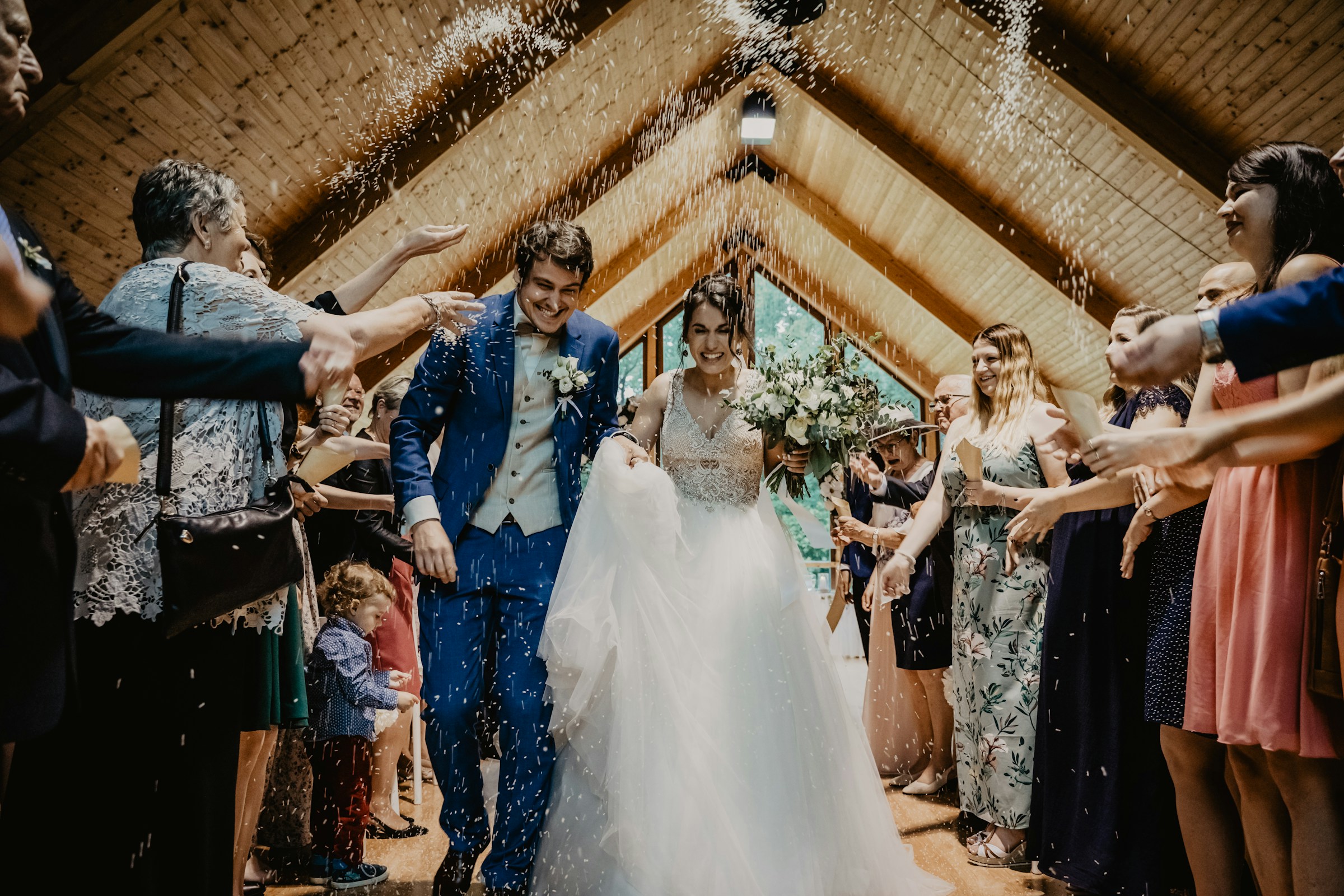
Fifteen minutes before my wedding, I learned the head table had been changed.
Not adjusted. Not fine-tuned for a photographer’s angle or a grandparent who needed the aisle seat. Changed. I was standing in the bridal room with my grandmother’s pearl earrings halfway in when my cousin Megan opened the door without knocking and I saw her face and understood immediately that something had broken.
The earrings were old pearl drops, modest things, not the kind of jewelry that gets appraised or insured. My grandmother had worn them through forty-one years of marriage and three jobs that kept her on her feet, and my mother had wrapped them in a square of tissue that morning and pressed them into my palm the way you press something into a person’s hand when you want them to carry something with them. I had been trying not to cry over that small ceremony when Megan came in. She was twenty-eight years old and had never in my memory looked frightened. She looked frightened now.
She told me I needed to come with her. She said it quietly, which was worse than if she had raised her voice.
I remember the uncapped lipstick on the vanity. I remember the county marriage license packet in its folder and my vows on the table beside it, written in blue ink because I had ruined two black pens trying to get the words right, and I remember thinking with some automatic part of my brain that I should cap the lipstick before it dried. Then my body stood before my mind finished the thought, and I gathered the front of my dress with both hands and followed her down the hallway toward the tent.
Michael and I had been together for three years before he proposed. I want to say that plainly because it matters to what came later. Three years is long enough to understand someone. It is long enough to eat dinner at their kitchen table and learn their family’s particular vocabulary of love and grievance. It is long enough to watch how a person manages the distance between who they are in private and who they are when their mother is in the room.
I had liked Michael from the beginning in the uncomplicated way you like a person who is genuinely kind in small situations, who holds doors and listens when you talk and laughs at things that are actually funny. He had a quality of steadiness that I mistook, for a long time, for strength. I understand now that steadiness and strength are related but not the same. Steadiness can be a form of avoidance. A steady person can watch something happen and tell themselves they are being calm when what they are actually being is absent.
His mother’s name was Sarah.
I had met her at a dinner eight months into the relationship, at the kind of restaurant where the portions are small and the prices are large and people speak in a register that is designed to communicate that they are comfortable in rooms like this one. Sarah was a handsome woman in her early sixties with the particular composure of someone who had spent decades performing self-possession so consistently that it had become structural. She wore a beige dress that fit her like a professional decision. Her smile arrived precisely when it was needed and dissolved just as precisely when it was not.
She asked about my family that first evening with the tone of someone conducting an intake assessment.
My parents were not wealthy. My father drove a truck for thirty years and had the back to show for it. My mother had been a school librarian for most of my childhood and had recently retired to manage a garden that consumed her weekends and produced tomatoes she gave to neighbors. They lived in the same house they had bought when I was three, which had been repainted twice and had a porch swing that listed slightly to one side. They were people whose lives were organized around showing up, which is a kind of wealth that does not translate into the currency Sarah used to measure things.
She never said anything explicitly unkind about them in those first months. That was part of her skill. She worked in suggestion. A slightly raised eyebrow when I mentioned where I had grown up. A pause before asking whether my parents would be comfortable at certain venues. Comments about how she imagined the wedding might look, delivered always in the first person, as if the imagining were an innocent private impulse rather than a careful campaign.
Michael said his mother was particular. He said she was from a different generation. He said she would come around once she knew me better. I believed this because I wanted to and because Michael was convincing about it, and because the version of him I loved was the one who held my hand in his parents’ driveway after a difficult dinner and said the things a person says when they want you to believe they are on your side.
He was on my side. In private. In parking lots and kitchens and ordinary Tuesday evenings. I have no doubt about that. The problem was not the private side but the public one, the side that activated when Sarah was in the room and Michael had to decide in real time what the calculation cost.
The engagement was eighteen months long, which is long enough to plan a wedding and also long enough for patterns to make themselves clear if you are paying attention. The guest list had grown by forty percent toward Michael’s side through a process of incremental additions that each seemed individually reasonable. The florist Sarah had used for Kevin’s wedding was strongly suggested over the one I had researched myself. The color palette shifted from what I had chosen to something described as more timeless. Each individual thing was small enough to set down without incident. Counted together, they added up to a story I had been telling myself was not being told.
The venue was beautiful. White tent, round tables, lilies in tall arrangements that caught the afternoon light. The string quartet. The printed programs with the gold trim. The table cards I had approved myself two weeks before the wedding, with both family names placed equally and with my parents in seats that honored what the day actually was, which was the day I was marrying someone I loved in front of the people who had made me.
The tent smelled like lilies and hairspray and coffee that had been sitting too long on a warmer. Outside, the sun hit the gravel driveway hard enough that it looked white. The quartet was still tuning when Megan brought me to the reception area, those small soft warm-up notes that usually make a person’s chest fill with something good.
Three staff members were moving place cards at the head table. The venue coordinator had a clipboard pressed against her body with the specific tension of someone managing information they wish they did not have. A server stood to one side holding a stack of folded napkins and directing his attention at the carpet.
I scanned the table first without understanding what I was looking at. Weddings produce a certain background anxiety about details that makes everything feel potentially wrong until proven otherwise. I told myself it was nothing. A centerpiece adjustment. A photographer’s request.
Then I read the cards.
Sarah. David. Michael’s sister. Her husband. Two uncles. Three cousins. Nine seats, all of them from Michael’s family, arranged along the head table in a row that looked like a photograph that had been planned without me.
I looked for my parents’ names the way you look for a familiar face in a crowded room when you begin to understand it might not be there. I scanned the roses and the crystal glasses and the gold-trimmed cards. I scanned twice. Then I looked up and Megan touched my elbow without speaking, because she knew that whatever she added would be less honest than what the silence already contained.
Then I saw the column.
It was off to the side of the main floor, near the service path where the staff moved behind the guests during the meal. Two folding chairs had been placed beside it. No covers. No reserved markers. No flowers. They were not even facing the head table at the right angle. They looked like furniture that had been placed in a hurry by someone who wanted the problem solved and had not considered that a problem solved carelessly is still a problem.
My father was already there.
He had bought the suit he was wearing in three payments because he did not want to rent something for his daughter’s wedding and because he had asked the salesman twice whether the sleeves looked right. He had sent me a photograph from the dressing room with the caption, good enough to walk you? I had cried when I received it, not from sadness but from the specific fullness of loving a person who manages their pride carefully around the people they love most.
He was standing beside the folding chair with one hand in his pocket, hiding the stiffness in his fingers the way he always did when his arthritis was bad and he did not want anyone to make a fuss. He was looking at the floor. Not because he was broken. Because he was trying to contain what was happening inside him so that it would not become my problem on the day I was supposed to be getting married.
My mother stood beside him in the navy dress she had chosen because she said it made her feel put together. She was adjusting the strap of her purse, moving it up and then down and then up again in the way she did when she was holding herself together by occupying her hands. I had watched her do that at funerals, at difficult appointments, at moments when she needed to be strong for someone else and the only available strategy was to find a small task and repeat it until the tears obeyed.
The venue coordinator told me, quietly and with the expression of someone who would have preferred almost any other assignment, that Sarah had requested the change that morning. That the groom had approved it.
That last part landed with a particular weight. Not the first part. I had already understood, with the cold clarity that arrives before the feelings do, who was responsible for the arrangement beside the column. The second part was the one that required processing.
I asked where Michael was.
The silence around the question was its own answer.
Sarah came in before anyone else could fill it. She looked the way she always looked, which was like a woman who had reviewed the situation in advance and made peace with the image she intended to present. Her composure was complete and her smile arrived exactly when the room required it and her voice when she spoke to me was soft in the particular way that cruelty sometimes uses as a delivery mechanism, soft so that anyone who responded to it would appear to be overreacting.
She told me not to be dramatic. She said my parents could sit there. She said they were not used to places like this anyway.
Then she looked at my parents and said they looked pretty pathetic trying to fit in here.
My mother was close enough to hear it. My father was close enough to understand it.
The cold that came then did not feel like anger. Anger is hot and wants to be fed. What moved through me was something more structural, a shift in the architecture of the day, everything I had been carrying about this wedding and this family and the slow patient process of understanding what I had been agreeing to by staying quiet, all of it becoming suddenly visible and solid.
I looked at my father’s hands in his pocket. I looked at my mother’s hand on her purse strap, gone still. These were people who had never asked to be treated like royalty. They had asked where to park. They had sent an email three weeks out asking if they should bring anything. My father had asked whether he could arrive early because he did not like being late to important days, and I had told him of course and he had shown up an hour before the ceremony and spent that hour talking to the caterers and making them laugh and asking if there was anything he could carry.
Michael knew this. He had eaten at their kitchen table more times than I could count. He had laughed at my father’s terrible weather jokes, the ones that required three setups and a punchline only my father found fully satisfying. He had carried my mother’s groceries in from her car one afternoon when her back was bad without being asked. He had told me once that being with my parents made him feel normal, which I understood to mean that their uncomplicated warmth was a relief from the performance his own family required.
I had believed him when he said it. I had taken it as evidence of who he was.
The dangerous thing about trust is that it does not only break when someone lies to you. It also breaks when someone stands close enough to defend you and decides that the cost of staying quiet is easier to absorb than the cost of speaking.
The venue coordinator had a clipboard. She had been holding it against her body the whole time with the compressed tension of someone who knew what was on it. When Michael walked in from the back of the tent, his tie crooked and his face pale in a way that was not the paleness of a nervous groom, I understood before anyone spoke that he had known since ten-eighteen in the morning.
He had not told me.
He had known that my parents had been moved to folding chairs beside a support column and he had signed the approval form and not found me in the bridal room to tell me what was happening.
I walked to the lectern near the front of the tent. The microphone was resting there, the same one the officiant had tested an hour earlier. The tent quieted as I picked it up, first the tables closest to me, then the middle rows, then the people near the bar. The quartet stopped playing.
Before this wedding begins, I said.
My voice was steady in a way I had not anticipated, the steadiness that comes when the thing you have been afraid to say has finally reached the surface and the fear of saying it is less than the cost of not saying it.
My mother lifted her eyes. My father took one step forward.
I said that my parents would not be hidden at my wedding so his mother could feel important.
The tent went still with the particular stillness of a room full of people who have just heard a truth that was being managed into absence and are now watching it materialize. A champagne glass stopped halfway to a mouth. A server stood with a tray balanced on one palm. Michael’s sister pressed her fingers to her lips. One of his uncles found something absorbing in the tablecloth.
Sarah said that was enough. I said it had been enough when she moved them.
Michael came toward me with his voice low and his face in the register of a man trying to manage a situation before it becomes the version he will have to account for later. He said my name. He said let’s talk privately.
Privately.
That word had done a great deal of work in the previous three years. Private was where Sarah’s comments had been explained away after the fact. Private was where Michael had told me she was difficult, that she needed time, that things would be different once we were married. Private was the space where I had consistently agreed to accept something and call it patience.
I said into the microphone: we are done doing private.
The coordinator, who had been standing with the clipboard the entire time, stepped forward then. I could see her deciding in real time. She handed me the form. The revised seating diagram, with FINAL stamped across the top and the timestamp in the corner, eight in the morning, two hours before the ceremony. Two folding chairs beside the column, labeled BRIDE’S PARENTS TO SIDE SEATING. And at the bottom of the approval line, Michael’s signature. His handwriting, unmistakable because I had watched him sign a hundred things in the three years I had known him.
I looked at him.
He looked at the floor.
I asked whether he had approved it.
He said he did not think it was a big deal.
My father made a sound then. Not words. Just the sound of a man who had been trying to absorb something quietly and had reached the limit of what could be absorbed that way.
I asked whether he had not thought hiding my parents at their daughter’s wedding was a big deal.
Michael looked around the room. At the guests. He was measuring the damage, calculating how this appeared from the outside, figuring the social cost. He did not look at my parents. He looked at the people watching.
You are embarrassing us, he said.
Us.
Not me. Not my parents. Us, which meant him and Sarah, which meant the image and the photograph and the family line that had been arranged to look a specific way. The us he was protecting had nine chairs at the head table. The us he was protecting did not include the two people standing beside a column in the clothes they had worn because this was the most important day of my family’s life.
I reached for my ring.
Sarah’s composure changed in a way I had not seen before. The confidence left her face all at once, not slowly but immediately, like a light being switched rather than dimmed. She told me not to dare make a scene.
I slid the ring off. It was heavier in my palm than it should have been, which I think is what happens when a promise reveals what it was worth.
I told her I was not making a scene. I said I was ending one. I placed the ring on the lectern. The sound it made against the wood was small but in the silence of that tent it arrived with the weight of everything that had led to it.
There will be no wedding today, I said.
My mother began to cry. Quietly. Not from the ceremony being cancelled but from something being named that had not been named before, which is its own kind of grief and its own kind of relief.
My father came to me. He did not ask whether I was sure. He did not tell me to think about the money, did not suggest I reconsider, did not look at me with any of the expressions people use when they want to manage someone back toward a decision they regret. He simply reached me, offered his arm, and said let’s go home.
I took it.
Megan gathered the back of my dress as we walked past the head table, past the roses and the nine chairs and the crystal glasses with the gold rim catching the tent light. When we reached the column, my mother touched one of the folding chairs with her fingertips. Just once, lightly, and then she let it go.
Outside, the afternoon was too bright. The gravel was hot under my heels. From behind us I heard someone crying, one of the guests or Michael or his sister, I could not tell, but the sound followed us out past the tent’s edge and then the sun swallowed it.
My father’s old pickup was at the far end of the lot. There was a small flag sticker on the back window, the corner peeling from years of sun, and the sight of it, that ordinary worn ordinary truck, was the most beautiful thing I had seen all day. My mother helped me in because the dress was too large for the cab, and Megan climbed in after us still holding my veil, and my father started the engine, and for a while nobody spoke.
The road back ran past lawns and mailboxes and a gas station sign blinking in the afternoon heat. I watched the white tent shrink in the side mirror. It got smaller and then it got smaller still and then it was just a pale shape behind us with no particular meaning.
My mother reached across the seat and took my hand. She said she was sorry.
I turned toward her. I told her she had nothing to be sorry for.
She shook her head. She said they should have told me when they saw the chairs. My father kept his eyes on the road and said they had not wanted to ruin my day.
I almost laughed but it came out as something else. I said they had not ruined it.
The people who loved me had tried to absorb humiliation so I could have a perfect wedding. The people who claimed to love me had created the humiliation and called it a seating decision. That difference is not something you forget. It settles into you and becomes part of the way you understand what love actually is and what it only resembles.
We went back to my parents’ house. My mother hung my dress over the laundry room door because she said laying it flat would wrinkle the skirt, and even then, in the middle of a cancelled wedding on an afternoon that had not gone the way any of us had planned, she was still trying to take care of something for me. My father made coffee. Megan took the pins out of my hair at the kitchen table, one by one, each pin making a small metallic tap when she dropped it into a mug.
Michael called at six twelve. I watched his name on the screen and did not answer. He called again at six-nineteen, and when I did not answer he sent a message that said his mother had been wrong but that I had not needed to do it in front of everyone.
I read it several times. Not because I was reconsidering. Because the message was a complete portrait of the problem in thirty words. His mother had been wrong, he conceded, but my refusal to be quietly wronged was the visible issue, the embarrassment, the thing that required apology. The wrongness had happened in private. My response had happened in public. In his accounting, the public response was the larger offense.
Another message came a few minutes later. We can fix this.
I typed back one sentence. You had fifteen minutes to fix it before I found out. Then I blocked his number.
People asked afterward whether I regretted saying it in front of everyone. Whether I wished I had pulled Michael aside. Whether I thought Sarah might have come around with time.
The answer is no to all three. Not because I am certain I handled everything perfectly. But because Michael had been given the fifteen minutes between ten-eighteen and the moment I found out, and he had used them to walk into the tent and straighten his tie and allow the morning to continue. He had made his calculation and acted on it. A conversation in a back hallway would not have changed what the calculation had already revealed.
Some truths only become visible when the conditions make it impossible for them to be managed around. Michael was kind in kitchens and patient on ordinary evenings and thoughtful in the specific ways that make a person easy to love. But a marriage is not tested by ordinary evenings. It is tested in the moment someone asks you to place a vulnerable person in a folding chair beside a column so that a powerful person can feel that the arrangement reflects the correct hierarchy, and you have to decide in real time who will pay the price for your comfort.
Michael paid it with my parents.
Two weeks after the wedding that did not happen, my mother gave me back my grandmother’s earrings. She had rewrapped them in the same tissue. I told her to keep them safe for me.
She asked until when.
I looked at the little pearls in her palm and thought about my father’s suit paid in three installments and his hand in his pocket hiding the stiffness and his voice in the truck saying let’s go home. I thought about my mother touching the folding chair once, lightly, and then letting it go.
I said: until the day I marry someone who would move chairs for you, not away from you.
My father made a sound that was approximately a cough, but his eyes went wet. Megan, who was sitting at the kitchen table eating the wedding cake that had been delivered to my parents’ house by a caterer who had apparently not received the cancellation message, said that was the best thing she had heard in years.
I kept the earrings in mind after that. Not as a promise to someone else but as a promise to myself, a description of the standard, a reminder of what the ordinary things reveal. How a person treats the people you love when it costs them something. Whether they show up in the hard public moments or only in the easy private ones. Whether the us they build has room in it for everyone who matters.
My parents had driven a truck and shelved books and raised me in a listing-porch-swing house where the tomatoes were good and the weather jokes were terrible and love was a practice not a performance. They had worn their best clothes to the most important day of my life and been placed beside a column, and they had stood there without complaint because they did not want my day to be about their humiliation.
That was the kind of love that does not declare itself. It simply stays in the room and adjusts the purse strap and hides the stiffness in its fingers and says let’s go home when you need it most.
Some people tell you where they think you belong by saying it directly. Others set a chair in a corner and wait to see whether you will accept the assignment.
I had been accepting smaller and smaller versions of that assignment for three years, in parking lots and back hallways and the private spaces where I told myself each thing was not that bad and Michael would handle it and patience was a form of respect.
The morning I stood at the lectern in my wedding dress with my grandmother’s earrings on and my parents beside a column and Michael’s signature on a form stamped FINAL, I finally understood that patience had never been what the situation required. The situation had required, from the beginning, the thing I said into the microphone.
The truth, clearly. In front of everyone.
And then, after, my father’s arm and the truck and the drive home and the coffee nobody drank and the pins coming out of my hair one by one into a mug on my parents’ kitchen table.
That was the day I understood that being loved badly is not the same as being loved, and that refusing the seat is not the same as being left without one.
The right seat was there all along.
It always had been.

Lila Hart is a dedicated Digital Archivist and Research Specialist with a keen eye for preserving and curating meaningful content. At TheArchivists, she specializes in organizing and managing digital archives, ensuring that valuable stories and historical moments are accessible for generations to come.
Lila earned her degree in History and Archival Studies from the University of Edinburgh, where she cultivated her passion for documenting the past and preserving cultural heritage. Her expertise lies in combining traditional archival techniques with modern digital tools, allowing her to create comprehensive and engaging collections that resonate with audiences worldwide.
At TheArchivists, Lila is known for her meticulous attention to detail and her ability to uncover hidden gems within extensive archives. Her work is praised for its depth, authenticity, and contribution to the preservation of knowledge in the digital age.
Driven by a commitment to preserving stories that matter, Lila is passionate about exploring the intersection of history and technology. Her goal is to ensure that every piece of content she handles reflects the richness of human experiences and remains a source of inspiration for years to come.