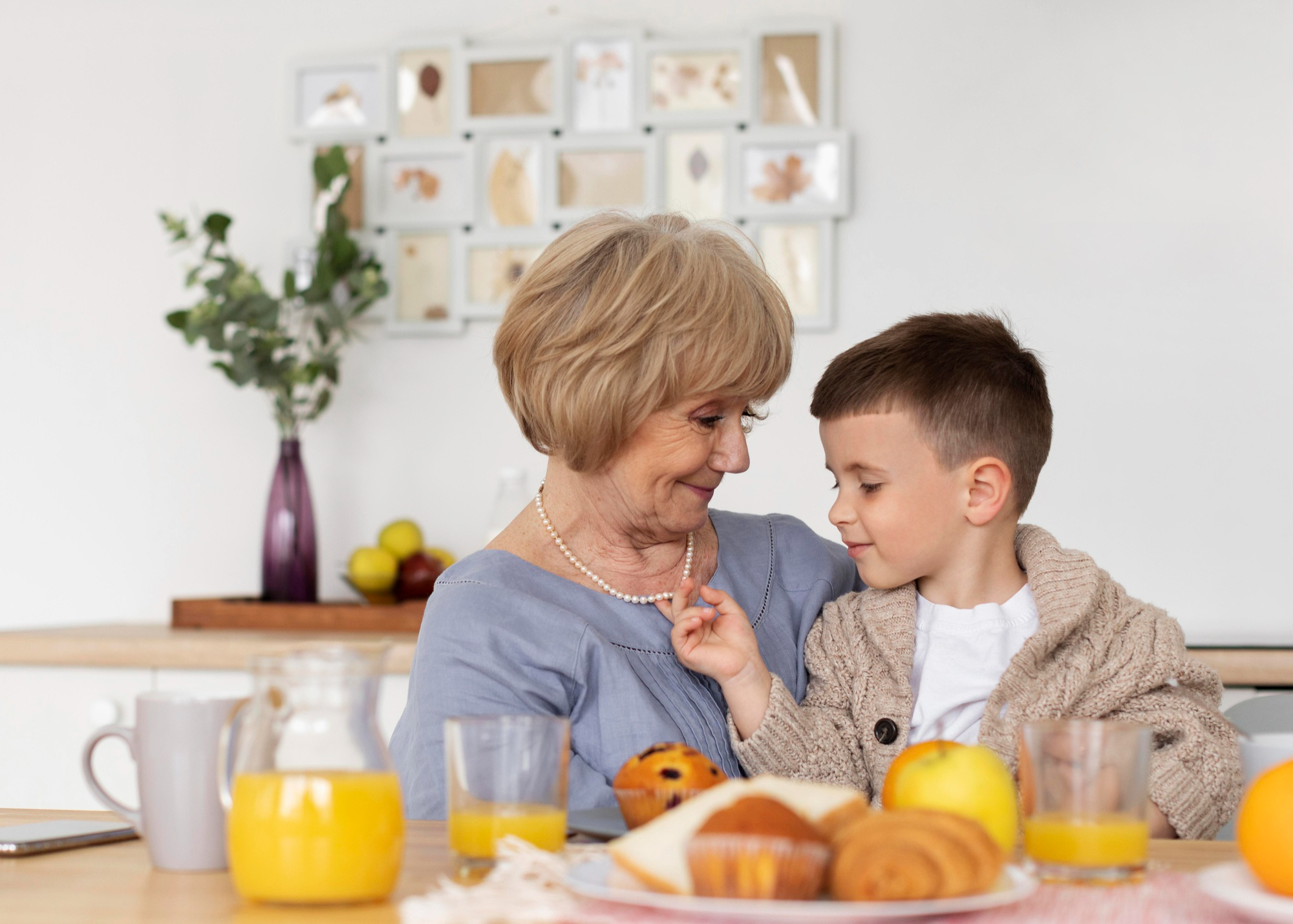
They looked happy when they dropped him off. That was the part I would come back to again and again in the weeks that followed, the way exhaustion and joy had settled on them in equal measure, making them look both older and younger than they were. Daniel stood by my front door tugging on his jacket while Megan shifted the diaper bag higher on her shoulder, and the whole bag smelled faintly of formula and baby powder and that warm, sweet milk scent that clings to newborn blankets and never quite washes out of your clothes. Noah slept against Megan’s chest with his little face flushed from the heat of her sweater, his mouth opening and closing in some slow, dreaming rhythm, as though he were practicing for a feeding that had not yet arrived.
They had only been parents for two months. Exhaustion had taken up residence in the ordinary places: under their eyes, in the loose slope of their shoulders, in the way they reached for coffee cups they had already forgotten were cold. But they looked happy. Tired, yes. Frayed around the edges, absolutely. But happy in that dazed, almost sacred way new parents look when a tiny life has rearranged the furniture, the sleep, the marriage, and the meaning of every room in the house.
Mom, could you watch Noah for an hour or two? Daniel asked. We just need to run to the mall. Megan has to pick up a few things.
Of course, I said. Go. I have got my grandson.
Megan kissed Noah’s forehead, pressing her lips there for a beat longer than necessary, the way mothers do when they are leaving even briefly, even when the person they are leaving their child with is the same woman who raised their husband from infancy. Then she placed him carefully in my arms. He was so light it frightened me for a second. Not because anything was wrong. Because I had forgotten. You forget, after decades, how little they weigh at the beginning. How the whole of a person can rest in the bend of one arm and still leave room. I remember the damp heat at the back of his tiny neck. I remember the soft scrape of his sleeper against my wrist. I remember thinking, the way I always did when I held him, that babies carry peace into a room even when the adults around them have forgotten how to keep it.
The front door clicked shut behind them.
Noah started crying.
At first it sounded like ordinary newborn fussing, the thin, restless cry of a baby who wanted warmth or milk or motion, something simple and fixable. I sat in the old chair by the window and rocked him slowly, humming the same lullaby I used to hum to Daniel when he was small enough to fit in the bend of my arm, a tune I could never remember the proper words to but whose melody had lived in my chest for thirty years. The house was quiet around us. The morning light came through the curtains in soft bars that fell across the rug, and for a moment it was peaceful, just a grandmother rocking a baby in a chair while the clock ticked and the world outside went about its business.
I checked the bottle Megan had packed. I warmed it carefully, the way I had done hundreds of times in my life, tested the temperature against the inside of my wrist, and brought the nipple to Noah’s mouth. He turned his head away. His lips pressed shut. He refused it with a force that surprised me, his tiny jaw clenched, his face screwing up as though the bottle itself were the source of whatever was wrong.
Then the cry changed.
It sharpened. It climbed. It tore through my quiet living room until even the clock on the wall felt too loud, until the hum of the refrigerator in the next room became an intrusion. His face flushed a deeper red, almost purple at the edges, and his fists tucked tight against his chest, and between sobs he dragged in those broken little breaths that make every adult in the room stop pretending things are fine. You know those breaths. Every parent knows them. They come in jagged, too fast, too shallow, and they carry a sound that is less like crying and more like a small body trying to communicate something it does not have the language for.
I had raised children. I had watched nieces, nephews, neighbors’ babies, and church babies. I had held infants through colic and teething and fevers and the restless fury of a wet diaper at three in the morning. I knew what hungry crying sounded like. I knew what tired crying sounded like. I knew the difference between protest and pain.
This was not protest.
This was pain.
I walked him from the living room to the kitchen and back again, keeping my steps steady, keeping my voice low, whispering the things grandmothers whisper when they are trying to hold the world together for someone too small to understand. Easy, sweetheart. Tell Grandma what hurts. You are all right. I am here. But he was not all right, and we both knew it, even if only one of us could say so. The untouched bottle sat on the counter. The blue blanket slid down my wrist and dragged on the floor. Noah arched so hard in my arms that my hand locked around him on instinct, that involuntary tightening you feel when a child throws himself backward and your body reacts before your brain can form the thought.
For one cold second I pictured calling Daniel. My thumb hovered over his name on my phone. But then Noah’s body went rigid again, and the older instinct stepped forward. The one that motherhood gives you long before language ever does. The one that does not reason or deliberate. The one that simply says: check him.
I laid him on the changing table in the hallway and unzipped his little sleeper. Snap. Zipper. Fold the cloth back. Lift the knees. I had done this motion so many times in my life that my hands knew where to go before my mind did, moving on memory and muscle, peeling back layers with the efficiency of someone who has changed ten thousand diapers and expects nothing more alarming than a mess that needs cleaning.
Then I lifted the fabric above the diaper line.
I froze.
Just above the waistband, low on his little abdomen, was a dark, swollen mark. Not a rash. Not a birthmark. Not some harmless red crease from a diaper tab pressed too tight against soft skin. A bruise. Thick. Purple. Ugly. And shaped, unmistakably, undeniably, in a pattern that made my blood go cold.
Fingerprints.
For a moment the room narrowed until there was only that mark, Noah’s trembling belly, and my own hands turning cold around the edges of the changing pad. The diaper tabs slipped between my fingers. My mouth went dry. I could hear the house around me too clearly, the clock ticking, the refrigerator buzzing, the bottle rolling once against the kitchen counter and stopping. Everything was too sharp and too still, the way the world gets in the seconds after you understand something you cannot take back.
Someone had hurt him.
I stood there for what felt like a very long time but was probably only a few seconds. My mind was doing what minds do in crisis, running through explanations, searching for the innocent one, the harmless answer, the version of events that would let me put his sleeper back on and call Daniel and say it was nothing. But there was no innocent explanation for fingerprint bruises on a two month old baby. Babies that age do not roll. They do not climb. They do not fall off things. They lie where you put them and they trust whoever is holding them because they have no choice.
I took one picture with my phone at 10:23 in the morning. My hands were shaking so badly the first attempt came out blurred, and I had to steady myself against the edge of the table and try again. I took the picture because some truths need witnesses before frightened people start explaining them away. Then I wrapped Noah in the soft blue blanket from the diaper bag, tucked the hospital intake card I kept in my wallet under my thumb, and picked up my keys.
I did not call Daniel.
I did not call Megan.
I did not stand in my hallway hoping for a harmless answer or talking myself into waiting.
By 10:26 I was backing out of my driveway with Noah strapped into the car seat behind me, crying so hard his voice kept catching, each sob breaking off into silence before the next one came. The bottle was still on my kitchen counter. The diaper bag sat open on the passenger seat with a burp cloth and a pacifier spilling out of the top. My knuckles were white on the steering wheel, and I drove toward County General Hospital with the kind of prayer that does not sound peaceful at all. It was not a prayer of faith or surrender. It was a prayer of velocity. A prayer that said, let me be wrong, let me be wrong, let me be wrong, while every part of me knew that I was not.
There are moments when love stops sounding gentle. When it becomes a locked jaw and a white knuckled wheel and a refusal to wait for permission from the people who may already be lying. Love in those moments does not feel warm. It feels like iron. It feels like something forged under pressure and heat that will not bend no matter how hard someone tries to reshape it into something more convenient.
I carried Noah through the sliding glass doors of the emergency entrance. His tiny body was hot and shaking against my chest, his face buried in the collar of my sweater, his cries reduced now to those exhausted, broken little whimpers that are somehow worse than screaming because they sound like a child who has given up trying to be heard. The waiting room smelled like antiseptic and burnt coffee and rainwater tracked in from the parking lot. A receptionist looked up from her keyboard. A young father near the vending machine stopped bouncing his toddler and turned. The triage nurse came around the desk, pulled back the blanket, saw my face first, then looked down and saw the bruise.
Her pen stopped above the intake form.
The receptionist stopped typing.
Nobody moved.
Then the triage nurse looked at me, lowered her voice, and asked who had brought the baby in.
For one second I could not answer. My throat had closed around the words, sealed shut by something that was not quite fear and not quite grief but something between the two, something that tasted like the moment before a diagnosis. Noah’s cries had softened into those wet, trembling sounds that babies make when they have exhausted themselves and their bodies are still shaking from the effort. His tiny fingers clutched at the edge of my sweater. His face was still wet with tears. And the bruise sat there beneath the bright hospital lights, dark and undeniable, a secret that had been dragged into daylight before anyone was ready for it.
I did, I finally said. I am his grandmother.
Her eyes moved from Noah to me. Where are his parents?
They went shopping. They left him with me less than an hour ago.
And you noticed this when?
Ten minutes after they left. Maybe fifteen. He would not stop crying. I checked him.
She nodded once, but her face had changed. Not cold. Professional. That was almost worse, because professional meant she had seen this before, and seeing it before meant it was real, and real meant I was not overreacting, and not overreacting meant my grandson had been hurt by someone who was supposed to protect him.
I need you to come with me, she said.
She did not send us back to the waiting room. She did not tell me to sit down and wait my turn. She opened the door beside the desk and guided me into a small examination room with pale blue walls, a paper covered table, and a hard plastic chair in the corner that looked like it had been sat in by a thousand frightened people before me. A doctor came in less than three minutes later. Then another nurse. Then a woman in a gray blazer who introduced herself as a hospital social worker.
That was the moment my legs nearly gave out. Because you can tell yourself you are overreacting right up until the point when professionals start entering the room quietly, one by one, with careful faces and clipboards and a gentleness that is not casual but procedural, the kind of gentleness that exists because someone wrote a protocol for exactly this situation.
The doctor examined Noah carefully. He was young, maybe thirty five, with steady hands and a voice that belonged to someone who had learned how to be calm in rooms where calmness was the only useful thing. He spoke gently to Noah the entire time, even though Noah was too young to understand a word.
Hi, little man. I know. I know. We are just checking. You are safe.
Safe. The word hit me so hard I had to grip the armrest of the chair. I had not said it out loud yet, the reason I had come, the fear underneath everything. But that was exactly it. Not because I wanted to accuse anyone. Not because I wanted to destroy my son’s life or tear apart his marriage or drag my family into a system I had only ever seen from the outside. I came because a two month old baby cannot explain pain. He cannot point to danger. He cannot say who held him too hard or when it happened or what the hands felt like that left marks on his skin. All he could do was cry. So I listened. And then I drove.
The doctor looked at me after the exam and asked if I had taken a photo before coming to the hospital. I told him yes. He said please do not delete it. I told him I would not. He asked if I had noticed any fall or incident while Noah was with me. I told him no, nothing, he was crying from the moment they left. His expression did not change, but the room seemed to grow colder, the way a room does when the people inside it stop hoping for the easy answer and begin preparing for the hard one.
The social worker stepped closer. Mrs. Harper, we are going to need to make a report.
I closed my eyes. I had known it was coming. I had known it from the moment I saw the bruise. Still, hearing it spoken aloud felt like a door locking behind me, the sound of something that could not be undone.
A report, I repeated.
Yes.
To child services?
And law enforcement, she said carefully. That does not mean anyone has been found guilty. It means the injury needs to be investigated.
I looked down at Noah. His eyes had finally closed. His little mouth trembled in his sleep, still recovering from the crying, still twitching with the aftershocks of whatever pain had been running through his tiny body. His blanket had fallen loose around his feet, and one tiny sock was half off. I reached down and pulled it back on, smoothing the fabric over his toes, because that was something I could fix and I needed to fix something.
I understand, I said.
My phone rang a few minutes later. Daniel’s name on the screen. I stared at it until the letters blurred. The social worker noticed and told me I did not have to answer right now. But I did. Because I needed to hear his voice before anyone told him what I had found. I needed to listen for the thing I was afraid of, the thing I did not yet have a name for but could feel pressing against the walls of my chest like water rising in a room with no windows.
I stepped into the hallway and answered.
Mom? Daniel said immediately. Where are you? We just got back to your place. Your car is gone.
I am at County General.
Silence. Then Megan’s voice in the background, sharp and sudden. What? Why?
Daniel came back on the line. The hospital? What happened?
Noah would not stop crying.
Babies cry, Mom.
There is a bruise, Daniel.
Another silence. Not confusion. Not the sharp intake of breath you would expect from a father hearing that his infant son might be injured. A pause. A measured, careful pause that lasted a beat too long, the way a pause sounds when someone is not searching for a response but selecting one.
My fingers tightened around the phone.
What kind of bruise? he asked.
A hand shaped one.
This time I heard Megan clearly. Oh my God. But the way she said it made something twist inside me. Not like a mother discovering her baby might be hurt. Like someone realizing a locked drawer had been opened.
Daniel lowered his voice. Mom, listen to me. Babies bruise. You know that. Maybe you held him wrong.
The hallway tilted beneath me. Every fluorescent light seemed to hum louder. I put one hand against the wall.
What did you just say?
I am not blaming you, he rushed on. I am just saying maybe you panicked. He is tiny. Things happen.
Things happen. Those two words landed in me like ice water dropped into something warm, killing the temperature instantly.
Daniel, I said slowly, I had him for less than twenty minutes.
Then why did you not call us?
Because he needed a doctor.
He needed his parents.
No, I said, and my voice came out stronger than I expected, steadier, harder, shaped by something that had calcified inside me in the time between seeing the bruise and hearing my son try to explain it away before he had even seen it. He needed protection.
The line went quiet.
Then Megan took the phone. Her voice was shaking, but underneath the tremor was something else. Not fear for her child. Anger. How dare you take my baby to the hospital without asking me?
I looked through the glass window into the exam room. Noah was asleep under a hospital blanket now, small as a loaf of bread, his monitor blinking green in the dim light. A nurse was writing something on a clipboard beside him.
How dare I? I repeated.
Yes, she snapped. You had no right.
That was when I knew. Not everything. Not yet. Not the full shape of what had happened in my son’s house that morning. But enough. Because a mother whose baby has been found bruised does not start with rights. She does not lead with anger at the person who brought her child to safety. She starts with one question, the only question that matters, and that question is: is he okay?
Megan had not asked that once.
Come to the hospital, I said. They are waiting for you.
Then I hung up.
They arrived eighteen minutes later. I know because I watched the clock above the nurses’ station the way you watch a clock in the worst hours of your life, each minute stretching out, each tick landing like a small, deliberate blow. Daniel came in first, pale and stiff, his eyes darting from the nurses’ station to the exam room doors. Megan was right behind him, clutching her handbag so hard her knuckles were white. Her hair was still curled from the mall. Her lipstick was still perfect. She looked put together in a way that made the whole situation feel uglier, like someone who had dressed for a life that no longer existed and had not yet realized it.
Where is he? she demanded.
A nurse stepped in front of the door. The doctor is with him.
I am his mother.
I understand.
Then move.
The nurse did not move.
That was when Daniel saw me standing at the end of the hallway with my arms folded and Frank’s old sweater pulled tight across my chest.
Mom, he said, walking toward me fast. You need to tell them this is a misunderstanding.
I stared at him. Not what happened. Not is my son okay. Not who could have done this. A misunderstanding. As though the bruise on his infant son’s body were a clerical error that the right combination of words could correct.
Do you know something I do not? I asked.
His face tightened. No. I am saying you are making this bigger than it is.
Megan spun toward me. You have always thought I was not good enough for Daniel.
I almost laughed. Not because anything was funny. Because the accusation was so practiced, so rehearsed, so perfectly timed that it sounded like it had been waiting in her mouth for years, packed and ready, a weapon she had been saving for exactly this kind of confrontation.
This is not about you, I said.
It clearly is, she said. You took one look at a mark and decided I hurt my child.
I decided he needed help.
Daniel stepped between us. Everyone needs to calm down.
A door opened behind him. The doctor came out with the social worker beside him.
Mr. and Mrs. Harper?
Daniel nodded.
I am Dr. Patel. Noah is stable. He is resting now.
Megan’s eyes flicked toward the door. Can we take him home?
The doctor paused. It was a very specific kind of pause. The kind that comes before a word that will rearrange everything.
No.
Megan blinked. What do you mean, no?
There are injuries that require further evaluation. We are also waiting for the appropriate authorities to arrive.
Daniel’s shoulders dropped. Not all at once. Slowly, the way a structure drops when the thing holding it up is quietly removed. Megan’s face changed completely. The anger disappeared, and something raw flashed through before she could cover it. Fear. But not the fear of a mother afraid for her child. The fear of someone who has been carrying a secret and has just felt the ground shift beneath the place where it was buried.
A police officer arrived first. Then a child protective services investigator. They separated us. I was taken to a small consultation room and asked the same questions again and again. When did Daniel and Megan arrive at my house? What was Noah wearing? When did he begin crying? Did I feed him? Did I change him? Did anyone else enter the house? Did I notice anything unusual about Daniel or Megan when they dropped him off? I answered everything as clearly as I could, my voice steady even when my hands were not. No, no one else came. Yes, he was crying from the beginning. Yes, I noticed the bruise after removing his sleeper. Yes, I took a photo. Yes, Daniel suggested on the phone that maybe I had held him wrong.
The officer stopped writing at that.
He said that?
Yes.
Before seeing the baby?
Yes.
The officer’s pen moved again.
When they let me back into the hallway, Daniel was standing alone by the vending machines with his hands in his hair, elbows out, head bowed, the posture of a man who is beginning to understand that the story he has been telling himself is not the story that the rest of the world is going to accept. Megan was nowhere in sight.
Where is she? I asked.
He looked up. For the first time that day, my son looked less like a defensive husband and more like a terrified father. His eyes were red. His mouth was tight. He looked like a man standing at the edge of something he could not step back from.
They are talking to her.
Good.
He flinched. Mom.
No, I said. Do not Mom me right now.
His eyes filled. I did not know.
Those three words made my breath stop. Not because I believed them entirely. But because there is more than one kind of confession. There is the confession of guilt, and then there is the confession of cowardice, which is sometimes worse because it means the person saw something and chose not to look.
What did you not know, Daniel?
He looked toward the closed door where Megan had been taken.
I knew she was tired, he whispered. I knew she got frustrated. I knew she did not like when he cried. But I did not think…
He could not finish.
I stepped closer. You did not think what?
He swallowed hard. His throat moved like there was something caught in it that would not go up or down.
I did not think she would hurt him.
The hallway went silent around us. Or maybe I stopped hearing anything else. Maybe the sounds were still there, the beeping monitors, the distant elevator, the muffled voice on the intercom, and my body simply decided there was only room for one thing, and that thing was the sound of my son admitting that he had suspected something and chosen to look away.
What happened before you brought him to me? I asked.
Daniel pressed both hands over his face.
He would not stop crying this morning. Megan had not slept. I was in the shower. I heard her yelling. Then it got quiet.
My stomach turned. The hallway lights felt too bright. The tile floor beneath my feet felt unsteady, like something liquid pretending to be solid.
When I came out, she was holding him. She said he finally settled. Then she said we should go out, just for an hour. Just to feel normal.
He looked at me, and the shame in his eyes was almost unbearable. Not the theatrical shame of a man performing remorse. Something deeper. The shame of a man who had heard a warning bell in his own chest and covered his ears.
I saw the way he was curled up, he whispered. I saw he was breathing funny. I asked if he was okay. She said I was being dramatic.
And you believed her?
His face crumpled. I wanted to.
That sentence told me everything about my son’s mistake. He had not chosen cruelty. Not at first. He had chosen comfort. He had chosen the easier explanation. He had chosen his marriage over the small alarm sounding in his rib cage. He had looked at his wife holding his silent baby and decided that silence meant peace, because peace was what he needed it to mean. And a baby had paid for it.
Before I could answer, the door opened. Megan came out with the officer behind her. Her face was red now, blotchy in the way faces get when crying has been fought and lost. Her mascara had smudged beneath one eye. She looked smaller than she had twenty minutes earlier, as though the room she had been in had taken something out of her and not given it back.
This is ridiculous, she said. I need my baby.
The officer’s voice stayed calm. Mrs. Harper, we are still gathering information.
I already told you. I did not do anything.
Daniel looked at her. Megan.
She turned on him with a speed that startled even the officer. Do not dare.
His voice shook. What happened this morning?
I told you.
What happened?
I said he was crying.
The hallway went still. Every sound pulled back, the way sound does in the moment before something breaks.
Megan’s chest rose and fell quickly. I was tired, she said, and her voice cracked along the center of the word tired, splitting it open. I had not slept in days. He would not stop. Nothing worked. I picked him up, and he kept screaming, and I just…
She stopped.
The officer took one step closer. You just what?
Megan looked at Daniel. For one moment, something passed between them that was not language but was louder than anything either of them had said. It was the moment when a lie runs out of oxygen and the truth fills the space it leaves behind.
Then she looked away.
I held him too tight, she whispered.
Daniel staggered back as if the words had shoved him physically. No.
I did not mean to hurt him.
No.
He would not stop crying.
He is a baby, I said.
My voice came out low, barely above speaking, but everyone in that hallway heard it. Every nurse at the station. Every officer. Every person standing within the acoustic reach of a grandmother who had spent the last three hours carrying the weight of something no grandmother should ever have to carry.
Megan looked at me with tears running down her face. I know.
No, I said. You do not. Because if you knew that, you would have put him down and walked away. You would have called someone. You would have asked for help before your hands became the danger.
She covered her mouth and sobbed. The sound was raw and ugly and full of something I recognized but could not quite name, something between remorse and disbelief, the sound a person makes when they meet the version of themselves they swore they would never become.
I wanted to feel sorry for her. Some part of me did. A small part. A human part. The part of me that remembers what sleep deprivation feels like, what new motherhood does to a woman’s mind, how the walls of a nursery can close in at three in the morning until the crying sounds less like a baby and more like a siren you cannot turn off. I understood that part. But understanding is not the same as forgiving. And then I pictured Noah’s tiny body stiff with pain on my changing table, his face twisted, his fists balled, the bruise sitting on his soft skin like a handprint left on wet clay, and whatever sympathy I had went quiet and sat down.
The investigation moved quickly after that. Noah stayed in the hospital overnight. More tests were done, more questions asked, more paperwork filed. Daniel called me twice from the hallway, crying so hard I could barely understand him. Megan was not allowed near Noah without supervision. By evening, Daniel was sitting beside me in the pediatric wing, staring through the glass at his son sleeping under the soft glow of a monitor.
I failed him, he said.
I did not comfort him. That may sound cruel. But there are moments when comfort becomes permission, when the arm around the shoulder and the it is okay and the you did your best becomes a bridge back to the same pattern, and I was not going to build that bridge.
Yes, I said. You did.
He closed his eyes. I should have known.
You did know something was wrong.
A tear fell onto his jeans, darkening the denim in a small circle.
You just did not want to pay the price of knowing.
He nodded.
The doctor came in later and told us Noah was going to be okay. Not fine immediately. Not untouched. But okay. The injury was serious enough to matter, but not fatal. There would be follow up appointments, monitoring, a plan. The doctor used the word lucky, and I hated it. No baby should need luck to survive the people holding him.
Two days later there was an emergency hearing. I sat in the back row of a small courtroom wearing the same gray sweater I had worn to the hospital, and when the judge said that Noah would be placed temporarily with me, Daniel broke down. Megan did not look at me. She stared at the table in front of her, pale and hollow eyed, while her attorney whispered beside her. She was ordered into counseling, parenting evaluations, and supervised contact only. There would be charges. There would be consequences. There would be no quick apology that made the bruise disappear.
Daniel was allowed supervised visits. He accepted it without argument. That was the first decent thing he did after everything fell apart.
When I brought Noah home, my house felt different. The same living room. The same chair by the window. The same clock on the wall. But now every sound mattered. Every sigh. Every stretch. Every small hungry cry from the bassinet beside my bed. At sixty three years old, I became the kind of tired I had not been in decades. Bottles at midnight. Laundry at two in the morning. Pediatric appointments. Social worker visits. A notebook full of feeding times, diaper changes, medications, and follow ups, a logbook for a life I had not planned to be managing but could not imagine handing to anyone else.
Some days I was so exhausted I cried while warming formula, tears falling into the sink while the bottle turned slowly under the faucet. Then Noah would blink up at me with those wide blue gray eyes, and I would remember the moment I lifted his clothes and saw what someone had tried to hide, and I would dry my face on my sleeve and keep going. Because that is what you do. Not because you are strong. Because the baby in the next room needs you to be, and you do not get to fall apart until he is safe enough for it not to matter.
Daniel came every Wednesday afternoon. At first I sat in the room during the visits, watching him hold his son with a carefulness that bordered on fear, his hands barely pressing, his arms wide and loose, the posture of a man who was afraid of his own grip. He whispered apologies Noah could not understand yet. He brought diapers, formula, tiny socks, and once a stuffed elephant he had bought at the hospital gift shop because he said Noah had been staring at it through the glass.
Do you think he knows me? Daniel asked one afternoon. He was sitting on the edge of my sofa with Noah on his lap, the baby’s head resting against Daniel’s forearm, his eyes moving slowly across his father’s face.
He knows your voice, I said.
His eyes filled. Is that good or bad?
That depends on what your voice becomes from now on.
He nodded. He did not ask me to say more, and I did not offer it. There are questions a person needs to sit with rather than have answered for them, and that was one.
Megan came once in the first three months. Only once. A social worker brought her. She looked thinner, quieter, stripped of the sharpness I had known. When she saw Noah in my arms she covered her mouth and cried so hard the visit had to pause before it started. The social worker stood by the door with a clipboard and a face that had seen this before.
I am getting help, Megan said to me.
I looked at her. I hope you are.
I never wanted to be this person.
No one cares who you wanted to be, I said. Only who Noah was safe with.
She bowed her head. I know.
But I did not know if she did. Not yet. Maybe someday she would. Maybe not. That was no longer the center of my concern. Noah was.
Weeks became months. The bruise faded. The photo stayed. Not because I wanted to look at it. I hated that picture. I hated that I had needed to take it. I hated that it existed in the same phone as photos of Noah smiling in a duck printed onesie. But I kept it because the truth should never be easier to erase than the wound it documented.
By the time Noah was eight months old, he had learned to laugh with his whole body. He liked ceiling fans and warm bath towels and the ridiculous song I made up about peas, a song with no melody and no logic that consisted mostly of me saying the word peas in different voices while he shrieked with delight. He hated carrots with a passion that felt personal, turning his face away with such theatrical disgust that I once laughed so hard I had to set the spoon down. He slept best when rain tapped against the window. And sometimes, when I rocked him in the evening, he would reach up and pat my chin with one soft hand, his fingers spread wide, his eyes locked on mine with that ancient, knowing look that babies sometimes have, as though they remember something the rest of us have forgotten.
The first time he did it, I cried. Daniel saw. He was sitting across the room during a supervised visit, his hands folded in his lap, his eyes red from something he had been carrying before he walked through my door. He did not say anything for a moment. Then he said, I am sorry, Mom.
You have said that before.
I know.
This time for what?
He looked at Noah. For making you the only adult in the room.
That answer was different. It was not an apology for a specific act. It was an acknowledgment of a pattern. It was a man saying, I see that you carried everything because no one else was willing to, and I see that the weight of it was not yours to carry. I let the silence hold it.
A year passed before the court made its long term decision. Daniel had completed parenting classes. He had continued therapy. He had moved out, filed for divorce, and taken every supervised hour he was allowed without missing a single one. His visits had slowly expanded from weekly to twice weekly, from supervised to monitored, from monitored to unsupervised with check ins.
Megan’s progress was slower. There were setbacks. Denial. Anger. Shame that hardened into resentment before softening again into something more honest. She loved Noah. I believe that now. But love without safety is not enough. It never has been. The court agreed.
Daniel was granted primary custody under strict monitoring. I was named a legal guardian support with regular overnight care and emergency authority. Megan’s visits remained supervised.
The day Daniel took Noah home for his first overnight, I packed the diaper bag three times. Then I unpacked it and packed it again. Then I stood in the hallway holding the bag and staring at the door as though letting them leave would undo everything I had spent a year protecting.
Mom, Daniel said gently, I have the list.
I know.
And the backup list.
I know.
And the emergency numbers.
I know.
He smiled, sadly and honestly. I deserve this, he said, meaning my worry, meaning my reluctance, meaning the fact that I could not hand his son over without my chest tightening.
Yes, I said.
Then I handed him the bag.
Noah was on his hip, babbling at the zipper like it had personally offended him. Daniel looked down at his son, then back at me.
I will not fail him again.
I wanted to believe him. But I had learned over the course of that year that belief was not a feeling. It was a record. A pattern. A set of choices repeated long enough to become trustworthy.
So I said, Then do not tell me. Show him.
He nodded.
And over time, he did. Not perfectly. No one parents perfectly. But he learned to put Noah down when he was overwhelmed. He learned to call me before pride could turn into danger. He learned that asking for help was not weakness but protection, and that the bravest thing a parent can do is admit when they are too tired, too angry, or too lost to be safe alone with their child.
Megan learned too, though her road was longer and harder and marked with detours I could not follow. Years later she would tell me that the worst day of her life was not the day she was charged, or the day Daniel left, or the day the judge limited her contact. It was the day I realized Noah had cried because of me, she said. Not crying for me. Because of me.
I did not forgive her easily. I am not sure forgiveness is even the right word for what eventually grew between us. It was not warmth. It was not trust. It was something closer to recognition, the acknowledgment that a person who has done a terrible thing can still become someone different, and that becoming different does not erase what they did but can, slowly, begin to mean something alongside it.
I stopped wishing pain on her once I saw that she had finally stopped running from the truth. That was not forgiveness. That was just the end of anger. And sometimes that is enough.
Noah grew. Two months became two years. Then five. He became a bright, stubborn little boy with Daniel’s crooked smile and Megan’s serious eyes. He loved dinosaurs and pancakes and asking questions from the back seat that made grown adults question the quality of their education. He collected rocks with the seriousness of a museum curator. He insisted on wearing mismatched socks. He talked to ants.
One afternoon, when he was five, we were planting tomatoes in my garden. His hands were covered in dirt and his knees were brown and he was talking to me about earthworms with the authority of someone who had been studying them for decades rather than discovering them ten minutes earlier.
Grandma, he said, pressing a small green stem into the hole I had dug, why do you always say babies tell the truth?
I smoothed the soil around the plant and looked at him. Because before people know how to use words, they still know when something hurts.
He thought about that, his forehead wrinkling in the same way Daniel’s did when he was working something out.
Did I tell the truth when I was a baby?
My hands stopped. The garden went quiet. Behind us, Daniel was standing near the porch. I heard his footstep pause on the wooden step.
Noah did not know the whole story. Not yet. He knew only that when he was very small, Grandma had taken him to the hospital and helped keep him safe. The rest would come later, carefully, in pieces, when he was old enough to carry it without being crushed by it.
So I smiled at him and touched his cheek, leaving a faint streak of garden dirt along his jaw.
Yes, sweetheart, I said. You did.
He grinned. Was I loud?
Daniel let out a broken little laugh behind us. I heard it catch in his throat before it became something lighter.
I laughed too.
Yes, I said. Very loud.
Good, Noah said, with the satisfied certainty of a child who has just confirmed something he already suspected about himself. Loud is important.
I looked at Daniel then. He was standing on the bottom step of the porch with his arms folded and his eyes shining. He looked at his son and then at me, and for a moment the three of us held still in the afternoon light, connected by something that had been broken and repaired and was still being repaired, something that would always carry the mark of what had happened but was stronger now in the places where it had been mended.
Yes, Daniel said quietly. It is.
That evening, after Daniel took Noah home, I sat alone in the same chair by the window where the story had started. The house was quiet again, but not in the same way. The silence no longer felt like fear hiding behind walls. It felt earned. Peaceful. It felt like the kind of silence that comes after a long storm passes and the air clears and the world is still wet but somehow cleaner than it was before.
On the small table beside me was a framed photo from Noah’s fifth birthday. His face was covered in frosting. Daniel was laughing behind him, his hands on Noah’s shoulders. Megan stood a little apart, present but careful, smiling with the humility of someone who understood she had not been handed a second chance cheaply. And I was there too, just visible at the edge of the frame, holding Noah’s small hand while he leaned toward the candles.
People sometimes ask me how I knew something was wrong that day. They ask it as though intuition were a superpower, as though I had some special gift that told me to check, some sixth sense that ordinary people do not have. I tell them the truth. I did not know everything. I did not know who had done it. I did not know what would happen to my family. I did not know whether my son would rise or collapse under the weight of what he had ignored. All I knew was that a baby cried in a way that made every part of me listen, and that I had spent enough years on this earth to know the difference between a baby who wants something and a baby who is in pain.
And thank God I listened.
Because love is not always soft. Sometimes love is a grandmother taking a picture with shaking hands. Sometimes it is driving faster than fear. Sometimes it is telling the truth even when the truth walks straight through your family and breaks it open. And sometimes, years later, love is a little boy in a tomato garden, laughing as he tells you loud is important, with dirt on his knees and sunlight in his hair and no memory of the day his voice was the only thing that saved him.
He was right. Loud is important. So is listening. And on the morning my grandson could not speak for himself, when his cries were the only language he had and his body carried a truth that no one else was willing to see, I listened. Not because I am brave. Not because I am wise. Because I am his grandmother, and grandmothers do not look away.
That is why he got to grow up. That is why the truth survived. And that is why, every time Noah runs into my arms now, healthy and laughing and loud enough to fill the whole house, I hold him a moment longer than I need to, and I remember the smallest, darkest mark I have ever seen on a child’s skin, and I thank God I did not look away.

Ethan Blake is a skilled Creative Content Specialist with a talent for crafting engaging and thought-provoking narratives. With a strong background in storytelling and digital content creation, Ethan brings a unique perspective to his role at TheArchivists, where he curates and produces captivating content for a global audience.
Ethan holds a degree in Communications from Zurich University, where he developed his expertise in storytelling, media strategy, and audience engagement. Known for his ability to blend creativity with analytical precision, he excels at creating content that not only entertains but also connects deeply with readers.
At TheArchivists, Ethan specializes in uncovering compelling stories that reflect a wide range of human experiences. His work is celebrated for its authenticity, creativity, and ability to spark meaningful conversations, earning him recognition among peers and readers alike.
Passionate about the art of storytelling, Ethan enjoys exploring themes of culture, history, and personal growth, aiming to inspire and inform with every piece he creates. Dedicated to making a lasting impact, Ethan continues to push boundaries in the ever-evolving world of digital content.