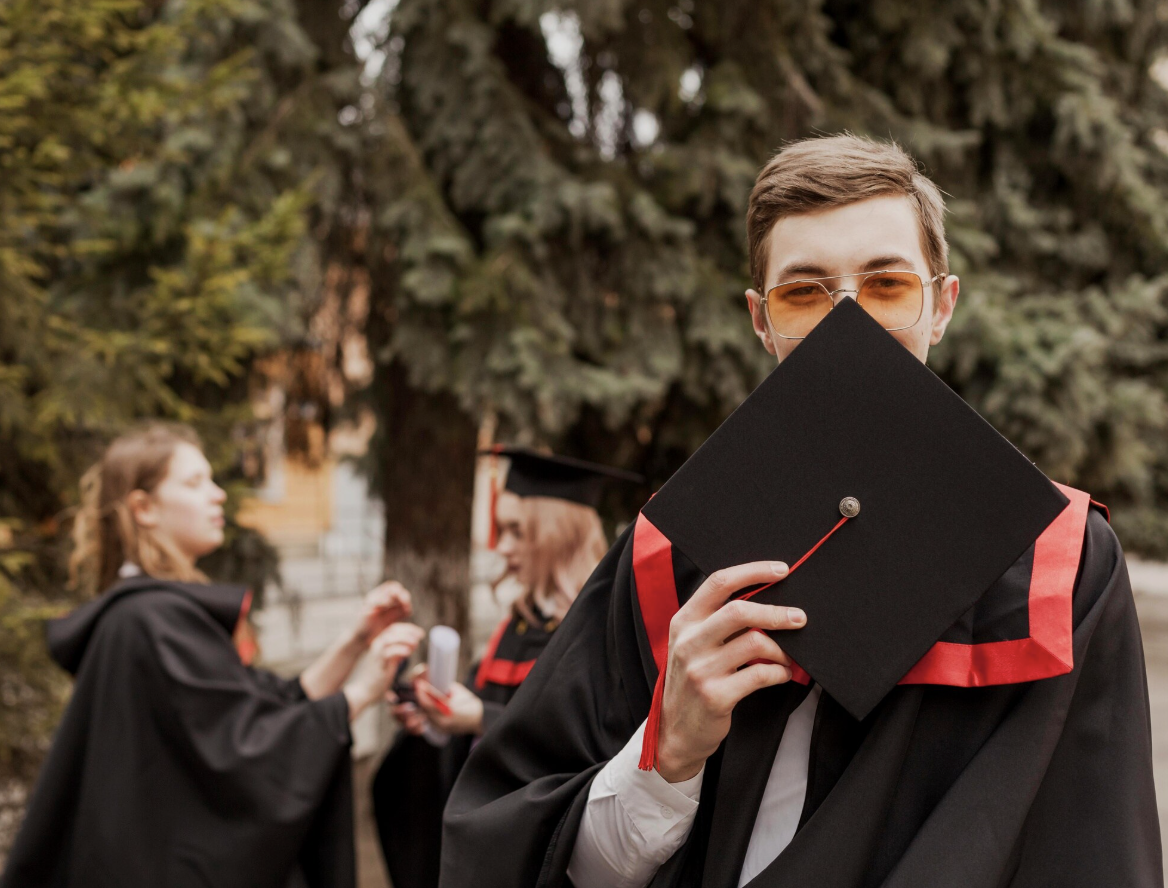
For nineteen years, Myra Summers had signed the same word on every school form.
Guardian.
That was how the pediatrician’s office knew her. That was how the school district knew her. That was the word on every camp waiver and field trip permission slip and allergy sheet and scholarship packet, the word that identified the person who got up at night, packed the lunches, sat in the waiting rooms, drove to the appointments, and returned the calls. Guardian was a small word for a life that size. Myra had never tried to replace it with something larger, and Dylan had never asked her to. The word sat on all the paperwork for nineteen years, and the paperwork was never the point.
When Dylan was six, he had a fever that climbed to one-oh-four over the course of an afternoon. Myra had been checking it every hour, bringing cool cloths, sitting on the edge of his mattress in the dim light while he drifted in and out of the feverish half-sleep that children fall into when their bodies are working hard. Late in the night, with the apartment quiet and the damp washcloth cooling in her hand, she stood to go refill the water glass. Dylan reached for her wrist without fully waking.
“Mom,” he said, still mostly asleep. “Don’t go.”
She stood in the doorway for a long time after that. She did not move. She did not know what to do with the word, where to put it, what it meant that it had arrived like that, in the dark, from a child who had said it before he could think about what he was saying. She went back and sat on the edge of the mattress until his breathing settled, and in the morning neither of them mentioned it. That was how they moved through the painful things. Carefully, and without making them larger than they needed to be.
Dylan was three weeks old when Vanessa left him.
Myra was twenty-two, which sounds young until you understand that twenty-two is old enough to have plans. She had an acceptance letter to a graduate program in social work, a full scholarship, a part-time job lined up, and a studio apartment she had chosen because it was two blocks from the library and had good afternoon light. She had imagined herself the way young people imagine themselves when they are finally about to begin the life they chose rather than the one they were born into: studying late, complaining about exams, becoming competent and independent and free.
Then Vanessa came home from the hospital.
Their older sister came home with a baby, a duffel bag, and a face that communicated less terror than irritation, as though motherhood had turned out to be an administrative inconvenience rather than the beginning of a life. Myra was in the kitchen when Vanessa came through the door. Their mother Rita was crying into a paper towel. Their father Gerald was checking his watch. Vanessa stood in the middle of the living room and said she could not do it, that it was suffocating her, that she needed time, that Myra was better with babies anyway.
Nobody asked Myra whether she wanted to raise a newborn. The conversation moved around her as though she were a piece of furniture that had been designated for a purpose and simply needed to be placed correctly. Rita said family had to step up. Gerald said these things happened. Vanessa set the baby carrier on the couch and went to lie down.
Myra picked him up.
He had a red face and a wrinkled forehead and a faded yellow blanket tucked around him, and he was crying the thin urgent cry of a newborn who has not yet learned to modulate distress. She held him the way she had seen people hold babies, which is to say uncertainly at first and then with increasing specificity as the baby made his preferences known. He stopped crying when his fingers found her thumb.
In that moment, every adult in the room made a decision. They did not call it abandonment. They called it helping Vanessa get back on her feet, which was a phrase that suggested something temporary and forward-moving, a phrase designed to make the arrangement feel like a pause rather than an ending. It was not a pause.
Myra learned motherhood the way people learn emergency procedures: by needing to use them before she had finished learning them. She borrowed a crib from a neighbor. She researched formulas at midnight on a borrowed laptop. She figured out that Dylan hated being put down on his back after feeding and that he needed to be held upright for at least twenty minutes or the colic would return, and so she held him upright for twenty minutes after every feeding, sitting on the kitchen floor with her back against the cabinet because it was the only position that did not hurt after the tenth time.
The colic lasted eleven weeks. She did not sleep more than three hours consecutively during any of those weeks. She did not complain about this because there was no one to complain to who could have changed it. She bought the dollar-store diapers and the cheaper formula and the knockoff sleep sack and she folded the acceptance letter to the graduate program into a drawer because she could not think about it without feeling something she did not have a name for yet.
Years later, she would identify that feeling as grief. At the time, it felt more like a room she was not allowed to enter.
Vanessa sent birthday cards some years. Other years she sent excuses. She came for visits that lasted less than an afternoon and brought toys that were too expensive and age-inappropriate, things for a child who already had everything, which Dylan did not. She posted photographs online with captions describing her beautiful son, taken during the visits, filtered and framed in ways that made the relationship look current and close. Myra did not follow Vanessa on social media because she had learned that some information was useless to have.
The apartment they lived in had thin walls and a bathroom that fogged even in summer and a refrigerator that required periodic defrosting. Myra worked and went to school at night, taking courses when she could afford them and stopping when she could not, moving toward a degree with the patience of someone who has learned to measure progress in small units. She managed the money the way people manage something that is never quite enough, carefully and without waste, wrapping the Christmas presents in newspaper and drawing stars in the margins with a black marker because Dylan was young enough that the presentation still made him happy and old enough that she thought he deserved something that looked like abundance even if it was not.
Dylan grew up with the specific seriousness of children who understand, without being told, that the people who love them are doing something difficult. He helped carry groceries before Myra asked him to. He learned to cook eggs and rice and the three other things that could be made from what was usually in the kitchen. He kept his school things organized with the careful attention of someone who knows that opportunity requires maintenance. When he was twelve, he found the graduate school acceptance letter in the desk drawer where Myra had put it seventeen years earlier, and he sat with it for a long time before putting it back. He never mentioned it to her. She never mentioned it to him. That was their way with the painful things.
At every event, every ceremony, every moment when a child looks out from a stage or a court or a classroom to check whether someone came, Dylan found Myra’s face first. That was their specific language. She had established it early without intending to. She had simply shown up, every time, and eventually the showing up had become a kind of promise that did not need to be spoken. At the kindergarten graduation, she stood in the back because she had come straight from work and her shoes were still damp from a puddle she had walked through in the parking lot. At the winter concert, she arrived with wet hair because the laundromat machine had flooded mid-cycle. She was not always early. She was not always put together. But she was always there, and Dylan always found her, and that was the thing that mattered.
The morning of his graduation, Myra ironed his shirt twice. The first time, the collar would not lie flat. The second time, she was honest with herself: she needed something to do with her hands. Dylan came to the kitchen doorway and watched her for a moment.
“You’re making it nervous,” he said.
“The shirt or my iron?”
“Both.”
He was eighteen, almost nineteen, and tall in the way that had crept up on her, the way children’s height always surprises the people who have been watching them grow because proximity makes the change invisible until it isn’t. He had her father’s forehead and nobody else’s eyes and a laugh that had always seemed to come from somewhere slightly deeper than usual, as if he had learned early that laughter required some conviction behind it to be real.
The valedictorian speech was on the counter in a folder. She knew he had been working on it for weeks. She had watched him at the kitchen table crossing out lines while the lamp flickered. She had not read any of the drafts, because he had said he wanted her to hear it with everyone else, and she had respected that without asking why, which she later understood was a mistake, though not the kind of mistake she could have corrected. He had been planning something much larger than a speech.
Claire, Myra’s closest friend since they had been in the same statistics class twelve years earlier, arrived at nine to drive them to the ceremony. The gym smelled like floor wax and carnations and warm paper programs. Parents fanned themselves. Grandparents held bouquets wrapped in crinkly cellophane. The orchestra was tuning in the corner. Myra sat in the third row wearing the first new dress she had bought herself in three years, a simple navy thing that she had stood in front of in the store for four minutes before deciding she deserved it.
She was trying to be present to the simple fact of the morning: her son had worked harder than most people understood, and he had done it, and in one hour he would stand on a stage and it would be real.
Then the gym doors opened.
Vanessa Summers walked in.
She wore an emerald dress and heels that clicked across the polished gym floor in the way heels click when the wearer intends to be noticed. Her auburn hair fell in careful waves. A silver-haired man in a tailored suit walked beside her with one hand at her lower back: Harrison Whitfield, whose name Myra knew only because Rita had mentioned him in a tone that suggested his money was the most interesting thing about him. Rita and Gerald came behind them.
Rita was carrying a cake.
It was a white grocery-store cake with pink frosting, the kind sold for birthdays and graduations, the kind with writing across the top. Myra read the words before she understood what she was reading.
Congratulations from your real mom.
The orchestra kept tuning. Somebody’s toddler was asking for juice. People around her were laughing at something Myra did not hear. The sound in the room continued as it had been, ordinary and warm, while Myra sat with those words in pink frosting and felt something move through her that was not quite anger and not quite sorrow but was more like the specific cold that comes when you have been carrying something heavy for a very long time and someone has finally told you, in public and in frosting, what they think it is worth.
Real mom.
Not the woman who had held a colicky infant upright for twenty minutes after every feeding at midnight for eleven weeks. Not the woman who had spent four hours once at a window seat in the ER while Dylan’s asthma narrowed his breathing and she counted his respirations and talked to him in the steady voice she had developed for frightening situations. Not the woman who had memorized his allergy card and kept it laminated in her wallet. Not the woman whose name was on every emergency contact form, every school document, every piece of paper that mattered.
Vanessa saw Myra looking and smiled. It was not embarrassed or nervous or apologetic. It was the smile of a woman who had practiced entering rooms and had learned that confidence, deployed consistently enough, creates the impression of belonging even when belonging has not been earned.
She went to Dylan first, at the edge of the staging area where the graduates were gathering. Dylan stood with his classmates in his navy cap and gown, his gold tassel brushing his cheek, and Myra watched Vanessa open her arms and say his name loudly enough for the surrounding families to hear. My baby.
Dylan did not lift his arms.
His eyes moved over Vanessa’s shoulder and found Myra across the room.
Wait.
That was all his face said. The same language they had always used, distilled to its essence. She had come. She was there. Wait.
Vanessa came to Myra’s row next. She stopped at the end and placed one manicured hand on Myra’s shoulder. She spoke in a carrying voice, not lowered for intimacy but raised enough to establish an audience.
She said she wanted to thank Myra so much for taking care of her son all these years. She said Myra had been an incredible babysitter. She said she was here now and she would take it from here.
Babysitter.
The word was precise in the way only a deliberately chosen word is precise. It reduced nineteen years to a paid professional arrangement. It removed love from the equation. It placed Myra on the side of the ledger where people are eventually replaced or dismissed, and it did all of this in front of an audience that had heard it, in the cheerful ringing voice of a woman who understood exactly what she was doing.
Claire’s hand found Myra’s under the program.
Myra wanted to stand up. She had things to say that she had never said, not because she did not know the words, but because she had made a choice early on that Dylan’s story was his to tell and his to carry, and she had not wanted to make herself the protagonist of something that belonged to him. But the cake was in the room. The word babysitter was in the air. And Dylan was watching.
He was still watching.
Wait.
So she waited.
The ceremony started. The principal welcomed everyone. The superintendent talked about the future with the enthusiasm of someone who would not have to live in it. Students crossed the stage one by one, names echoing in the gym’s poor acoustics. Vanessa recorded everything on her phone with the diligence of someone archiving an event they had missed and are now claiming. Every few minutes she leaned toward Harrison and said something with a smile. Rita kept the cake on her lap with the frosting facing outward.
People noticed. A father two rows over glanced at the cake and then at Myra with the particular expression of someone who has understood a situation they wish they had not. A grandmother nearby pressed her program to her chest. Cruelty is not always invisible. Sometimes it is simply dressed nicely enough that people decide not to intervene.
Then Principal Harris returned to the microphone and announced the valedictorian.
Dylan walked across the stage with his diploma folder. He shook the principal’s hand. He adjusted the microphone with the small careful motion of someone who has practiced this. He looked out over the crowd, and he found Myra’s face, and he held it for a moment.
He began with the speech he had written. He made a joke about freshman year and the cafeteria pizza, and the graduates laughed with the relief of people who needed one easy moment before something real. He thanked teachers and coaches and the counselor who had stayed late to help with scholarship applications. Vanessa lifted her phone higher.
Then Dylan stopped.
He looked down at the printed pages.
He folded them.
The gym quieted in the layered way that large rooms go quiet, first the people closest to the stage, then the rows behind them, then the people at the back who were still whispering, until the quiet was complete.
“I wrote nine drafts of this speech,” he said. “But I realized this morning that the most important thing I want to say isn’t on any of these pages.”
Myra’s breath left her body.
“The person I want to thank most today is not a teacher, not a coach, and not a classmate,” Dylan said. “It’s a woman who was twenty-two years old when someone handed her a newborn baby and told her this was her responsibility now.”
Claire began to cry.
Vanessa’s phone wavered.
“She had just been accepted to a master’s program with a full scholarship,” Dylan said. “She gave it up. She moved into a one-bedroom apartment, borrowed a crib, bought dollar-store diapers, and figured out how to be a mother before anyone had given her permission to figure it out.”
Rita’s face changed. Gerald looked at his shoes.
“I had colic,” Dylan said. “I cried for four hours a night. She still held me.”
The gym had gone so quiet that Myra could hear a program rustling three rows back.
“She wrapped my Christmas presents in newspaper because she could not afford wrapping paper. She worked while going to school at night. She was in every seat, at every event, at every moment when a kid looks out from a stage to see if someone came.”
Vanessa lowered her phone.
Dylan did not raise his voice. That was the thing about him, the controlled emotion, the quality she recognized because she had watched it form in him over years, the discipline of a person who has learned that feeling something deeply and expressing it with precision are not the same thing.
“She taught me to read before kindergarten,” he said. “She taught me to iron a shirt and change a tire and write a thank-you note and tell the truth even when your voice wants to shake.”
Then he reached inside his gown.
His hand came back holding a small square of faded yellow fabric.
Myra understood what it was before the rest of the room did.
The blanket. The yellow blanket from the afternoon Vanessa came home from the hospital. The one that had been wrapped around him when she first held him. She had saved it in the fireproof safe because it was the first thing Dylan had owned and the first thing that had connected them, and she had never told him she kept it there.
He unfolded it carefully under the gym lights, and a sound moved through the crowd, not quite a gasp but a collective shifting, the sound of three hundred people understanding something at once.
“This is the blanket I came home in,” he said.
Myra pressed one hand to her mouth.
“Myra kept this in a fireproof safe,” Dylan said. “With my hospital bracelet and my allergy card and every school picture and the first note I ever wrote her that said Mom by mistake.”
That was the moment she understood he had known about the note all along. She had never told him. She had kept it in the safe along with everything else because she had believed, from the beginning, that children deserved the truth about their histories when they were old enough to carry it. She had not planned for him to carry it in front of everyone.
Then Dylan reached into the fold of the blanket and pulled out an envelope she recognized by the handwriting before she knew what she was seeing.
Vanessa’s handwriting.
Rita made a sound. “Dylan, don’t.”
He looked at his grandmother with the controlled anger of someone who has been carrying something for a long time and has chosen this moment, very deliberately, to put it down.
“I found this last week when I was looking for my baby pictures for the senior slideshow,” he said.
He opened the envelope. The paper trembled once in the gym’s air conditioning and then settled. He read the first line into the microphone.
“Myra, I can’t do this. Don’t call me unless it’s an emergency.”
Vanessa closed her eyes.
Harrison turned toward her slowly.
“You’re better at this than I am anyway.”
Nobody in the gym moved.
The cake box sagged under Rita’s hands. The pink frosting had begun to settle at one corner.
Dylan folded the letter. He did not read the rest. He did not need to. He looked at Vanessa. Not with theater or accusation. With the directness of someone who has decided to tell the truth and has nothing left to protect from it.
“Where were you,” he asked, “when I was allergic to the wrong cookie in third grade and Myra sat up all night beside my bed?”
Vanessa opened her mouth. Nothing came out.
“Where were you when I made the honor roll for the first time?”
The silence held him.
“Where were you when I got rejected from the summer program and cried in the garage because I thought I had destroyed my future?”
Vanessa’s face had gone the pale color of someone who had prepared for many versions of a day and had not prepared for this one.
Dylan looked at the cake. He looked at it long enough for everyone in the room to look at it too, at the pink frosting and the words that had been carried in so confidently an hour ago. Then he looked at the crowd.
“I know who gave birth to me,” he said. “I also know who raised me.”
Myra could not see clearly anymore. The gym blurred around the edges and she did not try to stop it.
Dylan turned to face her.
“Myra Summers taught me that family is not the person who shows up when the room is full,” he said. “Family is the person who stays when nobody is watching.”
The applause started with the graduates. Then a teacher. Then the parents behind Myra. Within seconds, the entire gym was on its feet. The sound of it was physical, the kind of collective human sound that travels through the chest rather than the ears, and Myra stood because Claire was whispering get up and because her legs had apparently decided before she had.
She stood.
She did not look at Vanessa. She looked at Dylan, who was crying openly and without any apparent concern about it, holding the yellow blanket with both hands, and there was something in his face that she had been seeing her whole adult life from a different angle. He looked like a person who had made a decision and had accepted the full weight of it, which was the same expression she had been wearing for nineteen years without ever seeing it from the outside.
When the applause softened, Vanessa stepped toward the aisle. Her voice had lost the carrying quality, the shine it had when she walked in.
“Dylan, sweetheart,” she said. “I was young.”
Dylan looked at her for a moment. “I know,” he said. “Myra was young too.”
Harrison took one step away from Vanessa. He did it without seeming to notice he had done it.
The ceremony continued the way ceremonies continue because that is what they do, rolling forward on the structure that was planned for them regardless of what happens inside. Names were called. Diplomas were received. Families cheered. But the room had changed in the way rooms change when a truth has been named in them, not noisily changed, not with any announcement, but shifted in the way light shifts when a cloud moves off the sun, everything slightly different in ways that are hard to name individually.
People looked at Myra the way she had never been looked at in a public context: not with sympathy, not with curiosity, not with the particular regard of someone watching a difficult situation from a safe distance. With recognition. The simple acknowledgment of someone whose existence had been witnessed and confirmed.
In the crowded hallway afterward, Dylan found her before anyone else could reach her. He was still holding the blanket. They stood there for a moment without speaking, and then he was in her arms, taller than she was now but somehow still the same person who had reached for her wrist in the dark and said don’t go, and he folded himself into the hug in the way she remembered from when he was small.
He said he was sorry for letting Vanessa say what she had said before he stopped it.
She told him he had never been responsible for fixing what adults had broken.
He said he had wanted everyone to know.
She said they knew.
He shook his head. He said no: he had wanted her to know that he knew. That was the specific thing. Not the audience, not the recognition, not the standing ovation. He had wanted her to know that he had seen what she gave up and what she had done and what it had cost and what it had meant, and he had wanted her to know that he knew.
That was the sentence that finally undid her.
Rita came to them slowly. Gerald stood behind her with the diminished look of a man who had expected a different kind of day. Rita was still carrying the cake, though the lid had collapsed and the frosting had smeared against the cardboard. She said Myra’s name. She said they had thought they were helping Vanessa.
Dylan said, before Myra could respond: no. You were helping yourselves feel better about Vanessa.
Rita flinched.
You left Myra to do the hard part, he said. Then you brought a cake.
He said it without raising his voice. He said it with the flatness of a person who has arrived at the truth and is simply reporting it. Gerald covered his mouth. Rita looked at Myra with the expression of someone who has run out of performance and has arrived, perhaps for the first time, at something real.
She said she was sorry.
Myra had imagined that apology. She had imagined it while paying daycare bills and while sitting in emergency rooms and while explaining to strangers that yes, she had a child, and no, explaining the precise nature of the relationship was complicated. The apology, when it arrived, was smaller than the life it was trying to cover.
Myra told Rita she hoped she meant it. Rita said she did. Myra said then prove it by never calling her Dylan’s babysitter again.
Rita closed her eyes and said she would not.
Vanessa stood near the trophy case with Harrison, waiting for someone to invite her back into the story. No one did. Harrison left without the cake, without a word, and without touching her arm. Vanessa watched him go. Then she looked at Dylan.
She asked whether they could talk privately.
Dylan looked at Myra first. The old reflex, automatic and true. She gave a small nod. He turned back to Vanessa.
He said they could talk one day. Not today.
Vanessa said she was his mother.
Dylan held the yellow blanket against his chest. His mother was standing right here, he said.
There are moments that need no applause. This one had silence, a clean finished silence, and in it Vanessa seemed to understand for the first time what she had actually forfeited. Not a title. A life.
Later, Dylan insisted on a photograph before they left. Not in front of the school sign or with the balloons or with the cake that had been quietly set down on a hallway bench and not retrieved. Just the two of them, beside the old bulletin board, the yellow blanket folded between their hands. Principal Harris took it with a phone that he handled carefully, as if the photograph were already something to be kept.
He asked if they were ready.
Dylan put one arm around Myra’s shoulders. She leaned into him. She did not try to look the way she would have wanted to look in a photograph. She was tired in the nineteen-year way she had been tired for a long time. She was also proud in the same measure.
The camera clicked.
That evening, after the cap and gown were hanging over a kitchen chair and the diploma folder sat on the counter, Dylan placed the yellow blanket back in the fireproof safe with the careful reverence of someone returning something that belongs somewhere specific. Then he paused and reached into his pocket and pulled out the folded valedictorian speech he had not finished reading. He said he wanted to keep it in there too.
She took it from him. On the first page, below the printed words and the crossed-out lines, he had written one sentence by hand.
My real speech starts with her.
Myra pressed the page flat with both palms. The apartment was quiet around them. The refrigerator hummed. A car passed on the street outside. Somewhere down the hall, a neighbor’s television laughed at something that had nothing to do with any of this. Ordinary life, returned.
But something inside it had shifted.
Biology gives a child a beginning. It does not automatically give a childhood, or safety, or the specific knowledge that someone will always be in the crowd. Dylan had said that in front of a gymnasium full of people, in his own words, with a yellow blanket as proof.
Myra had lived the proof for nineteen years in the small repeated actions that do not appear on any form except, eventually, in the person they produce.
The next morning, she found a contact card on the kitchen table. Dylan had picked it up from the school office at the end of the ceremony. The old form still had the word she had been signing for nineteen years.
Guardian.
The new one had been corrected in his handwriting.
Parent or Guardian: Myra Summers. Relationship to Student: Mom.
Myra stood over it for a long time.
Then she put it in the safe with the blanket and the hospital bracelet and the folded speech and the first note he had ever written her, the one with the word he had said once in the dark by accident and then never taken back.
She closed the safe.
The lock caught.
The apartment was ordinary and quiet and entirely hers.
Outside, the morning was doing what mornings do.
Specialty: Emotional Turning Points
Rachel Monroe writes character-driven stories about betrayal, second chances, and unexpected resilience. Her work highlights the emotional side of family conflict — the silences, the misunderstandings, and the moments when someone quietly decides they’ve had enough.