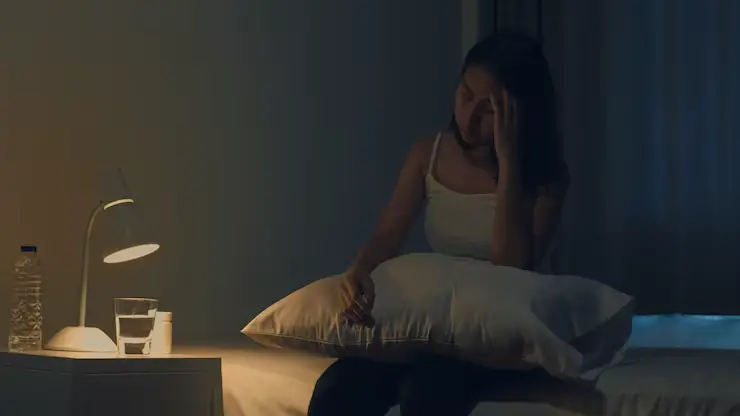
My daughter told me a man entered our bedroom every night, and by the time I dropped her at school, I had already lived through three different versions of my marriage ending.
Sonia was eight years old and serious in the specific way that only very gentle children can be. She did not invent things for effect. She did not say outrageous things to watch adults react. When she spoke, she spoke with the plain certainty of weather, and that morning, buckled into the back seat with her pink backpack beside her, she told me that a man walked into our bedroom after I fell asleep, that he moved slowly, and that her mother closed her eyes and said nothing.
She said it in the same voice she used when she asked for strawberries in her lunch.
I nearly took the car into the next lane.
I asked her to repeat it, hoping I had heard wrong, but she only looked out the window and told me she had seen him more than once. He came very late. He carried something. He never made much noise. Mom looked sad when he was there.
That last detail should have stopped me. Sad was different from afraid. Sad was different from guilty. But suspicion is a fast poison. Once it enters the bloodstream, it turns everything it touches into evidence, and I was already infected by the time I pulled into the school parking lot.
When I got home, Elena was in the kitchen with the coffee maker hissing and morning light filling the room. She looked up and smiled in that ordinary way she had, the easy smile of a person who has no idea the ground beneath a marriage has cracked open. I had loved that smile for eleven years. I had trusted it without thinking the way you trust breathing, automatically, completely, without inventory.
Standing there with my car keys cutting into my palm, I hated myself for the question that rose anyway: had I ever really known what it meant.
The cruel thing about suspicion is that it rewrites the past in seconds.
Elena’s tired face, which I had explained to myself a hundred times as long days and early mornings, became a sign. The long sleeves she wore even when the house was warm, a habit I had noticed and forgotten, became a sign. The way she had started showering before bed, keeping her phone closer, turning away from me some nights, falling quiet in the middle of conversations, all of it lined up in my mind like witnesses waiting to testify, and I was assembling the case before I knew I was building anything.
Around noon her phone buzzed while she was folding laundry. She glanced at the screen, stepped into the next room, and lowered her voice. I only caught one sentence before the door half-closed.
Tonight then. After he’s asleep.
That was enough.
I spent the rest of the day performing normalcy so badly I could feel my own failure at it. At dinner Sonia talked about spelling practice while Elena smiled and nodded, and every time I looked at my wife I felt as though I were staring at a wall, certain something enormous was on the other side but unable yet to break through to it.
Elena asked if I was feeling okay.
I said I was tired.
It was the kind of lie people tell when they don’t yet know how much the truth is going to cost.
Before bed I stopped at Sonia’s door. Her room smelled of crayons and the particular sweetness of children’s shampoo. She was already under her blanket with one hand tucked beneath her cheek.
Had she really seen him every night, I asked.
She nodded. He comes when it’s very dark.
Did Mommy talk to him.
Sonia thought for a second. Not really. She just looked sad.
Sad. I remember the word landing somewhere inside me and vanishing beneath everything louder. Anger was louder. Fear was louder. Wounded pride was louder. I kissed my daughter goodnight and went to my room carrying the wrong emotion like a weapon.
Elena came to bed at eleven. She smelled like soap and something clean and sharp, a clinical undertone I had been catching on her skin for weeks and choosing not to examine. She asked if I had taken my sleeping pill.
I told her yes.
In the bathroom I ran the tap, spat the pill into the sink, and tucked the wet tablet into my pocket. Then I got into bed and turned my back and began breathing with deliberate weight, the exaggerated rhythm of performed sleep.
Elena did not sleep either. I could feel it. Her breathing was too careful, too measured, the breathing of someone waiting for something and trying not to let the waiting show.
At 1:13 the bedroom door opened.
A strip of hallway light fell across the floor.
A man stepped inside carrying a narrow black case. He moved with the particular ease of someone who knew the room, who had navigated this route before. He closed the door without letting it click.
He went directly to Elena’s side.
My entire body went rigid.
He bent toward her and whispered that it would only take a minute. Elena’s eyes squeezed shut.
Then came the quiet snap of latex, the metallic click of a case opening, and a clean sterile smell that did not belong in a dark bedroom.
I still did not understand what I was looking at.
I only knew I had reached the edge of not knowing.
When I hit the lamp on, the room exploded into light and the whole scene resolved at once.
The man jerked backward with one gloved hand raised. He was wearing navy scrubs under a dark jacket. In the open case beside him were sealed syringes, alcohol wipes, a coil of clear tubing, and packets of medical tape. Elena had pulled her nightshirt aside at the collar, and just below her left collarbone, beneath a square of transparent medical dressing, a thin line disappeared under her skin.
For one wild second my mind refused to catch up to what I was seeing.
I was halfway off the bed when Elena sat up and said my name in a voice I had never heard from her before. Not guilty. Not frightened of being found out. Desperate.
Daniel. Stop. Please. Stop.
The man took one step back and said his name was Martín. He spoke quickly, professionally, and held up an ID badge with fingers that were not quite steady. Home infusion nurse. Saint Vincent Oncology.
Elena started crying the moment she saw I was actually looking at the badge.
That was the instant I understood that whatever I had prepared myself for, it was not this.
Martín asked Elena if she wanted him to leave. She wiped her face and asked for five minutes. He capped the syringe, closed the case, and stepped into the hallway with the quiet practiced grace of a man who had witnessed families fracture in doorways before and knew when to become invisible.
Then it was just the two of us and the sound of both our breathing breaking in different ways.
Elena pulled the blanket around herself like she was cold.
I found a lump six weeks ago, she said. Right here.
Her fingers touched the place above her collarbone.
She had thought it was stress first. Then a swollen gland. Then something she could ignore until after Sonia’s school performance, after my next job interview, after one more week when life looked less crowded. But the lump grew. The fatigue got worse. Bruises appeared on her arms. She went to her doctor alone because she did not want to worry me before she knew anything definite.
The blood work came back bad.
The biopsy came back worse.
Lymphoma. Aggressive, but treatable.
She said the word treatable the way people say things they have been holding onto with both hands in the dark.
I sat in the bright spill of the lamp and felt my body go hollow. I looked at the transparent dressing on her skin. I looked at the long sleeves folded over her wrists. I looked at the dark circles under her eyes that I had explained to myself dozens of times as late nights and early mornings. Every detail I had assembled into a case for betrayal rearranged itself into something that had been visible all along, something I had chosen not to see.
Why didn’t you tell me.
It came out harder than I meant. Hurt borrows the voice of accusation before it knows what else to do.
Elena looked at me, and what I saw was not deception.
It was the specific exhaustion that settles into a person after weeks of carrying fear alone.
Because you had just lost your job, she said. Because after your mother’s cancer, hospitals make you stop breathing. Because you started taking sleeping pills just to get through nights. Because every time I opened my mouth I thought I was dropping one more disaster on top of a man already drowning.
She swallowed and looked away.
And because I kept telling myself I would tell you tomorrow.
Tomorrow. The same word I had caught in her voice earlier that night and turned into evidence of something else. The word that had sounded like betrayal now sounded like cowardice mixed with love, and that combination was harder to forgive than either one alone because it was more human, more recognizable, more like the exact mistakes I would have made myself.
I told her I thought she was cheating on me.
She closed her eyes.
When she opened them, they held tears and something sharper.
You saw another man’s shadow before you saw how sick I was.
Nothing she could have said would have reached me further.
Because she was right.
I had noticed the phone calls, the distance, the late showers, the lowered voice, the long sleeves, the sadness. I had catalogued every detail with the diligence of a man building a case against himself. I had measured my own humiliation before I had measured my wife’s pain. Even when Sonia gave me the word sad, I had chosen the story that wounded my pride instead of the story that explained my wife’s face.
Martín came back in because Elena’s hands had started trembling. This time I stood aside and watched him work. He flushed the line, connected a small bag of fluid, checked the dressing, and moved with the unhurried rhythm of a person who knows exactly where mercy lives in practical things.
He explained that Elena had gone through her first chemotherapy session that afternoon and become severely dehydrated. The doctor had ordered several nights of home infusions so she would not need to return through the emergency room every time the nausea overwhelmed her. Martín was the only nurse available after midnight, and Elena had chosen that hour specifically because she did not want Sonia to see the tubing or the needles.
I watched clear medicine move into my wife’s body through the line beneath her skin and felt a shame that had no comfortable place to put itself.
We did not sleep that night.
After Martín left, Elena and I sat against the headboard with the lamp on between us like a witness. She showed me the appointment cards in her nightstand. The biopsy report folded twice. The prescription lists. The insurance denial. The hospital social worker’s number. The notebook where she had written questions for the oncologist in her neat careful handwriting.
All of it had been within arm’s reach for days while I was constructing a cheaper explanation.
By dawn I had cried, apologized, gotten angry at myself, and apologized again, and still felt as though none of it had reached the actual shape of what had happened between us.
Elena cried too, but not only from fear. Some of it was relief. Some of it was a fury she had earned, the anger of a person who had needed to hide illness in her own home to survive one week at a time.
That morning I drove her to her oncology appointment.
The building smelled exactly like the sterile note I had been catching on her skin for weeks and refusing to name.
The doctor was a woman with tired eyes and a voice made steady by years of practice. She walked us through the scans. Stage two. Serious but caught in time. Several rounds of treatment. Hard months ahead. A real chance.
She said all the things doctors say when they are trying to hold truth and hope in the same hand simultaneously.
I took notes because Elena’s hands would not stop shaking. I asked questions because she had run out of room in herself for new information. I signed forms. I learned the schedule. I learned what medications made her sleep and what symptoms meant we needed the hospital immediately.
By the end of that appointment I understood something about myself that I had not wanted to know. Elena had not hidden the truth because she didn’t trust me at all. She had hidden it because she had spent years trusting herself to hold everything together whenever life came apart, and she did not yet know what it would look like to let someone else carry part of the weight. That was her failure. My failure had been different and no smaller.
Telling Sonia was the hardest part.
We sat with her on the couch that afternoon, Elena and I side by side, and Elena explained that she was sick and needed special medicine for a while, and that the man Sonia had been seeing was not a bad man. He was a helper.
Sonia listened with both hands wrapped around her stuffed rabbit, the one whose ears had been chewed flat from years of being held too tightly in the dark. When Elena finished, Sonia leaned against her.
I knew he wasn’t bad, she said. You looked sad, not scared.
Children see the truth before they have words for it.
The months that followed stripped our life down to essentials. School runs and blood counts and plastic pill organizers and laundry folded around clinic schedules. Elena’s appetite left and did not return quickly. Her hair began coming out in the shower in soft dark clumps she tried to clean up before I saw them.
One evening she came out of the bathroom with swollen eyes and a handful of strands. I went to the cabinet, took out the clippers, sat her on a chair on the back porch, and shaved my own head first so she would not have to cross that particular bridge alone.
Sonia watched from the doorway holding a box of washable markers.
After Elena wrapped a scarf around her head, Sonia asked if she could draw tiny stars on the fabric near the edge so Mommy could borrow the sky when she was tired.
Elena laughed for the first time in weeks. Then she cried so hard she had to sit down. That sound held grief and gratitude at the same time, and I have not forgotten it.
Martín kept coming after the worst sessions. By then I knew the weight of his footsteps in the hall and the quiet professionalism in his face. The shadow that had once looked like the end of my marriage had become, in a rearrangement I had not anticipated, the shape of help arriving. Sometimes while he changed a dressing or adjusted a line, Elena would rest with her eyes closed and I would sit on the other side of the bed and hand him tape or saline or whatever he needed.
There was something humbling about learning that love is usually less dramatic than fear. Love looks a lot like holding a trash bin while someone vomits. Learning to flush a line. Rubbing lotion into hands made raw by treatment. Staying in the room when there is nothing useful left to say.
We fought, though. Not only about the illness but about what had surrounded it. About the secrecy. About my first instinct having been suspicion. About how completely we had both become people who thought silence was a form of protection.
One night, when Sonia was asleep and Elena was too exhausted to pretend she was not still angry, she asked the question I had been waiting for.
If you had known sooner, would you have handled it well.
I wanted to say yes. I wanted to offer a clean answer that would redeem something. But truth had already cost us too much to spend another lie on each other.
I don’t know, I said. I think I would have been terrified. I think I would have tried to control everything and failed. But you still should have let me be scared with you.
She looked at me for a long time.
Then she nodded once.
I know.
That was the night we stopped trying to be noble and started trying to be honest, which was harder and more necessary and the only foundation either of us had left to build on.
Treatment ended in the first week of spring.
The final scan came three weeks later.
We sat in the parking lot afterward in silence because neither of us trusted our voices. When the doctor came back into the room smiling before she spoke, Elena grabbed my hand hard enough to hurt.
Remission.
Not magic. Not a promise. Not the end of fear forever. But remission.
I cried into both hands. Elena laughed and cried simultaneously. When we got home Sonia ran at us so hard she nearly knocked Elena backward. We ordered greasy takeout and left the dishes in the sink and let the evening become loud and messy and grateful, the way evenings can be when the worst has passed and you are still standing together in it.
A few nights later, Sonia appeared in our doorway in her pajamas.
No more man at night, she asked.
I looked at Elena before I answered. She smiled, tired but real.
No more man at night, I told her. Just us.
Sonia seemed satisfied with that. She padded back to bed holding her rabbit, and I stood there a long time watching the hallway stay empty.
Sometimes I still wake around one in the morning and see that thin line of light in my mind. The door opening. The shadow stepping in. My whole life seeming to rearrange itself in the dark.
For a while I believed the biggest danger of that night had been betrayal.
It wasn’t.
The biggest danger was how easily two people who loved each other had started protecting each other with silence, until the silence grew its own shape and took up space in the marriage that should have been filled with something else.
I don’t know who was more wrong. The wife who carried terror alone until it nearly crushed her. The husband who noticed every sign except the one that mattered.
I only know this.
The red flag was never the stranger in the doorway.
It was the way pain had already moved into our house long before he arrived, and neither of us turned on the light soon enough.

Specialty: Emotional Turning Points
Rachel Monroe writes character-driven stories about betrayal, second chances, and unexpected resilience. Her work highlights the emotional side of family conflict — the silences, the misunderstandings, and the moments when someone quietly decides they’ve had enough.