The first time I saw my mother in my dining room after ten years, I did not recognize her by her face. I recognized her by the way she scanned the room like she was pricing it.
Not for comfort. Not for beauty. For proof. Proof that the child she once shoved out of the house with two ripped trash bags had turned into something expensive enough to claim. Proof that the life she dismissed had become the kind of life other people waited months to taste. Proof that she could disappear for a decade and still walk back in just in time for the rewards.
It was a Saturday night at Ember, the kind of night where the whole restaurant feels alive in your bones. Sixty seats. Two turns. Every table booked weeks in advance. The open kitchen blazed under clean white lights, every spoon of sauce and every sear on every protein exposed like testimony. Christina, my sous chef, was calling times with the steady voice that kept the line from slipping even when things got tight in the weeds. James floated through the dining room with the kind of grace that made hard service look effortless, the water glasses always full, the crumb sweeps invisible, the timing between courses so precise that diners never felt rushed and never felt forgotten. The room smelled like brown butter, oak smoke, and money, which is to say it smelled like a Saturday night at a restaurant that had earned its reputation one plate at a time.
I had seen the reservation hours earlier.
Mitchell. Party of four.
That last name hit me like a hand around the throat. Same spelling. Same hometown area code. Same kind of confidence in the note attached to the booking: Looking forward to an unforgettable experience.
Christina had caught me staring at the screen during afternoon prep, my knife paused above a pile of shallots. You know them? she asked.
I remember forcing my face still before I answered. Used to.
She did not press. Christina had been with me for three years. She knew when to ask and when to let the silence say what it needed to say. She went back to checking the fish deliveries, and I went back to the shallots, and neither of us mentioned it again until service started.
I could have canceled it. I could have had the host call and say there was a system error, a plumbing emergency, a private event. I could have made them disappear the way they had made me disappear. Instead I left the reservation exactly where it was and typed one note into our system: No comps. Standard service only.
That note steadied me more than I expected. Because there was a time in my life when everything depended on whether people wanted me, forgave me, kept me. There was a time when I stood in a driveway at eighteen with my clothes stuffed into black plastic bags, the kind you use for lawn waste, and my mother’s voice coming through the screen door telling me I was old enough to fend for myself if I was going to keep wasting time in kitchens. There was a time when my father sat in his recliner staring at the television and said nothing while I dragged those bags to the curb and tried not to cry in front of the neighbors. There was a time when the screen door closed behind me and the only sound in the world was the sprinkler across the street ticking back and forth through the evening air, and I stood there on the sidewalk with two bags of clothes and twenty three dollars and nowhere to go and no one coming after me.
That time was over.
I need to go back, though, because the restaurant does not make sense without the driveway, and the driveway does not make sense without everything that came before it.
I grew up in a house where cooking was the only thing that made me visible. My parents were not cruel people in the way that the word cruel usually implies. They did not hit me. They did not scream. They were simply uninterested in the particular kind of child I turned out to be, which was quiet and careful and drawn to work that involved my hands and my senses and the slow, patient transformation of raw ingredients into something that could feed people. My father sold industrial equipment. My mother managed a dental office. They understood effort only when it produced measurable, respectable results, the kind you could explain to neighbors over the fence or brag about at holiday parties. My older sister Natalie was beautiful and social and good at the things that earned praise in our household, grades, sports, the kind of bright performative confidence that made adults nod approvingly and say she is going places.
I was the other one. The one who came home from school and went straight to the kitchen. The one who taught herself to make stock from chicken bones at fourteen because she had watched a cooking show and wanted to know what patience tasted like. The one whose bedroom smelled like dried herbs and cumin because she kept spices on her desk instead of makeup. My mother tolerated this the way you tolerate a phase, with sighs and sideways looks and the quiet expectation that it would pass and I would become interested in something useful.
It did not pass.
By the time I was seventeen, I had told my parents I wanted to go to culinary school. My father’s response was a long silence followed by the words, That is not a plan. My mother’s response was to change the subject to Natalie’s college applications. Nobody argued with me. Nobody forbade it. They simply treated my ambition the way you treat a noise you cannot identify and have decided to ignore, with the assumption that if you do not acknowledge it, it will stop.
What happened instead was that I got a job at a restaurant. A small place, nothing special, the kind of family owned Italian spot that smelled like garlic bread and floor cleaner and had laminated menus with photographs of the food. I washed dishes. I prepped vegetables. I came home at midnight smelling like grease and onions and went to school the next morning with burns on my wrists from the sheet trays and a feeling inside me that I had never experienced in my parents’ house, the feeling of being exactly where I was supposed to be.
My parents saw it differently. They saw a daughter who was choosing minimum wage over college. Who came home late and slept through weekends. Who was drifting, as my mother put it, toward a life that would not sustain her. The arguments started small and escalated the way arguments do in houses where no one has learned to listen, gradually, relentlessly, until one evening in August the summer after I graduated high school, my mother stood in the kitchen and told me that if I was not going to get serious about my future, I could get serious about paying my own rent, because they could not afford to feed someone who was not contributing to the household.
Could not afford was a lie. My father made good money. The house was paid off. Natalie was about to leave for a state university on a partial scholarship. There was no financial emergency. What my mother meant was that she could not afford to keep watching me become someone she did not understand, and the easiest way to end that discomfort was to make me someone else’s problem.
She gave me two hours.
I packed what I could into the trash bags because we did not own luggage that was not already claimed, and I walked out the front door with the particular numbness of a person who has been expecting a blow for so long that when it finally lands, the body has already braced and the mind is already calculating the next step.
Nobody called.
Not that night. Not that week. Not that month. Not that year.
I slept on a couch belonging to a coworker from the restaurant for two weeks. Then I found a room above a bakery downtown, a converted storage space with a window that did not open all the way and a futon that sagged so badly in the middle that I woke up every morning with my spine curved like a parenthesis. The rent was four hundred dollars a month. I worked prep in the mornings at one restaurant, dinner service at another, and dish at a third on weekends. My hands cracked from soap and heat. My wrists collected burns the way other people’s wrists collected bracelets. I ate staff meals and day old bread from the bakery below my room and drank water from the tap because bottled water was a luxury I could not justify.
Nobody called.
A year passed. Then two. I moved from dish to prep to line to sauté at a restaurant in the city that was better than anywhere I had worked before. The chef was a hard woman named Grace who had cooked in New York and Paris and had come home to the Midwest because she said she was tired of paying someone else’s rent with her talent. She looked at my knife work on the first day and said, You are fast but you are sloppy. Then she spent the next two years teaching me the difference between cooking quickly and cooking well.
Grace did not mother me. She did not comfort me or ask about my feelings or try to fill the space my family had left empty. She taught me how to break down a fish without wasting flesh. She taught me how to taste a sauce and identify what was missing before my brain could name the ingredient. She taught me that talent mattered less than endurance and that endurance was something you built the same way you built a stock, slowly, with heat, over time. She told me once, on a night when I had burned a reduction and was standing at the sink fighting tears of frustration, that the kitchen would not love me back. That was not its job. Its job was to test me, and my job was to pass.
I passed.
By the time I was twenty five, I was sous chef at a restaurant that people drove an hour to eat at. By twenty seven, I was running my own kitchen in a space that seated forty and served food I had designed from the ground up, food that came from the things I knew and the places I had been and the particular way I understood hunger, not as a metaphor but as a memory. By twenty eight, the star came. Not a big ceremony. Not a parade. A phone call from my publicist at six in the morning that made me sit down on the floor of my apartment and press my hands against my face and cry in a way I had not cried since the night I left my parents’ house, because there was no one to call. The achievement was real and enormous and it belonged entirely to me and there was no one in my life who shared enough history to understand what it meant.
I opened Ember the following year. Sixty seats. Open kitchen. A menu that changed with the season and the market and whatever I was obsessing over that week, which might be a particular variety of heirloom bean or a technique for aging duck or the way black garlic behaves differently when you roast it at a lower temperature for twice as long. The restaurant was mine in every sense. My name. My money. My risk. My recipes. My mornings arriving before dawn to receive deliveries and my nights leaving after midnight with kitchen grease in my hair and the particular exhaustion that comes from doing the only thing you have ever wanted to do, the kind of tired that feels less like depletion and more like proof.
The Mitchells did not call.
Not when the star was awarded. Not when Ember opened. Not when a food magazine ran a profile with my photograph on the cover and the headline that said something about rising from nowhere. My mother did not call to say she had seen it. My father did not call to say he was proud. Natalie did not call to say anything at all. Ten years of silence. Ten years of building a life out of the ruins of the one they had demolished, and not a single word from the people who were supposed to know me first.
Then the reservation appeared.
Mitchell. Party of four. Saturday night. The tasting menu.
They arrived right on schedule. My mother always loved appearances.
From the pass, I watched the host lead them through the dining room. My father looked broader through the middle and smaller somehow everywhere else, like age had taken space from him where it mattered and added it where it did not. His hair had gone gray at the temples and his walk had the cautious, deliberate quality of a man who was aware that his body was no longer as reliable as his pride. My mother’s hair was shorter and too blond, the kind of blond that required appointments and chemicals and the particular vanity of a woman who believed that looking younger was the same as being forgiven. Her chin was lifted the way it always was when she entered a room, tilted slightly upward, as though she expected people to notice her and wanted them to see that she expected it.
Natalie was dressed for photographs instead of dinner. Glossy hair. Sharp makeup. A dress that looked like it had been chosen by someone who understood lighting and angles. She carried herself with the same confident carelessness she had always had, the posture of a person who had never been asked to carry anything heavy. Beside her was a man I did not recognize, well built, polite expression, the uneasy posture of someone who had been invited into a family story without realizing that the most important chapters had been removed.
We sat them at table twelve. Right where they could see the kitchen. And the kitchen could see them.
A few minutes later James drifted back to the pass with his notepad in his hand and his face carefully neutral. Table twelve wants to know if the chef does table visits, he said quietly. Your mother also asked if you would want a family photo later.
I almost laughed. The sound started in my chest and I caught it before it reached my mouth, because laughing during service would have confused the line and I could not afford confusion on a night when everything needed to be perfect.
Tell them the chef is in service, I said.
James nodded and disappeared back into the dining room with the practiced ease of a man who had delivered difficult messages to difficult tables for years and understood that the messenger’s job was delivery, not interpretation.
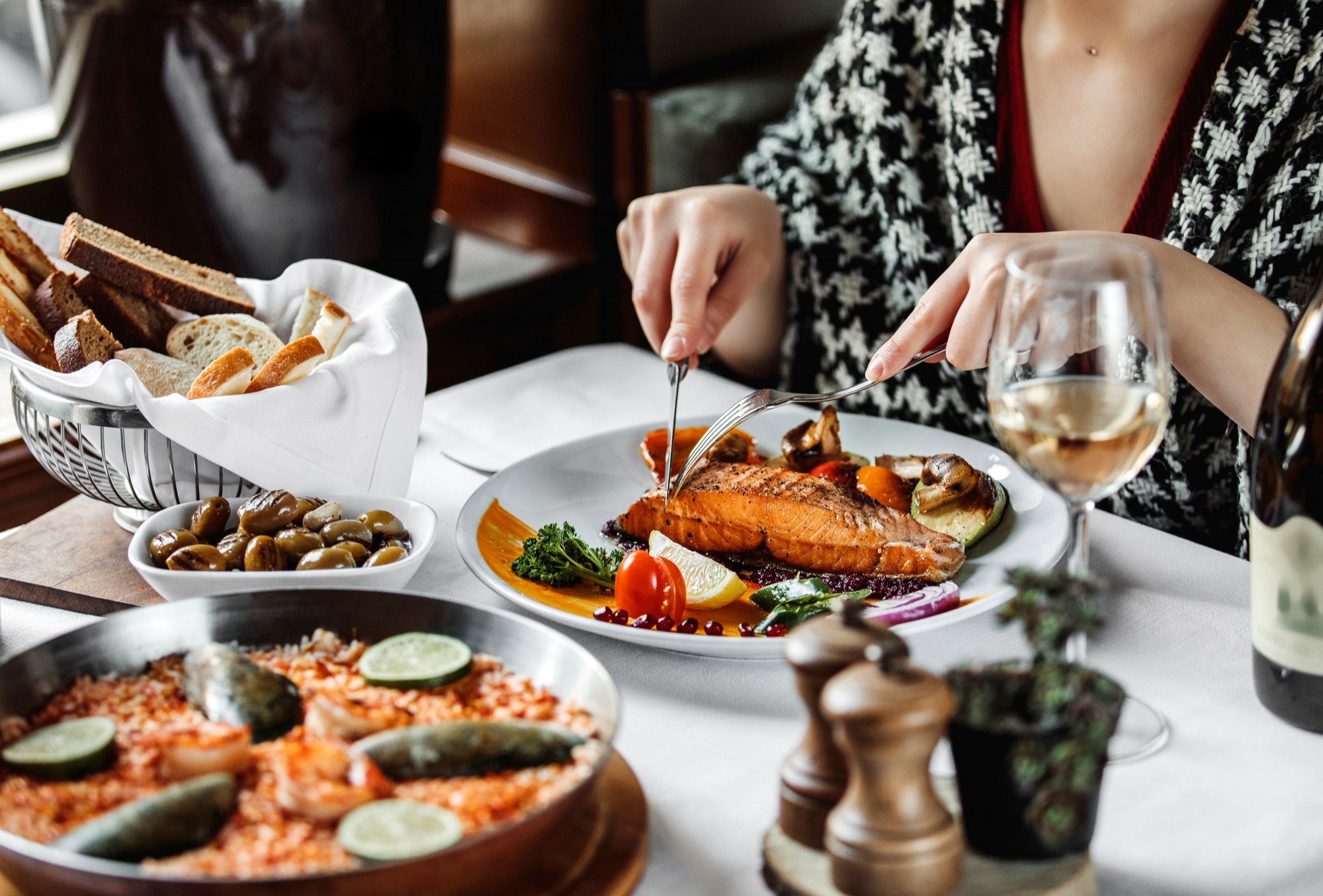
They ordered the full tasting menu for all four. Plus oysters. Plus the caviar supplement. Plus a bottle of Burgundy that cost more than some people’s car payments and that most diners spent ten minutes pretending not to care about before ordering it anyway. They photographed every course. My mother held her glass by the stem and angled her wrist like she had been doing it her entire life, which she had not. Natalie kept turning the plates so the light from the fireplace hit the food at the best angle. The man beside her ate with genuine pleasure and complimented James twice on the pacing, which made me think he was decent even if his taste in families was questionable.
Once, between courses, James passed by the kitchen and murmured without breaking stride, They have told the boyfriend that they are very proud of you.
That one almost made my hands shake.
Proud.
Not when I slept on a broken futon above a bakery because I could not afford first and last month’s rent at a real apartment. Not when I worked three jobs in a single day and taught myself discipline because no one had bothered to teach me anything except that my interests were inconvenient. Not when I burned my wrists on sheet trays and my knees ached from standing on concrete and my fingers cracked and bled from the cold and the soap and the endless, repetitive, essential work of learning how to cook. Not when my first real chef told me I was sloppy and I spent two years becoming less sloppy because I wanted her respect more than I had ever wanted my parents’ approval. Not when I stood in a borrowed jacket the night the star was announced and cried in an alley behind the restaurant because there was no one to call and the loneliness of achievement without witness is a particular kind of loneliness that people who have always been celebrated do not understand.
But now. Now, with sixty seats booked and a wine list in a leather folder and my name in magazines and on the lips of food critics who used words like revelatory and essential. Now they were proud.
The meal moved the way service always moves on a full night when you are too busy to fall apart. Scallop with citrus and fennel. Duck with sour cherry and juniper. Agnolotti stuffed with braised short rib in a broth so clear you could see the bottom of the bowl. Halibut with brown butter and capers. Lamb with herbs from the rooftop garden I had planted myself because I wanted to touch the ingredients before they touched the plate. Pre dessert. Chocolate. Every course left the pass perfect. Every ticket was called on time. Every instinct in me kept repeating not yet, not yet, not yet, the way a body repeats a heartbeat without being asked.
Then the check landed.
Less than a minute later, James came back looking pale.
Chef, he said under his breath, your father is standing. He says there is an issue with the bill.
I looked up from the pass in time to see half the dining room notice the shift in energy before they understood the cause. My father was not shouting. He did not need to. His voice carried in exactly the way certain men learn to make their voices carry when they have spent a lifetime assuming rooms will bend around their displeasure. He was standing with one hand on the back of his chair and the other tapping the leather folder that held the check, and his face wore the expression of a man who has been presented with an invoice for something he believed he was entitled to receive for free.
This is ridiculous, he said, loud enough for the tables around him to hear. We are not paying this. This should be taken care of. We are family.
Family.
The word landed on the dining room like a glass dropped on tile. Several diners looked up. A woman at table nine set her fork down. A man at the bar turned on his stool. My mother leaned back in her chair with the particular posture of a woman who expects the room to side with her because she has always believed that confidence is the same as being right. Natalie looked embarrassed but not surprised, which told me this had been discussed in the car on the way over, that the expectation of a free meal had been part of the plan from the beginning. The boyfriend looked confused, then alarmed, the face of a man realizing that the family he had been smiling with all evening was not the family he thought it was.
For one strange second, the whole restaurant seemed to stop breathing.
Christina moved beside me at the pass without speaking. James waited near the kitchen door for instructions. The heat lamps above the pass burned against the back of my neck. Every line cook on the station was watching me without turning their heads, the way a kitchen watches its chef when something has gone wrong and the response will determine whether the rest of the night holds together or falls apart.
I wiped my hands on my apron. I untied it, folded it once, and set it on the counter beside the pass. Then I stepped out from behind the kitchen and walked straight toward table twelve.
The dining room was quiet in the particular way that rooms become quiet when sixty people are pretending not to watch something they are absolutely watching. My shoes made no sound on the hardwood. The candles flickered in their holders. The piano music from the speakers sounded thin and distant, like something playing in another building.
My father saw me coming and his face rearranged itself into something that was supposed to look like warmth but looked instead like a man preparing to make a transaction. He tapped the check folder again, gave me a tight smile, and said, There you are. Tell them to fix this. And after dinner we need to talk about your sister’s wedding because we have decided family should handle the food.
I stood at the edge of the table and looked at him. Then at my mother, who was smiling in a way that did not reach her eyes. Then at Natalie, who would not meet my gaze. Then at the boyfriend, who looked like he wanted the floor to open beneath his chair and swallow him into the earth.
I let the silence hold for a few seconds longer than was comfortable, because silence is not empty. Silence is a room where careless people begin arranging the evidence against themselves, and I had learned that in kitchens and in life and in the years between the driveway and this dining room.
Then I spoke.
I did not raise my voice. I did not need to. A chef learns to project without shouting the same way a singer learns to fill a room without screaming. You use the diaphragm. You use the stillness. You let the quiet do the work.
You are welcome guests in my restaurant, I said. You received the same menu, the same service, and the same hospitality that every person in this room receives. The check reflects what you ordered. It will not be adjusted.
My father’s smile disappeared. His jaw tightened. Now wait a minute, he started.
I continued as though he had not spoken.
You did not call when I slept on a futon above a bakery. You did not call when I worked three jobs to pay rent on a room with a window that did not close all the way. You did not call when I burned my hands learning to do the thing you told me was a waste of time. You did not call when I earned a star or opened this restaurant or did any of the thousand difficult things that happened between the night you put my clothes in trash bags and this evening. Ten years. Not a word. And now you are sitting in my dining room telling my staff that you should not have to pay because you are family.
The room was absolutely still. Even the kitchen had gone quiet behind me. I could feel Christina and the line watching through the pass window, and I could feel James standing near the service station with his hands at his sides, and I could feel sixty strangers holding their breath.
My mother’s face had gone white. Not with shame. With the particular shock of a woman who has been confronted with a version of events she has spent a decade editing out of her memory. She opened her mouth and closed it. Her fingers tightened around her napkin.
Morgan, she said, using the wrong name for a fraction of a second before catching herself. I saw the slip. The boyfriend saw it too. My mother did not have a child named Morgan. She had a child named Mitchell, and she had confused me for a moment with someone else’s story, or perhaps with the version of me she had constructed in her mind, the version that was supposed to show up grateful and compliant and willing to comp the caviar because blood was thicker than a decade of silence.
You were not family when I needed you, I said. You do not get to be family now that I am useful.
My father stood up fully. His chair scraped against the floor. The sound was sharp and final. His face had gone from irritation to anger to something else, something I had never seen on him before, which was the dawning recognition that he was not in control of this room. He was not in control of this conversation. He was not in control of his daughter. And the realization was arriving in public, in front of people who would remember it, which was the one thing my father could not tolerate.
This is how you treat your parents? he said.
This is how I treat customers who refuse to pay their bill, I replied.
Natalie finally spoke. Her voice was small and strained and carried the particular petulance of a person who has been watching a situation deteriorate and wants it to stop without anyone having to be accountable. Can we please just go? she said to the boyfriend. This is embarrassing.
I looked at her. Yes, I said. It is.
She flinched.
The boyfriend stood up. He reached into his jacket and produced a credit card. He held it out to James, who had materialized beside the table with the quiet competence of a man who understood that the best thing he could do in this moment was process the payment and clear the table.
I will take care of it, the boyfriend said. His voice was calm and slightly horrified, the voice of a decent person who has just realized he has been sitting at a table with people who are not what they appeared to be.
My mother started to protest. He held up one hand, gently but firmly, and she stopped. Natalie stared at the tablecloth. My father sat down heavily and said nothing.
James ran the card. The receipt was signed. The tip was generous, far more generous than the meal required, and I understood that the boyfriend was not tipping for the food. He was tipping for the show, or perhaps for the years of unpaid labor that had built the kitchen he had just eaten in, the kitchen my parents had tried to prevent from existing.
They left without saying goodbye. My mother walked out first, her chin still lifted, her posture still performing for an audience that was no longer watching. Natalie followed with the boyfriend’s hand on her back, guiding her toward the door with the careful urgency of a man who wanted to be in his car before anyone asked him another question. My father was last. He stopped at the door and looked back at me.
For one second, I thought he might say something. An apology. An accusation. Anything that would acknowledge that the last ten years had happened and that he had been part of them, or rather that he had been absent from them, which was its own kind of participation.
Instead he turned and walked out.
The door closed behind him. The dining room exhaled. Someone at the bar ordered another drink. The piano music rose again from the speakers. A server carried a tray of desserts past me toward table six, and the smell of chocolate and caramelized sugar filled the air, and the restaurant resumed its rhythm the way a body resumes breathing after a held breath, automatically, gratefully, without needing to be told.
Christina appeared beside me. You good?
I looked at the empty table. The four chairs pushed back at uneven angles. The water glasses still half full. A single napkin on the floor.
Yeah, I said.
She studied my face for a moment. Then she nodded and went back to the kitchen, and I followed her, and we finished service.
Every ticket. Every plate. Every table.
The rest of the night was flawless.
After service, after the last table was cleared and the kitchen was broken down and the floors were mopped and the stations were restocked for tomorrow, I stood alone in the dining room with the lights dimmed and the chairs upside down on the tables. The room smelled like clean surfaces and extinguished candles and the faint residual warmth of a kitchen that had been running at full capacity for five hours. Through the windows, the city was quiet. The street was empty. The neon sign above the door cast a soft amber glow across the sidewalk.
I walked to table twelve and stood beside it.
The table was clean. Set for tomorrow. Fresh linen. Polished glasses. A small candle in the center waiting to be lit.
I put my hand on the back of the chair where my father had been sitting and I stood there for a while, feeling the wood under my palm, feeling the weight of the evening settle into my body the way exhaustion settles, slowly and completely.
I did not feel triumphant. I did not feel vindicated. I did not feel the satisfying rush of a person who has finally gotten the last word in an argument that lasted a decade.
I felt clean.
The way a kitchen feels clean after a long service. Everything in its place. Every surface wiped. Every debt settled.
My phone buzzed in my pocket. I pulled it out. Three missed calls from my mother. One text from Natalie that said, That was unnecessary. One text from my father that said nothing because my father had never learned to say the things that mattered and was not going to start now.
I deleted the notifications without reading them. Not out of anger. Out of completion.
Then I walked to the kitchen, turned off the last light, and stepped out the back door into the alley. The air was cold. The dumpsters smelled like kitchen waste and rain. A cat sat on the fence across the alley watching me with the patient indifference of a creature that has never needed anyone’s approval to exist.
I locked the door behind me.
There was a time when my mother put my clothes in trash bags and told me to leave. There was a time when my father watched it happen from his chair and said nothing. There was a time when my sister inherited the only bedroom that mattered and never once asked where I was sleeping. There was a time when I stood on a sidewalk at eighteen with twenty three dollars and two bags of clothing and no idea whether the world would have room for me.
The world had room.
The world had a kitchen.
The kitchen had heat and knives and fire and the particular brutal mercy of a profession that does not care where you came from as long as you can cook, as long as you can show up, as long as you can stand the hours and the burns and the loneliness and the relentless, unglamorous, essential work of making something beautiful out of raw material.
I had done that.
Not because they believed in me. Not because anyone believed in me. Because the food believed in me. Because the work believed in me. Because every plate I sent out of that kitchen was a small, precise, undeniable answer to every person who had ever looked at me and seen a waste of time.
I walked to my car in the dark. I sat behind the wheel. I did not start the engine right away. I just sat there, breathing, feeling the quiet of a night that was finally over.
Then I drove home.
My apartment was small and clean and exactly the way I had left it that morning. The counter held a cutting board and a knife and a bowl of lemons I had brought home from the market because they were too beautiful to leave behind. The window above the sink looked out over the street. The bed was made. The fridge held the components of a meal I was planning to cook for myself on my next day off, something simple, something slow, something that required patience and attention and the particular kind of love that does not need an audience.
I poured a glass of water and stood at the counter and drank it slowly.
My parents had tried to teach me that I was nothing without them. That my passion was a phase. That kitchens were for people without better options. That leaving their house with trash bags was the natural consequence of choosing the wrong life.
They were wrong about all of it.
But they were right about one thing, though not in the way they intended. They taught me how to survive without them. They taught me that the people who are supposed to love you can be the ones who hurt you most. They taught me that some families are not sanctuaries but structures you have to leave in order to stand on your own.
And they taught me, on a Saturday night ten years later, sitting in my dining room eating my food and photographing my plates and telling a stranger they were proud of me, that the most dangerous people in your life are not the ones who hate you. They are the ones who abandoned you and then show up at the door when the lights are on and the tables are full, expecting to be seated without a reservation.
I washed the glass. I dried it. I put it back in the cabinet.
Then I turned off the kitchen light and went to bed.
Tomorrow there would be deliveries at dawn. Prep at nine. Staff meal at four. Service at five thirty. Sixty seats. Two turns. Every table booked.
The restaurant would open.
The kitchen would heat.
The work would continue.
And the door, the one my parents had closed behind me ten years ago and the one I had closed behind them tonight, would stay exactly where I left it.
Closed.
Not locked in anger. Not slammed in revenge. Simply closed, the way you close a chapter in a book you have already finished reading, with the quiet certainty of a person who knows how the story ends and does not need to read it again.

Specialty: Quiet Comebacks & Personal Justice
David Reynolds focuses on stories where underestimated individuals regain control of their lives. His writing centers on measured decisions rather than dramatic outbursts — emphasizing preparation, patience, and the long game. His characters don’t shout; they act.