The invitation came on a Thursday afternoon, sitting in the mailbox between a water bill and a grocery coupon flyer.
Ordinary things have a cruel way of standing beside humiliating ones, as if your life is not falling apart, as if milk is still on sale and the trash still needs to go out on Tuesday and the world has not noticed that you are holding an ivory envelope with gold lettering that announces your ex husband’s wedding to the woman he left you for. I stood at the mailbox with the envelope in one hand and the water bill in the other and the coupon flyer tucked under my arm, and for a moment the three items felt equally weighted, as though the universe had decided that Ethan Caldwell’s second marriage and a thirty percent discount on paper towels occupied the same category of importance.
When I ran my thumb across his name, I could feel every expensive little ridge. The letters were raised in gold. The paper was thick and textured, the kind that costs more per sheet than most people spend on a greeting card, and the whole thing smelled faintly of the cologne Ethan used to wear when he wanted a room to remember he had been in it. He was getting married again. Six months after a county clerk stamped our divorce final while I stood in a family court hallway with a folder pressed to my chest and a paper coffee cup going cold in my hand, Ethan Caldwell was getting married to Lila, and he had invited me to watch.
I need to tell you about the end of my marriage because the invitation does not make sense without it, and the wedding does not make sense without Noah, and Noah does not make sense without understanding what he had been carrying in his pocket for months while the adults around him failed to notice.
Ethan told me he needed space on a Tuesday evening in our kitchen, under the ugly ceiling light we had always meant to replace but never did because there was always something more urgent, a leaking faucet or a school fee or a dental appointment that insurance did not cover. Noah’s lunchbox sat open on the counter. He was nine. He had been upstairs looking for a missing sneaker, and Ethan kept glancing at the staircase while he talked, not because he was worried about our son hearing but because he wanted to be finished before the interruption arrived. He delivered the news the way he delivered presentations at work, with a structure and a cadence and a conclusion that had been prepared in advance. He said he needed space. He said it was not about me. He said he hoped we could be mature about this. Each sentence was designed to make the destruction sound administrative, as though our marriage were a contract being renegotiated rather than a life being demolished.
The truth was Lila. She worked at his firm. She was younger and polished and good at smiling in photographs and very good at making Ethan feel like the version of himself he wanted people to applaud. By the time he admitted the affair he had already moved half his closet into a corporate apartment across town, which meant the conversation in the kitchen was not a confession but a notification. He had already left. He was simply informing me of the departure after the fact, the way airlines inform you of a cancellation after the plane has already been rerouted.
By the time he said this does not have to get ugly, it already was.
For the next year, ugliness arrived quietly. It did not come as a single dramatic event. It came in pieces, small enough to be absorbed individually but devastating in accumulation, the way water damage works, each drop insignificant on its own, each one contributing to a rot that eventually makes the floor give way.
It arrived as late child support. Not missing. Late. Always late by enough days to be inconvenient but not enough to trigger a formal complaint, which was the kind of calculation Ethan excelled at, finding the exact boundary between irresponsibility and consequence and positioning himself precisely on the safe side.
It arrived as missed school pickups. Not every time. Often enough that Noah learned to bring a book to the curb and sit on the bench outside the school office reading while other children climbed into other fathers’ cars. Often enough that the front office receptionist began recognizing me when I called at 3:45 to say his father was running late and I was on my way.
It arrived as Noah standing outside the gym after his winter concert, scanning the parking lot for Ethan’s car while other families walked past with flowers and programs and the particular glow that people carry when they have just watched their child perform. Ethan had texted Running behind thirty seven minutes after the music ended. He never arrived. Noah and I drove home in silence, and when we pulled into the driveway he said, It is okay, Mom, in a voice that was not okay and was not trying to be.
It arrived as empty apologies typed on Sunday nights. Let us not make this harder than it has to be. That was Ethan’s favorite sentence. He deployed it whenever he had already made something harder and wanted me to carry the shame of noticing. The sentence was a door that swung only one direction. It allowed him to pass through without consequence and trapped me on the other side with the mess.
I documented things because paperwork was the only language Ethan respected. School office sign in sheets showing which parent picked up and which did not. Family court payment notices with due dates and actual payment dates recorded in blue ink. Screenshots of missed visitation texts. A ledger I kept in the desk drawer that tracked every promise and every failure to keep it. I did not show Noah those documents. A child should not have to become the witness for his own heartbreak.
But children notice what adults think they have hidden. They notice the car that never pulls into the driveway at the time it was supposed to arrive. They notice when their mother checks her phone during dinner and then sets it face down too carefully, as though the screen contains something she does not want anyone else to see. They notice when every maybe next weekend becomes another Saturday folding laundry beside someone who keeps pretending she is not disappointed. They notice these things because children are paying attention even when the adults in the room believe they are not, and the gap between what a child sees and what a child is told creates a space inside them that fills, over time, with either trust or evidence.
Noah filled it with evidence.
I did not know that then.
When he found the wedding invitation on the kitchen counter, he did not ask why his father would invite us. He asked, Are we really invited?
His voice was careful. Too careful. He stood there barefoot in pajama pants, one hoodie sleeve pulled over his hand, looking at the envelope like it might explain something he had been trying to understand for a year. He was ten now. Taller than he had been when Ethan left. Quieter. He had the particular stillness of a child who has learned that being easy to overlook is safer than being easy to disappoint.
Yes, I said.
I wanted to say no. I wanted to rip the invitation in half and drop it into the trash under coffee grounds and eggshells. I wanted to protect him from watching Ethan build a new life in public after abandoning ours in private, from seeing his father stand at an altar and make promises to someone new while the promises he had made to us sat in a courthouse filing cabinet gathering dust.
Noah stared at the gold lettering. Then he said, I want to go.
I set the dish towel down. Why?
He shrugged, but his face did not change. I want to see if he acts different when we are there.
That sentence stayed with me for weeks. It was not angry. It was not childish. It sounded like something a person says after being hurt so many times that hope has become an experiment, something you conduct with careful distance and low expectations, not because you believe it will work but because you need to know, finally, whether the variable has changed or whether you have been measuring the same result all along.
I told him we could go. I also told him we could leave anytime he wanted.
He nodded.
Over the next two weeks, Noah was quiet in the particular way he got when he was thinking too much. He did his homework at the kitchen table without being asked. He packed his backpack the night before school. He asked me once where the tape was, then where we kept wrapping paper. I thought he was making a card. I imagined him at his desk with scissors and glue, constructing something for his father out of the same stubborn love that kept him checking the driveway every time a car engine sounded in the street. I did not ask for details. Sometimes the most dignified thing you can give a child is room to decide what love still means to him without requiring him to explain the decision to you.
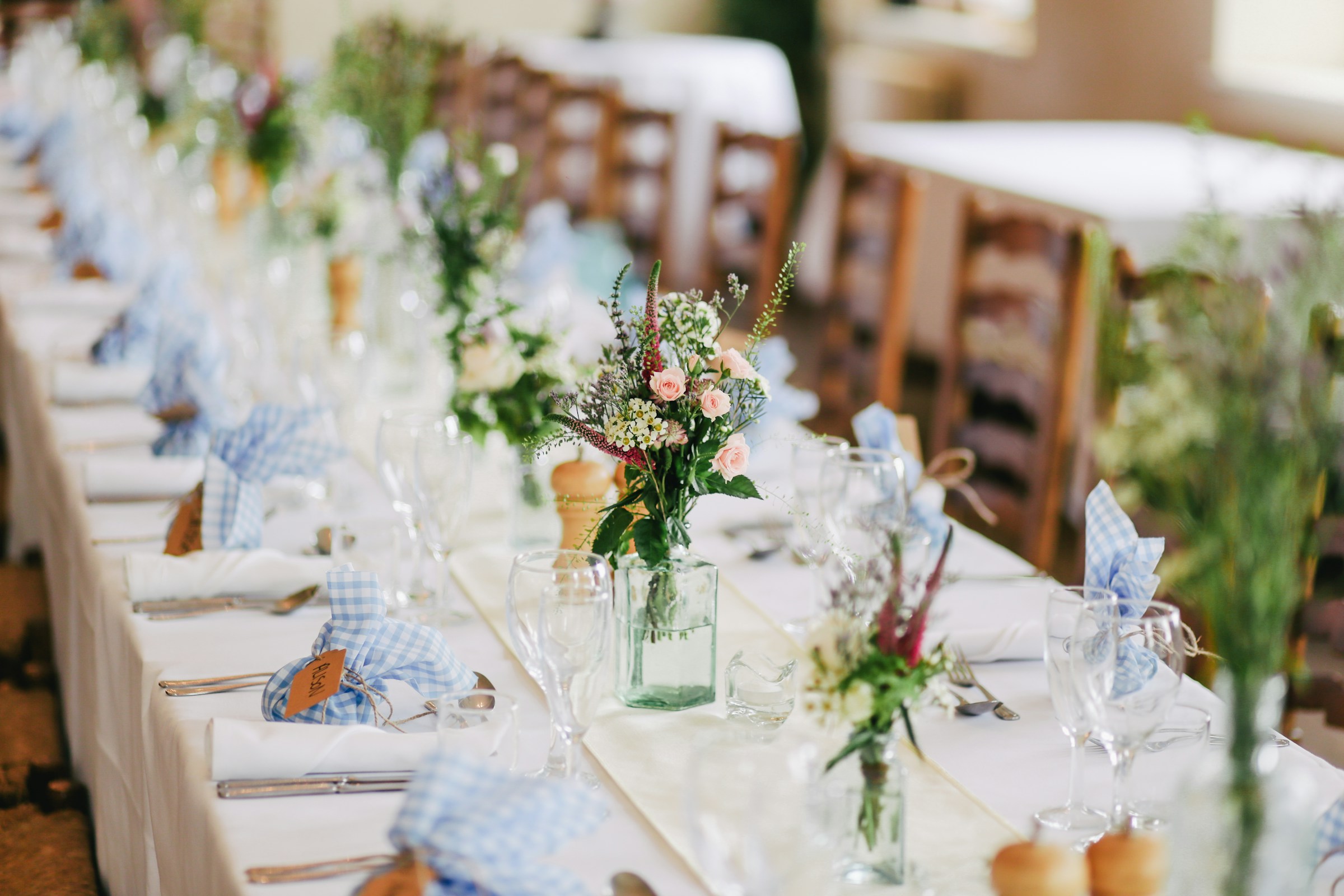
The wedding was at a country club outside Dallas, the kind with trimmed hedges and valet parking and a lobby that smelled like lilies and furniture polish and the particular fragrance of money being spent for the purpose of being seen being spent. There were white roses everywhere. There was a string quartet near the patio doors playing something classical that I recognized from a movie but could not name. There were waiters in black vests moving between guests with trays of champagne. Everything looked expensive enough to pretend nothing had ever been broken.
Noah wore a navy blazer I bought on sale at a department store. The sleeves were a little long, but he refused to roll them. He combed his hair flat even though it started lifting again before we reached the parking lot. He carried a small wrapped box under his arm, silver paper, blue ribbon, corners folded with the careful effort of a child who wanted it to look right. I assumed it was the card. I assumed wrong.
He did not fidget during the ceremony. He did not ask when we could leave. He sat beside me in a white folding chair on the lawn and watched with the focused attention of a person cataloguing details for a purpose he had not yet disclosed.
Ethan stood at the altar like a man receiving an award. Lila smiled at him with bright, certain eyes. When the officiant spoke about second chances, Ethan glanced toward the guests with an expression I recognized from a decade of living with him, the expression of a man who wanted everyone in the room to witness how well he had rebuilt himself, as though the rebuilding were the story and not the demolition that preceded it.
At the reception, we were seated at a back table with distant relatives and two of Ethan’s coworkers who knew exactly who I was. One woman looked at me, recognized me, and immediately became fascinated by her bread plate. The other studied her napkin with the intensity of someone who had just discovered an important document folded inside it. Noah sat beside me and cut his chicken into pieces too small to need cutting.
Do you want to go? I whispered.
He shook his head. I am okay.
The speeches started after dinner. Lila’s sister cried sweetly. Ethan’s best man told a harmless story about golf. Then Ethan stood with a drink in one hand and the microphone in the other, and I recognized his posture the way you recognize a weather pattern, the particular arrangement of his shoulders and chin and smile that meant he was about to charm a room into believing the version of himself he preferred. I had seen it at office parties, parent nights, and backyard barbecues, whenever Ethan needed an audience to confirm that he was the person he had decided to be.
He thanked people for coming. He talked about timing. He talked about finding love when you stop settling for less than you deserve, a sentence that managed to insult everyone he had ever been with while sounding like a compliment to the woman he was now standing beside.
Then Ethan looked toward the back of the room, toward our table, toward me, and his grin widened.
I will be honest, he said. Walking away from that mess was the best decision of my life.
The first laugh was small. Then another came. Then the room gave him the soft, ugly reward of people laughing because the groom had told them it was safe to laugh, because the target was sitting in the back near the kitchen and was not important enough to the room to warrant the discomfort of silence.
My body reacted before my thoughts did. Heat climbed up my neck. My fingers tightened around the napkin in my lap. The tablecloth creased under my grip. Beside me, Noah set down his fork. He set it down carefully, deliberately, the way you set down a tool you are finished with.
Ethan kept smiling. Sometimes, he continued, you have got to clear out your mistakes to make room for something better.
That was when Lila laughed. Not loudly. Not cruelly enough for anyone else to remember later. A small, participatory laugh, the laugh of a woman who has chosen to believe her husband’s story about his previous life because believing it is easier than questioning it and questioning it might reveal that the man standing beside her at the altar is the same man who will one day stand at a different altar and call her a mistake too.
But Noah heard it. I saw the change in his face, the small, quiet departure of the last hope a child carries before he accepts that the person he has been waiting for is not going to arrive, not tonight, not next weekend, not ever.
My chair scraped back. Maybe I was going to walk out. Maybe I was going to cross the room and tell Ethan that grown men who abandon their children do not get to call them mistakes in front of a hundred and fifty people eating salmon and drinking champagne that someone else paid for. Maybe I was going to say nothing and simply remove my son from a room that had mistaken humiliation for entertainment.
Noah touched my arm.
It is okay, Mom, he said.
Then he stood.
He walked toward the center of the reception hall with the small wrapped box under his arm, and the room noticed him the way rooms notice children in formal settings, with brief, indulgent attention, the assumption that whatever was about to happen would be cute and brief and easily absorbed into the flow of the evening.
A server stopped near the cake table. A cousin lowered her champagne glass. Someone’s phone stayed raised, still recording out of habit. Ethan’s grin widened because he still believed he controlled the moment, still believed the room was his, still believed that a ten year old boy walking toward him with a gift was an extension of his own narrative rather than a disruption of it.
Well, he said into the microphone, looks like my son has something to say.
Noah held out his hand. Can I use the microphone?
A few people smiled. They thought it would be sweet. They thought maybe he would say congratulations or tell a funny story or do the charming, precocious thing that children do at weddings when they are given a moment in front of the adults.
Ethan handed over the microphone with theatrical generosity, the kind of generosity that is really performance, the kind that says look how good I am with my son without requiring him to actually be good with his son at any other time.
Go ahead, buddy.
Noah took the microphone with both hands. His fingers were pale around the handle. He held it close to his mouth, not because he was going to shout but because his voice was quiet and he wanted to be heard.
I brought you something, Dad.
He bent down and picked up the wrapped box. Silver paper. Blue ribbon. Corners folded with care. The box he had wrapped at the kitchen table two weeks earlier while I thought he was making a card.
Lila leaned forward, smiling. Ethan chuckled. For me?
Noah nodded. For you.
The room softened. People leaned in. There is something about a child with a gift that makes adults lower their defenses, that makes them believe the moment will be tender because children are supposed to produce tenderness, and the adults in the room wanted tenderness because tenderness would confirm that the evening was going well and that Ethan’s story about second chances was true and that everyone could go home feeling good about what they had witnessed.
Ethan pulled the ribbon loose. The blue strip slipped through his fingers and fell across the white tablecloth. He lifted the lid. The tissue paper rustled. Then the color drained from his face.
His hand jerked back so sharply the box tipped against a champagne flute. The microphone caught his breath, a hard, involuntary intake that carried across the room through the speakers before he could cover it.
Noah, what did you do?
The room went silent. Not the polite silence of an audience waiting for the next line. The structural silence of a room in which every person simultaneously understands that something is happening that was not on the program.
Noah did not flinch.
Inside the box was an old black phone with a cracked corner and a superhero sticker peeling off the case. I knew that phone. Ethan had bought it for Noah two Christmases earlier and set it up with limited contacts so they could message each other, a gesture that had seemed generous at the time and that I later understood was another form of control, a dedicated channel through which Ethan could manage his relationship with his son without having to go through me. I had thought the phone stopped working months ago. Noah had told me the battery died and he did not need it anymore. He had not told me he was keeping it charged. He had not told me what was on it.
The screen was lit.
Beneath the phone was a plain white envelope. Lila’s name was written on the front in Noah’s careful handwriting, the letters printed with the deliberate neatness of a child who wanted to make sure the name was legible, who wanted to make sure there was no ambiguity about who the contents were meant for.
Turn it off, Ethan whispered.
The phone kept playing.
At first the sound was faint, distorted by the box and the tissue paper and the distance between the table and the nearest guests. Then a voice came through clearly enough for the front tables to hear.
Ethan’s voice.
He was laughing. Not the wedding speech laugh. Not the polished room laugh. Private laughing. The kind of laugh people use when they believe nobody vulnerable is listening, when the audience is small and sympathetic and the cruelty feels safe.
I invited them, his recorded voice said, because I want her to see what upgrading looks like.
A woman at the next table gasped. The sound was involuntary, the kind of noise a person makes when the air leaves them before they can decide whether to be shocked or embarrassed.
Ethan lunged for the phone. Noah stepped back but kept the microphone angled toward the box so the speakers would carry the sound, and I realized with a sick, rolling vertigo that my ten year old son had thought about acoustics. He had planned this. Not impulsively. Not out of anger. With the methodical patience of a child who had been collecting evidence for months and had chosen this moment to present it because every other method of being heard had failed him.
The recording continued. You should have seen her face when the support order came through, Ethan’s voice said. She thinks I am scared of paperwork.
I could not breathe. For months I had believed Noah was protected from the worst of it because I kept the adult evidence in folders and sealed drawers and password protected files. I had believed the documentation was mine, that the burden of proof belonged to me, that my son was shielded from the mechanics of his father’s cruelty by the wall I had built between the legal record and his childhood.
I had not known Ethan had called him from that phone and forgotten to hang up. I had not known my son had sat in his bedroom with the superhero sticker phone pressed to his ear listening to his father talk about us as though we were a problem he had solved. I had not known he had been carrying that voice around in his pocket for months, not as entertainment and not as comfort but as evidence, the way I carried my blue ink ledger and my screenshots, because he had learned from watching me that when the adults in your life refuse to acknowledge what they have done, the only thing left is a record.
Lila stood slowly. What is that? she asked.
Ethan shook his head. It is taken out of context.
That was another one of his phrases. A phrase men use when context is exactly what condemns them. A phrase designed to suggest that somewhere, in some other version of the conversation, the words sounded different, kinder, less cruel, as though cruelty were a matter of framing rather than content.
Noah reached into the box and pulled out the envelope. His hands were shaking. Just slightly. Enough that I finally moved. I crossed the room and stood beside him. I did not take the envelope away. I only rested my hand between his shoulders so he would know he was not standing alone in front of two hundred people with his father’s voice coming through a phone and his father’s face going white and the room holding its breath around him.
Noah looked at Lila. He left this on my phone, he said. I was going to give it to Dad after dinner. But then he called us mistakes.
Lila’s face changed. It was not anger first. It was confusion losing its balance, the expression of a woman who has been standing on a story and has just felt the first crack in the surface beneath her feet.
She opened the envelope.
Inside were printed screenshots. Not court documents. Not legal filings. Not the formal evidence I had been accumulating in my desk drawer. A child’s evidence. Dates. Times. Missed pickup promises. Ethan texting Can’t make it tonight. Ethan texting Tell your mom not to start. Ethan texting I will call tomorrow, then never calling. The texts were arranged in chronological order, printed on plain paper, the dates highlighted in yellow marker, and I understood with a clarity that made my chest ache that Noah had organized this the way I organized my ledger, carefully, chronologically, with the patience of someone who knows that the story is not believable unless the timeline is clear.
At the bottom of the stack was one screenshot I had never seen. It was from Noah to Ethan. Dad, are you still coming to my concert?
Under it was Ethan’s reply. Ask your mom.
Two words. Ask your mom. The most efficient possible way to transfer responsibility for disappointment from the person who caused it to the person who would have to explain it to a child standing outside a gym in the dark with a program in his hand.
Lila pressed one hand to her mouth. The room had no laughter left in it. Every face I could see had rearranged itself around a new understanding of the evening, an understanding that included not just a groom’s speech but a pattern, not just a joke about clearing out mistakes but a documented history of a man who had walked away from his son and then invited his son to watch him celebrate the walking.
Ethan reached for Lila’s arm. Lila, do not do this here.
She pulled away.
That small motion broke something public. Not with a slap. Not with a shout. Not with the dramatic gesture that movies teach us to expect when a woman discovers something true about a man she has chosen. Just a bride moving her arm out of reach in front of two hundred witnesses, a motion that said I do not want you to touch me right now, which is the most devastating thing a bride can communicate at her own reception without raising her voice.
Ethan turned on me then. You put him up to this.
I looked at my son. Noah looked back at me, and for one second I saw both versions of him simultaneously, the little boy who used to fall asleep clutching a stuffed dinosaur while waiting for his father’s headlights in the driveway, and the child standing in a wedding hall with a cracked phone and a yellow highlighted timeline, trying to hand an adult the truth because every adult method of delivering it had failed him.
No, I said. I did not know.
That was the part Ethan could not fight. Because it was obvious. My shock was not performance. It was all over my face, in my hands, in the way I was standing beside my son with my fingers trembling against his shoulder, seeing for the first time the weight he had been carrying while I believed he was protected.
One of Ethan’s coworkers stood from his table. Another sat back down like he suddenly wanted the chair to swallow him. The best man took one step forward, then stopped, because there was no safe role left to play, no harmless golf story that could absorb what had just happened and return the evening to the version of itself that Ethan had scripted.
Lila looked at the screenshots again. Then she looked at Ethan.
Did you say those things?
Ethan’s jaw worked. That is not what matters right now.
It was almost impressive, how quickly he tried to move the room away from the truth and toward damage control, how smoothly the machinery of deflection engaged even in the middle of his own unraveling. He had spent a lifetime redirecting conversations away from the thing that mattered and toward the thing he could manage, and even now, standing at his own wedding with his son’s evidence in his wife’s hand, the instinct was to pivot.
Noah raised the microphone one last time.
It matters to me.
Four words. Small voice. Full room. The microphone carried them across the reception hall and into every corner, and the words landed on every table and every guest and every untouched dessert plate, and there was nothing left to say after them because a child had just told the truth in the only venue where truth could no longer be redirected or minimized or explained away as out of context.
That was the moment I understood the gift had never been about revenge. It was not punishment. It was not cruelty. It was a child asking his father to stop editing him out of the story. To stop treating the first family as a rough draft that had been discarded in favor of a better version. To stop saying second chances as though the first chance, the one that included a nine year old boy and a lunchbox on the counter and a missing sneaker upstairs, had been a mistake that deserved to be cleared out.
The old phone kept glowing in the box. The white envelope trembled in Lila’s hand. A guest near the back wiped her eyes. The string quartet had stopped playing at some point during the preceding minutes, and the silence they left behind was not elegant. It was the silence of a room that had been entertaining itself at someone’s expense and had just been shown the bill.
Ethan looked around for help and found only witnesses.
I am his father, he said.
Noah nodded. I know.
Then he handed the microphone back to a server, turned away from Ethan, and reached for my hand. His fingers were cold. His palm was damp. His grip was tight, the grip of a child who has just done something enormous and is not sure yet whether it was the right thing or the wrong thing and needs to hold someone’s hand while he figures it out.
We walked out before dessert.
Noah did not cry until we reached the parking lot. The evening air smelled like warm asphalt and clipped hedges and the particular pre rain stillness that Texas gets in the early summer, when the sky goes heavy and the light goes gold and everything feels like it is holding its breath. He stood beside our car in his too long blazer sleeves and looked up at me.
Was I bad?
I pulled him into my arms so fast he made a small sound against my shoulder. No, I said. You told the truth.
He cried then. Not loudly. Not for the room. Not for the audience or the recording or the two hundred people sitting inside with their champagne and their salmon and their rapidly revising understanding of the evening. He cried for himself. For the school concerts and the missed calls and the driveway and the dinosaur and the years he had spent trying to be easy to love for a man who had never found anything easy enough.
I held him in the parking lot with the country club lights glowing behind us and the valet stand empty because everyone was still inside processing what had happened, and I let him cry until the crying was finished, because a child who has just set down something he has been carrying for months needs time to feel the absence of the weight before he can understand how heavy it was.
Inside, Ethan was probably explaining. Men like Ethan always explain. They call cruelty a misunderstanding. They call absence stress. They call public shame unfair only after they have already used it on someone who could not defend herself. They use phrases like taken out of context and not what matters right now and let us not make this harder than it has to be, and the phrases work because they are designed to work, calibrated through years of practice to redirect the conversation away from the thing that happened and toward the feelings of the person who caused it.
But that night his words finally had to stand beside his actions. The recording and the screenshots and the timeline with yellow highlighted dates placed Ethan’s version of events next to the documented version and let the room see the distance between them. The distance was ten years old. It wore a navy blazer with too long sleeves. It had combed its hair flat. And it had walked into the center of a wedding reception and handed the groom the truth in a box wrapped in silver paper.
Two days later, Lila sent me an email. It was short. She said she was sorry for laughing. She said she had believed Ethan’s version because it was easier to believe the woman before her had been difficult than to wonder why a man was so comfortable discarding his own child. She did not tell me what happened between them afterward. I did not ask. That was not mine to carry.
What mattered was Noah.
The next Friday, we went to his school office together and updated his emergency contact form. He asked to remove Ethan as the first call. I signed where the secretary pointed. The pen skipped once on the paper. Noah watched my hand, then looked at me.
Can we get pancakes?
So we did. At a diner with vinyl booths and a little American flag sticker on the front door and a waitress who called everyone honey and refilled coffee without being asked. Noah ordered chocolate chip pancakes and ate half of mine too. He talked about a science project. He told me his friend Caleb had a new bike. He said the pancakes were better than the ones at the hotel they stayed at once when Ethan took him to a baseball game, and then he stopped talking about Ethan and went back to talking about the science project, and the transition was not painful or heavy. It was ordinary. It was a boy eating pancakes and thinking about school and allowing one memory of his father to pass through him without it becoming the center of the morning.
That was the only ending I wanted. Not a ruined wedding. Not a room full of people feeling guilty because they laughed too quickly at a joke they should have refused to laugh at. Not Ethan’s embarrassment, though I will not pretend the image of his face when the box opened does not still satisfy something in me that has every right to be satisfied.
Just my son getting a morning where he did not have to collect evidence to prove he was worth staying for.
Later, when we got home, Noah placed the old phone in my desk drawer. He did not ask to keep it. He did not ask to destroy it. He held it for a moment, looking at the superhero sticker peeling off the case, the cracked corner, the small black screen that had carried his father’s voice into a room full of people who needed to hear it.
I am done carrying it, he said.
So I closed the drawer.
Outside, the neighborhood was ordinary. A dog barked two houses down. A lawn mower started somewhere up the block. The mailbox flag was down. The sprinkler across the street ticked back and forth through the late morning air, the same sound I had heard the day Ethan left, and the sound was the same but I was not the same, and Noah was not the same, and the house we stood inside was not the house it had been a year ago because something in it had finally shifted back into place.
Ethan had invited us to witness his new life. Instead he became a witness to what he had done to ours. He had stood at a microphone and called us a mess and called us a mistake and laughed about upgrading, and his ten year old son had stood at the same microphone and held up a phone and an envelope and a timeline and said it matters to me, and the room had to choose which version of the story it believed, and for once, the room chose the one that was documented.
That evening, I sat at the kitchen table with a cup of coffee and the coupon flyer I had brought in with the invitation two weeks earlier. The paper towels were still on sale. The trash still needed to go out on Tuesday. The world had not stopped turning because a boy walked into a wedding reception and told the truth. The world kept doing what the world does, which is to present you with ordinary tasks alongside extraordinary pain and expect you to handle both without dropping either.
Noah came downstairs in his pajamas. He had changed out of the blazer and hung it in his closet without being asked. He sat across from me at the table and opened a book and read for twenty minutes without speaking, and the silence between us was not the silence of two people avoiding something but the silence of two people resting after carrying something heavy a long distance together.
He looked up once. Mom?
Yes?
He paused. Then he said, I do not think he is going to change.
It was not a question. It was a conclusion. The kind of conclusion that arrives in a child’s voice and sounds older than it should because the child has been doing the math for longer than anyone knew.
No, I said. I do not think he is.
He nodded. Then he went back to his book.
And for the first time in a long time, he did not look toward the driveway waiting for someone who had already chosen to leave.

Specialty: Legal & Financial Drama
Michael Carter covers stories where money, power, and personal history collide. His writing often explores courtroom battles, business conflicts, and the subtle strategies people use when pushed into a corner. He focuses on grounded, realistic storytelling with attention to detail and believable motivations.