The first thing my father said to me when he walked through the lobby of my property was not hello. Not I missed you. Not even the awkward kindness people extend to strangers when they don’t know what else to say.
Seven years of silence, and his opening line was: “So, you think owning a little hotel makes you better than us now?”
I kept my voice completely even.
“Welcome to the Aldren,” I said. “Do you have a reservation?”
He laughed. The kind of laugh that used to make me shrink when I was a teenager. The kind that filled a room and told everyone else where they were supposed to stand. My father had always been good at that. He could make a sentence feel like a verdict.
“A reservation?” He turned toward my mother and my brother like I had just told the funniest joke in Savannah. “She’s asking if we have a reservation.”
My mother smiled, but not warmly. The cautious smile she used when she wanted to soften something without actually stopping it. My brother Derek stood beside her, looking past me toward the rooftop elevators. A woman I didn’t recognize stood at his side, dressed carefully, phone in hand, already bored.
I hadn’t seen any of them since I was twenty-six years old.
To understand what happened that Friday night, you need to understand what kind of family I came from.
I grew up in Savannah, Georgia, in a house where the rules were never written down but everyone knew them anyway. Inside that house, one truth sat above everything else.
Derek came first.
He was four years older than me. From the time I could form a complete sentence, I understood that his schedule mattered more. His baseball games, his college plans, his future. If he needed a ride, someone dropped everything. If he had a problem, the whole family shifted around it.
I didn’t resent him when I was young. I just accepted it as the weather inside our home.
My mother had a saying she repeated so often I can still hear the shape of it in her voice. “Derek carries the family name.” As if my name didn’t matter. As if I were borrowing space in that house instead of being raised in it.
So I worked hard because I understood early that no one was going to hand me anything. I got good grades. I took AP classes. I stayed up past midnight studying while Derek came home careless and loud and my parents called it a phase.
By my senior year of high school, I had a 4.1 GPA and had applied to six colleges. My dream was the hospitality management program at the University of South Carolina. I had wanted to run hotels since I was twelve years old, when my family took a weekend trip to a Marriott in Charleston. While other kids cared about the pool, I spent the weekend watching how the lobby worked. The way the front desk remembered names. How housekeeping moved like clockwork. How the breakfast staff handled complaints with smiles that never cracked.
To me, it felt like watching a machine made of people and grace.
When the acceptance letter came, I carried it downstairs with both hands. My mother hugged me. My father patted my shoulder. For about forty-eight hours, everything felt like it might finally be okay.
Then my father sat me down at the kitchen table.
He told me the money they had been setting aside, the account I had been told my entire childhood was my college fund, had been used. Derek had gotten into serious financial trouble the previous year. The family had needed to pull resources together to handle it quietly.
My college fund was gone.
All of it.
Forty-two thousand dollars that had been marked for my education had been used to fix my brother’s situation without anyone asking me, without anyone telling me, without anyone even acknowledging what they had taken.
My father looked at me across that kitchen table and said, “You’re smart, Maya. You’ll figure something out.”
That was the whole conversation.
I sat there for a long time after he left the room. I remember the hum of the refrigerator. The pattern on the tablecloth. The afternoon light through the blinds in thin gold lines. I remember thinking I should cry but couldn’t find the tears anywhere.
I just felt very still. Very clear. Very alone.
And then I did exactly what he said.
I deferred my enrollment for a year. I worked two jobs. Mornings as a barista from six to eleven. Afternoons and evenings as a hostess at a steakhouse on River Street, smiling at tourists while my feet ached inside cheap black shoes.
I saved everything.
I did not ask my parents for help. I did not ask Derek for anything.
Four years later, I graduated with a degree in hospitality management and a 3.8 GPA. Three internships completed. A job offer from a boutique hotel group in Atlanta before I even crossed the stage. My parents came to graduation. My mother cried a little. My father shook my hand. Derek didn’t come because Derek had plans, and no one made a comment about that.
Two weeks later, I moved to Atlanta and did not look back.
The next several years were not glamorous. Too many stories skip the hard middle part. The part where nothing is working yet. The part where you’re exhausted and underpaid and uncertain and still expected to show up polished.
My hard middle lasted about four years.
I started as an assistant front desk manager at a boutique hotel in Midtown. I covered every shift nobody wanted. I learned maintenance operations, housekeeping, kitchen operations, booking systems, vendor relationships, guest recovery. My manager, Patricia Chen, had been in hospitality for thirty years and could read a lobby the way some people read a weather forecast.
She told me once that the people who succeed in hospitality understand that every department is connected. A leak under a bathroom sink can ruin a guest’s anniversary trip and cost you a review that takes six months to recover from.
I never forgot that.
I got promoted twice in three years. Then a regional management role. Then I met Owen Bradshaw, a real estate attorney who specialized in commercial property. He introduced me to small hotel acquisitions. Distressed properties with good bones, history, and location, ruined by bad management. Buildings that could be repositioned if the right operator was willing to care about every inch.
Owen helped me understand how to structure deals, read a property’s financial history, negotiate with banks, and recognize the difference between a bad building and a badly run one.
The first property I acquired was a struggling twelve-room inn outside Athens, Georgia. I used every dollar I had saved, took out a small business loan, and spent fourteen months rebuilding it. Not just the interior, though I did that too. I rebuilt the staff culture, the pricing model, the booking strategy, the cleaning standards, the breakfast service, the entire brand identity.
Within two years, it was profitable. I sold it for a return that let me move up to something larger.
Then I did it again. And again.
Each time I learned something new. Each time I moved up carefully. I made mistakes, but I made them once. I lost sleep, but I didn’t lose direction.
By the time I was thirty-three, I owned the Aldren.
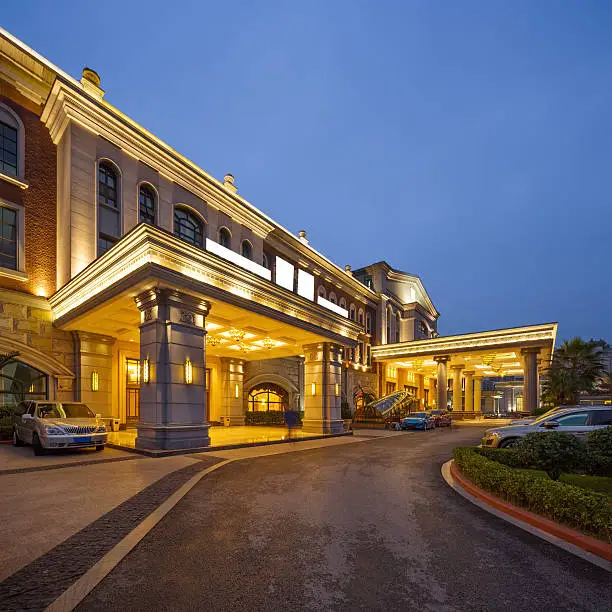
The Aldren was a thirty-eight-room boutique hotel in downtown Savannah. Historic building. Tall windows, old brick, brass railings, a rooftop bar with a view of the river that guests photographed constantly. The kind of bones people in hospitality dream about.
Before I acquired it, the property had been troubled. Mismanaged, under-renovated, losing money. Beautiful on the outside and tired underneath.
I spent eighteen months turning it around. Fixed the rooms first because guests forgive a lot but not a bad night’s sleep. Then the staff areas because employees should never be asked to create luxury from behind a broken door. Then the restaurant. Then the rooftop. Then the service standards.
By the second year under my ownership, we had a waiting list for weekend reservations from October through January.
I came back to Savannah not because of my family. The property was right, the market was right, and Savannah was a city I understood. I had been back nearly two years. Apparently they had no idea I was there, or if they did, they said nothing until that Friday night in November.
The hotel was full. A rehearsal dinner in the private dining room. A corporate buyout on the rooftop. A lobby full of guests arriving with garment bags and weekend luggage. Outside, the city was glowing in that soft Savannah way, streetlamps through the trees, car headlights sliding over wet cobblestone.
My front desk manager Celia called me at 7:45. Party of four asking to speak with the manager about a suite upgrade. Something in her voice told me it was more complicated than a routine request.
I came downstairs.
My father wore a blazer. My mother wore a dress she had clearly bought recently. Derek wore a collared shirt with fold lines still from the packaging. They looked like they were performing the idea of arriving somewhere nice.
My father saw me first.
Instead of shock, instead of tenderness, instead of any acknowledgement that seven years had passed, he looked at me with the expression I had known my whole life. The one that said he was already disappointed.
I kept my face neutral and asked about the reservation.
He laughed, turned to the others like I had told a joke. My mother stepped forward with her soft eyes and slight smile, the performance of warmth. Maya, sweetheart, we didn’t know this was your place. We just thought Derek’s firm was having their dinner here tonight on the rooftop. He’s being recognized.
I looked at Derek. He met my eyes for exactly one second, then looked away.
I checked the guest list. Derek’s name was there. One seat. Not four. He had added himself to a client event he had no authority over and brought three additional people without authorization.
I explained calmly that I was showing one confirmed seat under his name and that a full buyout meant the host company controlled the guest list entirely.
Derek’s jaw tightened. My father stayed quiet for about forty-five seconds, which was longer than I expected.
Then he stepped forward and said they had driven three hours, my mother was tired, and surely I could find a table for them in the restaurant while Derek handled the business thing upstairs.
I said of course and had Celia show them to a table near the window, the second-best table in the room, because I was raised to be professional even when I had every reason not to be. I sent over a complimentary bread course.
Thirty minutes later, Celia found me in the hallway outside the kitchen looking uncomfortable.
They were asking to see me again.
My father was sitting with his arms crossed. My mother picking at a bread roll. Cassandra studying her phone. Derek had gone upstairs, which told me everything about why the family was really there.
“Sit down,” my father said.
I remained standing. “Is there something I can help you with?”
“You can help us by acting like a daughter instead of a hotel employee.”
“I’m working. If there’s an issue with your table or service, I’m happy to address it.”
My mother reached out and touched my wrist. “We just want to talk, baby. We’ve missed you.”
Seven years. Not a single phone call. Not a text when I graduated from the program I had paid for entirely by myself. Not a word when I sold my first property. Not anything.
I kept my expression neutral.
My father unfolded his arms and leaned forward. Derek was being made partner at Hollis Group next month. That meant the family was moving into a different position. Socially. Professionally. They needed to present themselves appropriately. Derek and Cassandra were looking at a house in Ardsley Park.
“We need some help bridging the gap,” he said.
“What kind of help?”
“A loan,” my mother said quickly. Just to help with the down payment. Derek’s partnership bonus came in six months. It would all be paid back.
“How much?”
My father named the number.
“Sixty thousand.”
I let the silence sit for a moment. Outside the window, a couple was walking along the river. The woman laughed at something and the man reached for her hand. I watched them for just a second.
“I don’t think that’s something I’m able to do,” I said.
My father’s expression shifted. “You own a hotel, Maya. Don’t tell me you don’t have sixty thousand dollars.”
“What I have or don’t have isn’t really the point.”
“Then what is the point?”
I looked at him steadily. “The point is that the last significant financial transaction between our family and me involved forty-two thousand dollars for my college fund being used without my knowledge or consent. I built everything I have since then entirely on my own without support from this family. So when you ask me to loan sixty thousand dollars for Derek’s house, I think you can understand why the answer is no.”
His face went red. My mother pressed her lips together. Cassandra had stopped looking at her phone.
“That was years ago,” my father said. “You’ve clearly done fine.”
“I’ve done fine because I chose to. Not because of anything that came from this table.”
He leaned forward. His voice dropped to the register it used to drop to when I was in trouble as a child. The one designed to make me feel small.
“You want to talk about choices? You chose to cut off your family. You moved back to the city and didn’t say a word. You’ve been here two years and we had to find out from a colleague of Derek’s that our own daughter owns a property downtown. How do you think that feels?”
“I imagine it feels something like finding out your college fund had been emptied without anyone telling you,” I said.
He sat back. Jaw tight.
“Family helps each other,” my mother said softly.
“Family does help each other,” I agreed. “I believe that completely.”
There was a pause.
Then my father picked up the bread basket, set it to the side like he was clearing space, and placed both hands flat on the table.
“Maya, I’m going to be straightforward with you. Derek’s firm has a relationship with the property group that manages the lease for this building. I happen to know the senior partner there personally. It would be very easy for a concern to be raised about the current operator’s suitability at renewal time.”
He held my gaze the way he always did when he thought he had leverage.
I took a breath through my nose.
I thought about Celia at the front desk. I thought about my housekeeping supervisor Gloria, who had worked for me since the first month I opened and sent her grandchildren pictures of the rooftop every Christmas. I thought about the fourteen-hour days during the first year of this property. The corners I had refused to cut. The reviews I had earned one guest at a time.
Then I said, “Dad, who do you think owns this building?”
He blinked.
“The actual building. Do you know who holds the deed?”
He said nothing.
“I do,” I said. “I acquired the commercial property and the hotel operation as a combined asset eighteen months ago. There is no separate landlord. There is no lease to threaten. I own the building outright.”
The color in his face changed.
“The property group you’re referring to managed this building under the previous owner. They have no current relationship with this property. If Derek’s firm has a contact there, that contact has nothing to do with me. So when you say it would be easy to raise a concern at renewal time, there is no renewal. There is no leverage. There is nothing to threaten.”
I kept my voice completely even the whole time.
I was not angry. What I felt in that moment was not anger. It was something quieter and more final than anger. The feeling of something being fully completed.
My father opened his mouth, then closed it.
Derek came downstairs from the rooftop at that exact moment, saw everyone’s expressions, and said, “What happened?”
Nobody answered him.
I straightened my jacket.
“I’m going to have Celia bring your check over,” I said. “Your meals tonight are on the house because that’s how I run this property. Every guest receives my hospitality regardless of the circumstances. But I want to be clear that this is a professional courtesy and nothing more.”
I paused. “I hope Derek’s partnership goes well. I mean that. I don’t wish any of you harm, but I won’t be providing a loan, and I won’t be available for conversations like this one in the future.”
I looked at my mother last, because she was the one I had loved most, and therefore the one whose choices had cost me the most.
“I’m glad you came tonight, actually,” I said quietly. “I needed to see that I wasn’t afraid of this anymore.”
Then I walked back to the front desk.
Celia looked at me with wide eyes. “Everything okay?”
“Everything’s fine,” I said. “Table seven will be checking out in a few minutes. Please make sure their coats are retrieved from coat check promptly.”
They left twenty minutes later.
My father walked out first, quickly, without looking at the front desk. My mother paused at the door. I think she may have looked back. But I had turned to speak to a guest, and by the time I looked again, she was gone.
Derek stopped at the desk.
“Maya,” he said.
I looked at him. He had aged in seven years. Lines around his eyes that hadn’t been there before. He looked like someone who had spent a long time being the favorite and had recently begun to understand that favorites are not protected from consequences. They are only delayed from them.
“I didn’t know he was going to do that,” he said. “The thing about the lease.”
I studied him for a moment. I thought about the baseball games. The college fund. The year I worked two jobs before I was twenty to pay for something that had already been mine.
“I know,” I said.
Because I did know. Derek had always been the instrument, never the architect.
“I’m sorry,” he said.
For what it was worth, it was worth something. Not sixty thousand dollars. Not seven years. Not the version of our childhood that could have been different. But something.
“Good luck with the partnership,” I said.
He nodded once and walked out.
People have asked me since whether I felt like I won something that night. Whether it felt like revenge. Whether it felt like the universe finally balancing the books.
Honestly, it didn’t feel like winning.
It felt like finally being in a room where the air pressure was the same on all sides. No weight I hadn’t agreed to carry. No debt I hadn’t chosen to owe.
Just the even, quiet feeling of standing on ground I had built myself and not being moved.
The Aldren is doing well. We were recognized last spring by a regional hospitality publication. I hung the framing in the employee break room rather than the lobby, because the people who deserved the credit were the ones who would see it there.
I think about my family sometimes the way you think about weather from years ago. Not with anger. Not even with sadness anymore. More like you think about a very long winter that eventually ended and taught you, in the ending, that you had been warm-blooded all along.
My father walked into that Friday night still carrying a picture of a girl who could be pressured. He did not realize the picture was twenty years old.
I do not think he is a monster. He is a man who made consistent, deliberate choices to value one child’s future over another’s, and then lived long enough to watch the math catch up with him. That is not supernatural. That is cause and effect playing out at the pace it always does. Slower than you want when you are absorbing the damage. Faster than the other person expects when the bill finally arrives.
I built this life without a safety net and without a map and without anyone at a kitchen table telling me I was worth investing in.
I built it anyway.
That is the only story I know how to tell.
And it is the only one I need.

Specialty: Legal & Financial Drama
Michael Carter covers stories where money, power, and personal history collide. His writing often explores courtroom battles, business conflicts, and the subtle strategies people use when pushed into a corner. He focuses on grounded, realistic storytelling with attention to detail and believable motivations.