What Her Body Carried
The first thing Arthur did when the X-ray image appeared on the screen was ask them to turn it off.
Not: what is that? Not: is she going to be okay? He looked at the image the way a person looks at a thing they buried and hoped would stay buried, a debt or a secret suddenly lit in black and white for a room full of strangers to see. He stood very still. Then he said, firmly, with the specific authority of a man who has practiced having his requests treated as instructions: turn that off.
The doctor did not move.
Arthur turned that same authority toward him. “This is my family.”
Guadalupe heard her own voice before she had decided to speak.
“My mother is my family,” she said. “You are the man who just got frightened looking at something inside her.”
Her voice was steadier than anything else in the room, including her hands.
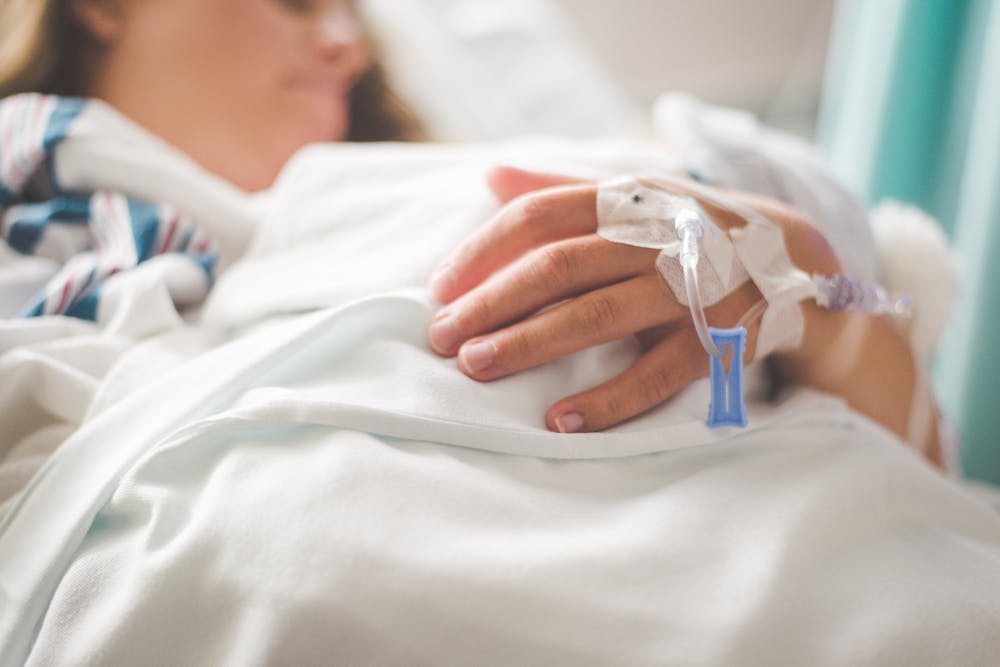
Her mother, Teresa Morales, closed her eyes. She was seventy-five years old and had spent the last four months carrying a metal capsule in her stomach, waiting for the right moment to be found, and the expression on her face in that exam room was not fear. It was the expression of someone who has been holding something impossibly heavy and has finally arrived at the place where they are allowed to set it down.
The doctor opened the door and spoke quietly to the nurse in the hallway. Arthur’s jaw tightened.
“The nature of this object,” the doctor said, returning, “requires surgical intervention and notification to the authorities.”
Arthur went several shades pale. “You don’t have the right.”
Teresa raised her hand from the exam table. Her fingers were thin and worn from decades of work, the knuckles a little swollen, the hand of a woman who had never had the luxury of softness. She pointed at the monitor.
“He does,” she said. “That small piece of metal knows more about you than my daughter does.”
Guadalupe felt the floor shift under her.
“Mom. Tell me what it is.”
Her mother swallowed. Something moved across her face like weather.
“A capsule. The kind I swallowed so he could not find it.”
Arthur moved toward the table.
“Keep your mouth shut.”
Guadalupe stepped between them. She did not plan to. Her body simply moved to where it was needed. Arthur stopped because the security guard was already coming down the hall, and the nurse had her phone raised and was recording. For the first time in the four years of her marriage, Guadalupe watched something enter Arthur’s eyes that she recognized only because she had spent those years watching for the inverse of it: fear. Not of losing her. Fear of a seventy-five-year-old woman in a hospital gown who was still talking.
Guadalupe and Arthur had met at a work event, an industry conference in a hotel ballroom downtown where the drinks were weak and the lighting was the kind that made everyone look more interesting than they were. He had found her at the edge of the room and stood beside her with the ease of a man who understood how to make proximity feel like attention, and she had been tired and a little lonely and had let herself be found. He was charming in a way that felt, at the time, like genuine warmth. He laughed at her jokes and remembered small details she mentioned and showed up with coffee when she had a hard week at work, and she told herself these were the signs of a person who saw her clearly and valued what they saw. It took her years to understand the difference between being seen and being studied.
In the first year of their marriage, she learned the texture of his moods the way you learn the layout of a house in the dark, which surfaces were safe, which were not, which rooms to avoid at certain hours. She told herself this was simply what intimacy required, the accommodation of another person’s full range. She told herself all relationships had their difficult seasons and this was one of theirs and the next one would be better.
She told herself many things.
When he checked her phone, she reminded herself that he simply worried. When he asked her to mention in advance any plans to visit her mother, she reminded herself that he valued communication and she was simply bad at it, which was a thing she could work on. When he commented on the temperature of dinner or the way she answered the phone or the particular expression on her face when she thought no one was watching, she told herself these were the small frictions of two people learning to share a life. She kept her eyes on the floor and her voice in the register that did not disturb him and her needs small enough not to become an inconvenience, and she called this love because she did not yet know what else to call it.
Her mother had called it something different.
Her mother had called it by its name, carefully and only once, during a Sunday visit two years into the marriage, and Guadalupe had defended Arthur with the specific heat of someone who is afraid that the person they are defending might be beyond defense. Her mother had listened to the defense quietly and then changed the subject and never raised it again. She had simply begun watching more carefully instead.
Teresa had come from a town in the high desert of Jalisco, a place where the summers were dry and the winters cut hard and the people had developed the particular durability of things that survive in difficult conditions without making a performance of it. She had come to Chicago in her late twenties with her husband Rodrigo, who had found work at a meatpacking plant on the South Side and had sent for her six months later with a money order and a one-way bus ticket and a letter that said, simply, it is better here than I expected, come. They had raised Guadalupe in a two-flat on Paulina Street in the Southwest Side, in a neighborhood where the corner stores stayed open late and the el train ran overhead and the blocks were full of people who knew each other well enough to notice when something was wrong.
Rodrigo had died when Guadalupe was seventeen, a heart attack, sudden and without warning, the kind of loss that rearranges everything about the world you thought you were living in. After that, it had been the two of them, mother and daughter, in the house on Paulina Street with the porch full of plants and the picture of the Virgin on the bedroom dresser and the old radio that Teresa kept tuned to a station that played the music she had grown up with.
Guadalupe had not moved far. Her apartment was twenty minutes by el. She visited every Sunday, usually. Before Arthur.
After Arthur, the visits became less frequent. There were reasons for this, which she had explained to her mother with the careful language of a woman managing two separate versions of her life, and her mother had listened to each explanation with the particular patience of someone who was not convinced but understood that conviction required more than patience.
Teresa had been watching for a long time before she saw Arthur at the produce market.
She told the story in the exam room in measured portions, the way someone tells a story they know they may only get one chance to tell correctly.
She had gone with her neighbor to pick up tomatoes and epazote at the wholesale market on 18th Street, where the stalls ran along loading docks that smelled of ripe fruit and diesel and the particular damp smell of produce in bulk. She had seen Arthur near one of the docks. She had seen him accept an envelope from a man she did not know. She had understood, with the instinct of a woman who has paid close attention to the world for seventy-five years, that she was watching something that was meant to be unseen.
She had her phone in her grocery bag. The pink flip phone with the strip of electrical tape holding the case together, the phone Arthur had laughed at over Sunday dinners, asking why Teresa didn’t just get something better, shaking his head when she said she didn’t need anything better. She had held it up at the edge of the dock and recorded what she could.
“What did you record?” Guadalupe asked.
Her mother looked at her with a sadness that seemed to age Guadalupe where she stood.
“Your husband saying he had the insurance policies ready. That he only needed you to sign some documents. That if I died first, even better. That a sick old woman would not cause problems for anyone.”
The room was completely silent.
Arthur opened his mouth. Nothing came out.
“When I understood what he was planning,” her mother continued, “I put the memory card into a metal capsule that had belonged to your father. He used it to keep a small religious medal. I thought about hiding it behind the picture of the Virgin on my dresser, but Arthur came to my house that same night.”
Arthur’s composure was visibly deteriorating, the careful surface cracking in the specific way of things that have been maintained through effort and have run out of effort.
“She’s confused,” he said. “She swallowed something on her own and now she’s constructing a story.”
The doctor spoke with the flat evenness of someone who had no interest in performance. “The object is lodged and causing inflammation. If the intestine perforates, she could die.”
Her mother did not look at the doctor.
“He came to my house,” she said. “He came that night and went through my drawers. He threw my plants off the porch. He broke the frame with your father’s photograph. He grabbed my arm and told me he knew I had seen something.” Her voice stayed even. “So I put the capsule in my mouth and I swallowed it.”
“Mom.”
“I thought it would pass naturally. It did not. And then the burning started, and I thought I was going to die in my own bedroom before anyone knew what I had tried to do.”
Arthur took a step toward the monitor. The security guard stopped him with one hand flat on his chest.
“That capsule belongs to me,” Arthur said.
Three words that said everything that needed to be said.
Nobody in the room breathed.
The doctor arranged emergency transport to a hospital with a full surgical unit. Arthur left the exam room by pushing past the guard, and Guadalupe heard him go without turning to watch. She could feel his anger moving down the hallway behind her like a change in pressure.
While they waited, her mother pulled her close.
“There is a blue notebook at my house,” she whispered. “Behind the picture of the Virgin. Names, dates, license plates. I wrote everything down in case the capsule did not survive.” She paused. “Arthur has copies of your signatures, Lupe. He was going to leave you in debt. He was going to take the house and take your mother.”
Tears arrived before Guadalupe could prevent them.
“I didn’t see any of it.”
“When you live in fear long enough, you learn to keep your eyes on the floor.”
That sentence hurt more than anything else had.
She called Mrs. Chela.
Rosa Chela Domínguez had sold breakfast burritos and tamales outside the Damen Blue Line station for twenty-two years and knew everyone within six blocks in either direction and had, over the course of those years, developed the specific competence of a person who has been useful in genuine emergencies often enough to know the difference between an emergency and a drama. Guadalupe told her about the spare key under the clay pot with the aloe plant and asked her to get the blue notebook out of the house immediately.
Mrs. Chela said: I am going right now. And if that man shows up while I am there, I will hit him with whatever I have in my hand.
Guadalupe believed her.
At the hospital, time moved the way it moves in waiting rooms, which is to say in ways that bear no relationship to the clock. The surgeon’s team took Teresa in. Guadalupe sat in the hallway with her mother’s shawl in her hands, worn soft and smelling of the Zote soap Teresa had used her entire life, and gave her statement to two police officers who arrived twenty minutes after she did. She gave it in a voice she did not recognize as her own, calm and precise, as if grief had cleared a space inside her for something clearer than grief.
Then Arthur texted her.
Your mother is leaving that hospital in a bag if you say another word.
She turned the phone screen toward the nearest officer and said nothing. He looked at it, looked at his partner, and began making calls.
Two hours later, the surgeon came out.
“She’s alive.”
Guadalupe bent forward under the weight of every month she had spent afraid to make a sound.
They had removed the object. A woman from the district attorney’s office came out behind the surgeon in gloves and carried a small clear evidence bag containing what looked like an ordinary piece of hardware, a dark cylinder no larger than a finger joint, scratched and worn. Inside it, when they opened it in front of the officers, was a memory card wrapped in plastic and a thin strip of paper, rolled tight, partially damaged by the months it had spent in her mother’s body.
Guadalupe could not read all of it. But she recognized her mother’s handwriting, the careful deliberate print of a woman who had learned to write in a different country and had taken the task seriously for that reason.
If something happens to me, Arthur did it.
That sentence ended what remained of her uncertainty.
Mrs. Chela arrived close to midnight with the blue notebook tucked inside her jacket and her hair half-undone and the residual smell of cooking oil that never entirely left her, looking like a woman who had moved very quickly for a long time without stopping to consider whether she should.
She had seen Arthur at the house. He had tried the front door, she said. But three neighbors had been on the porch by the time he arrived, because Mrs. Chela had made three phone calls before she left, and they had told him that the block had eyes.
She set the blue notebook on the waiting room table.
Inside were names and dates and license plate numbers and dollar amounts and clipped receipts, organized in the careful way of someone who had no training in evidence collection and understood nonetheless that specificity was the difference between a record and a story. There was a printed photograph, blurry but legible, of Arthur with an unknown man outside a warehouse in the South Side produce district. Teresa Morales, age seventy-five, with a taped-together flip phone and a grocery bag and a lifetime of being underestimated, had assembled a more complete file than most trained investigators would have thought to put together.
Arthur appeared in the hospital at three in the morning.
Guadalupe was in the hallway beside the coffee machine when the elevator opened and he stepped out. His shirt was wrinkled. His eyes were red in a way that had nothing to do with grief. He was a man who had spent several hours running out of options and had arrived at the end of them.
“Give me the memory card,” he said.
“I don’t have it.”
“You’ve always been good at doing what everyone else tells you. Everyone except your husband.”
“You are not my husband anymore.”
He smiled. It was the most honest expression she had ever seen on his face, stripped of the warmth he had performed for four years, cold and simple and entirely itself.
“Without me,” he said, “you are nothing.”
Before, that sentence would have found the exact place inside her where her confidence was thinnest and pressed. Before, she would have felt the familiar collapse of herself inward, the trained smallness. But she was standing in a hallway where her mother was breathing through tubes after spending four months carrying evidence through her own body, and what she felt when Arthur said it was not collapse. It was something else. Something that had been extinguished for a long time, lit back up.
“I am Teresa Morales’s daughter,” she said. “That is more than enough.”
He grabbed her arm.
Hard. The kind that leaves a mark.
She screamed. Not from fear. She screamed because every person within range deserved to hear exactly what was happening. The two officers came around the corner from the nurses’ station. Mrs. Chela appeared from the family waiting room on the other side of the hall, hospital coffee in hand, eyes fully open, looking like a woman who had been waiting precisely for this moment.
They handcuffed him under the fluorescent lights of the hospital corridor.
As they walked him toward the elevator, he turned back and looked at her the way he had always looked at her when he wanted her to feel followed. The stare designed to come home with her.
She held up her arm and showed him the marks his fingers had left on her skin.
“No,” she said. “I’m already starting to remember who I was before you.”
Teresa woke slowly, the way dawn comes in October, uncertain at first and then completely present. Her voice came out dry and small.
“And him?”
“Detained.”
One tear moved sideways down her face.
“The capsule?”
“It spoke, Mom.”
Her mother closed her eyes and smiled. Not wide, not triumphant. The quiet smile of a woman who had made a serious bet with her own body and collected.
“I told you,” she whispered. “I told you it would speak for me.”
The weeks that followed held the specific contents of aftermath, which is to say statements and legal appointments and documents requiring signatures and the grinding practical work of undoing what Arthur had built in her name without her knowledge. She learned the full extent of it by degrees, which is the only way to absorb something of that size without being destroyed by it: two life insurance policies taken out on her within the last eighteen months, forged signatures on loans she had never agreed to, a systematic construction of fraudulent debt that would have taken years to untangle if it had ever been discovered. He had also consulted someone about having Teresa declared mentally unfit to give testimony, which would have erased everything her mother had done to document what she knew.
Teresa had walked to the women’s center at the Chicago Department of Family and Support Services three times in four months. Three times she had stood at the doors. Three times she had turned back, not because she was frightened for herself, but because she was afraid of starting a chain of events she could not control, afraid of what it might do to Guadalupe in the process.
A mother’s silence is sometimes the most costly kind of protection.
When Teresa came home to the house on Paulina Street, her porch plants had been knocked around but none of them were dead. Mrs. Chela had swept and reorganized the pots and watered everything and left a covered pot of beans on the stove with a note that said low heat, don’t let it stick. The picture of the Virgin was still on the bedroom dresser with a new candle burning in front of it.
Her mother walked slowly to the rocking chair on the porch and sat looking out at the street.
“I thought I was not going to make it back here,” she said.
“Me too.”
Guadalupe began therapy that fall with a woman named Dr. Reyes who had a small cactus on her desk and the particular patience of someone who has spent years helping people understand which of their instincts belong to them and which were installed by someone else.
“When did you first learn to keep your eyes on the floor?” Dr. Reyes asked during their third session.
Guadalupe thought about it longer than she expected to.
“I don’t know that I ever knew I was doing it,” she said. “I thought it was how you loved someone. You made yourself small enough not to disturb them.”
“And now?”
She looked at the cactus on the desk.
“Now I think love shouldn’t require you to disappear.”
That December, she spent Christmas Eve at her mother’s house. Mrs. Chela came. Two neighbors came. Someone brought tamales. Someone else brought ponche. The house was warm and loud and full in the way that houses are when the people inside have chosen to be there.
Late in the evening, her mother pulled her into the hallway under the picture of the Virgin.
“I want to tell you something,” Teresa said.
“Okay.”
“When I was lying on that table and they were looking at the image on the screen, I thought about all the years I waited for you to see on your own what I could see. All the times I almost said something and stopped myself, because I told myself I was protecting you.” She paused. “But silence is not protection. I thought carrying it alone was keeping you safe. I was only making sure no one else had to help me hold it.”
Guadalupe did not speak.
“Your father used to say that the things we do not say become the walls in the house. You can live in a house full of walls for a long time before you understand why it feels so small.”
She held her daughter’s face in both hands. Those familiar hands, worn and slightly rough, the hands that had braided her hair and corrected her homework and held a pink flip phone up in a warehouse parking lot on 18th Street to record what needed to be recorded.
“Say things,” her mother said. “Say them while there is still time.”
The candle in front of the Virgin burned small and steady. Outside, a winter wind moved through Paulina Street.
Inside, two women who had learned the same lesson in different and costly ways stood together in a narrow hallway, and neither of them was afraid.
It did not end cleanly. These things do not. The legal process was long and the debts Arthur had put in her name took months and multiple attorneys to address, and the years she had spent making herself small would take longer than months to undo. She did not wake up one morning healed.
But she woke up. And the mornings were hers.
There were Sundays at her mother’s kitchen table, eggs and serrano peppers, the radio on. There were sessions with Dr. Reyes and the slow uneven work of understanding her own interior. There were Wednesday morning calls from Mrs. Chela reporting that the tamale vendor had new flavors or that the neighbor’s cat had gotten onto the roof again.
Arthur had looked at Teresa Morales and seen an obstacle. An elderly woman who might cause inconvenience before she could be managed. He had never once asked himself what she knew. He had never considered that she was watching him with a pink flip phone and a composition notebook and the steady attention of a woman who had spent seventy-five years paying close attention to a world that was not always paying attention back.
That was the real mistake. Not the greed or the planning or the morning he grabbed Guadalupe’s arm in front of two police officers.
The real mistake was assuming that a woman he had decided didn’t matter wasn’t dangerous.
She was the most dangerous witness in the room.
And in the end, everything Arthur had tried to hide was carried out of her body in a clear evidence bag, intact, still carrying what it had been trusted to carry.
He had called Teresa a liability.
She had made herself a vault.
And when they finally opened it, what they found was not the confused testimony of a woman Arthur had tried to discredit.
What they found was a record.
A witness.
A mother who had decided that if her voice could not be heard above the noise, then her body would hold the truth until someone was ready to receive it.
Someone was.
Her daughter was.
And she had been there all along, learning slowly, in the only way that lasting things are learned, which is through paying the full cost of understanding.

Adrian Hawthorne is a celebrated author and dedicated archivist who finds inspiration in the hidden stories of the past. Educated at Oxford, he now works at the National Archives, where preserving history fuels his evocative writing. Balancing archival precision with creative storytelling, Adrian founded the Hawthorne Institute of Literary Arts to mentor emerging writers and honor the timeless art of narrative.