What Was Buried
For four years, I watched my neighbor dig holes in her backyard every weekend and fill them back in before dark. I told myself it was none of my business. I told myself old women were entitled to their eccentricities. I told myself my wife was right when she said I was reading things into it.
I was not reading things into it.
Our street was the kind of quiet that made people lower their voices. Not the pleasant quiet of a neighborhood that had found its rhythm, but the other kind, the kind that feels like everyone has agreed, without discussion, to look away from certain things. The houses sat close together with narrow strips of yard between them, and the neighbors who had been there the longest seemed to have developed a practiced incuriousness about one another, the polite studied blindness of people who have learned that proximity without involvement is the safest arrangement.
Mrs. Harper had lived next door for longer than any of them. She was seventy-two, a widow, and she lived alone in a house that showed its age in the same way she did, not with neglect exactly, but with the quiet weariness of things that have been standing for a long time and no longer feel the need to announce themselves. Her curtains stayed closed. Her porch light never came on. Her mailbox sat at the end of the front walk looking like it was waiting for something that rarely arrived.
In four years of living beside her, Karen and I had exchanged perhaps twenty sentences with the woman. She waved when she saw you. She replied when you spoke. She was not unfriendly. She was simply, completely, a person who had retreated deeply into her own life and showed no particular interest in being drawn back out.
Except every weekend, she was out in her backyard with a shovel.
I noticed it the third or fourth week after we moved in. Karen was at the kitchen table with her coffee and I was standing at the window watching the yard come into the morning light, and there was Mrs. Harper, working her way through the hard-packed soil near the back fence. I watched her for a while before I said anything.
“She’s digging again.”
Karen didn’t look up. “Who?”
“Mrs. Harper. Next door.”
“Gardening, probably.”
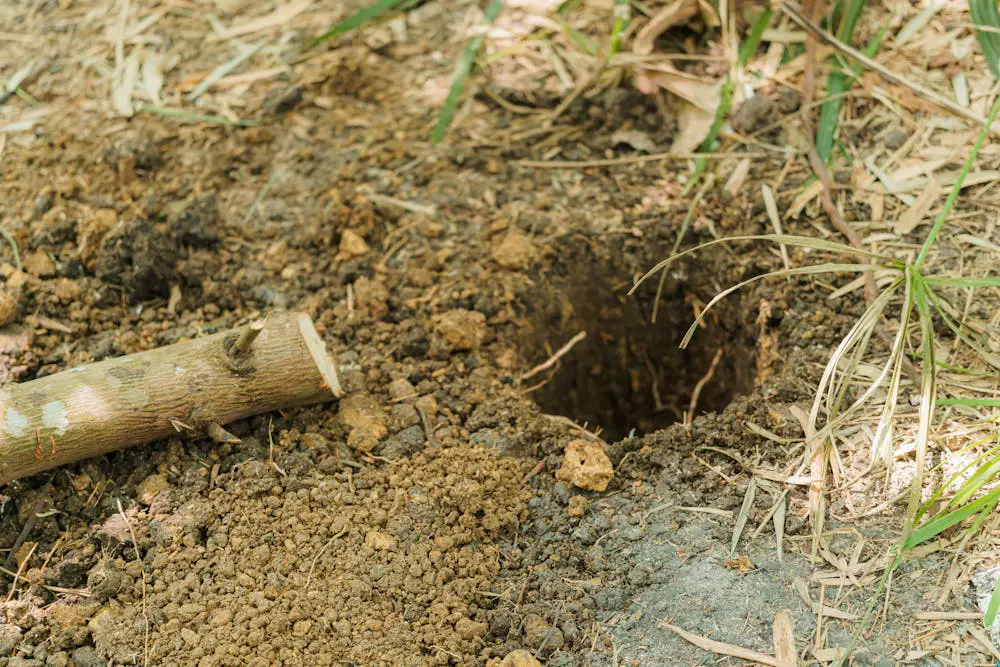
“She doesn’t plant anything. She just digs the hole and then fills it back in.”
“Maybe she lost something.”
“Every weekend for a month?”
Karen looked up then, briefly, with the expression she used when she was deciding whether something merited more than a sentence’s worth of attention. It didn’t, she decided. She went back to her coffee.
I kept watching.
What I noticed, in the weeks and months that followed, was not the digging itself. People have habits that look strange from the outside. Gardens are full of projects that take longer than expected and proceed according to a logic that is entirely private to the person doing them. I was not the kind of neighbor who thought everything unexplained was a problem. I had my own quirks and my own privacy and I understood what it was to want to be left alone in your own yard on a weekend morning without commentary from next door.
But the digging was not a garden project. I understood that clearly within the first few weekends, once I had watched it enough times to see the pattern. She always dug in the same area. She always worked alone and in silence. She never brought tools other than the shovel. She never brought seeds or bulbs or any of the accessories of actual gardening, no trowel, no gloves with the bright printed backs that the garden center sold, no bags of soil amendment. She simply dug. She sat beside the hole for a while. She filled it back in. She went inside before dark.
The watching itself made me uncomfortable sometimes. I was aware that there was something contradictory about spending years peering through kitchen blinds in the name of concern. But the concern was real, and the discomfort I felt about my own watching was less than the discomfort I felt about the alternative, which was to turn away entirely and let whatever was happening next door happen without a single person paying attention.
What I noticed, in the weeks and months that followed, was the way she held herself while she worked. Her hands gripped the shovel handle with a tension that went beyond effort. Her shoulders curved inward. She moved with the focused deliberateness of someone performing a task they had thought through carefully, not the loose unconscious rhythm of someone passing time. And every few minutes, she would stop and look back at the house.
Not toward the street. Not toward the fence where I stood. At the house.
There is a particular kind of vigilance that belongs to people who are afraid of something specific, and it looks different from general nervousness. It has a direction. Mrs. Harper’s vigilance had a very clear direction, and it pointed toward her own back windows.
I mentioned this to Karen more than once over those first two years. Karen was patient with me for a while and then less patient, and somewhere in the third year she stopped responding to Mrs. Harper observations entirely, which I understood. I had been saying the same things for a long time without being able to explain why I couldn’t let it settle.
Then I saw the car.
A silver sedan pulled into Mrs. Harper’s driveway on a Thursday afternoon in late October. The man who got out was somewhere in his mid-forties, broad-shouldered, wearing a jacket that was slightly too good for the neighborhood in the specific way that people wear things when they want you to notice the quality. He did not knock. He tried the door, found it unlocked or had a key, and walked straight in.
Mrs. Harper had been on the front porch when the car turned onto the street. I watched the color drain from her face in a way that had nothing to do with surprise and everything to do with the particular fear of someone who has been waiting for something bad to arrive and has been hoping each day that today is not the day.
“Whose car was that?” I asked Karen at dinner.
“What car?”
“The silver one. Next door. The man who went inside.”
“Probably her son.”
“She has a son?”
Karen set down her fork. “David. You have lived beside this woman for over three years. You didn’t know she had a son?”
“She doesn’t talk about herself. She barely talks at all.”
“This is exactly what I mean. You don’t know these people. You see fragments and you build a story around them.”
“I know she was frightened when that car pulled up.”
“You don’t know that. You think you know that.”
Karen was not wrong about my tendency to construct narratives. I was aware of it. I tried to sit with the awareness and let the concern about Mrs. Harper pass the way Karen clearly wanted it to pass.
But two nights later, at a little past two in the morning, I heard it.
A scraping sound, low and deliberate, coming from the yard next door.
I got up quietly and went to the window. The yard was lit only by the neighbor’s security light two houses down, just enough to see shapes. There was a figure in Mrs. Harper’s yard, and it was not Mrs. Harper. It was too tall, the movements too heavy, and it was dragging something under a blue tarp toward her side door.
I stood at the window for a long time. Then I went back to bed and lay there listening.
In the morning, I walked out to get the paper and looked at the ground along the fence line. Muddy boot prints led from the rear of Mrs. Harper’s yard to her side entrance. Large ones. The kind a broad-shouldered man in his mid-forties might make.
I knocked on her front door.
No answer.
I knocked again and said my name through the wood, told her I was just checking in.
The curtain in the front window moved.
“Please go away.” Her voice was muffled but I heard every word. “Please. You will only make it worse.”
“Worse how? Mrs. Harper, who is in there with you?”
“Nobody.”
“Then open the door.”
A long silence.
“I am begging you,” she said. “Please leave.”
I stood on her porch for several minutes before I went back to my own house and sat at the kitchen table. Karen came in and looked at my face.
“Call them,” she said.
“And tell them what? That my elderly neighbor asked me to go away?”
“Then don’t call.”
“But if something happens to her.”
Karen sat down across from me and was quiet for a moment. “You have to make a decision, David. Either you have enough to call the police or you don’t. Hovering in between doesn’t help anyone.”
She was right. I didn’t call. I spent the night sitting up in increments, going to the window and back to bed, not sleeping.
The lights came before dawn.
Red and blue, moving across the bedroom ceiling in the particular rhythm that means something serious is happening nearby. I was at the window before Karen was fully awake. Six officers stood in Mrs. Harper’s backyard with shovels and a portable light. A detective in plain clothes walked the perimeter. The neighbors were already gathering on the sidewalk in their coats, drawn out by the lights and the low authority of police radios in the early morning.
Karen appeared beside me. “David. Don’t go out there.”
I pulled on my jacket.
“David.”
“She’s seventy-two years old,” I said.
By the time I reached the fence, the officers had already opened one of the holes. I heard the crowd sound before I saw what they had found, that particular shift in a group of people when something unexpected changes the nature of what they are looking at. I pushed close enough to see.
In the dirt, half unearthed: a rusted metal box. A detective opened it carefully with gloved hands. Inside, wrapped in a piece of cloth that had once been a specific color and was now simply old, were letters tied with ribbon, photographs worn soft at the corners, and a child’s shoe. A single small shoe, no bigger than a man’s palm.
I heard the voice before I saw who it belonged to.
“Mom, just tell them the truth.”
A man in his mid-forties stood to the left of the lead detective. The man from the silver car. He was wearing the expression of a person performing deep concern, the slightly furrowed brow and tight mouth of someone who has practiced looking worried in the mirror. He had his arms folded across his chest and his eyes moved across the scene with the particular alertness of someone who is monitoring a situation he has a stake in.
A neighbor behind me whispered that it was her son, Daniel. He was the one who had called.
“My mother has not been herself for months,” Daniel said, addressing the detective but projecting his voice outward to the gathered crowd. “I have been worried. I asked her to get help. I believe she may have buried things. I had no choice but to come forward.”
The detective nodded in the careful noncommittal way detectives nod.
Then I saw Mrs. Harper.
Two officers were walking her across the lawn, her thin wrists in handcuffs, her gray hair undone from whatever she usually kept it in. She was wearing a house coat and slippers and she looked like someone who had been expecting this to happen and had run out of the energy required to be surprised by it. She kept her eyes on the ground.
“Ma’am, do you understand why we’re here?” the detective asked.
She didn’t answer.
“She’s confused,” Daniel said quickly. “She has been confused for some time. That’s part of why I was so worried. She doesn’t understand what she’s done.”
“Daniel.” Her voice was barely above a whisper, but it cut through everything else in the yard the way certain quiet sounds do, the way the absence of sound does. “Stop.”
“Mom, I’m trying to help you.”
“You are not.”
The crowd went completely quiet. Even the officers paused. Daniel’s performed concern thinned for a moment, became something else, some passing expression that was entirely unlike worry, before he pulled it back.
“You see?” he said, turning to the detective with a sad, patient smile. “She doesn’t even know who is on her side.”
I had been about to turn around and walk back to my own yard. Karen’s hand had found my elbow. I could feel her wanting to pull me back and I understood why, because she had been right about most of this, right that I did not fully know Mrs. Harper, right that I should not have waited so long, right that I had spent four years constructing a story from fragments.
But then Mrs. Harper looked up.
Her eyes moved through the crowd slowly, past the officers and past the neighbors and past Daniel with his practiced expression of filial concern, and they found mine. She was not reaching for anyone else. She had looked at me specifically. And she mouthed a single word.
Please.
Karen’s hand tightened on my elbow. I heard her say my name.
I looked at Daniel.
He had noticed me. His eyes were sharp and careful in a way that had nothing to do with the grief or worry he had been performing for the detective. He was calculating who I was and what I might know, and in that calculation I saw everything I needed to see. A worried son does not look at a neighbor with that kind of attention. A man who has just called the police because he is genuinely frightened for his mother does not immediately assess who in the crowd might be a problem.
“Detective,” I said. “Before you take her anywhere, you need to see something.”
The detective turned. He was a patient man who had the look of someone who had seen more situations than he could count and was not easily swayed, which was exactly what I needed him to be.
“I live right there,” I said, pointing. “I have security footage.”
Daniel’s expression shifted. “Officer, he doesn’t know what he’s talking about. My mother is unwell, and this man has apparently been surveilling her, which is its own kind of problem.”
“I set up the camera because I was worried about her,” I said. “Show me your phone, Detective. I’ll send you the clips right now.”
The detective looked at Daniel for a moment, then at me, then held out his hand.
I scrolled through three weeks of footage. Daniel in a dark hoodie, moving through Mrs. Harper’s yard after midnight on four separate occasions. Daniel placing objects near the holes she had been digging. Daniel rearranging things in her garden shed. Daniel taking photographs of items he had apparently positioned himself before stepping back to frame the shot.
The detective watched in silence. Then he watched it again.
“That is not what it looks like,” Daniel said. His voice had lost some of its steadiness.
“Then tell me what it looks like,” the detective said.
Daniel did not answer.
The detective crouched beside Mrs. Harper. His voice was gentle in the way that some people in positions of authority manage to be when they understand they are talking to someone who has already been through enough.
“Mrs. Harper. What’s in the box?”
She was quiet for a long moment. Then she lifted her head.
“My husband wrote me letters during the years he was sick. Before he passed.” She stopped. Started again. “And my daughter’s shoe. She was stillborn, forty years ago. She only lived for three hours.” Her voice was steady but her eyes were not. “They were all I had left of either of them. Daniel said when he took the house he would throw them out. He called them clutter. He said I needed to stop holding onto the past.” She looked at the box in the detective’s hands. “I was keeping them safe. I thought if I buried them he wouldn’t find them.”
The cemetery was completely silent now.
The detective stood slowly. He turned to face Daniel.
“Sir,” he said, “I need you to come with me.”
Daniel had apparently decided this was the moment for righteous indignation. He drew himself up to his full height and began to explain that his mother was not competent to make decisions about her own property, that he had power of attorney documentation that he would be happy to provide, that the state of her mental health had been concerning to the entire family for years, though he seemed to be the only family member present, and that he had only ever acted in her best interests.
“You’re under arrest,” the detective said, “on suspicion of elder abuse and fraud.”
Daniel looked at the detective for a moment as if he expected the sentence to rearrange itself into something more reasonable.
It did not.
The handcuffs went on the right person this time.
Mrs. Harper watched her son be walked to the patrol car. Her expression was not triumphant. It was not even particularly relieved. It was the expression of someone who has been carrying something very heavy for a long time and has finally been allowed to set it down, and is not entirely sure yet what they feel without the weight.
I stood at the fence until the patrol cars left and the neighbors drifted back to their houses and the officers finished their work in the yard. The detective came and took a formal statement from me before he left, and I gave him access to the full footage from the camera. The box of letters and the small shoe were placed in an evidence bag with what I thought was appropriate care, which I appreciated.
When it was over, Mrs. Harper was standing alone in her backyard.
I didn’t know what to say. I had spent four years watching this woman from a distance, constructing theories, worrying in the wrong direction, and ultimately waiting too long to act. None of that felt like something that deserved a great deal of credit.
“I’m sorry it took me four years,” I said.
She looked at me for a moment.
“Why did you help me?” she asked. “You barely knew me.”
“Because you needed someone to listen,” I said. “That much I knew.”
She was quiet for a while.
“He had been coming for months,” she said. “Taking small things at first. Moving things around so I would think I was losing my mind. He wanted the house. He knew if he could show that I was confused, that I couldn’t manage on my own, he could get guardianship and sell the property.” She paused. “He told me no one would believe me. He said I was too old and too strange and that everyone already thought I was peculiar.” She looked at the patches of turned earth around the yard. “He wasn’t entirely wrong about that.”
“You were protecting the things you loved,” I said. “That’s not peculiar.”
A week later, her curtains were open for the first time since I had moved in. The morning light came through them and made the front of the house look different, lighter, the way rooms look when you open them to air.
She called over the fence while I was getting the paper.
“David. Would you and your wife come in for tea?”
We went that afternoon. Karen brought cookies and Mrs. Harper made a pot of something strong and dark that she said her husband had preferred, and we sat in a living room that had a particular quality of stillness that belonged to places where someone has lived alone for a long time. The furniture was old and well cared for. The bookshelves were full. On the mantel above the fireplace there were photographs, and I found myself looking at them the way you do when you are finally inside a place you have been observing from a distance for years, trying to connect the images to the person sitting across from you in a good chair with her tea held in both hands.
Her husband had been a tall man, considerably taller than she was, and in every photograph where they appeared together she was looking at him with an expression that I recognized as the specific quality of attention people give to something they know they are lucky to have. He had died nine years ago. She had been living in that house alone since then, and for the first five of those years she had been managing well enough, she said, until Daniel began calling more frequently, stopping by more often, making small suggestions that accumulated into something else.
She told us about the daughter first. The stillbirth had happened early in the marriage, in the third year, and her husband had been with her through all of it, and afterward he had kept the small shoe from the hospital and had given it to her with the gravity of a man who understood that some losses required physical objects to hold them. He had written her letters throughout the years of his illness, when the doctors had told him to slow down and he had slowed down everything except writing to her, three or four pages on the good days, single paragraphs on the hard ones. After he died she had read them regularly, the way some people return to certain books, for comfort and familiarity and the particular reassurance of a voice you know.
Daniel had called them clutter during his second visit in the spring. He had stood in the living room looking around with the assessing expression of a man performing a calculation, and he had told her the house needed to be simplified, that she was holding onto things that were not healthy to hold onto, that he was worried about her. He had used the word worried frequently in those early months, and each time he used it she had felt something contract in her chest, the word arriving in the particular tone that meant it was not really about her wellbeing but about her property and his access to it.
When he had taken the folder of bank statements from her desk during the fourth visit and told her he was concerned about her finances, she had understood what was happening. She had contacted a lawyer, a woman from her church whose daughter had become an attorney, and the lawyer had been helpful and clear, but the process of fighting it was slow and expensive and Daniel had resources she did not. She had begun moving the letters when she realized she could not count on the legal system moving fast enough to help her.
The charges held. The footage was clear, the documentation of the financial manipulation even clearer once the investigators had access to Daniel’s records. He had been building a paper trail designed to support a guardianship claim, forging or manipulating certain documents, and had moved money from one of her accounts in small increments over eighteen months. His lawyer tried several arguments, including the one about Mrs. Harper’s mental competence, which required the court to speak with her directly, and by all accounts that conversation went very badly for Daniel’s case.
She was, as it turned out, the sharpest person in the room.
That spring, we worked in her backyard together on a series of weekends. Karen, who had come around to Mrs. Harper with the particular completeness that Karen brought to changes of mind, planted the first roses. She had done research and arrived with a variety she said would do well in the soil and would come back reliably year after year, which seemed like the right ambition for that yard. Mrs. Harper had opinions about where they should go and she expressed those opinions clearly, which I found I liked very much. She had specific ideas about sun exposure and drainage and the aesthetics of the thing, and she and Karen debated the placement of each one with a seriousness I found genuinely moving, two women who had never really talked before, crouching in the dirt together with total investment in where a rose should live.
I filled in the holes while they argued about it, the ones that had held her most private griefs for all those months, and worked the turned earth back into the level ground it had been before all of this. Mrs. Harper stood beside me at one point and watched.
“Does it feel strange?” I asked her once. “Filling them in?”
She thought about it.
“They were never the right place for them,” she said. “I was hiding them because I was afraid. That is not the same as keeping them safe.” She looked at the turned earth. “They belong inside. With me. Where I can see them.”
The letters came back in early June, returned in the same evidence bag with a formal receipt and a note from the detective that I thought was unexpectedly kind. She put them in a wooden box on the shelf above her fireplace, in the living room with the open curtains.
The shoe she placed beside it.
I think about those four years sometimes, about all the Saturday mornings I stood at the kitchen window watching her and not knowing the right thing to do, about the night I heard the scraping in the yard and put the phone down. There is no version of events in which I come out looking as quick or as capable as I would prefer. I waited when I should not have waited. I second-guessed myself when the evidence of my own eyes was telling me something I should have trusted sooner.
But Mrs. Harper, when I said as much to her one afternoon over tea, waved the apology away.
“You listened eventually,” she said. “That is more than most people offered.”
I thought about that for a long time.
The street is different now, or maybe I am the one who is different, and the difference is in what I notice. Mrs. Harper’s porch light comes on in the evenings. Her mailbox gets collected every day. She keeps a small table on the front porch in warm weather where she sometimes sits with a book in the afternoons, and she waves when the neighbors pass, and sometimes they stop and she talks to them.
She is not, it turns out, particularly quiet.
She is simply a woman who spent a long time keeping watch over what she loved, waiting for someone to ask why.
Some things that look like secrets are not secrets at all. They are just sacred things in the wrong hands, waiting for someone to recognize the difference.
I am glad I finally did.

Adrian Hawthorne is a celebrated author and dedicated archivist who finds inspiration in the hidden stories of the past. Educated at Oxford, he now works at the National Archives, where preserving history fuels his evocative writing. Balancing archival precision with creative storytelling, Adrian founded the Hawthorne Institute of Literary Arts to mentor emerging writers and honor the timeless art of narrative.