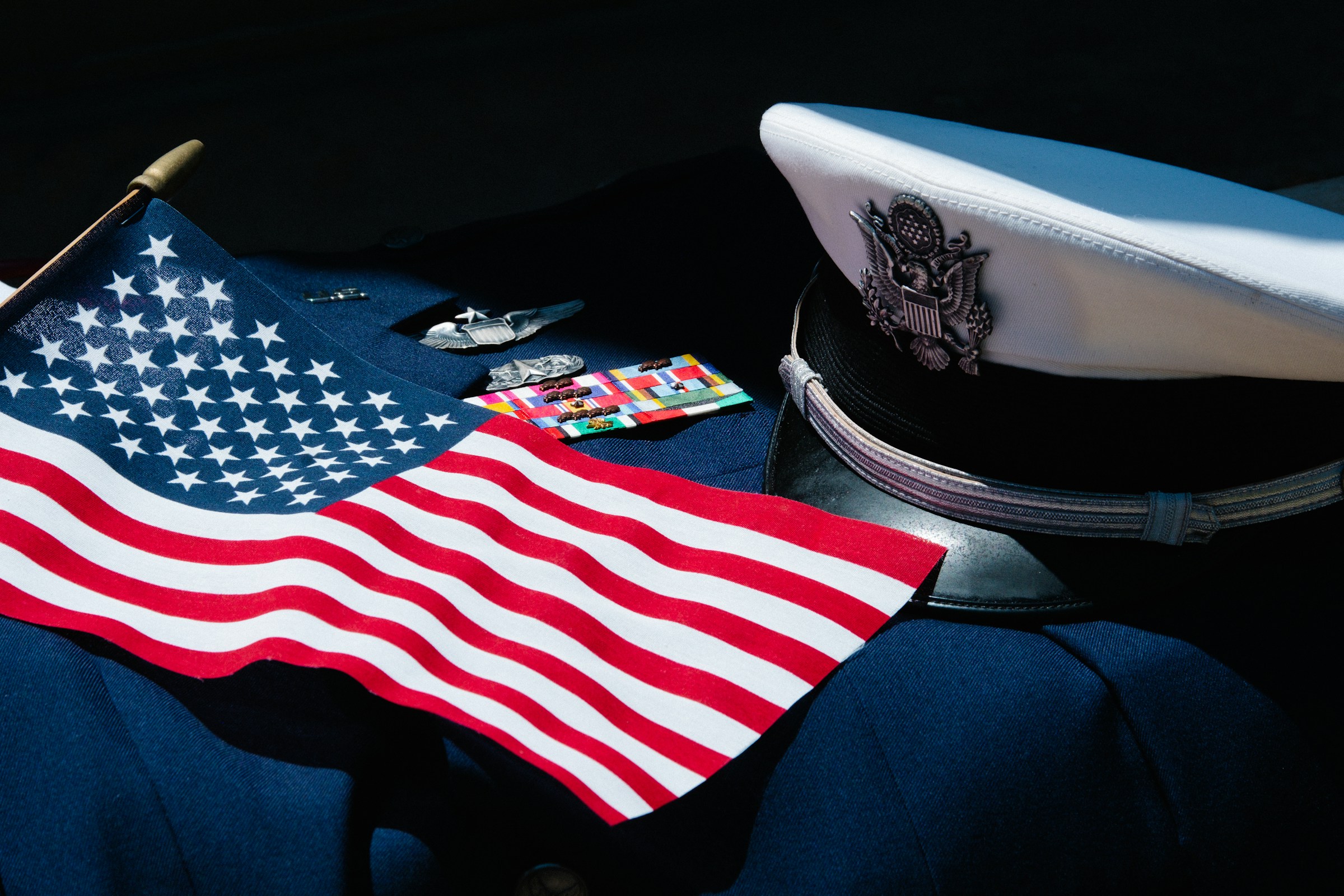
The morning of the dedication, I dressed carefully.
Not for Victoria. Not for the cameras or the reporters or the row of folding chairs facing the podium. I dressed carefully because my brother Tommy had taught me to show up for things that mattered, and this building mattered more than anything I had done in my adult life, and I wanted to look like I understood what I was walking into.
I wore a gray dress and low heels and the small pearl earrings my mother had given me after Tommy’s funeral, the ones she said she could not wear anymore because they made her think of him too much. I put them on every time I needed to remember why I was doing something hard.
My husband Daniel watched me from the doorway of our bedroom while I fastened them.
“You look good,” he said.
“Thank you.”
“Emily.” He paused. “Just so you know, my mother is going to be there.”
I met his eyes in the mirror. “I know.”
He seemed like he wanted to say something else. Instead, he straightened his collar and walked out.
That was Daniel in those years. Always on the verge of a sentence he could not finish.
Let me tell you about Tommy first, because nothing that happened at Fort Stewart that afternoon makes sense without him.
Thomas Everett was my older brother by four years. He was the kind of person who made rooms feel slightly larger simply by being in them, not because he was loud or dramatic but because he was genuinely interested in people in a way that most people are not. He remembered details. He asked follow-up questions. He laughed at the right moments and went quiet at the right moments, and he had a patience with difficulty that I spent years trying to understand and only gradually came to see was something he had cultivated on purpose, as a response to a world he found harder than he let on.
He enlisted at twenty-two, which surprised no one who knew him. Tommy believed in the idea of service in a way that was not performative. He did not talk about it much. He simply did it, the way he had always quietly done the things he believed were right, whether that was showing up to help our parents move furniture or driving a friend home from a party at two in the morning without complaint.
He deployed twice. He came home twice.
The second time, he was different in ways that were difficult to name and impossible to ignore if you loved him. He smiled the same smile. He told the same kinds of stories. But there was something in his eyes that had not been there before, a tiredness that sleep did not seem to touch, a distance that appeared sometimes in the middle of a conversation when he would go somewhere else for a few seconds before coming back. Our mother noticed. I noticed. We talked about it on the phone after his visits, carefully, the way you talk about something you are afraid of making more real by naming it directly.
We tried. I want to be clear about that because one of the things grief like this produces is a retrospective inventory of every moment you might have acted differently, and I have been through that inventory enough times to know it is not entirely honest. We asked him how he was doing. He said he was fine. We said we were there if he needed anything. He said he knew. We invited him to things, and he came to most of them, and he was present in the ways that were visible and absent in the ways that were not, and we did not know how to bridge the distance between those two versions of him because he was so convincing about the one that was fine.
He was not lying. I understand that now in a way I did not in those first months of grief. He was telling the truth as he was experiencing it, which was that he was managing, that he had it contained, that it was not as bad as it had been. He was just wrong about what managing meant and wrong about whether containing something made it safe. That was not his failure. That was the failure of a framework we had all inherited, which said that certain kinds of pain were temporary if you were strong enough, and Tommy was nothing if not determined to be strong enough.
He called me at eleven-thirty on a Tuesday night in November, two years after his second return. We talked for forty minutes about nothing in particular: a movie he had seen, a job he was thinking about applying for, whether I thought Mom’s potato soup had always had that specific amount of pepper or whether she had changed the recipe. It was a good conversation. Easy. The kind we had been having our whole lives. I told him I loved him. He said same, Em, and hung up.
The call came at three-twelve in the morning. My mother could not speak. She kept trying and the sound that came out was not words. I understood anyway.
I will not describe the weeks that followed except to say that grief of that particular kind, the kind where you cannot say it was unexpected but also cannot say it was expected because you had been hoping so hard that your hope would count for something, has a specific quality to it. It is not clean. It does not have clear stages. It lives in ordinary moments: opening the refrigerator, driving past a gas station where you stopped together once, hearing a song he liked on the radio and reaching for your phone to text him before remembering.
I was angry for a long time. Not at Tommy. At the gap between the person who came home and the resources that were waiting for him. At the way we had all been taught to treat returned soldiers as finished stories rather than people still in the middle of one. At the particular silence that surrounded men like Tommy, who were proud and capable and deeply uninterested in asking for help, and who could have been reached if the reaching had been made easier.
That anger, over time, became something I could work with.
I should tell you about the Parkers now, because they form the other half of the context.
I met Daniel at a Veterans Day event I attended as part of the early advocacy work I was doing after Tommy died. He was in his dress uniform. He was kind in the careful way of military officers at public events, formal but not cold, and when he asked for my number I gave it to him because he had a quality of steadiness I found comforting in that period of my life. He did not ask about Tommy on our first date or our second, which I appreciated. He waited until the third, and when I told him the short version of the story, he listened without flinching and without filling the silence with premature reassurance, which was rare enough that I noticed it. I thought, at the time, that it meant he was good at being present with difficult things.
I learned later that it meant something more specific: he was good at being present with difficult things that belonged to other people. His own difficult things, and the difficult things of the people he was supposed to protect, were a different matter.
We dated for a year. We were married quietly at a courthouse, which I suggested and he agreed to, and which Victoria never forgave either of us for even though she had not, in the early months, been particularly invested in our relationship. The courthouse wedding became, in her telling, evidence of something deficient in me: a refusal to do things properly, an unwillingness to invest in the family’s standards. I had simply wanted a wedding that was ours, without a performance built around people who barely knew me. I did not anticipate that this preference would be used against me for years afterward.
Victoria Parker was the kind of woman who had organized her entire existence around a hierarchy she had spent decades constructing, and any element that did not reinforce that hierarchy was experienced as a threat. Her family had military history she referred to often and in detail. Her late husband had been a colonel. Her older son was Daniel. She wore the family’s service record the way other women wore jewelry.
I was not part of this architecture. My family was from a small town in Tennessee. My father had worked at a plant. My mother had taught school. Tommy had enlisted from an apartment with a broken radiator and a landlord he liked. We were not the kind of people Victoria Parker described when she talked about the families who had built something in this country.
She never said any of this directly. Victoria was far too skilled for direct statements. What she did instead was conduct a sustained campaign of tiny diminishments, each one individually dismissible, collectively exhausting. She introduced me at events as Daniel’s wife without using my name. She spoke about my family with a particular variety of polite condescension, the kind that arrives dressed as concern. She had removed my chair from the front row at Thanksgiving twice before I stopped attending. She referred to my brother’s struggles, on the one occasion she referenced them at all, as that situation with your family, as if Tommy’s death were a mildly embarrassing domestic incident.
Daniel never started the fire. I want to be precise about this because the story is easy to tell in a way that makes him simply complicit, and it was more complicated than that. He loved his mother with the specific devotion of a person who has spent a long time earning approval from someone who dispenses it selectively, and when you have worked that hard for something you tend to protect it even when you understand, somewhere below the surface, that the cost of protecting it is being paid by someone else. He knew his mother was difficult. He knew she was unkind to me. He told me sometimes, privately, that he was sorry for specific things she had said or done. But he never told her. He kept his apologies in one room and his silence in another, and the silence was where we all actually lived.
I spent two years after Tommy’s death writing letters, making calls, attending meetings, and learning enough about military family support systems to understand exactly where the gaps were. I spoke to surviving spouses. I spoke to parents. I spoke to veterans who told me in careful, measured language about the period after return, the period that is not covered by the dramatic narrative of homecoming but where the most important and least visible work happens. I learned that the resources existed in many cases, but that the architecture of accessing them was difficult in ways that were not necessary, and that small changes in how services were delivered could make the difference between a family finding help and a family not finding it.
When my grandmother died and left me a modest inheritance, I did not spend time considering what to do with it. I knew before the will was read. I called Colonel James Whitmore, whom I had been corresponding with for months about the state of family support infrastructure at Fort Stewart, and I told him I wanted to fund a center. Not a wing of something existing. A dedicated space where soldiers and their families could access services without navigating a bureaucracy designed for people who already knew how to ask.
He listened for a long time. Then he said, let’s talk about what this would actually look like.
We talked for months. I attended planning meetings. I reviewed program designs. I spoke with counselors and social workers and family advocates and a group of veteran spouses who told me, over coffee in a borrowed conference room, exactly what they had needed that they had not been able to find.
I asked Colonel Whitmore to keep my name out of the early announcements. The center was not about me. It was about Tommy and every person like Tommy and every family sitting beside someone they loved and not having the words because no one had given them a frame for what they were seeing. I wanted it built right. I did not want it to become a story about me while it was still being built.
Victoria saw the word Parker on the building and assumed the rest.
She had spent months telling people it represented her family’s legacy. She had invited half of Savannah to the dedication. She had posed for magazine photos in front of the construction site. She had given an interview to a local publication about the importance of military families investing in the next generation. I heard about all of this through Daniel, who mentioned it with the careful neutrality of a man trying not to make anything worse, and through Fay, a friend who had connections in Savannah’s social circles and who reported back with the pained loyalty of someone watching a situation develop that she knew would not end well.
I thought about stopping it. I thought about calling Victoria and explaining, clearly and without drama, that the center had not been funded by her family and that she should stop presenting it as if it had been. I thought about this for approximately one day before I understood that doing so would produce two outcomes: first, Victoria would deny or reframe, and second, she would spend the months before the dedication making my life more difficult than it already was. I had work to do. I did not have time to manage her reaction to the truth before the truth was ready to speak for itself.
I said nothing. I let her have the months. I kept working.
The morning of the ceremony, I arrived to find my chair had been removed from the front row. There was an empty space where it had been, a missing program, and my name crossed out on the seating chart. I stood in the courtyard holding my invitation, which carried the installation commander’s signature, and looked at the limestone building I had spent two years working toward, and I felt something go very still inside me.
I had known Victoria would be there. I had not planned for this specifically, but I was not surprised. I found a place to stand near the side and waited.
She found me within ten minutes.
She walked directly to a military police officer, pointed at me, and said in a voice she had calibrated for the room: I want her removed.
The courtyard went quiet the way large spaces go quiet when something is happening that everyone recognizes as requiring attention.
The MP looked at my invitation, looked at his list, looked at my face.
“She doesn’t belong here,” Victoria said. “She is not family.”
Three feet away, Daniel stood in his Army blues. His jaw tightened. He looked at me for a moment. Then Victoria stepped between us and announced that I would not be sitting in the front row, and Daniel went still in the way he had always gone still, and the silence from him was the same silence that had surrounded us for the entire length of our marriage.
I said his name quietly.
I do not know what I was hoping for. Perhaps I was still, even then, giving him the chance to be the person I needed him to be.
He did not take it.
I told the MP I would stand. Victoria said I would leave, and called me dear in the tone that made the word feel like the opposite of what it meant, and her son Tyler was smirking behind her and his wife was recording on her phone and every reporter and officer and military family in that courtyard was watching me absorb it.
Then Colonel Whitmore’s voice crossed the courtyard from beside the building.
“Is there a problem at my dedication?”
He came forward in his dress uniform, every medal catching the light, with the specific authority of a man who has spent decades in situations that required clarity over comfort. His eyes moved from the MP to Victoria to me. For the first time that afternoon, Victoria’s certainty flickered.
She told him she was resolving a personal matter.
He looked at me directly and asked if I was being asked to leave. I said yes. He told the MP to stand down.
Victoria protested. She said I had caused her family nothing but problems. The colonel told her he understood more than she realized.
Then he walked to the velvet-covered plaque beside the entrance.
The plaque everyone in the courtyard had assumed, based on Victoria’s months of careful performance, honored the Parker family estate.
When the velvet fell, the gold letters caught the afternoon sun.
PARKER FAMILY READINESS AND RECOVERY CENTER
Dedicated in honor of Staff Sergeant Thomas Everett
Through the private donation and advocacy of Emily Parker
For every soldier who comes home carrying wounds no one can see
The sound that moved through the courtyard was not applause, not yet. It was the sound of hundreds of people recalibrating. Of understanding shifting. Of the story they had been given being replaced by the story that was actually true.
Victoria stared at the plaque. Her lips parted.
Daniel went pale.
Colonel Whitmore turned to the crowd and said that the facility had not been funded by the Parker family estate, had not been created through Victoria’s foundation, and had not been approved through social influence or family name. It had been made possible by Emily Parker, who had contacted the installation after the death of her brother, Staff Sergeant Thomas Everett.
He told them about Tommy. He told them what Tommy had survived and what Tommy had not survived. He told them about the months of letters and meetings and planning sessions, about the programs Emily had helped develop, about the counseling access and transition workshops and the quiet room inside with no cameras and no judgment.
He finished by saying that humility should never be mistaken for absence.
The applause was loud and sudden. Soldiers stood. Veterans stood. The military spouses near the back stood with tears on their faces that told me they understood in the specific way of people who have lived inside the thing the building was trying to address.
Victoria sat in the front row in the seat she had arranged for herself, under the weight of every eye she had invited.
Daniel came to me.
He said my name quietly. He said he had not known.
I looked at him and said: you did not ask.
He flinched.
Because that had always been the problem. Not malice. Not conspiracy. He had not asked. He had not asked when his mother moved my chair at Thanksgiving. He had not asked when she introduced me at events without using my name. He had not asked when she described Tommy’s death as that situation with your family. He had not asked because not asking was the way he kept a peace that only ever existed for him, while I absorbed a war he had decided not to see.
Colonel Whitmore offered me his arm and asked if I would do them the honor of joining him at the ribbon.
I looked at Daniel for one moment. His eyes asked me to make this easy, to smile and step into the reconciliation that would allow everything to return to the shape he was comfortable with.
I took Colonel Whitmore’s arm.
As I passed Victoria, she said quietly: you humiliated me.
I stopped.
“No,” I said. “I survived you.”
Her face changed. She did not say anything else.
At the ribbon, my hands trembled as I took the scissors. I thought about Tommy. About the phone call at eleven-thirty and the easy conversation about soup and movies and a job he had been thinking about applying for. About the call at three-twelve and the sound of my mother not being able to speak. About the flag, the casket, the silence that had moved into my parents’ house and never entirely left.
I thought about the young woman I had spoken to six months into planning, a veteran’s wife who had sat across from me in a borrowed conference room and said she had been afraid to ask for help because she did not want anyone to think she could not handle it. And I had said: that’s exactly what this is for. And she had cried a little and then straightened up and started talking about what had actually been hardest, and I had written everything down.
The ribbon snapped cleanly.
Inside the center, the air smelled of new paint and polished wood and flowers. There were counseling rooms with soft chairs, a children’s corner, a wall of resources, and a quiet room with no cameras and no plaques. Near the entrance hung a photograph: Tommy in uniform, young and smiling, with the words beneath it that I had chosen after sitting alone in my kitchen for an hour considering what he would have wanted said.
Some battles continue after homecoming. No one should fight them alone.
I stood in front of it with one hand over my mouth and let myself cry for a while. Colonel Whitmore stood nearby and did not try to fill the space with words.
Daniel found me there. He had removed his cap. He looked like a husband who had arrived too late to the most important moment of his marriage, which was what he was.
He apologized. Not just for that day. For all of it.
I told him there was never peace between us. There was only me absorbing the war.
He closed his eyes.
I told him that if we stayed married, his mother would not have a vote in our life. She would not have keys to our home or holidays by default or the ongoing right to treat me as something he had married beneath himself. And if he could not protect our marriage from her, then I would protect myself from both of them.
He did not defend her. For the first time, he did not explain or qualify or ask me to understand the complicated history of their relationship. He only nodded.
Outside, Victoria was calling for him.
The old Daniel would have turned immediately, would have moved toward her voice with the reflexive obedience of decades of conditioning.
He kept his eyes on me.
He told Tyler to tell her he would be out in a minute.
It was a small thing. It was also, in the context of everything that had come before it, the most significant thing he had done in years.
The weeks that followed were not simple. Healing of that kind rarely is. Daniel started counseling two days after the ceremony, alone at first. He did not tell me until after his second session, which I understood as a sign that he was doing it for himself rather than to perform it for me. We started counseling together three weeks after that. The first session was uncomfortable in the particular way of conversations that have been delayed for years, where all the words that should have been said in smaller contexts have accumulated into something that needs careful, professional handling to prevent it from simply becoming an argument. We did not resolve anything that first session. We simply established that there was something worth trying to resolve, which was more than we had managed in the two years before it.
Some days I was still angry in a way that did not want to be managed or explained or made comfortable for anyone around me. Some days Daniel sat with his shame and did not know what to do with it, and I had to decide how much patience I had left and whether it was being replenished by what he was doing now.
Victoria released a statement through her foundation describing miscommunication about the dedication. The local paper ran the story under the headline: Army Center Dedicated to Fallen Soldier After Sister’s Quiet Donation. The photograph was not of Victoria. It was of me and Colonel Whitmore at the ribbon, with Tommy’s name visible in the glass behind us.
She did not contact me after that. The cold messages stopped. The invitations that felt like summonses stopped. The particular silence she had always known how to make hostile became simply an absence, and I found the absence easier to live with than I had expected.
Months later, the center held its first family recovery workshop. I sat in the back, not as a donor or an advocate or the woman whose brother’s name was on the wall, but simply as a person in the room while other people said the things that were hardest to say. A young woman with a baby on her hip came up to me afterward and asked if I was Emily Parker. I said yes. She said her husband had come to the center the previous month and had finally talked to someone, and she wanted to say thank you.
I looked at the baby sleeping against her shoulder. I looked at the hallway where Tommy’s photograph hung.
I had thought for a long time that the ceremony would be the ending. Victoria exposed. The truth revealed. The crowd understanding what they had not understood before. But standing there, listening to that woman, I realized the real ending was not an event or a revelation or a moment when the right people saw the right thing happen.
The real ending was a young soldier sitting in a soft chair in a counseling room, finally saying out loud the thing he had been carrying alone, and someone being there to hear it.
That evening Daniel and I left together. In the parking lot, he stopped and looked back at the building against the evening sky.
“I thought legacy was a name on something,” he said.
I watched the American flag moving gently above the entrance.
“No,” I said. “Legacy is what still helps people after everyone stops clapping.”
He took my hand.
I let him hold it.
Not because everything was resolved. Not because the years of silence had been undone by a single afternoon or a sincere apology or the beginning of counseling. But because he was standing beside me now, looking at the building I had built with my brother’s memory and my grandmother’s inheritance and two years of quiet work, and for the first time he was not looking toward his mother to understand what he was supposed to think about it.
He was just standing beside me.
That was not everything.
But it was a place to start.

Adrian Hawthorne is a celebrated author and dedicated archivist who finds inspiration in the hidden stories of the past. Educated at Oxford, he now works at the National Archives, where preserving history fuels his evocative writing. Balancing archival precision with creative storytelling, Adrian founded the Hawthorne Institute of Literary Arts to mentor emerging writers and honor the timeless art of narrative.