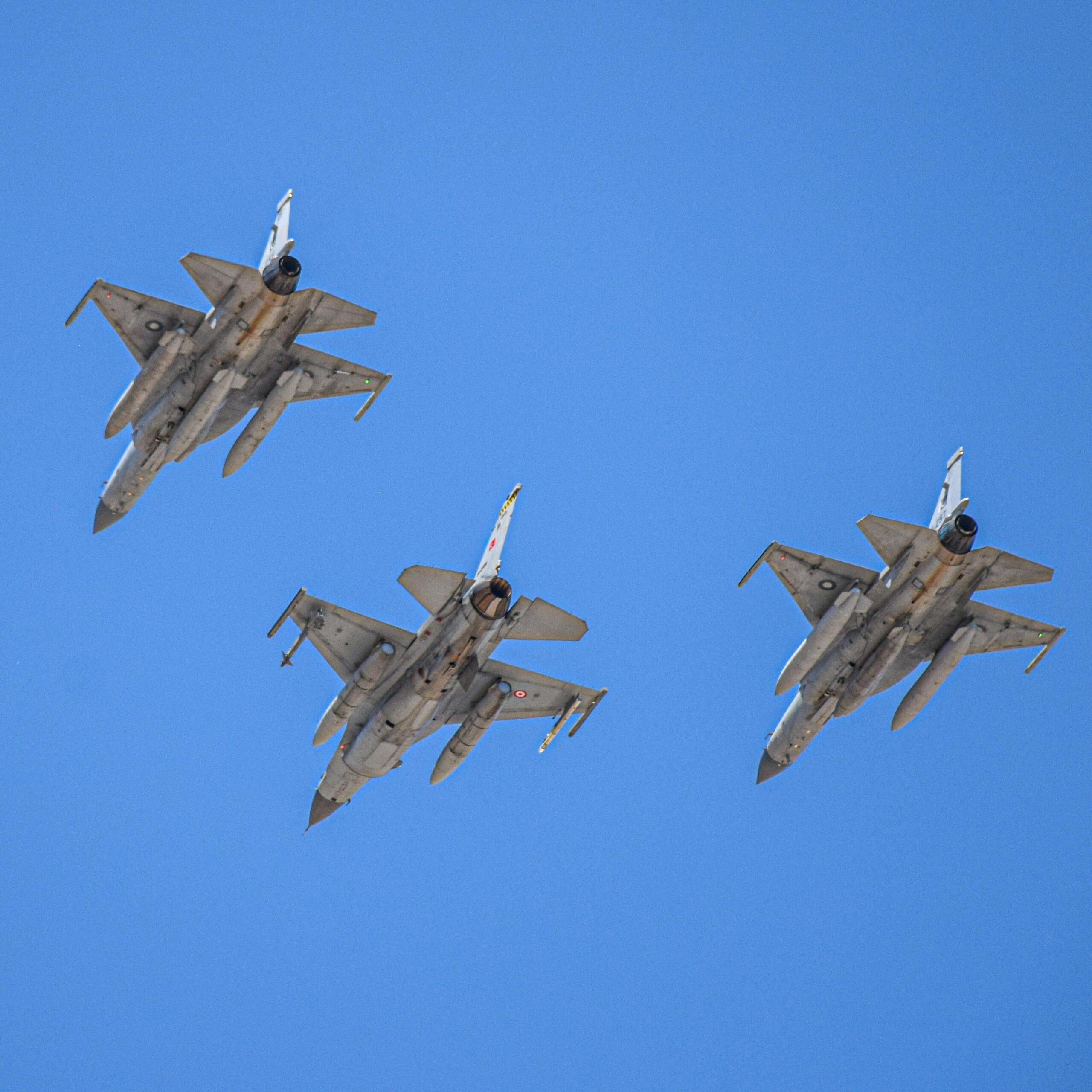
At exactly 6:47 AM on a Sunday morning in October, four F/A-18 Super Hornets from my late husband’s old Navy squadron flew the missing man formation directly over our suburban home in northern Virginia.
I was standing on the front porch in my blue terrycloth bathrobe.
My son David was standing beside me in his pajama pants and a hoodie, holding a coffee mug he had forgotten he was holding.
He was thirty-eight years old. He had not attended his father’s funeral at Arlington National Cemetery three days earlier. He had flown in from Denver on Friday night and told me he had come to help me sort through his father’s things.
What David actually did over that weekend, while I was at my sister Eleanor’s house in Maryland, is the reason that four aircraft from Naval Air Station Fallon flew their dawn formation route over our house instead of over the Atlantic that morning.
David did not know they were coming.
I did not know they were coming either.
When the engines became audible over the quiet of our suburban street at 6:46 AM, I was standing in the kitchen in my robe. I was sixty-eight years old. I had been the wife of a Navy fighter pilot for forty-one years. I knew the sound of an F/A-18 Super Hornet before my conscious mind put the words together.
I walked to the front porch in my slippers.
David came out of the guest bedroom behind me.
He followed me onto the porch.
He looked up.
The aircraft were already overhead at low altitude, holding perfect diamond formation, the dawn sun catching the metal of their fuselages. I had watched Daniel’s squadron fly this formation for other men three times in our marriage. I knew exactly what was about to happen.
The slot position aircraft pulled up vertically and climbed away from the formation into the dawn sky.
The remaining three aircraft held formation and continued forward over our roof and away into the distance.
The missing man.
The traditional United States military salute for a fallen aviator, dating back to the 1930s. One aircraft pulls vertically out of formation, climbing into the heavens. The remaining aircraft hold their position and carry on without him.
It was for Daniel.
David stood beside me on the porch and watched it happen. He did not move. His mouth was slightly open. His face was the face of a man who has just understood something terrible about himself in real time. The coffee mug in his hand was tilted forty degrees and about to spill.
I felt my own tears before I knew I was crying.
I turned my head to look at my son.
I said: “That was your father’s squadron, David.”
David did not respond. He did not look at me. He kept staring up at the sky where the three remaining aircraft were now small in the distance, headed back toward Naval Air Station Oceana.
I gently took the coffee mug out of his hand before he spilled it.
This is the story of what David did that weekend while I was at my sister Eleanor’s house.
It is the story of how four F/A-18 Super Hornets ended up over our roof at dawn on a Sunday morning when no flyover had been planned.
And it is the story of how my son knocked on my front door three months later in a leather jacket I had never seen him wear, asking me to please tell him every single thing about his father that he had spent his entire life refusing to hear.
Daniel Hayes was an F/A-18 Super Hornet pilot in the United States Navy for twenty-six years.
He flew his first combat sortie in 2003 over Iraq. He flew his last combat sortie in 2015 over Syria. He flew three combat deployments in total. He was awarded the Distinguished Flying Cross in 2009 for a combat sortie that I will not describe here because it is not my story to tell and because Daniel never told me the full version of what happened that day.
He retired as a Captain in 2017. The last four years of his Navy career he served as an aerial combat instructor at the United States Navy Strike Fighter Tactics Instructor program at Naval Air Station Fallon in Nevada. The civilian world knows this program by the name of a movie from 1986. The Navy knows it by its real name: Top Gun.
Daniel was forty-five years old when he made Top Gun instructor. He was the eighth oldest pilot to ever hold that position in the program’s history.
When he came home from his last combat deployment in 2015, he told me he had been thinking about retirement. We sat on this same front porch and we talked about what life would look like with him on the ground full time for the first time in our marriage. He told me he wanted to teach. He told me he wanted to spend more time with David. He told me he wanted to learn to garden.
He retired in 2017. He taught at Top Gun for two more years on a civilian instructor contract after his official retirement. He fully separated from the Navy in 2019. He came home and he gardened and he watched baseball and he read the entire works of Patrick O’Brian.
He had a stroke in his sleep on the morning of Friday, October sixth.
I called 911 at 4:42 AM. The paramedics arrived at 4:54 AM. He was pronounced dead at the hospital at 5:38 AM. He never regained consciousness.
He was sixty-nine years old.
I called David in Denver at 6:15 that morning.
David told me he was sorry. He told me he loved me. He told me he had a work conference at the Denver Convention Center on Monday and Tuesday that he could not move.
I asked him what kind of conference.
He said it was a quarterly investor presentation for the venture capital firm where he worked.
I asked him if his investors knew that his father had just died.
There was a long silence on the phone.
David said he would call me back.
He did not call me back that day. He called me back on Sunday afternoon. He told me his presentation was Tuesday morning and the funeral was Tuesday afternoon and there was a three-hour time difference and the cross-country flights would not work logistically and he was sure Dad would have understood.
I did not argue with him. I had been Daniel’s wife for forty-one years and I had been David’s mother for thirty-eight years and I knew there was nothing I could say to my son in that moment that he had not already practiced rationalizing in his head.
I hung up the phone.
I drove to Arlington by myself on Tuesday afternoon.
Daniel was buried with full military honors. The chaplain who conducted the service was Father Michael Brennan, a retired Navy officer who had been the chaplain at Naval Air Station Oceana when Daniel was stationed there in the late 1990s. The honor guard was provided by the United States Navy. The flag from Daniel’s casket was folded thirteen times by two young sailors I had never met and presented to me on behalf of a grateful nation.
There were sixty-three people at the graveside service.
None of them were my son.
David flew in from Denver on Friday evening, three days after the funeral.
He hugged me at the front door. He told me he was sorry. He told me he loved me. He told me he had come to help me sort through his father’s things.
I told him my sister Eleanor in Maryland had been alone since her husband died last spring and that she had asked me to come stay with her for the weekend. I told him I would be back Sunday afternoon. I told him to make himself at home.
I did not know that he had been planning what he was going to do that weekend since the previous Tuesday afternoon, when his father was being buried at Arlington and David was giving his investor presentation in Denver.
I learned what he did from the contents of the garage and the basement and his father’s home office when I returned on Sunday morning, two hours after the missing man formation flew over our roof.
David had spent Saturday morning loading Daniel’s flight jacket, his Distinguished Flying Cross, his Top Gun instructor patch, the photograph of him with President Obama from 2014, his squadron mug from VFA-103, his retirement chronograph, his Naval Academy class ring, and the framed commendation letter from the Chief of Naval Operations into eight large cardboard boxes.
He had spent Saturday afternoon driving those eight boxes to the Salvation Army donation center on Route 7.
He had told the volunteer at the donation center that the items belonged to a relative who had died recently and that the family no longer wanted them.
He had spent Sunday morning, before I came home, deleting every photograph of his father in uniform from the family Google Photos account that he and I shared.
He had spent Sunday afternoon, after the missing man formation, sitting on the front porch of our house staring at the sky.
I came home Sunday afternoon at three o’clock. I had been at Eleanor’s house. I had not yet learned about the donation. I had not yet seen the empty hooks where Daniel’s flight jacket should have been hanging by the front door.
David was on the porch.
I sat down in the wicker chair beside him.
I asked him why he had not attended his father’s funeral.
He did not look at me when he answered.
He said: “I did not know him, Mom. I did not know him at all. He was gone my whole childhood. He came home a stranger every time. I did not feel like a son. I felt like a guest. I do not know how to grieve a father I never knew.”
I let him sit with what he had just said.
Then I said: “Daniel was gone because he was protecting his country. He was a stranger because he had been doing things he could not tell you about. He came home to teach you to throw a baseball every chance he got. He missed your birthday in 2003 because he was in the Persian Gulf and he sent you a video message from the deck of the USS Theodore Roosevelt that he had to clear with three different officers because he could not show anything operational. Have you ever watched that video?”
David said he had not.
I told him it was on Daniel’s old laptop in the home office.
David got up and walked into the house.
I went to the front door to hang up the keys to the rental car he had been driving. The hook beside the door was empty. Daniel’s flight jacket was not on the hook.
I walked into the garage. The shelf where Daniel kept his Distinguished Flying Cross display case was empty. The shelf where his Naval Academy class ring sat was empty. The framed commendation letter was gone.
I walked into the basement. The eight boxes I had organized after Daniel’s retirement in 2017, labeled in Daniel’s own handwriting, were gone.
I walked back upstairs.
David was sitting at Daniel’s desk in the home office watching the video from 2003 of Daniel on the flight deck of the Roosevelt wishing him a happy ninth birthday.
I stood in the doorway.
I said: “David. Where is your father’s flight jacket.”
David did not turn his head.
He said: “I donated it to the Salvation Army yesterday.”
I did not respond. I walked back to the front porch and I sat down in the wicker chair where I had been sitting beside him five minutes earlier.
I sat there until the sun went down.
I learned later that morning, on Monday at approximately 9:30 AM, that the missing man formation flyover had been organized by Daniel’s old squadron commander, Captain Diana Marquez, who had been Daniel’s wingman during the 2009 sortie that earned him the Distinguished Flying Cross.
Diana Marquez had called me three days after the Arlington funeral. I had told her about David not attending. She had told me she was sorry. She had asked me if there was anything she could do.
I had told her no.
I had not told her about David’s plans for the weekend because I did not know what David’s plans for the weekend were.
Diana Marquez had decided, after she got off the phone with me, to organize an informal flyover for the weekend. She had pulled four pilots from the current VFA-103 squadron, all of whom had served under Daniel as students at Top Gun. She had cleared the flight plan with Oceana operations as a training mission with a routing alteration that would take the formation over our suburban neighborhood at dawn on Sunday.
She had not told me. She had wanted it to be a surprise.
She had not been able to predict that David would be standing on the porch beside me when the four aircraft passed overhead. She had not known that her dawn flyover would land at the exact moment her former student’s son would understand for the first time in his thirty-eight years what kind of man his father had been.
I told Diana Marquez the full story over the phone on Monday afternoon.
I told her about the eight boxes at the Salvation Army.
I told her about the empty hook by the front door.
There was a long silence on the line.
Diana told me she would call me back.
She called me back forty-five minutes later. She told me she had spoken with the Salvation Army donation center on Route 7 and that the eight boxes containing Daniel’s flight jacket, his Distinguished Flying Cross, his Top Gun instructor patch, his Naval Academy class ring, and his commendation letter had not yet been sorted or distributed to thrift store inventory.
She told me she had sent two active duty Navy officers from Naval Air Station Oceana to drive to the donation center to recover them.
She told me they would be transported to Naval Air Station Fallon by the end of the week.
She told me that the items would be displayed permanently in a glass case beside the ready room door of the Strike Fighter Tactics Instructor program, in honor of Captain Daniel Hayes, where every pilot who would ever attend Top Gun for the rest of the program’s existence would walk past them on their way to class.
I told Diana Marquez I did not have words for what she had just done.
She told me Daniel had walked her through her own first dual flameout in 2008. She told me she would have died in the Mediterranean Sea that afternoon without him. She told me that whatever she did for him now, for the rest of her career, would not be enough.
She hung up the phone.
I sat on my front porch for the rest of the afternoon. David was still inside the house. He had not come out since Sunday morning.
David and I have spoken exactly twice in the eleven months since the missing man formation.
The first conversation was four days after the flyover. David called me from Denver. He told me he understood if I never wanted to see him again. He told me he did not know how to be sorry enough. He told me he had been thinking about what kind of man it took to do what he had done to his own father in his own mother’s house and that he did not like the answer.
I did not respond to most of it.
I told him I needed time.
I hung up the phone.
The second conversation was three months after the flyover. David knocked on my front door on a Saturday afternoon in January.
He was wearing a leather jacket I had never seen him wear before.
I opened the door and I looked at him.
I did not say anything.
David looked at me.
He said: “Mom. I am asking you to please tell me every single thing about my father that I spent my entire life refusing to hear.”
I let him in.
We sat in the kitchen where Daniel and I had sat on a thousand mornings.
I made coffee in the pot Daniel had bought me for our thirty-fifth anniversary.
I started in 1981, when Daniel and I met at the Officers’ Club in Pensacola two weeks after he commissioned out of the Naval Academy.
We talked for nine hours.
I am writing this on a Sunday morning in October, exactly one year after the missing man formation flew over our roof.
David lives in Denver. He still works for the venture capital firm. He calls me every Sunday afternoon now. We have talked about his father every single one of those Sundays. He has asked me questions he never asked when Daniel was alive. He has read every letter Daniel sent home from deployments that I kept in a shoebox in the basement.
He has not asked to see the Distinguished Flying Cross or the flight jacket or any of the other items that are now in the glass case beside the ready room door at Naval Air Station Fallon.
He told me last month, when he asked me about visiting Fallon next summer, that he wanted to see them for the first time the way the Top Gun students see them every morning. Walking past the case on their way to learn what his father spent twenty-six years teaching.
The leather jacket David was wearing on that Saturday in January when he knocked on my front door belonged to my father. My father had been an army pilot in Korea. He had given the jacket to David on his sixteenth birthday in 2002. David had never worn it.
He wears it every time he visits me now.
Captain Diana Marquez is a Rear Admiral now. She was promoted in March. She still calls me on the anniversary of Daniel’s birthday and on the anniversary of his death.
The hook beside the front door of our house still has nothing hanging on it. I have not replaced Daniel’s flight jacket. The hook is for him to come home to. He is not coming home. I leave the hook empty anyway.
The American flag from Daniel’s casket sits folded in its triangle case on the mantle above the fireplace.
The four F/A-18 Super Hornets that flew over our roof at dawn on that Sunday morning in October are still flying. They are based at Naval Air Station Oceana. The pilots who flew the formation that morning have rotated to new assignments. The youngest of them, Lieutenant Phoenix Vasquez, who flew the slot position and pulled up vertically into the dawn sky, made Lieutenant Commander last spring.
She still sends me a card every year on the anniversary of the flyover.
The card always says the same thing.
It says: He flew us all home. We were glad to fly him out.
May Captain Daniel Hayes be remembered.
May the missing man formation be remembered.
May every father and mother and son and daughter who is alive today because someone in a uniform did their job, know that someone is keeping track.
Even when their own families do not.
Especially then.

Adrian Hawthorne is a celebrated author and dedicated archivist who finds inspiration in the hidden stories of the past. Educated at Oxford, he now works at the National Archives, where preserving history fuels his evocative writing. Balancing archival precision with creative storytelling, Adrian founded the Hawthorne Institute of Literary Arts to mentor emerging writers and honor the timeless art of narrative.