The Foundation
Part One: The Key That Would Not Turn
The key would not turn.
Daniel stood on the front porch in his airport clothes, one hand on his hard-shell carry-on and the other working the silver key back and forth in the lock the way a person does when they are certain the problem is mechanical rather than fundamental. Melissa stood beside him in oversized sunglasses with boutique shopping bags looped over her wrist, still laughing the first time the key jammed, a short easy laugh that belongs to people who have been getting what they want for long enough that inconvenience still seems temporary.
Then Daniel leaned his shoulder into the door. His jaw tightened. He pulled the key out and stared at it, then looked at the front door the way a man looks at something he has trusted for years and suddenly does not recognize.
From the tinted windows of a parked vehicle across the street, Eleanor watched all of it.
She had been there nearly an hour. The movers had dropped her off before dawn, and she had waited through the slow brightening of the morning, through the sprinkler clicking on at the Alvarez house, through Mr. Greene retrieving his newspaper and standing on his walkway for a long moment squinting at the empty yard where a for-sale sign had never appeared because the transaction had been handled without one. Three weeks. That was all it had taken to dismantle thirty-two years. Three weeks to wrap every dish and photograph and memory in brown paper, carry it through the same front door she and Frank had painted together the summer they moved in, when Daniel was four years old and the street smelled of wet grass and fresh paint and the future felt like something you could arrange with your own hands.
She should explain how she got there.
Part Two: Cedar Grove
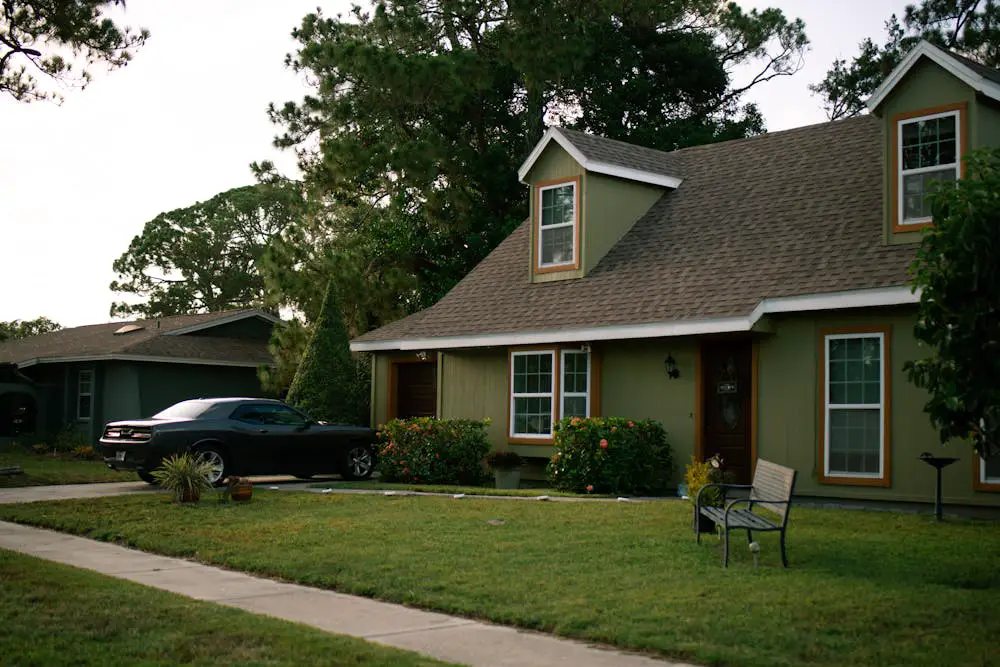
Cedar Grove was the kind of neighborhood where people trimmed hedges on Saturday mornings and waved from the porch with coffee mugs in hand. Their street had twelve houses, mostly colonials, mostly owned by couples who had arrived young and stayed until their children left and their hair went silver. Frank and Eleanor were no different. They bought the house when the area was still half muddy lots and optimism. They raised Daniel there, marked his height in pencil on the laundry room wall every year, writing the date beside each new line, watching those marks climb steadily until they stopped at seventeen, the year he decided he was too old for the ritual and Eleanor had pretended she did not mind.
Frank died on a Tuesday in March, two years before the morning Eleanor sat in that vehicle and watched her son discover what she had done. His heart, which the doctors had been warning him about for years and which he had ignored with the quiet stubbornness he brought to everything. He died in the kitchen at the counter, a dish towel still in his hand. She found him when she came downstairs. The faucet was running. She turned it off before she called anyone, because Frank hated wasting water, and even in those first terrible seconds of understanding, some part of her could not let it run.
After Frank, the house changed without changing. The rooms were the same. The stairs still creaked on the fourth step. The afternoon light still fell through the living room windows in long amber bars across his leather chair by the window, the one with the cracked armrest where he used to read. But the space felt wider, as if the walls had stepped back a few inches and left her standing in the middle of something that no longer fit around her the way it once had.
Daniel and Melissa came around more frequently after the funeral. People told Eleanor she was lucky to have them close.
Her son brought groceries. His wife brought soup in expensive paper containers and spoke in the careful voice she used around Eleanor, the one that made self-interest sound like concern, the one that arrived with a practiced head tilt suggesting empathy the way a stage set suggests a real room. It looked right. It was not the thing itself.
At first, Eleanor was grateful. She was grieving and slow, full of a sadness so heavy that even simple tasks felt like translating a language she used to know fluently. Having people in the house helped. Daniel would sit at the kitchen table and talk about work, and for twenty minutes she could almost pretend nothing had fundamentally changed. Melissa would arrange the flowers people sent and throw away the wilted ones, and Eleanor would watch her hands move with efficient tenderness and think: she is very good at looking like she cares.
But then the comments started.
“This house is too much for one person,” Melissa said one evening, running her hand along the stair banister as if measuring it for something.
“Stairs can become a real hazard,” Daniel added, in the tone one uses to mention weather. His eyes moved to the staircase and stayed there a beat too long.
Daniel began bringing up trusts and property taxes. He arrived with pamphlets. Melissa sent Eleanor photographs of cheerful senior communities with white fences and flower beds and names like Sunrise Meadows and Harmony Village, places that looked like real estate brochures and smelled, Eleanor imagined, of industrial cleaner and managed expectations.
They acted like they were helping her plan.
What they were really doing was circling.
She did not see it clearly then. Or maybe she did and chose not to look, the way grief makes you want to believe that the people still standing beside you are there out of love rather than calculation. She wanted to believe her son. She wanted to believe that the boy who used to fall asleep on her lap during thunderstorms had grown into a man who worried about her safety rather than her property value.
Then she heard the voicemail.
Part Three: The Message
It was the day before they left for Europe.
Daniel called while she was upstairs folding laundry. She missed it. A minute later she pressed play, expecting something ordinary, a reminder about the mail, the alarm code, the neighbor watching the yard.
Instead she heard a car door closing. Then Melissa’s real laugh, not the soft version she used around Eleanor, but the sharp unguarded one that came out when she was not performing for anyone.
Then her son’s voice.
“She’s a burden, Mel. She doesn’t see it, but she is. We’ve put our lives on hold long enough.”
Eleanor sat down so fast the folded laundry fell off her lap and landed on the floor. Her phone was still pressed to her ear.
Then Melissa: “When the house is finally handled, everything gets easier.”
Handled.
She played it again. Then once more. Not because she had misheard anything. Because she needed to feel the full weight of it before she could decide what to do with it.
That night she walked through every room in the dark. She touched the banister. She pressed her hand to Daniel’s old bedroom door, the one with the dent near the handle from a fight about curfew when he was sixteen. She stood in the kitchen and put her palm flat on the counter where Frank used to stand drying dishes, his hip leaned against the edge, humming songs he never quite knew the words to. She kept hearing the word burden until it stopped sounding like a description and started sounding like a verdict.
By morning the tears were gone.
What replaced them was clarity, the kind that arrives when you have been squinting at something for months and someone finally turns on a light.
She opened Frank’s file drawer. Then she opened Daniel’s old school box, the one he had left in the spare room years ago and never come back for.
What she found inside made everything go cold.
Printed emails. Notes in Melissa’s handwriting. Research into power of attorney, with search queries about documenting a parent’s decline. Draft language referring to Eleanor as resistant and emotionally unstable. A printed article about contesting the mental competency of elderly parents, with three sentences highlighted in yellow.
They had not just been waiting for her to grow tired of the house.
They had been building a case.
She sat at the kitchen table for a long time. The morning light came through the windows the way it always had, warm and unchanged, and the silence was the same silence she had been living inside for two years. But she was not the same woman. Something had shifted in her, structural rather than emotional, the way a foundation shifts before you can see the crack in the wall above it.
She made her own plans.
Part Four: The Three Weeks
She called Gloria Kessler first. Gloria had sold three houses on their street over the years and knew how to move without making noise. Eleanor told her what she wanted. Gloria did not ask why. She said she could have a buyer by Friday.
She did.
Eleanor called Frank’s attorney, Arthur Greer, who had handled their affairs for twenty years and who listened to her instructions without interrupting and then said, very quietly, three words: “Good for you, Eleanor.”
She called her bank. She moved everything Daniel had once assumed he would someday manage. She changed beneficiaries on accounts he had not known existed. She updated her medical directive. She named a new power of attorney, her friend Sandra Chen, who had known Eleanor since their children were in elementary school and who had never once looked at the house and seen a number.
The sale closed twelve days later. Private. No sign in the yard. No open house. No family discussion. No warning.
While Daniel and Melissa ate pasta under European sun and posted anniversary photographs with wine glasses and tagged each other in coastal sunsets, Eleanor’s movers wrapped her dishes in brown paper, boxed her photo albums, rolled Frank’s rugs, and carried her whole life out through the front door. The piano went last. She watched them wheel it down the ramp into the truck and she put her hand on the side of it as it passed, the way you touch something precious at the moment of permanent separation, not because it helps, but because your hand needs somewhere to go.
The buyers were a young family. A couple in their thirties with two small children and a golden retriever. They closed fast, paid cash, asked almost no questions. The husband shook Eleanor’s hand and said they would take good care of it. She believed him. Letting go of a house is easier when you can tell yourself it will be loved again by someone who is not counting it.
She rented a small furnished apartment by the lake. Two bedrooms. A bright kitchen with white tile and a window facing east. No stairs. A balcony that caught the sunrise over the water. She moved in with boxes along the walls and Frank’s photograph on the bookshelf and the blue anniversary vase on the windowsill, and that first night she sat on the edge of the bed and listened to the sounds of a place that did not yet know her.
She left one thing behind at the house. A white envelope on the kitchen counter with Daniel’s name across the front in her handwriting.
Part Five: The Return
She made sure to be there when they came home.
Not inside. Across the street, at a quiet distance, where she could watch without being seen.
She watched Daniel work the key in the lock. She watched his shoulder go into the door and the confusion on his face as it gave but in the wrong way, unlocked but not by him. She watched Melissa step inside behind him. She watched both of them stop in the foyer when they saw what was in front of them: bare rooms, stripped walls, the absence where thirty-two years of living used to be. The hardwood floors were marked where furniture had sat so long the wood beneath was a lighter shade, outlines of a life that had been there and was now gone.
The kitchen held one thing.
The envelope.
The letter inside was not long. Eleanor had spent enough years explaining herself to people who only heard what was convenient for them. She was done defending her existence inside her own home.
She kept it simple. She told him the house no longer belonged to her and that it also did not belong to him. She told him the locks had been changed at closing and the new owners would be taking possession in the morning. She told him not to contact them and not to make a scene. She told him she had heard the voicemail, every single word, and that she had found the rest: the printed emails, the power of attorney research, the draft language about her decline, the article with the yellow highlighted sentences.
She wrote: You were not protecting me. You were planning around me. So I protected myself.
She signed it: Mom.
She watched him read it from across the street. Once. Then again. His hand dropped slowly to his side, the paper going with it, the way a flag drops when the wind dies. Melissa took it from him before he could fold it away. Her sunglasses were pushed up into her hair, and she read fast at first and then slower.
“No,” she said. One word, small and sharp and completely unbelieving. She looked around the empty kitchen as though the walls might offer a correction.
Daniel moved past her into the living room, walking through the space where Frank’s leather chair had been. For one moment Eleanor could almost see the little boy he once was, the one who ran barefoot across the rug with a toy fire truck making siren sounds while Frank pretended to be the burning building. Then Daniel’s face hardened and the boy was gone, replaced by a man whose inheritance had just walked out the door without him.
He called her. She watched his phone come out across the street. She let it ring.
Messages came through.
Mom. Call me now.
This isn’t funny.
Where are you?
She did not answer.
She sat very still with her hands folded in her lap, and she felt something she had not felt in a long time. Not revenge. Not even satisfaction. Peace, the particular kind that comes after a door closes and you realize you were the one holding it shut, pressing your weight against it, keeping everyone else comfortable at the cost of your own spine.
Part Six: The Front Porch
A few minutes later, a police car pulled up.
She had not entirely predicted this, but she was not surprised. When people like Daniel lose control of a situation, they reach for authority and hope it will recognize them.
Officer Paul Bennett stepped out. Eleanor had known him since he was in high school. His mother had brought lemon bars to every church fundraiser and Eleanor had once helped him write thank-you notes the summer he interned with the neighborhood association. He looked at the house, then at Daniel, then at Melissa, who was already talking before his feet had touched the porch steps.
“My mother-in-law is missing,” she said, loudly enough for the neighbors to hear. “She’s elderly. She’s been confused since her husband died. She sold this house without telling us. Something is clearly wrong with her.”
There it was. The story. The one that had been built in those printed emails, the highlighted articles, the careful language about resistance and emotional instability. Poor confused widow. Grieving. Vulnerable. Easily influenced. In need of family intervention.
Eleanor opened the vehicle door.
The sound was soft, but Daniel heard it. His head turned. For a moment he looked almost relieved, the expression of a man who believes a crisis is about to resolve itself, who assumes his mother has come back to say she made a mistake.
Then he saw her face.
She crossed the street slowly. Not because she was unsteady. Because she wanted every step to belong entirely to her. She wanted to feel the pavement, the morning air, the full deliberate weight of what she was about to do, which was not to deliver a speech or enact a punishment but simply to stand in front of her son and tell the truth without apology.
“Mrs. Whitaker,” Officer Bennett said.
“Hello, Paul.”
Daniel came down the porch steps too fast and almost caught his foot on the suitcase. His voice dropped into the gentle register he used when he wanted her to feel cared for. “Mom. Thank God. We’ve been worried. What is going on?”
Worried. The word almost made her laugh. Worried was what she had felt sitting alone in that house for two years, wondering if her son still loved her or was simply waiting. What Daniel was experiencing was not worry. It was the disorienting experience of a plan that had gone wrong.
Melissa stepped toward her and reached for her arm. Eleanor stepped back before she could make contact. Melissa’s hand stayed in the air between them, fingers still curved, and something crossed her face that was not hurt but surprise. She was not accustomed to Eleanor refusing comfort.
Officer Bennett noticed.
“I am not missing,” Eleanor said clearly. “I am not confused. I am not in any danger. I sold my house legally, with my attorney present, with full understanding of what I was doing.”
“You cannot just sell the family home without talking to me,” Daniel said.
She let that phrase sit between them. The family home. She let him hear what it actually sounded like when spoken aloud by a man who had not paid the mortgage, had not replaced the roof, had not sat with his dying father in the kitchen on a Tuesday morning and turned off the running faucet.
“Yes,” she said. “That is exactly the problem. I finally know what you mean.”
Melissa crossed her arms. “We were trying to help you. This place was too much for you to manage alone.”
“No,” Eleanor said. “You wanted it to be too much for me.”
Officer Bennett looked between them with the quiet neutrality of a man who has learned that domestic situations are never as simple as the first person to speak suggests. He asked Eleanor if she had somewhere safe to stay. She said yes. He asked if the sale had been completed willingly, and she reached into her purse and took out the folder.
Frank had always said: hope for decency, prepare for paperwork.
She had prepared.
Inside the folder were copies of the closing documents, a letter from her physician confirming full mental competency, a statement from Arthur Greer, and printed screenshots of the emails she had found in Daniel’s old school box. The power of attorney research. The draft language about her decline. The highlighted article about contesting parental competency.
She handed the folder to Officer Bennett.
Daniel went pale. It happened fast, the way color leaves a face when the body understands something the mind has not yet finished processing. Melissa stopped breathing for a half-second. Eleanor could see it in her chest, the tiny pause before the next breath committed.
Officer Bennett opened the folder. His eyes moved across the pages. His jaw changed, and that was enough.
“Daniel,” he said after a moment, “this appears to be a civil matter. Your mother has the right to sell her own property.”
“She is my mother,” Daniel said.
“And she is an adult,” Officer Bennett said.
Those words landed like a gavel coming down on something that never should have been a case.
Melissa recovered first. “So that’s it? You sold everything and disappeared because of one private conversation?”
“One?” Eleanor asked.
Melissa looked away. That was when Daniel understood she had found more than the voicemail.
Eleanor stepped closer to him and lowered her voice.
“I heard you call me a burden,” she said. “But that was not what broke my heart.”
His eyes moved to hers.
“It was how normal you sounded. Like you had said it before. Like you had already practiced living without me while I was still in the house.”
His mouth opened. Nothing came out.
Across the street, Mrs. Alvarez had appeared with her garden gloves on. Mr. Greene was checking his mailbox for the third time that morning. Cedar Grove was a quiet neighborhood, but quiet neighborhoods hear everything.
Eleanor found she did not care.
Daniel looked at the neighbors and lowered his voice. “Mom, please. Let us go somewhere and talk.”
“No.”
The word came out clean and whole, with no qualifications trailing behind it. She had spent decades softening that word, burying it under maybe and we’ll see and let me think about it.
“No?” he said.
“There is nothing to discuss. I sold the house. I moved. My lawyer has updated my will, my medical directive, and every financial account. You no longer have access to anything that belongs to me.”
Melissa’s eyes went to the word will the way eyes go to something they have been watching carefully without wanting to be caught watching. She could absorb the loss of the house. She could survive the embarrassment on this porch. But the will was the real architecture of their plan, the structure they had been building toward, and hearing that it had been changed was like hearing the foundation had been poured somewhere else entirely.
“You changed the will?” Daniel’s voice had gone quiet.
“Yes.”
“You cut me out?”
Eleanor looked at him for a long moment. She could have listed everything: the fevers she had sat up through, the overtime Frank had worked so Daniel could graduate without debt, the twenty-two thousand dollars from their retirement account for Daniel and Melissa’s first condo, money Frank had transferred without complaint because that was what fathers did. The birthday cards that stopped coming unless Melissa picked them out. The way grief had made Eleanor smaller and their greed had mistaken that smallness for weakness.
But none of those memories would buy back what she had lost. They belonged to a version of this family that no longer existed.
“I did not cut you out, Daniel,” she said. “You walked out. I simply locked the door behind you.”
His eyes filled. She could not tell if it was anger or fear or genuine grief, possibly all three at once, the way feelings swirl in a person who has done something genuinely terrible and is only beginning to feel its actual weight.
He looked toward the empty house. “What about the piano?”
“Sold.”
His face twisted. “That was going to be mine someday.”
“No,” Eleanor said. “It was mine today.”
Part Seven: The Lake Apartment
The next morning, the new family took possession.
Eleanor watched from the end of the street. The little girl ran across the front lawn first, spinning with her arms out, laughing the way children laugh when a space feels made specifically for them. Her brother chased the golden retriever through the side gate. Their mother stood on the porch crying quietly while her husband held her shoulder. Through the front window, Eleanor could see boxes and a lamp being plugged in and the first warm light filling rooms that had been dark since the movers left.
Frank would have liked that.
She drove to the lake and began unpacking slowly.
His photograph went on the bookshelf. The blue vase from their thirty-fifth anniversary went on the windowsill where it could catch the morning light. Daniel’s childhood drawings stayed in a box for three days before she finally took them out, because that part was the hardest, harder than the porch, harder than the letter. Love does not disappear just because trust does. She could protect herself from her son and still miss the child he had been. She could despise what he had planned and still remember teaching him to ride a bicycle on the sidewalk in front of that house, running beside him with her hand on the seat, letting go without telling him, watching him pedal ahead on his own and not realize for half a block that she was no longer holding on.
She joined a book club. She took long walks along the lake path in the mornings. She had coffee with Sandra Chen twice a week. She discovered that living alone when it is chosen feels almost nothing like living alone when it is imposed, that the silence of a space entirely your own has a completely different quality than the silence of waiting for someone to remember you exist.
Two weeks after the porch confrontation, Daniel came to see her.
He arrived alone. No Melissa. No suitcase. No polished performance. She saw him from the balcony before he rang the bell, standing on the walkway with his hands in his coat pockets, looking at the building the way a person looks at a door they are not certain they still have the right to knock on.
She let him wait a full minute.
Then she opened the door.
He looked around her apartment with the eyes of a man searching for softness and finding honesty instead.
“It’s nice,” he said.
“It is.”
After a moment, he said that he and Melissa were separating.
Eleanor did not reach for his hand. She did not ask questions. Some part of him had expected her to shift back into the role of the mother who absorbs everyone else’s pain and forgets her own, to become useful again, to slide back through the door she had closed.
“I’m sorry,” she said. It was true in the smallest possible way.
He sat at the edge of her sofa with his elbows on his knees and told her that Melissa was angry about the house and the money and all of it. But the truth, he said, was that he had let it happen. He had said things. He had thought things. He had convinced himself he was being practical about a difficult situation.
“You called me a burden,” she said.
He closed his eyes. “I know.”
“You were planning to make me look incapable.”
His voice cracked slightly. “I know.”
“You were going to take my choices away from me.”
A tear moved down his face. “I know.”
Then he said the words she had wanted to hear weeks earlier and no longer needed in order to survive.
“I’m sorry, Mom.”
There was a time when those words would have made her cross the room. She would have pulled his head against her shoulder and patted his back and told him families make mistakes and they would get through it. She had been that mother for forty years, the one who smoothed things over, absorbed the blow, made peace at the cost of her own voice.
But not every wound deserves to be covered before it has been cleaned.
“I believe you are sorry,” she said.
Hope moved across his face.
“But sorry does not rebuild what you broke.”
His face fell.
“I am not punishing you, Daniel. I am living with the truth. There is a difference.”
“What happens now?” he asked.
“That depends on you.”
“I want to fix it.”
“You cannot fix it with one visit.”
“I know.”
“And you cannot fix it while still believing my forgiveness is your inheritance.”
That one landed the way she had hoped, not cruelly but clearly. His shoulders shook once, the way a man’s body shakes when it has been rigid for too long and finally gives.
She softened then. Not enough to undo anything. Not enough to open the door all the way. But enough to let her son see that there was still a door somewhere, narrower than before, heavier, one he would have to approach with clean hands and no expectations.
“We can have coffee once a month,” she said. “In public. For now.”
He looked up. “That’s all?”
“That’s more than you earned.”
He nodded slowly. “You’re right.”
At the door he turned back. “Did you really sell the piano?”
“Yes.”
“Why?”
“Because every time I looked at it, I thought about waiting for you to ask me if I was lonely. And you never did.”
He bowed his head. “I’m sorry.”
“I know.”
Part Eight: The Bench by the Lake
Months passed.
Daniel came for coffee. The first time was awkward, careful sentences and too much space between them. The second time he tried too hard and laughed at things that were not funny. The third time, something shifted. He did not mention money. He did not mention Melissa. He asked about her book club. She almost smiled.
He started therapy. He mentioned it the way you mention weather, without making it a gift she was supposed to unwrap and appreciate. That mattered. For years, every good thing Daniel did had arrived wrapped in the expectation of gratitude. The fact that he could tell her something true about himself without needing applause for it told her something had genuinely changed, even if she was not ready yet to build on it.
Melissa sent one email. It was long and polished and defensive, full of sentences that began with You misunderstood and From my perspective. Eleanor deleted it after the first paragraph. Some doors do not need to be reopened to prove they are closed.
A year after the sale, she drove past the house.
The porch had been painted blue. Bicycles were in the yard. Chalk drawings covered the driveway, wobbly circles and stick figures and a sun with too many rays. The golden retriever barked at a squirrel by the hedge. Someone had planted sunflowers where Frank’s rosebushes used to be, tall and leaning slightly toward the street as if greeting everyone who passed.
Her chest ached for a moment.
Then she looked through the front window.
A man was at the kitchen sink drying dishes beside a woman who was laughing at something. The same counter. The same window. The same ordinary act of love she and Frank had performed a thousand times without knowing it was sacred.
She understood then. The house had not been taken from her. It had carried her as far as it could, through marriage and parenthood and grief and betrayal, and then it had let her go. The way a good house does when the person inside has finally outgrown the need to stay.
That evening, Daniel met her at the lake.
They sat on a bench with paper cups of coffee, watching the water go gold under the setting sun. He looked older than he had a year ago. Lines had appeared around his eyes, and his hair had started to thin at the temples. She imagined she looked older too. But what she noticed was not the aging. It was the way he sat beside her. Quietly. Without reaching for anything she had not offered.
“Mom,” he said after a while, “do you ever regret it?”
She thought about the staircase. The pencil marks on the laundry room wall. Frank’s leather chair. The locked door. The white envelope on the counter. The look on Daniel’s face when the key would not turn.
Then she looked up at her small balcony above the lake, where her windows glowed warm in the fading light, and her life belonged only to her.
“No,” she said. “I regret that it had to happen. But I do not regret saving myself.”
He nodded and did not argue with her truth. He simply let it stand.
They sat until the sun disappeared and the water went dark and the first stars came out, small and patient and undemanding.
When she finally stood to leave, he reached for her hand. Then stopped himself. His fingers hovered in the air between them, waiting to see if she would allow it.
That small pause meant more than any apology he had ever given her. It meant he understood that the space between them was hers to close or keep open, and that reaching across it without permission was another version of the same mistake.
She took his hand.
Just for a moment.
Then she let go.
She walked home alone to her apartment by the lake, climbed to the balcony overlooking the water, and sat in the chair that belonged to no one but her. The surface of the lake was still and dark, and the stars above it were the same stars she had watched from the old backyard for thirty-two years, except that now she was watching them from somewhere she had chosen for herself, and the quiet around her was not the quiet of waiting.
She had spent thirty-two years being the foundation of a family. She had poured herself into every meal, every crisis, every scraped knee and late bill and winter morning when Frank had needed someone to tell him it would be all right. She had been the thing underneath everything else, invisible the way all foundations are invisible, essential the way they are essential, noticed only when the people standing on her began to wonder how much she was worth.
Her son had called her a burden in the normal tone of a man who had said it before.
So she had sold the house, taken her life back, and locked every door she found standing open.
What she had reclaimed was not the property. Not the money, though that mattered. Not the legal documents, though she kept them. It was her name. Her voice. The unshakable truth that she had always been the one holding things up, and that when the people standing on her forgot to be grateful, she had finally, quietly, without malice and without regret, stopped.
The water moved below her balcony. Somewhere on the path a couple walked their dog, their voices carrying briefly across the distance and then fading. Inside her apartment, Frank’s photograph sat on the bookshelf in the lamplight. The blue vase caught the last of the evening on the windowsill.
She was never the burden.
She had always been the foundation.
And now, at last, she was building something only for herself.

Adrian Hawthorne is a celebrated author and dedicated archivist who finds inspiration in the hidden stories of the past. Educated at Oxford, he now works at the National Archives, where preserving history fuels his evocative writing. Balancing archival precision with creative storytelling, Adrian founded the Hawthorne Institute of Literary Arts to mentor emerging writers and honor the timeless art of narrative.