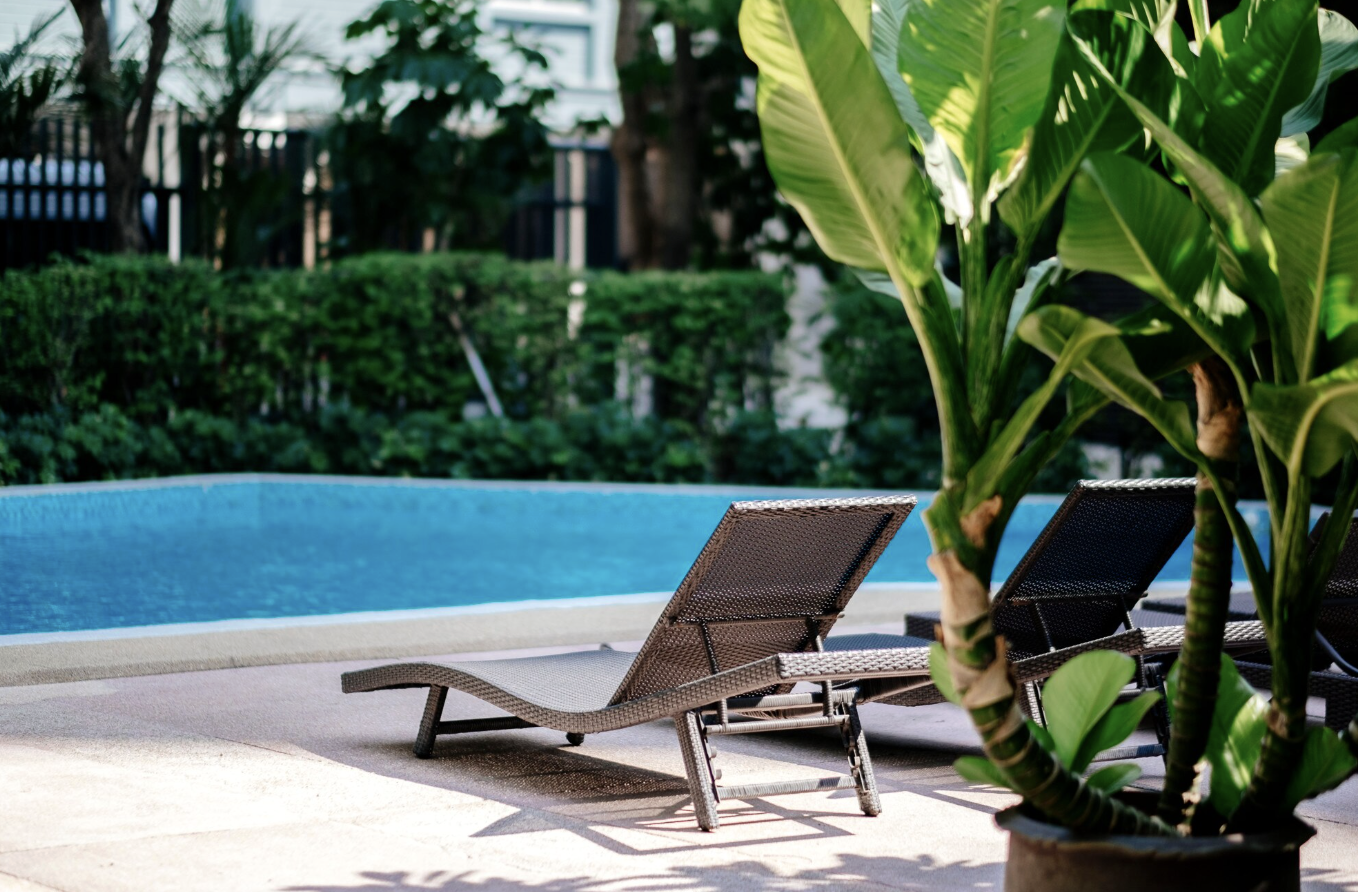
The grocery bag was too full and the twisted paper handle was cutting a red groove into Marissa’s fingers by the time she turned up the driveway, but she was thinking about avocados. That was all. The firm had let everyone out early because the server crashed just before four, and she had stopped at the market almost on reflex, buying the things that lived in the back of her mind as Caleb’s preferences: avocados, limes, cilantro, the expensive tortilla chips he complained about every Thursday while finishing the entire bag before dinner. She had also picked up a new basil plant near the checkout because the one by the grill had been looking tired, and Caleb once said that basil made the patio feel like home.
She would think about that word later. Home. The way it had meant one thing in the morning and another thing entirely by five forty-two.
Nothing about the front of the house suggested anything. The sprinklers were doing their evening rotation over the strip of grass between the mailbox and the sidewalk. The curtains in the upstairs bedroom were half open the way she always left them. Caleb’s truck sat in the driveway so polished it held a clean reflection of the sky, which made her think briefly of the argument they had dressed up as a conversation when he bought it. He said he deserved it after a brutal quarter. She said a person could deserve something and still need to count the money first. He had kissed her forehead and told her she worried beautifully, which was his particular way of making dismissal sound like affection, a trick she had spent years almost believing was charming.
She shifted the grocery bag to her other hand, unlocked the front door, and walked through the hall toward the kitchen.
The cool indoor air met her at the entrance. She was thinking about putting the cilantro in water so it would stay fresh, thinking about whether there was enough sour cream in the refrigerator, thinking about the small logistics of a Thursday evening in a marriage she believed was real. The kind of thinking that happens in the background of a life when the life is working.
Then she heard the pool.
Not the ambient sound of water settling, not the low hum of the pump. The rhythmic, steady slap of water against the tile edge. The sound of the pool being used. She had heard it ten thousand times and never found it alarming. It was part of the property’s texture, one of the sounds she associated with summer afternoons and weekend leisure. But there was something in the rhythm of it that afternoon, something in the regularity and the fact that Caleb was supposed to be working remotely, that changed the quality of the sound from background to signal.
She stepped into the kitchen.
The glass doors to the patio were blazing with late sun, every fingerprint and streak lit up in the glare. The backyard beyond was too bright to read clearly for a second. She set the grocery bag on the counter and an avocado rolled loose and tapped against the stainless-steel sink with a sound so small and final it seemed designed to mark the moment.
Then the glare resolved.
Caleb was in the pool.
Vanessa from number 218 was in his arms.
Her black bikini top was draped over Marissa’s patio chair. His linen pants were folded on the stone beside it, his belt coiled next to them with the patience of something that had been set down deliberately rather than dropped in haste. Vanessa’s sundress lay half across the lounge chair and half on the patio floor. Her sandals were tipped sideways as if she had stepped out of them in the middle of a laugh. Her phone was face-up on the table with three missed calls from Mark, who was Vanessa’s husband, a man Marissa had had over for dinner several times in the past year.
For a few seconds, Marissa’s mind separated the image into components and refused to assemble them. Pool. Chair. Belt. Clothes. Phone. Woman. Husband. It was the way the brain tries to buy itself a few more moments of the before. Then the picture assembled itself completely, and once assembled it could not be taken apart.
Caleb saw her first. His hands left Vanessa’s waist so fast the water spiked around them. He said her name the way people say something they need to contain quickly before it becomes a larger problem. Not my wife. Not I’m sorry. Just her name, with the inflection of a man already managing the situation.
Vanessa sank lower in the water until her shoulders and the red curve of her mouth were all that remained visible above the surface. Marissa recognized that lipstick. She had seen it on the rim of a coffee mug in her own kitchen the previous Tuesday, when Vanessa had come by to borrow sugar, standing at the kitchen island and asking whether Caleb was still working late so often, while Marissa answered honestly because she trusted the woman asking. She had trusted the question because it had been delivered with the easy warmth of a friend. Now she understood what kind of question it had actually been.
There were wet footprints on the stone leading from the kitchen door to the pool.
Not from the side gate. Not from the patio entrance. From the kitchen. The same kitchen where Vanessa had stood three Tuesdays in a row with an empty measuring cup and a neighborly smile. The same kitchen where Marissa had offered coffee and conversation and the comfortable assumption that kindness was being met with kindness.
She set the grocery bag down. She did not throw it. Some part of her still refused to make a mess in her own house, which was almost funny in retrospect and not funny at all.
Caleb said, “Don’t make a scene.”
Not this is not what it looks like. Not please let me explain. Don’t make a scene, because his first concern, standing in the pool he had complained about the cost of while his wife stood in the kitchen doorway with groceries still in her hand, was volume control. He was already inside the story he needed to tell later, already casting her in the role she would have to play for the narrative to protect him. If she screamed, she was hysterical. If she cried, she was unstable. If she demanded an explanation, she was humiliating him. If she exposed him, she was vindictive. Men like Caleb did not simply betray their wives. They reserved the right to grade the response.
Something inside Marissa went very still. Not numb, not broken. Organized. The hurt was real and enormous and she would feel all of it later, would feel it for months in the specific, layered ways that betrayal unfolds over time. But in that moment it arranged itself into something useful. She understood with complete clarity what was happening and what was available to her, and she decided, without drama, what she was going to do with it.
She walked to the lounge chairs.
Vanessa said, “Please,” in a voice that had gone small and frightened. “We can explain.”
Marissa looked at the wet footprints from the kitchen door.
“You already did,” she said.
She picked up Caleb’s shirt. His belt. His pants. His keys. Vanessa’s sundress. Her sandals. Her phone. She folded each item over her arm with the unhurried attention of someone completing a task, and the deliberateness of it, the refusal to hurry or fumble or show distress, seemed to unsettle both of them more than any screaming would have.
Caleb said don’t be dramatic, which was the same instruction in different packaging, and Marissa felt her fingers close tighter around the wet fabric. The red emergency button beside the kitchen entrance was mounted on the security panel she had paid twenty-seven hundred dollars to install after a series of break-ins two streets over. Caleb had called it overkill. He had made jokes about it at dinner parties. He had told Vanessa, while Vanessa laughed over a glass of wine, that Marissa was turning the house into a bank vault.
The system connected the side gate camera, the pool camera, the front doorbell, and the patrol dispatch service. It also sent automatic alerts to the monitoring company and pushed emergency notifications into the Ridge Hollow community app, which covered the entire subdivision.
Caleb understood all of this. She saw it in the way his expression changed before her hand reached the panel.
“Marissa.” His voice sharpened. “No.”
She pressed once.
The siren came out of the backyard the way a true emergency alarm is designed to come out of a space, without apology, without calibration, without any interest in being polite. It was sharp and brutal and designed specifically to be impossible to ignore. Dogs erupted down the block in a chaotic cascade. Curtains shifted in the windows of houses on both sides of the street. A garage door two houses over began groaning upward. Mrs. Palmer appeared at her fence in gardening gloves with one hand still muddy from whatever she had been doing. The older man from across the street stepped onto his porch with a coffee mug. Two teenagers on bikes stopped at the curb and stood straddling their handlebars. A delivery driver froze beside his open van with a box pressed against his hip and his mouth slightly open.
For several seconds, the entire subdivision paused.
The sprinkler in someone’s front yard kept its indifferent tick. A car alarm two blocks away answered briefly then stopped. Otherwise the neighborhood held completely still around the noise, and in that stillness the story of what was happening inside the yard at 214 Ridge Hollow Lane began its quiet, unstoppable transfer from private to public.
Caleb shouted for her to turn it off. His voice was raw with a kind of anger that comes from fear. He gripped the pool edge and stared at her with an expression that was no longer managing anything.
“Why?” Marissa asked. Her voice was steadier than she felt. “You brought this five feet from my kitchen.”
Vanessa covered her face with both hands. The water could hide a great deal, but it could not hide the fact that her clothes were folded over someone else’s arm or that the empty pool chairs explained the rest of the story without requiring any narration.
Caleb attempted to climb out of the pool. Then he remembered he had nothing to climb out in and settled back against the edge with his jaw tight.
Her phone buzzed. The monitoring company confirming the alert. Patrol notified. Then, almost immediately, the Ridge Hollow community app notification appeared on her screen. Backyard alarm at 214 Ridge Hollow Lane. Address. Timestamp. A public record created and distributed in the same moment, the kind of document that could not be charmed out of existence or blamed on someone else’s hysteria.
At five forty-two in the afternoon, the lie became an event.
Marissa reached into Caleb’s pants, which were still folded over her arm, and found the key fob to the truck. She held it between two fingers where he could see it clearly. His mouth opened.
“This,” she said, “is the last thing of yours going into my pool.”
She dropped it into the deep end. It disappeared under the water with a small, complete sound, and for the first time since she had walked into the kitchen, Caleb had nothing to say.
Then another car door slammed out front.
Vanessa turned toward the side gate without moving, the way people turn toward a sound when they cannot decide whether running toward it or away from it would be worse. She said one word. “Mark.” Not as a prayer. As a warning delivered too late.
Mark’s black SUV was at the curb. Marissa’s phone buzzed again with the doorbell camera notification. A motion clip from five thirty-nine, three minutes before she arrived home. She opened it. The clip showed Caleb’s hand resting low on Vanessa’s back as he guided her through the kitchen door, both of them entering the house that Marissa had been twenty minutes away from arriving at. He glanced over his shoulder before entering the code. Vanessa was laughing. He kissed her once, quick and familiar, before the door swung open. The casual intimacy of people who had done this many times and no longer felt the need to hurry.
Vanessa saw Marissa’s expression change. “What?” she whispered.
Marissa turned the screen toward Caleb.
He looked at the clip. His expression did not move through guilt first. It moved through calculation. He was assessing, in real time, what the footage meant for the version of events he would need to construct. That calculation, visible on his face for two full seconds before he recovered it, hurt considerably more than guilt would have. Guilt at least acknowledges the person who was wronged. Calculation only counts costs.
“Don’t show him that,” Caleb said, lowering his voice under the siren.
The doorbell sounded through the backyard speaker, clean and absurd.
Marissa opened the live camera feed. Mark leaned close to the lens, his face pale, his voice controlled in the way of a man who had been holding himself together on the drive over and was still holding on by discipline alone.
“Marissa,” he said. “Before you open this door, tell me one thing.” He paused. “How long has my wife been using your kitchen door?”
She walked through the house to the front door. When she opened it, they stood looking at each other for a moment, two people connected by the same injury, both of them trying to find language for a situation that had not existed when they woke up that morning.
“I’m sorry,” she said, because it was true and because she could not think of anything more useful.
“Me too,” he said.
He walked through the house without being invited, past the hallway photographs of vacations and Christmas mornings and the accumulated visual evidence of two lives that had been constructed with care and apparently inhabited dishonestly, and stepped out onto the patio.
Vanessa said his name. Then said please. He looked at the clothes on Marissa’s arm, at the pool, at the wet footprints from the kitchen, at the lounge chair with the bikini top, at the phone with his own missed calls on it. The scene had the terrible efficiency of things that explain themselves without requiring words.
Caleb spoke first. “Listen—”
Mark raised one hand.
Caleb stopped talking.
That gesture did what Marissa’s pain had not been permitted to do all afternoon. It silenced him completely, and the silence that followed was the first moment since she had walked into the kitchen where the situation belonged entirely to the people it had actually harmed.
The patrol officer arrived through the side gate six minutes after the alert confirmation. By then three more neighbors were visible, Mrs. Palmer watching through the fence slats with her gardening gloves still on, the teenagers having rolled their bikes cautiously closer. The delivery driver had apparently finished his route and not quite managed to leave the street.
The officer asked whether there was an intruder on the property.
Marissa said no. Then she looked at Caleb in the pool and Vanessa, who had wrapped herself in a towel the officer had produced from the outdoor storage bench, and said, “Not the kind you can arrest today.”
The officer recorded the report because the emergency dispatch required one. He recorded the timestamp, Marissa’s name as homeowner, the fact that two individuals had been found in the backyard pool without clothing immediately available, and that one of them had entered through the kitchen door shortly before the alarm activation. He wrote it all down with the patient thoroughness of someone who understood that paper has a long memory and does not respond to charm.
Caleb kept trying to redirect the conversation toward misunderstanding, toward marital privacy, toward anything with soft enough edges to blur what the report was recording. The officer kept writing.
The siren eventually stopped. The silence afterward was enormous and complete, the way silence feels after sustained noise, and in it Marissa understood that something had genuinely ended. Not only the marriage, though the marriage was over. Something else. The long, habitual labor of managing other people’s comfort at the expense of her own. The performance of calm acceptance she had maintained for years while instincts she should have listened to were filed quietly away.
Mark asked Vanessa for her phone. She hesitated. The hesitation answered more than the phone would have. He looked at it for a moment, then handed it back without speaking. There was nothing in that exchange that needed explaining. Marissa handed Vanessa her clothes. Caleb had to stand at the pool edge and wait while Marissa tossed him his shirt and pants one piece at a time, without stepping closer, without offering any assistance with the humiliation of being clothed in front of an officer and several neighbors in his own backyard.
Nobody laughed. That almost made it worse, and also better. The neighborhood had enough to discuss for years, but in the actual moment, none of it felt like entertainment. Even Mrs. Palmer looked away when Caleb pulled on his pants. Humiliation that is deserved is still ugly to watch, and Marissa did not need anyone to enjoy it. She only needed to stop protecting him from it.
When it was over, when the officer had his report and the neighbors had retreated and the patrol car had pulled away from the curb, Caleb turned to her.
“Can we talk inside?” he said.
Inside. After everything. He still thought the kitchen could be neutral ground, still thought the room where his footprints had dried on her tile could be a place where he could shape the next version of the story.
“No,” she said.
He looked around the yard. The pool where his truck key was sitting at the bottom of the deep end. The chair where Vanessa’s things had been. The alarm panel. Mark’s vehicle pulling away from the curb. His own truck in the driveway, inaccessible without a fob that was no longer a fob.
“Marissa, please.”
She looked at him for a long moment. This was the man who had stood beside her when the pool was installed and complained about the cost, then invited the entire neighborhood over to admire it. The man who called her careful when he meant boring and paranoid when he meant inconvenient. The man who had kissed her forehead and told her she worried beautifully while Vanessa was learning the rhythm of her Thursdays.
“I’m done discussing my marriage in rooms where you bring other women,” she said.
She went inside and locked the door.
That night she changed the gate code, downloaded every archived camera clip from the security system, and emailed the files to herself, her sister, and a divorce attorney whose name she had saved in her phone two years earlier for a friend who had ultimately not needed it. She had kept the contact the way you keep certain things, not expecting to need them, not quite willing to delete them either.
Caleb slept in the guest room because she had locked the bedroom door. He sent her a text from across the hallway asking her to handle this carefully. She read the word carefully and understood that it meant the same thing in his text that it had meant in his voice at the pool. He wanted the management of his exposure. He was asking her to protect the story that was most convenient for him, which was the thing he had always wanted from her, whether the subject was a truck purchase or a backyard.
The next morning she called a pool service. A technician arrived before noon and fished the truck fob from the deep end with a net and a long pole. He shook the water out of it over the stone and it did not power on. Caleb stood on the patio watching. Marissa signed the service invoice and kept her copy. She was under no illusion that this was justice. It was simply accurate documentation of a consequence, which was what the whole afternoon had been about.
Over the following week, Caleb moved through every available form of apology. He tried shock, then shame, then the version where Vanessa was primarily at fault, then the version where work stress had made him someone he did not recognize, then the version where the alarm itself had been the real problem, as though the siren had betrayed the marriage and he had merely been nearby when it happened. Marissa listened to none of it except once, and that once she played the five thirty-nine clip on the kitchen counter while he stood across from her, and she watched him go quiet when he saw his own hand on Vanessa’s back, and quieter when the next clip loaded, and quieter again when she scrolled backward through the camera history and the pattern of Tuesdays began to emerge.
She had not known how many there were. That was the part that kept reassembling itself over the following months, not the pool, not the afternoon, but the accumulated Tuesday archive, clip after clip of Vanessa arriving when Marissa was not home, Vanessa leaving forty minutes or an hour later, Caleb watching from the doorway before closing it, both of them captured with the casual unhurried posture of people who had stopped considering the possibility of being seen. The camera had not known what it was recording. It had simply kept the time.
Mark sent her a text three days after it happened. Short and without any performance. Thank you for not letting them make us both stupid. She was at the kitchen island when she read it and she put the phone down and cried for the first time since the afternoon, not because of anything Mark had said but because he had named the specific nature of the injury precisely. The affair was one wound. The staging of it was another. They had used the ordinary materials of neighborly warmth, the borrowed sugar, the watered basil, the banana bread during the flu, the gate code, as cover, and then expected the people they had used to feel embarrassed for noticing.
The divorce was not simple because divorces are not simple. Caleb wanted the house listed immediately. Marissa refused. Her attorney presented the camera archives, the patrol report, the alarm timestamp, the text messages Caleb had sent afterward asking her to handle things carefully, and the documentation of the truck key retrieval because Marissa had kept that invoice and it made a very specific point about the afternoon. The twenty-seven hundred dollar security system Caleb had called overkill became one of the cleanest timelines in the file. The backyard pool, the eighteen-thousand-dollar luxury item Caleb had fought about and then shown off to the entire neighborhood, became a witness.
She did not get everything. She had not expected to. But she got the house through temporary agreement and then through settlement, and when Caleb’s attorney insisted his personal property be returned, she mailed him the dead truck fob in a small plastic bag with tracking. She allowed herself exactly one small smile about that, standing at the post office counter, which seemed like the right amount.
Vanessa and Mark sold their house before the season ended. Mrs. Palmer left a new basil plant on Marissa’s porch two weeks after the patrol report was filed, with a note that said only, for the grill. Marissa stood in the doorway holding it for a long time, thinking about the ways people surprised her after everything, the ones who were nosy, the ones who were genuinely kind, the ones who pretended not to have watched from their windows because the pretending was more comfortable than admitting they had, and the ones who, like Mrs. Palmer, found small wordless gestures that said everything necessary without requiring anyone to discuss it.
The teenagers stopped biking past the house for about a month and then resumed, and Marissa was glad when they did because their presence had been part of the street’s ordinary rhythm and she wanted ordinary rhythms back. The delivery driver waved from his van one afternoon and looked immediately embarrassed about having done it, which she found oddly touching.
She learned, over the months that followed, that public exposure is not justice and was never meant to be. She had not pressed the alarm because she wanted witnesses to her humiliation. She had pressed it because Caleb had stood in her pool and told her not to make a scene, which was an instruction she was no longer willing to accept, and because the alarm existed precisely for moments when the truth needed a container that could not be revised later. The patrol report, the community notification, the timestamp on the app, all of it created a record that belonged to her, that existed independently of his willingness to acknowledge what had happened.
That was what she had actually needed. Not revenge. A record. Proof that the story had a shape and a time and an address, and that it could not be softened into misunderstanding by someone with a good voice and a practiced ability to make condescension sound like affection.
Months later, in the early part of summer, she swam in the pool for the first time since the afternoon. She had been avoiding it without entirely acknowledging that she was avoiding it, moving around it in the backyard the way you move around something that still has an association you are not ready to renegotiate. But one afternoon the heat was serious and she changed into her swimsuit and got in.
The water was cool. The tile made its familiar sound against the edge. The basil by the grill had grown back thicker than before, the original plant and Mrs. Palmer’s addition combining into something bushy and slightly aggressive that smelled extraordinary in the evening heat. She floated on her back and looked at the kitchen door, the door with the wet footprints, the door through which Caleb had guided Vanessa while Marissa was twenty minutes away thinking about cilantro.
She looked at it without flinching, which surprised her. She had thought there would be more of a remainder. But the door was just a door now, and the pool was just water, and the afternoon had become a fact about her life rather than the organizing event of it. The kitchen light came on automatically as the sun lowered, the way it was set to do, and she watched it from the water and thought about nothing in particular, which was its own small luxury.
People asked her sometimes whether she regretted pressing the alarm. Whether she wished she had handled it more quietly, more privately, more in keeping with the expectation Caleb had tried to set in the first seconds after she walked through the door.
She always gave the same answer.
He brought it five feet from her kitchen. He looked at her standing in her own doorway with groceries cutting into her fingers and his first thought was whether she would be loud about it. He had spent years making her feel that her careful instincts were anxiety, that her accurate observations were paranoia, that her questions were inconvenience and her concerns were beautiful worrying and that the correct response to all of it was a quieter version of herself.
She had been quiet for a long time.
All she did on that Thursday afternoon at five forty-two was press one button and let the truth stop waiting for permission to exist.
The basil smelled like the patio again. The pool held the last of the evening light. The kitchen door was closed. She swam until the sky went orange and then she got out and dried off and went inside, and she did not look back at the water when she closed the door, because there was nothing there she needed to see again.

Laura Bennett writes about complicated family dynamics, difficult conversations, and the quiet moments that change everything. Her stories focus on real-life tensions — inheritance disputes, strained marriages, loyalty tests — and the strength people find when they finally speak up. She believes the smallest decisions often carry the biggest consequences.