Just a Nurse
My sister introduced me to one hundred and twenty wedding guests with the same voice she would use to point out a scuff on an otherwise nice floor.
“This is my stepsister,” Victoria said, pausing just long enough to make the pause do work. “Just a nurse.”
Then she laughed.
My father laughed first, actually. A real laugh, full and unguarded, the kind that tells you the person laughing genuinely found something funny. Not nervousness. Agreement. My stepmother Diane let a small smile move across her mouth, the satisfied kind, the kind that comes when a plan executes cleanly. A few guests followed along because laughter at a wedding is contagious and most people are not paying close enough attention to understand what they are laughing at.
I stood at Table 14 in my forty-dollar navy dress among women wearing Valentino, and I did what I had been doing my entire life. I swallowed it. Pressed my fingers into my palms under the table and kept my face neutral and let the room move on, because the room always moves on, because that was the entire point of the introduction.
Acknowledge the stain. Then everyone politely ignores it.
What Victoria did not know, what nobody at that dinner knew, was that the man sitting at the head table, the man whose generous hands had funded every flower arrangement and every champagne flute and every hand-calligraphed place card in that room, was someone I had met before. Three years earlier. On a highway in the rain, with broken glass under my knees and my hands around his head and his pulse running too weak and too fast under my fingers while the ambulance was still twelve minutes out.
He was about to remember.
My name is Shelby Sittner. I am twenty-nine years old. I am a trauma nurse at St. Luke’s Regional Medical Center, and this is the story of what happened when my sister’s cruelest sentence became the one she could not take back.
The invitation arrived on a Tuesday, wedged between a power bill and a catalog I had never subscribed to. Cream Crane and Company paper, letterpress, a gold monogram. Victoria and James. I ran my thumb across the raised letters and noticed my hands still carried the faint antiseptic smell from the overnight shift. They had spelled my name wrong. Shelly. Nobody in my family has ever bothered to learn the difference between an e and a y, which is a small thing and also a large thing depending on how many times it happens over twenty years.
There was no plus-one.
I set the invitation on my kitchen counter next to a stack of trauma nursing journals and looked at it the way you look at a summons. Because that is what it was. Not an invitation. An accounting. Victoria wanted me present, which is different from wanting me there. She wanted me available for the family photograph and then invisible for the rest.
I grew up in my father Robert’s house as the thing that had existed before the renovation. Robert married Diane when I was nine and Victoria was twelve, and in the first week the architecture of the family reorganized itself around a new center of gravity. Victoria’s room had a canopy bed and a commissioned portrait. My room was the old study, fitted with a cot and a lamp that flickered whenever the heater turned on. Victoria’s school photos climbed the staircase wall in matching frames. Mine were in a drawer.
Diane introduced Victoria at parties as our daughter. She introduced me as Robert’s kid from before, which sounds like a description but functions as a category. Robert called me every Sunday, mostly, and picked up when I called, mostly, and would say hey Shell, let me call you back, mostly, and did not call back, always. Three months could dissolve without his voice and when I finally dialed again he would answer with the warmth of someone for whom no time had passed, because for him no time had passed, because I was not someone he kept track of between calls.
When my father called to tell me Victoria wanted me there, his voice had that rehearsed warmth he reserved for audiences. I almost asked who was listening. Instead I looked up the Harrington family on my laptop after we hung up, sitting cross-legged on my apartment floor with my computer balanced on a stack of pathophysiology textbooks.
Richard Harrington, sixty-three. Started as a construction laborer, built a real estate development firm from a single duplex into a company that had reshaped half the commercial corridor in Fairfield County. Self-made in the genuine sense. His son James was a corporate attorney, Georgetown Law, junior partner at a firm downtown. Good-looking in a clean, careful way. Victoria had been dating him for two years and in that time she had constructed an entire mythology about our family that I pieced together through her Instagram, the account she had never let me follow but never made private.
Curated Sunday brunches at restaurants I had not been invited to. Robert in a blazer Victoria had picked for him. Diane with fresh highlights. Candles. The captions read like advertising copy. Nothing matters more than family.
Robert managed an Ace Hardware in Milford. Victoria told the Harringtons he was in the hardware industry. Diane had done small neighborhood catering events, sheet cakes and chafing dishes, and Victoria had repackaged her as a woman who ran her own catering company. Everything about our family, in Victoria’s telling, was a renovation. New paint applied carefully over rotten beams.
I found out later, from James himself, that Victoria had given the Harrington family specific instructions about me before the pre-wedding brunch. I overheard her on the phone with Diane the week before: we need her there for the family photo, and after that, keep her invisible.
The word settled into my chest and stayed there.
Invisible. That had always been the assignment. I had just never heard it stated so efficiently.
Here is the thing about being made invisible at home. You learn to become essential somewhere else.
My shift at St. Luke’s started at seven and ended when the board was clear, which most nights meant nineteen hours. The week before the pre-wedding brunch I worked four back-to-back twelves, ran three codes, and assisted in a pediatric trauma case I still think about sometimes when the department goes quiet. A sixty-year-old man whose heart stopped in the waiting room. I had my hands on his chest before the crash cart reached us, and he walked out five days later with flowers for his wife. Nobody at St. Luke’s cared who my stepsister was marrying. They cared whether my IV lines were clean and my assessments were accurate and whether I could be trusted in the room when things were going badly.
Dr. Ellen Marsh, the attending who ran our emergency department with the focused authority of someone who has earned every square foot of her authority, had nominated me for the nursing excellence award the previous year. I won. The plaque lived in my locker. I had never mentioned it at home. The one time I tried, years earlier, mentioning to Victoria that I had been nominated for something, she had tilted her head and smiled. That’s cute, she said. Do they give real awards to nurses? Diane laughed from the kitchen. Robert said nothing. After that I stopped offering information about my work to people who had decided in advance what it was worth.
The most significant case of my career had happened three years before the wedding, on a November night on Interstate 95 in a rainstorm, in forty-seven minutes I still feel in my hands and shoulders and the specific tension I carry between my shoulder blades when something is about to go wrong. But I will get to that in the order it became known.
The pre-wedding brunch was held at the Harrington estate, a stone colonial on four acres with a circular drive and hedges trimmed to architectural precision. I parked my Civic between a Porsche and a Mercedes and sat with my hands on the wheel for two minutes before going in. Inside everything smelled like peonies and the particular calm of money that does not need to announce itself. Victoria had positioned herself at the center of the living room, magnetic and laughing, her hand resting on James’s arm with the comfort of someone who believes she has arrived at the place she was always headed.
I needed the restroom and took a wrong turn past what turned out to be Richard Harrington’s study. The door was open. I did not mean to stop, but the walls caught me. Floor-to-ceiling bookshelves. A cherrywood desk. Framed business awards along the shelves, and in the center of them, given more prominence than any professional accolade, a photograph. A man in a hospital bed, oxygen tubing, bruising across his jaw. Beside it a small handwritten card. To the angel on I-95. And next to that, a clipped newspaper article. Local businessman survives horrific highway crash thanks to off-duty nurse.
I looked at the photograph. The face was swollen and half-covered in gauze. I did not recognize him. I process hundreds of patients a year and three years is a long time. Faces blur. What I retain is often clinical, the pressure of a pulse, the angle of a spine, the specific quality of someone’s breathing when they are losing ground.
Richard Harrington walked in behind me.
“That’s my second birthday,” he said, nodding at the photograph. “The day someone gave me my life back.”
I smiled. “That’s incredible.”
He looked at me with the particular attention of someone whose mind is working on something it cannot quite resolve. Then Margaret called him from down the hall and the moment dissolved.
Victoria materialized at my elbow. “Stop bothering Mr. Harrington,” she whispered, and pulled me away.
At the brunch introductions under the pergola, Victoria moved through the family presentation with the efficiency of a press secretary. My mother, she said, who ran her own catering business before she retired. Diane beamed. My stepfather, in the hardware industry for twenty years. Robert shook Richard’s hand too firmly. Then Victoria turned her body and moved to the next cluster of guests without pausing, and I was standing three feet away holding a sparkling water and she passed through me like I was weather.
Margaret Harrington noticed. She extended her hand. And who is this?
Victoria’s smile tightened the way a seam does before it gives. Oh, that’s Shelby. She’s around.
Margaret looked at me with genuine interest. What do you do, Shelby?
Before I could answer, Victoria leaned in. She works at a hospital in some capacity.
I met Margaret’s eyes. I’m a registered nurse in the emergency department at St. Luke’s Regional.
Margaret’s expression opened. ER? That must be incredibly demanding.
Victoria’s hand landed on Margaret’s arm like a rudder, redirecting her toward the florist’s mock-ups, and I was behind them again before the sentence was finished.
Later, walking back through the house, I caught one fragment of what Victoria whispered to Diane. She’s already talking too much. Handle it.
Diane found me by the rose garden and guided me to a stone bench at the far edge of the property, in the kind of corner where people put things they want kept out of the sightline. Her voice was soft with manufactured concern. Victoria is under so much pressure. This wedding is everything to her. Just be supportive. Be quiet. Don’t make it about you.
I had heard this script before. At Thanksgiving. At Robert’s sixtieth birthday. At my own college graduation, where Robert checked his phone through the ceremony and left before I crossed the stage because Diane had a headache. I was always the variable to be managed. The element to be controlled before it could create an incident.
I said I heard her, and I did.
I called my friend Priya from the hospital parking lot afterward. I was sitting on the hood of my Civic, the sun going flat and late, when I heard Victoria’s voice carrying through an open window. She was on the phone, and the sentence arrived whole and clear: No, I told the Harringtons she has issues. Emotional stuff. They won’t ask questions.
I sat with it. I heard every word. And something in my chest did not break so much as rearrange, shifting the weight it had been carrying from one configuration into another, quieter and more deliberate.
Two days later the confirmation came at the rehearsal walkthrough. I stepped outside for air and came around a corner to find James on the patio with a groomsman named Tyler. They did not see me.
Yeah, James said, casual, almost gentle with it. Victoria’s stepsister has some personal issues. Victoria doesn’t really like to talk about it. The family tries to be supportive from a distance.
Supportive from a distance.
That was the phrase she had packaged for public consumption. She had not simply excluded me. She had rewritten me into a character who required careful handling, the sad, fragile stepsister that the family quietly managed. Not someone being pushed aside. Someone being gently quarantined.
I called my father that night. No preamble. Did you know Victoria told the Harringtons I have mental health issues?
Silence. Then the sigh he uses when he has been caught and wants to sound tired rather than guilty. She’s just protecting the family image. Don’t make a scene.
I asked whether he had gone along with it.
He did not answer, and the silence was a complete sentence.
I had spent twenty years watching Robert let things happen. Every erasure, every reframing, every dinner where I dissolved into the background because it was easier than introducing friction. I had told myself he was weak, that weakness was different from malice. Standing in my apartment with the phone against my ear, I understood something I had been circling for a long time. He had not been deceived. He had volunteered. Every silence had been a choice.
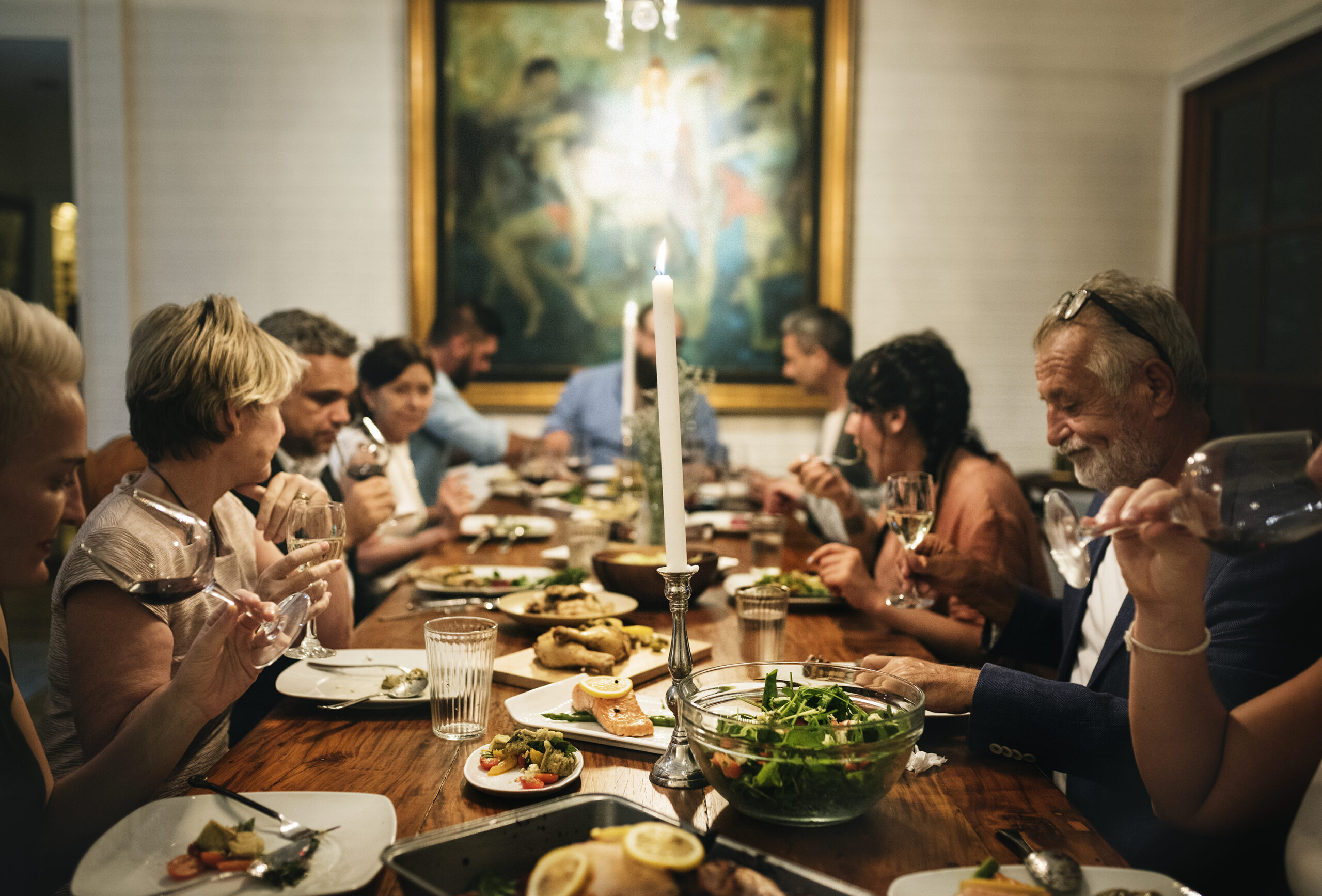
The rehearsal dinner was at the Oakmont Country Club. Crystal chandeliers. A string quartet. Place cards calligraphed in Hermès orange. The kind of event where the napkin folds have a name. I arrived in the same navy dress, with the pearl earrings I wore every day, two small luminous studs my mother had worn until the cancer took her when I was seven. They were the only thing of hers I had left.
My name was misspelled on the seating chart. I was at Table 14, nearest the kitchen doors, seated with the babysitter and a distant colleague of Diane’s and one empty chair. I found my seat and unfolded my napkin and looked at the menu without reading it and waited.
Victoria took the microphone and introduced her family in the order of their importance to the story she was telling. Diane, her rock, her compass. Robert, the man who gave her a real family. Her bridesmaids, her college roommate, her boss. Each introduction was a small coronation, designed to show the Harringtons at the head table exactly what kind of family they were joining.
Then she turned toward Table 14.
This is my stepsister, Shelby.
The pause was practiced. I knew because I knew Victoria, and she never left silence unscripted.
Just a nurse. She tilted her head slightly, a performative softness, a gesture of tolerance. Then she turned away. Anyway.
My father laughed first. A full laugh with warmth in it, the kind that confirmed he had been waiting for the moment. Diane’s smile moved in the slow, satisfied way of a plan executing correctly. A few guests followed, reflex laughter, the kind that requires no cruelty of its own because it borrows from whoever started it.
One hundred and twenty people looked at me for three seconds.
Then I was wallpaper again.
I pressed my fingers into my palms and held still and looked at the head table. Richard Harrington was not laughing. He had not lifted his champagne glass. He was looking at me with a concentration that was not social, not polite, not the ordinary attention of a host scanning his guests. It was the focused look of a man whose memory is running a search it has not finished yet. He leaned toward Margaret and said something I could not hear. Then he turned to James and his lips formed five words I read across the room.
That girl. I’ve seen her before.
A woman from Victoria’s side approached my table later, cocktail rings on three fingers, the particular confidence of someone who has decided the social license of the evening extends to whatever she wants to say. So you’re the stepsister. What do you do, empty bedpans?
She laughed before I responded.
I looked at her. Among other things, last Tuesday I assisted in an emergency thoracotomy. We opened a man’s chest in the trauma bay and repaired a lacerated ventricle.
I let the silence hold.
He lived.
The smile collapsed. She found something to do elsewhere.
Victoria arrived at my elbow within thirty seconds. Shelby, don’t bore people with work stories.
I said nothing, because the word lived had already done everything necessary.
She cornered me in the powder room an hour later. White marble, Aesop soap dispensers, monogrammed linen towels folded into fans. She closed the door and the click of the latch was its own kind of statement.
Tomorrow is my wedding, she said. Her voice had been stripped of everything she wore in public. Clean and flat and certain. You will sit. You will smile. You will say nothing. Don’t talk to the Harringtons. Don’t talk about your job. Don’t talk. Period.
I asked why she had told the Harringtons I had mental health issues.
She did not flinch. Did not deny it. I told them what they needed to hear, she said. I’m building something here. You think the Harringtons would accept this family as is? A hardware store manager and a nurse?
She said nurse the way you’d say a word you found distasteful.
I’m asking you to know your place.
Three words. The same three words my family had been communicating to me in different forms for twenty years, through misspelled names and empty chairs and photo crops and the studied nothing of a father who called back less than he promised. Victoria was just the first one to say them out loud in a room with no audience.
That night I sat in my Civic in the country club parking lot, key in the ignition, not starting the engine. The small RN charm on my keychain caught the light from a parking lot fixture and threw a reflection onto the dashboard. I thought about driving home. Skipping the wedding. Going back to the ER where people needed me and my name was spelled correctly on every chart I signed and my work meant something that nobody had to be told to appreciate.
I called Ellen Marsh instead. She picked up on the second ring, the way she always did.
They called you just a nurse, I said.
Her voice came back even and sure, the voice she used when things were bad and she needed the room to stay calm. Shelby, you’ve saved more lives in one year than most people do in a lifetime. Don’t let anyone shrink you.
Then my phone buzzed with a text from an unfamiliar number. This is Margaret Harrington. I got your number from the guest list. I wanted to say I’m glad you’re here tomorrow. Richard has been asking about you.
I read it three times. I did not understand it yet. But something in the specific phrasing, Richard has been asking about you, settled somewhere in my chest with the particular weight of things that mean more than they appear to.
I started the engine and drove home.
The wedding was held on the Harrington estate. Two hundred guests. Flower arrangements from the Netherlands. A string orchestra for the ceremony. A jazz band for the reception. Victoria wore a Reem Acra gown that turned the September light into something architectural. It was genuinely beautiful. Victoria has always understood beauty as a strategy, and she deployed it with precision.
She intercepted me in the driveway. Why are you early. Stay out of photos until I call you. She called me once, for the full family portrait, and the photographer positioned me at the far edge behind Diane’s shoulder. I would see later that every version Victoria posted had been cropped just far enough to exclude my face.
At the reception, I found my seat. Table 18 now, nearer the service entrance than Table 14 had been, with two empty chairs from guests who had not shown, a slightly wrinkled tablecloth, and a centerpiece with fewer flowers than the others. She had been meticulous.
Richard Harrington was working the room table by table when he reached mine. He did not shake my hand. He pulled out the chair beside me and sat down, turning his glass slowly.
Three years ago, he said, I almost died on I-95.
He told me about the rainstorm and the truck and the impact and being pinned and the broken glass. He told me about a woman who crawled through the wreckage and held his head and neck still and talked to him for forty-seven minutes, keeping him conscious, keeping him focused, keeping him present long enough for the ambulance to arrive.
He told me she had described her mother’s pearl earrings. That she wore them every day. That they had been her mother’s, that her mother was gone. He said he had focused on the description of those earrings for forty-seven minutes because they were something gentle to hold onto while he could not feel his legs and the rain was coming through the broken windshield and the sirens were still far away.
I should have made the connection earlier. I process hundreds of patients a year. Faces blur and names blur and three years creates real distance. But sitting at Table 18 listening to him describe the earrings, my hand went to my ear, to the small pearl stud, the one I had been wearing that night on the highway, the one I had described to a bleeding stranger to keep him anchored to something soft while the world around us was all broken glass and rain and the sound of distant emergency.
Richard watched my hand go to my ear. His eyes followed the motion and he looked at the earring and his jaw went tight and his voice, when it came, had the quality of something that has been held under pressure for a very long time and has finally found its release.
It’s you, he said.
The jazz band covered the silence. Nobody at the other tables heard him. The world continued its wedding momentum around us, oblivious and celebratory, and Richard Harrington sat at Table 18 and looked at me the way people look at something they have been searching for long enough to stop expecting to find.
Someone called his name from across the tent. He took my hand in both of his and said, please don’t leave. I have something to say tonight. Then he was gone, and I sat alone at the table with two empty chairs and the knowledge of what was coming without knowing its shape.
The toasts happened. Victoria’s speech was her masterpiece. She thanked everyone whose name had any value in that room, thanked the florist and the jazz quartet and the venue coordinator by full name, thanked the Harringtons as her new family, the people she had been waiting her whole life to find. She did not say my name once. Not in passing. Not in the careful parenthetical way of someone obligated to mention an inconvenient relative. Not at all. Two hundred people applauded and nobody noticed the omission because you can only notice an absence if you first understood there was supposed to be a presence.
James noticed. He leaned toward Victoria after the applause and said quietly, you didn’t mention Shelby.
She touched his cheek. She prefers it that way. Trust me.
I went to the restroom and stood at the vanity and looked at myself in the mirror. My mother’s pearl earrings caught the light. I touched one of them and thought about my mother, who would have said my name first. Then Margaret Harrington walked in, saw me, and did not pretend she had not.
I noticed you weren’t mentioned, she said.
I’m used to it, I said.
She held my gaze. No one should be used to that.
Then Richard took the microphone.
The room quieted for the father of the groom the way rooms quiet for people who have earned a particular kind of attention. Victoria was beaming from near the cake table, positioned for the moment she had choreographed, the Harrington patriarch welcoming her into the family, sealing the narrative she had worked two years to construct.
Richard did not smile.
Most of you know, he began, that three years ago I was in a serious accident. An eighteen-wheeler jackknifed on Interstate 95 in a rainstorm and hit my car head-on. My door was crushed. My legs were pinned. The steering column was against my chest.
The room went still the way it only goes still when it understands something real is being said.
For forty-seven minutes, before any ambulance, before any paramedic, before any rescue equipment, one person kept me alive. A woman who crawled through wreckage, held my head and neck still to protect my spine, and talked to me through the worst forty-seven minutes of my life.
He paused.
I never found her. The hospital would not release her name. Privacy regulations. I searched. I hired people to search. I established a foundation in her honor. For three years I called her the angel on I-95.
He looked at the room.
Tonight, I found her.
Two hundred heads turned.
Richard said: the woman who saved my life is sitting at Table 18.
The silence that followed had physical weight. The kind of silence that happens when a room full of people understands simultaneously that everything they thought they were watching was something else entirely.
Her name, Richard said, is Shelby Sittner.
He held up his phone. The screen faced the audience. The email from St. Luke’s, the formal commendation letter, the hospital seal. He read from it in a voice that was low and deliberate and absolutely certain. Shelby Sittner demonstrated extraordinary poise under extreme conditions, stabilizing a critically injured patient with suspected cervical spine trauma using manual inline stabilization for forty-seven minutes in adverse weather. She was solely responsible for his survival until paramedics arrived.
Then he looked directly at Victoria.
Twenty minutes ago, the woman standing on this stage introduced Shelby as just a nurse.
He let it sit.
Let me tell you what just a nurse means. It means kneeling in broken glass in the rain at eleven at night. It means holding a stranger’s head perfectly still for forty-seven minutes so his cervical spine does not sever. It means describing your mother’s pearl earrings to a dying man so he has something gentle to hold onto when there is nothing else left.
Someone began clapping from the middle of the room.
Then another person. Then the sound gathered itself and moved forward and outward and people were standing, first the graduates nearest the stage, then families, then everyone, and the applause filled the tent and moved through it the way real things move, not politely, not on cue, but because people could not help themselves.
Victoria stood at the edge of the stage with her face the color of the tablecloths. James was three feet away from her and he was not clapping. He was looking at his wife with the expression of a man running a rapid inventory of everything he thought he knew.
He said, his voice quiet but completely audible in the way that quiet voices carry when a room is paying attention: you told me she had mental health issues. You lied to me.
The standing ovation collapsed into a held breath.
Victoria’s hands went to her necklace, the nervous reflex I recognized from childhood, the gesture she deployed when a lie was meeting daylight.
James, this isn’t the time.
Answer me. Did you tell the Harringtons that Shelby was mentally unstable?
I was just keeping things simple, Victoria said, and the smile that accompanied it came out fractured, too wide and too bright, the social reflex of a woman who has always been able to perform her way through consequences.
Margaret Harrington rose from Table 18, her Loro Piana shawl still draped across her chair, her voice calm and cultured and entirely precise. You fabricated a mental health condition to hide the woman who saved my husband’s life at the back of the room.
Robert took a half step forward. Let’s not blow this out of proportion.
Richard looked at him. With respect, Robert, your daughter fabricated a story about your other daughter’s mental health to manipulate my family. That is not a proportion issue. That is a character issue.
Victoria’s eyes filled. Tears came fast, the practiced kind that appear on command, and Diane moved toward her. Victoria pushed her away.
Her voice cracked into something unmanaged, something raw, the real thing under all the performance finally surfacing without her permission.
This is her fault. She pointed at me. She should have stayed invisible.
A sound moved through the tent like wind through curtains, two hundred people inhaling at once.
Nobody had coached her to say it. Nobody had scripted it. And that made it the most honest thing Victoria had said all night, and the most damaging, because honesty, arriving at the wrong moment after years of careful lying, tends to confirm everything people were beginning to suspect.
Richard reclaimed the microphone. He stood at the center of the room and let the echo of Victoria’s words settle before he spoke.
Three years ago, after the accident, I established the Harrington Foundation First Responder Scholarship. Two hundred thousand dollars annually for nurses and EMTs who demonstrate exceptional dedication in the field. I have spent three years looking for the right person to receive the inaugural award. I reviewed dozens of nominations across the country.
He shook his head slowly.
And she was here. At Table 18. In a thirty-nine dollar dress.
He stepped down from the stage and walked toward the back of the room, the spotlight following him, the same light that had been illuminating Victoria’s twelve-thousand-dollar gown now tracking a sixty-three-year-old man moving with complete certainty toward the worst table in the room.
He stopped in front of me and extended his hand.
Shelby Sittner, on behalf of the Harrington Foundation, I would like to invite you as the first recipient of this scholarship. Advanced trauma nursing certification, continuing education, anything you need to keep doing what you do.
I stood.
My legs were unsteady but my eyes were dry.
I took his hand.
The room stood with me.
Richard leaned in and said, quietly enough for only me, just for me, thank you for my life.
James walked Victoria to the terrace. He did not pull her. His hand was simply at her arm and she went because she had no script left for what was happening. Through the glass doors the guests could see their silhouettes. Victoria with her arms crossed. James with his hands moving, then still, then running through his hair. The body language of a man dismantling something he had built on information he had been given in good faith.
Fragments carried through the cracked door. He said she was the reason his father had walked him down the aisle. He said he wanted a marriage counselor by Monday. He said if he found out she had lied about anything else, they were done.
Victoria came back inside fifteen minutes later, her makeup touched up but her eyes still red underneath the concealer, her posture carrying the stiffness of someone who has just been handed terms they did not expect. She took the microphone a third time. The room’s silence was a different quality now, expectant and judicial.
I owe someone an apology tonight, she said. Her voice was thin.
She found my name. Said she should not have introduced me the way she had. Said she had told the Harrington family things about me that were not true and she was sorry for that too.
Margaret spoke from her seat, polite and relentless. And the lies about her mental health.
Victoria absorbed it. Said yes, that too.
The apology landed in the tent the way a single coin lands in a large space. Small and hard and honest about its own insufficiency. It was what one night could extract. It was not enough, and the room understood that, and Victoria understood it, and I understood it most of all.
I did not go to the stage. I did not hug her. I met her eyes across the room and nodded once, and the nod was not forgiveness, which requires time and is a decision rather than a reflex, but it was an acknowledgment. I had heard her. The room had heard her. She had said the words with the same microphone she had used to humiliate me, and that was what the night could produce. The rest would take longer.
My father found me on the estate balcony, looking out at the fairy lights in the garden. He looked wrecked in the specific way of someone who has watched a structure collapse and realized too late that he was standing inside it.
I didn’t know, he said, about the highway, about Richard.
You didn’t know, I said, because you never asked. You never asked about my work. You never asked if I was okay. You never asked anything.
He cried. My fifty-eight-year-old father, standing on a stranger’s balcony in a suit his stepdaughter had bought, crying with the particular helplessness of a man who has just run out of distance to retreat into.
I did not move toward him. I had spent my whole life meeting people who were crying in my direction, absorbing their distress, making it easier for them to continue with the choices that had produced the distress in the first place.
I don’t hate you, I said. I stopped expecting you to be my father a long time ago. But you can’t fix this tonight. You can only remember this feeling on a regular Tuesday when Victoria asks you to pretend I don’t exist again.
He nodded. I walked back inside.
The reception continued because weddings have momentum that survives even substantial ground shifts. The jazz band played. Cake was cut. People danced. But the energy in the room had changed, not soured exactly but honest, the way a room feels when the performed version of events has been replaced by the real one, and nobody is entirely sure yet what the real one requires of them.
Richard found me in the garden near the magnolia tree where the ceremony chairs had been. He sat beside me and reached into his wallet, weathered brown leather soft at the creases, and unfolded a small piece of paper with the care of something carried too long to handle roughly. A printout from medical records. At the top, in clinical typeface: Lead nurse: Sittner.
I’ve carried your name in my wallet every day for three years, he said. I didn’t know your face or your voice. But I knew your name, and I knew I was alive because of it.
The paper was soft at the folds, the ink fading in the creases. He had not just saved it. He had lived with it, consulted it, kept it present the way you keep close the things that remind you what your life is worth.
He handed me a business card and told me the scholarship was real and the number was direct. He said if I ever needed anything. He said it the way people say things when they mean every word and do not need to elaborate.
I took the card. I held the worn paper with my name on it. I let three years of doing something important without recognition finally mean something, not because the recognition changed what I had done, but because it confirmed that what I had done had weight, had consequence, had mattered to a real person in the real and permanent way that only certain things do.
The foundation called on Monday morning at nine. A woman named Clare from the grants office explained the details. Two hundred thousand dollars for advanced trauma nursing certification through Johns Hopkins, continuing education, a travel stipend for conferences. My name, spelled correctly, as inaugural recipient. I signed the paperwork at my kitchen table in scrubs before a twelve-hour shift.
Victoria and James began counseling that week. The Harringtons put conditions on the house assistance they had planned to provide. Six months of counseling completed before any financial support. Victoria’s social circle contracted. The people who mattered in the world she had been trying to enter stopped returning calls. Her wedding photos went from hundreds of likes to dozens. The comment section, once a parade of heart emojis, went quiet.
Robert sent a handwritten letter on yellow legal pad paper, in handwriting I barely recognized because I had never seen it before. He wrote about my graduation and my pinning ceremony and every table where he had let someone else narrate my life while he said nothing. He wrote that he was sorry.
I read it. I folded it and put it in my nightstand. I did not write back, not because I was punishing him, but because some apologies need to sit before you can know whether they are seeds or just words, and I had not yet decided which this was.
I went back to St. Luke’s on Monday and the ER did not care about any of it. A construction worker came in with rebar through his forearm. A teenager arrived in the ambulance bay in cardiac arrest. A grandmother coded in Room 4 and we brought her back. Ellen caught me in the hallway between traumas and told me Richard had called the hospital that morning to thank the nursing staff. She said he called me a hero.
I’m a nurse, I said.
She smiled, the rare unguarded kind she reserves for moments she means. That’s more than enough, she said.
I did not tell my colleagues the full story. I did not post about it. I have never posted about my work, not the nursing excellence award, not the thoracotomy save, not the forty-seven minutes on Interstate 95. My work lives where it matters. In patient charts. In discharge summaries. In the quiet nod from a surgeon who caught something because I flagged it. In the man who walked out with flowers for his wife. In Richard Harrington walking his son down the aisle.
But something had shifted in me. Not in the world. In me.
I touched my mother’s pearl earrings in the locker room mirror before my shift and understood for the first time that they were not only a reminder of what I had lost. They were a thread running through every version of myself. The seven-year-old who lost her mother. The teenager who became furniture in her father’s new house. The twenty-six-year-old who knelt in broken glass on a highway in November rain and held a stranger’s life in her hands for forty-seven minutes. The twenty-nine-year-old who sat at Table 18 and chose to stay.
A card arrived two weeks later. Handwritten, on heavy cream stationery. From Richard Harrington. A Thanksgiving invitation. Our table seats twelve, he had written. There is a chair here with your name on it, spelled correctly.
I pinned it to my refrigerator next to my work schedule and a photograph of my mother, the one where she is laughing with her head thrown back, pearl earrings catching the light. I stand at the refrigerator sometimes and look at both things, the invitation and the photograph, and I think about what my mother used to tell me. Help people and the right people will find you.
It took twenty-nine years, but she was right.
Victoria did not change overnight, and I did not expect her to. The version of herself she had been performing for two years could not be dismantled in an evening. But something had been exposed that she could not re-cover, and the Harringtons had seen it, and James had seen it, and two hundred guests had heard her say what she had been communicating to me in softer forms for twenty years. Some consequences move slowly and some move fast, but the ones rooted in truth tend to hold.
Every morning I clip my badge to my scrubs and put in my mother’s pearl earrings and drive to the hospital where people need things from me that have nothing to do with whose table I was seated at, or how my name was introduced, or what story my family told about me to make themselves more comfortable.
My work has always been the truest thing about me. The forty-seven minutes that nobody witnessed except one man pinned in a car and a highway empty of everything except rain. The codes we run before the family has been notified. The assessments made in the first ninety seconds when someone’s life depends on accuracy rather than performance.
Victoria called me just a nurse in a room full of people she wanted to impress. She meant it as a diminishment, a quick reductive phrase to bracket me into insignificance before the real introduction could proceed.
She did not understand what the words actually contained.
Just a nurse is the forty-seven minutes in the rain. It is the chest opened in the trauma bay and the life that walked out afterward. It is the grandmother in Room 4 who went home to her family because someone’s hands were fast enough. It is the stranger’s head held still in the dark until help arrived, and the pearl earrings described in careful detail so a dying man had something gentle to hold onto.
That is what just a nurse means.
And I have never been more certain of anything in my life.

Adrian Hawthorne is a celebrated author and dedicated archivist who finds inspiration in the hidden stories of the past. Educated at Oxford, he now works at the National Archives, where preserving history fuels his evocative writing. Balancing archival precision with creative storytelling, Adrian founded the Hawthorne Institute of Literary Arts to mentor emerging writers and honor the timeless art of narrative.