The blood rushed to Vera’s ears before she even fully registered what was happening.
One moment she was crossing the diner floor with a fresh pot of coffee, and the next, Rick’s voice had cut through every conversation in the room like a blade through warm butter.
“You know she can’t pay, yet you serve her anyway.”
He wasn’t asking a question. He never did.
“Do you want your wages docked?”
His finger jabbed first toward Vera’s chest, then swung like a weapon toward the small yellow-jacketed figure hunched in the corner booth. The little girl who had slipped in at 7:00 a.m. like she did every morning. The little girl who never made eye contact. The little girl who whispered her order so softly that Vera had to lean down to catch the words.
Thirty pairs of eyes swiveled in unison. Construction workers with forks frozen midair. Elderly couples caught between bites. Even Martin, the line cook, had stopped everything and was peering silently through the service window like a man watching a building catch fire.
The little girl’s shoulders curled inward. Her gaze dropped to the egg sandwich Vera had just set in front of her, the one she hadn’t touched yet. The shame radiating from her tiny frame was so thick and so real that Vera felt it like a physical weight pressing against her sternum.
In that moment, every person in Waverly Diner saw exactly what Rick wanted them to see: a foolish waitress breaking rules for a charity case. A soft-hearted girl who couldn’t be trusted to follow simple instructions.
What none of them could see were the carefully counted quarters and dimes the girl brought each morning, smoothed flat and arranged in her small palm like something precious. What they couldn’t see was how she always chose the farthest booth. How she watched the door with those wide, frightened eyes while she ate. How she never once asked for anything beyond the egg sandwich, never took extra napkins, never lingered.
What they couldn’t see was the note Vera had found slipped beneath the empty milk glass the previous morning, written in large, uneven handwriting on a torn corner of notebook paper.
But Vera hadn’t read it yet. She would read it later, alone, standing at her kitchen counter with her coat still on. And when she did, her hands would shake.
For now, she was just standing in the middle of the diner with thirty people watching her, her face burning, Rick’s voice still echoing off the walls.
Vera’s name is Vera Sullivan. She is twenty-seven years old. She has been a waitress at Waverly Diner for three years, arriving every morning at five o’clock to prep for the rush, taking night classes at the community college two evenings a week, paying her own rent and her own student loans with the money she earns on her feet.
She is not the kind of person who makes speeches. She is not the kind of person who causes scenes.
But she is also not the kind of person who watches a child be used as a prop in someone else’s power play without saying a word.
“She’s just a child,” Vera said. Her voice came out steadier than she expected. “I can’t let her go to school hungry.”
“Not your problem,” Rick said, loud enough for every table to hear every syllable. “No more freebies, or it comes from your check.”
At the corner booth, the little girl had already stopped pretending to eat. She scrambled to gather her backpack, knocking the edge of the table hard enough to rattle the milk glass, and then she was gone. A flash of yellow moving fast through the front door and down the street before Vera could even take a step toward her.
Rick turned without another word.
“My office. Now.”
His office smelled like cigarettes and something cheaper, the kind of cologne that comes in bulk. A formal warning notice was already printed and waiting on his cluttered desk. He slid it across without looking up.
“Sign here. First and only warning. Unauthorized discounts stop today.”
“Rick, she’s just a kid trying to—”
“Not our problem.” He cut Vera off cleanly, the way he’d done a hundred times before. “Parents should feed their own kids. Sign it.”
Vera took the pen. She thought about explaining. She thought about describing the way the girl arranged her coins every morning, how her jacket seemed slightly more worn each week, how she always arrived alone, no parent walking her to the door, no one waiting outside. She thought about telling Rick that the whole thing cost her less than two dollars a day out of her own tips, money she chose to spend, money that wasn’t hurting anyone.
Instead, she signed.
“Don’t make me regret keeping you on,” Rick added as she reached the door. “Plenty of people would take your job tomorrow.”
That night, Vera lay awake in her studio apartment with the ceiling for company and replayed every second of it. The noise of the diner. The silence after Rick’s voice. The way the little girl’s shoulders had moved when she curled inward. The way everyone had watched.
She couldn’t afford to lose this job. Rent was due at the end of the month. Her student loans didn’t care about her feelings. Waitressing positions that accommodated a night class schedule were not easy to find, and she had spent too long building this routine to watch it fall apart over two dollars.
But the thought of turning the girl away made her stomach knot up so tightly she couldn’t sleep.
By the time gray morning light was coming through the blinds, she had made a decision.
She would pay for the girl’s breakfast in full herself, out of pocket, completely off the diner’s books. A legitimate transaction. Rick couldn’t touch it.
Seven o’clock came. The door opened and closed a dozen times. Construction crews. The retired couple who always split the French toast. A teacher who came in three mornings a week and always left a five on a four-dollar order.
No yellow jacket.
By seven-thirty, Vera was checking the door every few minutes, the worry gnawing steadily. By eight, she had convinced herself of a dozen different explanations, each one darker than the last. Had Rick’s humiliation scared the girl off permanently? Was she sick? Had something happened between yesterday morning and this one?
She was pulling a coffee refill when the diner’s entire atmosphere changed at once.
It happened in layers. First, the low hum of conversation simply stopped. Then came the sound of a vehicle, heavy and deliberate, pulling directly in front of the entrance. Through the glass, Vera watched a gleaming black SUV with tinted windows come to a smooth stop at the curb.
Two men in dark suits got out first. They didn’t walk to the door immediately. They stood for a moment, scanning the street in both directions, checking something. Only then did one of them open the rear door.
The man who stepped out was tall. His suit was black and clearly expensive, the kind of expensive that doesn’t announce itself, and his posture was the posture of someone who had long ago stopped thinking about whether people were watching him because they always were. Two more suited men fell into position on either side of him as he pushed through the diner’s front door.
Forks stopped moving. Cups stayed suspended halfway to mouths. Even the kitchen sounds dropped off.
Rick came out of the back office fast, smoothing the front of his rumpled shirt with both hands, his face doing something Vera had never seen it do before. Something close to fear dressed up in a smile.
“Good morning, sir. Welcome to Waverly Diner. How can we help you this morning?”
The tall man didn’t look at Rick. His eyes moved across the diner in one slow, deliberate sweep, taking inventory of faces.
“I’m looking for the person who’s been helping my daughter.”
His voice was controlled, low and even, giving nothing away.
Vera was standing at the coffee station with the pitcher still in her hand. She felt the words hit her before she fully understood them.
Rick’s smile flickered.
“I’m not sure I—”
“My daughter,” the man said again, the same calm tone. “Ten years old. Yellow jacket. She’s been coming here for breakfast.”
Vera set down the coffee pitcher.
She didn’t plan what she did next. She just did it.
“That’s me,” she said, stepping forward into the open floor. “I’ve been serving her.”
The man turned and looked at her for a long moment. She had the uncomfortable feeling of being studied completely, every detail noted and filed away. Then something shifted in his face. The careful neutrality cracked just slightly, and what came through underneath looked like exhaustion. Like someone who had been holding something heavy for a very long time.
“She hasn’t eaten breakfast outside our home since her mother died,” he said. “You’re the first person she’s spoken a complete sentence to in three years.”
The diner was so quiet that Vera could hear the hum of the refrigeration units behind the counter.
“I didn’t know,” she whispered.
The man crossed the floor and extended his hand.
“Nathan Fraser.”
Several people in the nearest booths made small, involuntary sounds. Vera recognized the name, the way you recognize something from the edge of your peripheral vision. Tech investor. Philanthropist. The kind of name that appeared in magazine headlines above photographs of galas and groundbreakings.
His grip was firm and brief.
“My daughter is Emily,” he said. “After her mother’s accident, she stopped speaking to most people. We tried therapists, specialists, different approaches. Nothing reached her.” He paused. “Then yesterday, she gave her tutor a note.”
He reached into the inside pocket of his jacket and produced a folded square of paper. Vera recognized the handwriting immediately, the large uneven letters, before she even took it from him.
It was the note from under the milk glass. She hadn’t needed to find it this morning. He had it.
She unfolded it carefully.
You’re the only one who talks to me without being scared. I like the milk every morning. Thank you, E.
Vera read it twice. Her throat tightened.
“This is the first time she has reached out to anyone since her mother died,” Nathan said, and now there was no mistaking the crack in his composure. He was a man who had spent three years watching his daughter disappear behind a wall of silence, and a waitress at a breakfast diner had accidentally found a door.
“I needed to find out who you were.”
Rick stepped forward from behind Nathan’s shoulder, his voice oiled and bright.
“Mr. Fraser, I want to assure you that we always welcome your daughter here. In fact, I personally instructed Miss Sullivan to take special care—”
Nathan turned to look at Rick. Just looked at him. He didn’t raise his voice. He didn’t need to.
“My security team reviewed the establishment before I entered,” Nathan said. “They had a conversation with several of your staff members.”
Rick stopped speaking.
Behind him, Vera could see Dany standing very still near the kitchen doorway, her phone nowhere in sight, her face the color of old chalk.
“I don’t need your apologies,” Nathan said to Rick. He turned back to Vera. “Where is Emily today?”
“At home,” Nathan answered before she could ask. “She has a cold. She was upset this morning about missing breakfast here.”
He reached into his jacket again and produced a business card, holding it out to Vera.
“Miss Sullivan. If you ever had the idea of opening your own place, I’d like to talk about making that happen.”
Vera stared at the card. The letters blurred at the edges.
“I don’t understand.”
“You showed kindness to my daughter when she was invisible to everyone else,” Nathan said. “I’d like to return that.” He paused. “Properly.”
The front door chimed.
A small figure in a yellow jacket came through it, moving carefully, followed by a calm-faced older woman who must have been her caretaker. The girl stopped just inside the entrance and looked around the diner with those wide, watchful eyes. Then she found Vera’s face across the room.
Emily walked toward her slowly. She stopped a few feet away.
For the first time in two weeks of morning breakfasts, she looked directly into Vera’s eyes.
“Will you still have egg sandwiches?” she asked. Her voice was small, but it was clear.
Vera’s knees felt unsteady. She crouched down to meet the girl at eye level, and the tears that she had been holding in since the moment Nathan Fraser began speaking finally came.
“Every single day,” Vera said. “For as long as you want them.”
Emily smiled. It was a small, tentative thing, like something that had almost forgotten how to exist. But it was completely, unmistakably real.
One month later, E and V Mornings opened its doors six blocks from Waverly Diner.
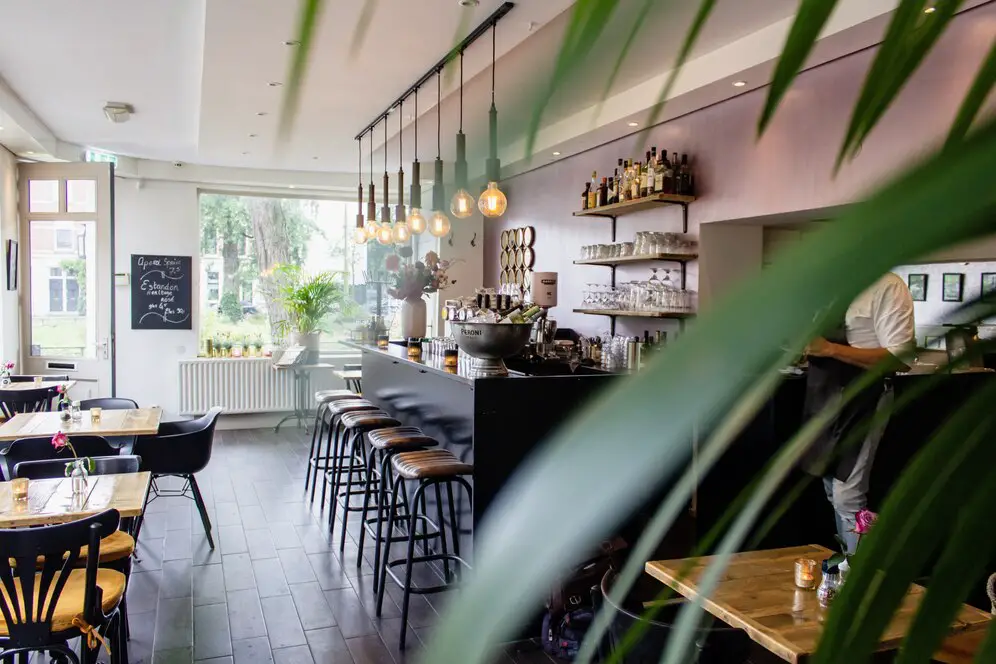
The name was Emily’s idea, or at least that was how Nathan told the story. The E and V stitched together on the awning. Warm lighting inside, mismatched chairs that were somehow comfortable, a corner near the window designated specifically for students. A chalkboard menu in Emily’s handwriting that she updated herself every morning before school, standing on a step stool to reach the top.
On the wall behind the counter, a small framed sign: No child turned away. All students welcome.
The business model was simple. Prices stayed low, low enough that the regulars who had been stretching fixed incomes at Waverly for years could stretch them here instead. A suspended meals board near the register let customers prepay a breakfast for someone who couldn’t cover it. Most mornings, the board was full before eight o’clock.
Martin, who had cooked at Waverly for eleven years and brought his secret hash brown recipe with him like it was personal property, showed up on the cafe’s third day and asked if there was room for him. There was.
Emily came every morning in her yellow jacket, now paired with a small canvas apron embroidered with the cafe’s logo that she had requested specifically. She didn’t speak much, but she moved through the space with a quiet purposefulness that Vera had never seen in her before. She arranged napkin holders. She wrote the specials in careful letters. She refilled the sugar bowls with the concentration of someone performing surgery.
Sometimes Nathan came with her, settling at a corner table with his laptop and a plain black coffee, staying out of the way, watching his daughter move through the world like a man watching something he had almost stopped believing in.
Sometimes he sent the car for Emily without coming himself, always with a generous tip pressed into an envelope and a handwritten note tucked beneath it. The notes were brief and always said some variation of the same thing. Thank you for seeing her.
Rick sent an email three weeks after the cafe opened. It was long. It covered every register of apology Vera could imagine, referenced his stress levels and the pressures of running a small business, mentioned a raise and an enhanced benefits package and a restructured schedule. He used the phrase fresh start twice.
Vera read it once, all the way through, and then closed her laptop.
She didn’t respond. There wasn’t anything to say.
The regulars found their way over on their own. The retired couple who split the French toast. The teacher with the standing Tuesday order. A handful of the construction crew who had watched the whole humiliation play out from their corner table and apparently had made their own quiet decision about which establishment deserved their breakfast business.
When a local news segment picked up the story, the requests for interviews came in a rush. Vera declined most of them. She agreed to one brief conversation with a reporter who had the sense to keep it short.
“I didn’t do anything extraordinary,” Vera said. “I just refused to ignore a child who needed to be seen.”
The reporter wanted more. Details about Nathan Fraser. The financial arrangement. The origin story.
Vera smiled.
“This isn’t about money. It’s about making a place where kindness is the default, not the exception.”
Emily was changing in ways that were hard to articulate but impossible to miss. Not in dramatic, sudden bursts the way it happened in stories. In small, accumulating moments that Vera noticed and quietly kept track of.
A nod to a regular customer that gradually became a small wave. A whispered comment about the pastry display that grew into an occasional full sentence. A journal she had started keeping, filled with observations about the cafe and the customers, that she sometimes showed Vera before school.
Then one morning Emily came in with a small wrapped package under her arm. She handed it to Vera without preamble, watching her face carefully as she opened it.
Inside was a framed photograph. Emily, unsmiling but not unhappy, holding up an egg sandwich with both hands. Someone had taken it without her fully realizing it, or maybe she had known and held still anyway. Underneath it, matted in her handwriting: Thank you for the milk when I was thirsty and the kindness when I was hungry.
Vera hung it directly behind the counter that same morning, at eye level, where she could see it without turning her head.
About a week after that, Vera saw Rick.
He was standing across the street, hands in his pockets, watching the line of people waiting for tables on a busy Saturday morning. She noticed him through the window while she was pulling shots for the espresso machine. He wasn’t doing anything, just standing there, watching the cafe that now occupied six mornings a week of her life and had more regulars than Waverly had seen in years.
Their eyes met through the glass for just a moment.
Then he turned and walked away.
Vera watched him go and felt nothing she expected to feel. No satisfaction. No triumph. Not even relief. Just a quiet, steady gratitude that the worst morning of her working life had somehow bent itself into the shape of this.
She turned back to the counter.
Emily was already in motion, moving through the cafe with her canvas apron tied and her journal tucked in the front pocket. She stopped near the door, and Vera followed her gaze to a boy who had just come in. Maybe twelve years old. Worn sneakers with the sole pulling away from the toe. Careful eyes that moved around the room quickly, assessing, the way eyes move when someone is trying to figure out whether they belong somewhere before they commit to staying.
Emily picked up an egg sandwich from the warmer. She poured a glass of milk. She carried both to the boy’s table herself, set them down without a word, and gave him one small, certain nod before walking back to Vera’s side.
The boy looked up, startled. He looked at the food. He looked at the girl who had brought it, already back at the counter now, uncapping her marker to update the specials board.
He ate.
Vera watched all of it and felt the understanding settle into her the way things do when they arrive not as revelation but as confirmation of something you already knew.
When someone shames you publicly for your compassion, you get to choose what you do with it. You can close yourself off, harden the edges, learn to keep your head down and your heart smaller. Most people would call that wisdom. Most people would call that protecting yourself.
Or you can do what Emily had quietly, without fanfare, just shown a boy with worn shoes and careful eyes.
You can take what was done to you and alchemize it into something that looks completely different on the other side.
Rick had stood in the middle of a crowded diner and used a child’s hunger to humiliate Vera in front of thirty people. He had handed her a warning notice and told her to be grateful she still had a job.
What he had actually handed her, without knowing it, was the exact circumstances that led to Nathan Fraser walking through the door. To the note written in uneven handwriting. To the framed photograph behind the counter. To this cafe, this morning, this boy eating his breakfast because a ten-year-old girl decided without anyone asking her to that no one should have to sit in front of an empty table.
Vera picked up the coffee pot and started her rounds.
The morning rush was just beginning.

Ethan Blake is a skilled Creative Content Specialist with a talent for crafting engaging and thought-provoking narratives. With a strong background in storytelling and digital content creation, Ethan brings a unique perspective to his role at TheArchivists, where he curates and produces captivating content for a global audience.
Ethan holds a degree in Communications from Zurich University, where he developed his expertise in storytelling, media strategy, and audience engagement. Known for his ability to blend creativity with analytical precision, he excels at creating content that not only entertains but also connects deeply with readers.
At TheArchivists, Ethan specializes in uncovering compelling stories that reflect a wide range of human experiences. His work is celebrated for its authenticity, creativity, and ability to spark meaningful conversations, earning him recognition among peers and readers alike.
Passionate about the art of storytelling, Ethan enjoys exploring themes of culture, history, and personal growth, aiming to inspire and inform with every piece he creates. Dedicated to making a lasting impact, Ethan continues to push boundaries in the ever-evolving world of digital content.