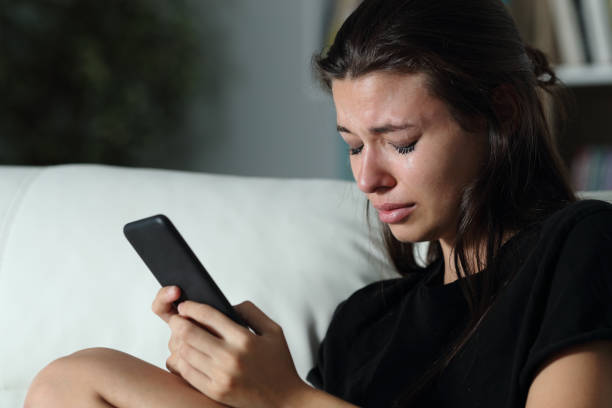
My phone buzzed five times before I stepped away from the compliance reports to answer it.
All five missed calls were from home.
I walked outside the food safety lab into the parking lot, the Cincinnati air cold enough to sting, and called back. The second the line connected, my father’s voice hit me like something physical.
“Are you mocking us, Clara? What is this? What is this insult?”
I had no idea what he was talking about.
“What do you mean?” I asked.
He wasn’t listening.
“Fifty cents. You sent us fifty cents. Are you out of your mind? You call yourself our daughter?”
My mother’s voice cut in behind him, sharp and certain.
“You are selfish, Clara. Living alone, spending on yourself. Sienna sends four thousand a month. Four thousand. Every month. Why can’t you be like her for once in your life?”
I gripped the metal railing along the building’s edge. My knuckles went white.
“That’s not true,” I said. “I’ve been sending four thousand every month. From my account. You should check.”
“Don’t lie,” my father said. “Sienna told us everything. She’s the one sending the money. You’re just sitting there doing nothing while your sister sacrifices for this family. You’ve always been like this.”
The line went dead.
I stood outside for a while after that, not moving, the phone still in my hand.
I had been working every weekend at a twenty-four-hour supermarket, night shifts in a freezing stock room, checking inventory until my back ached and my feet went numb. I had cut my phone plan and sold my bike and stopped ordering anything that wasn’t rice or canned soup. I had done all of that not because anyone asked me to. I had done it because I thought, somehow, after everything, this was how you finally got to matter.
I walked back into the lab and stared at the sample sheet in front of me and didn’t see a single word on it.
My name is Clara Monroe. I am twenty-eight years old. I am a quality assurance analyst at a midsized food packaging plant, and I live alone in a one-bedroom apartment with a view of nothing special, and I have spent most of my adult life trying to earn something that was apparently never going to be given to me.
I was not, and had never been, the good daughter.
That distinction belonged to Sienna.
My younger sister by five years had been treated like something precious and rare from the moment she could walk. I watched it happen in real time throughout my entire childhood. The way strangers in grocery stores leaned toward her. The way my parents’ faces changed when she entered a room. She was called angelic before she was old enough to understand the word.
I got her hand-me-downs and silence.
When I wanted to join the school choir, the fees were too high. When Sienna wanted ballet lessons she would attend twice before losing interest, the check was written the same day. When she wanted her own room, my parents looked at me and said it was only fair, that she needed space to grow, and that I didn’t need much. I packed my things and moved next to the old cabinet with my grandparents’ photographs, and nobody asked whether I was okay with it. They assumed I would understand because I always did.
There was one person in that house who saw me as more than background.
My grandfather Walter Monroe used to hold my hand during thunderstorms and bring me violets every spring. He sat me on his lap and told me stories about brave women and quiet victories and named me Clara because I was born just as the violets bloomed, because I would grow strong and quiet like them. He died when I was nine, and from that point on there was no one left in that house who really looked at me.
I learned to be invisible with grace. I learned to step aside. When Sienna broke my science project the night before the fair, I presented a paper instead and said nothing. When she borrowed things and never returned them, I let it go. When she lied, our parents believed her without question and told me to be mature, to be the older one, to understand.
I was twenty-one when I moved out, and it wasn’t rebellion. It was survival.
I found a studio apartment three train stops from the plant, small and drafty with a water heater that clicked like it had asthma, and it was the first place I had ever felt at peace. I worked. I saved. I built something small and quiet and entirely mine.
Then Sienna called.
She sounded different that day, less performative, her voice softer than usual. She said she had been thinking about everything our parents had given us. She said she wanted to give something back.
“We should send money,” she said. “A thank-you. Four thousand a month between the two of us. I’ll cover most of it, I make more than you, but we could do it together. And let’s send it under a fun name. Something pretty. Maybe Rain, so they won’t know right away.”
I didn’t understand the secrecy, but there was something in her tone, something hopeful and bright, that made me want to believe she was finally growing up. That this could be our shared olive branch after all the years of distance.
I agreed.
That night I scheduled two thousand dollars from my savings to go out the next morning. My salary was just under three thousand. That left me a thousand short every month, which meant the second job, which meant the night shifts in the stock room, which meant the cold and the smell of bleach and the bus home at three in the morning.
I stopped ordering takeout. I cut my phone plan down to the cheapest option. I sold my bike. I counted coins at the register and told myself every time that it was worth it. That this was how you proved you loved them. That this was how you finally earned your place.
Every month, without fail, I sent two thousand dollars labeled clearly as Clara Monroe.
I assumed Sienna was sending her half. That was what we had agreed. That was what I believed.
The first time they yelled at me about the fifty cents, I thought there had been some kind of error. A glitch. A miscommunication. I explained clearly that I had been sending two thousand every month under my own name, that they should check the records.
My father didn’t check the records.
My father told me not to lie.
Sitting with the phone dead in my hand in the parking lot, I finally understood what had happened.
Rain. Sienna’s idea of a pretty name. The four thousand that arrived every month under that label was, according to the story my sister had told our parents, entirely hers. Her generosity. Her sacrifice. And the separate transfer labeled Clara Monroe, which was my two thousand dollars, my weekends, my frozen fingers, my canned soup dinners, they had looked at that and seen the fifty cents. The joke. The insult. The proof of everything they already believed about me.
I sat in my apartment that night with only the microwave clock for light and my jaw so tight it ached.
I did not cry. But something broke loose inside me, quiet and final, the way a nail pulls free from old wood.
The next morning I called Harper.
Harper Lee had been my best friend since high school. She was in consulting now, sharp and precise, with a way of cutting through the surface of a thing and telling you what was underneath without softening it unnecessarily. I needed that.
We met at a diner near her office, and I had barely finished the story when she leaned back in her chair and crossed her arms.
“Clara, you’re too kind. That’s always been your problem. You’ve been bleeding for people who would never give you a bandage.”
I didn’t answer.
She leaned forward. “Do you actually know what Sienna makes? Or if she makes anything at all?”
The question sat in my stomach like a piece of ice.
She called me again that night. Her voice was flat and measured.
“I asked around,” she said. “Sienna doesn’t have real modeling work. She posts old shoots to make it look like she’s active. Someone told me she’s been telling her friends that her sister supports her, that she doesn’t even need to work full time.”
I pressed my hand against the kitchen table.
“Also,” Harper added, “your father hasn’t been working full shifts. He’s been seen at the casino on Route 9. And your mother has a new Gucci bag she’s been showing people.”
I stared at the wall of my apartment.
I had sold my bicycle. I had eaten rice and beans. I had stood in a freezing warehouse until my hands stopped feeling like mine. And they had taken that money and gambled it and spent it on designer bags and then called me selfish on a Tuesday afternoon.
That night, I cancelled the transfers.
Both of them. Everything. Done.
I turned off my phone and slept for eleven hours.
Two months of silence followed. My mother left voicemails in a register I recognized, the particular tone she used when she wanted to sound wounded. Sienna texted from different numbers until I blocked them all. I let the silence accumulate and found, to my surprise, that it felt like something opening rather than something closing. Like a window after years of stale air.
Then one morning just past eight, my phone rang.
I don’t know why I answered. Maybe I was ready to hear it.
Sienna’s voice was frantic, not angry the way it usually was, but panicked.
“Why haven’t you answered? Why did you stop? I’m drowning in expenses, Clara. I told Mom and Dad the money was from both of us and now they think I lied.”
“You did lie,” I said.
Silence.
“You told them Rain was yours,” I said. “You let them believe four thousand a month was your generosity while I worked weekends in a freezer. You named me the selfish one and let them believe it.”
She started to say something about the modeling world, about how brutal it was, about doing her best.
“I know what your best looks like,” I said. “I also know there was no debt. There was never any real debt. I was working a second job and eating beans for a family that was spending the money on casino trips and luxury bags.”
Then I hung up.
I thought that would be the end of it.
It wasn’t.
A week later they showed up at my door without warning, all three of them, my parents tired-faced and Sienna standing slightly behind them with her eyes on the floor. My mother’s voice went bright the second I opened the door, that particular brightness she used when she needed something.
“Clara, there you are. We’ve been trying to reach you. We just need a little help getting through this rough patch.”
Sienna looked up then, and she looked smaller than I had ever seen her.
“Please,” she said. “I made a mistake. I thought the agency was real.”
“What agency?” I said.
And then it came out.
She had been scouted, or so she believed, by a talent agency in New York. A lead role in an indie film. A real contract. All she needed was an entrance investment fee to secure her place. So she had asked our parents, and our parents had given her everything they had. My father’s early retirement fund. My mother’s personal loan. Sienna had wired the money to a number that went silent the moment it received the transfer.
A scam. A complete and total scam. They had lost everything.
The house was gone, sold to cover the defaults. They were living in an apartment on the east side. My father was picking up temp work. My mother was cleaning offices. Sienna was bouncing between hostess jobs she couldn’t keep because she had never learned to be anything other than the center of attention.
They had come to me as a last resort.
I looked at the three of them standing in my doorway and felt something I hadn’t expected. Not satisfaction. Not anger. Just the hollow, clear recognition of three people who had always treated me as a backup plan, and who were now on my doorstep because every other plan had failed.
“You threw away my trust,” I said. “You chose her story over my reality for twenty years. And now you want my help.”
My mother flinched. My father’s jaw tightened. Sienna whispered something about having no one else.
“Before you come to me,” I said, “go to the police about the scam. Go to a therapist. Go look in a mirror.”
Then I closed the door.
They knocked again. I didn’t answer. I watched through the curtain as they stood on the porch, shifting, whispering to each other, Sienna staring at the floor with the specific expression of someone who has finally run out of moves. Eventually they left.
But before they did, they slid an envelope under the door.
Inside was a single sheet of paper. No greeting. No apology. Just a list of numbers and a line at the bottom, handwritten and blunt.
We’ll use your grandfather’s savings if you refuse to help. Consider this your last chance.
I read it twice.
My grandfather had left money in a trust in my name when he died. He had seen something in me that was worth protecting, something he wanted to survive past him. That trust was the only thing from my childhood that had ever been entirely mine.
And they wanted to threaten me with it.
I went to the bank the next morning before it opened. I transferred everything in that trust into a secured investment account with a legal lock that would require considerably more than a letter slid under a door to touch. I changed my phone number. I notified my landlord. I deleted every voicemail and every text chain going back years.
Then I sat down in my apartment, in the quiet, and breathed.
It wasn’t about the money. It had stopped being about the money some time ago. It was about something simpler and harder than that. It was about finally deciding that I had spent enough of my life trying to earn love from people who had decided long ago that I wasn’t worth the full amount.
My grandfather had named me Clara because violets bloom quietly, without asking permission, in whatever soil they’re given.
I had spent twenty-eight years in the wrong soil.
The months that followed were quieter than anything I had known since childhood. I focused on work. I took the business consultant certification exam I had been studying for between warehouse shifts and passed it with the top score in my cohort. I applied to a firm in Columbus that Harper had told me about, a larger company with actual advancement, and they hired me as a team leader.
I moved. Sunlit apartment near the river. Hardwood floors. A small balcony where I planted violets in the spring and watched them take.
I was not waiting for anything.
Five years passed in the way that good years pass, not slowly the way the hard ones do, but in accumulation, in layers. Promotions. Mentoring junior colleagues. Learning to make bread from scratch on Sunday mornings. A weekend trip to Montreal with Harper that turned into an annual thing. Books read and finished and left on the shelf with their spines broken from love.
I didn’t look back. Not really. Not until Harper’s wedding.
It was October in Miami, the sky stretched wide and silk-blue over the ocean, the ceremony in a small seaside chapel filled with soft music and the kind of laughter that only happens among people who genuinely love each other. Harper wore a simple gown and had eyes brighter than I had ever seen them, standing beside a man named Michael who was kind and unhurried and never needed to be the loudest thing in the room.
At the reception, after the toasts had wound down and the dancing had gone soft, Harper came and found me.
“There’s someone I want you to meet,” she said, pulling me by the hand toward the terrace edge.
He was standing with his back slightly to us, watching the ocean. Tan suit. Light beard. He turned when we approached and his smile arrived before he had fully registered what he was smiling at, the way some people’s smiles work.
“This is Nick,” Harper said. “Architect. Good heart. Has a thing for violets, apparently.”
He laughed, the sound low and unforced. “Only because they’re stubborn. They bloom quietly even when nobody’s watching.”
I looked at him.
“That sounds familiar,” I said.
We talked for the rest of the evening. About books and cities and the particular way the Midwest teaches you to hold silence like something useful. About how sometimes letting go of the family you were born into is the only way to build the one you were meant for. He didn’t ask me what had happened, and I didn’t offer it. Some things don’t require explanation to be understood.
Later, when the reception had softened into candlelight and the ocean kept its quiet noise below the terrace, I stepped outside alone.
The sky was enormous and cloudless. The kind of sky my grandfather would have loved.
I closed my eyes.
“Are you watching, Grandpa?” I whispered. “Your Clara is okay now. I’m blooming, just like you said.”
Somewhere down the coast, a bell rang softly over the water.
I stayed there a while, leaning on the railing, the ocean air on my face, thinking about the girl who had carried other people’s definitions of her for so long she almost forgot she was allowed to write her own.
I had spent years believing that love was something you earned through sacrifice and silence. That if you just gave enough, worked enough, hoped enough, the people who were supposed to see you finally would.
It took me longer than it should have to understand that some people will never see you, not because you are invisible, but because they have decided not to look.
My grandfather had looked. Harper had looked. And now, standing on a terrace in Miami at a wedding full of people who had chosen each other freely and well, I understood that the looking was the whole thing. The rest, the money, the sacrifices, the years spent waiting for acknowledgment that never came, none of that had been love. That had been auditions for a role that was never going to be cast.
I walked back inside.
Nick was standing near the bar and lifted his glass slightly when he saw me, a small, easy gesture.
I crossed the room.
The night was just beginning.

Sophia Rivers is an experienced News Content Editor with a sharp eye for detail and a passion for delivering accurate and engaging news stories. At TheArchivists, she specializes in curating, editing, and presenting news content that informs and resonates with a global audience.
Sophia holds a degree in Journalism from the University of Toronto, where she developed her skills in news reporting, media ethics, and digital journalism. Her expertise lies in identifying key stories, crafting compelling narratives, and ensuring journalistic integrity in every piece she edits.
Known for her precision and dedication to the truth, Sophia thrives in the fast-paced world of news editing. At TheArchivists, she focuses on producing high-quality news content that keeps readers informed while maintaining a balanced and insightful perspective.
With a commitment to delivering impactful journalism, Sophia is passionate about bringing clarity to complex issues and amplifying voices that matter. Her work reflects her belief in the power of news to shape conversations and inspire change.