Remember This Moment
My family laughed when I walked into my sister’s wedding alone.
That was the first cut.
My father made sure the second one was public. He stood beneath the crystal chandeliers of the Fairmont Copley Plaza ballroom, holding a microphone like a judge holding a sentence, and said loudly enough for every guest to hear: “Meredith couldn’t even find a date.”
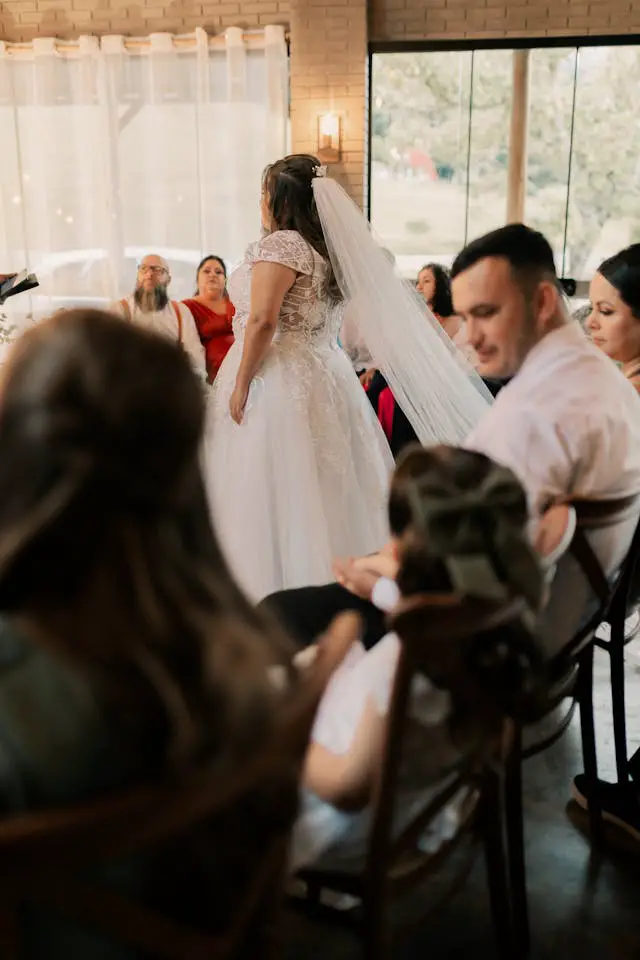
The laughter came quickly, too quickly, as if people had been waiting for permission. A few cousins covered their mouths with champagne napkins. One of my father’s law partners looked down into his drink but smiled anyway. My mother, Patricia Campbell, stood beside my sister Allison in pale blue silk and pretended to be concerned, though not concerned enough to stop him. And Allison, in her custom lace wedding gown, smiled.
It was not a surprised smile. It was the same smile she had worn when she got the bigger bedroom, when my birthday dinners became announcements about her awards, when my mother said let Allison speak first and everyone at the table obeyed.
I stood near the terrace doors with one hand still on the brass handle, trying to escape for two minutes of air. The ballroom was too warm, too polished, too full of people who had known me since childhood and still managed to know nothing true about me.
My father stepped closer.
Robert Campbell had built an entire career out of controlled cruelty. In Boston legal circles, people called him brilliant. In our house, we called him Dad, which was worse, because it meant we had to love him while surviving him.
“You missed the bridal shower,” he continued. “You missed the rehearsal dinner. You arrived late. And now you’re leaving early.”
“I’m just getting some air,” I said.
He laughed softly. “You always were dramatic.”
My cheeks burned but my voice stayed steady. “Dad, please. Not today.”
“It is exactly today. Today is about family. Commitment. Showing up for the people who matter.”
The words were dressed like values, but they carried punishment underneath.
I looked past him at my mother. Her face was tight and elegant. She gave me the tiny warning look she had used since I was a child: do not embarrass us, do not make this worse, do not require protection we are not willing to give.
I had spent thirty-two years reading that look.
I was tired.
“I came,” I said. “I’m here.”
“Yes,” my father said, smiling at the room. “Alone.”
Bradford Wellington IV, my new brother-in-law, shifted near the head table. He looked uncomfortable but not brave. My sister lifted her chin.
That was when I understood no one was going to stop this.
“Thirty-two years old,” my father said. “No husband. No fiancé. Not even a date. Meanwhile, Allison has made a match any family would be proud of.”
In the Campbell family of Boston, image was not a habit. It was a religion. My father was a senior partner at a firm with mahogany conference rooms and clients who liked the law best when it protected them from consequences. My mother served on museum boards and hospital galas and anything else that let her wear pearls in public and call it service. Allison had inherited their gift for performance.
I had inherited their name.
That was all.
“I have a life,” I said.
My father tilted his head. “Do you?”
Something in his tone sent me backward through time. I was sixteen at my own birthday dinner while he raised a glass to announce Allison’s acceptance to a summer program. I was twenty-eight, promoted at work, listening to him say government jobs were safe choices for people who lacked ambition.
The guests were watching. Some with pity, some with delight, most with the lazy curiosity of people relieved the humiliation had chosen someone else.
I should have walked away.
I almost did.
But my father reached out and gripped both my shoulders, and said through his perfect smile, “Don’t sulk, Meredith. It’s unbecoming.”
Then he pushed.
Not hard enough to look violent to people who wanted excuses. Hard enough that my heel caught the edge of the stone courtyard fountain.
There was one breathless second when the ballroom lights, Allison’s white dress, my mother’s blue silk, and the gold invitation still tucked in my clutch all blurred together.
Then cold water swallowed me whole.
When I surfaced, the first thing I heard was applause. Not gasps. Not concern. Applause. Someone whistled. Someone laughed so hard they coughed. The wedding photographer lifted his camera.
Click. Click. Click.
My emerald silk dress clung to my legs. Water ran from my hair down my face. My father stood near the fountain with the microphone still in his hand, and for the first time all afternoon, he looked genuinely pleased.
And suddenly, strangely, I was calm.
The water was freezing. My shoulder ached from hitting the edge. My pride should have been shattered across the marble floor. But something inside me had gone still. Not broken. Clear.
I stood slowly, water pouring from my sleeves. I looked straight at my father.
“Remember this moment,” I said.
The laughter faded.
My voice was quiet, but the room heard it.
“Remember exactly how you treated me. Because I promise you, I will.”
My father’s smile faltered. My mother’s hand flew to her pearls. Allison looked annoyed, as if I had chosen the wrong time to become inconvenient.
I climbed out of the fountain without anyone’s help. No hand reached for me. No aunt, no cousin, no old family friend stepped forward with a napkin or a shawl or even a whisper of apology.
I walked through the ballroom, leaving small dark footprints on the expensive carpet, and went straight to the ladies’ room.
In the mirror, I barely recognized myself. My hair was plastered to my face. Mascara ran down my cheeks. The emerald dress, the one Daniel had told me made my eyes look brave, was ruined.
Daniel.
My husband.
The part of my life my family knew nothing about.
For three years, I had kept my marriage private. Not hidden out of shame. Not hidden because Daniel was ordinary. But because some truths are too precious to hand to people who sharpen every fact into a weapon.
Daniel Reyes had asked to come with me that morning. We had been standing in the kitchen of our Cambridge townhouse, the one with old pine floors and a tiny brick patio where he grew basil in summer. He wore a navy suit and no tie yet.
“I can move the Tokyo meeting,” he said.
“No. That contract matters. Your team has been working on it for a year.”
“You matter more than a contract.”
He said things like that without making them sound dramatic. He was the son of a Worcester firefighter and a public school nurse. A man who still shoveled their elderly neighbor’s steps after snowstorms even though his company had offices in three countries.
He studied my face. “No, you won’t be fine. But you might survive it.”
“That’s the family motto.”
He did not laugh. He crossed the kitchen, took my hands, and kissed the inside of my wrist. “Text me if you need me.”
“You’ll be on a plane.”
“I’ll land before the reception ends. I’ll try to get there.”
“Don’t rush.”
“You don’t have to prove anything to people who keep moving the finish line,” he said.
I had wanted to believe him. Standing in that hotel restroom with fountain water dripping from my hair, I finally did.
My clutch had survived at table nineteen. A distant cousin named Rebecca brought it to the restroom door and passed it in without meeting my eyes.
“I’m sorry,” she whispered.
“For what you did,” I asked, “or what you watched?”
Her face went red. I did not wait for an answer.
Inside the clutch, my phone was dry. I opened Daniel’s messages with trembling fingers.
How close are you?
His reply came almost instantly: Ten minutes. Security already at perimeter.
Security. Of course. Daniel had known, or had simply loved me enough to prepare for the worst.
I changed into the black dress I kept folded in a garment bag in my car, a habit from years of work in emergency management. My family called it my mysterious little government job. They imagined a desk, fluorescent lights, a supervisor named Linda who brought cupcakes on Fridays.
They had never asked enough questions to learn that I was a senior regional director for infrastructure resilience. That governors had my direct number. That I had testified before a Senate committee. They had decided what I was before I had a chance to become anything else.
The disappointing daughter. The awkward one. The girl who stood a little outside the family photograph.
I dried my hair under the hand dryer. I wiped my face clean. I put on red lipstick, because sometimes dignity is not a feeling. Sometimes it is an action.
When I stepped back into the ballroom, my mother stood near the cake, speaking to women from her museum board. “We’ve tried everything with Meredith,” she was saying. “Some people simply refuse to thrive.” Then she saw me. Her smile tightened.
“You look dry,” she said.
“I always keep a backup plan.”
Then the ballroom doors shifted. Not opened. Shifted, as if the air itself had changed pressure. Two men in dark suits stepped inside. They did not look like hotel staff. They looked at exits, corners, hands, balconies. They looked like men who were paid not to be impressed.
Conversations thinned.
Then the double doors opened wider.
Daniel walked in.
He was not the tallest man in the room, but every room understood when Daniel Reyes entered it. He wore a charcoal suit that looked plain until you understood tailoring. His eyes found me immediately.
Only me.
My father recognized him first. I watched recognition strike him like bad news.
“Mr. Reyes,” he said, trying to recover. “This is a private family event.”
Daniel did not look at him. He crossed the room to me, people moving out of his way instinctively, the way people move when someone arrives with purpose and no interest in being delayed.
When he reached me, his eyes moved over my damp hair, my scraped shoulder, the black dress.
“What happened?” he asked.
I could have lied. For habit. For peace. For the old family training that said pain should be wrapped before anyone saw it.
Instead, I said, “My father pushed me into the fountain.”
Daniel’s jaw tightened once. Only once. Then he removed his suit jacket and placed it over my shoulders.
He turned.
Now he looked at my father.
“Robert Campbell,” he said.
My father’s smile came back, thinner. “There’s been a misunderstanding.”
“No,” Daniel said. “There hasn’t.”
Allison stepped forward, bouquet in hand. “Meredith, why are you making this so dramatic? It was an accident.”
I looked at my sister. For a moment I saw her not as the bride, not as the golden child, but as a woman trained just as carefully as I had been. Trained to win, to smile, to believe love was a spotlight with room for only one person. Understanding someone is not the same as excusing them.
“You smiled,” I said.
Allison blinked. “What?”
“When I was standing in the fountain. You smiled.”
“I was uncomfortable.”
“No,” I said. “You were pleased.”
Bradford looked at her then. Not angrily. Worse. As if he were seeing her clearly for the first time.
My mother stepped between us. “This is Allison’s wedding day. We will not have a scene.”
Daniel looked at her. “Mrs. Campbell, the scene happened when your husband humiliated your daughter in public and put his hands on her.”
My mother opened her mouth, but nothing came out.
My father’s voice hardened. “You should be careful, Mr. Reyes. You’re a guest here.”
Daniel’s eyes stayed cold. “I’m not a guest.”
He reached for my hand.
“I’m her husband.”
For one perfect second, the entire ballroom forgot how to breathe.
My mother’s face went pale beneath her careful makeup. Allison’s bouquet dipped. My father stared at my hand. I rotated the ring I had turned inward earlier, an old defensive habit.
A simple emerald-cut diamond in a platinum band.
Daniel’s grandmother’s ring.
“Your husband,” my mother repeated.
“Yes,” I said. “My husband.”
“How long?” Allison whispered.
“Three years.”
The number moved through the room like wind.
Three years of Thanksgiving invitations I had declined. Three years of Christmas cards my mother sent to my old condo, which I had sold after the wedding. Three years of my father making jokes about my empty personal life while Daniel and I hosted Sunday dinners for his family, argued over paint colors, paid property taxes, adopted an old golden retriever named Maple, and built a life ordinary enough to be precious.
My father looked wounded, which almost made me laugh.
“You got married and didn’t tell your family?”
“I learned privacy from this family,” I said. “You taught me what happens when I give you something that matters.”
My mother’s eyes filled with tears. The old reflex tugged at me: comfort her, apologize, make it easier.
Daniel’s thumb moved once across the back of my hand.
I stayed still.
I told the hotel what I wanted: the photographer to delete any humiliating images, the security footage preserved, and then I wanted to leave. My father started to protest. I said I was not threatening legal action. I was stating what I wanted.
“No,” I said when he tried again. “Tonight.”
At the threshold, he called after me. “You think this makes you better than us?”
I turned back. I saw the whole room: the flowers, the chandeliers, the champagne, the ice sculpture sweating. The bridesmaids frozen in pastel silk. The cousins who had laughed. The mother who had watched. The sister who had smiled. The father who thought cruelty was authority if delivered in a tuxedo.
“No,” I said. “It just makes me free.”
Then I walked out with my husband.
The crying came later, in our kitchen at 1:17 in the morning over cold pizza. The house was quiet except for the refrigerator and Maple snoring from the rug. Daniel had changed into sweatpants. I wore his old marathon hoodie. He placed a mug of tea in front of me.
That was when my hands began to shake. Not at the hotel. Not in front of my father. Only in my own kitchen, beneath the soft yellow light, with my husband close enough to catch the pieces.
“I kept thinking someone would help me,” I said. “Not save me. Just help. A towel. A hand. One person saying that was wrong.”
Daniel reached across and took my hand.
“Because you’re human,” he said. “And they’re your family.”
Family. In America, people say the word like a guarantee. But families are made of people. And people can be cowardly. People can confuse control with love.
We read the messages together, because that was what marriage meant to me: not grand gestures in ballrooms, but someone sitting with you at one in the morning while you opened messages from people who had failed you, making sure you remembered the difference between guilt and responsibility.
My mother’s message said the evening was unfortunate and that my behavior afterward was shocking. My father’s said call me tomorrow, alone, no lawyers, no husband.
Daniel read that one and lifted an eyebrow.
“Charming,” he said.
In the months that followed, the Campbell family did what it had always done. It managed. My father took leave from one charity board. His firm kept him, but one client reportedly requested a different partner. My mother went quiet on social media. Allison and Bradford delayed their honeymoon.
I did not answer my father’s calls.
He left five voicemails. The first was angry. The fifth came on a Thursday evening while Daniel and I were at the grocery store arguing over whether one household needed three kinds of mustard.
“I’m told I should apologize without qualification,” my father said. Long pause. “I handled the situation poorly.”
I pressed stop.
Daniel looked at me.
“Not an apology,” I said.
I deleted it.
Then Allison emailed me. Subject line: Can we talk?
I opened it on a Sunday morning.
She wrote that she didn’t know what to say except that everything got out of control. That she’d felt blindsided by Daniel being there, like everyone was looking at me instead of her on her wedding day. She wrote that she knew that sounded selfish. Maybe it was. Bradford said she needed to take responsibility. She didn’t like hearing it. She wasn’t asking for forgiveness right now. She just wanted me to know she was thinking about it.
I read it twice.
Daniel stood at the stove making eggs. “Is it terrible?”
“No.”
“Is it good?”
“Also no.”
“That sounds like progress in your family.”
I sent no reply. But I did not delete it.
In June, life moved into summer. At home, we were ordinary. We paid bills. We forgot laundry in the washer. Daniel labeled leftovers because he knew I hated mystery containers. Maple slept across my feet while I reviewed reports. I woke on Saturdays with nothing to prove.
Then one afternoon, my mother came to my office.
She entered the federal building near Government Center carrying a structured beige handbag and the faint scent of expensive perfume. She looked smaller in the fluorescent light and government furniture. Her eyes stopped on the framed commendation from the governor, then on the photo of Daniel and me with Maple at the beach.
“You look happy,” she said.
“I am.”
She sat without being invited. She looked around at the emergency response charts, the maps on my wall.
“I didn’t know your work was so significant.”
“You never asked.”
Her mouth tightened, but she did not argue.
“I thought I was keeping the peace,” she said finally. “I thought your father was hard on you because he saw strength in you. With Allison, everything came easily. With you, he pushed.”
“That’s one way to describe it.”
She closed her eyes briefly. “I know.”
She looked at me and for once her eyes were not inspecting. They were searching.
“I am sorry, Meredith.”
The office hummed around us. Someone laughed down the hall. Ordinary life kept going while I received the words I had wanted for decades.
They did not heal everything. That was the part movies get wrong. A real apology does not erase the years before it. But it does mark a door. Whether you open it is another matter.
“You can start by not managing me,” I said. “Ask questions. Listen to the answers. Don’t defend Dad when he’s wrong. Don’t use Allison’s feelings to erase mine.”
She nodded.
“And Daniel. You don’t get access to him just because you’re curious now.”
“I understand.”
“No,” I said gently. “But you can learn.”
In August, Allison asked to meet. We chose a coffee shop in Brookline, exposed brick, oat milk, college students. I arrived first. She came in wearing jeans, no makeup except mascara, looking younger without the armor.
For a second, I saw the little girl who used to crawl into my bed during thunderstorms.
Then I saw the bride smiling while I stood in the fountain.
Both were true.
She said she was sorry for smiling, for not stopping our father, for letting everyone treat me as less than her because it made her feel safer.
“Do you know what it’s like being the golden child?” she asked. “It sounds ridiculous. But it wasn’t love exactly. It was a job. If I was perfect, the house was calm. If I won, Dad was proud. I didn’t know who I was if I failed.”
I thought of Allison at twelve, practicing piano until her fingers cramped because our father had invited guests to hear her play. Both of us had been damaged, differently, by the same people.
“I understand that,” I said. “But you still hurt me.”
“I know.”
“And understanding why doesn’t make it okay.”
“I know.”
She looked at me. “I was jealous when Daniel walked in. Not because of who he is. Because he looked at you like the room didn’t matter. Nobody has ever looked at me that way.”
We sat for another hour.
We did not become sisters again in one coffee shop. But when she left, she hugged me and did not hold on too long.
That was something.
In October, my father wrote me a letter. A real letter, on his firm’s stationery, which he crossed out by hand and started over on plain paper.
He wrote that what he had done at the wedding was wrong. Not unfortunate. Not misunderstood. Wrong. That he had humiliated me because he was angry he could no longer control the story he had about me. That he had treated me as a disappointment for reasons that said more about him than about me. That he was sorry he pushed me. Sorry he laughed. Sorry he had taught other people in the family that laughing at me was acceptable.
He did not expect forgiveness. He was asking for the chance, someday, to apologize in person.
I put the letter in a drawer.
Three weeks later, we met at a diner in Watertown. Vinyl booths, bottomless coffee, laminated menus. My father arrived in his wool overcoat and looked deeply uncomfortable.
He said he was sorry.
No preamble. No defense.
“I believe you’re sorry,” I said.
His face changed. Hope, quick and dangerous.
“But I don’t trust you.”
The hope dimmed.
“You’re used to apology as resolution,” I said. “For me, it’s only information.”
He nodded. “My therapist said something similar.”
“I like her.”
“She’s expensive.”
“I like her more.”
A small laugh escaped him.
He told me that Allison’s achievements had been easy for him to understand, and mine hadn’t been, so he had treated mine as less. He had not tried to understand.
So I told him about my work. Not to impress him. Emergency planning, infrastructure risk, federal coordination, late-night calls, evacuation routes, communities after storms. The people whose names never appeared in magazines but whose work kept strangers alive.
He listened. Really listened.
When I finished, he said, “That matters.”
I let the words enter a place in me that had been waiting too long.
Then I let them pass through.
We drank bad coffee in silence. It was not reconciliation. Not yet. Maybe not ever, fully. But it was a beginning with fewer lies in it, and that was more than I had expected.
Spring came again. A full year after Allison’s wedding, Daniel and I hosted a small anniversary dinner on our tiny patio, which held six people comfortably and fourteen with optimism. We invited his parents, his sister Sofia’s family, colleagues, neighbors, Allison, my mother, and after much thought, my father.
He arrived with flowers for me and dog treats for Maple.
A smart man learns the household hierarchy.
My mother brought a lemon cake she claimed to have baked herself. Allison whispered to me that this was mostly true, which meant she had supervised a bakery mix and panicked twice.
The evening was awkward in places. Of course it was. Real families do not transform into perfect ones because someone gives a good apology. My father still spoke too formally when nervous. My mother still tried to help by rearranging serving spoons. Allison still made one comment about the cake presentation before stopping herself mid-sentence.
But nobody laughed at anyone’s expense. Nobody used the word disappointment. Nobody asked me to shrink.
After dinner, Daniel stood to make a toast.
He wore jeans and a blue button-down with the sleeves rolled up. Maple sat beside him hopefully.
“A few years ago,” he said, “Meredith married me at City Hall on a rainy Thursday. She warned me that loving her would mean learning which silences were peaceful and which ones were survival.”
He looked at me.
“She has taught me that strength is not the same as never being hurt. Strength is telling the truth after people taught you silence was safer. Strength is building a home where people can arrive imperfect and still be treated with care.”
He lifted his glass.
“To Meredith. And to homes built on truth.”
Everyone raised their glasses.
Even my father.
Especially my father.
Later, after dishes were stacked and leftovers packed, I stepped onto the back patio. The night was cool. Somewhere down the block, people laughed around a firepit. The city breathed around us.
My father came outside.
He stood beside me, leaving enough space. Progress.
“I thought family was something you preserved,” he said. “Like a name. Or a reputation.”
I watched Daniel through the kitchen window, laughing at something Sofia said.
“Family is something you practice,” I said.
He accepted the answer.
Another kind of progress.
Inside, my mother called for someone to help find the cake plates. My father looked at me.
“Do you want me to answer?”
“You don’t know where I keep the cake plates.”
“No,” he admitted. “But I could learn.”
I looked at him for a long moment.
Then I opened the door.
“They’re in the cabinet to the left of the sink,” I said.
He went inside.
I stayed outside a little longer.
A year earlier, I had stood in cold water while my family laughed. I had thought the worst part was the applause. Maybe it was.
But now I understood something else.
The best part was not Daniel walking through the ballroom doors, though that moment had changed everything. The best part was what came after. The quiet mornings. The hard conversations. The boundaries that held. The apologies that did not demand immediate forgiveness. The Thanksgiving casserole with burned edges. The diner coffee. The lemon cake. The ordinary, stubborn work of building a life where love did not require humiliation first.
I looked through the window at the people gathered in my kitchen. Not perfect people. Not a perfect family. But a truer one.
Daniel saw me from inside and lifted his eyebrows: You okay?
I smiled and nodded.
Yes.
For the first time in a long time, yes.
I thought of the words I had spoken in the ballroom.
Remember this moment.
Back then, they had been a warning.
Now they felt like a promise.
Remember the night air. Remember the house full of voices. Remember your husband at the sink, your sister trying, your mother learning, your father carrying cake plates like something fragile and important.
Remember that you were not chosen by becoming impressive enough to silence cruelty.
You were chosen by the life you built when you stopped begging cruelty to call itself love.
Inside, Maple barked once, probably at cake.
I laughed and went back into my home.

Laura Bennett writes about complicated family dynamics, difficult conversations, and the quiet moments that change everything. Her stories focus on real-life tensions — inheritance disputes, strained marriages, loyalty tests — and the strength people find when they finally speak up. She believes the smallest decisions often carry the biggest consequences.