Written in Her Name
The message arrived between a pharmacy coupon and a storm warning, which was the kind of context that would have been funny if the words themselves had been anything other than what they were.
Mac was standing beside her car with one foot still on the warm driveway, scrolling through the afternoon’s accumulation of notifications, when she reached her mother’s text.
“We changed all the locks. You don’t live here anymore. Let’s see how tough you are now. Haha.”
She read it twice.
The first thing she noticed was not the cruelty. She would notice the cruelty later, when it had time to settle into its full shape. What she noticed first was the neatness of it. No typos, no long explanation, no false warmth pretending to be a difficult conversation. Just one clean sentence from the woman who used to tuck notes into her lunchbox and draw small hearts on the napkins inside.
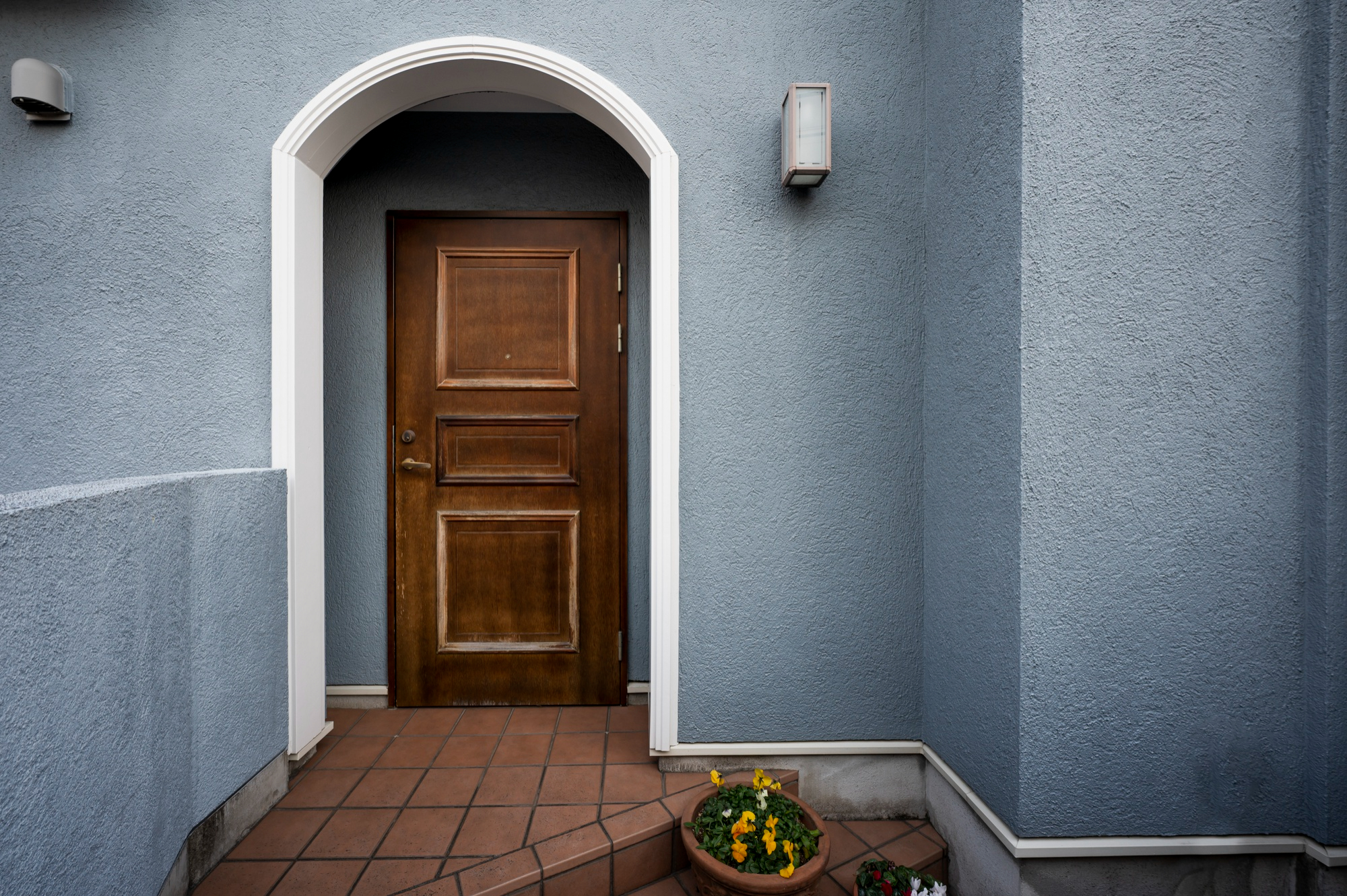
The house looked exactly as it always had. That was what made her feel foolish for standing there, studying the siding as though the hydrangeas or the porch steps might weigh in on her behalf. The lawn was trimmed. The brass plate on the front door was polished to the particular brightness her father maintained with the slightly aggressive energy of a man for whom appearances constituted order. The small flag near the mailbox moved in the late afternoon wind. The porch light was off because her father considered it wasteful before dark.
Everything looked like home.
Everything looked like home, and Mac put her key in the lock and the key stopped.
She tried again, more slowly, as if the problem might be her own impatience rather than the hardware. The key slid partway and quit. She pulled it out and looked at the small familiar teeth she had carried on her ring for years, then pushed it back in with the specific force of someone who knows the answer but cannot yet accept it.
Nothing. A clean, silent refusal.
She walked to the side door. To the back door. At the kitchen entrance she pressed her palm flat against the glass and looked through into the room where she had done algebra homework and scholarship applications and the tax forms her father always pushed toward her in April because she was “good with details.” Her laptop was upstairs. Her passport was in the desk drawer. Her grandmother’s letters were in a blue box on the closet shelf. Her whole accumulated life was twenty feet away, close enough to see, and she could not legally reach any of it.
She called her mother at 4:18. Voicemail.
She called her father at 4:21. Voicemail.
Then she stood on the driveway looking at her mother’s text until the words blurred slightly, and she felt the thing rising in her that wanted to kick the door or pick up the ceramic planter beside the front steps and put it through the window that was currently throwing her own reflection back at her.
Instead she typed the only response her pride could manage.
Funny how brave people get. Haha.
It was not a wise reply. It was not the response of someone who had taken a breath and thought things through. But it kept her from writing please, and that mattered more than wisdom at that particular moment.
“Mac?”
She turned fast enough that her keys knocked against her palm.
Mrs. Henderson stood at the fence in her sun visor, holding a garden hose that had been running long enough to create a puddle at her sneakers. She had lived next door since before Mac was born. She knew which neighbors watered too late, who parked improperly, who had money trouble, and who performed not having it. Her expression was not the expression of a curious neighbor. It was the expression of someone who had been watching from a particular position of sorrow.
“They changed the locks,” Mac said.
She heard the humiliation in her own voice as she said it and felt her throat close around the words.
“Oh, sweetheart.”
Mrs. Henderson turned off the hose and came closer. She looked at the windows first, then the porch, then back at Mac, with the quick peripheral scan of someone assessing whether the wrong people were watching.
“Your father left this with me. In case you came before Saturday.”
She handed over an envelope.
Mac recognized the fold before she opened it. Her father had particular habits with paper, straight-edged, deliberate, no handwriting, which he found too emotional for formal communications. Inside was a typed note without a signature, because the absence of a signature made it less personal and more official, which was the register he preferred when he wanted a document to feel like a verdict.
It stated that any attempt to enter the premises without permission would be treated as trespassing. That her personal property would be available for pickup Saturday, two to five in the afternoon. That all items must be removed by five o’clock.
He had always known how to make printer paper sound like the final word.
“Do you have somewhere you can stay?” Mrs. Henderson asked.
Mac lifted her head. “I’ll figure it out.”
The smile she produced felt like cracking glass. Mrs. Henderson did not push further, which was one of the kindest responses available to her.
Mac drove to Allison’s apartment without registering half the turns.
Allison opened the door in pajama pants, looked once at Mac’s face, and stepped aside without asking anything at all. There are friends who say they will always be there. Then there are friends who hand you a towel and clear a section of the couch and leave a glass of water on the coffee table without waiting to be asked. Allison was the second kind. Mac slept with her shoes still on.
The small fan in the window clicked every few seconds and the room smelled of laundry detergent and cold pizza and the lavender candle Allison always forgot to trim. Mac dreamed she was in her childhood hallway. Every door had a knob. Every knob turned to stone under her hand.
Morning made everything practical.
The night before, being locked out had been shock. By eight in the morning it had become inventory. Passport. Birth certificate. Social Security card. Laptop and charger. Tax folder. External hard drive. Work portfolio. The blue box with her grandmother’s letters. The small photo album with the picture of Trevor at seven with both front teeth missing, holding a popsicle like a microphone while Mac held the other half.
She wrote the list on a yellow legal pad while Allison made coffee. Her hand steadied as she wrote. That frightened her in a specific way she could not immediately explain. Rage made her shake. Planning made her calm. She was not sure what that said about her.
She left three voicemails that morning. The first was controlled. The second was embarrassing. The third was so flat and quiet that she barely recognized her own voice.
Then she called her brother.
Trevor answered on the fourth ring. He did not say hello. He just exhaled. That exhale told her he already knew. People who don’t know yet have a different sound when they pick up.
“I think you should read your messages carefully,” he said.
“I did,” Mac said.
“No, I mean really read them.”
Trevor had always handled conflict by finding the quietest available corner. When their parents fought about money when they were small, he would disappear into the garage and sit on an upside-down bucket counting screws in a coffee can. Mac used to find him there and bring peanut butter crackers. He would split them evenly even when he was the one crying. That was the quality of him that made his current tone land harder than their mother’s text had.
He sounded like someone who had already chosen the safest position again.
“Just stay with Allison for a couple of days,” he said. “Dad’s trying to handle something.”
“Handle what?” Mac asked. “They took my keys while I was at an interview. My passport is in that house. They decided removing me was simpler than talking to me. What exactly is he handling?”
“Mac.”
“No. Say it. Say what he’s handling.”
Trevor went quiet. The silence had a shape to it. Not confusion. Something closer to fear.
“Don’t make this uglier than it already is,” he said finally.
She hung up before she said the thing that had been building in her since childhood. The thing about how family cruelty always wants to rename itself. Discipline. Boundaries. Protecting the family. It sounds cleaner that way. Less like what it is.
For two days, Mac lived out of Allison’s borrowed hoodie and a grocery bag of drugstore basics. She brushed her teeth with a toothbrush Allison bought at ten-thirty at night. She wore sweatpants that were two inches too short. She used Allison’s laptop to check email and watched every notification with the concentrated attention people usually reserve for hospital monitors.
Her mother sent nothing.
Her father sent nothing.
Trevor sent one message: Please just come Saturday and get your stuff.
Mac stared at it for a full minute. Then she wrote back: Are you asking as my brother or repeating Dad?
Three dots appeared. Disappeared. Appeared again. Then nothing.
At 12:14 on Friday, an email arrived.
Subject line: Please call me immediately.
It was from the attorney her father used when he wanted intimidation to arrive on professional letterhead. Mac had seen his name before, attached to small disputes conducted through the mail, boundary complaints, contract disagreements, the kind of letters her father sent when he wanted a situation to feel more serious and more settled than it actually was.
The first line said there was an issue.
The second line referenced property records.
Not “your parents’ house.” Not “the residence.” The property. Then the attorney asked whether Mac had retained independent counsel, and whether she still had copies of any documents related to her grandmother’s deed acknowledgment.
Mac stopped breathing for a moment.
Then the memory came back with a clarity that felt almost physical, the way certain memories do when they arrive at the exact moment they become necessary.
Her grandmother at the kitchen table six years earlier. One side of her face still slightly slack from the stroke she had survived, the paralysis mostly resolved but present in small ways. Her hand had trembled slightly as she pushed a thick envelope across the table toward Mac. “Keep this somewhere your father can’t tidy it away,” she had said.
Mac had been twenty-two. Still young enough to believe that grown-ups eventually explained things properly when the time was right. Her father had laughed from the stove and told her not to worry about adult paperwork. Her grandmother had not laughed. She had put one spotted, warm hand over Mac’s and said, “Promise me.”
Mac had promised.
Then she had put the envelope in the bottom of the blue letter box and over time had stopped thinking of it as anything more than one of her grandmother’s deliberate habits. The old woman had trusted ink over memory. She had known something about her son that Mac had only begun to understand later.
Now she understood completely.
Her parents had not only locked her out.
They had locked her out of a house they had forgotten was not entirely theirs.
At exactly two on Saturday, Mac pulled up in Allison’s SUV. She was wearing the borrowed gray hoodie because her own clothes were still behind a lock she had not chosen. The street was clear and bright, the kind of afternoon that provides excellent visibility for everyone who is pretending not to watch.
Her father stood on the porch with his arms crossed. Her mother stood behind him holding her phone in both hands like a shield. Trevor waited near the garage with his hands in his jacket pockets, staring at the driveway. Mrs. Henderson was watering the same patch of lawn with suspicious dedication.
Mac stepped out of the vehicle.
Her father’s eyes moved immediately to her empty hands. “Boxes are in the foyer,” he said. “Three hours. Don’t start anything.”
It was the voice he used when he was certain of his position. The voice that came with the house behind him, the brass plate, the trimmed lawn, all the visible evidence of a man who had organized the world to confirm his authority within it.
Mac reached into the SUV and pulled out the envelope.
Her mother saw it first. Her smile moved in before she understood what she was smiling at, small and sharp and premature, a winning expression deployed a moment too early.
Then Mac unfolded the paper.
The smile didn’t disappear all at once. It faltered, like her face had received instructions it couldn’t immediately execute.
Her father’s arms dropped.
Trevor whispered her name.
She looked at her brother, then at her father.
“Do you remember Grandma’s paperwork?” she asked.
Her father’s hand came forward. “Give me that.”
The command was identical to every command from childhood. The same register, the same certainty that the correct response was immediate compliance. Give me the report card. Give me your phone. Give me the thing that proves I’m wrong before anyone else sees it.
Mac did not move.
Mrs. Henderson turned off the hose. The street was so quiet that Mac could hear the small flag tapping against its bracket.
Her father took one step down from the porch. Mac took one step back.
“Do not touch it,” she said.
Her voice didn’t shake. That surprised everyone present, including her.
Her mother lowered her phone a few inches. “What is that supposed to be?”
Mac held up the first page. “A copy of the deed acknowledgment Grandma asked me to keep after her stroke.”
The color left her father’s face in layers. Irritation first, because he was always irritated before he was afraid. Then recognition. Then something that reorganized his whole expression in a way she had never seen before.
“You weren’t supposed to still have that,” he said.
Trevor put one hand over his mouth.
That was when Mac understood the full picture. He had known something was hidden. He had known their father was concealing something. But he had not known this specific thing. His shock was genuine and it was the kind of shock that comes from a person realizing they have been standing next to a hole they didn’t know was there.
Mac’s phone rang.
The attorney’s name flashed on the screen. Two full seconds where nobody moved. Then Mac answered on speaker.
The attorney’s opening was not a greeting. “Mr. Reed, do not let them touch that paperwork.”
He had assumed, from the name and the file, that he was speaking to her father.
“It’s Mac,” she said.
A brief pause. Then his voice reorganized itself. “Do not let anyone handle those originals or copies. If you were denied access after a written notice was prepared, and if the property interest in those records is still active, your parents may have created a considerably larger problem than a family dispute.”
Her mother whispered, “Hang up.”
Mac looked at her.
“No.”
Two letters. The smallest possible answer. It landed in the driveway like something breaking.
The attorney continued. He advised that no personal property be moved, no documents destroyed, and no further access denied until the ownership question was formally clarified.
Her father laughed once, a dry and unconvincing sound. “She lives under my roof.”
The attorney’s voice lost whatever remained of its diplomatic warmth. “That may be precisely the statement you should stop making.”
Mrs. Henderson made a soft sound from the fence.
Trevor lowered his hand from his mouth. “Dad,” he said.
Their father turned on him with the speed of a reflex. “Stay out of this.”
But Trevor did not look away this time. It was a small thing. Almost nothing. But Mac noticed it the way you notice the first moment of a different season, not dramatic, just unmistakably changed.
The attorney guided Mac through the next hour with the efficiency of someone who had done this before. Photograph the lock. Photograph the typed notice. Document the condition of the entry. Once she was permitted inside, photograph each room before touching anything. Catalog the contents of every box before moving any of them.
Her father hated every second of it.
He hated that she didn’t arrive crying or demanding or giving him something emotional to manage. He hated that her steadiness was more threatening than any version of distress he had prepared for. He had expected her to beg or break or storm in and grab things and give him a reason to call the police and turn the situation into a narrative where he was the reasonable one and she was the problem. He had not prepared for documentation. He had not prepared for a daughter who had stopped being afraid of him before she even walked up the steps.
The foyer smelled like lemon polish and cardboard. The boxes were stacked near the wall, some labeled correctly and some not. Her mother had written CLOTHES on one box that contained tax records, a hard drive, and the blue letter box. Mac stopped when she found it. Her grandmother’s letters were inside. So was the original envelope. So was the second document she had not understood until the attorney explained it. A notarized acknowledgment, executed with the specific intentions of a woman who had known her son well enough not to trust his good intentions and had made legal arrangements accordingly.
Her grandmother had transferred a life interest and a future ownership share in a manner that Mac’s father had apparently spent years hoping would simply dissolve through neglect or ignorance. It had not dissolved. It had waited, in a blue box, on a closet shelf, behind a lock her father had changed without understanding what it could not lock out.
The details would take lawyers months to untangle. But the essential fact was simple enough for everyone standing in that foyer to understand without legal training.
Mac was not a guest who could be removed by text message.
Her mother sat down on the bottom step. She looked older than Mac had ever seen her look. Not sorry. Just tired. Tired in the specific way of someone who has been caught maintaining something for a long time and can no longer afford the energy of maintaining it.
“Your father was protecting the family,” she said.
Mac almost laughed. That was the thing she had grown up watching, the way every cruel act her parents committed eventually put on a reasonable shirt and explained itself as protection. Not control. Not fear of losing control. Protection. It was always protection.
“From what?” Mac asked.
Her mother looked at the boxes. Then the floor. Then her husband.
Trevor answered before either parent could. “From losing control,” he said.
Nobody corrected him.
The attorney instructed that the pickup stop pending a formal written access agreement. Mac left that afternoon with only the documents, her passport, her laptop, and the blue box. She did not take the winter coat by the basement door. She did not take the photo album or the chipped coffee mug or the books stacked under her bed.
Not because they didn’t matter. Because she had finally understood that leaving with less than everything was not the same as leaving defeated. She had come for what could not wait and documented the rest. The rest could be negotiated.
In the weeks that followed, the story became paperwork. A formal demand letter. A property records search. An access agreement with scheduled times and a written inventory process. Emails with timestamps. Her father, who had spent a lifetime using documents as instruments of authority over other people, found he did not enjoy being answered in the same language.
Her mother stopped sending texts with “haha” at the end.
Trevor came to Allison’s apartment one evening carrying two grocery bags. He set them on the counter and stood back. Inside were Mac’s winter coat, the photo album, the chipped mug, and a bag of peanut butter crackers.
Neither of them spoke for a while.
Then he said, “I should have told you sooner.”
Mac looked at the crackers and thought about the garage, the upside-down bucket, the way he used to divide things evenly even when he was the one crying.
“Yes,” she said.
It was not forgiveness. Not yet. It was not the end of him either. The difference mattered.
The legal process did not produce a dramatic scene. There was no courtroom speech that silenced the room. No gavel moment where justice arrived loudly and everyone was forced to witness it. Real consequences are usually quieter than that. They arrive in certified mail. They arrive as signatures on agreements. They arrive as people who once laughed through locked doors learning that ink has a patience that intimidation cannot outlast.
Mac eventually received scheduled, documented access to retrieve all of her personal belongings. Her parents were warned in writing not to interfere. The ownership question moved into formal negotiations where her father had to sit across from people who did not care how loudly he cleared his throat.
The house did not become painless. It never would. Mac still drove past it sometimes on the way to Mrs. Henderson’s, who had become both witness and informal keeper of the truth about what had happened on that driveway. The hydrangeas were overgrown by autumn. The porch light was on before dusk, which meant her father had stopped policing the electricity, which meant something in the household had shifted in ways she didn’t need to examine closely.
The first time Mac drove past without feeling the old familiar contraction in her chest, she didn’t notice it until she was already two blocks away. She had looked at the front door and thought about something unrelated and kept driving. The house had looked like home in the way a photograph of a place looks like somewhere you once knew. Present and clear and no longer pulling.
She thought about her grandmother at that kitchen table. The trembling hand pushing the envelope across the wood. The instruction to keep it somewhere her father couldn’t tidy it away. The question of whether Mac could be trusted with a promise.
Her grandmother had understood something that it had taken Mac much longer to see. That the protection of a person is not always physical. Sometimes it is paperwork. Sometimes it is a woman with a bad handshake and a steady voice saying I am the account holder keeping documents in a blue box for six years because someone who loved her had asked her to.
Home was not the house with the polished brass plate.
Home was Allison stepping back to make room at ten o’clock at night. Home was the yellow legal pad covered in her own handwriting, the list she had made while she was still scared, the steadiness of putting things into order when nothing felt orderly. Home was the blue box on the passenger seat. Home was the voice she had finally found in that driveway, after a lifetime of practice and a key that would no longer turn, saying do not touch it in a register that made everyone present understand she meant it.
Her mother had sent that text to remind Mac of how little she had.
Two days later, an attorney had answered on her behalf.
And by the time Mac understood what her grandmother had quietly arranged years before any of this happened, she had also understood the deepest thing the old woman had been trying to teach her.
Locks can keep a person standing outside.
They cannot erase what has already been written in her name.

Specialty: Quiet Comebacks & Personal Justice
David Reynolds focuses on stories where underestimated individuals regain control of their lives. His writing centers on measured decisions rather than dramatic outbursts — emphasizing preparation, patience, and the long game. His characters don’t shout; they act.
I liked this one. Thankyou.