I was twenty-two years old the morning an old man I had spent two months mocking saved my life with his bare hands. I have not made fun of a single person since, and I don’t expect I ever will again.
His name was Frank Delaney. He came to our gym every morning at five o’clock, and for two months my friends and I treated him like a punchline — the slow old man with the cracked leather belt and the gym bag older than I was. We had no idea who he was. We had no idea what he was really doing there. And we had absolutely no idea that the weakest-looking man in the building was about to turn out to be the strongest person any of us had ever met.
The Old Man At Five In The Morning
I should explain who I was back then, because you need to understand the kind of person who laughs at an old man before you can understand why what happened wrecked me so completely.
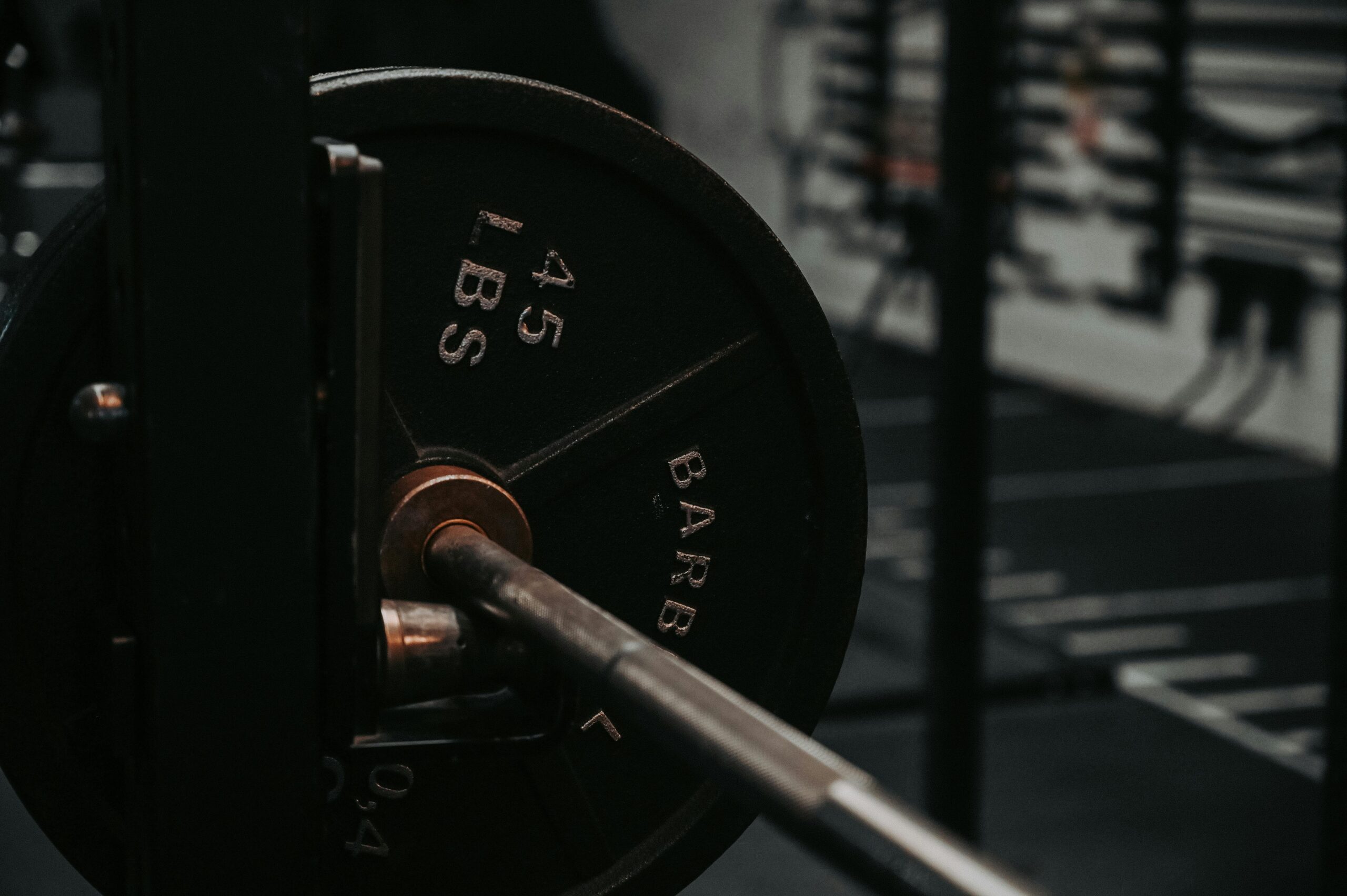
I was a college dropout with a chip on my shoulder the size of a forty-five-pound plate. My dad had left when I was fourteen and I’d been angry about it ever since, and somewhere along the way I’d decided that the gym was the one place I got to feel like somebody. I trained with a little crew of guys my age — Brayden, Marcus, a couple of others — and the early shift, five to seven in the morning, was ours. We were loud. We filmed everything. We talked more than we lifted, and we lifted mostly so we’d have something to talk about.
Frank was always there before us. Every single morning, no matter how early we came, that old beige sedan was already in the lot and Frank was already chalking up.
He had to be in his seventies. Thick glasses. A flat cap he hung on the same hook every day. A weightlifting belt so old and cracked it looked like it had been excavated from somewhere. He moved slow — deliberately, almost ceremonially slow — setting up each lift like a man defusing a bomb. He nodded at everybody and spoke to nobody. And he did the same strange workout every day: deadlifts, heavy carries up and down the turf, and this odd thing where he’d lower a sandbag to the floor and pick it back up, over and over, gentle as anything, like he was practicing.
We thought it was hilarious. A grown man, an old man, coming in at dawn to slowly pick things up and put them down. We didn’t get it. We didn’t try to.
He was there in ice storms. He was there the morning the power flickered and half the lights stayed off. He was there on Christmas Eve, when the gym was empty and even the front-desk kid had gone home early. Whatever else you could say about Frank Delaney, the man showed up. We mistook that for having nothing better to do. It never once occurred to us that a person that consistent might be consistent for a reason.
How We Treated Him
I’m not going to soften this part, because I don’t deserve to.
We called him Grandpa. Not to his face at first, then eventually to his face. Brayden did an impression of his slow setup that made us all howl. One morning Marcus filmed him for ten full minutes and cut it into a video captioned “POV: leg day at the retirement home,” and it got forty thousand views, and we passed Marcus’s phone around the locker room laughing until we couldn’t breathe.
Frank saw it. I know he saw it, because the gym was small and we weren’t quiet and one of the guys made sure to play it loud enough. He never said a word. He just kept chalking up, kept setting his feet, kept lifting. I took that silence as proof that he was harmless. A pushover. Somebody safe to laugh at.
Once, somebody — I won’t pretend it wasn’t sometimes me — moved his chalk and his belt to the other end of the gym as a joke, and we watched him walk the whole length of the floor to collect them, slow and patient, and we thought that was funny too.
Here’s the thing I understand now that I didn’t then: I wasn’t laughing at Frank. I was laughing at what I was afraid of. I was twenty-two and terrified of being weak, terrified of being left, terrified of being a nobody — and there was a man calmly being old in front of me, unbothered, not performing for anybody, and something about that scared me. So I laughed. We always laugh hardest at the thing we’re most afraid of becoming.
He never gave us anything to push against, either, and looking back I think that’s part of what kept us going. If he’d snapped at us, told us off, gotten red in the face, we’d have had a fight — and a fight would have made us equals. Instead he just absorbed it, the way the ocean absorbs a thrown rock, and went back to his lifting, and his calm made us feel small in a way we couldn’t name. So we got louder, to drown it out.
Then came the morning that ended the joke forever.
The Morning Everything Changed
It was a Thursday in February, a little after five-thirty. The gym was nearly empty — just me, Frank down at the far end, and one guy with headphones on the treadmill. Brayden and Marcus were running late.
I decided I was going to max out on bench press. No spotter. I want you to understand how stupid that is, but I was alone and impatient and full of something I needed to prove, and the rack had safety arms that I told myself made it fine. I loaded the bar heavier than I’d ever pressed in my life. I lay down. I unracked it.
I got it halfway up and my arms simply quit.
The bar came down across my throat.
I have tried many times to describe the next twenty seconds and I always fall short. The weight was on my windpipe. I couldn’t make a sound — I couldn’t get enough air to scream. The safety arms were set too low to catch it. I pushed with everything I had and the bar didn’t move a fraction of an inch. My arms were shaking and useless and the edges of my vision were going gray and I understood, with a calm that was worse than panic, that I was going to die on a bench in an empty gym at five-thirty in the morning because I’d wanted to look strong.
The guy on the treadmill saw. I caught the motion of him pulling out his earbuds, standing up, and then — God help me — raising his phone. He started filming. He actually started filming.
And then Frank was there.
I never heard him cross the room. One second the bar was crushing my throat and the next there was a quiet, steady voice right above me saying, “Hands off the bar, son. Let go. I’ve got it.”
I let go. And Frank Delaney, the old man we called Grandpa, the joke of the five a.m. crew, set his feet on either side of that bench, wrapped his thick old hands around the bar, and lifted it straight up off my throat in one smooth, controlled motion — no jerking, no struggle, no drama — and racked it like he was setting down a bag of groceries.
Then he crouched down next to me while I rolled onto my side gasping and retching air back into my lungs, and he put one steady hand on my back, and he said, very quietly, “Breathe. Just breathe. You’re all right. I’ve got you.”
When I could finally sit up, he handed me my water bottle, told me to take small sips, and then — this is the part that still undoes me — he went back to the far end of the gym and quietly picked up his sandbag and kept training, as if he hadn’t just done the single most important thing anyone has ever done for me.
What I Owed Him
I couldn’t sleep that night. I kept feeling the weight on my throat. I kept seeing that hand reaching down.
But more than anything, I kept thinking about how easy it had been for him. I am a strong young man, or I thought I was, and I could not move that bar one inch to save my own life. Frank, who was more than fifty years older than me, had lifted it off my body like it was nothing. Like he’d done it a thousand times before.
The next morning I came in early and waited for him in the lot. When he got out of his car I tried to thank him and completely fell apart instead — just stood there in the cold crying in front of a man I’d spent two months mocking. He didn’t make it weird. He just put his hand on my shoulder, the same steady hand, and said, “You’re alive. That’s the whole point. Now come on, it’s cold.”
After that I couldn’t stop watching him. And once I actually paid attention, I realized that what Frank did every morning was not a workout. Not the way we did workouts. There was nothing random about it, nothing for show. Every single thing he did was a version of the same motion: getting heavy, awkward, dead weight up off the ground and setting it down again with absolute control. The deadlifts to one exact weight. The carries. The sandbag he lowered and raised so gently, the one I’d laughed at. He wasn’t exercising.
He was rehearsing.
Meanwhile, without quite deciding to, I’d stopped maxing out to impress anybody. I’d stopped filming. I started warming up properly, the way he did. And one morning I caught myself setting a dumbbell down softly instead of dropping it, and realized I was copying him. The man I’d mocked for two months had become, without either of us ever saying so, the only person in that building I actually wanted to be like.
It took me two weeks to work up the nerve to ask him what for.
Why He Was Really There
He didn’t answer me at first. He finished his set, racked the weight, and sat down on a bench, and he was quiet for so long I thought I’d offended him. Then he reached into that ancient gym bag and took out a worn photograph and handed it to me.
It was a woman. Silver hair, a wide warm smile, sitting in a kitchen with sun coming through the window behind her.
“That’s Marie,” Frank said. “My wife. Fifty-one years this past October.”
Then he told me.
Three years ago, Marie had a stroke. A bad one. It took the use of her entire left side and most of her ability to bear her own weight. When the hospital was ready to discharge her, the doctors and the social worker sat Frank down and gently explained that a woman in her condition, with a husband in his seventies, really belonged in a long-term care facility. It was the responsible choice, they said. The realistic one.
“I told them no,” Frank said. “I made Marie a promise the day I married her, and I made it again in that hospital room. She was not going to spend her nights in a strange bed in a building full of strangers, not as long as I had breath and a back that worked. She comes home with me. That was the end of the discussion.”
But keeping that promise meant something specific. It meant that every single morning, Frank had to lift his wife — a grown woman who could not help him at all — out of bed and into her wheelchair. Into the bathroom. Into the bath and back out, wet and heavier. Back into the chair. Into bed at night. Over and over, all day, every day, the careful lifting and lowering of a human being who could not hold on.
“The day I can’t lift Marie,” Frank said, looking at me, “is the day I break my promise and she goes into a home. So I don’t get to be old yet. I don’t get to let this body quit. I come here every morning and I practice picking up dead weight and setting it down soft, because that is the most important thing my arms will do all day.” He almost smiled. “That’s why I’m so good at it, son. I’ve had a lot of practice lifting somebody who can’t lift themselves.”
He didn’t tell me it like a tragedy. That’s what got me. There was no self-pity in it at all — he told me the way you’d describe any job that simply needed doing, the enormous cost of it just sitting there, plain, in his tired eyes. He hadn’t taken a day off in three years. Not one. There were no weekends in Frank’s life, no sick days, no mornings he got to stay in bed because his back hurt — because if his back hurt, he stretched it out and lifted her anyway. I had spent two months certain that man was soft. He was the least soft human being I had ever stood next to.
I sat there on that bench and I understood, finally, what had happened on the morning he saved me. The reason Frank had lifted that loaded bar off my throat so easily, so calmly, so perfectly, was that lifting a limp and helpless human body off something and setting it down gently was the one thing in this world he had practiced more than any other. He hadn’t saved my life in spite of being a weak old man. He’d saved it because he was the strongest kind of strong there is. The kind nobody can see.
Marie
I asked if I could meet her. I don’t fully know why — I think I needed to see the reason with my own eyes.
Frank brought me to their house that Sunday. It was small and old and every inch of it had been adapted with ramps and rails and grab bars, most of which Frank had clearly built himself. And there was Marie, in her chair by that sunny kitchen window from the photo, and the second she saw Frank walk in with a guest her whole face lit up like a girl’s.
“You made a friend,” she said to him, delighted, teasing. “At the gym. Frank Delaney made a friend.” She took my hand in her good one and held it and asked me a hundred questions, and she was sharp and funny and warm, and within ten minutes I loved her, and within twenty I had to step out onto the porch because I couldn’t stop thinking about the video with forty thousand views.
When I came back inside, Marie was watching Frank refill her water glass in the kitchen, and she said something to me quietly that I have never forgotten. “He thinks I don’t know how hard it is on him,” she said. “He thinks if he smiles big enough, I won’t see. But I see everything, honey. Fifty-one years — you see everything.” She squeezed my hand with her good one. “You keep an eye on him for me. He won’t let anybody help him. He thinks needing help is the same thing as failing.” I promised her I would. It turned out to be the most important promise I have ever made, and at the time I didn’t even understand it.
I stayed the whole afternoon. I watched Frank do the evening transfer — lift Marie from her chair to her bed — and I have never in my life seen anything as strong or as gentle as the way that old man cradled his wife, talking to her softly the whole time, asking if she was comfortable, making her laugh, preserving every ounce of her dignity in a way the hospital never could have. It wasn’t a chore to him. It was the great work of his life. It was the promise, kept one more time.
I started coming by after that. I learned how to do the transfer so I could give Frank a morning off now and then. I rebuilt their back ramp when it started to rot. I became, somehow, part of their mornings — and the angry kid who used to feel like a nobody started, for the first time, to feel like he was actually good for something.
Frank didn’t know about my own father, not for a long time. But I think he understood something anyway, the way old men understand things they’re never told. He started calling me “son” more often. He started correcting my deadlift with a hand on my back. He started asking after me like the answer actually mattered to him. I’d spent eight years furious at the man who walked out on us, and somewhere in those mornings at the Delaney house I stopped being quite so furious — because for the first time since I was fourteen, there was a man in my life who simply, reliably, showed up.
What Strength Really Is
Things changed at the gym, too. I told my crew the whole story. Marcus took the video down. Nobody called Frank anything but Frank ever again, and when a couple of new young guys started snickering at him that spring, I was the one who walked over and told them exactly who they were laughing at, and watched their faces fall.
Frank started coaching me. Real coaching, old-school, the way he’d learned it back when he was a young dockworker hauling freight off ships before half the machines existed. He never once said “I told you so.” He never gloated about the morning he’d saved me, never held it over me, never asked for a single thing in return for it. He just kept showing up at five a.m., the way he’d always shown up — for Marie, and now, somehow, for me.
That’s the thing about real strength, I learned. It doesn’t announce itself. It doesn’t film itself. It doesn’t need forty thousand views. It just gets up before dawn, day after day, and lifts what has to be lifted, and asks for nothing.
Brayden asked me once why I cared so much about an old man I’d been making fun of just two months earlier. I didn’t have the words for it then. I do now. Frank was the first person who ever showed me that being strong was never about being seen being strong — that it was the opposite of that. It was doing the heaviest thing in your life at five in the morning where nobody is watching, and then going home and doing the even heavier thing where nobody ever claps. I wanted to be that. I still do. I’m not there yet. But I’ve got the right teacher.
A Year Later
Marie passed away last winter.
It was peaceful, and it was at home, in her own bed, by the window, with Frank holding her good hand. She never spent a single night in a facility. Not one. In fifty-two years of marriage and three years of that stroke, Frank Delaney never once broke his promise.
I was a pallbearer. Frank asked me himself, and I carried her the way he taught me — carefully, gently, with control — and I understood that it was the last time those particular muscles would do the job he’d built them for.
At the service, Frank stood up to speak and managed exactly one sentence before his voice gave out. “I got to keep my promise,” he said — and then he just stood there, this powerful old man, shaking, unable to go on. The whole church waited and let him, because every single person in that room understood that the one sentence was the entire eulogy. He got to keep his promise. There was nothing else that needed to be said.
He still comes to the gym at five in the morning. He doesn’t have to be that strong anymore — there’s no one left to lift — but he comes anyway, out of habit and grief and love, and these days he’s teaching me, and I’m there every single morning, not to be seen by anybody, just to learn from the strongest man I’ve ever known.
I used to think strength was the heaviest thing a person could pick up off the floor.
Frank Delaney taught me that real strength is the heaviest thing you’ll carry every single day for someone who can’t carry themselves — and never, ever put down.
He saved my life with his hands that morning on the bench. But he changed it forever the day he let me see why those old hands were so strong.

Sophia Rivers is an experienced News Content Editor with a sharp eye for detail and a passion for delivering accurate and engaging news stories. At TheArchivists, she specializes in curating, editing, and presenting news content that informs and resonates with a global audience.
Sophia holds a degree in Journalism from the University of Toronto, where she developed her skills in news reporting, media ethics, and digital journalism. Her expertise lies in identifying key stories, crafting compelling narratives, and ensuring journalistic integrity in every piece she edits.
Known for her precision and dedication to the truth, Sophia thrives in the fast-paced world of news editing. At TheArchivists, she focuses on producing high-quality news content that keeps readers informed while maintaining a balanced and insightful perspective.
With a commitment to delivering impactful journalism, Sophia is passionate about bringing clarity to complex issues and amplifying voices that matter. Her work reflects her belief in the power of news to shape conversations and inspire change.