That was the real reason the Montgomery family invited me to my ex-husband’s wedding. Not courtesy. Not closure. Not some gracious gesture from people who had spent years making sure I understood exactly where I ranked in their world. The Montgomerys were Chicago old-money royalty, wealthy and feared and obsessed with image, and they had spent the better part of my marriage reminding me that I had arrived from the wrong side of everything that mattered to them.
Eleanor Montgomery, Ethan’s mother, had perfected the particular cruelty of women who have never once had to wonder whether they belonged in a room. She made her feelings about me clear in ways that left no fingerprints. A comment about my accent at dinner. A question about my family background delivered with her head tilted just so. The way she would speak about our marriage’s future in the past tense, as if its ending were already decided, long before it was.
So when the invitation arrived, I understood it immediately for what it was.
Bait.
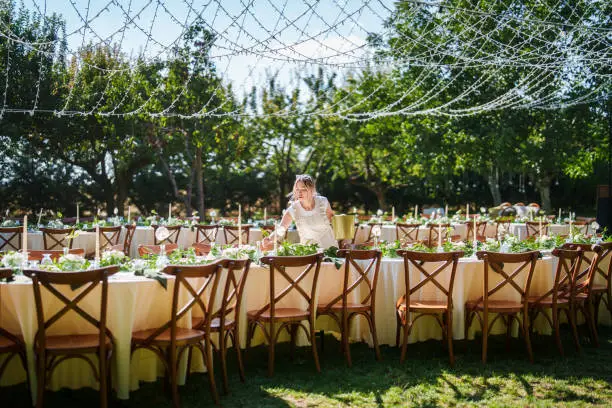
They wanted me seated quietly at Table 27, beside the kitchen doors of their enormous lakefront estate in Lake Geneva, close enough to hear the staff calling orders and far enough from the front to remind me I was no longer welcome. They wanted me to watch Ethan marry Caroline Hastings, daughter of a U.S. senator, while Illinois high society whispered about how easily I had been replaced. They wanted to study my face and feel the particular satisfaction of people who believe that watching someone suffer proves their own superiority.
Eleanor had planned every detail of what she expected to be my humiliation.
She made one mistake.
She had no idea I was not coming alone.
The invitation smelled like expensive perfume and imported paper. I stood beside the floor-to-ceiling windows of my penthouse overlooking downtown Chicago, turning the envelope between my fingers. Gold lettering announced the wedding of Ethan Montgomery and Caroline Hastings. I gave a quiet, brief laugh.
Ethan. The man who had signed our divorce papers five years earlier without looking me in the eyes. The same man who had stood by without a word while his mother dismantled my life in slow, methodical pieces.
“Mama, who’s getting married?”
I looked down.
Liam was tugging gently at my sweater. Behind him, Noah and Caleb were building a pillow fortress in the living room, arguing about dinosaurs with the focused intensity that only four-year-olds can bring to completely arbitrary disputes.
My triplets. Five years old now. All three boys had Ethan’s sharp gray eyes and dark wavy hair. But the fire in them came from somewhere else. It came from me.
I had left the Montgomery mansion five years earlier, pregnant and terrified, knowing that Eleanor would destroy me in court if she learned about the babies. She would have buried me under the weight of their lawyers and their connections and their willingness to spend whatever it took to take those children and raise them inside her frozen, performative empire. I knew this not because I assumed the worst but because she had told me directly, in the cold specific language of a woman who has never needed to raise her voice to make a threat land.
So I vanished.
And I survived.
I worked eighteen-hour days while pregnant. I built a digital marketing agency from nothing, in a rented apartment barely large enough for a desk and a crib, while my babies slept beside me. I lost clients and found better ones. I made decisions that terrified me and learned to make them faster. I stopped waiting for someone to make space for me and started making my own.
Now I owned one of the fastest-growing agencies in the country. My net worth quietly exceeded the Montgomery fortune three times over, and unlike theirs, mine was not quietly hemorrhaging toward bankruptcy.
I looked at the invitation one more time.
Then I called my assistant. “Clear my schedule for Saturday,” I said. “And call my tailor. I need three custom tuxedos for my sons.”
If Eleanor Montgomery wanted a family reunion, it was time she met her grandsons.
Saturday arrived cold and bright, the kind of October morning that makes Chicago feel like it was designed for events like this. The Montgomery estate looked like it had been staged for a magazine spread. Thousands of white roses banked the garden pathways. String quartets played beside the fountain. Chicago’s political and financial elite circulated across the grounds holding champagne glasses and wearing the careful, practiced expressions of people who have attended enough events like this to know how to look interested without committing to a feeling.
From the upstairs balcony, Eleanor waited. I could see her even from the gate, standing in pale silk with a champagne glass and the patient, satisfied air of a woman about to watch something she had arranged.
She expected heartbreak.
Instead, a convoy of black armored SUVs rolled through the front gates.
The first vehicle stopped directly in front of the wedding aisle.
A quiet spread over the estate, that particular hush that moves through a crowd when something unexpected has arrived and no one is yet sure what it means.
The back door opened.
I stepped out.
I wore an emerald couture gown that caught the afternoon light. The reaction moved through the crowd visibly, heads turning, conversations stopping mid-sentence.
But the real shock came a second later.
I turned and held out my hand toward the SUV door.
One by one, Liam, Noah, and Caleb stepped out beside me in perfectly tailored velvet tuxedos. Their hair was combed. Their shoes were shined. They were four years old and looking around at the spectacle with the calm curiosity of children who have been told they are going somewhere important and are reserving their opinion until they have more information.
The silence changed quality.
Because every person standing on that estate who had ever seen Ethan Montgomery in his childhood, or in photographs, or in the family portraits that lined Eleanor’s hallways understood immediately what they were seeing.
The gray eyes. The dark wavy hair. The particular set of the jaw.
Three children who were unmistakably Ethan’s.
Up on the balcony, Eleanor’s champagne glass slipped from her hand and shattered against the marble floor.
I raised my eyes toward her.
And I smiled.
In that moment, everyone on the estate understood that the wedding of the year had just become the scandal of the decade.
Ethan stepped onto the balcony behind his mother just as the glass shattered. The moment he saw the boys, every bit of color left his face. He gripped the railing with both hands and stared. First at the children. Then at me. Then back at the children. The math arrived with the particular brutality of something that has been waiting five years for a door to open.
I did not look at him for long. I adjusted Caleb’s bow tie, took my sons’ hands, and walked forward through the crowd. Chicago’s elite moved aside for us with the automatic instinct of people who have just understood that something significant is happening and do not want to be caught standing in the wrong place.
Noah, who had never once in his short life been at a loss for questions, looked around with great interest. “Mama,” he said, at a volume that carried clearly through the hush, “is that the man getting married?”
Several guests nearby nearly choked.
I smiled gently at him. “We’re only here to observe, sweetheart. Keep walking.”
I ignored Table 27 completely. I walked past the kitchen doors and straight to the front row, to the section marked for immediate family, and I sat down between my sons.
A shaking wedding coordinator hurried toward me within seconds. “Ma’am, I’m so sorry, but this section is reserved for close relatives only.”
I looked at my boys. Then back at her.
“I promise you,” I said, “there is no one here more closely related to the groom than his biological children.”
I settled my sons on either side of me and folded my hands in my lap while the estate continued to process what had just happened.
Eleanor came downstairs moments later. She moved through the crowd with the focused energy of a woman who has spent forty years being the most powerful person in any room she enters and is not prepared to discover that this has changed. Her face was composed on the surface and barely contained underneath.
“What is the meaning of this?” she said, in the low, lethal voice she reserved for situations where she could not afford to be overheard losing control. “Leave immediately. Before I have security remove you.”
“Try it,” I said calmly.
I nodded toward the crowd. “The senator is watching. Reporters are filming. If one security guard touches my children, I will sue publicly. And unlike five years ago, Eleanor, I have considerably more money than you now.”
Her expression did something I had never seen it do in all the years I had known her. It cracked.
Then her eyes drifted to the boys. The resemblance was not a matter of interpretation. It was a fact visible to anyone with functioning eyes, and there were several hundred such people standing on this estate at this moment.
Ethan approached from the altar with the deliberate walk of a man who has already understood that whatever happens next is going to be extraordinarily bad but cannot locate an alternative to walking directly into it. Caleb tilted his head at him in a gesture so precisely identical to the way Ethan used to look when something confused him that several guests nearby reacted visibly.
“Sophia,” Ethan said. His voice came out barely above a whisper. “What is this?”
I looked at him directly. “These are the sons you never knew existed.”
The front rows went still.
“The children you missed because you were too busy betraying me before our divorce was even final.”
Whispers moved through the crowd. The Montgomery family had maintained a careful public narrative about Ethan’s relationship with Caroline. According to that story, they had met long after my marriage ended. The presence of children who were clearly conceived during our marriage complicated that narrative in ways that could not be walked back.
“I didn’t know!” Ethan said, desperation overriding whatever composure he had been holding onto. “You disappeared!”
“I disappeared because your mother threatened me,” I said. I was not shouting. I did not need to. My voice carried the specific weight of a woman who has spent five years working up to this sentence and knows exactly how to deliver it. “She told me she would destroy me. She made it clear that if she discovered my pregnancy, she would take my children through the courts and raise them inside her empire. I believed her, because I had watched her do it to other people. And I had nothing then. No money, no lawyers, no connections. I left because it was the only way to protect my sons.”
“That is a lie!” Eleanor said sharply. “She hired child actors.”
“No.”
A firm, quiet voice from the crowd. Everyone turned.
Dr. Robert Montgomery, Ethan’s estranged uncle and one of the country’s leading geneticists, stepped forward. He had been standing near the back, and his expression was the neutral, analytical look of a man who has spent his career evaluating evidence rather than managing narratives.
He studied each of my sons in turn. Then he nodded once.
“The gold fleck in the left iris,” he said. “The Montgomery genetic marker. Ethan has it. His grandfather had it. All three boys inherited it.”
Silence settled over the estate like weather.
Then the wedding doors opened.
Caroline Hastings entered in a breathtaking designer gown on her senator father’s arm, her smile confident and practiced and completely unprepared for the several hundred guests who were staring at me and three small dark-haired boys instead of her arrival.
Her smile disappeared. She looked at Ethan. Then at my sons. Then back at Ethan with an expression that moved through several stages too quickly to catalog individually.
“You have children?” she asked.
Her father turned toward Ethan with the focused energy of a man whose political career has just registered an unexpected threat. “You humiliated my daughter!” He had a voice built for Senate chambers, and it deployed itself fully now. “You hid an entire family?”
“They are not illegitimate,” I said, standing. “My sons were conceived during a legal marriage. They are Ethan Montgomery’s lawful heirs.”
Eleanor lowered herself into the nearest chair, one hand pressing against her chest. Nobody moved to help her.
Caroline dropped her bouquet. She looked at the assembled guests, at the cameras, at Ethan, and at three small boys who looked exactly like the man she was supposed to be marrying, and she made the only rational decision available to her. She turned and walked out of the estate while cameras flashed around her. Her father followed, pausing to say something in Ethan’s direction that I was close enough to hear but will not repeat.
I checked my diamond watch.
“Well,” I said lightly, “that ended sooner than expected.”
I turned to my boys. “Say goodbye, kids.”
Ethan moved after us as we walked toward the exit. “Sophia, wait. Please. Please don’t take them away from me.”
I got the boys settled in the SUV before turning back to face him. He looked like a man who has understood something about himself that he would very much prefer not to know.
“They are my sons,” I said. “I carried them. I raised them. I stayed awake through fevers and nightmares and every hard thing while you were not there. The fact that you were not there by your own mother’s design does not change what the years looked like from where I was standing.”
His eyes were wet.
“You were the donor, Ethan. You can become something more than that. But it will take work, and it will happen on my terms and my timeline and with my sons’ best interests as the only thing that matters.”
I got in the SUV.
Three days later, Eleanor filed for custody. Fraud. Parental alienation. Full custody demands. She retained the most aggressive family law attorneys in Chicago and deployed the Montgomery name with the confidence of someone who has never lost a legal fight in her life.
By then, I knew something she did not.
The Montgomery empire was drowning in debt.
I had known this for some time. When you operate at the level of company I run, certain financial realities become visible before they become public. The estate had been mortgaged and remortgaged. The investment portfolio had been quietly liquidated over the preceding two years. The family businesses that Eleanor had run as personal fiefdoms were hemorrhaging money with no succession plan and no one capable of stopping the bleeding.
Eleanor did not know that I knew. She also did not know what I had done about it.
At a legal meeting downtown, she slid a check across the conference table without preamble. Ten million dollars. Her expression delivered the rest of the message without requiring words: sign over custody and disappear.
I looked at the check for a moment.
Then I laughed. Not politely. Actually laughed.
“Oh, Eleanor,” I said. “You still think I’m poor.”
Her jaw tightened. “Do not test me.”
I stood and walked slowly around the table until I was standing beside her chair. She did not move, which I respected. Whatever else she was, she had never lacked courage.
“My company earned thirty million dollars last quarter alone,” I said. “And this morning, I purchased your family’s bank debt.”
The room went very quiet.
“The estate mortgage belongs to me now,” I continued. “Technically, Eleanor, you are living in my property.”
Ethan’s face had gone gray. “You’re bankrupt?” he asked his mother, barely above a whisper.
Eleanor could not answer. Her hands, which had been so steady when she slid the check across the table, began to shake.
I stepped back and gave her the dignity of a few seconds to compose herself, because I was not there to enjoy her suffering. I was there to end something that had started five years ago and needed to be finished.
“Drop the lawsuit today,” I said. “All of it. Or I begin eviction proceedings on the estate tomorrow morning.”
Then I looked at Ethan.
“You may see the boys. But you will earn the right. You will show up consistently, not dramatically. You will be present, not impressive. And the moment you prioritize your family’s image over your sons’ actual needs, we revisit this arrangement entirely.”
Eleanor signed the withdrawal papers with hands that could not quite be held steady. Ethan nodded and cried without trying to hide it, which was the first unperformed thing I had ever seen him do.
I gathered my folder and walked out.
The months that followed were not cinematic. They were the ordinary, difficult, incrementally improving work of two people trying to figure out how to co-parent after five years of absence and a wedding disaster that was now a permanent feature of Chicago social history.
Ethan was not good at it at first. He arrived with gifts when he should have arrived with consistency. He planned grand outings when the boys needed someone to sit on the floor with them and build things. He performed fatherhood before he learned to practice it. But he kept showing up, which was more than I had expected, and the boys responded to him with the specific, unguarded openness of children who are willing to love someone who is still learning how to deserve it.
Eleanor never apologized. I did not expect her to. People who have operated from power for long enough rarely find the vocabulary for it. She retained her pride and her composure and her corner of the family story where she had always acted in everyone’s best interest. I let her keep it. The children were mine. The company was mine. The estate mortgage was, for the time being, mine.
What she thought about any of it, in the quiet of whatever remained of her empire, was her own business.
On a rainy Tuesday about six months later, I was working from my home office, reviewing contracts, when I heard the particular noise of paint being knocked off a table. I looked through the glass partition into the living room.
Ethan was on the floor with all three boys. They were attempting a mural, apparently, on a large piece of craft paper that had not been adequately secured and was now sliding steadily toward the rug. Caleb had paint on his ear. Noah was explaining something to his father with great authority about the proper way to make a green dinosaur. Liam was simply painting, focused and quiet, the way he always was.
Ethan caught my eye through the glass. He held up his paint-covered hands in a gesture of helpless apology.
I shook my head slowly and went back to my contract.
Something I had learned in the years I spent building a company from nothing while keeping three small people alive and intact was that the best outcomes are rarely the dramatic ones. The dramatic moments at the wedding, the check Eleanor slid across the table, the look on Ethan’s face when the math arrived, those were moments. They mattered because they changed the shape of things. But they were not the thing itself.
The thing itself was quieter. It was the boys going to sleep in clean beds in an apartment they had always been safe in. It was the company growing because I had built it on work rather than borrowed money and family connections. It was the contracts on my desk and the calls I could afford to take or decline based on merit alone.
The Montgomerys had tried to make me a footnote in their story.
I had simply built a different story. A better one. One where my sons grew up knowing their mother did not stay silent when silence was the expensive option, and that the life you make for yourself out of nothing is worth more than anything anyone can invite you to come and observe from a table beside the kitchen doors.
The greatest revenge is not destruction.
It is building a life so full and so solid that the people who tried to diminish you have to work very hard to remember why they thought that was worth doing.
Eleanor knew where we lived. She had never visited.
I did not expect she ever would.
And on a rainy Tuesday in Chicago, with paint on the living room floor and three small voices arguing pleasantly about dinosaur colors, I found that I did not mind at all.
There is something I want to be honest about, because the story as I have told it so far reads more cleanly than it lived.
The five years between leaving the Montgomery mansion and arriving at that wedding were not a clean arc toward triumph. They were mostly just hard. The company did not grow smoothly. There were quarters where I could not pay myself and quarters where a single lost client threatened to undo a year of progress. There were nights when all three boys were sick at the same time and I was running on no sleep and negotiating a contract renewal over the phone while someone’s temperature climbed and I was doing the math in my head about whether I could afford the out-of-pocket on a clinic visit.
I do not tell people this very often, because it does not fit the story people want to hear. The preferred version is that I left with nothing and arrived with everything, which is true in the broad sense but misses the years of daily decisions between those two points. The years of choosing to keep going when the easier choice was available and visible.
What actually carried me through those years was not the idea of the wedding. I did not spend five years imagining the moment Eleanor’s champagne glass would shatter. I spent five years building a company because I had three children and the company was the only foundation I could give them. The wedding was a consequence of that foundation, not the reason for it.
I want to say this clearly because I think the version of the story where the protagonist is driven by a desire for vindication is less honest than the version where she is driven by necessity, love, and the specific stubbornness of a person who refuses to accept that the worst moment is the final one.
The morning I received the invitation, I did not immediately decide to bring my sons. I stood at that window for a long time, genuinely uncertain. The safe choice was not to go at all. The safe choice was to send my regrets, noted by my very good assistant, and let the Montgomerys have their wedding in peace while I had a quiet Saturday with my children.
But there was a version of my sons’ lives that I kept thinking about, a version where they grew up not knowing who their father was, or knowing but in a way that had been managed and smoothed and sanitized into something that protected everyone except them. A version where they eventually found out the full story from someone other than me, or from documents, or from the particular ache of a gap in their history that had been carefully maintained.
I did not want that version.
I also thought about Eleanor, which is not the most comfortable thing to admit. Eleanor had made a calculation about me five years earlier and acted on it with complete confidence. She had been correct about my circumstances and wrong about my character. The difference between those two things was precisely what the wedding was an opportunity to demonstrate. Not to her. Not really. She was never going to revise her story about who I was. People who operate from that kind of certainty rarely do.
But to myself. And to my sons, who were old enough now to form impressions and young enough to form the kind that last.
I wanted them to see their mother walk into a room she had been told she was not allowed to enter and sit in the front row.
The rest was what it was.
What I did not fully anticipate was Ethan’s response. I had prepared for hostility, for legal threats, for Eleanor’s specific brand of controlled menace. I had not prepared for the look on Ethan’s face when he understood what the five years had been and what he had missed. Not defensiveness. Not calculated damage control. Something rawer than that.
I do not know what his marriage to Caroline would have been. I suspect he had talked himself into believing a story about himself that the wedding made difficult to maintain. People do that. They build narratives that require certain supporting facts to remain in place, and when the facts shift, the narrative becomes very uncomfortable very fast.
What I know is that the man who showed up in my living room six months later, covered in paint and trying to understand how to talk to five-year-olds about dinosaurs, was not performing anything. He was just a father who had arrived late to something he was not allowed to say was his fault and was trying anyway.
I watched him try, and I let him try, because my sons needed him to succeed more than I needed him to fail.
That is the part that required the most from me. Not the confrontation at the estate. Not the legal maneuvering or the bank debt or the meeting where Eleanor’s hands shook. Those required preparation and nerve, but they were one-time events. They had a beginning and an end.
Choosing, day after day, not to poison my sons’ relationship with their father because of what their father’s family had done to me, that required something ongoing. Something that did not get easier with repetition, exactly, but became more practiced. More automatic.
Less expensive.
I am still working on that part. I will probably be working on it for a long time.
What I know for certain is this: Eleanor expected me to arrive broken, take my seat beside the kitchen, and confirm everything she had decided about who I was and what I was worth.
I arrived in an emerald gown with three children who looked exactly like her son, and I sat in the front row, and I did not apologize for any of it.
Not because I was trying to ruin her son’s wedding, though I understand why it reads that way. Because I was done letting other people decide what space I was allowed to occupy.
The invitation had been bait.
I had accepted it as something else.
A chance to show my sons what it looks like when their mother decides she has already paid the entry fee and is done waiting to be let in.
They were five years old and probably too young to remember the specifics. But children absorb the emotional texture of things even when they cannot articulate the events. They absorb what calm looks like under pressure. They absorb what it means when someone does not move when they are expected to move.
I wanted them to absorb that.
I think they did.
On the drive home that afternoon, Caleb fell asleep in his car seat about three minutes after we left the estate. Liam looked out the window at the lake and the trees going past, the way he always did when he was processing something. Noah, who had asked whether that was the man getting married and had successfully nearly caused six people to choke on their champagne, turned to me with great seriousness.
“Mama,” he said, “that wedding was very weird.”
I kept my face steady for approximately two seconds before I started laughing.
“Yes, baby,” I said. “It was.”
He nodded, satisfied with this assessment, and went back to looking out the window.
The lake glittered behind us. The estate disappeared. The city came up ahead.
I drove home.

Sophia Rivers is an experienced News Content Editor with a sharp eye for detail and a passion for delivering accurate and engaging news stories. At TheArchivists, she specializes in curating, editing, and presenting news content that informs and resonates with a global audience.
Sophia holds a degree in Journalism from the University of Toronto, where she developed her skills in news reporting, media ethics, and digital journalism. Her expertise lies in identifying key stories, crafting compelling narratives, and ensuring journalistic integrity in every piece she edits.
Known for her precision and dedication to the truth, Sophia thrives in the fast-paced world of news editing. At TheArchivists, she focuses on producing high-quality news content that keeps readers informed while maintaining a balanced and insightful perspective.
With a commitment to delivering impactful journalism, Sophia is passionate about bringing clarity to complex issues and amplifying voices that matter. Her work reflects her belief in the power of news to shape conversations and inspire change.