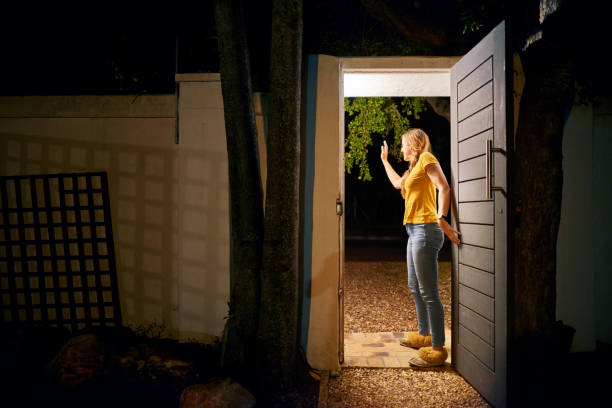
The moment I walked through the front door, I knew something was wrong.
Ruby felt it too. She pressed closer to my side, her hospital bracelet still loose around her small wrist, her fingers curling around the strap of my bag the way she used to hold my hand when she was little and something frightened her.
Twelve years old, pale from severe anemia, discharged only an hour earlier from St. Matthew’s Regional with instructions to rest, hydrate, and return if she fainted again. She had spent six hours hooked to monitors and an IV drip, and what she needed was a quiet room, a warm blanket, and a mother who could tell her everything was going to be fine.
Instead, the dining room smelled like reheated takeout, and my family was already arranged around the table like they had been waiting.
My mother stood beside the counter with her arms folded. My father sat at the head of the table with the particular stillness of a man who has already decided something. My sister Paige barely looked up from the takeout containers spread across the lace runner, sesame noodles and orange chicken I had paid for two nights earlier, now being eaten under the lights like nothing unusual was happening.
She was wearing my robe.
“We need to talk,” my mother said.
Not how is Ruby. Not how did it go. Not sit down, you must be exhausted.
We need to talk.
Ruby looked up at me. I kept my expression steady for her sake and pulled out a chair.
“Talk,” I said.
My father cleared his throat. “Your sister is behind on her rent at Brighton Oaks. Three months. There is also the Discover card balance, and Paige missed a car payment in March.” He laid his hands flat on the table. “We think you should cover it.”
I looked at Paige. She was twirling noodles around her fork with the practiced calm of someone who had already rehearsed this scene and knew how it ended.
“How much?” I asked.
“Combined, about two thousand dollars,” my father said.
Two thousand dollars. On the evening I brought my daughter home from the emergency room.
“I’m not doing that,” I said.
The room shifted.
My mother’s expression tightened. “Evelyn.”
“Ruby has been in the hospital all day. She needs to eat and sleep. This conversation can wait.”
“It can’t wait,” my father said. “Paige is going to lose her apartment.”
“Then Paige should get a second job,” I said. “The way I did when I was her age and needed to make rent.”
Paige finally looked up. “You always do this. You act like you’re the only person who has ever worked hard.”
“I act like money I earned belongs to me,” I said. “That’s different.”
My mother stepped forward. “You have more than enough. You always have more than enough. And this family has supported you through things you seem to have conveniently forgotten.”
I thought about the things my family had supported me through. My divorce, during which my mother had called my ex-husband twice a week to commiserate. My first year as a single mother, during which my father had told me I should have tried harder to save the marriage. The promotion I did not get because I had used two sick days when Ruby had pneumonia and my mother had been unavailable to help despite living twelve minutes away.
“I’m going to take Ruby upstairs and get her settled,” I said. “We can finish this later.”
My father stood up.
That was when his voice changed. Not louder, exactly, but harder, the voice he used when he had decided the conversation was over and compliance was the only remaining option.
“You will sit down,” he said, “and you will listen, because we are your family and you owe us the basic respect of hearing us out.”
Ruby’s hand found my arm.
I looked at my father. Then at my mother, who had arranged her face into the expression she used when she wanted to appear reasonable while saying unreasonable things. Then at Paige, who had set down her fork and was watching with the focused attention of someone watching a negotiation she expected to win.
Then I looked at Ruby. Pale and tired and holding onto me like I was the only steady thing in the room.
Something settled inside me. Not anger, though that was there too. Something colder and cleaner. The feeling of a decision that had been building for a long time finally arriving.
“I’m taking Ruby upstairs,” I said. “And then I’m coming back down, and we’re going to have a different kind of conversation than the one you planned.”
I did not wait for a response.
Upstairs, I got Ruby into her pajamas, made her drink a full glass of water, and sat on the edge of her bed while she told me about the nurse who had let her pick the flavor of her IV flush and had said she was the most polite patient of the week.
“Am I going to have to do this again?” Ruby asked. “The hospital thing.”
“We’re going to take care of you so you don’t have to,” I said. “Iron supplements every day. More leafy greens. Less running yourself ragged.”
She smiled tiredly. “What about downstairs?”
“Don’t worry about downstairs,” I said.
I waited until her eyes closed. Then I sat there for another few minutes in the quiet of her room, listening to her breathe, and I thought about everything I had been carrying in a manila envelope in my bag for the past three weeks.
I had not planned to use it tonight. I had hoped it would not be necessary tonight, of all nights. But my family had made their choice about what kind of evening this was going to be, and I had made mine a long time ago without telling them.
I went back downstairs.
My father was still at the head of the table. My mother had refilled her coffee. Paige had finished the noodles and moved on to the orange chicken. My uncle, who I had not noticed earlier, sat in the corner chair with a glass of something amber, watching.
“Sit down,” my father said.
“I’ll stand,” I said.
I reached into my bag and pulled out the manila envelope. I set it on the table beside Paige’s takeout. The county seal was visible through the top page.
Paige looked at it. My mother looked at it. My father looked at it.
“What is that?” my mother asked.
“Documentation,” I said.
I pulled out the first page. It was a credit line application from Brighton Oaks Leasing, the same building where Paige lived, the same building that had been sending me past-due notices for four months. My name was printed at the top. My address. My date of birth. And at the bottom, a signature that was supposed to be mine but was not.
I laid it flat on the table.
“That application was filed using my Social Security number,” I said. “The signature is a forgery. I did not authorize it, I did not sign it, and I did not know about it until Huntington Credit Services contacted me six weeks ago about a delinquency on an account I had never opened.”
Nobody spoke.
“I have filed a fraud complaint with Jefferson County Civil Court,” I continued. “I have the original notice, the lease file, the bank records, and a timeline of every transfer that ran through my accounts without my explicit consent.” I laid each document on the table as I named it. “The Discover card that was opened in my name in 2019. The car insurance policy that lists my address as the primary insured. The utility accounts at Brighton Oaks that have been drawing from a secondary account I set up for emergencies and which three people in this room had access to.”
My mother’s coffee cup touched the table very slowly.
Paige had stopped chewing.
“I want to be clear about something,” I said. “I am not angry about being asked to help. I have helped this family my entire adult life, and I was willing to keep doing that. What I am not willing to do is be robbed. Those are different things.”
My father found his voice. “Evelyn, you’re being dramatic. Paige needed help. We used the resources available. That is what families do.”
“Families ask,” I said. “They do not forge signatures and open accounts and then sit at a table and demand the person they stole from write them a check.”
“Nobody stole anything,” my mother said quickly. “It was a misunderstanding about what you had agreed to.”
“I would like to show you something else,” I said.
I pulled out the second document. This one had a different seal at the top. The county recorder’s stamp was crisp and dark.
It was the property deed for the house we were sitting in.
“Six years ago,” I said, “when Dad lost his job and you were three months from foreclosure, someone purchased the mortgage note and paid off the remaining balance. You were told it was an anonymous donor from the church community. It was not.” I turned the deed so the name at the bottom faced my father. “It was me.”
The room went very quiet.
Not the quiet of people thinking. The quiet of people trying to process something that had rearranged the furniture inside their understanding of a long story.
My mother’s mouth opened.
“You have been living in a house I own for six years,” I said. “I paid for it when I was thirty-one years old, working two jobs, raising Ruby alone. I liquidated my retirement account. I sold my car. I borrowed against a life insurance policy my grandmother left me. And I did not tell you because I knew that if you found out, it would not feel like a gift. It would feel like leverage. And I did not want to be the person who held leverage over my own parents.”
My father looked at the deed for a long time.
“I have tried,” I said, “for a very long time, to be the person this family needed without asking for much in return. I covered emergencies. I co-signed things. I showed up. I paid for dinners and groceries and car repairs and things I never mentioned because mentioning them felt petty. I did all of that because I love you and because I believed that love meant showing up even when it cost something.”
I picked up the fraud complaint.
“But this is not love asking. This is a system. And I have the paperwork to prove it.”
Paige pushed back from the table slightly. “I was going to pay it back.”
“You have said that before,” I said. “About the landscaping loan. About the money from 2018. About the credit card you opened in my name after the divorce when you said you just needed it for three months.” I looked at her steadily. “You have been saying you were going to pay things back for eight years. I have the transfer records and the Venmo history and the messages where you said don’t tell Mom I asked.”
Paige looked away.
My mother had been very still for the past several minutes. That was unusual. My mother was not a still person. She had opinions about everything and delivered them continuously, in the gentle relentless way of someone who believed softness of tone excused the hardness of content. But right now she was still, and something in her stillness told me she was doing the same calculation I had done six weeks ago when the first Huntington notice arrived. Figuring out how much of this she had known. Figuring out what knowing it made her.
“What do you want?” my father asked finally.
It was the first honest question he had asked me all evening.
“I want three things,” I said. “First, I want the fraud complaint to proceed without interference. The lender has already been notified. The account will be closed and the liability assigned correctly. I am not asking anyone’s permission for that. It is already done.”
My father’s jaw tightened but he said nothing.
“Second,” I said, “the Brighton Oaks situation needs to be resolved by the people who created it. The deposit that was collected from Paige’s actual tenant goes back to the tenant. Paige handles her own lease going forward. I am not the backstop for those bills.”
Paige started to say something. I kept going.
“Third,” I said, “I need thirty days notice honored on the upstairs unit, and I need the keys returned before I go back to work on Monday. I will be listing the property.”
My mother stood up. “You can’t sell this house.”
“I own it,” I said. “I can.”
“This is our home. Your father and I have lived here for twenty-two years. You cannot do this to us over a misunderstanding.”
“I am not doing this over a misunderstanding,” I said. “I am doing this because I came home tonight with a sick child and found my family waiting to demand money from me, and the only reason any of you thought that conversation was going to go the way you planned is because it has always gone that way before. I have always absorbed it. I have always found a way to smooth it over and keep the peace and tell myself that next time would be different.” I folded the envelope carefully and put it back in my bag. “Next time is tonight, and it is different.”
The kitchen was very quiet again.
My uncle put down his glass.
My father looked at the table.
Paige was looking at her hands.
My mother looked at me for a long moment, and I could see her cycling through the responses she had available. The wounded version. The reasonable version. The version where she cried and I felt guilty. The version where she reminded me of everything she had ever done for me, edited for the audience.
She chose silence instead. That was new.
“The thirty days starts tonight,” I said. “I will have the paperwork sent over this week.”
I went back upstairs.
Ruby was not asleep. She was lying with her eyes open, staring at the ceiling, and when I came in she turned her head and looked at me with the particular expression children get when they have been listening to something they were not supposed to hear and are not sure how to feel about what they learned.
“Did you really buy the house?” she asked.
“Yes,” I said.
“Why didn’t you tell them?”
I sat down on the edge of her bed. “Because I wanted to give it as a gift,” I said. “And I knew that if I told them, it would stop feeling like a gift and start feeling like something they owed me. And I did not want them to feel like they owed me. I just wanted them to be okay.”
Ruby thought about that. “But they weren’t okay.”
“No,” I said. “They weren’t.”
“What happens now?”
I tucked the blanket up around her shoulders. “Now you rest and get your iron levels up. And I figure out the next part.”
She was quiet for a moment. “Are we going to be okay? Just the two of us?”
I looked at her. At the hospital bracelet still around her wrist. At the way she looked at me like I was the person who knew the answer to every question that mattered.
“Ruby,” I said, “it has been just the two of us for a long time. And we have been okay every single time.”
She thought about that. Then she nodded, slowly, the way she did when something settled into the right place inside her understanding.
“Okay,” she said.
She was asleep within ten minutes.
I sat in the chair beside her bed for a long time after that, listening to the house settle around us, thinking about the drive to Charleston I had been considering for the past two months, the property management position that was still open, the two-bedroom apartment with the balcony I had looked at online a dozen times and not let myself want yet.
My phone lit up on the nightstand.
A message from my father. It said: You are making a mistake.
I read it once, set the phone face down, and looked at Ruby sleeping.
Then I picked the phone back up and typed back: I have been making the same mistake for fifteen years. I am not making it anymore.
I did not send it angry. I sent it the way you close a door that has been open too long. Quietly, without a scene, with the calm of someone who has finally decided the draft is not worth the trouble.
The next morning, before Ruby woke up, I called the property manager I had been using for my other units. I asked her to begin the listing process for the Gardenia Lane property. She did not ask questions. She said she would have comps to me by Thursday.
Then I called the number in Charleston.
The position was still available. They were delighted to hear from me. We scheduled a call for the following week.
By the time Ruby came downstairs in her pajamas asking if we had any orange juice, I had made three phone calls, sent two emails, and started a new folder on my laptop labeled Next Chapter.
“We have orange juice,” I said. “And I am making eggs.”
She climbed onto a stool at the counter and watched me crack eggs into a bowl. “You seem different,” she said.
“Different how?”
She considered this with the seriousness she brought to most things. “Lighter,” she said finally. “Like something heavy fell off.”
I poured the eggs into the pan and watched them begin to set.
“Something did,” I said.
The proceedings over the following weeks were not dramatic. Paperwork rarely is. The fraud complaint moved forward through the county process. Paige negotiated her own lease situation, which I understand involved several uncomfortable conversations with the Brighton Oaks management office and ultimately a repayment arrangement that had nothing to do with me. My parents retained an attorney and sent two letters through him. I retained my own attorney and responded through her. The house was listed and sold within six weeks. The number was better than I expected.
My mother sent a card three weeks after the listing went up. It said she missed me and that she hoped I would reconsider. It did not say she was sorry. It did not say they had been wrong. It said she missed me, which I believed, and that she hoped I would reconsider, which I understood as her version of an apology, the kind that asks you to do the work of forgiving without requiring the speaker to do the work of changing.
I put it in a drawer and did not answer.
The sale money went into three places. A college fund for Ruby. A donation to a legal aid organization that helped people navigate familial financial exploitation, which turned out to be common enough that the organization had a specific intake category for it. And a high-yield savings account with my name only on the access list.
We moved to Charleston in the spring.
Our apartment had a small balcony where I planted yellow marigolds in a pot, and on the first Saturday morning we were there, Ruby and I sat outside with coffee and hot chocolate respectively and looked out at the street below and said almost nothing for a long time, which is one of the underrated pleasures of a life that has gotten quieter in the right ways.
“Do you miss them?” Ruby asked eventually.
It was the question I had been waiting for her to ask.
“I miss who I wanted them to be,” I said. “I miss the version of us I kept trying to build. But the actual version, the one that was really there? That version made choices. And I made mine.”
Ruby nodded. She was thirteen now, with her grandmother’s eyes and a way of going quiet when she was thinking that reminded me of myself at that age, before I learned that quietness in my family’s house meant you were available to be redirected.
“Good,” she said. “I think you made the right one.”
I reached over and put my hand on top of hers.
“Me too,” I said.
The marigolds came back the following spring. Ruby grew three inches and made the school honor roll and joined a robotics club that met on Thursday evenings in a classroom that smelled like solder and dry-erase markers. I took on two new buildings for the portfolio and hired an assistant who reminded me, in her quiet competence, of who I had been before I spent so many years being useful to people who never asked how I was doing.
I am thirty-seven years old. I have a daughter who knows what it feels like to be someone’s first priority. I have a job I am good at, in a city where no one has a version of me that predates my own choices. I have friends who call to check in and colleagues who say thank you and a balcony with marigolds that require nothing from me except water and a little attention.
I kept the property deed in a frame on my desk for a while, not out of bitterness but as a reminder. A reminder of what I had built before I let other people convince me it was available for redistribution. A reminder that the version of me who worked two jobs and liquidated her retirement at thirty-one and never said a word about it was not naive. She was generous. And generosity given to people who cannot distinguish it from obligation is not a character flaw. It is just information you eventually have to use.
I used it.
Some families are built on blood. Mine is built on something I chose, deliberately, in a Charleston apartment with yellow marigolds and a daughter who looks at me like I am someone who knows what she is doing.
Most days, I think she is right.
There is one thing I want to say that I did not say at the table that night, because the table was not the right place for it and my father was not the right audience.
I spent a long time asking myself why it took so long. Not the practical question of why I had not acted sooner, which has a practical answer involving hope and exhaustion and the specific difficulty of accepting that the people who are supposed to love you most are capable of taking from you most. That question I can answer. The harder question is the one underneath it.
Why did I keep believing the next time would be different?
I think the answer has something to do with what we are taught about family and what family actually is, and the gap between those two things, and how long it can take to look clearly at the gap instead of trying to paper it over.
We are taught that family is unconditional. That blood creates obligation that runs in both directions. That you show up for people who share your last name in ways you would not necessarily show up for anyone else, because that is what love looks like when it has history behind it.
What nobody tells you is that unconditional love and unconditional access are not the same thing. You can love people and still have a door with a lock. You can want the best for someone and still decline to fund their choices. You can be a good daughter and a good sister and still look at a forged signature on a lease and call it what it is.
My mother would have said I was choosing money over family. What I would say, now, from the balcony in Charleston with the marigolds and the quiet, is that I was choosing myself. And choosing yourself is not the same as abandoning anyone. It is just the decision to stop abandoning you.
Ruby understands this better than I expected her to. She is thirteen and she has her whole life of navigating people and relationships and the question of what she owes and what she does not ahead of her, and I do not want her to learn the lesson I learned, which is that being easy to take from is not the same as being generous, and that the people who take most easily are often the ones who confuse the two most completely.
I want her to be genuinely generous, from a place of abundance and clarity and actual choice, not from the anxious need to keep everyone comfortable that I spent thirty years mistaking for virtue.
I think she is already partway there. She asks good questions. She notices things. She came home from school last month and told me that a girl in her class had asked to borrow her calculator for a test and she had said yes, but when the same girl asked to borrow her completed homework to copy, she had said no. She told me this without drama, just as a thing that had happened, the way you report information rather than seeking approval.
“Was that okay?” she asked anyway.
“That was exactly right,” I said.
She nodded like she had thought so too and had just wanted the confirmation.
That is the thing I am trying to give her. Not the answer to every question about what she owes and to whom, but the capacity to ask the question clearly and trust her own answer. The confidence to know the difference between a request and a demand, between someone needing help and someone expecting tribute, between love and the use of love’s language to extract something love would not actually require.
My grandmother used to say that you could tell the quality of a person’s character by how they behaved when they thought they were owed something. She meant it as a warning about entitlement, about the particular ugliness that comes out in people who believe the world has fallen short of what they deserve.
I think about that now and apply it differently. You can tell the quality of a relationship by how the other person behaves when you finally say no. Not a dramatic no, not an angry no, but a clear and quiet no, the kind that does not apologize for itself. The relationships that survive that no without punishment, without withdrawal, without rewriting history to make your boundary into a betrayal, those are the ones worth keeping.
I have a small number of those. They are enough. They are more than enough. They are, in fact, the only kind that were ever going to be enough, because the other kind always required me to be smaller than I was in order for the arrangement to function.
I am not small anymore.
The marigolds on the balcony are doing well this year. Ruby waters them on Tuesday and Friday mornings before school, unprompted, because she decided they were her responsibility and she takes her responsibilities seriously. She is her mother’s daughter in that way, though I am working, slowly, on teaching her that responsibility does not mean making yourself available to be responsible for everything and everyone without limit.
She is learning. We both are.
That is the part of the story nobody tells you when they talk about walking away from a situation that was taking too much. They tell you about the moment of clarity, the confrontation, the paperwork, the clean break. They do not tell you about the Tuesday morning eighteen months later when you are standing on a balcony watching your daughter water flowers she chose to plant, and you feel, quietly and without announcement, like a person who is finally living in the right story.
That is what I want to tell you.
Not just that I walked away. But that what I walked toward turned out to be real.
Specialty: Emotional Turning Points
Rachel Monroe writes character-driven stories about betrayal, second chances, and unexpected resilience. Her work highlights the emotional side of family conflict — the silences, the misunderstandings, and the moments when someone quietly decides they’ve had enough.