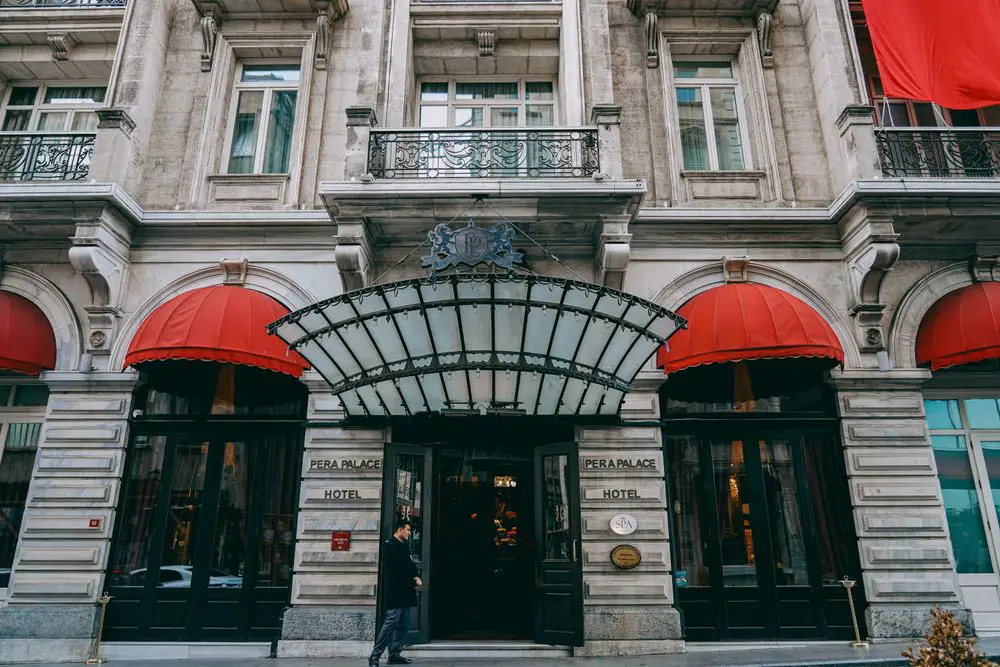
The Grand Celestial
The hotel rose above the circular drive like a palace of glass and warm gold light, every window glowing against the winter night. Ten thousand Christmas lights traced the eaves and the entrance canopy, turning the snow-dusted asphalt silver under the valet lamps. Valets in crisp uniforms rushed toward the luxury cars queuing ahead of me: a black Mercedes, a Bentley, a silver SUV with luggage that looked as though it had been chosen to match the vehicle.
My Toyota sat idling for a few seconds too long.
A young valet approached. His expression was professionally courteous, but his eyes moved over the faded paint and the small dent near the rear bumper before coming back to me with the particular calculation of someone trying to establish whether I belonged in the driveway or had made a navigational error.
“Miss,” he said. “Are you here for an event?”
“Family gathering. Under the name Chin.”
His face adjusted. “The Chin party. They’re in the Grand Ballroom. You can leave your vehicle here.”
I opened the trunk and took out my duffel bag, weathered and practical and nothing like the designer luggage I had just watched being unloaded from the other cars. The valet tried not to stare at it and almost succeeded.
Inside, warmth swept around me. The lobby was exactly as I had imagined it years ago and exactly as I had approved it. Marble floors polished to a mirror shine. Gold accents that caught the light without looking loud. A twenty-foot Christmas tree near the grand staircase, covered in silver ornaments, crystal ribbons, and tiny white lights. The hand-cut stone around the fireplace. The soft curve of the reception desk. The custom chandelier that had taken five months to design. The subtle lighting calibrated to make everyone look a little more elegant.
Everything was perfect.
Then I heard my brother’s voice.
Derek’s voice carried across the lobby the way it always had: confident, loud, and deliberately amused by something only he fully appreciated.
He was walking toward me with his wife Amanda, my mother Patricia behind him, and my younger brother Marcus with his phone in his hand. All of them looked polished and at ease in a place they believed was made for people like them. Derek wore a tailored navy suit. Amanda wore a champagne dress. My mother had on pearls and the controlled expression she reserved for correcting me in public. Marcus wore a watch he made sure everyone noticed.
“We were wondering if you’d actually show up, Sophie,” Derek said.
“Traffic was heavy.”
“From the budget motel?”
Amanda gave a soft laugh. My mother came closer and air-kissed my cheek without smudging her makeup.
“Darling, we love that you came. But Derek has a point. There’s no shame in staying somewhere more appropriate. There’s a clean motel fifteen minutes away.”
“I have a reservation here.”
Derek looked at my duffel bag, then back at my face. “You must have maxed out every card you own. Mom, you should talk to her about financial planning.”
“Sophie has always been impulsive,” my mother said.
“Tech support paid my bills,” I said.
“Exactly. It didn’t put you in a five-star hotel.” He spread his hands. “Tonight matters for my business relationships. I reserved the Grand Ballroom. Full catering, premium bar, chef’s menu. People who expect a certain level of sophistication.”
Amanda looked over my jeans and simple sweater. “Please tell me you brought something appropriate.”
“I brought clothes.”
“From where?”
“Target.”
He snorted. My mother lowered her voice. “Sophie, dear, we can’t have you looking like you came from work at a call center.”
“Tech support,” I said. “Not a call center.”
“Phone work. Customer complaints. Same thing,” Marcus said.
I looked at them. My family, who shared my blood and knew almost nothing about my actual life.
Derek had inherited our father’s import business and treated it as proof that he had built something himself. He had the confidence that comes from walking into a position someone else created and being praised for not dismantling it. Marcus echoed him in the way middle children echo their older siblings when it earns inclusion, agreeing with Derek’s assessments of me without ever forming his own. My mother had married well twice and believed that judgment, delivered with enough refinement, was a form of love. She had been telling me what was wrong with my choices for twenty-eight years. Amanda only knew me as the version Derek had described, the younger sister who hadn’t quite found her footing, the one who required sympathy at family gatherings.
None of them had ever asked what I actually did.
I had tried, more than once, to explain. Three years ago at Thanksgiving I had talked about the platform, the hospitality integration software, the early clients. My mother said she was tired of hearing about tech things at dinner. Derek made a joke about Silicon Valley delusion. Marcus asked if I could pass the rolls.
After that I let them have their version.
A group of hotel staff moved past the lobby fireplace. Victoria, one of my front desk managers, caught my eye. She held her expression neutral.
Not yet. Let them talk first.
We walked across the marble floor together. My family formed a loose queue behind me, visibly anticipating the moment the front desk clerk would gently explain that I had misunderstood the reservation process. Elena, Martin, and James worked the desk. They had been with the hotel since opening day.
Elena looked up when I reached the counter.
“Reservation under Sophie Chin,” I said.
She checked the screen. “Yes, Miss Chin. Your suite is ready.”
Derek made a small sound. “Suite?”
“The penthouse suite,” Elena said, her voice even. “Five nights. All amenities prepared according to your preferences.”
The silence behind me was immediate and complete.
“Five thousand a night,” Marcus said. “Five nights is twenty-five thousand.”
My mother’s hand moved to her chest. “Sophie, what have you done?”
Derek leaned on the counter. “There has to be a mistake. My sister couldn’t possibly afford the penthouse.”
Elena glanced at me. I gave a small nod.
“No mistake, sir,” she said. “Miss Sophie Chin. Penthouse suite. Five nights.”
“If someone is sponsoring this for you, you should just say that,” Amanda said.
I looked at her. “You should choose your next words carefully.”
She swallowed and gave a nervous laugh. “I didn’t mean anything.”
“You did.”
Derek cut in. “This isn’t funny. Tech support doesn’t pay this kind of money. Did you borrow? Take out loans? Get involved in something you shouldn’t?”
“I haven’t done anything improper.”
“Then explain it.”
The lobby music continued its soft bells. From the ballroom down the hall came the sound of a quartet warming up. My family waited for an explanation they were already constructing in advance.
Before I could speak, a distinguished man in his late fifties approached from the executive hallway. Dark suit. Polished shoes. The unhurried calm of someone who had handled royalty, celebrities, and impossible holiday schedules without raising his voice.
Charles Morrison, my general manager.
“Good evening,” he said. “Miss Chin, wonderful to see you. I trust your drive was pleasant.”
“It was. Thank you, Charles.”
Derek looked between us. “Maybe you can clear this up. Your staff is saying my sister has the penthouse suite for five nights.”
“That is correct.”
“That doesn’t strike you as unusual?”
Charles smiled pleasantly. “Miss Chin is one of our most valued guests. We are always delighted when she stays with us.”
“She stays here?”
“In the penthouse, among other times.”
Before Derek could respond, Victoria appeared at Charles’s side. “Excuse me, Mr. Morrison. The final numbers from the Christmas Eve gala are ready for review. Revenue exceeded projections by twenty-two percent.”
“Excellent,” Charles said. He looked at the tablet, then at me. “Miss Chin, would you like to review these now, or after you’ve settled in?”
My mother’s voice went faint. “Why would Sophie review the hotel’s revenue numbers?”
Charles appeared genuinely confused. “Because she’s the owner.”
The lobby seemed to stop.
A guest near the fireplace paused with a glass halfway to his mouth. Staff members who had been pretending not to hear turned to look. My family stood as if someone had pressed pause on reality.
“Owner,” Derek said finally.
“Yes,” Charles replied. “Owner of the Grand Celestial Hotel.”
“That’s impossible,” my mother whispered. “Sophie works in tech support. She drives a Toyota.”
“I do drive a Toyota,” I said. “It gets good gas mileage.”
“This hotel must be worth—” Marcus began.
“The property is valued at approximately two hundred and forty million dollars,” Charles said helpfully. “Miss Chin owns it outright. No mortgage.”
Amanda sat down in a nearby chair.
My mother looked at me like she was seeing a stranger. “Sophie. Is this true?”
“Yes.”
“But how?”
“The startup I mentioned at Thanksgiving. You told me you didn’t want to hear about another one of my little projects.”
“What startup?”
“I developed a customer relationship management platform for luxury hospitality. It integrated booking systems, guest preferences, concierge, housekeeping, and revenue management into a single interface. The problem it solved was that high-end hotels were running six or seven separate systems that didn’t communicate with each other, which meant staff were wasting hours on manual coordination and guests were falling through the gaps. I spent three years building the solution in the evenings while working tech support during the day.”
No one spoke.
“I sold the platform to three major hotel chains six years ago for eighty-five million dollars.”
Marcus found words first. “Six years ago you were twenty-six. You were living in that tiny apartment off Clement Street.”
“I was coding in the evenings. The tech support job paid my rent and kept my health insurance. It took three years from first prototype to final sale.”
“Eighty-five million,” my mother whispered.
“After taxes and paying back the early investors who had helped me get the first prototype off the ground, I kept about fifty million. I used thirty million to acquire this land and finance the construction of the Grand Celestial. The rest went into diversified investments. The hotel generates substantial returns annually, and those have funded the expansion.”
Victoria had stayed nearby with her tablet. “Miss Chin, the architectural firm called about the Singapore property. They need your approval on the lobby designs by tomorrow.”
Derek turned toward her. “Singapore property?”
“We’re expanding internationally,” I said. “The Grand Celestial Singapore will be our second property. Construction begins in March if permits clear. We’re in active negotiations for Paris and Tokyo, and we’ve had preliminary conversations about Dubai and Melbourne.”
“Fourteen industry awards in three years,” Charles added. “Including best new luxury hotel and excellence in guest service from two separate industry bodies. The New Year’s Eve waiting list is six months long. We are completely booked through next Christmas.”
My mother looked like she was trying to arrange information that kept shifting into new shapes before she could file it properly. “My daughter Sophie owns this hotel,” she said, mostly to herself, as if saying it aloud might help it become real.
Derek still seemed fixed on one detail. “And you drive a Toyota. Why?”
“Because it runs well.”
“You’re rich.”
“Being wealthy doesn’t mean I need to be wasteful.”
Marcus looked embarrassed now. “We thought you were struggling.”
“You assumed I was struggling. I never said that.”
“You let us believe it.”
“I tried to tell you about my work more than once. You weren’t interested.” I kept my voice even. “At Christmas two years ago, I tried to explain my business model and the hospitality platform. You said you didn’t want to hear about computers at dinner. At Easter, Marcus joked about budget airlines when I mentioned I was traveling for work. I was flying to Dubai to study how the world’s leading luxury hotels managed their guest experience. First class, because the research required staying in the properties and experiencing them at the level they were designed to operate.
“When I came home from that trip with forty pages of notes and a clearer vision of what I wanted to build here, I thought about telling you. I had been thinking about telling you for two years by then. But you had a version of me that you were comfortable with, and I had learned that correcting it only made the conversation worse.”
Derek sat down.
“When I bragged at Thanksgiving about doubling Dad’s business revenue—”
“You hadn’t doubled it. Revenue was down eighteen percent. But you seemed happy believing your version, so I didn’t correct you.”
The words landed harder than I expected. Derek had spent years rebuilding our father’s legacy as his own story of success, and I had let him because the correction would have cost more than the lie.
My mother looked at her hands. “This whole time, we’ve been patronizing you.”
“Yes.”
“Making comments about your car, your clothes, your simple life.”
“Yes.”
She looked up. “Why didn’t you stop us?”
“I tried. After a while, I realized you needed to believe I was struggling. It made you feel better about your own choices.”
Charles’s phone buzzed. He glanced at it. “Miss Chin, the mayor’s office confirmed your attendance at the New Year’s charity gala. You’re receiving the Entrepreneur of the Year award.”
Marcus stared. “The mayor knows her?”
“Miss Chin is quite prominent in the business community. She sits on three nonprofit boards, mentors young entrepreneurs, and has donated more than ten million dollars to local charities in the past three years. The Grand Celestial also provides free venue space for charitable events. Last month’s literacy fundraiser raised more than half a million dollars with Miss Chin’s matching contribution.”
My mother was crying now, silently.
“We’ve been horrible to you,” she said.
“You’ve been dismissive,” I said. “There’s a difference.”
Derek looked at me then. Really looked at me, in the way people look when they are trying to account for years of incorrectly filed information.
“Sophie, we spent years making fun of your car, your clothes, your job, your life. And all that time you were building this.”
“Success isn’t a competition.”
“Maybe not. But you were more successful than any of us, and we spent every family dinner treating you like the one who hadn’t figured it out.”
I did not answer right away. My mother wiped under one eye. Outside the lobby’s tall windows, snow was still drifting lightly over the entrance canopy.
“Why are you here?” Marcus asked. “After how we treated you, why spend the holiday with us?”
“Because you’re my family. And I kept hoping eventually you’d stop assuming and actually ask about my life.”
My mother crossed the space between us and held me. Not an air kiss. Not a public gesture. An actual embrace.
“I’m so sorry, sweetheart.”
“I know.”
“So many questions. About the software, the hotel, your plans.”
“We have five days,” I said. “Plenty of time.”
Derek approached carefully, as if he was not entirely sure of his reception.
“Sophie, I’ve been a complete ass.”
“Yes.”
“Can I fix it?”
“You can start by being interested in my life instead of shocked by my bank account.”
He managed a small smile. “Tell me about the hotel. Why hospitality?”
“Because I believe luxury should include warmth. Most high-end properties are beautiful but cold. I wanted to create something elegant and welcoming, where guests feel valued rather than processed.”
We toured the Grand Celestial together, and my family saw it with new eyes.
The Grand Ballroom where their party would be held later that evening: crystal chandeliers catching the light, white linen on every round table, gold-rimmed china already set, winter greenery framing the stage, a string quartet warming up near the far wall. The entire room smelled faintly of pine and orange peel, a combination Charles had spent two weeks calibrating with the events team.
Derek looked around, holding his champagne glass. “It’s beautiful.”
“Your planning was good,” I told him. “You’ve always had good taste.”
He gave me a small, grateful look that I had not expected.
We moved through the restaurant where Chef Michael’s team worked with the quiet efficiency of people who had done this many times. Copper pans caught the light. Pastry chefs arranged desserts that looked like miniature architectural models. Chef Michael came out briefly, shook my hand, thanked me for approving his holiday menu. Amanda watched the exchange.
“He talks to you like you’re his favorite person,” she said.
“He talks to me like we respect each other,” I said. “Which we do.”
The spa had won three international awards. The private terrace overlooked the city in a way that made guests stop and stand quietly for a minute before they could remember what they had been about to do. Staff members greeted me by name throughout: not with the practiced warmth they showed guests, but with something more specific, the recognition people extend to someone who has made them feel seen in their work.
Derek watched this and was quiet for a while.
“They really care about you,” he said.
“They appreciate being valued,” I said. “It’s not a complicated system.”
Later, the staff briefing ran twenty minutes. Sixty employees gathered in the conference room: front desk, housekeeping, valet, restaurant, security, events, kitchen, concierge, maintenance. The people who made the Grand Celestial beautiful while everyone else simply enjoyed the beauty.
I reviewed the evening schedule, called out a housekeeper who had found and immediately returned a guest’s missing bracelet without being asked, thanked the kitchen team for adapting to a last-minute severe allergy request that had come in three hours before service, reminded the valet team about the flow patterns that kept luxury vehicle arrivals from blocking the lower entrance. Before we ended, I told everyone their holiday bonuses would be in their accounts by morning and that everyone working that night would receive an additional paid vacation day.
The applause was immediate and warm.
Afterward, as we walked back through the lobby, my mother said: “When you were little, you used to build hotels out of blocks. Do you remember?”
“I remember.”
“I told you to focus on practical things. Accounting. Traditional paths.”
“You did.”
“I was wrong.” She was quiet for a moment. “Safe is different from small. I think I wanted you small because small felt manageable. I could understand you when you were small.”
I didn’t answer right away. Derek was walking beside us.
“This isn’t just about money for you,” he said. It wasn’t quite a question.
“No.”
“You care about it. All of it. The staff, the guests, the details.”
“I built something I’d want to walk into,” I said. “The money made it possible. That was never the whole point.”
The ballroom at dinner was everything Derek had planned.
He had done this well: crystal chandeliers, white linen, gold-rimmed china, winter greenery in the centerpieces, a string quartet that had been warming up since the cocktail hour. About forty guests mingled under soft golden light. Derek was in his element, circulating with champagne and confidence, the successful older brother who had arranged a spectacular Christmas Eve.
Several of his business associates converged on me once introductions happened. A real estate developer I had been watching for two years spent twenty minutes trying to convince me to take a meeting about a development opportunity. An architecture firm partner asked about my design philosophy for the Singapore lobby. An investor who had heard about the international expansion wanted to discuss participation. Derek moved around the periphery of these conversations, the host whose party had become someone else’s professional evening.
When we had a moment alone near the bar, he looked at me with an expression I had never seen from him before.
“I brought these people here to impress them,” he said. “Your hotel.”
“It’s a lovely party. You should be proud of the planning.”
“I’m not.” He looked across the room. “I’ve been acting like the successful one. You were quietly building something I couldn’t have imagined.”
“It’s not about who built more.”
“No. But I’ve been making you feel smaller than you are for years. That matters.”
Dinner was exactly what I had approved when Chef Michael presented the holiday menu six weeks earlier. The kind of meal that made people lower their voices without noticing. My family asked real questions as we ate. My mother about Singapore’s market entry. Marcus about maintaining staff culture across multiple properties. Derek about the five-year plan. Amanda, quieter than she had been all evening, asked why I had chosen hospitality over building another software company.
“Because software is invisible,” I said. “You can see this. You can walk through it. When it works, guests feel something they can’t quite describe. That experience is worth more to me than a platform metric.”
She nodded slowly, and I thought she was actually thinking about it.
The mayor arrived near nine o’clock. She found me before she found anyone else, which my family noticed. The conversation was brief and warm and specific, the kind that only happens between people who have been working together long enough to trust each other’s judgment. My family watched with the expression of people recalibrating in real time, adjusting the version of me they had been carrying against the evidence currently in front of them.
We stood on the penthouse terrace as midnight approached, the city spread below us with Christmas lights in every direction.
“This has been the strangest Christmas Eve of my life,” Marcus said.
“Strangest” seemed accurate. We had arrived as the family we had always performed, with its comfortable hierarchies and its settled story about who had figured things out. We were leaving as people who were attempting something more honest with the same raw material. That was not nothing.
My mother slipped her arm through mine.
“Thank you for not giving up on us. For inviting us here. For showing us your life even after we spent years refusing to see it.”
“You’re my family. That doesn’t change because we frustrate each other.”
“We did more than frustrate you.”
“Yes.”
“And you still love us.”
“I do.”
Derek turned from the railing.
“I want to learn from you. About building something real. About leadership. About creating things that outlast the people who made them.”
“If you’re genuinely interested.”
“I am. I’ve been coasting on Dad’s legacy for years. Inheriting something is not the same as building something, and I’ve been pretending otherwise for a long time.” He paused. “I want to know what building actually feels like.”
“Then I’ll help. But you have to be willing to hear what’s true instead of what’s comfortable.”
“Fair enough,” he said. And for the first time in years, it sounded like he meant it.
Below us, the Grand Celestial glowed warm and gold against the winter night. My hotel. My vision. My success, built in evenings over three years in a small apartment while a family that loved me imperfectly had no idea what I was working toward.
But standing there with them as Christmas Day began, I understood that success has more than one shape. The hotel was one thing I had built. This moment, imperfect and overdue, was another.
And I was grateful for both.
Ethan Blake is a skilled Creative Content Specialist with a talent for crafting engaging and thought-provoking narratives. With a strong background in storytelling and digital content creation, Ethan brings a unique perspective to his role at TheArchivists, where he curates and produces captivating content for a global audience.
Ethan holds a degree in Communications from Zurich University, where he developed his expertise in storytelling, media strategy, and audience engagement. Known for his ability to blend creativity with analytical precision, he excels at creating content that not only entertains but also connects deeply with readers.
At TheArchivists, Ethan specializes in uncovering compelling stories that reflect a wide range of human experiences. His work is celebrated for its authenticity, creativity, and ability to spark meaningful conversations, earning him recognition among peers and readers alike.
Passionate about the art of storytelling, Ethan enjoys exploring themes of culture, history, and personal growth, aiming to inspire and inform with every piece he creates. Dedicated to making a lasting impact, Ethan continues to push boundaries in the ever-evolving world of digital content.