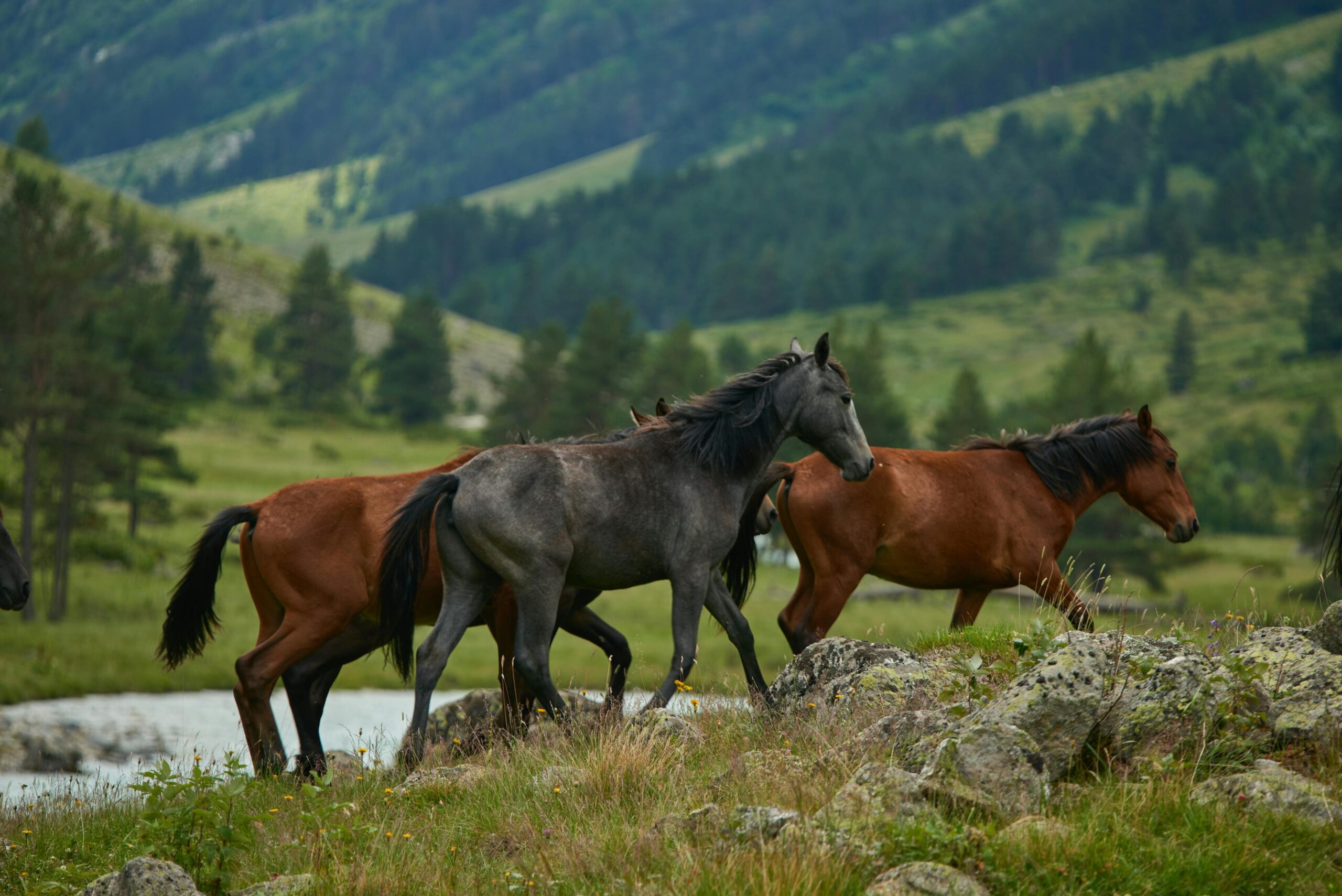
His name was Thomas Reeves. He was twenty-four years old. He was a cattleman out of Palo Pinto County, Texas, and on the third afternoon of December in 1873, on the high flat tableland the Spaniards had called the Llano Estacado, he became separated from his crew in a blizzard that came down off the Caprock with no warning at all.
The wind hit them at about three in the afternoon.
By three thirty, he could not see the horse in front of him.
By four, the herd had scattered.
By four thirty, his horse had stepped into a prairie dog burrow at a run and gone down hard, breaking its right foreleg, and Thomas had pulled himself out from under it with a torn shoulder and the bone-deep knowledge that he was going to die on this stretch of grass.
He shot the horse with his last clean shot.
Then he started walking.
He did not know which way.
The Llano Estacado in a winter blizzard is one of the loneliest places on earth. There are no trees. There are no landmarks. There is only flat grass running away from you in every direction until it disappears into the white wall of the storm. The Spaniards had named it the Llano Estacado — the Staked Plain — because the early Spanish traders had driven stakes into the ground to find their way back across it. The stakes did not last. Nothing lasted out there.
Thomas Reeves walked for what he thought was an hour and was probably twenty minutes.
His face went numb. Then his hands. Then his feet.
He fell down once and got up.
He fell down again and could not get up.
He lay on his side in the dry grass with the snow blowing horizontally over him and decided he was going to close his eyes for a minute and then keep walking. The minute did not end. He felt the cold leave him, which he knew was the worst sign, and he felt the small warmth come up from inside him, which he knew was the last warmth he would ever feel, and he thought about his mother in Tennessee whom he had not seen in six years and he thought about a girl named Sarah Ellsworth whom he had courted briefly in Weatherford the previous spring and who had married a doctor in Fort Worth in October.
He thought about Sarah.
Then he stopped thinking.
What he did not know, lying there with the snow already covering his coat, was that a young Comanche scout named Standing-In-Two-Rivers was at that moment riding the rim of the Caprock about two miles south of him, looking down across the Llano for sign of a small herd of antelope his band had been tracking for three days.
Standing-In-Two-Rivers was nineteen years old.
He was a scout for a band of Quahadi Comanche under a war chief named Hears-the-Sky, and he had been riding the rim of the Caprock since dawn, and he had been about to turn back when the wind had shifted and he had seen, in a brief gap in the snow, the dark shape of a downed horse on the flat ground below.
He had ridden down off the Caprock to look.
He had found the horse first, with the bullet wound in the head, which told him a story he understood immediately. Then he had ridden in widening circles around the horse and found Thomas Reeves about four hundred yards north of it, lying on his side, no longer moving.
Standing-In-Two-Rivers got down off his pony.
He turned the white man over.
The white man was not dead. Not quite.
The Comanche scout knelt in the snow and considered what to do.
It was the winter of 1873. The Quahadi were the last free band of Comanche on the southern plains. Two summers earlier, Colonel Ranald Mackenzie of the U.S. Army had led the Fourth Cavalry into the Llano Estacado for the first time, looking for the Quahadi, and had not found them. He had come back the next year, in 1872, and had found them at McClellan Creek, and he had killed twenty-three warriors and captured one hundred and twenty-four women and children. The Quahadi had scattered into the canyons of the Llano.
Standing-In-Two-Rivers had been at McClellan Creek.
He had lost two cousins there.
He had lost an uncle the year before that, in a separate fight with the Texas Rangers.
He had no reason in the world to save the life of a white Texas cattleman lying in the snow on his band’s hunting ground in the winter of 1873.
He knelt there for a long moment, in the wind, looking at Thomas Reeves’ face.
Then he picked the man up.
He put him across the back of his pony.
He rode three hours through the storm, back to the Quahadi winter camp in a small protected canyon below the Caprock that the Spaniards had not known existed and that the U.S. Army would not find for another year.
He brought the white man into the camp.
He laid him in the snow outside the lodge of his grandfather.
His grandfather was a man named Walks-Beside-Horses.
He was sixty-eight years old.
He was the oldest man in the band.
He had lost his two sons to the war that the white men had brought.
The first one had been killed by Texas Rangers in 1865, when Walks-Beside-Horses was still a man young enough to ride after them. He had ridden. He had killed two of them. It had not brought his son back.
The second one had been killed at McClellan Creek the year before by one of Mackenzie’s soldiers, and Walks-Beside-Horses had not been able to ride after that one, because he was too old by then, and because the soldiers had gone too far, and because there were no more soldiers a man could find one by one and kill the way you could in the old days.
Walks-Beside-Horses came out of his lodge into the snow.
He looked at the white man lying on the ground.
He looked at his grandson.
He did not speak for a long time.
Then he said, in Comanche: Bring him inside.
Thomas Reeves woke up two days later.
He woke up under a heavy buffalo robe in a hide lodge that smelled of woodsmoke and sage and the particular sweetness of cured leather. There was a small fire in the center of the lodge. There was an old man sitting on the other side of the fire, looking at him.
The old man was wrapped in a robe painted with red ochre and ground charcoal in a pattern Thomas did not understand but later learned was a record of a single battle the old man had fought as a young warrior against the Tonkawa in 1828.
The old man’s face was creased and brown.
His eyes were black.
He did not smile.
Thomas tried to sit up.
He could not. His shoulder was bound tight with strips of rawhide. His feet were wrapped in something that smelled like animal fat. His hands were inside the buffalo robe and he could feel them again, which surprised him.
He looked at the old man.
The old man looked back.
For a long minute neither of them said anything.
Then the old man spoke, in Spanish, which Thomas understood about half of, having spent two years on a ranch in the Nueces Strip working alongside vaqueros.
The old man said: You are not going to die.
Thomas swallowed.
He said, also in Spanish: Thank you.
The old man shook his head, very slightly.
He said: Do not thank me yet.
Thomas stayed in the Quahadi camp for eleven days.
The first three he was too weak to do anything but eat the bone broth a young woman brought him twice a day. The fourth and fifth he sat up and watched the life of the camp move around him through the open flap of the lodge — children running, women working hides, men sitting in small circles talking in a language he did not understand.
No one in the camp spoke to him except the old man, Walks-Beside-Horses.
The young scout who had brought him in — Standing-In-Two-Rivers, whose name he learned from the old man — did not come to see him.
By the sixth day, Thomas could stand.
By the eighth, he could walk to the edge of the camp and look up at the rim of the canyon and understand that he was somewhere no white man knew about.
By the tenth day, the old man told him that on the next morning, he would be given a horse, food, and a guide, and he would be taken to the edge of the Llano and pointed toward the settlements.
Thomas asked, in his broken Spanish, why.
Walks-Beside-Horses looked at him for a long moment across the small fire.
Then he said: Because my grandson brought you in. And because you were not yet dead.
Thomas said: I have nothing to give you. I have no money with me. I have no goods. When I get back to my ranch I will send you horses. I will send you cattle. I will send you whatever you want.
The old man held up his hand.
He said: No.
He said: You will send me nothing.
Thomas said: Please. You saved my life. Let me pay this back.
The old man was quiet for a long time. He looked at the fire. He looked at the lodge poles above him. He looked at his own old hands.
When he finally spoke, his voice was different.
He said: I lost two sons to the white men. I am too old to lose anything else. I did not save you because I forgave the white men. I saved you because my grandson asked me to. He did not ask in words. He asked by bringing you to my door. He is nineteen years old, and he is the last grandson I have, and someday he will be the man who decides what kind of people we are. I did this for him. Not for you.
Thomas did not answer.
The old man looked at him then, directly, for the first time.
He said: If you want to pay me back, do not send me horses. Do not send me cattle. Do not send me anything. I will not take it. My people will not take it.
He said: If you want to pay me back, you will go home, and you will live a life in which, when a man comes to your door who is the kind of man my sons would have grown up to be — when he is hungry, when he is cold, when he is wounded, when he is at your mercy — you will remember this lodge. You will remember the broth. You will remember the buffalo robe. And you will do for him what was done for you.
The old man paused.
Then he said: Do you understand?
Thomas Reeves understood.
He left the next morning.
Standing-In-Two-Rivers took him to the edge of the Caprock, gave him a small, tough pony, gave him three days of pemmican wrapped in a piece of hide, pointed east, and turned around without a word.
Thomas rode east for two and a half days. He came down off the Caprock near what is now Crosbyton. He was found by a small party of buffalo hunters who took him in to Fort Griffin. By the new year of 1874, he was back at his ranch in Palo Pinto County.
He did not tell anyone, for the rest of his life, exactly where he had been those eleven days.
He told the foreman who asked that he had been holed up in a line shack with a broken shoulder and a sick horse.
He told the men in the saloon in Weatherford who asked that he had gotten turned around in the blizzard and had survived by sheer luck.
He told the priest in Mineral Wells, in confession, only that he had been saved by strangers and had been given a debt he could not repay in this life.
He did not say who the strangers were.
He understood, by then, that there were people in Texas in 1874 who would have ridden out to the Llano Estacado with rifles and torches if they had known what Thomas Reeves knew. He understood that the old man, Walks-Beside-Horses, had given him not only his life but a secret to keep, and that the keeping of the secret was part of the debt.
The Quahadi were forced onto the reservation in the spring of 1875.
Mackenzie’s cavalry found them at Palo Duro Canyon in September of 1874, slaughtered their horse herd — fourteen hundred animals shot in a single afternoon — and burned their winter food. Without horses, without food, the band had no way to survive on the Llano. They came in to Fort Sill in May of 1875.
Walks-Beside-Horses was sixty-nine years old.
He died on the trail to the reservation.
Standing-In-Two-Rivers came in with the rest of the band. He was twenty-one years old. He spent the next forty years on the Comanche reservation in what was then Indian Territory, and what is now Oklahoma.
Thomas Reeves did not know any of this at the time.
What he did was go home, and he started building.
He built a ranch.
He built it large.
By 1880, he had three thousand head of cattle.
By 1885, he had eight thousand.
By 1890, he was one of the wealthiest cattlemen in Palo Pinto County, and he had married a schoolteacher from Fort Worth named Eleanor Hayes, and they had three children — two boys and a girl — and he had built a house with white columns and a wraparound porch on the highest hill of his land.
He did one thing that was different from the other cattlemen of his time.
He kept a small cabin, separate from the main house, at the back of his property near a creek.
It had a wood stove, a bed, a table, a small cookpot, and a shelf with dried beef, beans, coffee, and a tin of pemmican that he made himself once a year using a recipe he had watched a young woman make in a hide lodge in 1873.
He told his foreman that the cabin was for any traveler who needed it. He said: The door is never locked. There is food. There is a bed. There is water from the creek. No one asks any questions. No one pays anything.
In the first ten years, perhaps a dozen men used the cabin.
In the next twenty, perhaps fifty.
Thomas Reeves never met most of them. They came through in the night. They left in the morning. The foreman would notice the cabin had been used, would restock the supplies, and would not mention it.
In 1893, a man came through the cabin who was a Kickapoo from the reservation in Indian Territory, traveling south to visit family in Mexico. He stayed for one night. He left a small bundle of sage tied with a strip of red trade cloth on the table when he left.
In 1898, a young Black sharecropper from East Texas, who had run from a man who had threatened to kill him over a debt of twelve dollars, stayed in the cabin for three days. Thomas Reeves heard about him from the foreman and did not interfere. The man left at dawn on the fourth day. He left a single coin — an Indian Head penny dated 1882 — on the windowsill.
In 1902, a Mexican family of four — a man, a woman, two small children — stayed in the cabin for a week while the man recovered from a knife wound. They left without leaving anything behind, because they had nothing to leave. The woman had spent the days while her husband was healing sweeping the cabin and washing the bedding and stacking the woodpile. Thomas Reeves found out about them only after they were gone. He stood in the cleaned cabin for a long time.
Then he went home and told his wife: Eleanor, I have been keeping a count of strangers I have helped at the back of this land, and today the count is sixty-three.
She asked him why he was telling her now.
He said: Because I am sixty-four years old, and I would like someone in this family to know what to do with that cabin after I am gone.
She said: Why didn’t you tell me earlier?
He said: Because it wasn’t a story I knew how to tell.
Then he sat down at the kitchen table, and he told his wife about the blizzard in 1873.
He told her about the young Comanche scout who had found him.
He told her about the old man with the painted robe.
He told her about the broth and the buffalo robe and the eleven days in the lodge.
He told her what the old man had said about a debt that could not be paid back, only paid forward, to whoever came next.
Eleanor Reeves listened to her husband for nearly two hours without saying a word.
When he was done, she got up from the table, walked over to him, and put her hand on his shoulder.
She said: Thomas. The cabin will stay open as long as we are alive. And when we are gone, our children will keep it open.
He nodded.
He did not say anything.
He put his hand over hers and held it there for a long time.
Thomas Reeves died in 1913.
He was sixty-four years old.
His oldest son, Robert, took over the ranch and the cabin.
His youngest son, Frank, became a doctor and moved to El Paso.
His daughter, Margaret, became a schoolteacher, married a man named Carter, and moved to Amarillo.
All three of them, until the day they died, kept the cabin open.
In 1923, fifty years after the blizzard, Robert Reeves received a letter that had been forwarded through three different addresses, postmarked from Lawton, Oklahoma.
The letter was short.
It said:
My grandfather’s name was Standing-In-Two-Rivers. He died last spring at the age of sixty-eight. Before he died, he told me a story about a white man he found in the snow when he was a young scout. He said his grandfather had told the white man that he could not pay back the debt — but that he should pay it forward. My grandfather said he hoped the white man had lived a good life and had remembered the lodge. I am writing because my grandfather wanted you to know that he remembered too. He remembered every day. He said the old man, his grandfather, who was named Walks-Beside-Horses, said the same thing to him when he was a young man — that we do not pay debts, we pay them forward. He said this was the way we kept the world from ending. He said someone should write it down. So I am writing it down.
The letter was signed: Joseph Two-Rivers. Lawton, Oklahoma. November 1923.
Robert Reeves read the letter twice.
He sat with it on his porch for a long time.
Then he saddled his horse and rode to the back of his land, to the cabin by the creek, and he opened the door.
The cabin had been used three nights earlier by a man traveling north — a man Robert did not know, would not know, would never meet.
The woodpile was a little lower than it had been.
The bedding was rumpled.
There was a small note on the table, written in pencil on a torn piece of paper.
It said: Thank you for the bed. I will do the same for someone someday.
The note was not signed.
Robert Reeves stood in the cabin holding the letter from Joseph Two-Rivers in one hand and the note from the stranger in the other.
He stood there for a long time.
Then he took the letter, and he put it in the drawer of the small table at the back of the cabin, alongside the small bundle of sage tied with the red trade cloth that the Kickapoo man had left in 1893, and the Indian Head penny that the sharecropper had left in 1898, and a small handful of other things that had been left over the years by people who had no money but who had wanted to leave something behind.
He closed the drawer.
He walked outside.
He looked up at the sky over the Palo Pinto hills.
He said, quietly, to no one in particular: Grandfather, we remember.
Then he rode home.
The cabin stayed open for another forty years.
It was used by sharecroppers in the Depression. It was used by veterans coming home from two world wars. It was used by a family who had lost their farm in the Dust Bowl. It was used by a young Black man from Mississippi traveling north in 1955 who was running for his life and who stayed three nights and left only a small carved wooden bird on the windowsill.
The Reeves family kept the cabin open until 1967, when the land was sold and the new owners tore the cabin down to build a stock pond.
The drawer was emptied before the cabin was demolished.
The bundle of sage. The Indian Head penny. The carved wooden bird. The letter from Joseph Two-Rivers. The dozens of small notes left over the years by people who had passed through the cabin and had nothing to leave but their thanks.
All of it is in a small wooden box, which sits on a shelf in the home of Margaret Reeves Carter’s great-granddaughter, who lives in Amarillo, and who keeps her own door open for travelers, because that is the rule in her family, and has been the rule for one hundred and fifty-two years.
There is a part of this story that almost no one tells.
It is not the part about the blizzard, or the lodge, or the eleven days in the canyon.
It is not the part about the cabin on the Palo Pinto ranch, or the sixty-three strangers, or the letter from Lawton.
It is the part about an old man with a painted robe, sitting in a hide lodge on the Llano Estacado in the winter of 1873, who had lost both of his sons to the war the white men had brought to his country, and who looked across a small fire at a half-dead white cattleman and made a choice that he did not owe anyone.
He chose grace.
He chose it without forgiveness, because forgiveness was not his to give and he knew it. He chose it without expecting to be repaid in this life. He chose it because his grandson had brought a man to his door, and because the grandson was the last grandson he had, and because someday that grandson would be the man who decided what kind of people they were.
That is the choice the story turns on.
Everything that came after it — the ranch, the cabin, the sixty-three strangers, the letter from Lawton, the wooden box on the shelf in Amarillo — all of it began with one old man, in a hide lodge, on a winter night in 1873, who decided that what had been done to him would not be the last word on what he himself would do.
That is the moral of every real story.
That what was done to you is not the last word.
That you can decide, in any winter, in any lodge, in any moment when a stranger is at your mercy, what kind of person you are going to be.
That is the rule of the cabin.
That is the rule of the lodge.
That is the rule, even now, of the small wooden box on the shelf in Amarillo, which is opened once a year, by a woman who is herself a great-grandmother, who takes out each small object — the sage, the penny, the carved bird, the letter — and lays them out on her kitchen table, and remembers.
She is teaching her granddaughter to do the same.
The granddaughter is seventeen.
She is the seventh generation.
She will not be the last.

Adrian Hawthorne is a celebrated author and dedicated archivist who finds inspiration in the hidden stories of the past. Educated at Oxford, he now works at the National Archives, where preserving history fuels his evocative writing. Balancing archival precision with creative storytelling, Adrian founded the Hawthorne Institute of Literary Arts to mentor emerging writers and honor the timeless art of narrative.