Lauren had not planned to make Christmas about money.
That was the first thing she would tell herself later, when everyone tried to rewrite the evening into a story about her temper. She had planned to deliver pies, roasted vegetables, and one sealed envelope. She had planned to sit down for one meal without checking invoices, oven timers, or bank balances. She had planned, foolishly, to be a daughter for a few hours instead of the quiet financial emergency contact everyone used and no one thanked.
By late afternoon, suburban Ohio had gone hard and silver with December cold. The roads were dry, but snow crusted along the gutters, and every house on Diane’s street glowed with wreath lights and kitchen warmth. Lauren drove with the heat blasting against her ankles and the smell of apple pie filling the passenger seat. Her hands were raw from washing bakery pans. There was flour in the seam of her coat cuff that she’d given up trying to brush out.
Her bakery had opened at five that morning, because Christmas customers did not care whether the owner had a family dinner to attend. They wanted pumpkin pies, cinnamon rolls, sugar cookies shaped like mittens, and the two dozen dinner rolls Mrs. Alvarez had ordered three weeks in advance. Lauren had made every order herself. By eleven, her shoulders ached. By noon, her hair smelled like butter and yeast. By one-thirty, she was boxing the last paid order and doing math in her head about whether she could close early without losing someone’s repeat business.
Then Diane called.
“Don’t forget the envelope,” her mother said.
Not Merry Christmas. Not drive safe. The envelope.
Lauren looked toward the office drawer where the December mortgage payment sat folded behind a bakery supply receipt.
“I have it,” she said.
Diane exhaled like the world had just corrected itself. “Good. And bring those pies you mentioned. Melissa said Tyler likes cherry.”
Lauren had almost laughed then. Almost.
After her father died, Diane’s house had become the thing everyone talked around. It was the house with the maple tree Dad had planted too close to the driveway, the one whose roots were slowly buckling the concrete and nobody had the heart to cut down. It was the house where Lauren and Melissa had learned to ride bikes, wobbling down the same cracked sidewalk one summer apart. It was the house where Diane still kept Dad’s old coat in the hall closet, because she said moving it felt cruel.
It was also the house with a mortgage Diane could no longer manage alone.
At first, Lauren helped because grief makes promises before wisdom can stop them. Standing in a funeral home parking lot, watching her mother fold in on herself, Lauren had said the words every responsible child says. Don’t worry about the house, Mom. We’ll figure it out. We turned out to be Lauren.
She paid one month. Then another. Then the electric bill, because winter was coming. Then groceries, because Diane’s card declined at the store and she’d called Lauren crying in the parking lot. Then the car repair Melissa swore she would pay back after tax season, a season that apparently never arrived. Then Tyler’s summer camp, because Diane said the boy had been through enough since his grandfather died, and how do you argue with that.
Lauren did not have children. She did not take vacations. She owned a small bakery that smelled like sugar and survival, and she kept telling herself that family was allowed to need you.
The trouble came when need turned into habit. Habit turned into expectation. Expectation dressed itself up as love and started giving orders.
That was the part nobody wanted named.
When Lauren reached Diane’s house, the windows were glowing gold. The smell of turkey, cinnamon, and buttered rolls drifted into the freezing air before she even made it up the walkway. For half a second, standing there with the pies balanced against her hip, she let herself remember being twelve years old and running through that same front door in snow boots. Dad would have been in the kitchen, carving the turkey badly and pretending he wasn’t. Diane would have been swatting at him with a dish towel, pretending to be annoyed while smiling anyway. Melissa would have been stealing olives off the relish tray, one at a time, like nobody could see her.
Memory is dangerous that way. It keeps handing you older versions of people and asking you to forgive the ones standing in front of you.
Lauren shifted the tray of roasted vegetables against her arm and rang the bell.
Diane opened the door in pearls and a bright red sweater. “Finally,” she said, and then corrected her face into a smile, the seam barely visible. She kissed Lauren’s cheek quickly. Her perfume was floral and sharp. “Come in, come in. Put those in the kitchen.”
Lauren stepped inside. The house was loud with silverware, football commentary from the living room, and Melissa’s laugh floating above all of it. Melissa had always laughed like she owned the room. Even when they were children, she knew how to make adults look at her first. Lauren had been the useful one. Melissa had been the bright one. No one ever said it that plainly, but families don’t need to print labels when they practice the roles every single day.
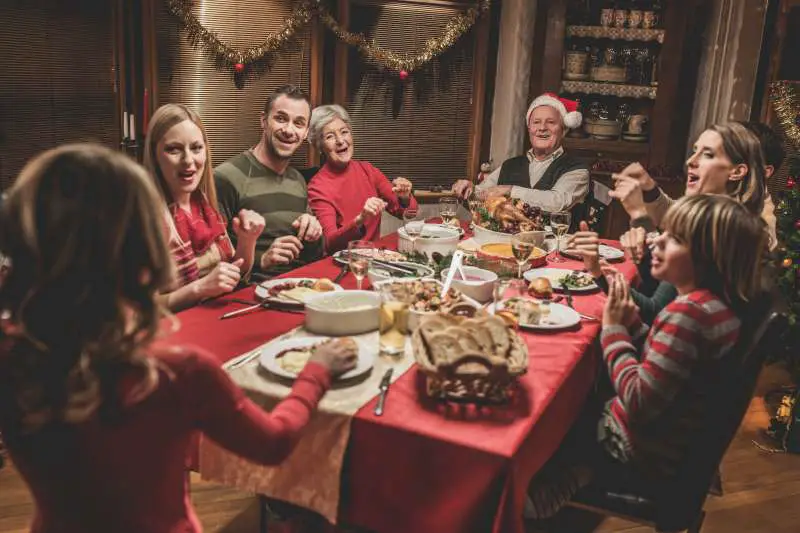
Brad sat at the dining table with his sleeves rolled up, looking comfortable in a house he had never paid a single bill for. Tyler, ten years old, leaned over his plate, pushing cranberry sauce around with his fork. Cousin Rachel sat near the candles, quiet as always, watching everyone without committing to anyone.
There was one empty chair left. It was at the far end of the table, near the hallway, the seat you give someone you expect to keep getting up.
Lauren carried the food to the kitchen island. Diane’s eyes flicked to her purse. Lauren noticed. Of course she noticed. The envelope was inside. The December mortgage statement had arrived the week before, and Diane had called three times in one day to make sure Lauren knew the exact amount, down to the cents.
What Diane didn’t know was that Lauren kept records now. The payment confirmations printed from the bank portal. The utility emails. The car repair invoice. The summer camp receipt, paid from the bakery account on June 3. All of it lived in a folder under her register, labeled taxes, because shame often needs a boring disguise.
“Lauren,” Diane said, already turning back toward the stove, “can you help serve? You’re so good at that.”
The sentence was small. That was why it worked. Small sentences carry years inside them when the right person says them. You’re so good at that. Not sit down, you must be exhausted. Not we saved you a seat. You’re so good at serving.
Lauren slipped one arm out of her coat. “Sure,” she said. “After I sit down for a minute.”
Melissa looked up then. Her eyes moved over Lauren’s coat, her tired face, the purse on her shoulder, and something passed across her expression that was not quite a smile and not quite irritation.
It was ownership.
Lauren recognized it because she’d seen it every time Melissa asked for help without calling it help. A loan. A favor. A quick transfer, just until things got better. Things always got better for Melissa right after Lauren paid.
Lauren reached for the empty chair.
That was when Tyler dragged his plate across the table.
The ceramic scrape cut through the room. It wasn’t loud, exactly. It was worse than loud, because it was deliberate. The plate slid over the tablecloth toward Lauren, stopping near the edge, turkey and potatoes and cranberry sauce arranged like an insult.
Tyler’s face was smug in a way children rarely invent by themselves. He looked at his mother first. Then he looked at Lauren.
“Mom says you should serve, not eat.”
The room froze.
Brad’s fork stopped halfway to his mouth. Rachel stared down at her napkin. Diane’s serving spoon hovered over the gravy bowl while a single ribbon of gravy slipped back into the dish. The chandelier hummed faintly overhead. The cranberry sauce glistened, untouched.
For one breath, everyone in that room understood exactly what had just happened. Nobody moved.
Then Melissa laughed.
Brad laughed with her, too loud and too fast, like a man making sure he was on the winning side. Diane covered her mouth, but Lauren saw the way her shoulders shook. Rachel pressed her lips together and looked away.
That was the part Lauren would remember most clearly, later. Not the child’s line. Not Melissa’s laugh. Rachel looking away. Because there are betrayals that shout, and there are betrayals that lower their eyes and let the shouting happen.
Lauren looked at Tyler. He was ten. He still had a child’s roundness in his cheeks and cranberry sauce on the side of one finger. The sentence had not come from him. It had been rehearsed somewhere. In the car, maybe. In the kitchen. Over the kind of adult conversation people think children don’t understand, right up until the child repeats it perfectly, with the timing intact.
“Who told you to say that?” Lauren asked.
Her voice came out quiet. That frightened her more than shouting would have.
Tyler’s eyes flicked to Melissa.
Melissa lifted her wineglass. “Oh, relax. It’s Christmas. Don’t be dramatic.”
Brad snorted.
Diane lowered the serving spoon. “Lauren,” she warned.
Not Melissa. Not Tyler. Lauren.
The room got warm and close. Lauren could feel the heat rolling out of the kitchen, the scratch of her coat lining against her wrist, the purse strap biting into her shoulder. Her fingers tightened around the strap until her knuckles went pale.
For one ugly second, she imagined picking up Tyler’s plate and throwing it against the wall. She imagined cranberry sauce sliding down Diane’s perfect cream paint. She imagined everyone finally going silent for the right reason.
She did not do it. That restraint cost her something. It always had.
People love the word family when they mean access. They love the word sacrifice when they are not the ones bleeding.
Lauren looked at her mother. “Do you think that’s funny?”
Diane’s smile vanished. “Don’t start a scene.”
The words landed with more force than Tyler’s line had. Because Tyler was a child repeating poison. Diane was an adult protecting the person who had handed it to him.
Lauren thought of her father then. Not as a saint, because he hadn’t been one. He’d been stubborn, late with apologies, terrible at remembering birthdays. But he would never, not once, have let a child humiliate someone at his table and then called the humiliated person dramatic. He would have said Tyler’s name one time, in that low voice, and that would have been the end of it.
Lauren’s eyes moved around the table. Melissa with her wine. Brad with his grin. Rachel with her napkin. Diane in her pearls beside the stove. All of them sitting warm and fed in the house Lauren had been keeping warm for three years.
The envelope pressed against the inside of her purse like a pulse.
Lauren reached in and took it out.
Diane’s eyes followed the movement immediately, and for the first time that evening, her performance cracked.
The envelope was plain white. No bow. No card. Just the December mortgage payment Diane had asked about three times, folded with the kind of care Lauren usually reserved for wedding cake invoices and vendor contracts.
Lauren placed it on the table beside the cranberry dish. It made almost no sound.
Diane heard it anyway.
“You’re right,” Lauren said. “I won’t.”
She turned for her coat.
Diane’s voice sharpened. “Lauren, sit down.”
Lauren slipped her other arm into the coat.
Melissa muttered, “There she goes again.” It was meant for the table, not for Lauren. Somehow that made it worse.
Lauren turned once at the door, her hand closing around the cold brass knob.
“Enjoy dinner,” she said.
Then she left.
The cold outside hit her face like water. Behind her, the house stayed bright and golden. Someone laughed again before the door swung fully shut, and that small sound followed her all the way down the walkway, past the maple tree, to her car.
She sat with both hands on the steering wheel and did not start the engine. Her breath fogged the windshield. The pies were gone. The vegetables were gone. The envelope was no longer in her purse, and for one weak moment, she thought about going back inside. Not to apologize.
To take it back.
Then her phone buzzed. Diane. Lauren didn’t answer. It buzzed again before she reached the end of the street. Then Melissa. Then Diane again.
She drove to the bakery instead of her apartment, because the apartment would be too quiet and the bakery, at least, was a place where effort became something honest. The ovens were off when she arrived, but the air still held the ghost of cinnamon and yeast. She turned on the fluorescent lights, locked the front door behind her, and stood in her own kitchen with her coat still on, listening to nothing.
At 9:17 p.m., Diane texted.
Stay away.
Two words. After three years of mortgage payments, after the groceries and the electric bills and the summer camp. After raising a daughter and then renting her out as the family’s safety net. Stay away.
Lauren stared at the message. The ovens clicked softly as they cooled. A tray rack gleamed under the lights. Her hands smelled like butter, cold metal, and winter.
She could have replied a dozen ways. She could have explained that Tyler was a child and Melissa was the one responsible. She could have said Diane had hurt her tonight, badly. She could have asked whether anyone at that table understood what she’d been carrying alone.
Instead, Lauren typed the truth stripped down to the bone.
Sure. The payments stay away too.
She pressed send.
Three dots appeared almost immediately. Then disappeared. Then appeared again.
No message came.
Lauren walked into the office behind the bakery and opened the bottom drawer. The folder labeled taxes sat beneath a stack of supplier catalogs. She pulled it out and laid it on the desk, opening it under the lamp.
Inside were all the things love was never supposed to need. Mortgage confirmation pages, dated and stamped. Utility receipts. Melissa’s car repair invoice. The summer camp receipt, paid June 3 from the bakery account. Screenshots of Diane’s texts asking for help in careful, pleading fragments, always sent when no one else would see them.
The December statement wasn’t in the folder. It was sitting unopened on Diane’s dining table, next to the cranberry sauce.
Lauren looked at the folder for a long time. She did not feel proud. She did not feel cruel. She felt awake, the way you feel when a noise you’ve lived with for years suddenly stops and you realize how loud it had been.
By 10:04, Melissa called. Lauren let it ring. By 10:19, Brad called from Melissa’s phone. By 10:36, Diane again. By midnight, the calls had become a storm, names flashing across the screen in rotation. Diane. Melissa. Diane. Melissa. Brad. Diane.
The same people who had laughed when a ten-year-old called her the help now needed her to answer like family.
When Melissa’s name appeared for the sixth time, Lauren finally picked up. She put the phone on speaker and set it on the stainless-steel prep table, in the middle of her own kingdom.
“What?” she said.
Diane’s voice came through first, tight and breathless. “Lauren, you need to fix this before the bank calls me.”
The bakery went silent around that sentence.
Lauren looked at the phone. Not before you forgive your sister. Not before Tyler cries himself to sleep thinking you hate him. Not before Christmas is ruined.
Before the bank calls me.
Even now, even after everything, the first concern was the money.
Melissa’s voice came next. “You’re seriously going to punish Mom because Tyler made a joke?”
“It wasn’t a joke,” Lauren said.
“Oh my God, you’re impossible.”
Then Brad’s voice entered, and it sounded different from the others. Uncertain. “Wait. What payments?”
That was when the real fracture opened.
Lauren could almost see it through the phone. Melissa turning toward her husband, wineglass still in hand, her face changing as the part of the story she had carefully edited out came alive in the room.
“Brad, stay out of it,” Diane said.
But Brad did not stay out of it. “What payments?” he repeated.
Lauren picked up the folder and spread the documents across the prep table under the bright bakery lights. Each page looked so plain. That was exactly what made them powerful. A mortgage confirmation. An electric bill. A car repair invoice. A summer camp receipt. Proof does not need to be loud. It only needs to be kept.
“For three years,” Lauren said, slowly and clearly, “I have paid Mom’s mortgage and utilities. I paid for Melissa’s car repair last spring. I paid for Tyler’s summer camp in June. I brought the December mortgage payment to dinner tonight because Mom asked me to. Three times.”
The phone went very quiet.
Then Brad said one word. “Melissa?”
Melissa did not answer. Diane did. “Lauren, this is not the time.”
Lauren almost laughed out loud. For three years, there had never been a time. There had only been emergencies, whispered requests, calls made when no one else was in the room. The help had been real, but it had also been a secret, because a secret can’t be thanked, and what can’t be thanked doesn’t have to be respected.
“You let him say it,” Lauren said.
Diane’s voice hardened. “He is a child.”
“He looked at Melissa before he said it.”
Another silence, and this one had shape. On the other end, something clinked against a plate. Maybe Melissa’s glass. Maybe Diane’s spoon. Maybe just the sound of a family realizing the person they had been treating like a servant was the person keeping the roof over their heads.
Brad spoke again, quietly. “You told me your mom was managing fine.”
“Not now,” Melissa snapped.
“When?” Brad asked.
The question hung in the air, and Lauren did not rescue Melissa from it. She had rescued enough.
Diane tried again, softer this time. “Lauren, honey, you know I didn’t mean for anyone to hurt you.”
The word honey came too late. It sounded borrowed, like something taken down off a high shelf and dusted for the occasion.
Lauren looked at the documents spread in front of her and thought of the little girl she had been in that house, helping set the table because Dad said every guest deserved to sit down warm. She thought of the woman she had become, standing in a bakery after midnight, finally understanding something she wished she didn’t.
Tyler hadn’t invented that line. He had been taught it. And not only by Melissa in the car. He’d been taught it by an entire table, over years, every time the adults laughed at the wrong moment, every time Lauren was handed the serving dish and the empty chair by the hallway. A child learns where to aim by watching who the adults refuse to defend.
And they had expected her to keep paying for the room where it happened.
“I’m not sending the payment,” Lauren said.
Diane inhaled sharply. “Lauren.”
“I’m also not paying the utilities next month.”
Melissa exploded. “You selfish—”
“Stop talking,” Brad said.
The command surprised everyone, including, Lauren suspected, Brad himself. She heard it in the silence that followed.
Diane began to cry then. But Lauren had heard her mother cry many times over the years, and she had learned the difference between grief and strategy. This was the second kind. It had an audience and an objective.
“Your father would be ashamed,” Diane whispered.
For one second, the sentence found its mark, the way only a mother’s aim can. Lauren closed her eyes. She saw Dad at the old dining table, sleeves rolled up, carving the turkey badly. She saw him looking down the table at Tyler, at Melissa, at Diane laughing behind her hand.
No, she thought. No, he would not be ashamed of me.
He would be ashamed of the table.
Lauren opened her eyes. “My father taught me not to humiliate people in my house,” she said.
Diane stopped crying.
“And if you want to keep that house,” Lauren continued before anyone could speak, “you need to figure out how to do it without making me pay for the privilege of being insulted inside it.”
Brad said Melissa’s name again, and this time it sounded different. Not angry yet. Worse than angry. Awake.
Somewhere in the background, Lauren heard Tyler’s small voice. “Mom? What’s happening?”
Nobody answered him. That hurt too, in its own way, because Tyler was still a child. He had been handed an adult’s cruelty, told it was funny, and praised for the delivery. Someday, if someone loved him enough to tell him the truth, maybe he’d understand what had really happened at that table. But that wasn’t Lauren’s work anymore.
“So that’s it?” Diane said. “You’re abandoning your family on Christmas?”
Lauren looked around her bakery. The stainless-steel counters she had saved two years to buy. The cooling ovens. The flour bin. The quiet, solid proof that her life existed outside of their need.
“No,” she said. “I’m leaving the table where I was never allowed to sit.”
No one spoke.
Lauren picked up the phone. Her hand was perfectly steady.
“Do not call me tonight,” she said, and ended the call.
The silence afterward was enormous. It did not feel peaceful at first. It felt like standing in a house after the power goes out, waiting for your eyes to adjust. She gathered the documents back into the folder, locked the office, went home at 12:41 a.m., and slept badly.
But she slept.
The next morning brought messages. Diane sent seven. Melissa sent five, then deleted two before Lauren could open them, which told its own story. Brad sent one.
I didn’t know.
Lauren believed him about halfway. Not knowing is much easier when knowing would cost you comfort. Still, it was the first message from that side of the family in three years that didn’t ask her for something. She didn’t reply yet. She brewed coffee, showered, and went to the bakery, because there were day-after-Christmas orders to fill. People still wanted bread. People still wanted coffee cake. Life, rude and ordinary, kept requiring her hands, and for once she was grateful for it.
By noon, Diane called the bakery landline. Lauren let it go to voicemail.
By three, Rachel appeared at the front door.
She looked smaller in daylight, her hair pulled back, her gloves held in both hands like a hat at a funeral.
“I’m sorry,” Rachel said, before Lauren could even speak.
Lauren wiped her hands on her apron. “For what?”
Rachel’s eyes filled. “For looking down.”
That apology mattered more than Lauren expected it to. It didn’t fix the dinner. It didn’t erase the laughter. But it named the exact thing everyone else was still pretending was invisible, and naming it was more than anyone else had managed.
Rachel told her what had happened after the call ended. Brad had asked Melissa how much Lauren had paid over the years. Melissa said she didn’t know. Diane said it was private. Tyler had started crying because he thought he’d made everyone angry, and Melissa had blamed Lauren for that, too. Of course she had. Blame travels downhill in families unless somebody finally stands on the stairs and blocks it.
Lauren listened without interrupting. Then she boxed up two rolls and pushed them across the counter.
“I don’t deserve these,” Rachel said.
Lauren gave her a tired smile. “They’re day-old.”
It was the closest either of them came to laughing.
In the weeks that followed, Diane learned what unpaid bills sounded like when Lauren’s phone stayed silent. They sounded like hold music. They sounded like late notices in the mailbox. They sounded like conversations with lenders who did not care about Christmas, embarrassment, or daughters who had finally reached their limit.
Lauren did not gloat. She did not post anything. She did not mail Melissa copies of the receipts, though she drafted that envelope in her head more than once. She simply stopped paying, and let reality introduce itself to the people who had been living behind her like a windbreak.
The bakery became quieter without the constant emergency texts. Her apartment did too. At first the quiet felt like punishment, like being sent to her room. Then, slowly, it began to feel like oxygen.
In February, Diane asked to meet. Not at the house. Lauren suggested a diner halfway between the bakery and Diane’s neighborhood. Neutral ground. Bright lights. Separate checks.
Diane arrived wearing no pearls. That was the first thing Lauren noticed. She looked older, and more tired, though maybe she had always looked that tired and Lauren had simply been too busy rescuing her to see her clearly.
Diane apologized. Not perfectly, and not all at once. She started with excuses, detoured through tears, and finally, somewhere near the bottom of her second cup of coffee, arrived at the sentence Lauren had actually needed to hear.
“I should have stopped him.”
Lauren stirred her coffee. “Yes.”
Diane nodded slowly. “I should have stopped Melissa before he ever said it.”
That was better. That was the real shape of it.
Lauren did not forgive her right there in the diner booth. Forgiveness, she had learned, was not a curtain you dropped over the stage so everyone could file out comfortable. It was a door. Sometimes it opened slowly. Sometimes it stayed locked until people stopped rattling the handle and started knocking properly.
Melissa took longer. Melissa always took longer when the truth did not flatter her. Her first apology arrived secondhand through Brad and did not count. Her second came by text and contained the words if you felt hurt, which is not an apology but an accusation in a costume, and Lauren ignored it.
The third came in person, outside the bakery after closing, on a gray evening in March. Melissa stood on the sidewalk looking miserable, and beside her stood Tyler in a puffy coat, staring at his shoes.
“Tyler,” Melissa said, her voice trembling. “Tell Aunt Lauren what you told me.”
Tyler swallowed hard. “I’m sorry I said you should serve and not eat.”
Lauren waited. She could see there was more.
His eyes filled with tears. “Mom said it in the car. I thought it would be funny.”
Melissa flinched like the words had hit her, which, finally, they had.
Lauren looked at her sister for a long moment. There it was, out loud, on a public sidewalk. Not a misunderstanding. Not a child’s joke. A line, written by an adult, taught in the car, delivered at a table full of people who laughed.
She felt the old anger rise, and she let it pass through her without picking it up. Then she crouched slightly, so Tyler wouldn’t have to look up at her.
“Thank you for telling me the truth,” she said.
He nodded miserably.
“I don’t hate you,” Lauren added.
His head came up. “You don’t?”
“No. But grown-ups should not teach kids to be cruel.”
Melissa started crying then, right there on the sidewalk. For once in her life, Lauren did not move to comfort her. That was Melissa’s own work now, and it was overdue.
Months later, Diane sold the house.
Not because Lauren forced her to. Because the house had become too expensive and too heavy, and because keeping it had required too many lies from too many people for too long. The maple tree, the buckled driveway, Dad’s coat in the hall closet, all of it traded for a smaller place near the library, with a manageable payment and a radiator that clanked.
Diane hated it for three weeks. Then she started walking to book club. Then she admitted, grudgingly, that the heating bill was lower. Then, one Sunday in the fall, she invited Lauren over for coffee and did not ask her to bring anything.
Lauren went. She sat at Diane’s small kitchen table with both hands wrapped around a mug. There was no empty chair shoved off by the hallway. There was no envelope in her purse. There was only coffee, a plate of store-bought cookies that Diane apologized for twice, and a mother trying, carefully and clumsily, to learn the difference between needing her daughter and using her.
Melissa and Lauren did not become close again overnight, and maybe they never would be, not the way the word usually means. Some relationships don’t heal back into what they were. They heal into something smaller, more honest, and far less convenient, and that is its own kind of progress. Brad eventually learned the full amount Lauren had paid over the years, every line of it, and he was quiet for a long time afterward. Whatever conversations happened in that house after Christmas, they were no longer Lauren’s to manage, and that, too, felt like recovery.
And Tyler, to his credit, never made another joke like that one.
At the next family meal Lauren attended, almost a full year later, at Diane’s small new place with its clanking radiator, Tyler carried his own plate to the sink without being asked. Then he came back to the table and stood beside Lauren’s chair, fidgeting.
“Can I take that?” he asked.
Lauren studied him for a second. He looked nervous. Not smug. Nervous, and hopeful, the way kids look when they’re trying to fix something they only half understand.
She handed him the plate.
“Thank you,” she said.
His shoulders loosened, and he carried it to the sink like it mattered.
It was not a grand ending. Real endings rarely are. No one clapped. No one delivered a perfect speech. No court declared Lauren right and awarded her three years of payments and one ruined Christmas in damages.
But a child learned a different line to say at the table. A mother learned that help is not ownership, and that the person who keeps the lights on gets to sit in the light. A sister learned that jokes can carry invoices, and that some of them come due all at once.
And Lauren learned the thing she would carry for the rest of her life, the thing she would think about every December when the bakery filled with the smell of cinnamon and the orders stacked up by the register.
Leaving a table is not always abandonment.
Sometimes it is the first honest meal you give yourself.

Specialty: Quiet Comebacks & Personal Justice
David Reynolds focuses on stories where underestimated individuals regain control of their lives. His writing centers on measured decisions rather than dramatic outbursts — emphasizing preparation, patience, and the long game. His characters don’t shout; they act.