The call came at the hour when even trouble seems to hold its breath.
At almost three in the morning, the police station was nearly silent except for the wall clock, the hum of fluorescent lights, and the tired clicking of keys at the duty desk. The duty officer had been staring at the old computer monitor long enough that the glow had begun to blur soft around the edges. He had a cold cup of coffee at his elbow that he kept forgetting to either drink or throw away, and a report half-finished on the screen that nobody would read closely.
The incident log for the night was almost empty. No emergency calls. No crashes. No alarms. Just the kind of quiet small towns talk about like a blessing, the kind that gets mentioned at diner counters and town meetings. Twenty years on the job had taught him something about that quiet, though. Silence isn’t always peace. Sometimes silence is just the sound a thing makes while it’s hiding.
The phone rang at 2:58.
He reached for the receiver without thinking, the motion worn into him by two decades of night shifts.
“Police station, officer speaking.”
For a moment, nobody answered. There was just open line, and the faint sound of breathing.
Then a small voice came through.
“Hello…”
The officer sat up straight, the chair creaking under him.
It was the voice of a little girl. Not a teenager trying to sound calm. Not an adult pretending to be a child, which happened more than people would believe. A real child, no more than seven years old by the sound of her, breathing too fast and speaking too softly, the way kids do when they’re trying to be quiet and brave at the same time and can’t manage both.
“Hello, sweetheart,” he said, his whole tone changing, dropping into something gentler. “Why are you calling so late? Where are your parents?”
“They… they’re in the room,” she whispered.
The officer pulled a blank call sheet toward him and clicked his pen. The top line showed the time. 2:58 a.m.
“Alright,” he said, keeping his voice level. “Can you hand the phone to your mom or dad?”
There was a pause, long enough for him to hear the faint sounds of a house at night behind her. A floor settling. A soft sniff. The little girl’s breath catching and then steadying again, like she was working hard at something.
“No… I can’t.”
The officer’s hand tightened around the pen.
He had taken calls from frightened children before. Most of them were confusion, a kid who woke up disoriented and dialed numbers. Some were pranks, older kids giggling in the background. A few were nightmares that felt completely real for five minutes and then dissolved the moment a sleepy parent picked up the extension and apologized.
This did not sound like any of those. There was something in her voice he recognized without wanting to. Children lie badly and panic loudly. This girl was doing neither. She was reporting.
“Then tell me what happened,” he said. “You only call the police when something important is going on.”
“It is important…” Her voice broke into a sob she tried to swallow. “Mom and Dad are in the room… and they aren’t moving.”
The words moved through the station like cold air through an open door.
The officer stood up. Across the room, his partner looked up from a report folder, reading his face before any words were exchanged. The officer lifted two fingers, then pointed toward the board where the patrol keys hung. His partner was already moving.
“Maybe they’re just sleeping?” the officer asked into the phone. He said it because a child deserved every gentle possibility offered to her before fear became instruction. “It’s very late. Grown-ups sleep heavy sometimes.”
“No,” the girl said.
It was the first word she had said with complete certainty, and it landed harder than her crying had.
“I tried to wake them. Usually, Mom always wakes up when I come in… but not this time.”
That sentence would stay with him for a long time afterward. Usually, Mom always wakes up.
Because that’s how children build their world. Out of patterns. A mother’s hand reaching out in the dark before the child even says anything. A father’s voice rumbling from another room. The instant, automatic stirring of a parent when a small body appears beside the bed at night, some ancient alarm that never fully sleeps. Children trust those patterns the way they trust gravity.
When that pattern breaks, the child knows something is deeply wrong before any adult is willing to admit it.
“Are there any other adults in the house?” the officer asked, already writing. “Grandparents? Anyone staying over?”
“No… just Mom and Dad.”
“Alright. Then listen to me very carefully. You’re doing a great job. Tell me your address.”
She gave it slowly, the way someone recites something they memorized for a test. House number first. Then the street name. She even told him the house was white with a dark door, in case that helped.
The officer wrote down every word and read it back to her, and she said yes, that was right. A small two-story house on the edge of town. A narrow porch. A road where, at this hour, every neighbor would be asleep behind locked doors and drawn curtains, hearing nothing.
He opened the county dispatch line and typed the address with one hand while holding the phone with the other. He marked the call CHILD ALONE.
By 3:01 a.m., the address was entered and confirmed. By 3:02, his partner had the patrol car running outside, exhaust ghosting up into the cold. By 3:03, the officer was still on the line, doing the only thing he could do from a desk, which was keep the child anchored to the sound of his voice.
“We’re coming to you right now,” he said. “Stay in your room and wait for us. Don’t go anywhere, do you understand?”
“Yes…” came the small reply.
And then, just before the line clicked, she whispered something that was not meant for him at all. It was meant for the room down the hall.
“Please wake up.”
The line went dead.
The officer did not move for three full seconds. The station clock ticked. The fluorescent light buzzed.
Then he ran.
The patrol car pulled away from the station with its lights cutting silent red and blue across the empty street. They didn’t run the siren. There was no traffic to clear, and some instinct told him not to announce themselves to the night.
The town outside the windows looked sealed shut. Dark storefronts. Mailboxes silvered with cold. Lawns washed pale under the streetlights, every house buttoned up tight. It was the kind of night that would be described the next day as peaceful by everyone who slept through it.
Inside the car, the radio gave its short clipped updates, but the officer barely heard them. He was hearing a seven-year-old’s voice on a loop.
Mom and Dad are in the room. They aren’t moving.
His partner drove with both hands on the wheel and said only one thing the whole way. “Kids don’t make that up.”
“No,” the officer said. “They don’t.”
Ten minutes after the call, the patrol car turned onto the road at the edge of town and slowed in front of the address.
The house was small, two stories, white with a dark door, exactly as she’d said. The windows were black. The porch sat too still under the wash of the emergency lights. No porch light burned. No television flickered blue behind the curtains. No dog barked anywhere on the street.
The officers stepped out. The cold hit them first. Then the silence, which was worse.
The officer went up the porch steps and knocked hard, once.
Before he could knock again, the door opened a few inches.
The little girl stood there.
She was barefoot in pajamas printed with small faded stars, her hair tangled flat on one side from sleep. Her face was wet and blotchy. One hand gripped the doorframe so tightly that the skin over her knuckles had gone pale, like she’d been holding onto the house itself, keeping it from drifting away.
“They’re in there…” she said, and pointed down the hall.
The officer crouched down to her level, putting his face where her eyes were.
“Are you hurt?”
She shook her head.
“Did anyone else come into the house tonight?”
Another shake.
“Did you touch anything besides the phone?”
“I tried to shake Mommy,” she said.
The answer was so honest and so terrible that neither officer said anything to correct it. There was nothing to correct. She had done exactly what any child would do, and then she had done the thing most adults couldn’t have done at her age. She had stopped, remembered a phone number, and dialed it.
The officer gently moved her behind him, one hand resting briefly on her small shoulder. His partner stepped through the door first and radioed their arrival.
The first thing they noticed was the smell. Not smoke. Not gas in the sharp, obvious way people imagine gas. Something subtler and wrong. The air inside the house felt stale and heavy, used up, like a room that had been breathing in but never out.
The officer swept his flashlight down the hallway.
The beam found a tipped water glass lying on the carpet near the bedroom threshold, a dark stain spreading from its mouth. A phone lay faceup on the floor a few feet away, where it had fallen or been dropped. A framed family photo on the hall dresser hung crooked, knocked askew. A child’s blanket had been dragged halfway out of the bedroom and abandoned in the hall, where a little girl had let go of it to use both hands.
Evidence does not always announce itself. Sometimes it’s a glass on the floor. A phone in the wrong place. A blanket dropped mid-journey. A seven-year-old who became the first witness because nobody else in the house could speak.
“Stay behind me,” the officer told her quietly.
His partner pushed open the bedroom door.
The room was dark except for one thin strip of streetlight lying across the bed like a ribbon. The flashlight beam moved across the blankets, the nightstand, the carpet, the wall.
Then it found them.
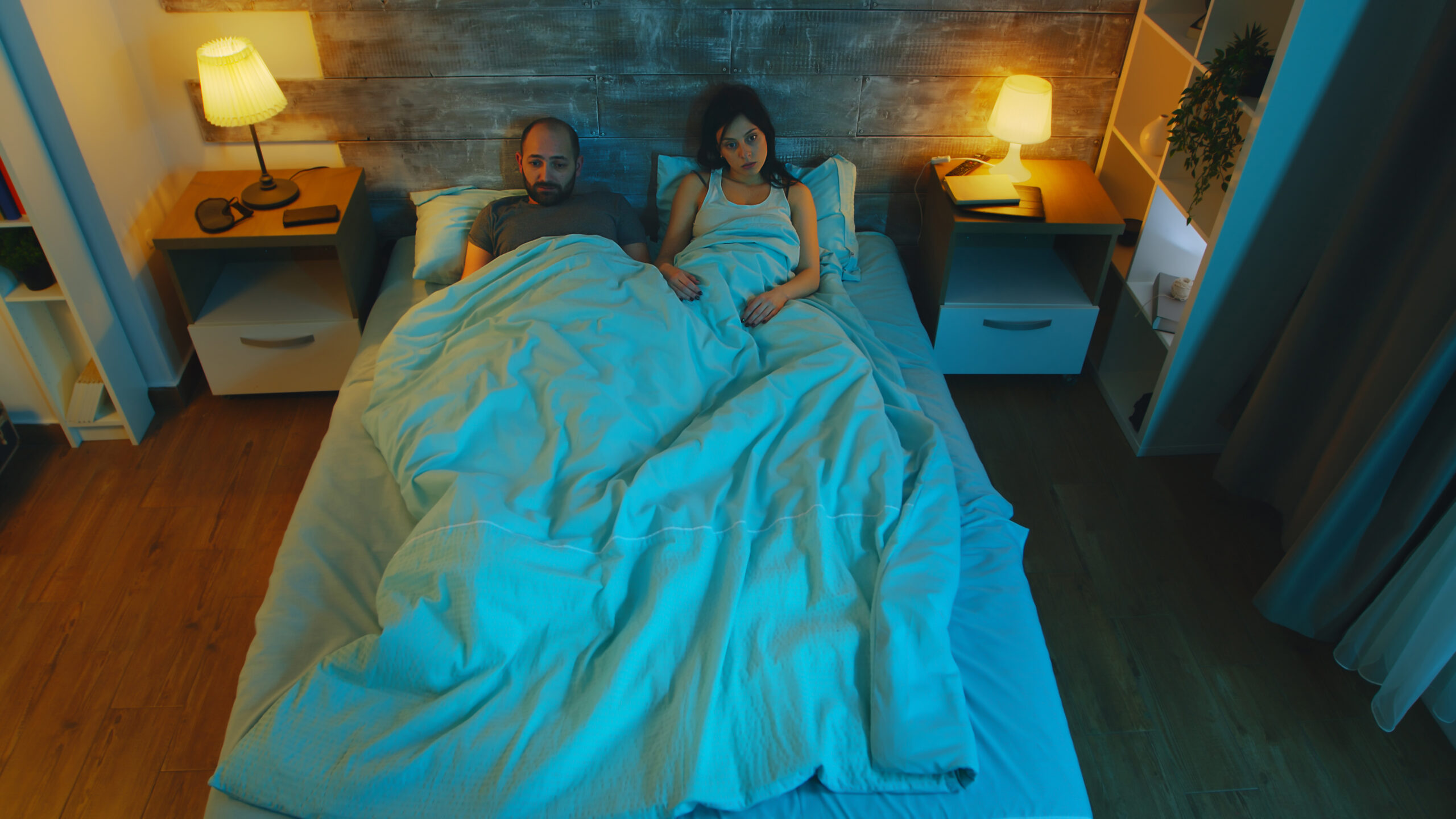
The parents lay side by side in the bed. They were utterly still. Not sleeping-still. A different kind of still, the kind every officer learns to recognize and never stops dreading.
For one cold second, nobody in the doorway spoke.
Then twenty years of training shoved everything else aside. The partner moved to the father’s side of the bed. The officer moved to the mother’s. They checked for breathing. For pulse. For any response to voice, to touch.
There was something. Faint. Wrong. But something.
The officer’s jaw set hard, not because he felt nothing, but because feeling would have to wait until the child wasn’t standing six feet away in the doorway, watching everything with her enormous eyes.
“Get fire and medical here now,” he said.
His partner called it in, voice flat and fast.
The little girl tried to step forward into the room. The officer raised one hand without turning around.
“Stay with me,” he said.
“Are they sleeping?” she asked.
He looked back at her then, and in the half-second before he answered, he hated every option the English language gave him. Yes was a lie. No was a door he could not open for her on this carpet at this hour.
“We’re helping them,” he said.
It was the truest thing he could hand her, and he watched her accept it the way children accept the things adults say in emergencies, holding it with both hands.
Then his flashlight caught something on the nightstand.
A phone. Its screen still faintly lit. A recording app open on the display, showing that a voice memo had recently ended.
His partner picked it up carefully with gloved fingers and angled it toward the light. The last recording had started at 2:41 a.m.
Seventeen minutes before the girl had called the station.
Behind them, the little girl whispered, “That’s Mommy’s phone.”
The officer felt the room narrow down around that fact. The tipped glass. The phone on the carpet by the door. A recording started at 2:41 by a woman who could no longer be woken at 2:58. The thick, dead weight of the air.
His partner lifted the edge of the pillow, looking for anything, and found a folded paper. He opened it under the flashlight.
It was an appointment reminder from the county clinic, the kind that comes in the mail. The mother’s name was printed at the top. One line had been circled in pen, circled so hard and so many times that the paper had nearly torn through.
Follow-up respiratory evaluation.
The officer read it once. Then again. Headaches. Dizziness. Respiratory complaints. A sealed-up house in the cold months. Two adults who wouldn’t wake. A child, sleeping farther away with her door partly closed, sick but conscious.
The pieces snapped together all at once, and his stomach dropped.
“Open windows,” he said. “Now. Everything.”
His partner understood instantly. They moved fast. The bedroom window was forced up and open. The hallway window stuck in its old frame, fought them, then gave with a scrape of paint and swollen wood. Cold night air rushed in like something alive, cutting through the staleness.
The little girl began to cry harder then. Not because she understood the specific danger. Because the adults had stopped pretending the night was ordinary, and children read that change like weather.
The fire crew arrived two minutes later, boots loud on the porch.
Their handheld detector started chirping before the first firefighter even reached the bedroom door. Then it stopped chirping and started screaming.
That sound changed everything.
Carbon monoxide.
Invisible. Effectively odorless. Patient. Deadly in the quietest way anything can be deadly. The house had not been broken into. No one had hurt this family. The house itself had been slowly filling with poison for hours while a child slept across the hall with her door partly closed, just far enough from the source, just shielded enough, to wake up sick instead of not waking up at all.
The firefighters moved the little girl outside first, and she fought them once, hard, twisting in their arms back toward the bedroom door.
“My mom,” she cried. “My dad.”
The officer picked her up before he had consciously decided to. She weighed less than he expected. Her bare feet were ice cold where they pressed against his uniform jacket. He carried her out onto the porch, away from the doorway, and wrapped her in the blanket from the patrol car, tucking it around her feet first.
The ambulance lights painted her small face red, then white, then red again. She didn’t fight anymore. She just stared at the front door of her own house and shook.
Inside, the medical crews worked. Outside, the firefighters ran their tests room by room.
The carbon monoxide reading near the master bedroom was dangerously, almost unbelievably high. The source was traced within the hour to a malfunctioning heating unit connected to an old venting system. In the utility area, a firefighter found a repair tag from months earlier, zip-tied to a pipe and yellowed at the edges. A later inspection would establish the full chain: the problem had been reported, patched cheaply, and forgotten. The patch had failed. The vent had been quietly leaking the furnace’s exhaust back into the house, a little more each cold night, while the family slept and the paperwork sat in a drawer somewhere, closed.
But in that moment, on that porch, nobody was thinking about paperwork. They were counting breaths.
The mother was carried out first. An oxygen mask covered her face. Her hand slipped off the side of the stretcher and hung in the cold air for a second until a paramedic tucked it gently back under the blanket. The little girl saw it and tried to bolt off the porch toward her.
The officer held her, gently but completely.
“Let them help her,” he said into her hair. “That’s their whole job. Let them do it.”
Then the father came out. His face was gray-pale under the strobing lights. Another mask. Another stretcher. Another set of fast, low voices that meant the night was very far from over.
The little girl looked from one parent to the other as they were loaded into separate ambulances, and then up at the officer holding her.
“Are they going to wake up?”
He had been trained for active scenes. Evidence handling. Call logs. Protective custody procedures. Emergency response protocols. There is no training, anywhere, that tells a man how to answer a seven-year-old on a porch at 3:19 in the morning while her entire world is being loaded into ambulances.
“They’re going to the hospital,” he said. “The doctors there are very good. And you’re going too, so they can check you over.”
“I don’t want to leave them.”
“I know,” he said.
It was all he had, and somehow it was enough to get her into the ambulance.
At the hospital, the little girl was treated for carbon monoxide exposure and watched closely through the night. The doctors pieced together her part of it. She had been in her own room with the door partly closed, farther from the failing heater, breathing better air. She had woken with a pounding headache and a sick stomach, and she had done what every child does when they feel sick in the night. She had gone to her parents’ room.
When her mother didn’t respond to her voice, she shook her shoulder. When her father didn’t answer either, she called out louder. When nothing changed, when the most reliable pattern in her whole world broke, she did not freeze and she did not hide.
She remembered the number her mother had taught her.
That detail became the quiet center of the entire incident report. The mother had practiced it with her. Their address, recited until it stuck. How to call for help. What to say if a grown-up couldn’t speak. It had been an ordinary lesson at the time, one of those small parental drills children squirm through and parents wonder if they should even bother with. Five minutes at the kitchen table, maybe. Repeated a few times over a year.
That five minutes was the reason help arrived while there was still time.
The voice memo from the mother’s phone was reviewed later, with appropriate care. It was not dramatic. It was not a goodbye. It was a tired, frightened woman trying to be sensible at 2:41 in the morning. She had been feeling dizzy and strange for days, worse that night, and she was recording her symptoms so she could describe them properly at her follow-up appointment, the one circled on the paper under her pillow. Her words slurred as the recording went on. She mentioned the headache. She mentioned, almost in passing, that the heater had been acting up again.
Then the recording caught movement. A muffled sound. And silence.
That was what had made both officers go quiet in that bedroom. Not a monster in the house. Not a crime scene in the way television teaches people to imagine one. A family being erased, slowly and gently, by something none of them could see, while one of them tried to take notes on it.
The father woke first, hours later, confused and frightened, fighting the mask until a nurse calmed him. His first clear question, before he fully knew where he was, was about his daughter.
The mother woke after him. When she was strong enough to be told what had happened, the whole shape of it, the heater, the gas, the phone call, she covered her face with both hands and cried so hard the nurse had to steady her oxygen line.
The little girl was brought in only after the doctors agreed it was safe. She stood in the doorway of the hospital room in too-big donated slippers, suddenly shy, as if she’d forgotten how to approach her own parents.
Her mother reached out one hand.
The child crossed the room at a dead run, and after that, nobody in the room pretended to be composed. Not the parents. Not the nurse. Not the officer standing just outside the door.
He visited once before the end of his shift. He hadn’t planned to stay long. He only wanted to confirm that relatives were on their way and that the family understood, fully understood, what their daughter had done.
The mother took his hand in both of hers. Her grip was still weak.
“She saved us?” she asked. It came out as a question because she needed to hear it from someone official, someone whose job was facts.
The officer looked over at the girl, who was curled up beside her father on the hospital bed with a blanket tucked around her shoulders, finally asleep, one hand knotted in his gown.
“Yes,” he said. “She did.”
The girl didn’t look like a hero, sleeping there. She looked exhausted. She looked exactly like what she was, a small child who had been asked to do something enormous and had somehow done it.
Children should not have to be brave at three in the morning. But sometimes the smallest person in the house is the only one left awake enough to save it.
In the days that followed, the machinery of aftermath did its work. The fire department issued a public safety notice about carbon monoxide detectors, annual heater inspections, and the importance of practicing emergency calls with children. The police report recorded the call time, the response time, the condition of the home, the readings, the medical transports, and the recovered phone recording. The clinic appointment reminder and the old repair tag were photographed and filed as supporting documents.
Paperwork made the story official. But paperwork couldn’t capture the sound of that first whispered hello at 2:58 a.m. It couldn’t capture the way the officer’s entire body changed when the child said her parents weren’t moving. It couldn’t capture the sight of a barefoot little girl in star pajamas opening her front door to two strangers because she had already done the hardest thing a child can do, which is keep going when the people who protect her could not.
When the family finally returned home, weeks later, after the heating system had been torn out and replaced and the house had been tested and cleared twice, the first thing installed was not new furniture. Not a new appliance, not fresh paint, not anything for comfort.
It was a set of carbon monoxide detectors. One in the hallway. One near the bedrooms. One close to the utility area, mounted where the old repair tag used to hang.
The father tested them twice while his daughter watched from the stairs. The alarm shrieked through the house, and she covered her ears with both hands and screwed her eyes shut.
Her mother knelt down beside her on the step and gently pulled her hands away.
“That sound means we wake up,” she said.
The little girl thought about it. Then she nodded, slowly, taking the sentence and filing it away in the place where children keep the rules that hold their world together.
For weeks afterward, she slept with her bedroom door open. Some nights she padded down the hall to her parents’ room, and her mother woke instantly every single time, the way she always had before, the pattern restored. Sometimes the girl just stood beside the bed for a moment, checking, confirming, watching the blanket rise and fall. Sometimes she climbed in without a word and was asleep again in minutes.
Nobody ever told her she was being silly. Nobody told her to stop checking. Fear leaves fingerprints long after the danger is gone, and the only thing that wears them away is being allowed to check, as many times as it takes, and finding everything safe.
The officer kept the original call sheet longer than procedure required. Long after the case was closed and the copies were filed, the original stayed in the top drawer of his desk at the station.
Not because it was evidence anymore. Because of the first line.
2:58 a.m. Child alone. Parents not waking.
He had written those words quickly, professionally, in the compressed shorthand officers use when there’s no time to feel what they’re writing. But he knew now what those nine words actually contained.
They meant a mother had once sat at a kitchen table with her daughter and patiently taught her a phone number and an address, never imagining the lesson would be graded. They meant a seven-year-old woke up sick and scared in the dark, found the two people she trusted most in the world unreachable, and still managed to speak clearly through her tears to a stranger. They meant ten minutes of driving mattered. They meant a quiet white house on the edge of town did not become the town’s worst story, the one people lower their voices to tell, because one small voice reached the right person in time.
Late one night, a little girl called the police and said her parents wouldn’t wake up. What the officers found inside that house left everyone who responded changed in some quiet way they didn’t talk about much.
What they found was not just danger.
It was proof that love sometimes prepares children for moments no child should ever have to face. That a five-minute lesson at a kitchen table can outweigh every alarm and inspection that failed. And that the smallest voice in a silent house can still be loud enough to save everyone sleeping inside it.

Ethan Blake is a skilled Creative Content Specialist with a talent for crafting engaging and thought-provoking narratives. With a strong background in storytelling and digital content creation, Ethan brings a unique perspective to his role at TheArchivists, where he curates and produces captivating content for a global audience.
Ethan holds a degree in Communications from Zurich University, where he developed his expertise in storytelling, media strategy, and audience engagement. Known for his ability to blend creativity with analytical precision, he excels at creating content that not only entertains but also connects deeply with readers.
At TheArchivists, Ethan specializes in uncovering compelling stories that reflect a wide range of human experiences. His work is celebrated for its authenticity, creativity, and ability to spark meaningful conversations, earning him recognition among peers and readers alike.
Passionate about the art of storytelling, Ethan enjoys exploring themes of culture, history, and personal growth, aiming to inspire and inform with every piece he creates. Dedicated to making a lasting impact, Ethan continues to push boundaries in the ever-evolving world of digital content.