For two years, my daughter-in-law dressed like every season was late autumn.
In July, when the rest of us sat on the patio in sleeveless dresses and sandals, fanning ourselves with paper plates, Emily came to Sunday dinner in long sleeves buttoned to the wrist and high collars that skimmed her throat. At Christmas, she looked the same as she had in August, only in darker colors. Even at backyard cookouts, with the grill smoking and the air so thick you could drink it, she kept herself covered from her neck to her hands, and she never once complained about the heat, which somehow made it stranger.
At first, I told myself it was a style choice. Some young women dress modestly. Some are sensitive to the sun. By the end of that first summer, I had stopped believing my own explanations.
Because people reveal themselves in what they avoid. I learned that raising a son and burying a husband, and I have always trusted it. Emily never rolled up her sleeves, not even to do dishes. She never reached too quickly for anything across the table. When she got nervous, she tucked her hands up into the ends of her cuffs like a child hiding inside a sweater. If a bracelet or her watch shifted on her wrist, she adjusted it instantly, almost before it moved. If someone suggested eating on the patio instead of the air-conditioned dining room, she smiled and agreed, every time, but I could see the strain gathering around her mouth by dessert.
I watched all of it. I catalogued all of it. I am not proud of how good I was at it.
“Lilian,” my sister Carol said one Sunday while we stood in my kitchen making potato salad, “if you stare at that girl any harder, she’ll burst into flames.”
I kept chopping celery. “Her sleeve rode up earlier. Half an inch, maybe. She nearly jumped out of her skin pulling it down.”
Carol sighed the sigh she reserves for me. “So?”
“So nobody dresses like that in ninety-degree weather unless they’re hiding something.”
Carol gave me the look she has been giving me since 1968, the one that says she loves me and finds me exhausting in equal measure. “Or unless they don’t want people looking at them.”
“That’s the same thing.”
“No, Lilian. It isn’t.”
I didn’t answer, because I had already decided I was right, and when I decide I’m right, conversations with me become a formality. My late husband used to say I could out-stubborn a fence post. He meant it affectionately. Mostly.
Later that same afternoon, Ben caught me watching Emily at the sink while she rinsed plates, her sleeves dry and buttoned even with her hands in the water.
“Mom.”
“I didn’t say a word.”
“You were about to.”
He stood there in his faded college T-shirt, holding a tray of burger buns, looking exhausted before the argument had even started. My son had developed that particular tiredness sometime in the past two years, and I had never let myself wonder whether I was the cause of it.
“It’s been two years, Ben. Two years. I’m not some stranger on the street.”
“Neither is she.”
“Then why does she act like she’s hiding from us?”
His jaw tightened. “Please leave it alone.”
That was all he ever said. Leave it alone. No explanation, no defense, just that closed door, which of course I took as further evidence that there was something behind it worth finding.
He walked over to Emily, touched her gently at the waist, and said something low that made her smile. But when her eyes lifted and found me watching from across the kitchen, the smile vanished so fast it embarrassed me.
That should have been my warning. A woman whose smile dies when she catches your eye is not a woman with a guilty secret. She is a woman who feels hunted.
Instead, I went to bed that night making a list in my head. Scars from a bad old relationship. Self-harm. A tattoo she regretted, something crude from a wilder youth. A criminal past Ben either didn’t know about or was helping her bury. I lay in the dark arranging my suspicions like a woman arranging flowers, and I felt, God forgive me, almost pleased with myself. Vigilant. Protective.
Ben had married her quickly. Not recklessly, exactly, but faster than I would have liked, after barely a year. He looked at Emily the way a man looks when he has already decided, and no mother’s questions were going to un-decide him. I kept waiting for that certainty of his to crack, to need my help. It never did. Maybe that was part of it too, if I’m being honest. There was no room in their marriage for my opinion, and I have never been graceful about rooms I can’t enter.
The beach trip was my idea.
I told everyone it was because the whole family needed time together before fall got busy. The grandkids were growing. Carol hadn’t seen the ocean in years. That wasn’t a lie. It just wasn’t the whole truth.
The whole truth was simpler and uglier. People can hide a great deal in sweaters and blouses and buttoned cuffs. They cannot hide on a beach.
“Mom, you didn’t have to do that,” Ben said when I called to tell him I’d rented a house for the week.
“I wanted to.”
Emily thanked me too, on the phone, soft and polite as always. That gratitude should have shamed me. It didn’t. I remember hanging up and feeling like a chess player.
The rental house sat right off the dunes, all weathered gray wood and broad windows facing the water. The minute we arrived, the grandchildren tore through the rooms, shrieking over the bunk beds and the seashell lamps. Ben carried in suitcases two at a time. Carol opened the refrigerator and announced that whoever stocked it clearly believed butter was a food group.
Emily disappeared into the back bedroom with her bag.
When she came out twenty minutes later, she was wearing a long white cover-up that fell nearly to her calves, and she had a beach towel draped around her shoulders like a shawl, in eighty-eight-degree heat.
Ben looked at her for one second too long. There was a question in that look, and an answer, and a whole conversation I wasn’t part of.
“Ready?” he asked.
She smiled at him. “Ready.”
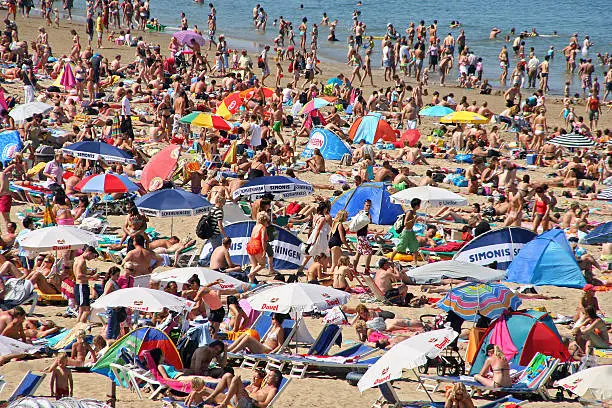
We walked down to the beach together, the whole noisy parade of us, sunscreen and folding chairs and far too many bags. The grandkids ran straight for the surf. Ben followed them into the water, throwing the football with my grandson near the shoreline. Carol settled under an umbrella with a magazine and a hat the size of a satellite dish.
Emily lowered herself into a chair beside me and opened a paperback.
The towel stayed around her shoulders.
For the first half hour, I tried not to speak. The ocean rolled in and out. Children shrieked happily down the beach. Emily turned a page, then another, though I noticed her eyes didn’t seem to be moving across the lines. She was holding that book the way a soldier holds a shield.
Finally, I couldn’t help myself. I never can.
“You’re not going in?”
She kept her gaze on the book. “I don’t think so.”
“The water’s lovely.”
“I’m happy here.”
I smiled, and even I could hear the edge in it. “We came all this way, Emily.”
Her fingers tightened on the paperback. The knuckles of her hands, in their fine cotton glove of long-sleeve cuffs even here, even now, went white.
I lowered my voice, which somehow made it worse, made it intimate, conspiratorial, a blade offered politely. “Two years is a long time to be family and still feel like a stranger.”
Now she looked at me. “What does that mean?”
“It means you’re always covered. Always careful. Always stepping around something nobody is allowed to mention. Don’t you think it’s time you trusted us?”
“Mom.” Ben’s voice came from behind us. He was already walking up from the water, fast, dripping, his face changing as he came.
I should have stopped. Every decent instinct I had was telling me to stop. But I had built two years of certainty around my suspicions, two years of being the sharp-eyed mother who saw what others missed, and pride is a freight train. It does not stop just because the track runs out.
“What are you hiding?” I asked her.
Emily stood up so quickly the chair legs drove into the sand.
“I’m going back to the house.”
“Emily.” Ben reached her just as she turned. “Hey. Hey. It’s okay.”
But it was not okay. I could see that even then, in the way she clutched the towel tighter around her shoulders and started toward the path with her head down, taking small, quick steps across the soft sand, a woman in full retreat from a beach chair.
And then I did something I will regret until the day I die.
I shifted my foot. Just enough.
The trailing corner of her towel caught beneath my sandal. Emily took one more step before the fabric pulled loose from her shoulders and fell into the sand behind her.
She froze. And I froze too, because the wind chose that exact moment to catch the edge of her white cover-up and press it briefly flat against her back before the fabric settled again.
And I saw the scars.
Pale, rippled scars spread across the upper half of her back and down both arms, disappearing beneath the modest swimsuit she had chosen to wear even covered, even hidden. The skin on the backs of her hands was marked too, fine and shiny in patches, taut in places. They were old scars. Years old. Decades. The kind of scars a body has long since finished making and a person never finishes carrying.
My throat closed.
Ben reached her in two strides. He snatched the towel up out of the sand and wrapped it around her shoulders so quickly, so smoothly, that I understood with a fresh wave of sickness that he had done it before. That this was practiced. That my son had spent years of his life standing between his wife and moments exactly like the one I had just manufactured.
He turned to me with a face I did not recognize on my own child.
“What is wrong with you?”
The people nearby had gone quiet. A woman walking past with a little boy turned him gently by the shoulder so he wouldn’t stare. Two teenagers down by the water suddenly found their feet fascinating. Emily made one small, broken sound, barely a sound at all, and pressed her face into Ben’s chest.
“I didn’t mean—” I began.
“Don’t,” Ben snapped. “Do not say you didn’t mean it.”
And he was right. That’s the thing I have had to live with. Maybe I hadn’t planned that exact second, that exact sandal, that exact gust of wind. But I had wanted something to happen on that beach. I had booked the house wanting it. I had wanted proof. I had wanted her exposed. The wind had only finished what I started.
Ben guided Emily back toward the house, one arm wrapped around her, one hand holding the towel in place at her shoulders like a shield. I stood there on the sand with my foot half buried, with strangers carefully not looking at me, and felt every ugly thing inside me become suddenly, completely visible. To them. To my son. To myself.
That night, the house was quiet in a way beach houses are never supposed to be quiet.
The grandchildren had been sent to the movie room with popcorn and strict instructions not to come upstairs. Carol banged cabinets in the kitchen considerably louder than cooking required, which was her way of saying everything she wasn’t saying. I sat at the dining table staring at my folded hands, listening to the ocean through the windows, the same ocean, going in and out like nothing had happened.
Ben came down after sunset.
He sat across from me, and he did not offer me the mercy of pretending we could talk around it. My son has many of my qualities. That directness is one of them, and that night it was pointed at me.
“She was seven,” he said.
I looked up.
“There was a fire in her house. At night. Her mother got her out through a bedroom window, but not before…” He stopped and swallowed, and I watched my grown son have to work to say it. “Not before Emily was burned.”
I pressed my hand to my mouth.
“Her back. Her arms. The backs of her hands, from covering her face.” He said it evenly, like a man reciting something he’d memorized because feeling it fresh every time would kill him. “Multiple surgeries. Skin grafts. Years of hospitals, all through her childhood. Years of physical therapy. Years of kids at school.”
“Oh, Ben.”
He didn’t soften. He wasn’t finished.
“She hates people staring. She hates hot weather, not because of the heat, because everyone notices what she’s wearing and asks about it. She hates beaches most of all, because there is nowhere on a beach to be covered without being obvious about it. Every choice she makes about clothes, every single day, is a calculation you’ve never had to do in your life. And you sat next to her and demanded to know what she was hiding.”
The shame that had been circling me all evening finally came down and landed with its full weight.
“I didn’t know,” I whispered.
“No,” he said. “Because it wasn’t my story to tell. It was hers. It was the one thing in this family that was actually hers.”
I started crying then, silently at first, the way you cry when you haven’t earned the right to be comforted.
Ben rubbed a hand over his face. He looked so tired. Then he said the thing that broke me completely.
“Do you know she bought a swimsuit for this trip?”
I stared at him. “What?”
He nodded once. “A special one. Designed for burn survivors, more coverage, but still a swimsuit. She ordered it online and sent it back twice because she kept panicking. Then she ordered it a third time and kept it. She told me she thought maybe this would be the week. That maybe she’d walk down to the water with the family and just take the cover-up off, fast, before she could think about it. She wanted to stop hiding from us, Mom. She said she wanted to do it herself. On her own terms.”
The room blurred.
“I took that from her,” I whispered.
“Yes.”
Nothing he could have shouted would have been crueler than that one quiet word.
“She kept asking me,” he went on, “whether you would still look at her the same once you knew. Whether you’d get that face people get. I told her my mother was difficult sometimes, but kind where it mattered.”
I flinched as if he’d struck me. Because that was the testimony my son had given on my behalf, and I had spent the afternoon proving it wrong in front of a beach full of strangers.
“Ben. I’m so sorry.”
He looked at me for a long moment, and there was love in it somewhere, buried deep under the anger, which somehow made it harder to bear.
“You were so busy hunting for some dark secret,” he said, “that you never once considered the possibility that she was just carrying pain.”
He went upstairs to his wife. I stayed at that table for a long time, listening to the ocean, doing the only honest accounting of myself I had done in years. Two summers of surveillance. Two years of lists in the dark. All those Sunday dinners where I had studied her cuffs while she passed me the green beans and asked about my garden and tried, again and again, to be loved by me.
I had imagined every possible darkness. I had never once imagined a seven-year-old girl at a bedroom window with the house burning behind her.
The next morning, I sat alone on the porch with a mug of coffee I never drank, watching the early light move on the water.
Emily came out just after eight, wearing a thin sweater despite the heat already rising off the boards. She paused when she saw me, one hand still on the screen door, like a deer deciding whether to bolt. I would not have blamed her for bolting.
“Emily,” I said quietly. “Would you sit with me for a minute? You don’t have to. But if you’ll let me, I’d like to say something.”
She hesitated long enough that I prepared myself for her to go back inside. Then she crossed the porch and sat on the far end of the bench, as far from me as the bench allowed. Up close, I could see she hadn’t slept much. Neither had I. We matched, for once.
“What I did yesterday was cruel,” I said. “Not curious. Not clumsy. Cruel. I have told myself for two years that being protective of Ben gave me the right to judge you, study you, push at you. It didn’t. It never did.”
She kept looking out toward the dunes, her hands tucked into her sweater cuffs, that gesture I had spent two years cataloguing as evidence and could now barely look at.
I went on, because I owed her the whole truth, not a cleaned-up version engineered to protect what was left of my pride.
“I had decided there must be something wrong with you. Something hidden. Something dangerous. Something I deserved to uncover. I made up stories in the dark, Emily, whole histories for you, because I preferred any invention to admitting I was simply uncomfortable not knowing everything about my son’s life. That is the truth of it. There was nothing noble in it at all.”
Emily’s eyes filled, but she still didn’t look at me. When she finally spoke, her voice was almost too soft for the morning.
“I practiced what I would say to you. For weeks.”
My throat tightened.
“I bought a swimsuit. Ben said the color looked nice on me.” She gave a small laugh that broke in the middle. “I stood in front of the mirror yesterday morning and told myself maybe I could do it. Maybe if I just walked down there and took the cover-up off fast, before anyone could make it a moment. I had a whole plan. And then I’d tell you about the fire if you asked, just the short version, and we’d all go back to playing with the kids, and it would just be… done. Normal.” She wiped her cheek with her cuff. “I wanted you to know me. I didn’t want you to pity me, and I didn’t want it to be a scandal. I just wanted to stop feeling like the strange woman your son married.”
“You are not strange,” I said. “You have never been strange. And I am ashamed, to the bottom of myself, that I ever made you feel that way at my table.”
Now she turned and looked at me, and there was so much hurt in her face, two years of it, maybe more, maybe a lifetime of faces like mine, that I almost looked away. I made myself hold it. It was the very least I owed her, to be looked at honestly for once instead of doing the looking.
“The hardest part,” she said softly, “is that I was starting to believe you might love me.”
That undid me entirely. I covered my mouth and cried in earnest, ugly and unhidden, on a porch in full daylight.
“I do,” I managed. “I do love you, Emily. I have just done a terrible job of showing it. Worse than terrible. I’ve shown you the exact opposite, week after week, and called it concern.”
The screen door opened behind us. Ben stepped out, saw the two of us sitting there with wet faces, and stopped dead, his whole body braced for impact, ready to step between us again. The fact that my son’s reflex, on seeing me near his wife, was protective of her was its own complete sentence about the past two years.
Emily reached for his hand when he came over. He took it and stood beside her.
I wiped my face and looked at them both.
“I don’t expect forgiveness quickly,” I said. “Or at all, if that’s what this becomes. That’s yours to decide, not mine. But I will spend whatever time you allow me proving I can do better than what I did yesterday.”
Ben’s expression softened only a fraction, a single degree.
It was Emily who surprised me.
“I don’t need you to fix it today,” she said. “I just need you not to pretend it wasn’t what it was.”
“It was cruel,” I said at once. “And invasive. And unforgivable, if that’s what you decide it is.”
She nodded slowly, as if that answer, the refusal to shrink it, mattered more than any apology wrapped around it. Maybe it did. Maybe when you have spent your life having your pain managed and minimized and stared at and whispered about, the rarest gift anyone can hand you is the plain truth, unsoftened.
The rest of the trip was careful. Quiet at the edges. Conversations started and ended a little too politely. But something real had finally entered that house, and I learned that week that real things, even painful ones, are better to live inside than suspicion. Suspicion had been my constant companion for two years, and I hadn’t noticed until it left how much room it had been taking up.
On the final evening, Emily came down to dinner in a short-sleeved blouse the color of pale butter.
The conversation at the table stuttered for half a second, the way it does, and my heart stuttered with it. For one awful moment I worried she had done it for me, out of pressure, out of politeness, out of some terrible obligation my apology had created.
Then I saw the way Ben looked at her, the pride in it, the question he asked her with his eyes and the answer she gave back with the smallest lift of her chin, and I understood. This was her choice. Made in her own time, by her own measure. Not mine. Not ours. Hers. The week I had stolen from her, she had taken back.
The scars on her arms caught the evening light from the window. They were simply part of her, the way anything is part of anyone.
I kept my eyes where they belonged, on her face, on the bread basket I was passing, on the salad tongs, on being a normal mother-in-law at a normal dinner, which it turns out is the easiest thing in the world once you stop conducting an investigation.
“More corn?” I asked her.
She smiled, small but genuine. “Please.”
Carol, God bless her forever, carried on a full monologue about the neighbors back home repainting their shutters entirely the wrong shade of blue, an outrage she described in such detail that the grandchildren started giggling. The kids argued over who got the last brownie. Ben reached for Emily’s hand under the table and didn’t bother hiding it.
And for the first time in two years, I sat at a table with my daughter-in-law and did not search her for evidence.
There had never been anything wrong with Emily. There had only been something wrong with the way I needed answers I had not earned, and with how willing I had been to call that need love.
When we got home, Emily kept coming to Sunday dinner. Still in short sleeves, sometimes. Not every week, and not all at once, and some weeks back in her cuffs and collars, and that was fine too, because the point was never the sleeves. The point was that she was deciding, for herself, week by week, exactly how visible she wanted to be in my house. The deciding was hers now, where it should have been all along.
That was the lesson, I think, the one I will carry to the end. Not that I finally learned her secret. The secret was never the prize, and learning it cured nothing in me. The lesson was that I had no right to it, none at all, not as her mother-in-law, not as family, not after two years or ten or fifty, until the moment she chose to hand it to me herself. Closeness is offered. It cannot be excavated.
I spent two years looking at my daughter-in-law and imagining darkness. All I ever found, when the truth finally came out, was pain she had survived with more courage and more grace than I had shown her on my best day.
So now, when Emily reaches across my table on a Sunday and her scars catch the light, I do the only decent thing there has ever been to do.
I look at her eyes. I smile. And I pass the bread.

Specialty: Legal & Financial Drama
Michael Carter covers stories where money, power, and personal history collide. His writing often explores courtroom battles, business conflicts, and the subtle strategies people use when pushed into a corner. He focuses on grounded, realistic storytelling with attention to detail and believable motivations.