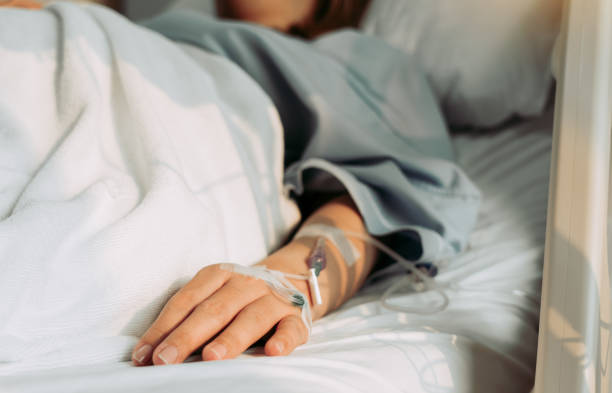
The hospital coffee in my hand had gone cold an hour ago, but I kept holding it anyway, as if it were the only solid thing left in my life.
Six months had passed since the word leukemia walked into our living room and refused to leave. My daughter, Carol, was seventeen. I was a single mom who had learned to smile through things no smile should ever have to cover, and by that spring, I could have taught a class in it. How to smile while a doctor talks about cell counts. How to smile while your child vomits into a pink plastic basin at three in the morning. How to smile in a hospital parking garage and then scream into your steering wheel before driving home to wash her favorite blanket so it would smell right.
To understand what that night meant, you have to understand what prom meant. Not to me. To her.
Carol used to cut dresses out of magazines and tape them to her bedroom mirror. She started in the fifth grade, long before any boy had ever made her blush, long before she even knew what high school looked like from the inside. Ball gowns, slinky things she’d never be allowed to wear, ridiculous feathered ones she taped up just to make herself laugh.
“Mom, promise you’ll do my hair that night,” she’d say, ten years old, mouth full of toothpaste, pointing at the mirror.
“I promise, baby. I’ll do your hair for every prom you ever have.”
Now her hair was gone, taken a fistful at a time by the chemo, and the magazine pictures were still taped to that mirror at home. Waiting. I couldn’t bring myself to take them down, and I couldn’t look at them either. I just kept her door closed and told myself it was about dust.
That afternoon, I sat by her hospital bed and watched her doze. The latest round of chemo had hollowed Carol out in a way the earlier ones hadn’t. Her cheekbones looked sharper. Her hands looked smaller against the blanket, like the hands of a much younger child, and there is no preparing yourself for the sight of your teenager’s hands looking younger instead of older.
On the rolling tray beside her sat a leather journal I’d bought her back in February, when the nurses said writing helped some kids. She’d taken to it more than I expected. She wrote in it every day now, sometimes for an hour at a stretch. And lately there were letters, too, folded carefully in thirds, addressed in her looping handwriting to names I recognized from her class. I assumed they were thank-you notes, or the kind of dramatic friendship letters teenage girls have been writing since the beginning of time.
When I leaned over to fluff her pillow, Carol stirred and slid the journal under her blanket. Quickly. Smoothly. Like a reflex she’d been practicing.
“Sorry, honey. Didn’t mean to startle you.”
“It’s fine, Mom.” She gave me her tired smile, the one that used most of her energy budget for the hour. “Just girl stuff.”
I nodded as if I understood. Teenagers need their privacy, I told myself. Even sick ones. Especially sick ones, maybe, when so little of their bodies and schedules and bloodwork belongs to them anymore. A journal was the one territory the hospital couldn’t chart.
Her phone buzzed on the tray. The name Daryl lit up the screen before she turned it face down.
Daryl had been her best friend since middle school, a lanky, polite boy who held doors open and remembered birthdays and once walked two miles in the rain to bring her the homework she’d missed. The kind of kid who makes you believe the next generation might be all right.
“He’s checking on you again?”
“He’s just being Daryl.”
I smiled and squeezed her foot through the blanket. “He’s a good one.”
Carol’s eyes drifted to the window, to the slice of ordinary sky out there where ordinary kids were driving home from school. Prom was four days away. The whole town knew it. The grocery store had a display of corsage flowers. The dry cleaner had a sign about tuxedo rush orders.
“Mom?”
“Yeah, sweetheart?”
“Do you think I’ll get to go?”
I opened my mouth to say yes, of course, absolutely. The doctors were optimistic. Anything to fill the silence with hope. Somewhere in the last six months, I had decided that was my job. The doctors handled the medicine. I handled the hope. It was the one thing I could still hand her that didn’t come through an IV line.
“You’re going to that prom, my baby. One way or another.”
It was a lie, and on some level we both knew it, and I told it anyway, because I was telling it to myself just as much as to her.
Carol looked at me for a long moment, and something passed behind her eyes that I couldn’t quite read. Not disbelief, exactly. Something quieter. Something almost like mercy. Then she nodded and reached for my hand, and I thought, in my ignorance, that I had comforted her.
That night, after she fell asleep, I noticed she’d tucked another folded letter into the back of her journal.
Two days before prom, another round of chemotherapy knocked her flat.
I drove her back to the hospital with shaking hands while she rested her cheek against the cool of the window, watching the town slide by. She didn’t say much. She didn’t have to. We had developed a language by then that didn’t require words, and everything about her silence said bad.
She was admitted for the night. Then the next night. Then indefinitely. The word indefinitely is a terrible word to hear in a hospital. It sounds neutral and it lands like a stone.
“I won’t make it, will I, Mom?” Carol whispered from the bed that first evening. The prom dress conversation hung in the air, unspoken.
I sat beside her and smoothed what was left of her thin hair back from her forehead.
“You’re going to make it to plenty of proms, baby. This is just a delay.”
She turned her face toward the wall, and I told myself she was tired.
The following evening, I was rinsing out her water cup at the little sink in the corner of her room when Nurse Jenny appeared in the doorway. Jenny had been with us since the beginning, a steady, warm woman who knew how Carol liked her blankets and which veins behaved. But that evening, there was a strange look on her face. Not bad news. Something else. Something almost mischievous, fighting to stay professional.
“Linda, honey,” she said. “Can you step into the hallway for a second? Just for a minute.”
I dried my hands and followed her out, my stomach already bracing the way it always did now, assuming paperwork at best and a doctor with a clipboard at worst.
I stepped through the door and froze.
The hallway was full of teenagers.
Boys in rented suits with crooked ties and shoes too shiny to be theirs. Girls in long dresses with sneakers peeking out underneath the hems. They were carrying pizza boxes and foil pans and stacks of plastic cups, and bobbing above their heads were Mylar balloons in soft pink and silver. One girl, Megan, clutched a pitcher of lemonade against her chest with both arms, like it was something holy. A small Bluetooth speaker hung from Daryl’s wrist by its strap.
They were all looking at me, twenty-some kids dressed for the biggest night of their year, standing in a hospital corridor that smelled like antiseptic, waiting for my reaction.
“Mrs. Linda,” Megan said, stepping forward. “We talked to Dr. Patel. She said it was okay. We wanted to bring prom to Carol.”
I covered my mouth. I could not speak. The cold coffee, the parking garage, the six months of smiling, all of it rose up in my throat at once.
“You did all this?” I finally managed.
“For weeks,” Daryl said quietly. “We’ve been planning it for weeks.”
I tried to thank them and my voice cracked apart in the middle of the first word. Jenny squeezed my shoulder and motioned them toward Carol’s door with her head.
“Go on, sweethearts. She has no idea.”
I followed them in.
When Carol looked up from her bed and saw her friends crowding through the doorway in their prom clothes, balloons scraping the ceiling, she let out a sound I will carry with me for the rest of my life. Half a sob, half a laugh, all disbelief.
“You guys,” she whispered, and then she was crying, and so was half the room.
Megan climbed right up onto the bed, careful of the lines and monitors like she’d rehearsed it, and helped Carol into the sparkly top she’d brought, sliding it on right over the hospital gown. Another girl produced a little tiara from somewhere. Someone hit play on the speaker, and the room filled with the song Carol had been singing in the car since February, the one I’d heard through her bedroom door a hundred times.
And I watched my daughter laugh. Really laugh. Eyes closed, head tilted back, shoulders shaking, the way she used to laugh before any of this started, before our vocabulary filled up with words like neutrophils and protocol.
She bit into a slice of pizza and made a horrified face because the cheese had gone cold on the drive over, and the kids howled like it was the funniest thing that had ever happened, and in that room, in that moment, it was.
They ate together and danced badly in the three square feet of available floor and took pictures with the IV pole wearing somebody’s bow tie. For the first time in months, I watched my daughter be seventeen.
I stepped back toward the hallway so I wouldn’t intrude. Some moments belong to a mother, and some belong to a girl and her friends, and I had learned the difference the hard way over the years.
I leaned against the wall outside her door, pressed both palms to my face, and let myself cry for the first time in days. Not from sadness. From whatever the opposite of sadness is when it still makes you weep.
Then I heard footsteps and looked up.
Daryl had come out of the room. His tie was loose and his hands were in his pockets, but he wasn’t smiling anymore. He looked older than seventeen out there in the hallway light. He looked like a man carrying something heavy and trying to set it down gently.
“Mrs. Linda,” he said. “Can we talk?”
I opened my arms to hug him. “Daryl, I can’t even tell you what this means to us. You kids did something tonight I’ll never forget.”
He stepped back. Just half a step. But enough that my arms fell to my sides, and enough that the temperature of the hallway changed.
“Ma’am,” he said carefully, “you do know why we’re really here, right?”
I blinked at him. From inside the room, Carol’s laughter drifted out under the door, lighter than it had sounded in months.
“Well… yes. To give Carol her prom.”
Daryl reached inside his suit jacket and pulled out a thick white envelope. He held it out to me, and I noticed his hand was shaking a little.
“No. I’m sorry, but I have to tell you the truth. Open this envelope. That’s the real reason we’re here.”
I stared at it like it was something hot. “Daryl, what is this?”
“Carol gave it to me last week. She told me to give it to you the night of the prom, before the last song. She said you’d need to know by then.” He swallowed. “Please, Mrs. Linda. Just open it.”
My fingers fumbled with the flap. Inside were folded pages, some covered in Carol’s looping handwriting, some printed. I recognized the journal paper immediately, the cream pages from the leather book I’d bought her in February. The letters she’d been folding in thirds for weeks. The “girl stuff.”
The first letter was addressed to Daryl. The second to Megan. The third had my name on it.
I read mine first, standing in that hallway in my wrinkled shirt, and the floor tilted under my feet.
Dear Mom. My last scans from three weeks ago didn’t give the results I told you. While I was waiting outside the consultation room, I overheard Dr. Patel going over my films with another doctor. They said the numbers weren’t moving the way we’d prayed they would.
I felt dizzy. I kept reading because stopping was worse.
I cornered Dr. Patel the next morning. She confirmed it, and I begged her to sit down with me that same week and tell me everything straight. And I asked her for a little time before telling you. I’m sorry, Mama. I couldn’t bear to watch you break down in front of me. I needed a few more normal days where you still looked at me like the future was real.
“She knew?” My voice came out cracked and small, a voice I didn’t recognize. “Dr. Patel knew? You knew?”
Daryl nodded. His eyes were wet now.
“She made us promise. Megan, me, all of us. Not to say anything yet. She said she didn’t want you spending whatever time was left crying, ma’am.” He paused, and his voice went rough. “She said you’d already given up too much for her.”
I leaned against the wall and pressed the letters to my chest because my legs were no longer participating. My breath wouldn’t come in right. The pieces were assembling themselves whether I wanted them to or not. The letters. The journal slid under the blanket. The way she’d looked at me when I promised her plenty of proms, that unreadable expression that I now understood perfectly.
It had been mercy. My daughter had been showing me mercy.
“This prom,” I said slowly, “isn’t an early prom.”
“No, ma’am.” Daryl looked down at his shiny rented shoes. “It’s the only one. She didn’t want to risk missing it waiting for the real one. She wanted to dance once, with her friends. And she wanted you to see her happy.”
A sound came out of me then that I didn’t recognize as mine. It tore out before I could stop it and went down the corridor.
“How could Carol hide something like this from me?”
A nurse at the station looked up, then quickly, kindly, looked away. The door to Carol’s room cracked open and a teenager peered out, worried. Daryl gave them a small nod, and the door closed again. The music inside kept playing, muffled and sweet.
Daryl didn’t flinch from me. He just stood there, this seventeen-year-old boy in a rented suit, while a grown woman shook in front of him, and he held his ground the way you hold ground for someone you love.
“I’m her mother, Daryl. Her mother. I should have been the first person she told. Not the last. Not by letter.”
“I know, ma’am. She knew you’d feel that way. She wanted you to read it tonight. That was her plan. Not mine, not Dr. Patel’s. Hers. Down to the timing.”
I wiped my face with the back of my hand. “Why tonight? Why now, in the middle of all this?”
Daryl finally lifted his eyes and met mine, and what he said next I will hear for the rest of my life.
“Because she wanted you in there with her, knowing. Not after. Now. While she’s still laughing.”
I looked at the closed door of my daughter’s room, at the light leaking out from under it, at the muffled bass of a pop song and the laughter of children dressed as adults. My beautiful girl had been carrying the heaviest thing a person can carry, alone, for three weeks, and she had spent that time planning a party so that the truth would arrive wrapped in the best night of her life. So that when it hit me, I would be ten feet from her smile.
“She thought she was protecting me,” I whispered.
“She loves you, Mrs. Linda,” Daryl said. “That’s all this ever was.”
I folded the letters along their creases, carefully, as if they might tear, as if they were skin. Then I straightened my shoulders, smoothed the front of my shirt with my palms the way I do before hard things, and turned toward Carol’s door with the envelope still in my hand.
I am a mother. We get ten seconds to fall apart, and then the door is there, and our child is behind it.
I opened it and walked back into my daughter’s room.
The music was still playing softly. Megan was painting glitter polish onto Carol’s nails around the pulse monitor. My daughter was glowing in a way I hadn’t seen in months, sparkly top over hospital gown, crooked little tiara on her bare head.
Carol looked up. Her smile faded the second she saw the envelope in my hand.
The room went quiet on its own, the way rooms full of teenagers somehow do when something real walks in. Someone turned the music down without being asked.
I sat on the edge of her bed.
“You read them,” she whispered.
“I did, sweetheart.”
Her eyes filled, and her chin did that wobble it has done since she was two years old, the one that has always undone me.
“Mama, I didn’t want you to spend our good days crying. You’ve been so strong for so long. I just wanted you to keep hoping a little longer. I wanted us to have some weeks that weren’t about it.”
I took her hand. It felt so small in mine, glitter polish half-finished.
“Carol, listen to me.” I held her eyes. “We don’t hide anything from each other anymore. Not scans, not numbers, not fear, nothing. Whatever’s coming, we face it together, with the truth on the table. No more brave little secrets. Deal?”
She leaned into me and nodded against my shoulder, and I felt her whole body let go of something it had been holding for three weeks.
“Deal.”
I looked up at her friends, all of them standing awkwardly along the wall in their suits and gowns, unsure whether they should slip out and give us the room. Megan had her hand over her mouth. Daryl stood in the doorway.
I shook my head at all of them.
“Don’t you dare go anywhere,” I said. “My daughter’s at her prom.”
Then I stood up, smoothed my wrinkled, decidedly un-formal shirt, and held out my hand to the girl in the hospital bed.
“Carol. Will you dance with your mother?”
She laughed through her tears, that same half-sob, half-laugh from when they’d all walked in, and she took my hand. Megan and another girl helped her up gently, minding the IV line, and someone turned the music back up, something slow.
We swayed together in the middle of that little hospital room, my daughter’s head on my shoulder, her friends clapping softly around us, Daryl wiping his eyes in the doorway and pretending he wasn’t. I held her the way I held her the day she was born, like the whole world had condensed into one small person, because it had.
I did her hair for prom after all. There wasn’t much of it, just soft thin wisps, but I tucked them behind her ear while we danced, and she smiled, and a promise made to a fifth grader at a bathroom mirror was kept in a hospital room eight years later. Not the way either of us pictured it. Kept all the same.
The party went on past visiting hours, because Nurse Jenny developed a sudden and total inability to read a clock, and Dr. Patel, when she stopped by in her coat on her way home, looked at the balloons and the pizza boxes and my dancing daughter and simply said, “Well. Carry on, then.”
Later, when the kids had hugged Carol one by one and filed out into the night, and the room was quiet except for the monitors, my daughter and I sat together in the half dark with the balloons bumping the ceiling.
“Are you angry with me?” she asked.
I thought about it honestly, because we had a deal now.
“I was, for about ten minutes in that hallway,” I said. “Now I’m just amazed by you. And a little humbled. I thought hope was my job. Turns out you were carrying mine and yours both.”
She smiled sleepily. “We can split it now.”
“We split everything now,” I said. “That’s the deal.”
She fell asleep with the tiara still on, and I sat in the chair beside her bed and read her letter four more times, and I let every word of it in.
Four weeks later, Dr. Patel sat down across from the two of us, together, the way everything happened now, and said the numbers had steadied.
Not a turnaround. She was careful and honest with us, because we had asked her to always be, and we held hands while she talked. Not a cure. A plateau. A quiet, level stretch of road where, a month earlier, there had only been a cliff.
More time.
That was the gift. Not a miracle with trumpets. Just road. And I have learned that road is the miracle, when you thought there wasn’t any.
I don’t know what tomorrow holds. Nobody does, and nobody ever did, we just used to be able to pretend otherwise. But I know this much, and I would tell it to any parent sitting in any hospital anywhere, holding any cup of cold coffee.
The night Carol’s friends carried prom into her hospital room in pizza boxes and foil pans was the night our family stopped pretending. My daughter gave me the truth the only way she knew how, wrapped inside the happiest night she could build, handed to me by a boy in a rented suit who was braver than most grown men I’ve known.
And the truth didn’t take our hope away. That’s the part I got wrong all those months. I thought hope and honesty were opposites, that my job was to stand between my child and the facts. But denial was costing us our realest days, and we didn’t even know it.
Honesty gave us back time that pretending never could.
We’ve been living every minute of it since. Fully, loudly, with the magazine dresses still taped to her mirror at home, and no more brave little secrets between us, ever again.

Lila Hart is a dedicated Digital Archivist and Research Specialist with a keen eye for preserving and curating meaningful content. At TheArchivists, she specializes in organizing and managing digital archives, ensuring that valuable stories and historical moments are accessible for generations to come.
Lila earned her degree in History and Archival Studies from the University of Edinburgh, where she cultivated her passion for documenting the past and preserving cultural heritage. Her expertise lies in combining traditional archival techniques with modern digital tools, allowing her to create comprehensive and engaging collections that resonate with audiences worldwide.
At TheArchivists, Lila is known for her meticulous attention to detail and her ability to uncover hidden gems within extensive archives. Her work is praised for its depth, authenticity, and contribution to the preservation of knowledge in the digital age.
Driven by a commitment to preserving stories that matter, Lila is passionate about exploring the intersection of history and technology. Her goal is to ensure that every piece of content she handles reflects the richness of human experiences and remains a source of inspiration for years to come.