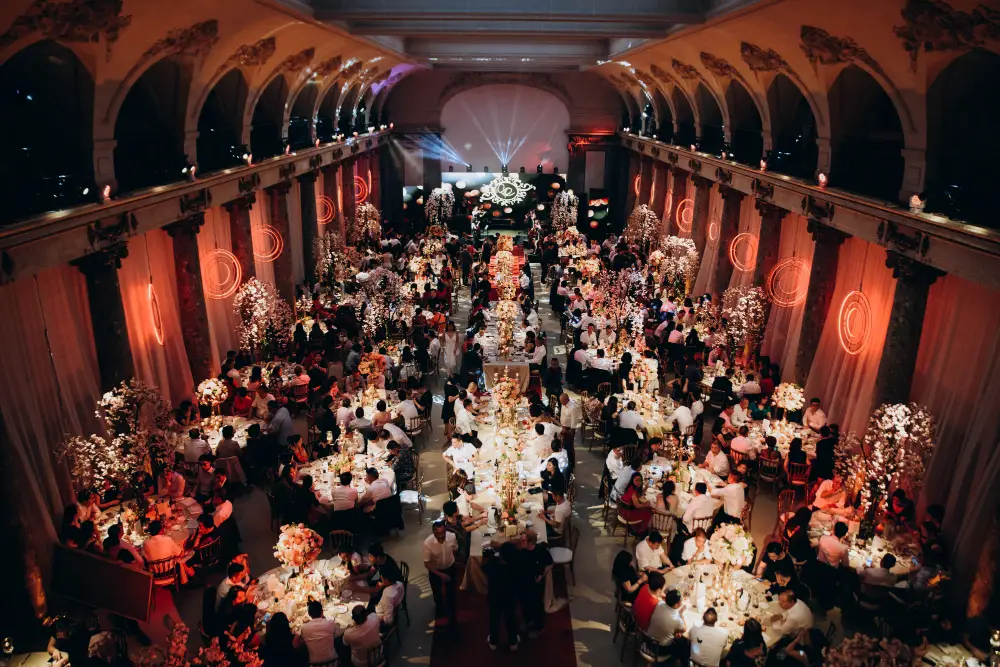
Courtney had always known how to make a room choose her.
She did it with perfume and posture and a particular laugh she deployed with precision, the kind that made people feel specifically selected when she turned it in their direction. She could walk into a gathering of strangers and within twenty minutes have redistributed the social gravity of the room so that it revolved around her without anyone quite noticing the shift had happened.
My mother Patricia taught her that. She taught her before either of us was old enough to understand what we were being taught, which is the most effective time to teach a person anything. In our house, manners were not expressions of consideration. They were tools. They had linen napkins folded around the handles so the edges were not visible, but they were tools nonetheless, and they were wielded with the practiced ease of people who had been using them for generations.
I was the older daughter, the practical one, the one who learned contracts because someone had to read what Patricia only smiled through. When I was twelve and my mother signed the caterer’s agreement for Courtney’s birthday party without reading the cancellation clause, I read it for her and found the term that would have cost us three times the deposit if the weather had turned. Patricia thanked me in the distracted way she thanked contractors and electricians, which was to say she acknowledged that something useful had been done without quite acknowledging that I was the person who had done it.
Courtney was the sparkling one. She remembered birthdays and wrote thank-you notes in a hand that suggested private school and genuine feeling, and she could make a stranger believe she had been waiting all week for the specific pleasure of their company. People loved her for it. I spent most of my twenties mistaking that charm for warmth, which is an understandable error to make once and a significant error to keep making.
My first mistake was the misreading.
My second was giving her access to everything I had built.
We worked together inside the family real estate firm for six years. It seemed natural at the time, the way things seem natural when you have grown up in a particular household and absorbed its logic so completely that you cannot see where the logic ends and the assumption begins. I shared my vendor lists, my lender contacts, the buyer histories I had spent years compiling through referrals and careful follow-up. I shared the quiet procedural knowledge that separates a competent agent from an excellent one: which inspectors gave full reports rather than convenient ones, which title companies caught problems early, how to manage a complicated closing through bad weather and worse personalities without losing either the deal or the client’s trust.
I told myself family was different. I told myself blood made betrayal less likely.
Blood only makes betrayal better informed.
By the time I was thirty-six, the damage had been done gradually enough that I had not seen it accumulating. I was divorced, exhausted, and living in a rented townhouse with boxes stacked against the wall from a move I had not finished unpacking because finishing it would have meant admitting this was where I lived now. Courtney had learned, during those six years, exactly which parts of my professional life could be disassembled in public without leaving fingerprints.
She told people I was unstable. Not loudly, not with accusations that could be examined and refuted, but in the quiet, concerned voice that women use when pretending cruelty is worry. She said it to clients we shared. She said it to contacts I had introduced her to at conferences. She said it to my former husband’s friends at events I was no longer invited to, which is a precision strike disguised as a social observation.
Patricia told relatives I had poor judgment. She said it gently, the way she said everything that was meant to wound, in the tone of a woman reluctantly sharing a difficult truth out of love for everyone involved.
What neither of them mentioned, during the months when I was navigating a divorce and a professional unraveling simultaneously and could not find the seam between the two, was the ledger I found in a drawer that Courtney believed no one checked anymore.
I found it on a Wednesday evening at seven forty-two, sitting alone in the back office of the firm while the copier hummed steadily and rain came against the windows in the particular way it does in late autumn, insistent and rhythmic and indifferent to whatever is happening inside. I had a paper cup of cold coffee in one hand. I had my name missing from work I had done.
Three commission transfers had been moved out from under accounts I had originated. The paper trail was careful but not careful enough. Two client introductions had been reclassified in the records as team-generated leads, which is a bureaucratic phrase for I took credit for what you built. And there was an email chain. Courtney forwarding my client notes to Patricia with one line above them: Madeline won’t notice until she’s already gone.
I noticed.
I sat in that office for an hour and looked at the documents and let the full shape of it assemble itself. Then I gathered the records. I hired an attorney. I signed nothing further until every page that required my signature had my name in every place it belonged. Patricia called this dramatic. Courtney called it bitter, which is the word people apply to anger they believe has no right to exist. I called it documented, because documented is what anger becomes when it cannot afford to be anything less precise.
I left the firm on a Thursday morning in November. I left with client relationships I had built personally, my professional reputation in the communities where I had done my own work, and a secondhand laptop I had purchased to keep my personal correspondence separate from the firm’s servers. Three clients followed me out of loyalty rather than obligation, which is the only kind of loyalty that means anything. My calendar was so empty it looked less like a professional start and more like a challenge that had been issued and not yet accepted.
For a while, Courtney and Patricia laughed.
They did it at charity luncheons and open houses and the family brunches I stopped attending because the cost of maintaining the performance had exceeded whatever I was getting in return. Patricia’s preferred characterization was that I had always been intelligent but difficult, which was her way of converting a serious person into a social inconvenience. Courtney preferred unstable, because unstable carries the implication that walking away is not abandonment but self-preservation, and it gave everyone who heard her a reason to feel comfortable doing nothing.
I spent the first six months building something too small to attract attention and too solid to collapse. The hospitality consulting work came from a narrow overlap between what I knew about distressed properties and what I knew about managing the specific human environment of clubs, hotels, and private venues. The kind of institutional knowledge that reads membership patterns and kitchen invoices and deferred maintenance schedules the way a doctor reads vital signs: not as separate data points but as a system either in balance or failing to be.
Briar Glen Country Club sat outside Charlotte on thirty acres that had been impressive once and were maintaining the performance of impressiveness through accumulated debt and selective inattention. From the street it still looked like the version of itself from twenty years earlier: trimmed hedges, brass railings polished to catch the afternoon light, a dining room that smelled of lemon wax and flowers that cost enough to suggest the club valued quality. Inside the maintenance reports told a different story. The pool filtration system was years past replacement. The ballroom roof had developed a leak that grew larger with every significant storm and smaller only in the version presented to members. The kitchen invoices showed negotiating patterns that suggested a club paying more than it needed to because it had lost the leverage that comes with reliable payment schedules.
Membership had declined for three consecutive quarters.
The board knew. They discussed it in minutes that were polished enough to suggest concern without quite specifying liability. They deferred the expensive repairs in favor of the ones that were visible to members and left the structural problems for a future conversation that kept being postponed.
A board member found my firm in early spring. He told me later he had been opposed to the idea of outside consulting until the maintenance company’s estimate arrived for the ballroom roof and made the board’s position untenable. Desperation, as I had learned, makes people read résumés more carefully than confidence does.
By June I had the debt schedule, the maintenance assessments, the membership reports, the five-year projection models, and the board minutes that documented just how close Briar Glen was to the point where a developer’s offer would look like rescue rather than acquisition. I had also completed a controlled conversation with the investment group I had been working with for two years on turnaround opportunities. The due diligence took four months. The offer negotiations were cautious and then firm. The old liens required attention. There were two emergency board meetings where men in expensive suits expressed concern about the direction of ownership in the language that is used when the actual concern is something that cannot be stated directly.
The final documents were signed on a Friday afternoon in late September.
The transition dinner was scheduled for the following evening. The managing ownership introduction, as it appeared on the evening’s program.
I arrived early.
I had worn a dark green blouse, simple gold earrings, and the calmest face I had available. I had spent time that afternoon choosing clothes the way I used to choose my seat in difficult meetings: with awareness that how you occupy space sends information before you speak. The hostess recognized my name from the authorization sheet and walked me to a table near the center of the room without any indication that she found this unusual, which she should not have, because it was not.
I ordered sparkling water because I wanted my hands steady and my mind clear. The room was exactly what it had always been under Patricia’s social geography: gold chandelier light touching white tablecloths and turning every glass into something that looked simultaneously fragile and expensive. Local attorneys leaning toward donors. Doctors and their spouses speaking in the low, practiced registers of people who have learned that volume signals insecurity. A piano player near the bar working through something that made everyone feel they had cultivated taste.
For ten minutes I sat there and watched Briar Glen breathe. I thought about the roof and the kitchen contracts and the filtration system. I thought about the staff I had already begun meeting with, the people who had stayed through years of institutional drift because they valued the place even when the institution failed to value them adequately.
Then Courtney walked in with Patricia.
They had dressed for an evening they expected to preside over, which is a different thing from dressing for an evening you are attending. Patricia wore the expression of a woman moving through a room that belonged to her understanding of the world. Courtney wore something that caught the chandelier light. They did not see me for the first thirty seconds because they were scanning the room with the specific social survey of people deciding where to position themselves for maximum advantage, and I was not in any position they would have been looking for.
Courtney saw me first.
She stopped at the edge of the room in a way that people around her noticed only because of the stillness of it.
Patricia followed her gaze.
What moved through my mother’s face was not surprise or confusion. It was offense, specific and immediate, the expression of someone who has encountered an incongruity that affronts their sense of how the world is organized. As if my presence in a room she considered properly hers was not a fact to be processed but an error that required correction.
Courtney walked toward me with the purpose of someone who has already decided the resolution before they reach the conversation. Nearby tables felt the approach.
“Madeline,” she said. My name in her voice carried the specific inflection she had learned to apply to it over years of deploying it in rooms where she wanted it to land as a diminishment.
I looked up. “Courtney.”
She looked at the chair across from me, at the place setting, at the hostess station. “Who let you in?”
It was not a question. It was a social weapon deployed as a question, designed to reframe my presence as intrusion in front of everyone near enough to hear. The hostess nearby held her reservation book against her chest in the particular way of someone who understands they are about to be asked to do something uncomfortable.
Patricia arrived beside Courtney and placed one hand lightly against her pearls in the gesture she used when she wanted to suggest that what she was about to say was unfortunate but necessary. “You were not invited,” she said. Her voice was low enough to perform dignity and precise enough to carry to the tables nearby. That had always been Patricia’s particular skill: the ability to humiliate someone at the volume and temperature of concern.
“I know,” I said.
For a moment neither of them knew what to do with an answer that did not negotiate.
Courtney turned toward the hostess and raised her voice. “Get the owner. Right now.” The piano player missed a note. Silverware paused in midair across three tables. A woman in navy silk looked down at her napkin with the absorbed attention of someone who has decided that involvement is not worth the social cost. A waiter froze with a coffee pot tilted slightly forward in a posture that was not quite pouring.
“She doesn’t belong here,” Courtney said. The room became a collection of people with no idea where to direct their eyes.
Patricia stepped beside her daughter in the formation I had watched them deploy my entire life: competence and charm aligned, cruelty wearing the presentation of reasonable concern. “Remove her immediately,” she told the hostess. Then she said that this was a private club, not a public cafeteria.
There it was. Not the insult itself, which was ordinary enough, but the architecture beneath it. The assumption that certain rooms belonged to certain people by category, and that other people could enter them only through oversight or mistake. I had grown up inside that assumption and it had taken me until my mid-thirties to understand how much of my own energy I had spent trying to earn my way out of it.
I folded my hands on the table and let my nails press slight impressions into my palms.
For one second I imagined standing up and naming everything plainly: the commission transfers, the email with my name in it and the assessment of my awareness, the stories Patricia had spread during and after my divorce, the years of quiet professional theft dressed in sisterly solidarity. I imagined doing it in front of everyone nearby who was currently performing not-watching.
I did not.
Cold clarity has better posture than hot anger. Cold clarity knows the value of choosing the moment.
Courtney made a small sound toward the room. She said something about what she was looking at. Nobody answered her. Patricia leaned toward me and said, in the tone she had used my entire life when she wanted obedience to feel like guidance, not to make this worse.
The hostess disappeared toward the back of the room.
Courtney watched her go with the satisfaction of someone who believes the machinery of a place is theirs to operate. Patricia’s shoulders eased slightly, that particular relaxation of a person who believes order is restoring itself. Around us the room held the specific stillness of people who have decided to pretend they are not witnessing something.
The general manager arrived. Silver-haired, unhurried, dressed in a navy suit with a slim folder under one arm and the practiced calm of someone who has managed difficult situations in dining rooms with expensive furnishings before and has learned that the most important thing is to read what is actually happening before responding to what is being performed.
He looked at Courtney’s position. He looked at Patricia’s hand on her pearls. He looked at the frozen waiter and the silent tables. Then he looked at me, and I gave him the smallest nod I had.
His expression shifted in a way that was almost imperceptible and entirely readable to anyone paying attention.
“Good evening,” he said.
Courtney crossed her arms. “There seems to be some confusion,” she said, helpfully framing the situation.
“There is,” the manager agreed pleasantly. He opened the folder. “I’m afraid removing Ms. Anderson isn’t something I’m able to do.”
Courtney’s chin lifted. “She doesn’t have a reservation.”
“She doesn’t need one.”
He placed the acquisition packet on the table in front of Patricia and Courtney and turned it so they could read the first page. He tapped the controlling-interest line with two fingers, not dramatically, just informatively.
“The transfer was completed yesterday afternoon,” he said. “Ms. Anderson owns the property.”
The sentence moved through the room differently than shouted things do. It traveled. It took the route of information rather than confrontation and arrived in each listener separately, with the specific impact of something that reorders the room without asking permission.
Courtney’s irritation became something she could not name immediately. Patricia’s expression shifted from social offense into the cooler register of a person performing rapid reassessment of a landscape that had changed without her knowledge.
Then Patricia looked at me. Not as the embarrassment she had been managing. Not as the difficult daughter she had always found it easy to reduce. She looked at me as information she had failed to gather, which was an entirely different kind of attention and one I had never received from her before.
That look hurt in a way the insults had not. It also released something.
Courtney reached for the packet and then went still when she read the name beneath the signature block.
Madeline Anderson.
Not Maddie. Not Court’s sister. Not a useful person who had eventually become inconvenient. Madeline Anderson, on a controlling-interest document, at a table in the center of a room where both of them had just finished asking for her removal.
The manager explained the transition dinner, the board introduction, the managing ownership structure, in the calm procedural language that is the most devastating possible tone for this kind of information.
Patricia said, with the faint, injured quality she applied to things she could not otherwise address: “You should have told us.”
I looked at her. “You should have asked who I had become before deciding who I still was.”
Courtney flushed. She said I had done this to embarrass them.
The old version of me would have explained everything. The debt schedule, the maintenance crisis, the membership decline, the months of negotiations that had nothing to do with anyone’s family dynamics. The old version of me would have auditioned the truth for people committed to misunderstanding it, because I had spent years believing that if I explained myself thoroughly enough and patiently enough, I would eventually receive acknowledgment I had actually earned.
I was exhausted from that particular performance.
“I did this because the club needed someone who could save it,” I said. “You embarrassed yourselves.”
The manager looked at me and asked, with the perfect professional neutrality of someone who has identified the question in the room, whether I wanted anyone escorted out.
The entire dining room leaned without moving.
Courtney understood what she was hearing. The removal she had demanded was still available. The direction had simply changed.
I looked at my sister. I looked at my mother. I thought about the holiday table where Patricia corrected my tone while Courtney’s arrived unremarked. I thought about the clients who stopped returning my calls after a season of whisper campaigns. I thought about the rented townhouse and the cold coffee and the commission ledger and the long months when the only person who believed my name had professional value was the person whose name it was.
“No,” I said.
Courtney blinked.
Patricia exhaled with the quality of someone releasing a breath they had not known they were holding.
I was not finished.
“They can stay for dinner as paying guests if their reservation is valid.”
The manager nodded.
“However,” I said, “they won’t direct staff to remove other guests. They won’t harass employees. And if either of them points at another person in this room again, please apply the conduct policy.”
The manager said of course in the tone of a man who had managed difficult guests before and found this version of the conversation considerably more pleasant than most.
Courtney looked at me the way someone looks when they have been slapped without any physical contact being made.
Patricia tried one last time to find the shape she recognized. “Madeline,” she said, quietly, in the voice she used when she wanted obedience to feel like intimacy. “This is family.”
Family. Her reliable word for situations that required me to absorb something without registering it as damage. Family had been the frame around every ask that should have been declined, every erasure that should have been named, every version of my professional identity that had been diminished in soft voices at respectable volumes.
“No,” I said. “This is business.”
She had nothing for that.
The room breathed again in pieces. The waiter set down the coffee pot. Someone cleared a throat. The piano player found his place again. I stayed seated because leaving would have converted clarity into escape, and I had been escaping long enough.
I let the manager lead me to the alcove where several board members were already seated and waiting. I shook hands with donors who had been watching and remembered, suddenly, how collegial they could be. I spoke about the renovation schedule, the kitchen contract renegotiations, the membership retention strategy, the staffing changes and the conduct policy revisions that would make Briar Glen a place where the staff felt as protected as the tablecloths.
I did not mention Patricia. I did not mention Courtney. Whatever grace that was, it was the cleanest I had available that evening, and I offered it not because they deserved it but because the room did not need to hold any more of the history between us.
They sat three tables away for the remainder of the evening. Courtney moved her food around her plate. Patricia kept her posture correct, which is the thing she always kept correct when she had nothing else left to control, but her hand trembled slightly each time she reached for her glass.
My mother approached me near the hallway after dessert. Courtney stood slightly behind her, smaller than I had ever registered her being in a room.
Patricia did not apologize. What she offered was the nearest she could get to it without crossing into territory that would have required her to revise the version of events she needed in order to live with herself. She said I could have handled this privately.
“You made it public,” I said.
Courtney’s eyes flashed. She said the manager had humiliated them.
“I let him tell the truth in the room where you lied,” I said.
My sister looked away.
There was no dramatic collapse. No confession wrung from the evening. No sudden repair of everything that had been broken over years of careful, incremental damage. Real endings are rarely that generous, and I had stopped expecting them to be.
Patricia asked whether I intended to punish them.
I told her that access to me was no longer automatic. Courtney would not receive referrals from my business. Patricia would not have information about my operations. Neither of them would use family language to step around professional or personal boundaries in the future.
Patricia called that cold.
Maybe. But cold is not always cruelty. Sometimes cold is the temperature of a wound that has finally stopped being open.
The next morning I woke before sunrise and checked my messages. Board members, hospitality contacts, one former client who wrote to say she had heard what happened at Briar Glen and congratulated me by name. There was also a message from Courtney that said I had gone too far.
I looked at it for a while.
Then I deleted it without answering, not because I had nothing to say but because silence belongs to the person who chooses it, and I was choosing it.
The renovation work at Briar Glen began that autumn. The ballroom roof was repaired first, which was a practical decision and also a symbolic one. The filtration system followed. The kitchen contracts were renegotiated by spring. Staff training changed. The conduct policy was rewritten to protect the people who worked there as rigorously as it had always protected the people who spent money there, because the two populations deserve equal consideration and a well-run club understands that.
Membership stabilized by the first winter. By the following spring the same people who had watched Courtney point across the dining room were shaking my hand without any apparent difficulty.
Patricia never discussed that evening in any version I recognized as accurate.
Courtney told people she had been misinformed about something, which was the closest to an account of events she was willing to offer.
I let them have whatever story helped them sleep. I did not need their confession to know what had happened, because I had the packet and I had the signatures and I had the room. More than any of that, I had my name. For a long time my family had treated that name as something they could revise or diminish or explain away in soft voices at respectable volumes. I had spent years believing that if I proved myself thoroughly enough they would eventually stop.
Names are stubborn things when you finally decide to stand behind them.
That evening at Briar Glen did not make me powerful. It reminded me that I already was, and had been, and that the only thing that had ever limited me was the amount of space I had been willing to surrender to people who had decided in advance what I was worth.
Courtney pointing across the dining room. Patricia lifting her chin. The room holding its breath to see whether I would fold.
I folded my hands on the table instead.
I had done enough shrinking for one family.
So I stayed seated.
And eventually, as things tend to do when you stop abandoning them, the room came to me.

Specialty: Legal & Financial Drama
Michael Carter covers stories where money, power, and personal history collide. His writing often explores courtroom battles, business conflicts, and the subtle strategies people use when pushed into a corner. He focuses on grounded, realistic storytelling with attention to detail and believable motivations.