The first thing Emily saw was not her daughter.
It was Rosie.
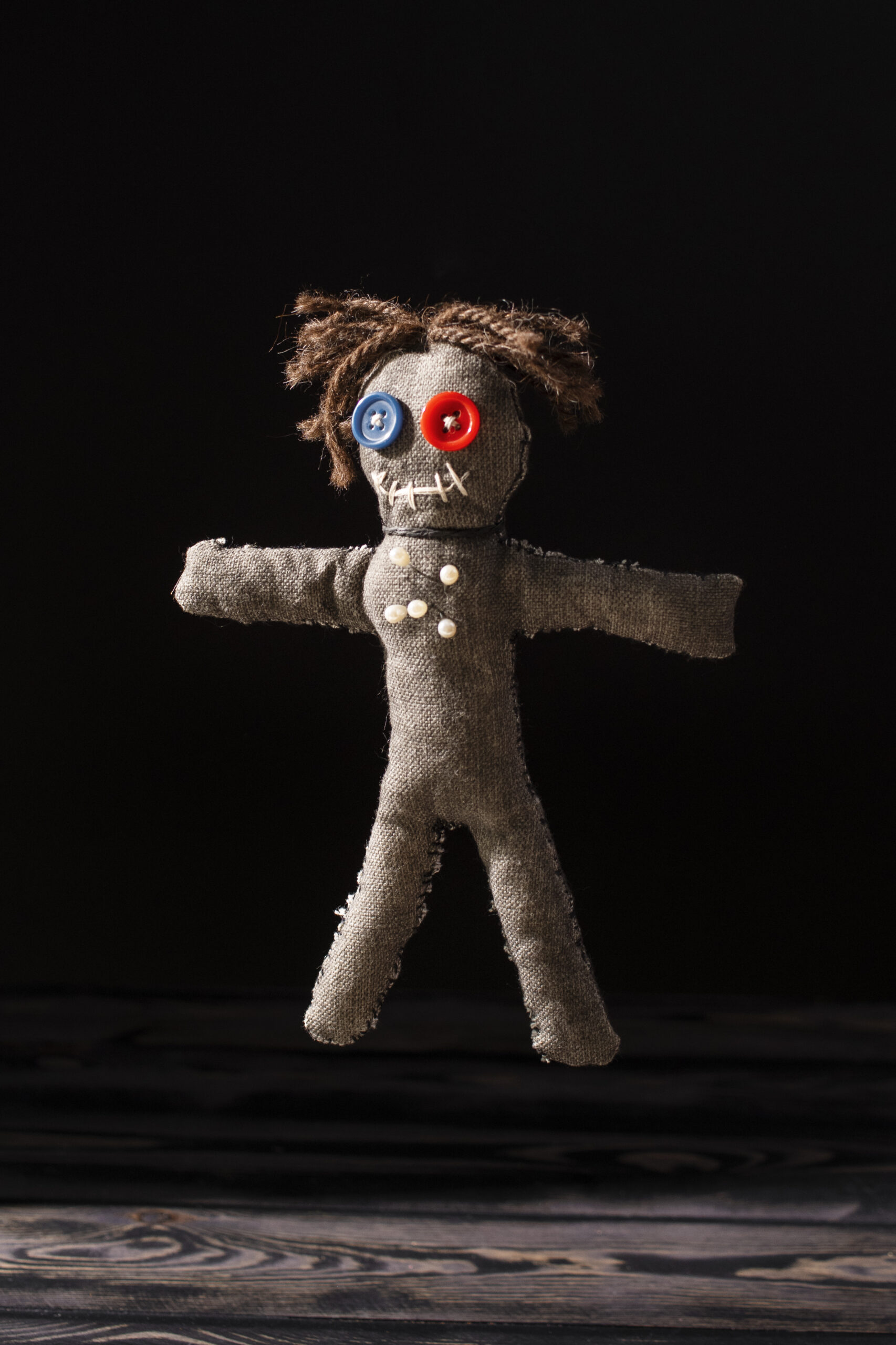
The faded pink rag doll lay on Lorraine’s front step like something somebody had dropped while running. One cloth arm was twisted backward. The little dress was ripped at the seam. Cotton stuffing spilled out onto the porch mat and stuck there in the hot afternoon light.
Emily sat in her idling SUV for three full seconds before her hand moved to the gearshift.
She had just come off a long shift, the kind that left hospital soap under her fingernails and stale coffee in her throat. The vinyl steering wheel was warm under her palms. Somewhere down the street, a lawn mower started up and then cut out. After that, everything felt too quiet, the way a room feels when a sound you’ve grown used to suddenly stops.
Rosie was not just a toy. Anyone with a three-year-old understands this, the way certain objects stop being objects and become organs, external pieces of a child’s heart that happen to be machine washable. Rosie was the doll Mia carried into grocery aisles, doctor’s offices, car seats, and bed. Mia had once cried for twenty minutes because Rosie had been left in the laundry basket during bath time. She insisted Rosie needed her own apple slices on a paper plate. She tucked Rosie under her own blanket at night and patted the doll’s face the same gentle way Emily patted hers.
A three-year-old does not abandon that kind of love on a front step. Not torn open. Not like that.
Emily got out of the SUV and walked toward the porch, and the closer she got, the more wrong it looked. Rosie’s button eye hung by a single thread. The doll’s soft body was warm from the sun, which meant she’d been lying out there a while. When Emily picked her up, stuffing clung to her scrub top.
The front door was closed. The curtains were drawn.
Lorraine’s house usually announced itself before you even reached the steps. A television turned up too loud. A game show audience clapping. Lorraine on speakerphone with somebody from church, pretending she was too busy to gossip while doing exactly that. That afternoon, the house sat silent, sealed, giving back nothing.
Emily knocked once. Then harder.
“Lorraine? It’s Emily. I’m here for Mia.”
No answer.
She pressed her ear near the door. Nothing. No cartoon music. No little sneakers thumping across hardwood. No toddler voice asking for crackers. No outraged Rosie-rescue cry from inside the house.
Emily tried the handle. Locked.
She looked down at the torn doll in her hand, and the old argument rose up in her chest, the one that had been running for three years on a loop.
Lorraine had always acted like Emily was too much. Too careful. Too scheduled. Too modern. Too attached to rules that Lorraine believed a grandmother had earned the right to ignore. Just that morning, when Emily had written Mia’s nap time on a yellow sticky note, Lorraine had smiled at Jackson over her coffee as though Emily were performing anxiety for an audience.
“Mothers today write instructions for breathing,” she’d said.
Jackson had chuckled, because Jackson hated tension before nine a.m. And Emily had smiled, because she had eleven minutes to get to work, and because she had spent three years smiling through exactly this.
That smile haunted her now, standing on the porch with the gutted doll.
She had handed over the diaper bag that morning. She had packed apple slices, the blue sippy cup, a clean shirt, the pink light-up sneakers, and Rosie. She had kissed the top of Mia’s head, breathed in the strawberry shampoo from last night’s bath, and driven away. She had trusted Lorraine with the single most important living thing in her world.
That was the part that wouldn’t stop repeating.
She called Lorraine. Voicemail. She called again. Voicemail. She called Cassandra next, Jackson’s sister, even though she already knew how that would go. Cassandra loved family drama when there was an audience and had a genuine gift for evaporating the moment responsibility entered the room. No answer.
She called Jackson. He picked up on the fourth ring.
“Babe, I’m in the middle of something.”
“I’m at your mom’s. Mia isn’t answering. Your mom isn’t answering. Rosie is torn open on the porch.”
A pause. Then his voice shifted into that patient register men use when they’ve decided that calm and disbelief are the same thing.
“Mom probably took her somewhere.”
“Her car isn’t in the driveway, Jackson.”
“Maybe Cassandra picked them up.”
“Cassandra isn’t answering.”
“Then wait a few minutes.”
Emily looked at the drawn curtains. She looked at the locked door. She looked at the doll’s torn stomach, the stuffing moving slightly in the breeze.
“Jackson. Mia would never leave Rosie like this.”
He exhaled. Just one breath through the phone, but it did more damage than shouting would have, because she could hear everything inside it.
“You’re panicking.”
Maybe she was. But panic is not the same as being wrong. Fear demands proof before it acts. Instinct sees the thing everyone else is busy explaining away. And every cell in Emily’s body, every hour of every shift she’d ever worked watching what happens when people wait for proof, was telling her the same thing.
She ended the call and dialed 911 at 3:24 p.m.
The dispatcher asked her to breathe and start from the beginning. Emily gave her name. She gave Lorraine’s address. She said her three-year-old daughter had been dropped off there at 7:42 that morning. She said the grandmother was unreachable, the house was locked and silent, and the child’s most precious possession had been found destroyed on the front step.
The dispatcher asked whether she could see movement inside. No. The dispatcher asked what Mia was wearing.
Emily closed her eyes and rebuilt the morning. Yellow T-shirt with strawberries. Denim shorts. Pink sneakers that lit up when she stomped. A tiny ponytail with a purple elastic, because Mia had chosen the purple one herself, holding it up like a verdict.
The dispatcher stayed on the line. Emily stayed on the porch, holding Rosie against her chest, as if keeping the doll together might somehow mean Mia was still together, somewhere behind that door.
The first patrol car arrived eight minutes later.
Two officers stepped out. The older one looked at Emily’s face, then at the doll in her arms, and something in his expression settled into seriousness. The younger one looked at the drawn curtains. Neither of them laughed at her. Neither told her to calm down. She would be grateful for that for the rest of her life.
The older officer knocked and identified himself. No answer. He knocked again, harder. Nothing.
The younger officer took Emily through questions for the incident report, writing as she answered. When did you drop her off. Was Lorraine authorized to take her anywhere. Has Lorraine ever failed to answer before. Does Lorraine have any medical conditions. Can Mia unlock doors by herself.
Emily answered every one through a throat that felt two sizes too small.
The older officer checked the side window. Then the other side. The house stayed still. At the corner of the porch, a small American flag shifted in the heat. A neighbor had come halfway down her driveway and stood there with one hand shading her eyes. Emily barely registered her.
The older officer came back to the front door. He looked at Rosie again. Then at Emily.
“Ma’am, step back.”
She obeyed because her body could not do anything else.
The officer forced the door. The sound cracked through the quiet afternoon, wood splitting, metal giving, and Emily flinched so hard Rosie nearly slipped out of her hands.
“Police!” the officer called. Both of them moved inside.
Emily started to follow. The younger officer turned and raised a hand. “Stay here, ma’am.” It was not a request.
She stopped at the threshold, and from there she could see into the hallway. The house smelled faintly of lemon cleaner with something stale underneath it. The hallway light was off.
The diaper bag sat on the hallway bench. Zipped shut. Untouched.
That detail hit Emily harder than the broken door had. If Lorraine had taken Mia anywhere, the diaper bag would have gone too. No one takes a three-year-old out into the world without the bag. Every parent and every grandparent alive knows that.
The blue sippy cup sat on the entry table, half full, the straw still bent from Mia’s little teeth.
Emily gripped Rosie until her knuckles ached.
And then, from the back of the house, came a sound. Not a sob. Not exactly. Something smaller and worse, a dry, broken little voice pushing through a closed door.
“Mommy.”
Emily moved before she thought. The younger officer caught her with his body, both hands up.
“Emily, stay right there.”
“That’s my daughter.”
“I know.”
“Let me get her.”
“I know.”
Down the hallway, the older officer reached the closed door, and his voice changed completely, dropping into something soft and slow.
“Mia, honey, this is the police. Your mommy is right here, okay? We’re going to open the door.”
The handle rattled. It didn’t open. Locked. From the outside.
Emily heard him try again, and then the front yard erupted behind her.
Lorraine came hurrying around the side of the house carrying two paper shopping bags, her cardigan hanging crooked, her face red from the heat. She was not injured. She was not confused. She was not a grandmother rushing back from some emergency.
She was angry about her door.
“What did you do to my house?” she screamed.
Emily turned around slowly. Lorraine’s eyes found Rosie in her arms, and for one second, one single second, the older woman’s entire face emptied out. Then she recovered, much too quickly.
“That doll was filthy,” Lorraine snapped. “Mia was being dramatic.”
Behind them, inside the house, the handle rattled again. Mia whimpered.
The officer in the hallway looked back toward the yard. “Why is this door locked?”
Lorraine’s eyes jumped from him, to Emily, to the splintered front door, doing math that wasn’t working out.
Jackson called at that exact moment. Emily hit speaker because her hands were shaking too badly to hold the phone to her ear.
“Emily, what is going on?”
Lorraine took a step toward the porch and the phone, toward the one court she expected to rule in her favor. “Jackson, tell them this is ridiculous.”
No one answered her. Not Emily. Not the officers. Not Jackson.
In the hallway, the older officer opened the locked door with a tool from his belt. It gave with a small scrape, and Emily saw a slice of the back bedroom.
And then she saw Mia.
Her daughter was sitting on the floor near the bed, knees pulled to her chest, face blotchy and tear-streaked, hair damp at the temples where she’d been crying against her own arms. Yellow strawberry shirt. Purple elastic, half fallen out.
She was not bleeding. She was breathing. She was alive.
Emily made a sound she had never made before and did not recognize as her own.
The officer crouched first, slow and careful, talking to Mia the way you talk to a frightened animal, and then he stepped aside, and Emily crossed the hallway and dropped to her knees, and Mia launched into her arms with a force that knocked Emily backward onto the carpet. Small hands fisted into her scrub top. Breath coming in hitching little bursts against her neck.
“Mommy, I called you,” Mia whispered.
“I know, baby. I know. I came.”
“I wanted Rosie.”
Emily looked back toward the porch, where the torn doll had fallen from her hands when she ran, and something in her chest split cleanly in two.
Lorraine was still talking. That was the worst part. Even then, even with her granddaughter shaking in her mother’s arms on the floor and two police officers in her hallway, Lorraine was still talking.
She said Mia wouldn’t nap. She said Mia kept crying for her mother, on and on, working herself up. She said she had only stepped out for a few minutes. She said the doll was making everything worse, that Mia used it to throw fits. She said she’d locked the door because Mia wouldn’t stay put.
She laid out each sentence like a small reasonable brick in a wall everyone present was supposed to step back and admire.
The younger officer’s face hardened as he wrote. “You left a three-year-old locked in a room while you went shopping.”
Lorraine lifted her chin. “I was gone twenty minutes.”
Emily looked at the paper bags sitting on the porch where Lorraine had dropped them. Milk. Dish soap. A magazine. A carton of eggs. Nothing urgent. Nothing that could explain leaving a child. Nothing that made sense of a door locked from the outside. Nothing on this earth that mattered more than the little girl currently trying to climb inside her mother’s ribcage.
Jackson’s voice came through the speaker, very quiet now. “Mom?”
Lorraine turned toward the phone like a drowning woman toward a rope. “Jackson, she is making this into something ugly.”
There are moments when a husband chooses what kind of man he is going to be. Not with a speech. Not with a promise. With what he refuses, from that moment forward, to excuse.
Jackson was silent for a long moment. The yard hummed with heat.
Then he said, very quietly, “Did you lock my daughter in a room?”
Lorraine’s face crumpled, but Emily saw clearly that it crumpled with outrage, not shame. “I was teaching her to settle down.”
Emily pressed her cheek to Mia’s damp hair and closed her eyes. Mia smelled like warm carpet, dried tears, and the strawberry shampoo from last night’s bath, a lifetime ago.
The older officer asked Emily if she wanted Mia medically evaluated. Emily said yes before Lorraine could open her mouth. They were not taking chances on anyone else’s judgment. Not anymore. Not ever again.
At the hospital intake desk, Emily filled out forms one-handed with Mia asleep against her shoulder, boneless and heavy the way only exhausted children get. The nurse glanced at the police incident number at the top of the paperwork, then at Emily’s face, and her voice softened. “We’ll check her over, Mom.”
Mia was dehydrated and frightened, but physically unharmed. The doctor documented everything carefully, every observation going into a record no one could later argue with. A nurse brought a small plastic bag for Rosie, because Mia had woken briefly, asked for the doll, and started shaking when she saw the torn arm and the hanging eye.
So Emily sat in the exam room under the bright fluorescent lights with a little emergency sewing kit from the bottom of her purse, and tried to stitch Rosie back together while her daughter slept. Her hands would not stop trembling. The seams came out crooked. She kept going.
Jackson arrived before the paperwork was finished, looking like a man who had aged ten years on a forty-minute drive. He stopped in the doorway when he saw Mia asleep against Emily’s chest. Then his eyes found Rosie on Emily’s lap, half-sewn, and his mouth tightened until it shook.
“I should have listened,” he said.
Emily did not comfort him. There are apologies that only count after action, and his account was badly overdrawn. But she watched what he did next, because what he did next mattered.
He did not flop into the chair and make the moment about his guilt. He did not reach for Mia without asking, the way his family reached for everything.
“Can I sit with you?” he asked.
Emily looked at their sleeping daughter. Then she nodded. Jackson sat on the other side of the hospital bed and rested his hand near Mia’s foot, not on it, close enough to be there, far enough to let her choose. His face broke quietly when she curled away from him in her sleep.
Cassandra texted two hours later. Heard Mom had a bad afternoon. Call me before Emily exaggerates.
Emily stared at the message until the letters blurred. Before Emily exaggerates. The family operating system, in five words.
Jackson saw it. He took the phone gently out of her hand and typed the reply himself.
Mia was locked in a room while Mom went shopping. There is a police report. Do not contact Emily about this.
Then he set the phone face down on the table.
It was the first moment all day that Emily felt the floor come back under her feet.
The next morning, their house was quiet in a different way, the careful quiet of a home checking itself for damage. Mia slept late, Rosie tucked beside her on the pillow, unevenly stitched, one arm now slightly shorter than the other. Emily made pancakes because Mia had asked for them in a whisper the night before. Jackson stood at the stove and flipped them too early and burned the edges, and nobody cared.
No one mentioned Lorraine until Mia did.
“Grandma was mad at Rosie,” she said, out of nowhere, the way three-year-olds detonate things over breakfast.
Emily put down the spatula. Jackson turned off the burner. Mia looked from one parent to the other, gauging, the way children do when they’re not sure if the truth is allowed.
“I was loud,” she said.
Emily came around the counter and knelt down so they were eye to eye.
“You are allowed to be loud when you are scared,” she said. “Always. Every time. That is a rule of this family.”
Mia’s lip trembled. “Rosie cried too.”
Jackson pressed his hand to his mouth and turned toward the window. That was the sentence that finished him, and Emily let it. He needed finishing.
For three years, Emily had tried to make Lorraine like her. She had accepted the comments about organic snacks and screen time. She had swallowed the jokes about modern mothers. She had let Jackson sand down every insult until it could pass as misunderstanding, and she had called that keeping the peace.
But a torn doll on a front step tells the truth without needing anyone’s permission. It says that someone decided a child’s comfort was an inconvenience to be managed. It says someone wanted control more than they wanted care. It says the peace you’ve been keeping was never peace at all. It was just quiet, purchased on credit, and the bill always comes.
By noon, Jackson called his mother. He set the phone on the kitchen counter, on speaker, in the open, no more hallway conversations in that family ever again. Emily sat with Mia in the living room, close enough to hear, far enough not to script him. This one had to be his.
Lorraine answered with tears already loaded in the chamber. “Jackson, thank God. Your wife has turned everyone against me.”
His voice came out flat and level. “You are not seeing Mia.”
Silence. Then Lorraine laughed, one short, terrible note. “Don’t be ridiculous.”
“You are not seeing Mia,” he repeated. “Not alone. Not with Cassandra. Not at our house. Not at yours.”
“I am her grandmother.”
“You locked her in a room.”
“I raised children before that woman ever changed a diaper.”
“You locked my child in a room and left the house.”
Lorraine began to cry harder, the practiced kind, the kind that had ended every argument in that family for forty years.
Emily watched Mia carefully feeding a pancake piece to Rosie on the living room floor, and searched herself for what she felt. Not guilt. Not pity. Not even rage anymore. Something colder and far more durable.
A decision.
The police report came together over the following days. Statements from Emily, from Jackson, from both officers, from Lorraine. The 911 log fixing the call at 3:24 p.m. The incident report listing the forced door, the doll, the locked room, the shopping bags, the diaper bag still zipped on the bench, and Mia’s condition when found. No document could ever capture the sound of a child’s voice coming through a closed door. But it could do something almost as important.
It could stop everyone from pretending nothing happened. In families like Jackson’s, that was everything.
For weeks, Lorraine tried to come around the side door of the story, since the front of it was now a matter of public record. She called Jackson at work. She sent Cassandra with messages, which Jackson returned unopened. She mailed Mia a stuffed animal, which went straight into a donation bag, because Mia flinched at the sight of the box with her grandmother’s handwriting on it, and that flinch was the only review that mattered. Lorraine wrote that she had been embarrassed. She wrote that Emily had never liked her. She wrote that grandparents make mistakes too.
Jackson read the last letter at the kitchen table, folded it once, and dropped it in the trash.
“That wasn’t a mistake,” he said. “A mistake is forgetting the sunscreen.”
Emily didn’t answer. She didn’t have to anymore. That was new, and it was everything.
The repair work was slow, the way it always is. Mia started sleeping with a night-light again. She asked whether doors could lock from the outside. She asked, over and over, in a dozen different ways, whether Mommy would always come if she called.
Emily answered yes every single time. At bedtime. At two in the morning. From the front seat in the preschool pickup line, months later, when the question floated up from the back seat out of nowhere while Mia held Rosie by the repaired arm and stared out the window at nothing.
“Always.”
That is what love after fear actually looks like. Not one grand reassurance. Repetition. You say the same safe thing, in the same steady voice, a hundred times, a thousand, until the child’s body, not just her mind, starts to believe it.
Jackson did the work too, and Emily gave him credit for it, slowly, as it was earned. He changed the locks. He blocked the numbers. He sat through the meeting at Mia’s preschool while the director wrote down, in official ink, exactly who was and was not authorized to pick her up, and he taped a copy of that list inside the kitchen cabinet where both of them would see it every day.
And he stopped saying his mother meant well.
That was the biggest repair of all. Not the apology. Not the tears in the hospital. The stopped excuse. Because every excuse he had ever made for her had been a brick in the wall around that locked room, and he finally understood that he’d helped build it.
On Mia’s fourth birthday, Emily stood near the porch and watched her daughter tear across the backyard with Rosie tucked under one arm like a football. The doll’s stitches were crooked. One button eye was newer and shinier than the other. The repaired arm sat a little shorter than its twin.
Mia could not have cared less. She had picked the repair thread herself from Emily’s sewing box, bright blue, because she announced that Rosie wanted a superhero scar. Emily had sewn it in exactly as instructed.
Jackson came to stand beside her. The small flag by the railing moved gently in the warm air. The yard was full of clean, ordinary noise, kids shrieking, sneaker lights flashing across the grass, somebody’s juice box hitting the ground.
“I keep thinking about that day,” Jackson said quietly.
“I do too.”
“I thought you were panicking.”
“You did.”
His face tightened, and he made himself say the rest. “I was wrong. You knew in three seconds what I couldn’t see over the phone. I’ll never second-guess that again.”
Emily watched their daughter laugh as her sneakers strobed pink across the lawn, and let his words settle into the place where the old argument used to live.
Because that ordinary noise, that was the thing that had almost been taken from them. Not anything dramatic. Just ordinary. A child running with a doll. A mother pulling into a driveway at the end of a shift. A grandmother who should have simply opened the door.
The first thing Emily had seen that day was Rosie, torn apart on the front step, and for a long time afterward that image lived inside her like a wound that wouldn’t close. But slowly, over the months of night-lights and repeated promises and crooked blue stitches, it changed into something else.
Proof.
Proof that her instinct had spoken clearly, in a single image, before a single fact was available. Proof that she had listened to it over the patient voice on the phone telling her to wait. Proof that sometimes the smallest object in a quiet yard will tell you the whole truth before any adult in your life is brave enough to say it out loud.
And every time Mia asked, in daylight or in darkness, whether Mommy would come when she called, Emily gave the only answer that had ever mattered, the answer she would keep giving for the rest of her life.
“Always.”

Specialty: Legal & Financial Drama
Michael Carter covers stories where money, power, and personal history collide. His writing often explores courtroom battles, business conflicts, and the subtle strategies people use when pushed into a corner. He focuses on grounded, realistic storytelling with attention to detail and believable motivations.