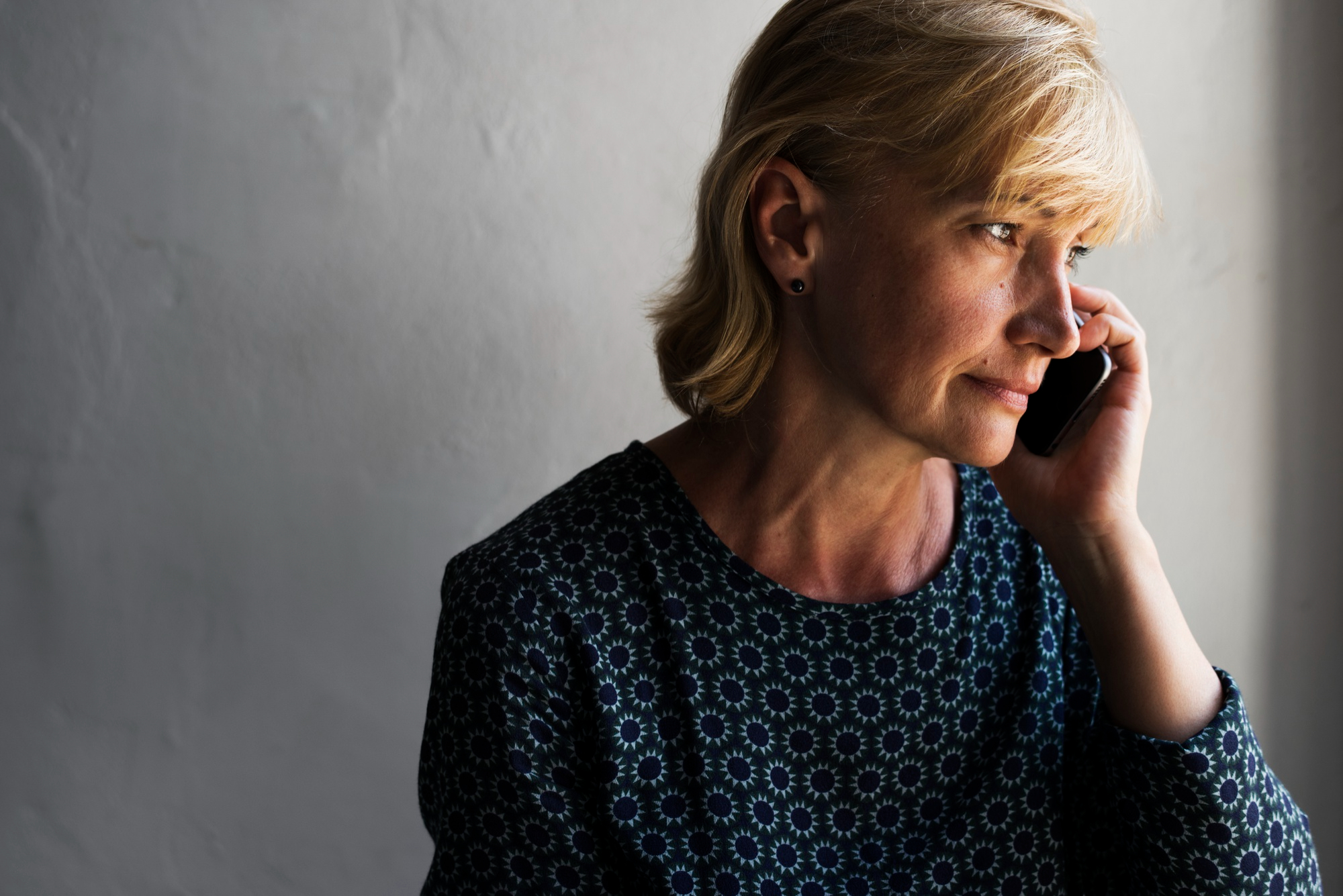
The doorbell rang on a Thursday morning and I almost did not answer it.
At sixty-seven, I had learned that unexpected knocks rarely brought anything good. But the bell rang again. Not impatient. Just certain. I wiped my hands on a dish towel and looked through the narrow window beside the door.
A young woman stood on the walkway outside my apartment in San Diego, one strap of a worn backpack over her shoulder. She looked like she was in her early twenties, with dark hair pulled back and the tired posture of someone who had traveled farther than she expected. She was not dressed like a salesperson. No badge, no brochure, no practiced cheerfulness.
She looked nervous.
I opened the door halfway.
“Can I help you?”
She stared at me for a moment, then swallowed.
“Are you Rosa Delgado?”
Something about her face made my hand tighten on the knob. It was not recognition exactly. More like an old photograph trying to come into focus.
“Who’s asking?” I said.
She took a breath.
“My name is Sophia. Sophia Delgado.”
I felt the hallway go quiet around us.
“I’m Daniel’s daughter.”
My son’s name landed between us like something pulled from a grave.
I had not spoken it in years. Not to neighbors, not to the women at church, not to the pharmacy clerk who once asked whether I had children. I had buried the name because every time it surfaced it carried the same image: my husband on the floor, the safe hanging open behind him, twenty-five years of savings gone. Daniel gone with it.
Antonio had died three days later. Heart attack, the doctor said. Catastrophic damage. Clean, medical words that could not explain how a family breaks in one morning and never reassembles.
For over twenty years, my son had not called, not written, not come back. He had vanished as if he had never existed.
And now his daughter was at my door.
She had Antonio’s eyes.
That was the part that made me step back.
“Come inside,” I heard myself say.
Sophia followed me into my small apartment. One bedroom, neat but worn at the edges, the kind of place where nothing matched but everything had been cleaned and repaired until it could be cleaned and repaired no further. We ended up at the kitchen table without discussing it. I offered coffee because I needed something to do with my hands.
She wrapped both hands around her mug like she was cold, though the morning sun was already warming the window.
“He died last month,” she said.
I waited.
“Cancer. Pancreatic. He was sick almost a year.”
The news landed flat. I had already mourned Daniel. Done it in pieces for more than two decades. The first grief had been sharp, the kind that made me look toward every door when a bell rang. Then came the heavier grief, settled into my bones through the years. After that, anger moved in and made a home where sorrow used to live.
“What kind of things did he tell you?” I asked, when she said he had told her things before he died.
“About you. About San Diego. About what happened.”
“What happened,” I said flatly, “is that he emptied our safe and disappeared.”
She flinched but did not look away.
She reached into her backpack and set a small silver key on the table between my calculator and red pen. A storage-unit key. The number 247 stamped into the metal.
“He made me promise to find you,” she said. “He said everything is there. What he took. Why he left. All of it.”
I picked up the key. Cold in my palm, lighter than it should have been for carrying what it represented.
“I haven’t seen my son in over twenty years,” I said. “I didn’t know if he was alive or dead or if he ever thought about me at all.”
“He thought about you,” she said. “All the time.”
I almost laughed. Not because it was funny, but because the words reached a place I thought had gone numb.
The truth about why I had believed what I believed required going back to the restaurant. La Cocina de Antonio on University Avenue. Twenty tables, red vinyl booths, a bell above the front door, and framed photographs of Guadalajara on the walls. Antonio had done all the cooking. I managed the front of the house and kept the books. Daniel had started working there after high school and never left.
We were a family.
Antonio kept cash in a safe in the back office, an old habit from growing up poor in Guadalajara where his family had lost everything when a bank failed. Two hundred and fifty thousand dollars by the time it ended, organized in labeled envelopes, carefully added to each week. The building fund was the biggest one. Our landlord had promised to sell the property when we saved enough. Antonio dreamed of owning it outright. No one able to take it from us.
When Daniel turned twenty-one, Antonio taught him the combination.
“In case something happens to me,” he had said, “you need to be able to take care of your mother.”
Daniel memorized the numbers, tore the paper into pieces, and threw them away. Just as his father had instructed.
The morning the world changed had started like any other. Antonio went to the office early for cash before a supplier delivery. I was prepping onions and peppers in the kitchen, the radio playing norteño music low. Then I heard a heavy thud from the back.
I found Antonio on the floor. His face was gray, his hand at his chest. Behind him, the safe door hung open. Empty. Completely empty.
They kept him on machines for three days and used careful words. Catastrophic. Irreversible. I did not understand at first that those words were preparation for what came next. Antonio died without waking up. On the third day. The same day the police finished asking their questions about who knew the safe combination.
Only three people had known.
Daniel never answered his phone.
I went to his apartment on the second day. His landlord let me in. Everything was there, clothes in the closet, dishes in the sink, bed unmade. But Daniel was gone. His car was gone from the parking spot.
I went back to the kitchen table and looked at Sophia across from me.
“So whatever is in that storage unit,” I said, “you think it explains all of it.”
“I think it does,” she said quietly. “I just know there’s more to the story.”
We drove to the facility off Marina Boulevard in my aging Honda. A chain-link fence, rows of orange roll-up doors, a small office with faded blinds. Unit 247 was at the far end, tucked into the corner.
I stopped in front of it.
My palm was sweating around the key.
I fitted it into the lock. It clicked. I pulled the door up and the metal screamed on its rails.
Against the back wall sat a dark green safe.
Medium-sized. The exact same kind as the one Antonio had kept in the restaurant office.
For a moment I could not breathe right.
He had stolen from a safe and spent decades keeping everything inside another one.
A piece of paper was taped to the top. Numbers in Daniel’s handwriting. His birthday. July 15, 1978. Numbers I would know anywhere.
My hands shook, but I needed to do it myself.
Right to 07. Left past zero to 15. Right to 78.
The handle gave. The door swung open with a familiar metallic groan I had not heard in decades.
Stacks of cash. Rubber-banded, organized by denomination, each stack wrapped with a paper band marked by year in black ink. The first stacks were from the early years after he left. Then the years marched forward through the 2000s and 2010s. The most recent stack was from only months before.
“Count with me,” I said.
Sophia opened the calculator on her phone.
Stack after stack. Year after year.
Finally she looked at the screen.
“Three hundred fifty-six thousand dollars.”
I sat down hard on the concrete.
More than he had taken. More than two hundred and fifty thousand. He had added to it. Saved more. Year after year, for over two decades.
I started crying before I understood I was going to. Not the managed grief I had practiced for years, the quiet kind that knew its place. Real crying, from somewhere deep and ugly and old. Hot tears that were angry and confused and something else I did not have a name for.
Sophia sat beside me on the concrete. She did not touch me. She just stayed.
When I could breathe again, I looked back at the safe. Three cardboard boxes sat behind where the money had been.
All three were labeled Sophia.
The first held photographs. Hundreds of them. Sophia as a newborn, as a toddler with a gap-toothed smile, in school pictures spanning every year. I picked up one showing her at about seven, standing in front of a birthday cake with Daniel behind her, his hands on her shoulders. Both of them smiling, but his eyes looked sad even then. I turned it over.
His handwriting on the back.
Her seventh birthday. She asked about you today. I didn’t know what to say.
Another photo. Sophia in a pink dress, Daniel in a suit.
Her quinceañera. She’s fifteen. She looks like you when she smiles.
Nearly every photograph had his handwriting on the back. First steps today. Lost her first tooth. Honor roll again. You would be proud.
Sophia was crying too, seeing herself through her father’s eyes.
The second box held folders labeled by year. The third contained something wrapped in a blanket. We lifted it together and found a small wooden box, old and worn at the corners. Inside was a men’s watch, silver and hand-wound, its face scratched, the band worn smooth, frozen at some long-ago time.
I turned it over.
An inscription on the back: To Daniel. Graduate 1996. Love, Dad.
Antonio had given that watch to Daniel the day he graduated high school. I remembered it. Antonio had saved for months.
Beneath the watch was a photograph of the three of us in front of the restaurant. I was younger. Antonio had his arm around my waist. Daniel stood between us, grinning at the camera.
We had looked happy.
A folded note lay at the bottom of the box.
The watch was mine. Dad gave it to me when I graduated. I wore it every day, even after it stopped working. The photo was in my wallet. It’s all I had left of you both.
He had carried it with him into exile. A broken watch and a family photograph. His only connection to the father who died and the mother he had left behind.
At the bottom of the safe, beneath all the stacked money, was a sealed envelope.
Thick with pages.
Rosa, written across the front.
Sophia watched me pick it up.
“He wrote it the week before he died,” she said. “He said everything you need to know is in there.”
We drove back separately. I dropped Sophia at her hostel and sat in my parked car for a while with Daniel’s watch in the wooden box on my lap and the letter on the passenger seat.
By the time I got home the sun was setting, painting my kitchen window orange. I made tea I did not want, sat down, and opened the envelope.
Six sheets of paper, written front and back. The handwriting was shaky in places, unsteady in a way I recognized as a body near its limit.
Mom, it began.
I don’t know how to start this. I’ve written it in my head a thousand times and never found the right words. I still haven’t. But I’m dying, and I’m running out of time to be a coward.
You think I stole from you and Dad. You’re right. I did. But not for the reason you think.
That spring, Carlos Ruiz came to me with a job. You remember Carlos. We’d been friends since high school. He said he had side work. Deliveries. Paid cash. Two thousand dollars for one night. I wanted a car. I wanted to buy it myself, not ask you both for help, because you had already worked so hard for everything.
Carlos said it was easy. Just packages from San Diego to Tijuana. I should have asked what was in the packages. I should have asked why anyone would pay two thousand dollars for one night of driving.
But I was twenty-two, and stupid, and proud.
We picked up the package on a Wednesday night. A heavy box, taped shut. We stopped at a gas station off the 805 and I went inside for water. When I came back, Carlos was panicking. The car window was smashed. The package was gone.
That was when he told me what was inside.
Cocaine. Five kilos. Worth two hundred and fifty thousand dollars.
Less than two hours later, they found us. Three men pulled up while we were still at the gas station. Carlos knew them. They were not police. They took us to a house in Chula Vista and explained that we owed two hundred and fifty thousand dollars. We had forty-eight hours to bring it to Tijuana in cash.
If we didn’t, they would kill us both. Then they would visit our families.
They said your name, Mom. They knew the restaurant address. They described Dad. They told us not to go to the police and said they would know if we did.
I believed them.
I told myself I was protecting you. I told myself if I didn’t pay them, they would kill all of us. I told myself I would pay it back somehow, even if it took the rest of my life.
That night I went to the restaurant. I let myself in through the back. I opened the safe. All those envelopes were there. Years of saving. Dad’s careful handwriting on each one. I took all of it. I tried to close the safe, but my hands were shaking so badly I couldn’t. I left it hanging open.
The next day, Carlos and I drove to Tijuana. We met them at a warehouse. We handed over the cash.
Then they told us we were staying in Mexico.
They said if we crossed back, they would assume we had talked to police. That our families would become problems.
We were trapped.
That afternoon I tried calling the restaurant to explain. The line was busy. I tried again. Busy. The third time, a stranger answered and said there was an emergency and the restaurant was closed.
I found out two days later that Dad had found the empty safe.
Heart attack.
I killed him, Mom.
I emptied that safe and his heart couldn’t take it. He died thinking I had betrayed him. He died thinking I stole from my own family and ran.
How do you come back from that? How do you call your mother and say I’m sorry I killed Dad, but I had a reason?
I couldn’t. I was a coward. I stayed in Tijuana. Got construction work. Lived cheap. Saved everything. I opened a safe of my own and started filling it every week.
I labeled each stack with the year.
Then I met Sophia’s mother. We had Sophia. She left when Sophia was three and I raised her alone.
Every time I had a chance to save, I saved. Every time I thought about buying something nice or making my life easier, I saw Dad on that floor.
Sometimes I crossed the border and came to San Diego. I watched from a distance, making sure you were okay. When I saw you needed help, I helped the only way I could. Anonymously. So you would never know it was me.
The safe filled up. Years passed. Sophia grew.
I kept thinking I would come back one day. Face you. But every year that passed made it harder.
Then I got sick.
The money in the safe is yours. All of it. It was always yours. I know it doesn’t fix anything. It doesn’t bring Dad back. It doesn’t give you back all those years.
But it is all I have.
I spent my whole life trying to pay back one terrible night.
I am sorry, Mom.
Sorry I took the money. Sorry I ran. Sorry I was too afraid to face you. Sorry you had to lose your husband and your son in the same week.
I love you. I always did.
I wish I could have told Dad.
I’m sorry.
Daniel.
I set the pages down with my hands still shaking.
The tea sat untouched beside me. The streetlight came through the kitchen window, making everything look cold. I had been sitting in that kitchen for over twenty years telling myself one story about my son.
Now I had another one.
Understanding did not erase the pain. It changed it. Made it heavier in some places and softer in others.
I remembered the eviction notice three days after I lost my job at the retail store, when the hours had been cut and I could not make rent. The landlord had called, confused, and said someone had paid the balance plus late fees. He would not say who. I had thought it was an accounting error. A miracle.
It was Daniel.
The appendectomy I had one February with no insurance, the bill more than eight thousand dollars. I had cried looking at it. Then a nurse told me it had been covered by an anonymous donation to the hospital’s charity account, specifically designated for my bill.
It was Daniel.
The transmission repair one winter when my car died. The mechanic called and said someone had already paid. I had cried in that parking lot, thinking I had finally gotten lucky.
It was Daniel.
Anonymous envelopes in my mailbox over the years with no return address, just enough to cover small emergencies.
All of it, Daniel.
He had been crossing the border and watching my life from a distance and seeing when I struggled and sending what he could. All the times I had survived alone through my own determination, he had been there beside me in secret, trying to fix what he had broken.
He had stolen everything.
But he paid it back.
He disappeared.
But he never really left.
Both things were true at the same time. There was no clean way to resolve that. Some truths do not resolve into something comfortable. They only become true in a more complete way.
The next morning, Sophia and I met at a small café near downtown. She was already there when I arrived. Two coffees on the table. Outside, ordinary traffic moved in the ordinary way of a city that has nothing invested in your interior weather.
We sat in a booth and neither of us knew how to start.
“Do you believe him?” she asked eventually.
I thought about it, actually thought.
“I believe it happened the way he said,” I answered. “I believe he was terrified. I believe he thought he was protecting us.”
“But?”
“But I am still angry he didn’t trust us enough to tell the truth. We could have run together. Faced it together. He made the decision for all of us and we paid for it.”
Sophia nodded slowly.
“He said the same thing in the hospital. That his biggest mistake was thinking he had to handle it alone.”
“What were his last days like?” I asked.
The question came out softer than I intended.
She told me. The hospice room, the morphine. Most of the time he had not been fully present. Then one night at two in the morning he had woken up completely lucid and grabbed her hand so hard it hurt. He had started talking about San Diego, about the restaurant, about Antonio and about me. He had cried while he talked, she said. He kept saying I killed him. I killed my own father. Then his machines alarmed and the nurses rushed in and she was pushed into the hallway. Two hours later a doctor came out and said his heart had given out.
Heart attack, she said.
Like Antonio.
The parallel sat between us, cruel and precise.
Father and son dying with the same wound at the center of the story. One from discovering the betrayal. One from finally confessing it.
Sophia asked the question I had known was coming.
“Can you forgive him?”
I looked out the window.
“I don’t know if forgiveness is the right word,” I said after a while. “What I can say is that I understand why he did it. And I accept that he tried to make it right.”
“Is that enough?”
I looked at her face. Antonio’s eyes looking back at me across three generations.
“It has to be,” I said. “He’s gone. I can’t forgive him to his face. I can’t yell at him or hug him or tell him what those years cost me. All I can do is decide how I move forward.”
She asked if she could still visit.
“You’re not him,” I said. “You’re you.” I touched her hand briefly across the table. “Yes. You can visit.”
Over the weeks that followed, we met regularly. Sometimes at my apartment, sometimes at coffee shops, once at a park where we walked for an hour without saying much but found it sufficient. We traded stories. She told me about Daniel teaching her to ride a bike, the Sunday breakfasts he cooked using recipes he had learned from Antonio, the way he came to every parent-teacher meeting even when he came home from work covered in construction dust. I told her about Daniel as a boy, how he loved standing on a stool beside Antonio to watch him cook, how his laugh used to fill the restaurant, how he was always gentle with the stray cats that gathered near the back door.
We were building something. Not what had been lost, but something new.
I moved the money from the safe into a bank account. For the first time in my life, those numbers appeared after my name on an official statement. I quit one bookkeeping client, then another. I stopped doing math in my head at the grocery store. I fixed the broken faucet, the cabinet door, the window screen I had been patching with tape for two years. I bought a reliable used car. I bought good coffee.
Then I used most of the rest for a down payment on a small house. Two bedrooms. A yard. A neighborhood where people waved from porches in the evenings.
Nothing fancy.
But mine.
One bedroom for me. One for when Sophia visited.
I set up an account for her as well. She was in nursing school and working part-time. The money would help her build a life without carrying every burden alone, without having to be as stubborn and exhausted as I had been. I wanted her to have the option of not surviving on the edge of things.
One weekend, Sophia drove us to Tijuana. We crossed the border together, something I had not done in decades. She drove through streets I did not recognize, past shops and food carts and apartment buildings with laundry on the balconies. Daniel was buried in a small cemetery at the edge of the city.
His headstone was simple.
Daniel Delgado. Beloved father.
Sophia stayed back and gave me space.
I stood at the grave alone. I had not prepared what to say. But the words came anyway, quietly, with no one else to hear.
“I read your letter,” I said. “I know what happened now.”
A bird sang somewhere in the trees beyond the wall.
“I understand you were scared,” I said. “But you should have told us. We could have faced it together. You didn’t have to carry it alone.”
The stone gave no answer.
“You carried it alone your whole life,” I continued. “That was your choice. I spent just as long being angry. That was mine.”
I knelt and brushed dirt from the base of the stone.
“You raised a good daughter,” I said. “She is smart and kind and strong. You did that right.”
My voice broke slightly on the last sentence.
“Antonio would have loved her. He would have been proud.”
I paused.
“Maybe he would have been proud of you too. For that part.”
I placed the flowers I had brought beside the grave. A simple bouquet in bright colors against the gray stone.
Sophia drove us home in the quiet.
Some things do not need words. Some understanding happens at a level below language, in the body rather than the mind, and you know it has occurred not by anything you say but by the way the weight redistributes itself afterward.
Back in my house, I hung photographs on the living room wall.
One of Daniel at around twenty, before everything fell apart, smiling in the restaurant with an apron and a tray.
Beside it, Sophia’s nursing school graduation photo. Cap and gown. Diploma in hand.
Same smile.
Family, continuing.
Different than before, but continuing.
Sophia started coming every few weeks. We cooked together. I taught her how to make tamales the way Antonio had taught me, showing her how to spread the masa, how to fold the corn husks just right, how to feel the texture instead of measuring by eye.
She took notes on her phone and asked questions and learned quickly.
One evening we were in the kitchen, music playing softly, the garden outside the window showing early green from the seeds I had planted in the spring. Sophia was working on her corn husks with the focused expression that reminded me of Daniel learning to chop vegetables beside his father.
I watched her and thought about Daniel at twenty-two, making a desperate decision in a moment of terror. About Antonio dying without knowing the truth. About myself, surviving alone for twenty-five years, not as alone as I had believed.
Daniel broke our family.
Then he spent the rest of his life trying to place something back into the space he had emptied.
He paid back every penny.
He watched over me when I did not know.
He raised his daughter to be kind, and then he sent her to find me.
That has to count for something.
Sophia looked up.
“Like this?” she asked, holding up a neatly folded tamale.
I checked it and smiled.
“Perfect,” I said. “You’re a natural.”
She smiled back.
Three generations of smiles moving through the same face.
Outside my window, the garden was coming up green and deliberate, reaching toward the light in the ordinary determined way that things grow when someone has finally decided to tend them.
We kept working side by side, hands moving together, making something from everything that had broken.

Adrian Hawthorne is a celebrated author and dedicated archivist who finds inspiration in the hidden stories of the past. Educated at Oxford, he now works at the National Archives, where preserving history fuels his evocative writing. Balancing archival precision with creative storytelling, Adrian founded the Hawthorne Institute of Literary Arts to mentor emerging writers and honor the timeless art of narrative.