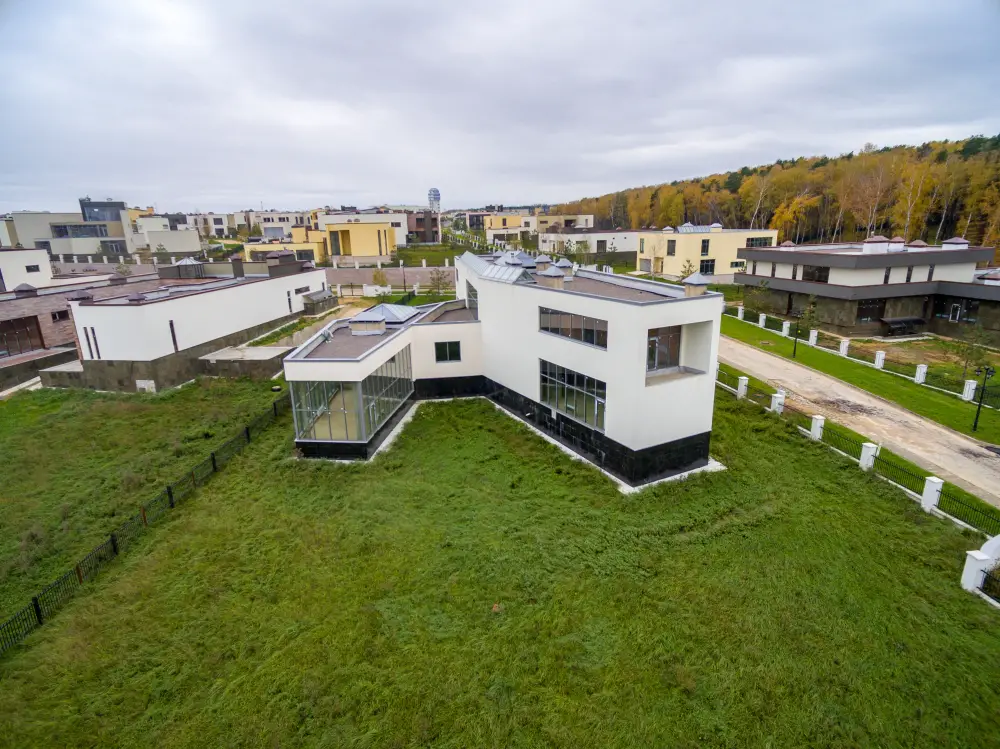
The drive to Lake Harmony took three hours on a good day, and that particular Friday it was a good day. The mountain road wound through old-growth pines and the kind of silence that does not exist in the city, and by the time Margaret Wilson saw the first glimpse of the lake between the trees, she had already begun to feel the week loosen its grip on her shoulders.
She was sixty-five. Retired fourteen months ago, after a career in hospital administration that had taught her, among other things, that the difference between crisis and resolution was almost always documentation and patience. The city was too loud and too fast and she had earned the right to ignore it on weekends. The Lake Harmony villa had been the answer to that for twenty-two years. Her husband Robert had insisted on building it, sketching the floor plan on the back of a restaurant receipt over their anniversary dinner when she had thought he was being impractical. She had been wrong about that, as she had been wrong about several things across a long marriage, and she had made peace with most of them in the years since his death.
The white shutters came into view as she turned into the long driveway.
Something was off.
Smoke from the chimney. Music through an open window. A second car parked beside the house in a way that suggested someone who had planned to be there, not someone stopping by. Margaret frowned and parked and walked toward the terrace, her sensible flats crunching on the gravel, her mind already doing what it did when things did not add up: cataloguing, assessing, resisting the urge to reach a conclusion before she had all the information.
Through the large glass terrace doors, she could see Emily lounging in a cream bathrobe, coffee cup in hand, her hair impossibly neat for a country morning. Her husband David sat beside her in a matching robe, scrolling through his phone with the posture of a man who believed himself to be in his natural environment.
Emily noticed her first. A flicker of surprise moved across her face and was replaced almost immediately by something Margaret had never seen there when looking at her. Not irritation, which she had seen plenty of. Not sadness, which had come and gone in waves since Robert died. Something colder.
Coldness.
“Mom,” Emily said, setting her cup down. “What are you doing here?”
Margaret stood in the doorway that led to her own terrace. “What am I doing here? This is my house, Emily. I drove three hours.”
Emily gestured vaguely, as if the distance were a minor bureaucratic detail she was willing to acknowledge but did not find particularly relevant. “We have plans. It’s a private weekend. It’s inconvenient for you to be here right now.”
The word inconvenient settled in Margaret’s chest like a stone.
“Emily.” Her voice was quiet, steady. “Your father and I built this place. Every piece of furniture, every tile, we chose together.”
Emily sighed in the particular way that communicates not patience but its performance. “I know, Mom. But things change. You don’t even come here that often anymore. You should focus on yourself.”
Focus on herself. The villa was part of herself. The only place left where she felt Robert’s presence consistently, where she could sit on the terrace in the mornings with a cup of coffee and feel the particular peace that came from being somewhere built with love and intention. The suggestion that she ought to redirect that need toward something more age-appropriate was not concern. It was dismissal dressed as concern.
David spoke, his tone quiet and firm in the way of men who have confused measured delivery with wisdom. “Maybe it’s best if we have the weekend, Margaret. We can talk about this later.”
Margaret looked at her daughter’s face and saw the thing underneath the irritation and the practiced reasonableness. A smug certainty. The expression of someone who believes the outcome is already arranged.
“I wouldn’t want to intrude,” Margaret said.
Emily nodded, visibly relieved by the apparent capitulation.
Margaret walked back to her car and sat in the driver’s seat with the engine off, looking at the lake through the windshield. The water was indifferent to everything happening on its shore, as it had always been. That quality had appealed to her about this place from the beginning. The lake did not require anything of you. It simply existed, glittering and cold and permanent.
Then she started the engine and drove home.
She did not shout. She did not demand anything back. She drove the three hours to San Francisco with both hands on the wheel and let the anger do what she had learned, over sixty-five years, to make anger do: turn itself into something useful.
The call came that evening.
Margaret was already home, sitting with a cup of tea she had not sipped, when Emily’s name appeared on her phone. She considered letting it go to voicemail. Then she answered.
“Mom. I wanted to let you know. David and I have decided the villa will be for his parents now. They’ll be moving in soon. It just makes more sense. You’re in the city, you don’t use it, and they need more space.”
Margaret set the teacup down carefully. “Emily. Your father and I built that villa. It’s our family history.”
“Mom.” Emily’s voice carried the specific fatigue of someone explaining something to a person who is being willfully obtuse. “You’re older now. You should focus on comfort, not on clinging to some big empty house.”
Older. Comfort. Clinging.
Margaret looked at the mantel, where photographs lined the shelf in their predictable order. Emily at graduation, cap crooked, grinning, Margaret’s hand on her shoulder. Emily’s wedding. An SUV Margaret had bought when David’s car gave out, Emily’s voice on the phone that day tight with urgency, and Margaret writing the check without hesitation.
“It’s not about asking,” Emily was saying. “It’s about doing what’s right. You’ll thank me later.”
The call ended soon after.
Margaret sat in the quiet with her cold tea and the photographs and the memory of every check she had written, every crisis she had managed, every gap she had filled without fanfare, and she made a decision.
No angry calls. No confrontation. No demand that Emily reconsider.
Let her think she had won.
The next morning, Margaret called Jonathan Lee.
Jonathan had been her family’s lawyer for so long that she still remembered him as the young associate who had handled the villa’s purchase paperwork, nervous and precise. He was no longer young, but he was still precise, and precision was exactly what she needed.
She drove to his office and laid it out plainly. What Emily had said. What she was planning. The assumption that Margaret would simply accept whatever was decided for her.
Jonathan listened without interrupting. When she finished, he asked whether she had signed anything recently, any transfer documents or power of attorney.
“No. Nothing.”
“Then legally the villa is yours. But if she’s this determined, Margaret, we need to be careful. People who convince themselves they’re entitled to something will sometimes justify unusual methods to get it.”
“You mean forgery.”
“I mean anything. We should secure your documents and add legal safeguards to any property transfer. Additional verification requirements that can’t be bypassed without your direct involvement.”
“And in the meantime?”
“In the meantime, we keep this quiet. If Emily thinks you’re protecting yourself, she may accelerate whatever she’s planning.”
Margaret nodded slowly. “Let her think nothing has changed.”
Walking back to her car, she felt the first hint of something she had not felt since the terrace confrontation. Not anger. Something colder and more useful.
Purpose.
Tom Parker lived two doors down from her, a quiet man in his early forties with a tidy lawn and a garage that served as a small engineering workshop. He had helped Margaret with the villa’s systems over the years, upgrading the thermostat and the internet and once diagnosing a bizarre electrical fault that three other contractors had failed to identify. When she knocked on his door that evening, he answered in a faded T-shirt with grease on his forearm and looked at her with polite curiosity.
“Tom,” she said, “I need your expertise. The villa. I need a security system that cannot be bypassed.”
He let her in and listened without interrupting, which was one of the things she appreciated about him.
When she explained what Emily was planning, he set down the wrench he was holding and was quiet for a moment.
“Linda and Robert, you said. David’s parents.”
“Do you know them?”
A short, humorless laugh. “Linda was involved in a property scheme about eight years ago. My aunt lost her retirement condo. Linda’s name wasn’t on the paperwork, but she was in it. I couldn’t prove anything. My aunt never got her money back.”
Margaret absorbed this.
“So you’ll help me.”
Tom grinned, but there was steel in his expression. “Not just help you. We’ll make sure that villa is a fortress. If they try to move in without your permission, they’ll wish they hadn’t.”
They drove up the following Tuesday, a weekday morning when the road was empty and the villa was undisturbed. Margaret unlocked the front door and stepped inside, breathing in the familiar cedar and lake air.
Tom unloaded his equipment with the efficiency of someone who had done similar work before and was not particularly interested in explaining more than necessary. Smart locks requiring passcode, facial recognition, and remote access through Margaret’s phone. Motion sensors installed in the ceiling corners, nearly invisible unless you knew what you were looking at. A voice system that would respond to unauthorized presence with calm, pre-programmed announcements. Hidden cameras feeding a secure signal to both Margaret’s phone and Tom’s encrypted server.
And in the upstairs hallway, a device Tom described only as interactive deterrence.
“Meaning?”
“Motion triggers a sequence. Lights flicker. Doors engage briefly. Every faucet in the house turns on simultaneously. Not enough to cause real damage. Just enough to make people rethink their choices in a location they’re not as comfortable in as they believed.”
Margaret raised an eyebrow. “You designed all of this yourself?”
“Most of it. I adapted some existing components.” He paused. “Linda was involved in a property scheme eight years ago. My aunt lost her retirement condo. I couldn’t prove Linda’s involvement in a way that held up legally. My aunt never recovered the money.” He shrugged, picking up a cable. “Let’s say I’ve been thinking about this type of situation for a while.”
Margaret looked at him for a moment. “I’m sorry about your aunt.”
“So am I,” he said, and went back to work.
By late afternoon, the villa looked exactly as it always had. The cedar floors, the Italian curtains Robert had loved, the view of the lake through the terrace doors. Nothing obviously different. But beneath the surface, a network of systems waited with the patient readiness of something designed by a man with a personal reason to make it work.
Standing on the terrace watching the sun fall across the water, Margaret felt the first thing she had not felt since the confrontation on that same terrace two weeks earlier.
Ready.
When Emily called three days later to inform her that David’s parents would arrive that weekend to begin moving in, Margaret’s response was warm and entirely unhelpful. “That’s nice, dear. I hope they enjoy their stay.”
Emily hesitated, likely expecting resistance. When none came she recovered quickly. “Right. Well, you don’t have to worry about a thing.”
After the call, Margaret dialed a number she had not used in several years.
Michael Grant was a real estate investor she had met at a charity event when David had been trying to secure business loans for one of his projects. He was well connected in the circles David moved through, and he had a particular gift for letting information travel in the direction it needed to travel without appearing to have directed it.
“Margaret Wilson,” he said warmly. “It’s been a long time.”
“Michael. I was thinking about David Miller. My son-in-law. I wondered how he was managing his current obligations.”
A short laugh. “Ah, David. Always chasing the next thing. His current obligations?” A pause that communicated knowledge. “You mean the loan still outstanding from the condo flip? Or the investors waiting for returns?”
“I hope Emily knows about those things,” Margaret said, her tone sympathetic.
Michael was quiet for a moment. “If she’s involved in any property decisions, she probably should know. Especially if there are liens attached.”
“Yes,” Margaret said. “That’s what I was thinking.”
She thanked him and ended the call.
Michael had a habit of sharing information, discreetly, with precisely the people who needed to hear it. Margaret knew how fast news traveled through David’s circle.
She did not need to do anything else on that front.
On Saturday morning, the security cameras showed the dark SUV turning into the driveway. Linda emerged first, pearls and careful hair, surveying the property with the expression of someone taking inventory of something already won. Robert followed with luggage. David was on his phone, directing movers. Emily arrived last in sunglasses, walking the grounds like a person who has already mentally redecorated.
Margaret watched all of it from her living room in San Francisco, through the hidden cameras Tom had installed, listening through the audio feed to conversations about which curtains would have to go, which appliances needed replacing, which rooms would be repurposed.
Those curtains had been chosen in a shop in Florence on the same trip where Robert had proposed they buy the land. Margaret knew the name of the shop.
She let them unpack. Let them rearrange. Let them feel the specific satisfaction of people who believe they have outmaneuvered someone slower and older and more sentimental than themselves.
Then she opened the control panel on her phone.
The sequence Tom had programmed began quietly. The hallway lights flickered. A low vibration rose from somewhere that seemed to be the walls themselves. Then the voice, mechanical and calm, moved through the rooms: “Unauthorized presence detected. Please vacate the premises.”
Then every faucet in the house turned on simultaneously.
The audio feed captured Linda’s cry from the kitchen. Robert slamming his shoulder against the front door as the smart lock briefly engaged. David’s voice, high now, calling for Emily. Emily calling for David.
“This place is haunted,” Linda said. “We need to get out.”
The locks disengaged at the precise moment Tom had programmed, and the door flew open. All four of them came down the steps in a rush, piled into the SUV, and drove away at a speed inappropriate for the gravel driveway.
The cameras showed the villa falling quiet. Faucets shutting off. Lights returning to their warm glow.
Margaret exhaled slowly.
She allowed herself a small, genuine smile.
Emily called the next day with strained composure, insisting it was a wiring fault and they would handle it. Margaret expressed sympathetic concern and said nothing useful.
Then Tom received a visitor at the villa two days later: a locksmith David had hired to remove and replace the entire security system. Margaret watched through the cameras as the man examined the hardware, his confidence dissolving gradually into reluctant professionalism.
“This isn’t a standard lock,” she heard him tell David. “It’s integrated into a full security suite. Multiple authentication layers. Facial recognition. Encrypted backup. To bypass this without access credentials could take days. And forcing it might trigger automatic responses that lock down the entire house.”
David’s voice: “I don’t care if you damage the door.”
The locksmith packed his tools. “Whoever installed this left no identifying information on the hardware. I’d recommend finding the original installer.”
After he left, Emily’s voice in the kitchen: “David, why didn’t you tell me about the debt?”
Margaret leaned forward.
A conversation she had not orchestrated had begun, accelerated by a brief call she had placed to Michael Grant, an investor who had worked with David and who had, when Margaret mentioned she hoped Emily knew about David’s current financial obligations, understood exactly what was being asked of him.
Michael’s hint to Emily had been enough.
“Why didn’t you tell me there are liens on your properties? And you’re trying to move your parents into my mother’s villa while you’re juggling debt you didn’t tell me about?”
David’s voice dropped. “You overreact. I’m handling it.”
“Do you know what she’s capable of when she’s quiet like this? She’s not just going to let this go.”
“She doesn’t have proof. She doesn’t even know what we’re doing.”
“David, she knows everything. That’s what you don’t get.”
Margaret listened to the crack spreading through their alliance and did not say a single word to help it along. The work was being done from the inside.
The following week, she drove to Jonathan’s office.
She had spent several nights thinking, not about what she wanted to take from Emily, but about what she wanted to build. The decision had come to her somewhere around two in the morning, clear and certain.
“I want to transfer the villa to the Second Horizon Foundation,” she told Jonathan.
He studied her for a moment. “The housing charity.”
“They’ve done good work for years. And their donor agreements allow for lifetime usage rights. I’ll retain full access. But once it’s transferred, Emily has no standing. No claim. No path to court.”
“Margaret, once this is done, it can’t be reversed. You won’t own the property. Your usage rights will be protected, but ownership is gone.”
“That’s exactly what I want. No loopholes. No back doors.”
He exhaled slowly. “Emily will know you did this deliberately.”
“Emily decided I was expendable the moment she tried to hand my home to her in-laws. I’m prepared for her anger. I’m not prepared to watch her dismantle what Robert and I built.”
They spent two hours on the paperwork. Jonathan moved with the efficiency of someone who understood he was handling something important, and the agreement was airtight. The villa would become a charitable asset, protected from personal claims and inheritance disputes. Margaret’s lifetime usage rights were written into the agreement down to the letter.
When the final page was in front of her, Jonathan said, “Once you sign, the villa will be safe forever.”
Margaret picked up the pen. Her hand did not shake.
Jonathan witnessed the signature and placed the documents in a folder. “As of Monday, the Second Horizon Foundation will be the legal owner. She’ll have nothing. Not even a standing to contest.”
Margaret smiled. “That’s the point.”
Two days after the paperwork was filed, Emily’s car appeared in the driveway with David behind her.
Margaret took her time answering the door.
Emily pushed past her into the living room without waiting. David followed, jaw tight.
“What have you done?” Emily said, spinning around.
“I don’t know what you mean,” Margaret said mildly, sitting in her armchair.
“Don’t play games. We know you’re blocking us. The villa is supposed to be for David’s parents.”
“Oh?” Margaret tilted her head slightly. “And when did we agree on that?”
“We can take this to court,” David said. “You’ve been deliberately interfering with our right to use the property.”
Margaret looked at him with calm interest. “On what grounds?”
Emily’s jaw tightened. “On the grounds that you’re blocking us from property that should be ours.”
“Ah.” Margaret’s voice was pleasant. “That’s the interesting part. The villa isn’t mine anymore.”
Both of them went still.
David’s brows drew together. “What?”
“I transferred ownership. The Lake Harmony villa now belongs to the Second Horizon Foundation. Legally. Permanently. I retain lifetime usage rights, which means I’ll continue to visit and maintain it. But ownership belongs to the charity. You can check the public records.”
Emily’s face went pale. “You what?”
“You can’t sue me for it. You can’t transfer it. You can’t attach a lien. It’s entirely outside the scope of any family dispute.”
David’s voice hardened. “You can’t just sign it away.”
“I can. And I did.” Margaret’s voice remained even. “Jonathan has the documents. The foundation received them Monday.”
Emily turned on David. “I told you she would do something.”
David turned on Emily. “Don’t start.”
Margaret sat back and watched the cracks she had been tending for weeks split fully open.
Then she spoke, very quietly. “Emily. The villa was never yours to give. You built plans on something you didn’t own. And now it’s beyond your reach.”
Emily’s composure crumbled. Her voice broke between anger and disbelief. “You’ve destroyed everything. Do you understand that? Everything we planned.”
“I destroyed nothing. I protected what was mine. You destroyed your own plans by building them on something that wasn’t yours.”
Silence.
David had nothing left to say. Emily looked at her mother for a long moment, and in her expression Margaret could see the anger and the disbelief and, somewhere underneath them both, something that might have been reluctant understanding.
Then Emily turned and walked to the door. David followed. The front door closed with a definitive click.
Margaret sat in the quiet for a moment. Then she poured herself a glass of wine and sat by the window as the evening settled over the street.
It was done.
She drove to Lake Harmony the following weekend. The road was the same as it had always been, lined with pines and silence, and she felt the week loosen its grip on her shoulders in the familiar way at the first glimpse of the lake between the trees.
She unlocked the door and stepped inside. Cedar and lake air. Sunlight across the floorboards. Everything exactly as it should be.
She went room to room, not with the urgent inventory of defense but with the deliberate calm of a person restoring something to its natural state. In the entryway, she opened the control panel Tom had installed and deactivated each system one by one. The voice warnings. The motion sequences. The automated faucets. The flickering lights. Each one switched off with a quiet click.
The systems had done their job. The villa did not need to be a fortress anymore.
She made tea in the kitchen, listening to water boil and the gentle sound of the cup against the counter, and carried it out to the terrace. The lake was perfectly still. A pair of ducks moved across the far shore. In the trees behind her, a bird she could not name was calling.
She sat and let herself breathe.
She thought about Emily. Not the woman who had stood in her living room with David, making legal threats that had dissolved the moment she said the word foundation. She thought about the girl she had raised. The child who had needed comfort after bad dreams. The teenager who had rolled her eyes at every piece of advice and then asked for help the next day anyway.
That daughter felt very far away, buried under years of something Margaret could only describe as entitlement that had been grown, in part, in soil she had prepared herself. She had given without condition for so long that her giving had ceased to feel like generosity and had begun to feel like obligation. What is given freely and always can begin to seem like something owed.
She did not know if the relationship could be repaired. She suspected it could not be, not fully, not soon. But she had stopped needing it to be repaired in order to feel whole.
She had her villa. She had her life. She had her husband’s memory in every window and tile and piece of furniture that Linda had wanted to replace with something more modern.
None of that had changed.
On the terrace, watching the sun drop lower and turn the lake to hammered copper, Margaret reached into her bag and found the small photograph she kept there. Robert at the water’s edge, maybe twenty years younger, laughing at something out of the frame. She could not remember what it had been. She remembered the sound of it.
“I think you’d be proud of me,” she said to him.
The lake made no answer, but the light on the water was very beautiful, and she stayed watching it until the first stars appeared.
That evening she lit the fireplace and sat beside it with a book she had been meaning to read for months. The flames were warm and steady. Outside, the lake lay still under the early dark.
She did not glance at her phone once.
The villa was quiet. So was her heart.
She had built something once with a man she loved, and she had protected it. Not through rage, not through public confrontation, not through scenes that would have satisfied her in the moment and cost her everything afterward.
Through patience. Through legal precision. Through a security system and a quiet lawyer and a neighbor with a workshop full of deterrence technology and a personal score to settle with the right people.
Through the simple, foundational knowledge that what is yours does not have to be surrendered because someone louder has decided they want it.
She turned a page.
Outside, the pines stood dark against the sky, and the lake went on being itself, calm and wide and entirely unimpressed by any of the human difficulties that had briefly disturbed its shore.
Margaret had always liked that about it.
She fell asleep in her chair before the chapter was finished, the book open in her lap, the fire burning low.
She slept soundly.

Laura Bennett writes about complicated family dynamics, difficult conversations, and the quiet moments that change everything. Her stories focus on real-life tensions — inheritance disputes, strained marriages, loyalty tests — and the strength people find when they finally speak up. She believes the smallest decisions often carry the biggest consequences.