The first person to laugh at Nora Vance that evening was not the loudest man in the room.
It was the man on the treadmill who glanced at her hoodie, saw the rain on her sleeves, and smirked before looking back down at his screen. Keller only gave the laugh a voice.
“Wrong gym, sugar.”
He said it from beside the pull-up rig, loud enough to bounce off the mirrors and make the weight racks feel like witnesses.
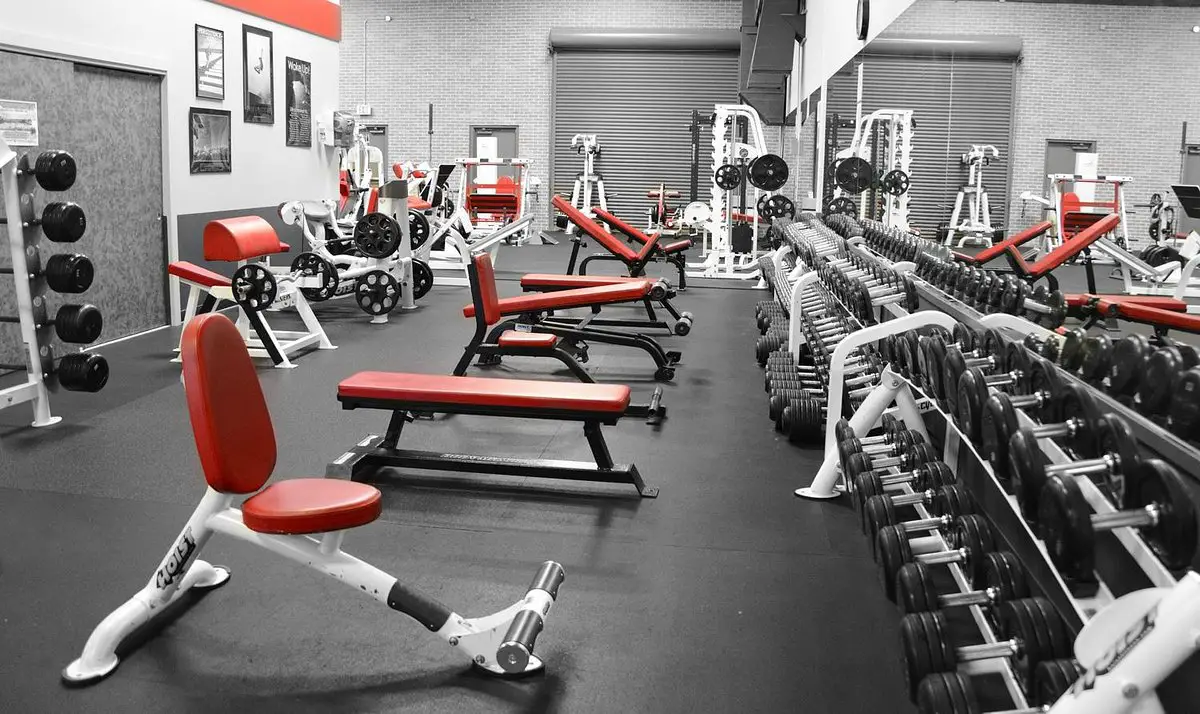
Trident House Fitness was the kind of place that did not bother pretending it was for everyone. The rubber floor smelled faintly of sweat, disinfectant, and old metal. Framed flags and deployment photos covered the walls. Challenge coins sat behind glass near the front desk. Over the squat racks, painted in block letters, was the rule Keller liked to point at whenever someone new walked in looking uncertain.
EARN THE RIGHT TO STAY.
Nora read it once. Then she looked away. She had not come to be impressed by paint.
She stood just inside the training room with a faded black duffel hanging from one shoulder and rainwater darkening the cuffs of her gray hoodie. She was not tall. She was not polished. Her running shoes were scuffed, her hair was twisted into a tired knot, and the only thing on her wrist was a black watch with a cracked face.
That was all Keller needed to decide he understood her.
Three men near the rig turned their bodies toward her. Keller was in front, blond and square-jawed, with the easy confidence of a man who believed his size answered questions before he opened his mouth. The shaved-headed man beside him grinned like he had just been offered entertainment. The lean one chewed gum slowly and leaned against a barbell as if he wanted everyone to see how little effort this would take.
At Keller’s feet sat a Belgian Malinois.
The dog did not laugh. His coat was sable and black. His ears were sharp. A black working harness crossed his chest, and the patch on the side read K9 ROOK.
Rook’s eyes were already on Nora. Not in a friendly way. Not in a warning way. In the way a locked box might look at the only person who had the key.
Nora felt the stare before she saw the patch. Her left hand tightened once around the strap of the duffel. It was a small movement. Most people in the room missed it.
Rook did not.
Keller followed the dog’s gaze and smiled. “He likes pretty civilians,” he said. “Don’t take it personal.”
The shaved-headed man laughed. The gum-chewer made a crack about yoga. Somebody else muttered something about the flag wall and selfies.
The room did what rooms often do when cruelty stays small enough to deny. It watched. A young man on the bench press paused with the bar hovering over his chest. An older veteran in a Navy cap stopped wrapping his wrist. A woman stretching near the turf lane lowered her face toward her phone, though her thumb never moved.
Nora saw each of them. She did not judge them out loud. She simply recorded the shape of the silence.
Then she set her duffel on the floor. No slam. No flinch. No performance.
“I’m here to see Cole Mercer,” she said.
The name did more damage than her tone. Keller’s expression did not disappear. It adjusted. It was a tiny shift, the kind people miss when they are hoping not to be involved.
Nora did not miss it.
“Cole’s not here,” Keller said.
“His truck is outside.”
“Lots of trucks outside.”
“His has a cracked left taillight and a Camp Lejeune sticker peeling at the corner.”
The gum-chewer stopped chewing. Rain kept tapping the front glass. Somewhere near the back, a cable attachment swayed once and clicked against its stack.
“He told me to come at six,” Nora said.
Keller’s eyes went to the hallway behind him. It was fast. Too fast for a lie that had been thought through. Then he shifted sideways and blocked the path.
“Cole’s busy.”
“Then I’ll wait.”
“This is a private facility.”
“I know.”
“You a member?”
“No.”
“Then you don’t wait.”
Behind Nora, the shaved-headed man drifted toward the door. He did not touch her. He did not need to. He filled the space between her and the exit in a way everyone understood.
The old veteran in the Navy cap looked down at the wrap in his hand. The young lifter set the bar back in the hooks with a soft metallic clack.
Nora stayed facing Keller. “Move.”
The word was flat. That made it worse.
Keller chuckled, but it sounded less certain than before. “Oh, sugar,” he said. “You really don’t know where you are.”
Nora lowered herself just enough to unzip the top of her duffel.
The mood in the gym snapped tight. Keller’s hand went toward Rook’s lead. The shaved-headed man’s shoulders squared. The gum-chewer’s eyes dropped to the bag.
Rook rose before any of them moved.
Nora pulled out a pair of thin black gloves. Nothing else. No badge. No paper. No weapon. Just gloves.
She put them on slowly, finger by finger, without looking away from the dog.
Keller stared at her hands. “You planning to box somebody?”
“No.”
“Then what are the gloves for?”
Nora’s gaze shifted to Rook. The dog’s ears came forward. “Old habit,” she said.
A gym can go quiet in layers. First the voices leave. Then the machines. Then the breathing becomes too loud. Trident House went quiet that way.
Rook made a sound low enough that several people felt it before they understood they had heard it.
Keller tightened the lead. “Rook.”
The dog did not look at him.
Nora lifted two gloved fingers. It was not dramatic. It was not a command most of the room would even have noticed if the dog had not answered it.
Rook dropped. His chest met the rubber floor. His front legs stretched toward Nora’s shoes. His nose pressed near the damp black rubber at her feet like he had found a scent buried under years of distance.
The bench press bar clanged back into place behind them. The woman near the turf lane finally forgot to pretend she was reading her phone. Keller looked down at his own K9 as if the animal had betrayed him.
Then the back office door clicked.
Cole Mercer stepped out. He had a towel in one hand and an irritated look on his face, the kind men carry when they expect to handle a normal problem. The look died when he saw Rook on the floor. The towel slipped from his fingers. No one bent to pick it up.
Cole’s eyes moved from Rook to Nora’s gloves, then to Keller’s hand still wrapped around the lead.
“Keller,” he said. It was not loud. It did not need to be.
Keller straightened. “He broke command.”
Cole took one slow step closer. “No,” he said. “He finally heard the right one.”
That was the moment the room understood the joke had gone somewhere none of them were ready to follow.
Nora kept her hand low. Rook trembled against the floor. It was not the shaking of a frightened dog. It was recognition trying to stay inside obedience.
Cole crouched near the dog but did not touch him yet. He knew better than to insert himself into a moment he had not earned.
Nora did not look at Keller. She looked at the dog. “Easy,” she said.
Rook’s breathing changed. His shoulders loosened one fraction at a time.
The old veteran in the Navy cap stood up. The shaved-headed man stepped away from the door as if the space had burned him. The gum-chewer swallowed.
Cole saw the movement and then saw the whole arrangement. Nora at the center. Keller in front. One man behind her. Witnesses pretending too late that they had not been witnesses.
Cole’s jaw set. “You boxed her in?”
Keller said nothing. That silence was the first honest thing he had offered.
Cole looked at Nora. “I told them you were coming.”
“No,” Nora said. “You told them somebody was coming.”
Cole’s face tightened, because she was right. He had been tired that afternoon. He had been distracted. He had told Keller to expect a consult at six, and because men like Keller heard the word consult and imagined someone who looked like them, he had not bothered with the rest. That omission had opened the door to all of this.
Keller tried again. “She walked in like she owned the place.”
Nora finally looked at him. “I walked in like I had an appointment.”
It landed harder than anger would have.
Cole turned back to Rook. The dog had not moved from Nora’s feet.
“Show them,” Cole said quietly.
Nora did not ask what he meant. She lowered her gloved hand, turned her wrist, and gave another small signal. Rook rose just enough to come into a perfect down at her left side. No leash pressure. No spoken command. No hesitation. His eyes stayed on her like the rest of the room had disappeared.
A few people inhaled at once. Keller’s face changed color.
Cole stood. “This dog came to me because there was one person he would not stop searching for,” he said.
Nora’s eyes flicked toward him.
Cole softened his tone but kept going. “He learned his first clean work from her. Not from me. Not from Keller. From Nora.”
The room did not need a speech. The dog had already given testimony. Still, Cole’s words put a frame around what everyone had seen. Nora had not stumbled into the wrong room. The room had failed to recognize the person who had already earned it.
Keller looked at Rook, then at Nora’s plain hoodie, then at the gloves. “You trained him?”
Nora did not answer right away. She bent and touched two fingers to the floor near Rook’s paw. Rook pressed his chin down and went still. Only then did she look back up.
“I helped him trust hands again.”
That sentence did something a louder accusation could not have done. It made the lead in Keller’s hand look ugly.
Cole saw it too. His attention dropped to the harness. Near the chest strap was a small frayed place, the kind of wear a careless handler might ignore because the dog kept working anyway. Cole touched it with his thumb. His face hardened.
“Nora,” he said, “is that what you saw?”
She nodded once.
Keller’s mouth opened. Cole raised one hand. “Don’t.”
That single word stopped him.
Cole did not call the police. He did not stage a public takedown. This was not that kind of story. The consequence in that room had to match the damage done in that room.
He unclipped the lead from Keller’s hand and held it himself. “You’re done handling Rook today,” he said.
Keller’s jaw flexed.
Cole kept his eyes on him. “You’re also done using my floor to test whether strangers will scare easy.”
The shaved-headed man stared at the wall. The gum-chewer looked at the floor. No one laughed now.
Nora removed one glove slowly. The sound of the fabric sliding over her fingers was small, but in the silence it felt like a gavel.
Cole looked at the two men who had stood with Keller. “You two can train or you can leave,” he said. “But if you ever block a door in this place again, you will not have to wonder which one I prefer.”
The old veteran in the Navy cap cleared his throat. It was a rough, uncomfortable sound. Then he looked at Nora. “Ma’am,” he said, “you want that bench?”
It was not much. It was not an apology from the room. But it was the first person inside Trident House to offer her space instead of taking it.
Nora looked at him, then at Rook. “No,” she said. “I’m here for him.”
Cole nodded and led them toward the turf lane.
Keller remained near the pull-up rig, suddenly enormous and useless.
Rook walked at Nora’s left side without the leash going tight. The dog who had been still in the wrong way now moved like his body had remembered a language.
Nora knelt at the edge of the turf. She checked the harness first. Not dramatically. Not for the audience. She ran her fingers under the chest strap, felt the rub point, and adjusted it with the practiced care of someone who knew that loyalty did not make pain acceptable.
Rook kept his eyes on her.
“You made him work through that?” Cole asked Keller from behind her.
Keller said, “It was nothing.”
Nora did not turn. The dog’s ear twitched.
Cole’s voice went cold. “If it were nothing, she would not have seen it from the door.”
That did more to Keller than shouting would have. Because the entire room remembered Nora’s first glance at the dog. They remembered how little she had needed to see.
Nora stood and gave Rook one small hand cue. He backed up. Another cue. He circled and returned to heel. A third. He dropped again, clean and fast, not crushed to the floor this time but placed there by trust.
The difference was visible. Even the young lifter saw it. He whispered, “Whoa,” before he could stop himself.
Nora rewarded the dog with a quiet touch behind the ear. Rook leaned into it and then checked himself, as if remembering discipline.
Nora smiled for the first time. Barely. But enough.
Cole turned to Keller. “You mocked the woman I asked here to evaluate the one teammate on this floor who cannot speak for himself.”
Keller’s eyes flashed. “He’s a dog.”
Nora’s smile vanished.
The sentence hung in the air and showed everyone what had been underneath Keller’s confidence the whole time. Not strength. Ownership.
Cole stepped closer to him. “He is a working dog,” Cole said. “And even if he were just a dog, that would still be more than enough reason not to use him as a prop.”
Keller looked around. That was his mistake. He expected support. He found the old veteran staring at him with disgust. He found the woman by the turf lane still holding her phone down at her side, her face pale. He found the gum-chewer no longer willing to meet his eyes.
The room had not become brave. But it had stopped being useful to him.
Nora clipped the lead to her own left hand. Rook accepted it without tension.
Cole watched the line of the leash. It stayed loose. There are some truths people argue with until an animal tells them. Rook had told this one with his whole body.
Cole walked to the front desk and wrote Keller’s name on the incident log. He did it slowly, in front of everyone. Not because the paper was magic. Because rooms remember what is written down.
“Keller,” he said, “office.”
Keller did not move.
Cole looked up. “Now.”
The blond man who had filled the room twenty minutes earlier seemed smaller crossing the floor. He passed Nora without speaking. She did not give him the satisfaction of turning her head.
The shaved-headed man followed him with his eyes, then looked at Nora. His apology never quite formed.
Nora did not wait for it. She worked Rook through three more cues, each one quiet, each one clean. Sit. Down. Heel. The dog answered her like a door opening from the inside.
By the time Cole came back from the office, Keller was not with him. Cole looked tired. He also looked ashamed.
“I should have said your name,” he told her.
“You did,” Nora said.
“I should have said who you were.”
Nora glanced around the room. Some people looked away again. Others did not.
“No,” she said. “You should have made sure it didn’t matter.”
Cole accepted that because there was no defense against it. That was the part Keller had never understood. Respect that depends on a title is not respect. It is costume inspection. Nora had walked in without the costume, and the room had shown itself.
Rook sat beside her left leg, calm now, his shoulder touching her shin. Cole noticed. So did everyone else.
“Will he be all right?” the woman from the turf lane asked. It was the first full sentence she had spoken.
Nora looked at the dog before answering. “He remembers more than people think,” she said. “But he also learns faster than people do, when people stop making it harder.”
No one laughed.
The rain softened against the windows. The room slowly began to make noise again, but it was a different noise. Weights moved carefully. Voices stayed lower. The young lifter waited until Nora stepped away from the turf before he asked Cole how to re-rack properly after a failed set. The old veteran sat back down and finished wrapping his wrist. He did not stare at his hands this time.
When Nora packed the gloves back into her duffel, Rook watched them disappear. Cole saw that too.
“You’ll come back?” he asked.
Nora zipped the bag. “For him,” she said.
Then she looked at the painted rule over the squat racks. EARN THE RIGHT TO STAY. Keller had used those words like a fence. Nora read them now like a receipt.
She had not raised her voice. She had not listed her history. She had not cleared her name with a speech. The dog had done what the people in the room had failed to do. He recognized what mattered.
One week later, Trident House had a new rule taped beside the front desk. It was not painted. It was not dramatic. It was a single sheet of white paper under clear tape.
No one blocks the door.
Under it, in Cole Mercer’s handwriting, was a second line. Respect arrives before credentials.
Nora saw it when she returned. She did not comment on it.
Rook did. He came around the corner, saw the gray hoodie, and dropped into a perfect down at her feet.
This time, nobody laughed. This time, the room made space before she had to ask.

Specialty: Emotional Turning Points
Rachel Monroe writes character-driven stories about betrayal, second chances, and unexpected resilience. Her work highlights the emotional side of family conflict — the silences, the misunderstandings, and the moments when someone quietly decides they’ve had enough.