The Blueprint
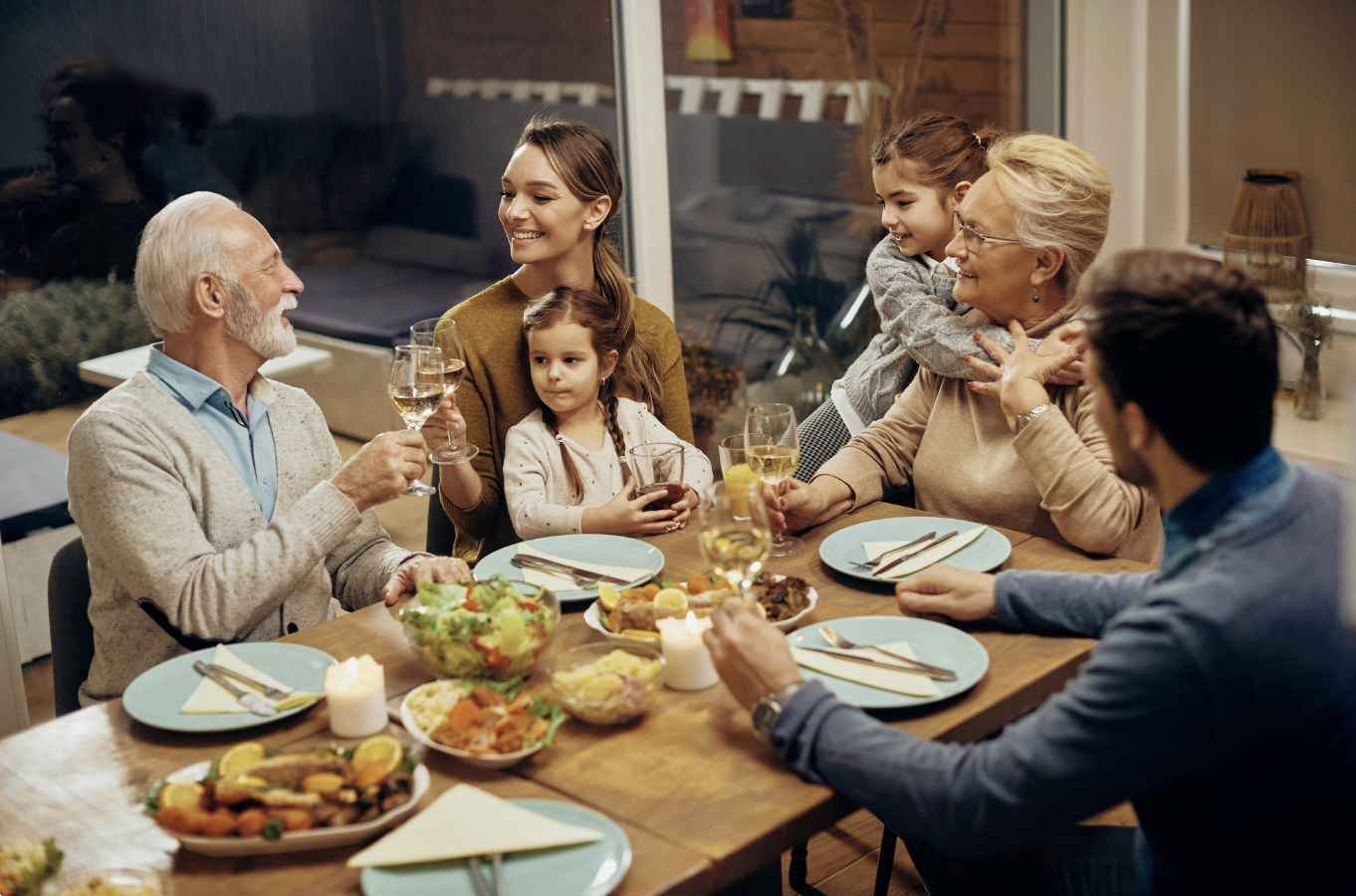
Grandpa froze in the middle of a bite.
“Wait,” he said. He put his fork down and looked at me. “You pay your parents rent?”
My fork stopped halfway to my mouth. Across the Thanksgiving table, my mother’s expression tightened at the edges. My sister Claire looked down at her plate as though the mashed potatoes had suddenly become the most absorbing thing she had ever encountered. Before I could answer, Dad waved one hand in the air between us, the gesture he used to disperse smoke before it became a problem.
“Your sister has two kids,” he said. “She needs more help.”
The table went quiet.
Grandpa set his fork down fully.
“No,” he said, with the particular quiet of a man who has decided something. “I asked Ethan.”
My stomach dropped.
Dad leaned back in his chair. “Dad, let’s not.”
Grandpa kept his eyes on me. “How much?”
I swallowed. “Eight hundred a month.”
Grandma repeated the number softly, just to herself, as if she needed to hear it one more time to be sure she had heard it correctly.
Mom moved quickly to contain the situation. “It’s not rent. He’s helping with household expenses.”
“I live in the basement,” I said, before I could weigh whether saying it was worth what would follow. “I buy my own groceries. I pay my phone, my car insurance, my gas, and half the utilities.”
Claire’s head came up. “You make it sound like we’re abusing you.”
“I didn’t say that.”
“But you’re sitting there acting like it. I have two children, Ethan. Do you have any idea what daycare costs?”
“You don’t pay for daycare,” I said. “Mom watches them five days a week.”
Claire’s cheeks went red. Dad tapped the table lightly with his palm. “That’s enough from both of you.”
But Grandpa was no longer eating. His face had gone still in a way I had only seen once before, at my uncle’s funeral, when they lowered the casket and Grandpa stood with his hands clasped and did not look away.
“Claire,” he said. “Do you pay anything toward this house?”
She opened her mouth. Then closed it.
Dad answered for her, which was his habit. “She’s rebuilding.”
Grandpa nodded once, slowly. “How long has she been rebuilding?”
Mom’s voice came out thin. “That isn’t a fair question.”
“No,” Grandpa said, looking around the table at each of them. “What isn’t fair is charging one child rent while giving the other free housing, free childcare, free meals, and then calling it family.”
Dad’s jaw tightened. “Ethan is twenty-six. He should be contributing.”
“And Claire is thirty-two,” Grandpa said, “with two children she chose to have and a man she chose to marry and divorce and take back each time he appears at the door.”
Claire stood so quickly her chair scraped across the floor. “How dare you.”
Grandpa did not raise his voice. “Sit down.”
She sat.
He turned back to me. “Ethan. Where does your money go?”
I laughed once, though there was nothing funny in it. “To them.”
Mom’s eyes filled. “We never forced you.”
“You told me if I moved out, I was abandoning the family.”
Dad pointed at me. “Because family helps family.”
Grandpa pushed his plate aside.
“Then tonight,” he said, “family is going to tell the truth.”
In the living room, my nephews Owen and Miles were watching cartoons, too young to understand that every adult at the Thanksgiving table had just stepped into a fight that had been building for years. The television laughed loudly from the other room, making the silence around us feel heavier by contrast.
Dad stood. “I’m not doing this at Thanksgiving.”
Grandpa looked up at him. “You’ve been doing it for years. Thanksgiving didn’t create it.”
Mom pressed a napkin beneath her eyes. “Ethan, please tell your grandfather we’ve never mistreated you.”
I looked at her.
That was the part that hit hardest. She did not ask if they had mistreated me. She asked me to deny it.
“I don’t know what you want me to say,” I told her.
Claire crossed her arms. “Maybe start with the fact that you’ve had a roof over your head.”
“So have you.”
“I have children.”
“You keep saying that like it means I owe you my life.”
Dad’s voice cut across the table. “Enough, Ethan.”
Grandpa turned sharply toward him. “Don’t silence him.”
Dad looked genuinely startled. He was the loudest man in any room, especially this one. But this house had been Grandpa Daniel’s before it was ever my father’s. My grandparents had helped Dad buy it twenty years earlier when he and Mom were buried in debt and could not see a way through on their own. Dad never mentioned that part.
Grandpa looked at me. “How long have you been paying?”
I took a breath. “Since I was nineteen.”
Grandma covered her mouth.
Mom said quickly, “He offered.”
I stared at her. “I offered two hundred dollars because Dad said the mortgage was tight. Then it became four hundred. Then six. Then eight hundred.”
Dad’s face hardened. “Because costs went up.”
“And Claire’s costs?” Grandpa asked.
No one answered.
“I was married then,” Claire said, without quite meeting his eyes.
“And after the divorce?”
“I had babies.”
Grandpa nodded slowly. “So Ethan paid because he had no babies.”
“That’s not what this is,” Mom said.
“Yes,” I said. “It is.”
My own voice surprised me. For seven years I had kept everything locked down because I hated conflict. I worked at a logistics company, came home exhausted, ate microwave dinners in the basement, and listened to everyone upstairs describe me as selfish whenever I wanted something for myself. I had missed friends’ weddings because Mom said Claire needed babysitting help. I had postponed looking at apartments because Dad said renting elsewhere was wasteful when I could be contributing to family. I had watched Claire buy a new SUV while I drove a twelve-year-old Honda with a heater that had been failing since the previous winter.
And every month, I handed Dad eight hundred dollars and told myself it was temporary.
Grandpa’s fingers tapped once against the table. “Do you have savings?”
I looked down. “About eleven hundred dollars.”
He closed his eyes.
Dad scoffed. “Because he wastes money.”
“On what?” I asked.
“Games. Takeout.”
“I haven’t bought a game in two years. I order takeout once a week because nobody saves dinner for me when I work late.”
Grandma’s eyes moved toward Mom, who looked away.
Grandpa stood. He looked at me directly. “Get your coat.”
I blinked. “What?”
“You’re coming with us tonight.”
Dad’s chair scraped back. “Absolutely not.”
Grandpa turned to face him. “He is twenty-six years old.”
“He lives under my roof.”
“And that roof,” Grandpa said, his voice going cold in a way I had never heard before, “was paid for with help from me. Don’t test my memory, Richard.”
For the first time all evening, Dad had nothing ready to say.
Grandpa looked back at me. “Pack what you need for a few days. Tomorrow, we figure out the rest.”
Mom’s voice broke open. “You’re tearing this family apart.”
Grandpa looked at her with something that was not anger exactly. It was more like the exhaustion of a man who has waited a long time for something to be corrected and has finally stopped waiting.
“No, Linda,” he said. “I’m just opening the basement door.”
I packed in fifteen minutes.
That was the part that stung more than anything that had been said at the table. Twenty-six years of living and seven years of paying rent, and everything I actually needed fit into two duffel bags and a backpack. Some clothes. My laptop. My work badge. A shoebox with my birth certificate, car title, and Social Security card. A framed photograph of Grandma and Grandpa from my high school graduation. Three books I had been meaning to finish for two years.
I stood in the doorway of the basement and looked at the room. Gray walls, because Dad had once said white paint cost too much for a space nobody ever saw. A narrow bed against the far wall. A desk under the tiny ceiling-level window that let in one rectangle of morning light across the carpet, just enough to remind me the world existed above.
I had told myself for seven years that this was temporary.
When I came upstairs, Mom was on the couch with Owen asleep against her. Claire was in the kitchen whispering angrily into her phone. Dad stood near the front door with his arms crossed.
“You walk out tonight,” he said, “don’t come back when you realize the real world costs more than eight hundred a month.”
Grandpa stepped in front of me before I could respond. “The real world also lets him keep his dignity.”
Dad glared. “You always thought I was a bad father.”
Grandpa’s expression stayed steady. “I thought you were a proud man who couldn’t stand being wrong. Tonight you’re proving me right.”
Mom stood. Her voice cracked. “Ethan, please. Don’t leave like this.”
For one long second I almost folded. That had always been the mechanism. Dad pressured. Claire complained. Mom cried. And I gave in, because giving in had been the price of peace for so long that I had stopped recognizing it as a price.
But then I remembered every small thing I had asked for and been refused. Whether I could skip babysitting one Saturday because I had a work presentation the following morning. Whether the rent could come down slightly so I could start saving for my own place. Whether Mom could ask Claire not to take my food from the fridge. Each time, what I needed had been labeled selfish, and what Claire needed had been labeled family.
I adjusted the bag on my shoulder. “I’m not leaving because I hate you,” I said.
Mom’s eyes filled.
“I’m leaving because I can’t keep paying to be treated like the least important person in this house.”
Claire came out of the kitchen. “That is so dramatic.”
Grandma, who had stayed quiet through all of it, looked at Claire with a disappointment so clean and complete it did not require words. “Hush, Claire.”
Claire’s mouth fell open.
Grandma took my hand. “Come on, sweetheart.”
Nobody stopped us.
The ride to my grandparents’ house was quiet. I sat in the back seat watching streetlights pass across the windows. My phone buzzed three times before we reached the highway.
Dad: You embarrassed your mother tonight.
Claire: Hope Grandpa enjoys paying for you.
Mom: Please call me when you’ve calmed down.
I put the phone face down on my leg. Grandpa noticed in the rearview mirror but said nothing until we merged onto the highway.
“You don’t have to answer tonight,” he said.
“I don’t know what happens tomorrow.”
“Tomorrow you sleep past seven. Then we make a plan.”
Grandma reached back and placed her hand on my knee. “And you eat breakfast at a real table.”
That nearly broke something open in me.
Their house was a small ranch, thirty minutes away, that smelled of lemon cleaner and old wood and the cinnamon candles Grandma lit in every room from October through January. The guest room had a quilt folded at the foot of the bed and a lamp on the nightstand and curtains that actually kept the morning out. Grandma brought towels. Grandpa left a glass of water by the bed. Nobody asked me to explain more than I had already explained.
I lay awake for hours anyway.
The next morning I woke to coffee and bacon. In the kitchen, Grandpa was already at the table with a yellow legal pad divided into three columns. Income. Expenses. Plan.
“Sit,” he said. Grandma set a plate in front of me. “Eat first.”
So I ate. And then we talked.
I told them everything, not dramatically, not with performance, just honestly. Dad had started charging me the month after my first full-time paycheck, calling it teaching responsibility. Mom said it was temporary. Claire moved back after her divorce and somehow became the center around which everyone else organized, while I was expected to babysit, repair things, pick up groceries, cover utilities, and still pay eight hundred a month in rent.
Grandpa wrote the numbers down without comment. My monthly take-home. Car insurance. Student loan. Gas. Groceries. Phone. The eight hundred. When he circled the rent amount, he pressed hard enough that the pen nearly tore through the paper.
“You could have moved out two years ago,” he said.
“I know.”
“Why didn’t you?”
I looked at the coffee cup in my hands. “Because they made it sound like leaving would destroy them.”
Grandma sat beside me. “And what was staying doing to you?”
I did not answer. I did not need to.
By Monday, Grandpa had helped me schedule three apartment tours. Nothing impressive. One-bedroom units near my job, clean buildings, safe streets. The rent was higher than what I paid Dad, but a landlord gave you a lease and locked doors and no one presenting you with babysitting hours as a supplemental fee for existing in the building.
Tuesday evening, Dad called. I almost let it go to voicemail. Grandpa said, “Answer if you want to. Not because you’re afraid of what happens if you don’t.”
I answered.
Dad skipped hello. “You’ve made your point.”
“I’m not trying to make a point.”
“Your mother hasn’t slept.”
“I’m sorry she’s upset.”
“Come home and we’ll talk it through.”
“We can talk. I’m not moving back in tonight.”
A pause. Then: “You think your grandparents are going to save you? They’re not going to be around forever.”
The old version of me would have felt the panic of that sentence immediately. Standing in my grandparents’ hallway, I heard it for what it was. Not concern. Leverage.
“I know they won’t,” I said. “That’s why I need to build something on my own.”
His voice went lower. “After everything we did for you?”
The exhaustion rolled through me like a tide. “What did you do for me that you didn’t also do for Claire?”
“We raised you.”
“You raised both of us.”
A long pause. “You’re a man, Ethan. You’re supposed to help.”
There it was. The rule beneath all the other rules, the one that had governed my entire adult life without ever being stated plainly until now. Claire’s choices were emergencies. My needs were selfishness. Her comfort was family. My exhaustion was ingratitude.
“I did help,” I said. “For seven years.”
He exhaled. “Then I’ll tell your mother you’re choosing money over family.”
“No. Tell her I’m choosing my future over being used.”
He hung up.
My hands were shaking, not from fear. It felt more like my body catching up to a decision my mind had already made without informing me.
Two weeks later, I signed a lease.
Grandpa came with me. He did not offer to pay the deposit. I did not ask him to. He stood beside me while the manager explained the paperwork, and when my hand hesitated before the signature line, he said, “Read every line. Then decide.”
I read every line. Then I signed.
Third floor of a brick building with old stairs and a radiator that clanked when the heat came on. One bedroom, one bathroom, a narrow kitchen, a living room just large enough for the couch I bought from a man named Marcus on Facebook Marketplace. Not impressive. Mine.
On moving day, Grandma brought cleaning supplies. Grandpa brought his toolbox. My friend Noah helped carry the mattress. By sunset I had a bed, a folding table, two chairs, and a shower curtain with blue stripes because Grandma said a man still needed a proper bathroom and she would not be moved from this position.
At eight that evening I sat on the floor eating pizza off a paper plate. Nobody asked where the leftovers were. Nobody told me to keep the volume down. Nobody knocked to tell me Owen had woken up and needed something.
I slept nine hours without interruption, and in the morning the alarm was the only thing that woke me.
The fallout arrived in stages.
Mom texted every day. We miss you. The boys ask about you. Your father is hurt. Claire is under a lot of stress. I answered briefly and without apology. I miss the boys too. I’m not available to babysit this weekend.
That last sentence produced the first explosion.
Claire called me at work, which she only ever did when she needed something handled. I stepped out to the loading dock.
“I need you Saturday,” she said.
“I’m busy.”
“With what?”
“My apartment.”
“That’s not a real answer.”
“It is.”
She laughed, the bitter kind. “You got one apartment and now you think you’re too good for everyone.”
“No. I’m just unavailable.”
“Must be nice to abandon your nephews like this.”
I looked out at the gray winter sky and the parking lot below. “I’m not their parent, Claire.”
She was quiet.
“You’re selfish,” she said finally.
A month earlier, that sentence would have landed cleanly and drawn blood. “I have to get back to work,” I said, and ended the call.
Mom’s text arrived within the hour. Claire is crying. Was that necessary?
I drafted three replies and deleted them all. Then I wrote: I’m willing to have a respectful relationship with everyone. I’m not willing to be guilted into responsibilities that aren’t mine. She did not reply for two days.
Christmas was tense. I almost skipped it, then went because I loved my nephews and because I wanted to prove to myself that I could walk into that house without becoming who I had been inside it. Owen ran at me the moment I came through the door. Miles wrapped himself around my leg. For ten minutes, everything felt simple.
Then Claire said, from the couch, “Be careful, boys. Uncle Ethan has a very busy independent life now.”
I gently set Owen down.
Dad watched from the recliner with an expression I could not fully read. Grandpa cleared his throat once. Claire said nothing more.
After dinner, Dad followed me out to the porch.
It was cold enough to see our breath.
“Your mother says I should apologize,” he said.
“Is that why you came out here?”
He considered this honestly. “I don’t know.”
He leaned against the railing and looked at the yard.
“When you started paying, it helped. I told myself it was normal. You were working, you were home. Then Claire came back with the boys and everything went sideways. She was falling apart. And you were stable.”
“I looked stable,” I said. “Because I wasn’t allowed to fall apart. You needed me to be fine, so I acted fine. But I wasn’t.”
He glanced at me.
“You didn’t see that,” I said. “I know you didn’t. But that’s the thing, Dad. You didn’t look.”
The porch boards creaked under his weight.
“I don’t know how to fix it,” he said.
“You can start by not asking me for money.” A slow nod. “And by not sending Mom or Claire to guilt me when you won’t say something directly.” Another nod. “And by admitting that what happened wasn’t fair.”
That one cost him something. The pride moved across his face like weather. Then he looked at the dark yard and said, roughly, almost against his will: “It wasn’t fair.”
Seven years.
I had waited seven years for those three words.
I let them land without making them bigger than they were, and without dismissing them either.
When I went back inside, Mom was standing near the hallway. She touched my arm. “Will you come next Sunday? Just dinner. No favors. No money. No babysitting.”
I looked toward the living room. Claire was helping Owen stack something. Miles was asleep on the couch with frosting on his chin.
“I’ll think about it,” I said.
I meant it exactly that way. Not yes from guilt. Not no from anger. An actual consideration of what I wanted, which was something I had not been permitted to attempt in seven years.
Over the following year, things shifted unevenly, the way real things shift, not all at once and not smoothly.
Dad never paid me back. I had not expected him to. Grandpa once told me that some debts cost too much to pursue because chasing them keeps you tethered to the person who took from you, and he was right. I let it go not because it was fair but because holding it would have cost me more than the money.
Claire stayed Claire for a long time. She tested limits and made remarks and called me selfish whenever I declined something. But no had become a complete sentence, and the world continued moving each time I used it. Her eventual second marriage to a quiet electrician named Ben changed the dynamic in ways I had not predicted. Ben did not tolerate her distributing blame to everyone in her radius, and once, in front of the family, he said simply, “Your brother is not your emergency fund.” I liked Ben immediately.
Mom took the longest. She had spent so many years brokering peace between everyone else that honesty felt like aggression to her. She did not know how to read me when I stopped making myself easy. But eight months after Thanksgiving, she came to my apartment with a container of soup and stood in my doorway looking at the room. The bookshelf. The curtains. The framed print of Lake Michigan above the table. Everything chosen by me.
“It’s nice,” she said quietly.
She walked in and set the soup on the counter and looked around with the particular attention of someone encountering something they should have already seen.
Then she said, “I’m sorry.”
I turned toward her.
She did not cry loudly. She did not make me comfort her. She said: “I told myself you were okay because I needed you to be okay. I should have protected you. From your father’s expectations. And from Claire’s. And from mine.”
“I needed you to notice,” I said.
She nodded. “I know.”
It did not return seven years of rent money or the friend’s wedding I had missed or the mornings I had woken in that gray basement room and told myself it was temporary. But it was the first time she had named what happened without asking me to soften it first, and that mattered in ways I was still learning to name.
Grandpa died two years later. A heart attack in his garden while he was working on the tomato plants. He was seventy-nine. Grandma found him. At the funeral, the church filled with people who had known him over decades, neighbors, former coworkers, strangers who shook my hand and told me he had fixed a fence or lent a tool or driven someone to a medical appointment during a snowstorm. He had been the kind of man who spoke little and showed up often, and the room was proof of it.
Grandma pressed an envelope into my hand after the burial.
I opened it alone in my car outside the cemetery.
Ethan, it began.
You were never weak for staying. You were surviving the only way you knew how. But I am proud that you left. A family should be a place where a person grows stronger, not smaller. Remember that when you build your own. Don’t become bitter. Become clear.
Love, Grandpa.
I sat with that letter for a long time before I could drive.
Years went by.
I was promoted twice. I moved from the third-floor apartment into a small townhouse with a garage. The Honda finally stopped at 214,000 miles and I bought a used Subaru with heated seats, which felt like something close to a luxury. I repainted the office a dark green and put a decent desk in front of the window. I grew tomatoes in raised beds along the side yard because Grandpa had grown them and I wanted to understand what he had loved about it.
On a Thursday evening in late October, five years after that Thanksgiving, I hosted my first holiday dinner.
The table was not perfect. I had borrowed two chairs from a neighbor and the tablecloth was slightly too small. But the food was real and the house was warm and every person who sat down had been invited because I wanted them there.
Grandma at one end. Dad at the other. Mom adjusting the green beans until I quietly took the serving spoon from her hands. Claire arriving late with Ben, Owen, and Miles, who were now tall enough to investigate the refrigerator without asking permission.
Owen, twelve, wandered into the kitchen while I was carving the turkey.
“Uncle Ethan?”
“Yeah?”
He leaned against the counter with the casual authority of a kid who knows he is welcome. “Mom said you used to live in a basement.”
“I did.”
“Why?”
The knife paused.
I thought about how to answer that honestly without handing him something heavier than he could carry.
“Sometimes people stay in places longer than they should,” I said. “And sometimes they need someone to remind them they can leave.”
Owen considered this with the serious attention children give to things they sense are more complicated than they appear.
“Grandpa Daniel helped you?”
“Yeah,” I said. “He did.”
Owen nodded, stole a roll from the basket on the counter, and was gone before Grandma could register what had happened.
At the table, noise filled every corner. Forks clinked. The boys argued over seats. Claire told a story too loudly. Dad complained that turkey was impossible to carve evenly. Mom asked three times whether anyone wanted more potatoes.
For a moment I saw the old Thanksgiving table clearly. Me with my fork frozen in the air. Dad waving his hand. Claire offended. Mom quietly crying. Grandpa setting down his fork with the specific care of a man who had just made a decision.
Then I looked at the table in front of me.
Different house. My rules. My name on the mortgage. My food on the plates. My choice who came through the door and what they were permitted to ask of me once inside.
Grandma raised her glass of cider.
“To Daniel,” she said.
The room went quiet in the way rooms go quiet when someone names a person who is no longer in them. Dad looked at the table. Mom pressed her napkin to her eye. Claire’s expression shifted into something softer than I usually saw from her. Even the boys went still.
I raised my glass.
“To Grandpa,” I said.
And silently, underneath that, I said the rest.
Thank you for seeing what I could not see about myself. Thank you for asking one question at a Thanksgiving table while everyone else was eating and pretending it was normal. Thank you for understanding that opening the basement door was not an act of disruption.
It was the first thing I ever built on a foundation that was actually mine.

Specialty: Emotional Turning Points
Rachel Monroe writes character-driven stories about betrayal, second chances, and unexpected resilience. Her work highlights the emotional side of family conflict — the silences, the misunderstandings, and the moments when someone quietly decides they’ve had enough.