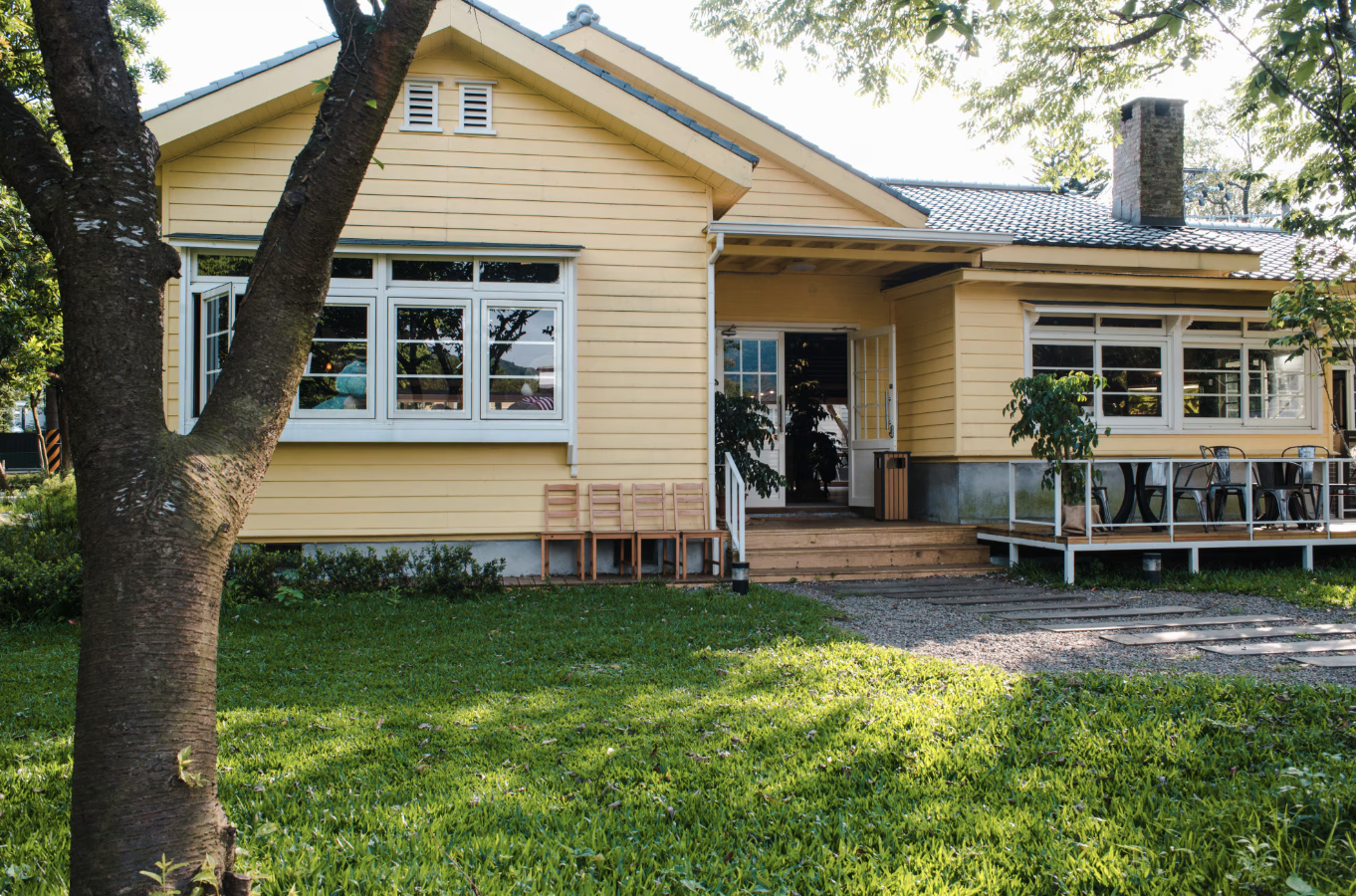
What Saved Me
The last ordinary thing my mother ever did before everything changed was hand me a container of chicken soup.
Not a family recipe passed down through generations. Not something she had labored over all morning. Just chicken soup in an old plastic container with a blue lid that never quite sat right, the kind of lid that requires a specific pressure on a specific corner before it clicks into place, and she had long since mastered that corner while I never could.
“You’re too skinny,” she said, pushing it into my hands in the way she had been pushing food into my hands my entire life, without ceremony and without accepting argument. “Take it and don’t start.”
I laughed the way I always laughed at this, because the words were so familiar they had become their own form of warmth. My father stood behind her in the kitchen doorway wearing his faded navy cap, the one with the hardware store logo from a place that had closed a decade ago but whose cap he wore anyway because the fit was right.
“Listen to your mother,” he said. “She’s been telling me what to do for forty years and I’m still reasonably functional.”
That was my father. Always a joke ready, always managing to make a difficult day feel lighter without diminishing what was difficult about it. He had been doing that my whole life, deploying the specific kind of warmth that never called attention to itself.
I hugged them both in the doorway. My mother’s hug was brief and practical, her arms pressing firmly as if confirming I was solid and present. My father patted my back twice. I told them I would be back the following weekend. I meant it completely. That is the part I think about most now, standing at the threshold of their house with the container of soup cooling in my hands. I meant it with no reservation. I had no reason to know it was a promise I would not keep in the way I intended.
Life has a particular cruelty when it comes to ordinary promises. It lets you make them with full sincerity and then quietly moves the conditions.
The weekend passed. Work became chaotic in the way work does when you have finally reached a period of relative order and a client decides that is exactly the moment to move up a deadline. I caught a cold that settled into my chest and made the idea of a ninety-minute drive feel like an expedition. My husband Michael was working additional shifts. My sister Kara called once, but I was in a meeting and texted her afterward: Tell Mom I’ll come soon.
Soon.
I used the word without thinking, the way you use words that have no weight until later.
The following Tuesday, Kara sent a message. She and her husband Daniel would be out of town for a few days. Could I stop by our parents’ house and pick up the mail? Nothing urgent. Just the regular accumulation of catalogs and bills and those cards that come from doctors’ offices reminding you of appointments you have not scheduled.
I was glad to have a reason. The guilt about the postponed weekend had been sitting quietly at the back of my mind, and a task gave me somewhere to put it. After work I stopped at the grocery store for the things I knew would please them. Seedless grapes, which my father selected by the handful with the specific focus of a man who has strong opinions about fruit. Butter. A loaf of sourdough from the bakery section, because my mother believed in bread that had some weight to it.
By the time I reached their neighborhood, the evening was coming in around the edges of the afternoon and long shadows stretched across the familiar street. Their cars were in the driveway. The porch light was on. The small American flag by the mailbox moved in the breeze.
I stood on the sidewalk for a moment before going in, and something in me registered that the house was too quiet. Not in any way I could have articulated. Just quiet in a way that was slightly off from its usual quiet. I attributed it to tired nerves and long days and the cold I still had not fully shaken.
I rang the bell. Nothing.
I knocked. Mom? Dad? It’s me.
The silence on the other side of the door was not the silence of people moving around in another room. I stood there for a moment and felt the specific texture of it, the way it had no movement inside it.
I used my key.
The air inside was different from how it should have been. Stale in a way that meant the windows had been closed and nothing circulated for some time. The television was off.
That detail stopped me before I could process anything else. My mother hated silence. She always had some form of background company going, cooking shows, old movies, the weather channel, anything that kept the house from feeling empty. A quiet television in her house was like a stopped clock. It told you something was wrong.
I walked into the living room.
My mother was on the floor beside the coffee table. My father was stretched out near the couch.
My brain refused the information for several seconds. What I was seeing did not fit any category of experience I had. The grocery bag slipped from my hand and I heard the grapes scatter across the hardwood floor, a small absurd sound that I would hear again in my sleep for weeks afterward.
I dropped beside my mother and touched her face. Cold enough to frighten me in a way that made me stop breathing.
I went to my father and pressed my fingers against his neck, searching with shaking hands for anything. For a moment I found nothing. Then, just at the edge of what was perceptible, a faint pulse. Weak and slow but present.
I dialed 911. My voice did not sound like my own voice when I spoke.
The paramedics arrived quickly. Both of my parents were loaded into separate ambulances with the efficient urgency of people trained not to show how serious things were. I followed in my car with no memory of driving. At the hospital, I sat in a waiting room for what felt like most of my remaining life before a doctor emerged with the particular expression of someone who is about to give news that is bad and better than it could have been simultaneously.
“Both are alive,” he said.
I put both hands over my mouth.
“We believe they may have consumed a significant amount of sleeping medication.”
I lowered my hands.
The relief that had just moved through me was replaced with something else entirely, something that did not have a simple name. Someone had given my parents enough sleeping pills to put them in a hospital. That was not an accident. That was not a mistake. That was a thing someone had decided to do.
The police questions that followed were what you would expect. Who had access to the house. Who had keys. Who had visited recently. My parents were not the kind of people who inspired enemies. They were the kind of people who lent tools and remembered birthdays and brought food when neighbors were sick. The questions felt wrong applied to them, like the wrong document had been matched to the wrong person.
A week after they were admitted, Michael went back to their house to collect some things they would need for recovery. He called me that evening. His voice had something in it I could not immediately categorize, a careful steadiness that told me he was controlling something underneath.
“Come home,” he said. “I need you to see something.”
When I arrived, he and Kara were at the kitchen table. A laptop was open. Michael explained that while moving things on the porch, he had found a memory card inside my father’s old doorbell camera. The app connected to it had stopped working months ago, but the camera had continued recording locally to the card. Nobody had thought to check it because the app showed nothing.
Michael had checked.
He pressed play.
The footage was from the night before I found them. The porch light illuminated the front door at a timestamp after nine in the evening. A man walked toward the house carrying a white pharmacy bag. He did not ring the bell. He used a key, his own or a copy of one, and let himself in.
Thirty minutes later, he came back out.
As he turned toward the porch light, his face was fully visible.
Kara made a sound I had never heard from her before.
The man was Daniel. Her husband.
Nobody spoke. Nobody moved. I became aware of the refrigerator running, a car passing outside, the specific quality of a silence that arrives when something irreversible has just entered the room.
Michael reached across the table and handed me an envelope. He had found it beneath the seat cushion of my father’s truck, pushed down in the way you push something when you want it hidden but accessible. My mother’s handwriting was on the front.
Emily. Open only if something happens.
My hands did not feel like my hands.
Inside was a medical form and at the bottom, in my mother’s small careful printing, a single line.
If anything happens to us, look at Daniel first.
She had known something was wrong before anything happened. She had felt it coming, or suspected it, or known something she had not known how to name, and she had written it down and hidden it where she thought it might eventually be found if it was needed. She had prepared a message for after, because she believed there might be an after that required one.
I do not have language adequate to what that felt like.
The detective received the footage within the hour. What followed moved faster than I expected family disasters to move, though perhaps speed is easier when the evidence is comprehensive. Investigators found the pharmacy bag in Daniel’s garage. They found receipts for the specific medication. They found internet search history about sleeping pills, dosages, and detection windows. They found the debt he had accumulated that my father had refused to fund when Daniel asked for a substantial loan, and my mother had supported that refusal, and Daniel had apparently decided that both of them were standing between him and a solution to a problem he could not otherwise solve.
Daniel was arrested.
In the days afterward, the word that stayed with me was ordinary. The ordinary container of soup with the lid that didn’t quite fit. The ordinary request to pick up the mail. The ordinary promise to visit soon. The ordinary evening shadows on an ordinary street. Everything that preceded what happened had been utterly, completely ordinary, and the ordinariness of it was what made the rest so difficult to absorb. Evil does not always announce itself. Sometimes it arrives on a Tuesday and lets itself in with a key.
My mother woke first. She could not speak immediately and I was not sure in those early hours how much she understood of what had happened or how much she remembered of the days before. But when I showed her the envelope, the one with her own handwriting on the front, tears ran down her face without any change in her expression. She squeezed my hand twice, deliberately, and looked at me steadily.
She had known. She had not been able to prove it or name it clearly enough to act on, but some part of her had known, and she had done the only thing available to her, which was to leave a record.
My father woke two days later. When I told him Daniel had been arrested, he closed his eyes. Not in relief. In the particular sadness of someone who had hoped to be wrong. Being wronged by a stranger is painful in a clean way. Being betrayed by family contaminates something more fundamental. It changes the way the past looks, works backward through memories and conversations and moments you thought you understood, revising them.
Kara did not defend him. She never asked us to be lenient or to consider his circumstances or to remember the good parts. She sat in the hospital hallway on the second day and said, “I brought him into this family,” and kept saying it in different forms, unable to move past the weight of it.
My mother, still on a slow recovery, wrote a note on a hospital notepad and held it toward Kara when she came to visit.
He fooled you too.
Four words. Kara held the notepad for a long time.
Daniel pleaded guilty. The legal process concluded in the way legal processes conclude when the evidence leaves no reasonable alternative. He received a sentence that was, depending on your perspective, either adequate or inadequate, which is perhaps the most honest thing I can say about it. What the justice system gives back to you after something like this is not the same as what was taken.
My parents came home eventually. The house looked the same. Everything inside it had changed.
My father moved more carefully than before, as though he was now aware of his body in a way that had not been part of his awareness before. My mother locked the doors during the day, which she had never done, and the spare key that used to live under a particular stone in the garden was gone and did not return. She was not paranoid in any way that interfered with her life. She was simply no longer inclined to trust the same way she had trusted before someone she considered family had done what Daniel had done.
Trust, I learned, does not heal the way bones heal. Bones mend to full strength. Trust mends to something different, still functional but now aware of its own history.
Kara moved into an apartment across town and started the slow, necessary work of becoming the person she was before Daniel had shaped her understanding of what family required from her. She was quieter than before and more careful with her words, but the carefulness was not damaged in the way I had feared. It was more like someone who has been in an accident and now drives attentively rather than reflexively.
Her relationship with my parents repaired in increments, the way relationships repair when the damage was not mutual but the guilt is. She did not push for reconciliation. She gave them space and showed up when invited and did not ask for more than they were able to give in any given week.
My father was the one who finally said it. About two months after coming home, he looked at Kara across the table during what had been an awkward Sunday visit where everyone was trying carefully and the trying itself was making everything feel effortful.
He said, “You can come to dinner on Sundays.”
Not you’re forgiven, which would have been too large and too rapid and probably not entirely true yet. Not everything is okay, because it was not. Just: you can come. The door is not closed to you.
Kara pressed both hands over her face.
My mother passed her the bread basket.
That was the whole of it, and it was enough for that particular Sunday.
Winter came in gradually the way Ohio winters come, not dramatically but steadily, cold arriving by degrees until one morning there is frost on the cars and you realize you have adjusted without noticing. I came to my parents’ house almost every Sunday now, which was a thing I had not done before all of this, not because I had not loved them but because the ordinary week had its ordinary claims and I had let those claims crowd out what mattered most.
That is what I mean when I say the word soon. I mean the way a harmless word can represent years of postponement that feels, at any given moment, entirely reasonable. I had a meeting. I had a cold. Michael was working late. The weekend after next would actually be easier. I was always coming soon. I never understood that soon was not a plan. It was a habit of deferral that required something catastrophic to interrupt.
My parents did not change their lives dramatically after what happened. They were not the kind of people who would. They still drove themselves to appointments and argued companionably about which route was faster and filled their bird feeders and watched cooking shows and did all the things they had always done. But they did these things knowing, as they had perhaps always known but now could not set aside, that time was finite and ordinary Tuesdays were precious.
I brought them things when I visited, the same things I had brought that evening, grapes and bread and whatever else seemed useful. My father still made jokes about my mother managing him for forty years. My mother still told me I was too skinny.
Some months after everything, she made chicken soup.
The same pot. The same recipe. When she came to the door, she was holding the plastic container with the blue lid.
Neither of us laughed this time.
We looked at each other and understood without saying it that we were both thinking about the last time, about how neither of us had known that an ordinary goodbye was happening, about the specific weight of an ordinary container in an ordinary doorway when you understand what ordinary actually means.
She pressed the container into my hands.
I held it with both hands this time.
“Sunday,” I said. Not soon.
“Yes,” she said. “Sunday.”
That was all.
I drove home through streets that were both entirely familiar and different from how they had been before, the way places change when your understanding of what they contain has changed. The soup was warm against my palms.
What I had learned, that evening when grapes scattered across the floor and my parents lay motionless beneath the lamp, was something I had probably always been told but had not previously understood in my body rather than my mind. Love is not a feeling you maintain privately and express occasionally. It is something you build through the accumulation of presence, through showing up on Sunday and the Sunday after that and the one after that, through not deferring the people you love to the category of things you will get to when the schedule clears.
The schedule does not clear. You make the room or you do not.
My mother handed me soup in a container with a lid that did not fit properly and I took it with both hands and told her Sunday, and on Sunday I came, and I have kept coming every Sunday since, and every single Sunday I understand more clearly that this is not a sacrifice or a discipline or a thing I make myself do.
It is the whole point.
It was always the whole point.
I just needed to nearly lose them to understand that ordinary Tuesdays and ordinary containers of soup and ordinary doorways with the porch light on are not interruptions to the important things.
They are the important things.
They were the important things the entire time.

Adrian Hawthorne is a celebrated author and dedicated archivist who finds inspiration in the hidden stories of the past. Educated at Oxford, he now works at the National Archives, where preserving history fuels his evocative writing. Balancing archival precision with creative storytelling, Adrian founded the Hawthorne Institute of Literary Arts to mentor emerging writers and honor the timeless art of narrative.