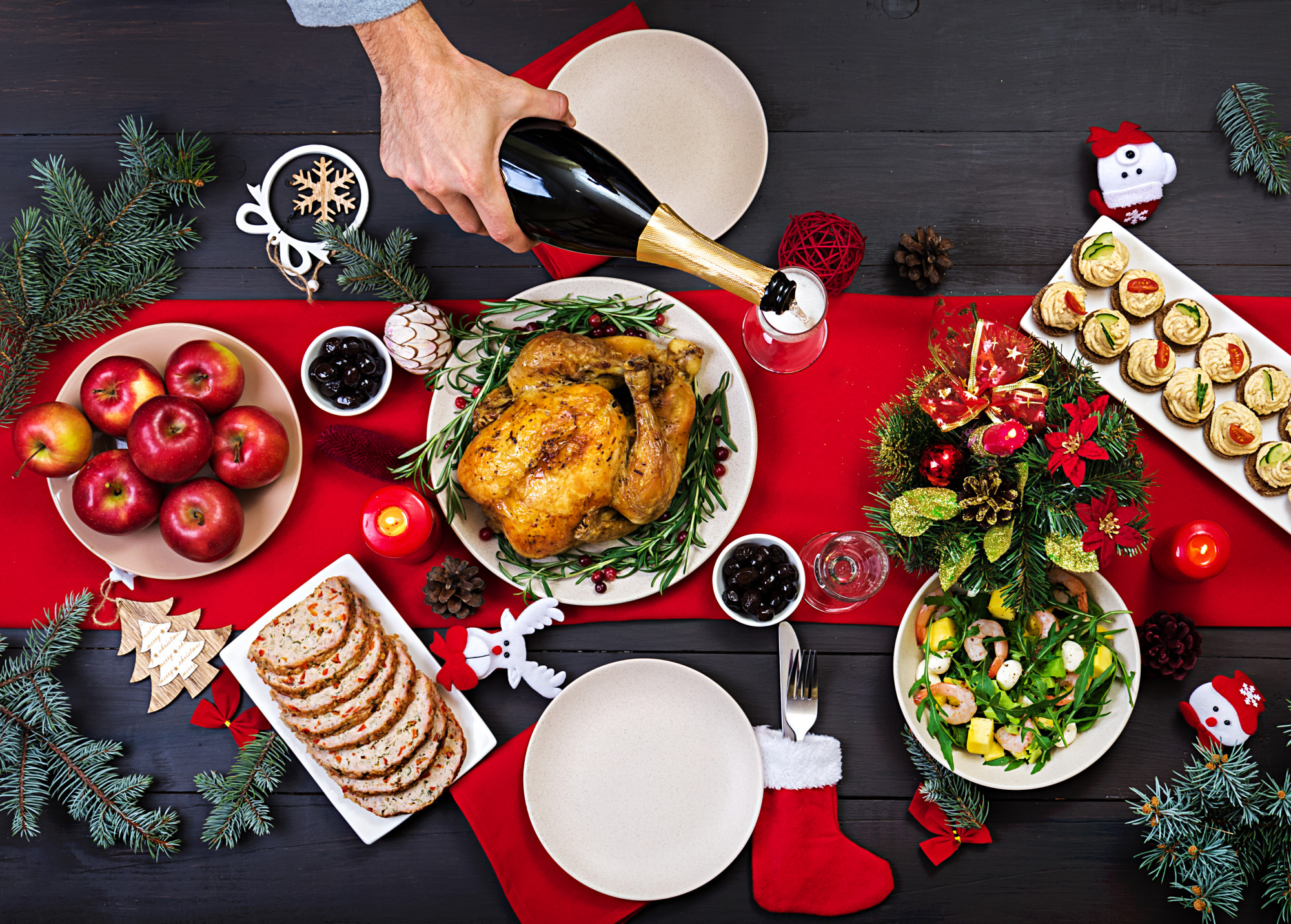
The Table Where I Was Never Allowed to Sit
Lauren had not planned to make Christmas about money.
She would tell herself this later, when everyone tried to rewrite the evening into a story about her temper. What she had planned was simpler and more generous than any of them deserved: deliver the pies, carry in the roasted vegetables, place the sealed envelope on the counter where her mother could find it, and sit down for one meal without checking invoices or bank balances or the time. She had planned to be a daughter for a few hours instead of the quiet financial emergency contact everyone used and no one thanked.
That had been the plan.
The bakery had opened at five that morning because Christmas customers did not care whether the owner had somewhere to be. They wanted the pumpkin pies they had ordered in November and the cinnamon rolls they had forgotten to call about until the day before, and the two dozen dinner rolls Mrs. Alvarez had reserved three weeks in advance, and the sugar cookies shaped like mittens that had been promised to three different families. Lauren had made every order herself. By eleven, her shoulders ached with the particular weight of standing at commercial ovens for six hours. By noon, her hair smelled like butter and yeast. By one-thirty, she was boxing the final paid order and running quiet arithmetic about whether she could close early without losing someone’s business next year.
Then Diane called.
“Don’t forget the envelope,” her mother said, before hello, before merry Christmas, before anything that acknowledged the day for what it was supposed to be.
Lauren stood behind the register and looked toward the office drawer where the December mortgage payment sat folded inside a plain white envelope.
“I have it,” she said.
Diane exhaled the way she exhaled when something had been corrected. “Good. And bring those pies you mentioned. Melissa said Tyler likes cherry.”
Lauren almost laughed. Almost.
After her father died, Diane’s house had become the thing the family talked around. It was the house with the maple tree Dad had planted too close to the driveway, the one whose roots were slowly buckling the concrete and whose continued existence depended on everyone agreeing not to make a decision about it. It was the house where Lauren and Melissa had learned to ride bikes down the same cracked sidewalk one summer apart. It was the house where Diane still kept Dad’s old coat in the hall closet because moving it felt like a cruelty she was not ready to commit.
It was also the house with a mortgage Diane could not manage alone.
Lauren had started helping because grief makes promises before wisdom can slow it down. Standing in the funeral home parking lot, watching her mother fold in on herself, she had said what any responsible child would say. Don’t worry about the house. We’ll figure it out. We had turned out to mean Lauren.
One month, then another. The electric bill because winter was coming and Diane’s card had run low without anyone noticing. Groceries after Diane called crying from the store parking lot because the transaction had been declined and she was too ashamed to go back inside. The car repair Melissa had promised to pay back after tax season, a season that apparently had no end. Tyler’s summer camp, because Diane said the boy had been through enough since his grandfather died, and how do you argue with that, really, when you’re standing in someone’s kitchen holding a check?
You don’t. Or Lauren hadn’t. Not yet.
The trouble with need is that it shapeshifts. Need turns into habit without announcing the transition. Habit turns into expectation. Expectation dresses itself up as love and begins giving orders from a comfortable chair.
Lauren had been paying for the chair.
When she reached Diane’s house, the windows were warm and gold against the December dark. Turkey and cinnamon and buttered rolls reached her before she was halfway up the walk. She stood there for a moment with the pies balanced against one hip and let herself remember being twelve, running through that front door in snow boots while her father stood in the kitchen pretending he knew what he was doing with the carving knife. Her mother would have been swatting at him with a dish towel. Melissa would have been stealing olives off the relish tray one at a time, very slowly, as though the pace made it invisible.
Memory is a trap that way. It keeps offering you older versions of people and asking if you can forgive the current ones for standing in their place.
Lauren shifted the roasted vegetables against her arm and rang the bell.
Diane opened the door in pearls and a red sweater, her face arranged into a smile that arrived a half-second after it should have. She kissed Lauren’s cheek. “Put those in the kitchen,” she said, already turning.
The house was full in the specific way of houses where the television in the next room has been on all day and someone’s been doing dishes off and on and the holiday has gone comfortable without arriving at joy. Melissa’s laugh floated above everything else, which it always did. Melissa had the kind of laugh that staked a claim on a room. Lauren had always been the useful one. Melissa had always been the bright one. Nobody had ever needed to say it because families practice the arrangement every day without naming it.
Brad sat at the dining table with his sleeves rolled up, comfortable in a house where he had never paid a single expense. Tyler, ten years old, was pushing cranberry sauce around his plate with his fork, bored in the specific way of children who are waiting for dinner to start so they can be excused from it. Cousin Rachel sat near the candles, quiet as always, watching without committing.
There was one empty chair left. It was at the far end of the table, near the hallway, positioned the way you position a chair for someone whose role at the table is to keep getting up from it.
Lauren carried the food to the kitchen and set it on the island. Diane’s eyes went to the purse over Lauren’s shoulder. The envelope was in it, and both of them knew it, and neither of them said so yet.
“Lauren,” Diane said, already redirecting toward the stove, “can you help serve? You’re so good at that.”
The sentence was small enough to fit between two other sentences without anyone noticing what it weighed. You’re so good at that. Not sit down, you must be exhausted after working all day. Not we saved you a seat. You’re so good at serving.
“Sure,” Lauren said. “After I sit down for a minute.”
Melissa looked up. Her eyes moved over Lauren’s coat, her face, the purse strap, and something passed across her expression that was not quite a smile and not quite irritation. It was the expression of a person who has grown accustomed to a resource and has just been reminded that the resource has preferences.
Lauren pulled out the empty chair near the hallway.
Tyler dragged his plate across the table.
The ceramic scrape cut through the room. It wasn’t the loudest sound that had happened in the house that evening, but it was the most deliberate, and everyone heard the deliberateness. The plate moved slowly across the tablecloth and came to rest near the edge, turkey and potatoes and cranberry sauce arranged like a presentation.
Tyler looked at his mother first. Then he looked at Lauren.
“Mom says you should serve, not eat.”
The room did the particular thing rooms do when something has been said that cannot be unsaid. Everyone went still at the same moment. Brad’s fork stopped halfway to his mouth. Rachel stared at her napkin. Diane’s serving spoon hovered over the gravy while a ribbon of gravy slipped back into the bowl. The chandelier hummed overhead. The cranberry sauce reflected the light.
Then Melissa laughed.
Brad laughed with her, a beat behind and a note louder than it needed to be, in the way of a man confirming which side he has chosen. Diane covered her mouth, but Lauren saw her shoulders. Rachel looked away. Not down at her plate. Sideways, away from the table, as if something in the middle distance required her urgent and private attention.
Lauren would remember that most clearly later. Not Tyler’s line. Not Melissa’s laugh. Rachel looking away.
She looked at Tyler. He still had the roundness of a child’s face that had not yet sharpened into whatever it would become. The line had not originated with him. Nobody invents contempt that precise at ten years old. It had been rehearsed somewhere. In the car, most likely. In the casual register of adults who think children are not absorbing the conversation because they are looking at their phones.
“Who told you to say that?” Lauren asked.
Her own voice surprised her. It had come out quiet. Measured. The voice she used when a vendor was trying to change an invoice after the work was done.
Tyler’s eyes moved to Melissa.
Melissa lifted her wine. “Relax. It’s Christmas. Don’t be dramatic.”
Brad made a sound that wasn’t quite a word.
Diane lowered the serving spoon. “Lauren,” she said. One word, one warning. Not directed at Melissa. Not directed at Tyler. Lauren.
Something compressed and hot moved through her chest. She thought for one clear moment about the envelope in her purse and about every month before this one and about what it means to keep someone’s house standing warm while they seat you at the edge of it with instructions to keep getting up.
She looked at her mother.
“Do you think that’s funny?”
Diane’s social smile vanished. “Don’t start a scene.”
That sentence landed harder than Tyler’s had. Tyler was a child who had been handed poison and praised for the delivery. Diane was an adult protecting the person who had handed it to him.
Lauren thought of her father. Not as a saint, because he had not been one. He had been stubborn, late with apologies, bad at birthdays, the kind of man who fixed things around the house instead of saying what he felt about them. But he would not have let a child humiliate someone at his table and then turned his eyes toward the person who was humiliated and said don’t make a scene. He would have said Tyler’s name once, in a particular voice, and that would have been the end of it.
Lauren’s eyes moved around the table. Melissa with her wine. Brad with his grin. Rachel with her carefully arranged attention to the middle distance. Diane in her pearls, standing beside the gravy that had long since stopped being served.
All of them seated warm and comfortable in a house Lauren had been holding up for three years.
She reached into her purse and took out the envelope.
Diane tracked the movement before Lauren had finished the gesture. For the first time that evening, something behind her mother’s eyes went unsteady.
The envelope was white and plain. No bow, no card. Just the December payment, folded with the kind of care Lauren reserved for vendor contracts and payroll.
She set it on the table beside the cranberry dish.
“You’re right,” Lauren said. “I won’t.”
She reached for her coat.
Diane’s voice sharpened. “Lauren. Sit down.”
Lauren put her other arm through the sleeve.
Melissa said, just at the register meant for the table and not for Lauren, “There she goes.” The distance of it was somehow worse than a direct attack.
Lauren turned once at the door. She held the cold brass knob.
“Enjoy dinner,” she said.
The cold outside hit her face. Behind her, the house held all its warmth and all its noise and someone’s laugh, quick and uncertain, followed her down the walkway past the maple tree.
She sat in the car with both hands on the steering wheel and did not start the engine. Her breath fogged the windshield. The pies and vegetables were still inside. The envelope was no longer in her purse. For one moment, she considered going back. Not to apologize. To take the check off the table and tear it in half in front of everyone.
She started the car instead.
Her phone buzzed before she reached the end of the street. Diane. Then Melissa. Then Diane again. She drove to the bakery because the apartment would be too quiet and the bakery was the one place in her life where effort became something honest. The ovens were off when she arrived but the air still held the memory of cinnamon and yeast. She locked the front door behind her and stood in her own kitchen with her coat on and listened to the silence.
At 9:17 p.m., Diane texted two words.
Stay away.
After three years of mortgage payments. After the groceries and the utility bills and the summer camp in June. Stay away.
Lauren stared at the text. The cooling ovens clicked. The tray rack gleamed under the fluorescents.
She typed the truth as plainly as it had ever been.
Sure. The payments stay away too.
She sent it and put the phone face-down on the prep table.
Three dots appeared. Disappeared. Appeared again. No message came.
Lauren went into the office and opened the bottom drawer. The folder labeled taxes sat under a stack of supplier catalogs. She spread everything on the desk under the lamp: mortgage confirmation pages, utility receipts, Melissa’s car repair invoice, the summer camp receipt dated June 3, screenshots of the late-night texts Diane had sent when the account was short and she didn’t want anyone else to know.
All the things love was not supposed to require as documentation.
The December statement was still sitting on the dining table, near the cranberry sauce. Let them keep it.
By ten o’clock the calls had become a rotation. Diane. Melissa. Diane. Melissa. Brad. Diane. The same people who had laughed when a ten-year-old was used to tell her to stay in her place were now calling like she was family.
When Melissa’s name appeared for the sixth time, Lauren answered and set the phone on the stainless prep table on speaker.
“What?” she said.
Diane’s voice arrived first, tight and clipped. “Lauren, you need to fix this before the bank calls me.”
Not before you forgive your sister. Not before Tyler is upset all night wondering what he did. Before the bank calls me.
Even now, even after all of it, the first concern was the money.
Melissa’s voice joined in. “You’re going to punish Mom because Tyler made a joke?”
“It wasn’t a joke,” Lauren said.
“You’re impossible.”
Then Brad’s voice, and it was different from the others. “What payments? What payments is she talking about?”
That was where the real fracture opened.
Lauren could almost see Melissa turning toward him in the dining room, the wineglass still in her hand, her face rearranging as the portion of the story she had been editing disappeared.
“Brad, stay out of it,” Diane said.
Brad did not stay out of it. “Melissa,” he said, just that one word, and the way he said it meant he had started to understand something.
Lauren spread the documents across the stainless prep table under the bakery lights. A mortgage confirmation. A utility receipt. A car repair invoice. A summer camp receipt. Proof does not need to be loud. It only needs to have been kept.
She walked through every item out loud. Three years of mortgage payments. The electric bills. The car repair Melissa had promised to pay back. Tyler’s summer camp in June, paid from the bakery account, which was to say paid from Lauren’s back.
The phone went very quiet.
Then Brad said it again. “Melissa?”
Melissa did not answer him. Diane tried to redirect. Lauren kept talking.
She said she had brought the December payment to dinner tonight because her mother had called about it three times. She said the envelope was still on their table. She said she would not be sending the January payment.
Diane said Lauren would regret this. Melissa said the word selfish, and Brad told her to stop. In the background, Tyler’s small voice asked what was happening. Nobody answered him.
Diane tried again, softer. “Lauren, honey. You know I didn’t want anyone to hurt you.”
The word honey arrived too late. It had the quality of something taken down from a high shelf where it had been stored unused.
Lauren looked at the documents on the prep table and thought about the little girl she had been in that house, setting the table because her father said every person who comes to your table deserves to sit down warm. She thought about the woman she had become, standing in a bakery at midnight, keeping other people’s house warm while learning that her own seat was reserved for getting up from.
Tyler had not invented the cruelty. He had been taught it. And not only in the car on the way to dinner. He had been taught it by an entire table that had laughed at the right moment, that had given Lauren the chair by the hallway and the job of filling everyone’s water and called it being useful.
She had been paying for the room where it happened.
“I’m not sending the payment,” Lauren said.
Diane said her name.
“Or the utilities next month.”
Melissa started to speak and Brad said stop, firmly enough that she did.
Diane whispered that Lauren’s father would be ashamed.
That sentence found its mark the way only a mother’s aim can. Lauren closed her eyes and saw her father at the old dining table, sleeves rolled up, carving the turkey badly and refusing to admit it. She saw him looking down the table.
No, she thought. No, he would not be ashamed of me. He would be ashamed of the table.
“My father taught me not to humiliate guests in his house,” Lauren said.
Diane went very quiet.
“If you want to keep that house,” Lauren said, before anyone could fill the silence, “you’ll need to figure out how to do it without making me pay for the privilege of being mocked inside it.”
She ended the call and put the phone in her coat pocket and stood in the bakery for a while. Then she drove home and slept badly but she slept.
In the weeks that followed, Diane learned what unpaid bills sound like when no one absorbs them quietly. They sounded like hold music. They sounded like paper envelopes. They sounded like a conversation with a lender who does not care what happened at Christmas.
Lauren did not call to check on them. She did not post anything. She did not mail the receipts, though she composed that letter in her head more than once and understood the impulse completely. She simply stopped, and let reality introduce itself to the people who had been living behind her for three years like she was a windbreak.
The bakery without the constant emergency texts became a different kind of place. Her apartment did too. The silence felt at first like punishment, like being sent out of a room you had every right to be in. Then slowly, over the course of January, it began to feel like something she had not known she was missing. Like oxygen. Like the particular relief of setting down something you had been carrying so long you forgot you were carrying it.
Rachel came to the bakery in February. She stood at the counter in the early afternoon with her gloves in both hands, looking like someone who had been gathering the courage for this moment for six weeks.
“I’m sorry,” she said, before Lauren could say anything.
Lauren wiped her hands on her apron. “For what specifically?”
“For looking away.”
That apology mattered more than any of the others that came later, because it named the exact shape of what had happened. Not the line Tyler said. Not Melissa’s laugh. The moment when everyone who was not laughing chose to let it continue.
Rachel told her what had happened after the call ended. Brad had asked the full accounting. How much, for how long. Melissa had said she didn’t know the exact amount, which may have even been true. Diane had said it was private. Tyler had cried because he understood he had caused something serious without understanding what. Melissa had blamed Lauren for his upset. Of course she had. Blame moves downhill in families unless someone stands in its path.
Lauren gave Rachel two day-old rolls and accepted the apology and did not pretend it fixed anything, because it didn’t need to fix everything to matter.
In March, Diane asked to meet at a diner. Neutral ground. Bright lights. Separate checks.
She arrived without her pearls. She looked tired in a way that might have always been there, visible now that Lauren was no longer too busy managing her comfort to look closely.
Diane apologized in the circling way of people who have practiced the shape of an apology without quite having the courage to land it. Excuses. Tears. A long detour through intentions before she arrived, somewhere near the bottom of her second cup of coffee, at the sentence Lauren had needed to hear.
“I should have stopped him.”
“Yes,” Lauren said.
Diane held her mug with both hands. “I should have stopped Melissa before Tyler ever heard it.”
That was better. That was the actual shape of what had happened, and hearing her mother name it was different from knowing it.
Lauren did not forgive her that afternoon over diner coffee. Forgiveness was not a curtain you dropped over the stage so everyone could leave comfortable. It was a door that needed to be approached from the right direction, and she was not there yet. But she was willing to sit at the table, which was progress.
Melissa took longer. Her first apology arrived secondhand through Brad and did not count. The second came by text with the phrase if you felt hurt inside it, which is not an apology but an accusation wearing borrowed clothes, and Lauren did not reply.
The third came on a gray evening in March. Melissa stood outside the bakery after closing. Beside her, Tyler stood in a winter coat looking at his shoes with the focused attention of a child who has been asked to do something difficult.
“Tell Aunt Lauren what you told me,” Melissa said, her voice unsteady.
Tyler swallowed hard. “I’m sorry I said you should serve and not eat.”
Lauren waited. She could see there was more.
“Mom said it in the car. I thought it would be funny.”
Melissa closed her eyes briefly. There it was. Out loud. On a public sidewalk. Not a child’s mistake. An adult’s cruelty, rehearsed in a car, delivered at a table full of people who laughed.
Lauren let the anger move through her without picking it up. Then she bent slightly so Tyler wouldn’t have to look up at her.
“Thank you for telling me the truth,” she said.
He looked up carefully. “You don’t hate me?”
“No,” she said. “But grown-ups shouldn’t teach kids to be cruel.”
Melissa was crying on the sidewalk then, and Lauren did not move to help her with it. That was Melissa’s own work now.
Later that year, Diane sold the house. Not because Lauren forced the decision. Because the house had become too expensive and too heavy, and because keeping it had required too many lies from too many people over too long a time. The maple tree and the cracked driveway and Dad’s coat in the hall closet were traded for a smaller place near the library with a manageable payment and a radiator that clanked.
Diane hated the new apartment for three weeks. Then she started walking to book club. Then she admitted the heating bill was lower. Then one Sunday she invited Lauren over for coffee and did not ask her to bring anything.
Lauren went. She sat at a small table in a kitchen that held nothing owed and drank coffee from a mug Diane had chosen herself and ate store-bought cookies her mother apologized for twice. The clanking radiator was the loudest thing in the room.
It was not a restored version of the family they had been. Some things do not restore. They repair into something smaller and more honest, and the honesty is where the value lives.
At the next family meal Lauren attended, almost a full year after Christmas, Tyler carried his own plate to the sink without being asked. Then he came back to the table and stood beside Lauren’s chair.
“Can I take that?” he asked. His voice was nervous and careful. He was hoping to get something right.
She handed him the plate.
“Thank you,” she said.
His shoulders came down. He carried it to the sink like it meant something, which it did.
There was no applause. No grand speech. No document declaring Lauren right and awarding her three years of payments in damages. The radiator clanked. Someone asked for more coffee. A small, ordinary dinner continued in a small, ordinary room.
But a child brought a plate to the sink because he had learned a different way to be useful. A mother came to a diner and said I should have stopped him and let it cost her something. A sister stood on a sidewalk and let her son say the true thing out loud.
And Lauren learned the thing she would carry every December when the bakery filled with cinnamon and the orders stacked up by the register.
Leaving a table is not always abandonment.
Sometimes it is the first honest meal you give yourself.

Lila Hart is a dedicated Digital Archivist and Research Specialist with a keen eye for preserving and curating meaningful content. At TheArchivists, she specializes in organizing and managing digital archives, ensuring that valuable stories and historical moments are accessible for generations to come.
Lila earned her degree in History and Archival Studies from the University of Edinburgh, where she cultivated her passion for documenting the past and preserving cultural heritage. Her expertise lies in combining traditional archival techniques with modern digital tools, allowing her to create comprehensive and engaging collections that resonate with audiences worldwide.
At TheArchivists, Lila is known for her meticulous attention to detail and her ability to uncover hidden gems within extensive archives. Her work is praised for its depth, authenticity, and contribution to the preservation of knowledge in the digital age.
Driven by a commitment to preserving stories that matter, Lila is passionate about exploring the intersection of history and technology. Her goal is to ensure that every piece of content she handles reflects the richness of human experiences and remains a source of inspiration for years to come.