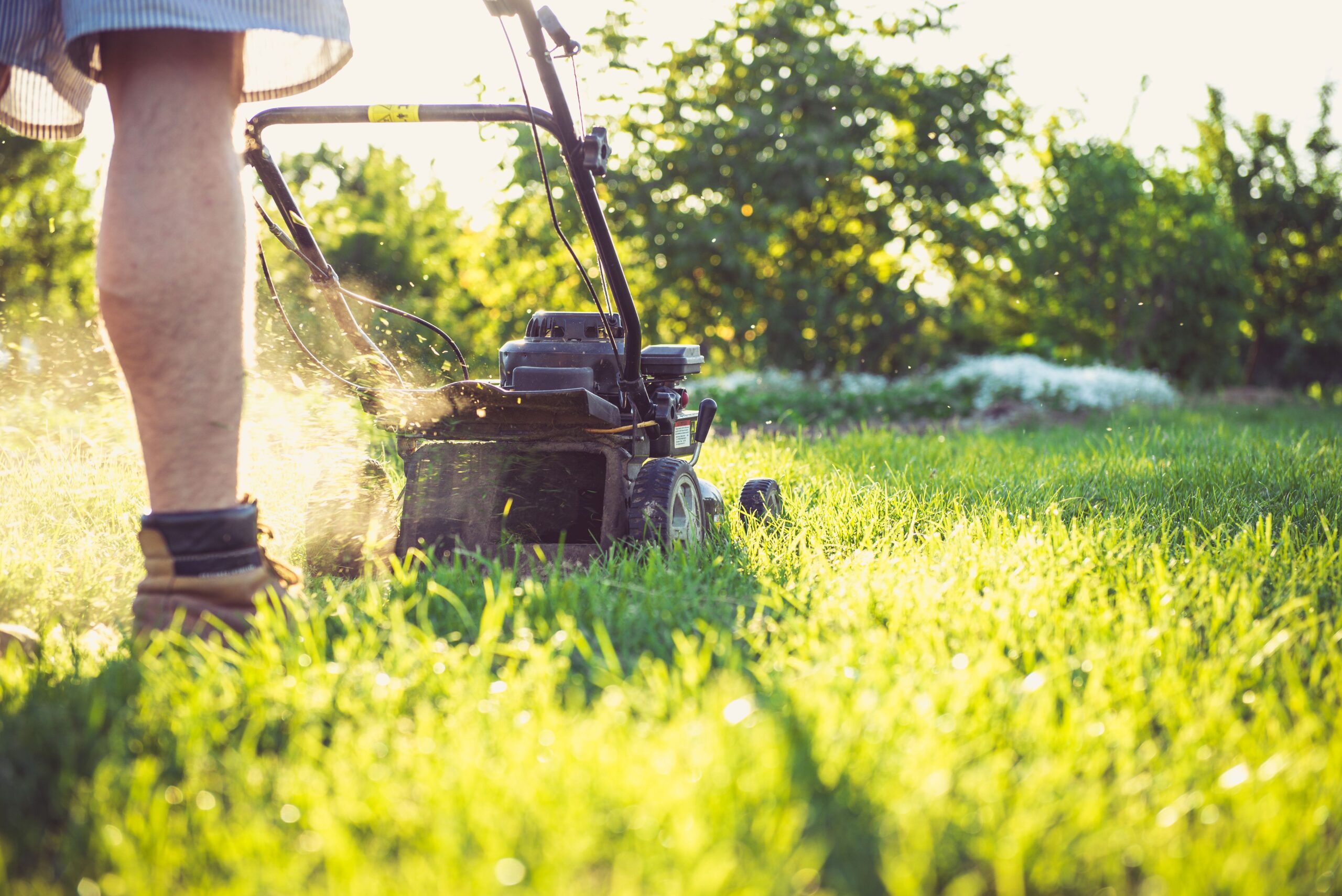
I know what the neighbors say about my yard. I’ve known for two years.
I’ve seen them slow down as they walk past. I’ve watched the curtains move across the street. I got the letters from the city, the ones with the official stamp and the words property violation and overgrowth and a date by which I was meant to fix it. I kept them in a drawer in the kitchen, unopened after the first one, because I already knew what they said, and because there was nothing in the world I could do about it.
They think I’ve let myself go. They think I’m one of those old women who stops caring. They look at the weeds standing chest-high where a lawn used to be, at the brush swallowing the fence, and they think: how could she let it get like that.
I’ll tell you how. But you have to let me start with George.
George and his yard
My husband George kept that yard like other men keep a religion.
He was not a fancy man. He grew up poor in a house with a dirt floor, and he never got over the wonder of owning a patch of green earth that was his own. He worked forty-one years at the plant and came home tired every single day of it, and the one thing that was purely his, the one thing that belonged to no boss and no schedule and no foreman, was that yard. Evenings, you’d find him out there in his old canvas hat, edging the walk on his hands and knees, talking to the grass like it could hear him. Saturdays he mowed in straight proud lines you could’ve measured with a ruler. He had a way of standing at the end of a long day with his hands on his hips, surveying it all in the last of the light, that made you understand he felt, right then, like the richest man who ever lived.
We didn’t have much else. We married young and poor and stayed poor a good long while. Our first years, we lived on beans and each other’s company, and George used to say a man didn’t need money if he had a wife who’d laugh at his jokes and a piece of ground to put his hands in. I believed him. I still do.
And the roses. Lord, the roses.
George planted his first rose bush for me the year we married — a little red one, by the front step, because I’d said offhand once, early on, that red roses were my favorite, and he never forgot a single thing I said in fifty-one years. And then the next year, on our anniversary, he planted another one. And the year after that, another. It became the thing he did. Every June, one more rose bush, for one more year I’d put up with him, he used to say, grinning, with the dirt still on his hands.
By the time he was done, there were fifty-one of them.
Fifty-one rose bushes. One for every single year we were married. They lined the front walk and clustered along the fence and spread in beds he’d dug himself, a great red sprawl of them, like a map of our whole life laid out in the yard. And George knew every one. He could walk you through the decades by the roses, the way other people walk through a photo album.
This one’s nineteen sixty-three, he’d say, the year we nearly lost the house, remember, when the plant cut my hours. This one’s the year Linda was born. This one’s the year she got married and I cried at the wedding and you swore you wouldn’t tell anybody.
There was one bush that wasn’t red. Just one, set right in the middle of all the others. A white one. He planted it the year we lost the baby — a little boy, born too soon, two years before our Linda came. We never spoke of him much; people didn’t, back then. But George planted that one white rose among all the red so that, he said, our boy would always have his place in the yard with the rest of the family. Fifty years that white rose bloomed beside the red ones, and every June, George touched it first.
He tended every bush like it was the marriage itself, which I suppose, to him, it was. And he was out there pruning them the morning his heart gave out. Sixty-eight years old, kneeling in the dirt with his shears in his hand. The doctor told me later he likely never knew a thing, that it was that fast. I tell myself he was happy, right at the end, out among his roses in the morning sun. I have to tell myself that. It’s the only version I can live in.
Why I couldn’t touch it
Here is the part the neighbors don’t know, the part I’ve never said out loud to anyone.
After George died, I could not go into that yard.
It wasn’t that I stopped caring. It was that the yard was him. Every blade of that grass had been under his hands. Every brick in that walk he’d laid himself. To take the mower to it felt like erasing him, like wiping away the last warm place his fingerprints still were. I’d stand at the kitchen window over the sink, where I’d watched him a thousand evenings, and I simply could not make myself open the back door and walk out into all that absence.
I tried, once. About a month after the funeral. I got the mower out of the shed and I stood there holding the handle and looking at his straight proud lines already starting to blur, and I started to cry so hard I had to sit down right there in the grass, and I put that mower back in the shed and I never touched it again.
And the plain truth underneath the grief is that I couldn’t have kept it up anyway. I’m seventy-eight. My hip went bad three winters ago and my hands shake now and I couldn’t push a mower across that yard if my life depended on it. George did everything outside; I never had to learn. I never had to, because he was always going to be there to do it. That was the arrangement. That was the promise the whole marriage was built on, the silent one underneath the spoken ones: I’ll be here. And then he wasn’t.
Our daughter Linda lives three states away, with a husband and two teenagers and a job that eats her alive, and she calls every Sunday at four o’clock, and every Sunday I tell her I’m fine. Because what good would it do to tell her otherwise? She can’t move home. She can’t fix my yard from a thousand miles away. All I’d do is give her one more thing to lie awake about. So I say I’m fine, and we talk about the grandkids, and I hang up and sit in the quiet.
So the grass grew. And the weeds came up through the grass. And the brush came in after the weeds, the way it does, until you couldn’t see the walk, couldn’t see the fence, couldn’t see the front step where it all began fifty-one years ago.
And somewhere in there, the roses vanished too. The weeds grew up through them and over them and around them and swallowed them whole, and I assumed — the way you assume the sun is gone when the clouds come in thick — that they had died. Fifty-one years of George, choked out and lost under a wilderness. I couldn’t bear even to look at where they had been. I kept the curtains drawn on that whole side of the house, for two years, so I wouldn’t have to see.
I let it all go to ruin because facing it was the one thing I could not survive. And I was so ashamed. You cannot imagine the shame of it. An old woman hiding behind her curtains from her own backyard. From the only thing she had left of the man she loved.
The young man at the gate
His name is Cody. He’s got one of those small businesses that clear land and overgrown lots, and somebody — a neighbor, I think, though to this day no one will own up to it — must have told him about the old woman on Mercer Street whose place had gone to jungle.
He knocked on a Tuesday. I almost didn’t answer the door; I’d stopped answering it much. But something made me, and when I finally cracked it open, there was this sunburned young fellow in a ball cap, maybe thirty years old, twisting his work gloves in his hands like a boy in the principal’s office. He said he’d been driving by and seen the yard, and he wondered if maybe he could help with it. For free, he said, quick, before I could say anything. No charge. He said it the way you say a thing when you’re terrified of embarrassing somebody.
I told him no. Of course I told him no. My pride stood straight up in my chest and said no for me. I told him I couldn’t possibly let him, that I had no money to pay for such a thing, that it was fine, that it was all just fine.
He didn’t push. He didn’t argue. He just looked at me for a moment, and then he said, real soft, “Ma’am, you don’t owe me anything. I just don’t think anybody should have to live like this and feel alone about it.”
And I don’t know what it was about the way he said that word — alone — like he knew, like he could see right through the weeds and the brush and the drawn curtains to the thing underneath all of it, but my no came apart in my mouth. I stood at that gate, holding the rusted wire, and what came out instead was, “My husband always kept it so nice.”
He looked at the wilderness behind me for a long moment. And then he looked back at me, and he just nodded, slow, like he understood the whole of it. The marriage and the loss and the two years of curtains, all of it, in one nod.
Maybe he did. Some people, young as they are, already know things.
What he found
I couldn’t watch him at first. The sound of it — the machine grinding, the tearing of all that green — was more than I could stand, and I went inside and sat at the kitchen table with the radio turned up loud.
But after a while something pulled me to the window. And then the window wasn’t enough, and it pulled me to the door. And then, for the first time in two years, it pulled me out onto my own back step, into my own yard, blinking in the sun.
Cody was standing out in the middle of what he’d cleared, and he had gone very still.
He was looking down at something. Then he crouched down, careful, and he started pulling the cut weeds away by hand instead of with the machine — gentle, so gentle, like he was uncovering something that might come apart if he wasn’t careful.
And then I saw the red.
Roses. Roses. Choked and wild and grown leggy from years of reaching up through the weeds toward whatever light they could find — but alive. Blooming. Stubborn and impossible and gloriously, defiantly alive. George’s roses had not died at all. They had been down there in the dark the whole time, the entire two years, holding on, waiting, surviving everything that I could not.
Cody looked up at me across the yard. He didn’t say a word. He didn’t need to.
I came down off that step on my bad hip, and I crossed the broken dirt, and I lowered myself down onto my knees in front of them, right there in the soil George used to kneel in, and I put my shaking old hand against a bloom.
And I said the only thing that was in my heart to say.
“He planted those for me.”
And then I wept. I wept the way I had not let myself weep since the morning they carried George out of our front room. I wept because they were still here. Because his love had outlasted my grief. Because the thing I had been so certain I’d lost had been alive and waiting in the dark the entire time, needing nothing from me but someone kind enough to come and dig it back into the light.
And there, set right in the middle of all that impossible red, blooming away same as ever — the one white rose. Our boy’s rose. Still keeping his place in the family, just like George promised it would.
What I have now
Cody counted them, after. He went all through that cleared yard, careful as a man stepping through a graveyard, and he counted the bushes that had made it.
Forty-nine. Forty-nine of the fifty-one had survived two years of total neglect. Only two were truly gone — and one of those, thank God, was not the white one.
He found the bare spots where the lost two had been, and he marked each one with a little wooden stake. And the next Saturday — he came back, that boy, on his own time, with no one asking him to — he pulled up in his truck with two new red rose bushes in black plastic pots, and he planted them in the empty places, firming the soil down with his hands.
“So it’s all fifty-one again,” he said, like it was nothing at all. Like he hadn’t just reached into the wreckage of my whole life and stitched the missing years back into it.
He comes by still, now and again. To run the mower, to check on the roses, to drink a glass of lemonade on the back step where George used to stand with his hands on his hips. He will not take a single dollar; I gave up trying a long while back. So I bake for him instead — he’s partial to anything with apples in it, and he never leaves without a foil packet of something.
I tend the roses myself now, as best these hands allow. It’s slow going, and I have to sit on a little stool that George would have laughed himself silly to see, but I do it. I prune them in the spring the way I watched him do it for half a century. And every June, on our anniversary, I plant a new one. Bush fifty-two went in last summer. Bush fifty-three this past June. One for every year I get to go on loving that man, even with him gone.
I had it backward the whole time, you see. For two years I believed that tending the yard would mean erasing him, letting him go, moving on. It turns out it’s the exact opposite. Tending the yard is how I keep him. Every rose I prune, every June I plant a new one, I’m out there with George again, dirt under my nails, in the only church he ever needed.
My daughter Linda flew in to see it, when I finally told her the whole story over one of our Sunday calls. She walked out into that yard and saw fifty-three red roses and the one white one blooming in the middle, and she sat right down in the grass and cried, same as her mother. She’d forgotten about the white one. She’d been so small when we lost her brother. We sat out there together a long time, the two of us, and for the first time in two years that yard was full of family again.
I opened the curtains, too. All of them, on every side of the house, the first morning after Cody finished. Two years I’d kept that one side drawn against the sight of the yard, and now I stand at the kitchen window over the sink with the light pouring in and I watch the roses the way I used to watch George, and the shame is just gone. Lifted clean off me. I didn’t even notice it leave.
One of the neighbors came over, finally. A younger woman from two doors down, the kind I’d been so sure was judging me all that while. She’d seen the yard come back, and she stood at my gate the same way Cody had, except she was the one crying, and she said she was sorry, that she’d had no idea, that she should have come over years ago. I told her there was nothing to be sorry for. I told her she couldn’t have known. How could she? I’d made certain nobody could. That’s the thing about hiding — it works. People believe you’re fine because you’ve worked so hard to make them believe it. She comes by on Thursdays now. She likes the apple things too.
So I’ll ask you one thing, and then I’ll let you go.
When you walk or drive past a house that’s gone to ruin — before you decide what kind of person must live there, before you shake your head at the weeds — please. Consider that grief has a weight to it you cannot possibly see from the sidewalk. Consider that the overgrown yard might be the only thing a person has left of someone they cannot live without, and that they may be drowning quietly behind their drawn curtains, too proud and too ashamed and too broken to ask for the one hand that would pull them out.
And if you happen to be young, and strong, and you’ve got yourself a free Saturday — I promise you there’s a woman on a street not far from yours, sitting behind her curtains this very minute.
She is never going to knock on your door.
So go knock on hers.

Lila Hart is a dedicated Digital Archivist and Research Specialist with a keen eye for preserving and curating meaningful content. At TheArchivists, she specializes in organizing and managing digital archives, ensuring that valuable stories and historical moments are accessible for generations to come.
Lila earned her degree in History and Archival Studies from the University of Edinburgh, where she cultivated her passion for documenting the past and preserving cultural heritage. Her expertise lies in combining traditional archival techniques with modern digital tools, allowing her to create comprehensive and engaging collections that resonate with audiences worldwide.
At TheArchivists, Lila is known for her meticulous attention to detail and her ability to uncover hidden gems within extensive archives. Her work is praised for its depth, authenticity, and contribution to the preservation of knowledge in the digital age.
Driven by a commitment to preserving stories that matter, Lila is passionate about exploring the intersection of history and technology. Her goal is to ensure that every piece of content she handles reflects the richness of human experiences and remains a source of inspiration for years to come.