She Had Been Enough From the First Breath
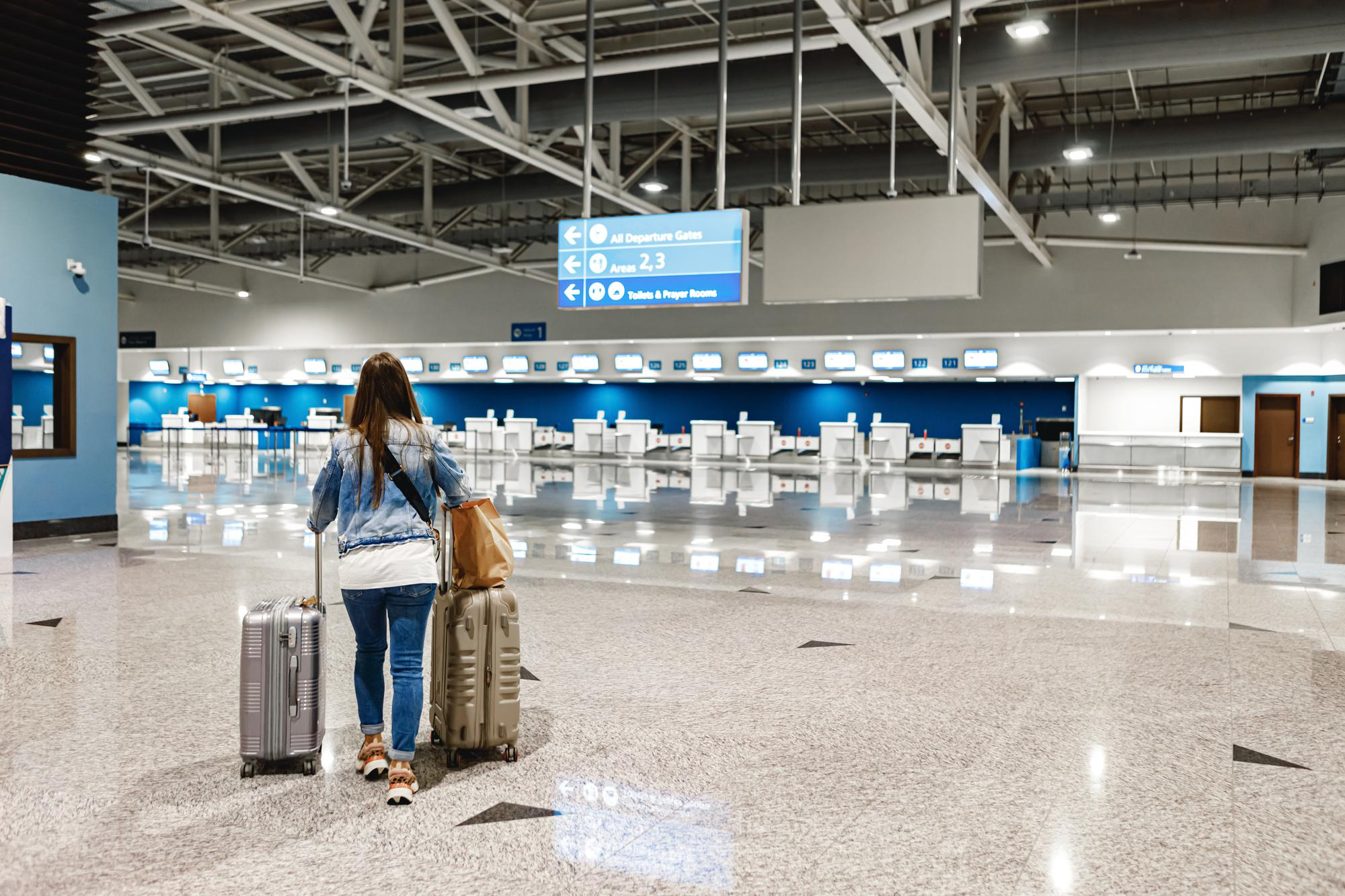
The smell of jet fuel cut through the terminal the way certain smells do when you are about to remember them for the rest of your life. JFK International at that hour was all rushing footsteps and rolling luggage and the particular noise of a thousand separate goodbyes happening simultaneously, each one private, each one believing it was the only one.
I was standing in front of the security checkpoint watching my husband walk away from me.
Daniel Carter was tall enough to clear a crowd easily, and I had always loved that about him, the way I could find him in any room just by looking. That morning he moved with the easy confidence of a man certain of his direction, his overnight bag over one shoulder, his boarding pass in his hand. He had kissed me twice at the curb. He had told me two years was nothing, really, in the length of a life. He had said when he came back from London with the promotion secured we would finally have everything we had always talked about wanting.
I had believed him.
I had believed him the way you believe someone you have shared a bed and a kitchen and a future with for seven years, which is not a naive way but a trained way, a way built out of the thousand small proofs of ordinary days.
When he turned at the security line and waved, I waved back. My throat was tight. My eyes were wet. The tears were real. I want to be clear about that because it matters later: the grief I felt in that terminal was genuine. I was mourning the man I thought I was watching walk away toward a promotion, toward a sacrifice we had agreed to make together.
I stopped crying the moment he disappeared into the crowd.
Not because the grief was fake. But because three nights before his flight, I had found something on his laptop screen that had retroactively changed the meaning of every single thing I was crying about.
Let me go back to that night.
He had been distracted for weeks in a way I had attributed to the pressure of the new position, the logistics of an international move, the weight of the decision. I was in the study to retrieve my phone charger when I noticed his laptop open on the desk, the screen still active. I was not a person who snooped. In seven years of marriage, I had never read his messages or checked his call history or held his phone up to his face while he was sleeping. I believed in the architecture of a marriage built on trust, and I had maintained my end of it with the consistency of someone who believed the other person was doing the same.
But something stopped me that night.
Not a dramatic instinct. Not a premonition. Just the plain fact that he had been acting secretive for weeks and the screen was right there and the study was empty.
I hovered the mouse over an open email.
I read it.
Then I sat down slowly on his desk chair and read it again.
There was no London. No international contract, no company relocation paperwork, no promotion. There was a lease agreement for a luxury penthouse in Miami Beach, signed by two names: Daniel Carter and Olivia Bennett. There was an email thread in which Daniel discussed finally getting free, finally being able to live openly, finally building the life he actually wanted. There was an ultrasound image attached.
The word her appeared in one email, referring to me.
He was planning to walk through JFK and straight into another life. He had been siphoning money from our joint account for months to fund it. Not small amounts. The money in that account represented seven hundred and twenty thousand dollars, the proceeds of my parents’ estate, money I had managed and grown through careful decisions over years before we were married, money I had moved into our joint account when we bought the house because marriage was supposed to mean something about shared futures.
He had watched me do that. He had thanked me for trusting him.
I sat in his chair and felt something leave my body that I do not have a precise word for. It was the specific exit of an illusion I had been living inside without knowing the walls were made of paper.
After he left for his early flight the morning of departure, I did not cry. I waited until I was certain he was through security and then I went home.
I want to be accurate about my state of mind. It was not rage, though rage was present somewhere underneath. What I felt primarily was clarity. The specific clean cold clarity of a person who has been deceived and has understood the deception fully and is now operating from a place where the next steps are simply obvious.
I walked to the home office.
I logged into our joint account.
I had an account of my own, one I had opened years ago on the advice of my financial adviser, long before the joint account existed, long before Daniel. My adviser had told me when I inherited the estate that regardless of who came into my life, I should always have something solely in my name. I had kept that account open through our marriage the way certain people keep a passport even when they have no plans to travel, not from distrust but from the understanding that the future cannot always be predicted.
I transferred the seven hundred and twenty thousand dollars.
I watched the balance of the joint account go to zero.
Then I called my attorney.
His name was Mr. Thompson, and he had handled the estate documentation after my parents died and had been my lawyer since. I told him Daniel had already left. I told him to file for divorce immediately. I told him to send the papers to the Miami Beach address, not London.
He said he would take care of it.
Two hours later, my phone rang.
Daniel.
I let it ring twice, then answered.
“Hi, love,” I said. “Did you land safely?”
His voice came through sharp and unsteady. His card had been declined. The account showed zero. He demanded to know what had happened.
“I transferred it,” I said.
The silence that followed had a very specific quality. It was the silence of a person who has been certain of something and has just discovered the certainty was misplaced.
“That’s our money,” he said.
“That’s my inheritance,” I said. “And I’ve decided to keep it.”
I told him I knew he was not in London. I told him I knew about the penthouse. I told him I knew about Olivia and I knew about the baby, and that the tears he had seen at the airport were real but they had been for the version of him I had believed existed, which turned out to be a character he had played for seven years while planning his actual life.
He tried to explain. His voice went through several registers, from defensive to pleading to something that sounded like it was reaching for an emotion he had not genuinely felt.
“You’re my home,” he said, and I recognized the phrase because he had used it at the airport and it had moved me then.
“Get a job,” I said. “You’re good at creating stories. Maybe try writing fiction.”
I ended the call.
The weeks that followed had the quality of a house that has been aired out after a long time of closed windows. The space Daniel had occupied was still there in the objects and routines, but the pressure that had made the air thick was gone. I did not miss him. That was the thing I kept waiting to feel and kept not feeling. What I felt instead was the sustained mild astonishment of someone discovering that a significant portion of their grief had not been for the actual person but for the idea of the person, and that the idea had been his invention, not mine.
The divorce proceedings moved through Thompson’s office with the efficiency of paperwork that has clear documentation behind it. There were calls from Daniel. There were calls from Daniel’s lawyer. There were messages framing the transfer of funds as something I had done to him, which required a certain kind of creative reinterpretation of events that I declined to engage with.
During this time, I began thinking seriously about what came next.
I had spent the last several years of my marriage participating in Daniel’s vision of our future while my own professional ambitions had been quietly deprioritized. He had been the one with the firm, the clients, the network. I had been the one with the inheritance and the careful investments and the background support. When I examined that division now, I could see clearly how useful it had been to him and how indefinitely deferred it had left me.
My financial adviser, a woman named Carol who had known me since before my parents died, sat across from me in her office and asked what I wanted.
The question was simple. The answer took me longer than I expected.
What I eventually said was that I wanted to build something I had chosen. Not inherited, not managed for someone else’s future, not kept available as a funding source for a husband’s plans. Something that was mine because I had made it.
Carol helped me identify an area where my interests and the current market overlapped in a way that was not just financially sensible but genuinely energizing. I had always cared about sustainable building practices, a holdover from the renovation work my parents had done on their property, and the investment landscape there had changed significantly in recent years. There were small development firms working in that space who needed the kind of patient capital and long-term thinking that my inheritance represented.
I started meeting people.
That was the unexpected part: how much I had forgotten about the pleasure of professional engagement. I had attended Daniel’s networking events for years in the role of the supportive spouse, smiling at the right moments, remembering names, following up on his behalf. When I began attending events in my own right, as someone with a project and a financial position and opinions, the conversations felt entirely different.
I met David at one of those events.
He was not the reason I was there, and he was not the reason I kept going. He was simply someone I encountered, a man who ran a mid-sized construction firm with a sustainability focus and who asked questions and listened to the answers in the specific way of someone who is actually interested rather than waiting for a conversational opening to discuss himself. We exchanged cards. We had coffee once, then twice. There was no urgency to any of it. That was the thing I noticed most. I had spent so long in a relationship with a man who managed my perceptions carefully that genuine unhurried interest felt almost unfamiliar.
I was not ready to trust it yet.
That was fine.
The divorce was finalized on a Tuesday.
Thompson called to confirm and I sat with the phone in my hand for a moment afterward in the particular stillness of a thing that has been in motion for months finally coming to rest. I had expected to feel something larger. What I felt was quiet. A quiet that was not empty but full, the way a room feels after it has been properly cleaned, everything in its correct place, nothing extra.
About a month after the finalization, a package arrived at my door.
The return address was unfamiliar. Inside was a manila envelope containing legal documents and a handwritten note from Daniel.
He wrote that he was sorry. He wrote that I deserved everything and had always deserved it. He wrote that he had signed over any remaining claims related to the joint account and that the attached documents confirmed my full financial independence. He said he did not expect forgiveness and did not deserve it but hoped I could find peace.
I read the letter twice.
It did not move me the way I think he intended it to. Not because I was hard or closed off but because I had already done the work of understanding what had happened without requiring his acknowledgment of it. The letter was for him. It was his way of completing something for himself. I could accept it without it meaning what he wanted it to mean, which was that we had arrived at a mutual understanding of the relationship. We had not arrived there. He had arrived at regret. That was his journey to make.
I filed the documents and let the rest go.
Some weeks after that, I ran into Olivia.
I had gone to a coffee shop I liked for a meeting with a potential investor, a woman who had built her own company from a small inheritance and had a reputation for directness I found appealing. I was early and was setting up when I looked up and saw Olivia come through the door.
She was poised and well-dressed, with the kind of composure that costs something to maintain. When she saw me, she did not look away. She held my gaze for a moment and then, after some visible internal deliberation, crossed the room to my table.
She said my name. She said she was not sure if I would want to speak with her. She said she thought maybe we both deserved some kind of closure.
I looked at her.
I did not feel what I had expected to feel in a meeting like this. Not rage, not the territorial satisfaction of proving I had come out ahead. What I felt, honestly, was tired of the drama in a way that left room for something like clarity.
“Closure is yours to find,” I said. “I’ve already found mine.”
She sat for a moment with that.
She said she was sorry, not in the performing way that people apologize when they want something from you but in the quieter way of someone who has genuinely sat with what they have done. I did not know enough about her to know whether she was the architect of the situation or primarily someone who had believed Daniel’s version of events the same way I had, and I found I did not need to know. The distinction had stopped being useful to me.
“I hope things work out for you,” I said. And I meant it in the flat, uncomplicated way you wish things for strangers. Not warmly. Not coldly. Simply.
She stood, and she left, and the investor arrived, and we had a very productive meeting.
My company began taking shape through the winter.
The first investment I made was in a small firm developing affordable modular housing using reclaimed materials, operating in three northeastern states. The second was in a consulting practice advising municipalities on sustainable infrastructure. Both were unglamorous in the way that genuinely useful work often is, and both were exactly aligned with the kind of future I was interested in building.
I worked long hours, but the hours were mine. The decisions were mine. When things went wrong, I was accountable to myself, and when things went right, the satisfaction was direct and unmediated by anyone else’s narrative about what I had contributed.
David and I continued to spend time together slowly, in the unhurried way that felt right. Coffee became a standing appointment on Sunday mornings at a place near the park where we walked sometimes in the afternoons. He was careful with me in a way that communicated he understood there was something to be careful about without making me feel fragile. He asked about my work with genuine curiosity. He talked about his own without the competitive edge that some men use when they are attracted to a woman who is professionally accomplished.
One evening in early spring we were walking back from dinner when he stopped and said something.
He said he knew I was not looking for anything serious yet and that was entirely right and he was not trying to rush anything. He said he admired the way I had rebuilt something real from a situation that could have leveled a person. He said he would like to see where things went between us if I was open to it.
I looked at him in the streetlight.
I thought about Daniel at the airport, saying I was his home, saying he would think of me every day. I thought about how seamlessly those words had felt like truth and how entirely they had been performance. And I thought about the difference between a man who told you what you needed to hear in order to keep something in place and a man who said something honest at the risk of not getting what he wanted.
“I’m open to it,” I said.
It was not a declaration. It was a beginning, small and uncertain the way real beginnings are. Not the dramatic pivot of a romantic resolution but the ordinary first step of two people deciding to pay attention to something that might be worth paying attention to.
Spring came.
My company was not large and it was not yet profitable, but it was mine and it was moving in the direction I had chosen and every day I made decisions that were accountable only to my own judgment and the facts of the market. I had hired two people I trusted. I had turned down three investment opportunities that did not align with what I was trying to build, even when the money was attractive.
That kind of refusal was new to me.
I had spent years of my marriage accommodating Daniel’s version of prudence, which meant prioritizing his timeline and his vision and his appetite for risk. Learning to say no to things that were financially appealing but wrong in other ways was the quietest form of recovery I went through, and in some ways the most profound.
I thought about my parents sometimes during this period. They had built their estate through decades of patience and careful compounding, and they had tried to teach me a version of those habits before they died. My mother used to say that money was only ever a tool, and the important question was always what you were building with it. I had thought I was building a shared life with Daniel. When that turned out to be built on his fiction, the money remained and the building could begin again, this time according to my own plans.
The inheritance had survived because I had protected it.
The future was growing because I was building it.
One morning I drove past the house Daniel and I had shared, not to look at it but simply because it was on the way to a meeting. I did not slow down. I noticed it the way you notice any building from a car window: the details of it, the way the light fell across the front, the small American flag the new owners had put near the mailbox. It was just a house now. The meaning I had once attached to it had redistributed itself into the actual texture of my daily life, into the office where my two employees were doing real work, into the spreadsheets that reflected decisions I had made alone, into the Sunday morning coffee and the park and David’s steady unhurried presence.
I thought of Daniel occasionally, without particular emotion. He had made his choices. Olivia was presumably living with those choices alongside him. The baby would be here by now, or nearly. That life was entirely separate from mine in the way that felt correct given how entirely it had been built without my knowledge or consent.
I did not wish them harm.
I did not wish them much of anything.
That absence of feeling, that clean neutral space where the anger used to be, was perhaps the most unexpected development of the year. I had expected the anger to last longer and to require more work to dismantle. What I found instead was that once the legal and financial dimensions were resolved, and once I had something genuinely my own to direct my attention toward, the anger simply became irrelevant. It had no useful function in the life I was building, and so it left the way smoke leaves a room when a window is opened.
My life now was smaller than what Daniel had promised and larger than anything he could have given me. It was quieter and more demanding and more completely mine. Every morning I woke up in an apartment I had chosen and went to work on a company I had designed and made decisions whose consequences belonged entirely to me.
That accountability, which had once felt like a burden I was not sure I could carry alone, had become the most clarifying thing in my life.
I had thought, at JFK, that I was watching my future walk away from me.
I had been wrong about that, too.
The future had been there the whole time, patient, waiting for me to stop looking at someone else’s back and turn around to face it.

Sophia Rivers is an experienced News Content Editor with a sharp eye for detail and a passion for delivering accurate and engaging news stories. At TheArchivists, she specializes in curating, editing, and presenting news content that informs and resonates with a global audience.
Sophia holds a degree in Journalism from the University of Toronto, where she developed her skills in news reporting, media ethics, and digital journalism. Her expertise lies in identifying key stories, crafting compelling narratives, and ensuring journalistic integrity in every piece she edits.
Known for her precision and dedication to the truth, Sophia thrives in the fast-paced world of news editing. At TheArchivists, she focuses on producing high-quality news content that keeps readers informed while maintaining a balanced and insightful perspective.
With a commitment to delivering impactful journalism, Sophia is passionate about bringing clarity to complex issues and amplifying voices that matter. Her work reflects her belief in the power of news to shape conversations and inspire change.