They were shouting from the porch before I had even made it fully out of my car.
I heard my mother first, her voice carrying across the gravel driveway with that particular shrill certainty she reserved for moments when she believed she had already won. “Get off Ashley’s property, you homeless junkie!” She pointed at my old backpack as she said it, the one I had carried since before I got sober, the one she had always used as shorthand for everything she believed was permanently wrong with me.
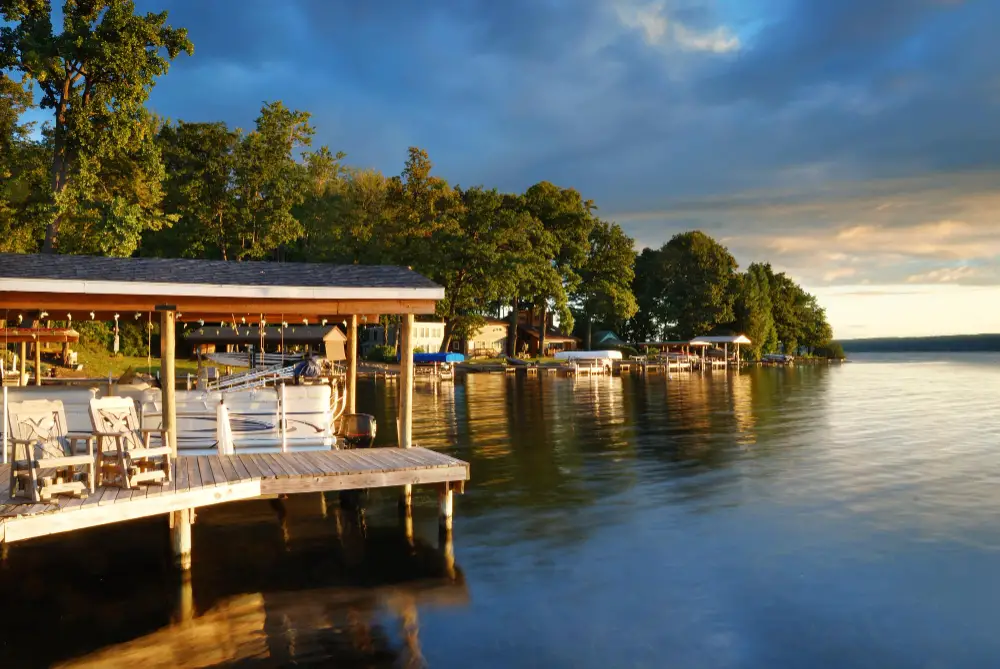
Behind the house, the lake sat bright and still in the August heat, indifferent to all of it. Somewhere out on the water, a boat moved slowly toward the far shore. The dock was new, or at least the planking was. Someone had redone the dock.
I stood in the gravel with a manila envelope pressed to my chest and looked up at the three of them arranged on the porch as if they had been rehearsing this moment. My father stood to the left with his arms crossed and his jaw set in the expression I had known since childhood, the one that meant he had already decided what kind of person you were and nothing you said was going to change it. My mother had stepped forward and was still pointing, her arm trembling slightly with the force of her conviction.
And Ashley.
Ashley stood in a white sundress with her sunglasses pushed up into her hair, watching me with the particular smirk she had been wearing since we were children, the one that said she already knew the ending of whatever you thought you were about to start. “You heard Mom,” she said. “This place is mine now. Grandma wanted someone responsible to have it.”
She gestured at the house behind her as if to let the house itself confirm it.
That was the lie they had been building for two years.
My grandmother Ruth had raised me in the ways that counted long before I understood what that meant. My parents had not been neglectful in any dramatic or documentable sense. They had fed me, enrolled me in school, kept the lights on. But there is a difference between those things and being seen, and Grandma was the person who saw me.
She had grown up watching her own parents lose land on a handshake that was never recorded. A neighbor’s claim, an absent document, and a courthouse clerk who was not interested in the testimony of people who could not produce proof in the form he recognized. The loss rippled through her family for a generation. She mentioned it obliquely sometimes, the way people mention the specific injuries that made them careful, not as complaint but as explanation. She trusted the physical evidence of ownership the way other people trust the word of someone they love. She trusted it more. Paper remembers the truth, she used to tell me. She said it often enough that I stopped hearing it as a proverb and started hearing it as instruction.
When I was in the worst years of my addiction she was the only person in my family who did not treat me as an embarrassment to be managed. She drove two hours to visit me in rehabilitation on a Tuesday in February, sat in the visiting room with her coat still on because the building was drafty, and held my hand for the entire hour without saying anything I would later want to forget. When I left that facility and relapsed four months later she did not write me off. When I finally got serious at twenty-four she was the first person I called. She picked up on the second ring and said she had been waiting to hear my voice.
I stayed with her for fourteen months while I rebuilt enough of a life to support myself. I waited tables at a restaurant in town, went to meetings three times a week, helped her with the garden and with the dock that needed restaining every few years and that neither of us particularly enjoyed doing but that we did together on a series of autumn weekends I remember now as among the best hours of my adult life. She was not sentimental about it. She did not tell me every day that she was proud of me or that I was doing well. She just made breakfast and asked practical questions and treated me like a person who was fully capable of getting things right, which was more than almost anyone else was doing at the time.
When I left for Seattle she stood on this same porch and told me she was proud of me. The genuine kind, not the relieved kind people sometimes mistake for pride.
She passed the following spring. The attorney who called me was a quiet man in his sixties who had handled her affairs for twelve years and who told me she had been very clear about what she wanted and very clear that she did not want it announced until the documents were processed and recorded and legally irreversible. The deed had transferred to my name before she died. She had arranged it quietly, without telling anyone in the family, through an attorney in a city two hours away where no one would recognize her or wonder why she was there. She had done it that way on purpose. She knew what would happen if she did it openly. She had watched her own family lose land to the gap between a spoken intention and a recorded fact, and she had no intention of letting me become another version of that story.
When she passed, I disappeared for a stretch. Not into using again, the way my family immediately assumed and then, as months went by, began stating as fact to neighbors and old friends and anyone who would listen. I disappeared because I was grieving and because I was working double shifts at a restaurant in Seattle where no one knew my last name or my history, trying to accumulate enough money to pay the property taxes on the lake house she had left to me. Ashley moved in three months after the funeral. Mom called it temporary. Dad changed the locks. Then they began renting the dock to vacationers at two hundred and fifty dollars a weekend, and the east bedroom started appearing in vacation listings under Ashley’s name, and the story around town became that I had stolen jewelry from the house to fund a relapse, which explained my absence and made the whole arrangement feel like common sense to anyone who did not know the details.
I let them talk because my attorney, Melissa Grant, told me to wait. We needed proof, she said. Not just the deed, which would be challenged, but a pattern: bank deposits from the rental income, screenshots of the listings, text messages establishing that all three of them knew the property was not Ashley’s, forged estate documents, and most importantly a recording of Ashley telling someone that she had copied Grandma’s signature from an old Christmas card because the handwriting was easy and I was too ashamed to fight.
The eleven months of waiting were not easy. There were weeks when the story being told around town felt so thoroughly established that I wondered whether showing up at all would accomplish anything. My attorney reminded me regularly that arriving with righteous anger and a deed was not the same thing as arriving with righteous anger and a deed and a documented pattern of fraud.
We got the recording because a woman Ashley had gone to high school with had stayed at the lake house one weekend as a paying guest and had found the whole situation uncomfortable enough that she kept the voice memo Ashley had left on her phone after a conversation about whether I would ever actually show up to fight. Some people keep things. Some people eventually send them to the right person.
I drove up from Seattle the morning after Melissa called to say we had everything.
My father stepped down from the porch. He moved the way he always did when he wanted to project that a conversation was already over: deliberate, unhurried, carrying the certainty of a man who had never seriously been challenged by the people he was walking toward. “Leave before I call the police,” he said. “Nobody believes addicts, Claire.”
I had heard that sentence, or versions of it, since I was twenty years old. I had spent years trying to outrun it, first into substances and then into the long grinding work of actually becoming someone different. I had seven years of sobriety. I had a job I was good at and an apartment I paid for and people in my life who trusted me. None of that had ever fully insulated me from the particular devastation of hearing that sentence from him.
But I was not twenty anymore.
I opened the envelope and lifted the certified deed. “Ashley doesn’t own this,” I said. “I do.”
Nobody spoke.
I looked at my sister. “And you’re all going to jail.”
Ashley’s face went through several things in quick succession and landed on white. Mom grabbed her arm. Dad turned toward the road, already calculating, already looking for the angle that would let him reframe this as something other than what it was.
That was when the two sheriff’s cars pulled into the driveway, their tires crunching through the gravel. My sister’s voice came out small. “Claire, wait.”
Waiting was no longer an option.
The first deputy stepped out of his car carefully, one hand resting near his belt, his eyes moving between my family on the porch and me in the driveway. “Who called this in?” he asked.
“I did,” I said, lifting my phone. “And so did my attorney. This is my property. I delivered written notice that I was taking possession today. They refused to vacate.”
My father gave the sharp, ugly laugh I remembered from arguments going back twenty years. “She’s lying. She’s unstable. Ask anyone in this town. She’s been on drugs since she was a teenager.”
The old shame rose in my chest, hot and immediate, the way it always did no matter how many years I put between myself and the worst of those years. But I kept my voice level. “I have been sober for seven years. And being in recovery has nothing to do with whether a forged document is legal.”
The second deputy took the deed from my hand. He compared it against the paperwork my attorney had emailed to the sheriff’s office the previous afternoon, and then he gave one measured nod. “This deed lists Claire Bennett as sole owner.”
My mother’s mouth opened. She looked at my name on the document as if she had never seen those letters arranged in that particular order before. Ashley stepped back and walked into one of the porch chairs and stood there holding its arm for balance. “Grandma promised me,” she said, so quietly it was almost inaudible.
“No,” I said. “Grandma didn’t promise you anything. She let you visit because she loved you. That is not the same as giving you a house.”
A black sedan pulled in behind the sheriff’s cars. Melissa stepped out carrying a folder that looked, in the August light, like it weighed more than she did. She walked directly to the deputies and introduced herself, and then she opened the folder on the hood of her car with the particular efficiency of a person who has spent years organizing the moments that matter most to other people.
“We have evidence of unlawful occupancy,” she said, “rental income collected from a property my client owns, forged estate paperwork, and attempts to transfer the utility account using false authorization.” She laid each document out as she spoke, clearly labeled, clearly dated.
My father’s anger shifted into something I recognized as panic underneath the hardness. “This is family business,” he said.
Melissa looked at him without particular hostility. “Fraud is not family business.”
The deputies asked Ashley for identification. Her hands shook as she went through her purse. Mom had begun crying, the specific kind of crying that was less grief than appeal, the wet-faced argument that everyone was overreacting and this was all a misunderstanding and couldn’t we please be reasonable. “Ashley was only keeping the house safe,” she said. “We were protecting it.”
I turned toward the porch. The welcome mat was new, something with a nautical print that Grandma would have found fussy. The rocking chairs had been replaced with cushioned wicker that would not last three seasons in the lake weather. But through the front window I could still see Grandma’s blue curtains hanging in the living room exactly where they had always been, because even Ashley had not touched those, and something about their familiar stillness hurt more than any of the shouting had.
One of the deputies asked whether I wanted them removed from the property. My mother turned toward me. The crying gentled suddenly into the version of her that appeared when she needed something. “Claire, please,” she said. “Don’t do this to your sister.”
I remembered every time she had used the word dirty when she talked about the person I had been at my worst. I remembered the way she had stopped telling her friends I existed for about three years because it was easier than explaining me. I remembered Ashley posting photographs from the dock at sunset with the caption Blessed to inherit peace, and I remembered sitting in my apartment in Seattle looking at that post at midnight after a ten-hour shift thinking about all the ways it would be easier to simply not fight this.
I looked at the deputy. “Yes,” I said. “I want them removed.”
That was when Ashley stopped performing composure and became whoever she actually was underneath it.
“You don’t even deserve this place!” Her voice went up and broke. “You were supposed to ruin your life. You were supposed to keep being a mess so the rest of us could stop thinking about you. You always ruin everything.”
The deputy moved to calm her down. She did not calm down. She lunged toward the porch table and grabbed a folder that had been sitting there and made a motion toward the papers inside, the fingers-first tearing motion of someone who has just understood that documents are the only real enemy left.
Melissa said, without raising her voice, “Deputy, those are copied rental contracts tied to the investigation.”
Ashley froze. She was standing with a fistful of paper and her white sundress had gotten a smear of something on the sleeve and her sunglasses had fallen down off her hair and landed crooked, one lens tilted up. The deputy took the folder from her carefully and she let it go, and after that everything in her seemed to simply go flat, like a pressure that has finally been released has nowhere left to go.
No one was handcuffed that afternoon in the dramatic way these moments unfold in imagination. Real life does not often provide that kind of clarity. But Ashley was asked to come to the station to answer questions about the forged documents, and my father was told very clearly that returning to the property without my permission would result in trespassing charges.
Mom stood in the driveway beside two suitcases while Dad loaded the car in a silence so furious it was almost its own form of noise. She looked at me once before she got in. “Your grandmother would hate this,” she said.
That was what finally broke the careful stillness I had been maintaining since I arrived. “Grandma hated lies,” I said. “That is why she left the house to the one person who knew what it felt like to lose everything and still come back honest.”
She looked away.
Their car left first. The sheriff’s cars followed a few minutes later. Melissa stayed while I walked through every room.
Ashley had replaced Grandma’s photographs with framed pictures of herself and her friends at brunches and beach weekends, arranged on the same walls where Grandma’s face had lived for forty years. She had painted over the wall in the kitchen where Grandma used to mark our heights in pencil with a date beside each line, the whole history of how tall we had been through the years. The paint was a color called Quiet Gray and it covered everything underneath it completely.
The living room furniture was Ashley’s, modern and pale and already slightly damaged in the corners. The blue curtains were still there, hanging exactly as they always had, and I stood in front of them for a long time before I could move on.
In the back bedroom, the one that had been mine during the year I stayed with Grandma while I got sober, I found the one thing Ashley had not touched because I do not think she had ever known it was there. Beneath the window, half behind the radiator, sat Grandma’s sewing basket with the broken wicker handle she had always meant to fix. I knelt down and opened it.
Inside, under the spools of thread and the folded tissue patterns, was a note in her handwriting. Not a formal letter. Just a folded piece of her personal stationery with the small blue border she used for correspondence.
Claire, it said. If they make you feel small, remember this house is not a reward. It is a place to stand.
I sat down on the floor of that room and cried until the light outside changed color and the lake turned orange with the sunset.
The investigation lasted several months. Ashley accepted a plea agreement in the end, charges of forgery and fraud-related conduct, a sentence that required community service and repayment of rental income and a period of probation. My father avoided criminal charges by paying back his portion of what had been collected from the property and signing a written statement acknowledging that he had known the deed did not belong to Ashley. My mother moved in with her sister two towns over and stopped calling.
I did not move into the lake house right away. I spent three weekends going through it room by room, clearing out everything Ashley had brought, repainting the kitchen in a color close to what Grandma had chosen, repairing the dock myself with Jim from the hardware store in town who had known Grandma and who said nothing about any of it except that the boards she had originally used were better quality than what people bought now. I found Grandma’s photographs in a box in the storage room where Ashley had put them face-down, and I rehung each one in the place it had always been, and I covered the Quiet Gray kitchen wall with a coat of the original yellow, and I sat with the paint chart for two days making sure it was close enough.
I drove up on a Friday in October with my car packed and my lease in Seattle surrendered. The town looked smaller than I remembered and also more like itself, the way places do when you return to them after absence with the specific intention of staying. The maples along the main road were at the end of their turning, red going brown at the edges, the last of the bright color thinning out before winter.
The first night I slept in the lake house I woke before sunrise. I lay still for a moment and listened to the complete quiet of the house and the water sounds from outside, the small repetitive motion of the lake against the dock and the shore, which is one of the only sounds I have ever found genuinely restful. Then I got up and made coffee in Grandma’s old mug, the one with the chip in the handle that she had kept using for years because she said it was still a perfectly good mug.
The mist was on the water. The sky was that particular early-morning color that is not quite dark and not yet light, the hour before the birds start, when everything is suspended and possible. I took my coffee out to the porch and stood at the railing where Grandma used to stand and looked at the lake for a long time without thinking about anything in particular.
They had tried to bury me beneath the worst years of my life. They had spread the story of who I used to be so thoroughly that for a while I had believed fighting them was not worth it, that the cost of showing up would be higher than anything I might gain by doing it. For a long time, shame had been the most efficient instrument anyone had ever used against me, more effective than any argument, more reliable than any lock they might change.
But Grandma had known that about them, which was why she had done it in paper. Not because she thought a document would protect me from being called names in a driveway, but because she knew that at some point, if I was still standing, I would need something the shame could not reach. Something that had been made before the noise started, when everything was still quiet and true and hers to give.
She had left me proof. Not proof of my worth, which was not something paper could carry anyway. Proof that someone who knew me completely, who had sat with me through the worst of it and driven me to the meetings I was too embarrassed to let her wait for, had looked at who I was becoming and decided it was worth protecting. She had done it without asking my permission, without telling me it was happening, without making it into a conversation about whether I deserved it. She had just done it. That was the most Grandma thing I had ever known her to do, and I had known her to do a great many things.
I held the coffee mug in both hands and let the mist come in off the water.
The deed was folded inside my desk drawer where it would stay, unneeded now, its work finished. The investigation was closed. The plea was entered. The rental income was repaid. The photographs were back on the walls.
I had not spoken to my father or my sister since the day they drove away, and I had no expectation that I would. I held no specific anger about that, or at least not one that required action. Some distances are simply the correct distance, established by what happened and who everyone turned out to be.
What I carried instead was something I did not have a clean word for: not peace exactly, which implies that conflict has been resolved and balance restored. More like the specific solidity that comes after you have been told for a very long time that you are too damaged to deserve something good, and you have refused to believe it, and then the thing you were told you did not deserve turns out to have been yours all along.
The sun came up. The mist began to move off the water.
I went inside and refilled the mug and stood at the window over the kitchen sink, the one that looks out across the yard toward the dock, and watched the light come in across the lake the way it had every morning since before I was born, indifferent and steady and entirely without opinion about who I was or what I had done or what I was worth.
Just light on water.
And this time, nowhere to be but here.
Paper remembered the truth.
And so, finally, did I.

Adrian Hawthorne is a celebrated author and dedicated archivist who finds inspiration in the hidden stories of the past. Educated at Oxford, he now works at the National Archives, where preserving history fuels his evocative writing. Balancing archival precision with creative storytelling, Adrian founded the Hawthorne Institute of Literary Arts to mentor emerging writers and honor the timeless art of narrative.