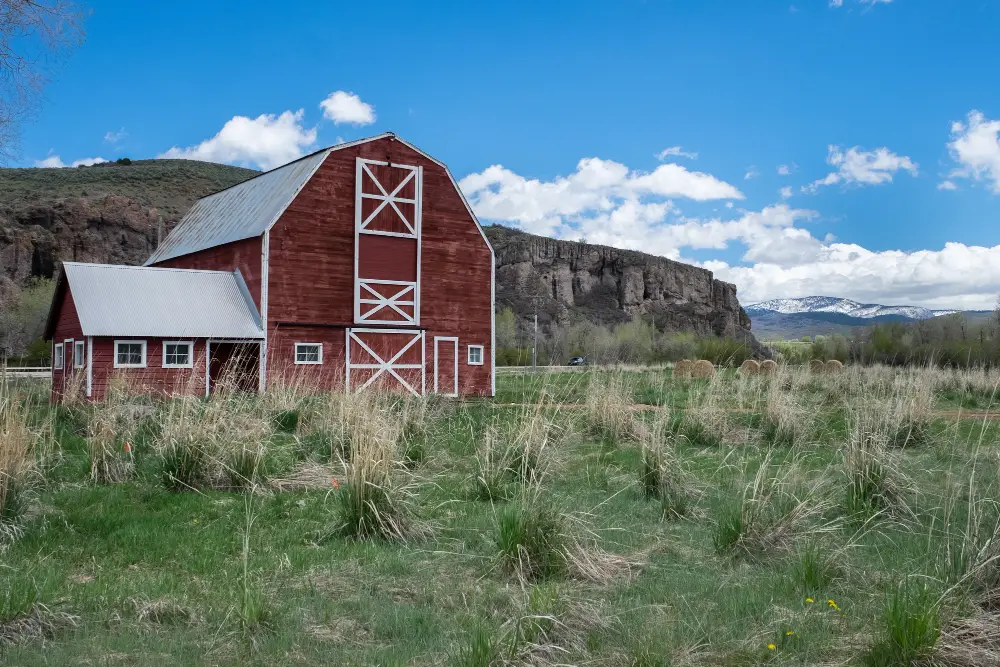
I was brushing Lightning when my son’s phone began going off.
He was standing a few feet away in the stable doorway, the screen trembling in his hand, notification after notification appearing in rapid succession. Card declined. Line suspended. Transaction unauthorized. The morning light outside was that particular Napa Valley kind, red soil still damp from the night, air carrying alfalfa and manure and fresh coffee from Sarah’s kitchen.
“What do you mean they weren’t mine?” Austin said.
I kept brushing. Lightning snorted and shifted his weight, restless the way horses get when something in the air has changed.
“They were extensions of my accounts,” I told him. “I was paying for them.”
Austin laughed, but it came out wrong. “Dad, don’t start. All of this is mine too. It’s the family estate.”
“The family’s, yes. Yours, no.”
He went still in a way I had not seen from him in a very long time. For the first time in years, my son did not know what to say.
Victoria appeared behind him in a white robe, as if she had come straight from posing for a photograph. But her face no longer matched the silk. Her lips were pressed flat, her eyes doing the quick calculation they always did when she sensed money moving in the wrong direction.
“What is going on?” she asked.
“My dad canceled my cards,” Austin said, still working through it.
Victoria looked at me, and the expensive-perfume confidence was gone. What replaced it had a sharper, colder smell.
“Mr. Valdes, this is an insult.”
I set the brush on the shelf. “The insult was sending the owner of the house to sleep with the horses.”
The word owner held in the air between us.
I reached into my vest pocket and pulled out the old keychain Eleanor had given me the day we bought the first corrals, and alongside it a folded copy of the deed. I did not hand either to them. I only let them see the seal.
“The Golden Sun Ranch is in my name,” I said. “The house, the lands, the wells, the warehouses, the cattle, the export contracts, and even the Western saddle your wife had removed because it looked too country.”
Victoria went white.
Austin shook his head slowly. “No. Mom would never have done that.”
That hit harder than anything else he could have said. Not because he doubted me. Because he was still using Eleanor as a shield after allowing them to humiliate me in her garden.
“Your mother did it precisely because she knew you,” I told him.
Austin took a step back. “You’re punishing me.”
“No, son. I’m stopping the rewards.”
Victoria reacted the way she always did when money shifted away from her. “This doesn’t change anything. Austin is the heir. You can’t erase your son over a tantrum.”
“It is not a tantrum,” I replied. “It is an inventory.”
“An inventory?”
“Yes. I am counting what is left of the family.”
She did not wait for more. She yanked Austin by the arm and pulled him toward the door. At the threshold she stopped and looked back at me the way a person looks at an old animal before deciding it is no longer worth the feed.
“You don’t know who you’re messing with.”
I stroked Lightning’s neck. “I do know, Victoria. That is why I started early.”
I did not go to the main house that day.
I stayed with the workers. Jim, the foreman, arrived with his worn hat and dust-covered boots and brought me coffee in a clay mug, the strong kind you drink before checking fences. Out in the corral the boys were separating calves. Beyond them the rows of vines stretched out in their ancient patient lines, and I stood there remembering what this land had required of us over forty-five years: planting today to harvest years later, enduring droughts, waiting for rain, trusting the root.
That was the ranch. Not champagne flutes. Not contracts in English. Not the del Bosque last name.
In the mid-afternoon Henry Suarez arrived from San Francisco. He came in a plain truck with his sleeves rolled up and a black folder under his arm. He entered through the stable, which is where men come when they know where the truth is kept.
“Your daughter-in-law already called two notaries,” he told me. “She also made inquiries about a medical evaluation to have you declared incompetent.”
It did not surprise me. Even so there was a pain in my chest.
“Austin?” I asked.
Henry lowered his gaze. “He signed as the petitioner.”
For a moment the noise of the ranch disappeared. No roosters. No wind. No Lightning. Only Eleanor’s voice from that night at the clinic, asking me to wait. First, let life show you who everyone really is. It had shown me. But it still hurt to see it face-to-face.
“Then let us do it right,” I said.
Henry opened the folder. Inside were the trust papers, the affidavits, the bank statements, Eleanor’s letter, and a video on a flash drive. My wife had left everything prepared with a precision that broke my heart. She was dying, and she was still protecting me.
“The investors are coming Saturday,” Henry said. “They want to sign a land-sale agreement for the valley sectors and the water rights. If they manage to have you declared incompetent, they will try to push it through family legal channels.”
“Let them come.”
“Ernest.”
“Let them all come. Victoria, Austin, the investors, the notaries, and anyone who believes an old man who smells like a stable no longer knows how to defend his home.”
Henry looked at me for a long moment. Then a small smile crossed his face. “Eleanor would have said that with fewer words.”
“Eleanor would have won before breakfast.”
On Friday night Austin came looking for me.
I found him in the small chapel Eleanor had ordered built next to the rosebushes in the south garden. A simple room with wooden benches, a small Madonna, and a cross carved by a local craftsman. Austin was sitting in the front pew. No Victoria. No suit. No phone. For a moment he looked like my son.
“Dad,” he said, “did Mom really think so poorly of me?”
I sat beside him. The chapel smelled of wax and dried flowers.
“Your mother thought well of you. That is why it hurt her so much to watch you lose yourself.”
He rubbed his face. “I just wanted to make the ranch grow.”
“No. You wanted to prove you were bigger than the ranch.”
His eyes were red. “Victoria says if we don’t sign with Green Peaks, they will drown us in debt. That the water is already worth more than the cattle. That the lands can be turned into a hotel, an equestrian club, luxury experiences for foreigners.”
“Experiences,” I said. “That is what they call selling someone else’s history now.”
“It is not that simple.”
“Of course it is not. It never is when you want to justify a betrayal.”
Austin lowered his head. “I am in debt, Dad.”
I said nothing.
“A lot. Before the wedding. Victoria does not know everything. I thought with this contract we could get out. I thought I would explain it to you later.”
“And the nursing home was also part of your explanation?”
His face came apart. “I did not want that.”
“But you signed.”
“Victoria told me it was temporary.”
“Victoria told you. Victoria wanted. Victoria decided. And where were you, Austin?”
He did not answer. Outside, distant music drifted from wherever the remaining wedding guests were still drinking toasts to a future they did not understand.
“Your mother left you a letter,” I said.
He raised his face. “To me?”
“Yes. But I am not giving it to you yet.”
“Why?”
“Because a letter from Eleanor is not used to quiet your guilt. It is received when you are ready to change.”
I stood. Before I left, Austin caught my sleeve.
“Can I still fix it?”
I looked at him. I was seventy years old and for the first time I did not know whether I wanted to save my son or let him sink long enough to learn to swim.
“Tomorrow we will find out,” I told him.
Saturday dawned clear, the sky that shade of blue that makes the vine leaves shine like knives. At eleven the cars arrived. Three black SUVs, a sedan with out-of-state plates, two lawyers, a notary. The men from Green Peaks Group stepped out smiling in brand-new boots and hats that had never seen sweat. Victoria went to greet them in a beige dress and pearl necklace, carrying the confidence of someone who believes she is already in charge of something that does not belong to her. Austin followed, pale.
They looked for me in the main house. I was not there. I made them walk to the old riding arena, the one Eleanor had refused to demolish because that was where Austin rode his first horse. In the stands sat Jim, Sarah, the cowboys, the cooks, the children of the workers, and several local suppliers who had worked with the Golden Sun for decades.
Victoria stopped when she saw me in the center of the ring, hat on, a clean shirt, my cane, Henry at my side.
“What kind of circus is this?” she whispered.
“A proper country one,” I said. “Out here, important things are spoken face-to-face.”
One of the investors smiled uncomfortably. “Mr. Valdes, perhaps this would be better handled in private.”
“It would not.”
Henry produced the documents. Victoria tried to interrupt, but the notary she had brought stepped closer, and it took thirty seconds for his face to change.
“The property is locked down,” he murmured.
Henry spoke loudly enough for everyone in the arena to hear. “The Golden Sun Ranch legally belongs to Ernest Valdes. Miss Eleanor established an irrevocable trust. No sale, transfer, mortgage, or exploitation of water rights can be carried out without the direct signature of Mr. Ernest and the validation of two witnesses designated by her.”
Victoria clenched her fists. “This is manipulation. He is not well. He does not understand.”
I raised my hand. Jim connected the screen they used for cattle auctions.
Eleanor’s face appeared.
Thin. Pale. Beautiful.
The murmuring stopped.
Austin put his hand over his mouth.
My wife’s voice came through clearly, though tired.
“If you are seeing this, it is because someone tried to remove Ernest from his home. Do not fool yourselves. My husband is not stubborn because he is old. He is stubborn because he knows how to love what others only know how to sell.”
My chest opened up.
She continued. “Austin, if you are there, listen to me carefully. A ranch is not inherited by blood. It is earned with loyalty. And you will have a right to this land only when you learn to take care of your father, the workers, and the water the way you take care of a child.”
Austin was crying.
Victoria was not. She stared at the screen as if she wanted to break it with her eyes.
“And to anyone who thinks they can use my death to take what we built,” Eleanor said, “I leave my last will: every single stone will be sold to pay for legal defense before the Golden Sun is handed over to greedy hands.”
The video ended.
Nobody applauded. There was no need. The silence weighed more than any applause.
Victoria turned to Austin. “Say something.”
Austin did not move.
“Austin,” she said, harder this time. “Tell them your father is confused.”
My son closed his eyes. When he opened them he looked at me.
“My father is not confused.”
Victoria froze. “Excuse me?”
Austin swallowed. “I am.”
That sentence cost him more than any amount of money.
The primary investor picked up his contract folder. “Mrs. del Bosque, you assured us you had family control and the authorization of the operating heir.”
Henry stepped forward. “We also have copies of emails discussing pressuring a medical evaluation and transferring rights without the owner’s knowledge. I recommend you leave the ranch before this becomes a criminal complaint.”
Victoria’s notary closed his briefcase. “I am not signing anything here.”
Victoria lost her composure entirely. “You ridiculous old man! Do you think they love you? Everyone here is after your money. Even your son.”
I walked toward her slowly.
“Maybe,” I said. “But you were the only one who sent me to the stable believing it was a punishment.”
She was breathing hard. “Austin, let us go.”
My son did not follow her.
She understood then. She had not lost the ranch. She had lost control. She tore off her ring and threw it into the dirt of the arena, then walked out between the black SUVs without looking back, her beige dress kicking up dust from that earth she had always despised.
Nobody stopped her. Sometimes the worst defeat is leaving without anyone asking you to stay.
When the investors were gone, Austin remained alone in the center of the ring. I walked over and picked the ring up from the ground and placed it in his hand.
“This belongs to you too,” I said. “Your decisions.”
He broke down. He knelt in the red dirt in front of everyone, and I let him stay there for a moment. I had spent too many years rescuing him from debts, from failures, from women, from himself. A father also gets tired of being a bridge for a son who keeps burning the other side.
“I do not know if I can forgive you today,” I told him.
Austin nodded, crying. “I understand.”
“But you can start tomorrow at five, with Jim, checking the water troughs.”
He looked up. “What?”
“You wanted a ranch. Start by carrying buckets.”
Jim laughed. Sarah did too. Austin cried and laughed at the same time, the way he used to as a boy when he fell off his horse and wanted to get back on before anyone could see him hurt.
That afternoon I walked back into my bedroom. The master suite. My room. The bed was covered in new sheets Victoria had chosen and I pulled them off one by one and asked Sarah to bring Eleanor’s embroidered quilts. I opened the windows and let the wind in carrying the smell of roses.
On the nightstand her photograph remained, my wife smiling under the sun of the south garden with her hands full of dirt.
“You see, old girl,” I said to her. “You were right.”
The following dawn, Austin arrived at the corral at exactly five o’clock. Not five-oh-five. Five sharp. The sky was still dark blue with only a thin line of orange along the eastern hills. Jim was waiting. He handed Austin two metal buckets and said nothing except: water troughs first.
By noon Austin’s hands had blisters. By sunset his back was aching. By the third day the expensive softness had started leaving his skin. The ranch has a way of telling the truth about people. Out here the land does not care about degrees or bank accounts or last names. The land only respects effort.
I watched from the porch. I did not praise him and I did not punish him. Trust grows slower than vineyards, and once uprooted it takes years to return.
On the fifth morning I noticed he was not wearing his watch. The silver Swiss one I had seen him show investors more than once. That evening Sarah found me in the kitchen.
“He sold it,” she said quietly. “He used the money to pay overdue wages for the seasonal workers. Said he should have done it months ago.”
I said nothing. But somewhere inside me a stone shifted. Just slightly.
That same afternoon Henry arrived carrying a small wooden box I recognized immediately. Eleanor’s box. The one she had kept locked in our bedroom drawer. Henry removed his hat and set it on the table and said only, “I think it is time.”
Inside the box rested a single envelope in Eleanor’s handwriting. Austin. Only when he is ready.
I found my son near the south garden repairing a broken fence with Jim. His shirt was stained. His boots were muddy. For the first time in years he looked like a Valdes.
When he saw the envelope his hands began to tremble. He opened it slowly, as if touching it might make her disappear again. He read silently. Then his knees weakened. Tears fell onto the page. He handed it to me, and for the first time since Eleanor died I read words she had written for our son.
My beloved Austin, if you are reading this then life has finally become your teacher. Your father spent his entire life building things for others. Homes. Fences. Dreams. Even bridges for people who never thanked him. I worried less about losing this ranch than losing you. Because greed does not arrive wearing horns. It arrives dressed as ambition. If you have hurt your father, repair what can still be repaired. Land can survive drought. Families often cannot. One day this ranch may become yours. But ownership is not given by papers. It is given by character. Take care of your father. Take care of the workers. Take care of the water. And remember this: a good man leaves wealth to his children. A great man leaves children worthy of wealth. I love you. Always. Mom.
Austin broke entirely. Not the way proud men cry quietly. He cried like a child who finally understands what he has lost.
I sat beside him under Eleanor’s rosebushes and for a long time neither of us spoke.
Then he whispered, “Dad, I do not know how to become the man she believed I could be.”
I looked at the ranch stretching beneath the evening sun. The vines. The cattle. The old stable. The house where Eleanor still lived inside every room.
“You start tomorrow,” I told him.
Three weeks passed, and on a ranch three weeks can feel like three years.
The vines were pushing new green shoots. The calves were stronger. Eleanor’s rosebushes bloomed early that spring as if she had somehow persuaded heaven to send us a little extra rain. And Austin worked, not perfectly and not gracefully, but honestly. Every morning at five, every evening after sunset. He cleaned stalls, fixed fences, checked water troughs, carried feed. I caught him more than once rubbing his blistered hands when he thought no one was looking. He never complained. Jim treated him like any other ranch hand. Maybe harder. That was fair. Trust is paid in installments, not promises.
Then one afternoon Sarah walked out of the kitchen with a strange look.
“You have visitors. Plural.”
Two black sedans stood near the gate. Victoria stepped out, but she was no longer the woman from the wedding. The pearls were gone. The perfect smile was gone. Her hair was pulled back carelessly and dark circles shadowed her eyes. Beside her stood two men in expensive suits carrying the particular quiet of collectors.
Austin came running from the barn. When he saw her, all the color left his face.
One of the men stepped forward. His name was Gregory Kane, and he represented several creditors. Austin’s debts had finally come looking for their owner. Outstanding liabilities tied to various loans, investment agreements, and personal guarantees exceeded twenty-six million dollars. Even Jim whistled softly.
Victoria looked at me without arrogance for the first time since I had met her. Only desperation.
“Mr. Valdes,” she said quietly. “We need help.”
The words landed heavily. Not because they surprised me. Because they were very late.
I looked at her. This was the woman who had sent me to sleep in the stable, who had picked out my nursing home, who had treated Eleanor’s house like commercial real estate. And yet Eleanor had always said that mercy should never be cheap, but neither should it disappear.
Austin stepped forward, his voice unsteady. He told me about the loans. The mortgaged future income. The borrowed-against development contracts. He had signed everything believing Green Peaks would make the ranch bigger.
Bigger. Not better. Bigger. That single word has undone many men.
I walked slowly toward him. “Do you know the first thing your grandfather taught me?” I pointed toward the irrigation canal. “Water does not care about ambition. You take more than the land can give, and eventually the land collects its debt.”
The creditors waited.
“The ranch will not pay your debts,” I said.
Victoria flinched. Austin simply nodded, as though he had expected nothing less.
Then something happened I did not anticipate. My son removed his wedding ring, the simple silver band he had worn since Victoria threw the first one away, and placed it in my hand.
“I am not asking for money,” his voice broke. “I am asking for a chance to fix what I broke.”
I looked at the ring in my palm. A circle. No beginning. No end. Like family: easy to damage, hard to replace.
Then Victoria began to cry. Not graceful tears. Ugly ones. Human ones.
“I grew up with nothing,” she whispered. “My father lost everything. I promised myself I would never be poor again.”
Nobody spoke, because fear wears many disguises. Sometimes it wears pearls.
“I thought money meant safety,” she said.
I looked at Eleanor’s roses. At the workers. At Austin. At this broken young woman in front of me. And I understood something my wife had known long before I did. People rarely become greedy because they have too much. Most become greedy because they are terrified of having too little. That does not excuse the harm. But sometimes it explains it.
I handed the ring back to Austin.
“Debt can be repaid,” I said. Then I looked at them both. “Character takes longer.”
That evening, after everyone had gone, Henry handed me a sealed envelope with no stamp, no return address, only five words written on the front in handwriting I did not recognize: FOR ERNEST VALDES. URGENT.
Inside was a satellite photograph of the valley. Red circles marked each of the water wells. Beneath the image, a single line: They are coming back for the water.
I barely slept that night.
People think ranches are built on land. They are not. They are built on water. Land without water is memory. Water turns memory into life.
At four-thirty in the morning I was in the kitchen and Sarah was already making coffee. She handed me a mug without asking questions. People who spend their lives on ranches learn that silence also has a language.
By six o’clock I had driven out to the valley wells. Halfway there I saw dust rising ahead. Three government vehicles. White. Official.
A woman stepped forward when I arrived at the pump station. Mid-fifties, sun-weathered face, practical boots, the kind of person not impressed by money. I liked her immediately. Her name was Maria Delgado, State Water Authority. She handed me a file. Inside were maps, reports, satellite images, and then a document that made my breath catch. Beneath our valley ran one of the largest underground aquifers in the region, far larger than anyone had previously documented. The estimated value was not in millions. It was in billions.
Suddenly Eleanor’s decisions made even more sense. She had not just protected a ranch. She had protected a future.
Maria told me that several companies had been quietly acquiring water rights across three counties, using fraud, coercion, and in some cases improper medical petitions filed against elderly landowners to remove them from title. They had not been buying land. They had been hunting weakness.
Henry arrived carrying more documents. Federal investigators were joining the case. Green Peaks Group was at the center of it.
A truck pulled up and Austin climbed out, covered in dust, work gloves tucked into his back pocket. He saw the officials and froze. Maria handed him a subpoena. He had unknowingly signed several Green Peaks agreements that were now under investigation. His face went pale, but he looked at me rather than reaching for his phone.
“Am I in trouble?” he asked.
Maria answered before I could. “That depends. Did you knowingly participate in fraud?”
“No.” No hesitation. No qualifications. Just truth.
She studied him for a long moment. People who investigate lies learn to recognize honesty. Finally she nodded. “Then cooperate.”
Austin released a breath. Not relief. Responsibility. There is a difference.
The inspections lasted all day. That evening we gathered on the porch, Jim and Sarah and Henry and Austin and me, and Lightning stood in his paddock nearby with his ears twitching. The ranch felt as it does before a rain: waiting, attentive, alive.
Austin stared toward the horizon. “Dad,” he said after a while, “if Mom had not protected everything, would I have lost it all?”
“Yes,” I told him.
He nodded slowly. “Would you have lost it too?”
I looked at Eleanor’s roses. At the house. At the fields built over forty-five years.
“No,” I said.
He frowned, confused.
I placed my hand on the porch railing worn smooth by decades of use. “Because none of this was ever mine to keep forever.”
He sat quietly with that for a long time. Then he asked the harder question. “Do you think Mom would forgive me?”
I looked up at the first stars appearing above the valley and for a moment I could almost hear Eleanor laughing the way she did when she caught me taking life too seriously.
“Your mother believed in second chances,” I said.
Austin lowered his head and tears moved down his face.
“Then maybe there is still hope.”
I placed my hand on his shoulder. Not as a judge. Not as the owner of a ranch. Simply as a father.
“Hope is like water, son.”
He looked at me.
“You have to keep it flowing.”
Five years later.
I was seventy-five years old when my granddaughter asked me why old people cry when they are happy.
Children ask questions adults spend entire lives avoiding.
Her name was Elena. Austin named her after her grandmother. Not Eleanor. Elena. He said he wanted her to have her own life while still carrying a piece of the woman who saved ours. She had Eleanor’s eyes, the same soft brown that always seemed to notice what others missed.
That morning she sat beside me on the porch swing overlooking the south pasture. Lightning was gone now. He had lived to thirty-two before we buried him beneath the cottonwoods near the stable. Austin cried harder than I did. Funny how life works. Sometimes boys become men only after learning how to grieve.
The ranch looked different. Better. The wells had been placed under a regional conservation trust. The workers received profit-sharing. The north pasture had been restored. Eleanor’s rose garden had doubled in size, and every spring children ran through it laughing.
The house was louder now. Not with parties. With family. The kind Eleanor had always wanted.
Elena swung her legs. She was six years old and believed every mystery deserved an answer.
“Grandpa?”
“Yes, sweetheart?”
She pointed toward Austin in the distance. My son was repairing a fence with two ranch hands. Not supervising. Working. His hands were rough now. His face carried the kind of lines that honest lives eventually put there.
Beside him stood his wife. Her name was Isabel, a schoolteacher from town with kind eyes and a strong heart and no interest in investors. Only people. Sometimes life writes second drafts, and sometimes those drafts are better than the first.
Elena leaned against me. “Daddy says Grandma Eleanor saved the ranch.”
I smiled. “She did.”
“How?”
I looked across Golden Sun Ranch. At the cattle and the vines and the water moving through the irrigation channels. At the workers laughing near the barn. At Austin, who had spent five years earning back what money could never buy.
“Your grandma understood something important,” I told her.
“What?”
I squeezed her little hand. “Love is not giving people everything they want.”
She frowned the way children do when truth arrives wearing simple clothes.
“Then what is love?”
The wind moved through the valley. The same wind Eleanor loved. The same wind that had touched generations before us and would touch generations after.
“Love is helping people become who they are supposed to be.”
Elena thought about that with the seriousness only a child can bring to large ideas. Then she nodded, as if she had always known it and was only now being reminded.
A few minutes later Austin walked toward us carrying fresh peaches from the orchard. He handed one to Elena, one to me, and then sat quietly beside us. No phone. No hurry. No investors. Just family. He looked toward Eleanor’s rose garden.
“Dad?”
“Yes?”
His voice was softer than it used to be.
“Do you think Mom would be proud?”
Five years had passed and he still asked. Maybe that was a good sign. The people who stop asking difficult questions about themselves are usually the most lost.
I looked at the roses blooming yellow in the afternoon light. Then I looked at my son, and at my granddaughter, and at a ranch that was still standing.
“I think she always believed this version of you was possible,” I said.
Austin lowered his head. Not in shame. In gratitude.
As the sun began settling over Golden Sun Ranch, Elena climbed into my lap and pointed at my cheek.
“Grandpa, why are your eyes wet?”
I touched my face. She was right.
“Because happy things matter too,” I told her.
She smiled as if that made perfect sense. Maybe it did.
The valley glowed gold. The wind carried the scent of roses. The cattle moved slowly toward the watering troughs and the vines held their rows with the patient authority of things that have grown where they belong.
I thought about what Eleanor had known from the beginning: that the greatest threat to Golden Sun Ranch was never the investors, never the debt, never the lawyers arriving in clean boots. It was the possibility that the people who would inherit it might not become worthy of it first. She had understood that and she had prepared for it the way she prepared for everything, quietly, precisely, and without asking anyone for permission.
She had built the trust. She had recorded the video. She had hidden the letter in the wooden box and told Henry to wait for the right moment. She had left a note inside a panic room she hoped I would never need and a letter for a son she hoped would change. She had protected the water and the land and the name of the ranch and the old man sleeping in the stable by doing what she had always done: she had loved us all toward the people we were capable of being.
I held Elena and watched the light fade and felt something I had not felt since Eleanor died. Not peace exactly. Something better than peace. The sense that you are exactly where you are supposed to be, doing exactly what you were made for, and that the ones you love are near.
Some people leave this world. But what they built stays. And as long as Golden Sun Ranch stood beneath the western sky, pressing its roots deep into the water Eleanor had protected, a part of her always would too.
“Come on,” I said to Elena. “Let’s go find your father.”
She jumped down and ran ahead of me across the grass, and I walked slowly after her into the last warmth of the afternoon, past the rosebushes and the stable and the old riding arena where the truth had finally been spoken out loud, back toward the house my wife had made into a home.
The wind moved through the valley behind me.
I did not look back.
I did not need to.
She was already there.

Adrian Hawthorne is a celebrated author and dedicated archivist who finds inspiration in the hidden stories of the past. Educated at Oxford, he now works at the National Archives, where preserving history fuels his evocative writing. Balancing archival precision with creative storytelling, Adrian founded the Hawthorne Institute of Literary Arts to mentor emerging writers and honor the timeless art of narrative.