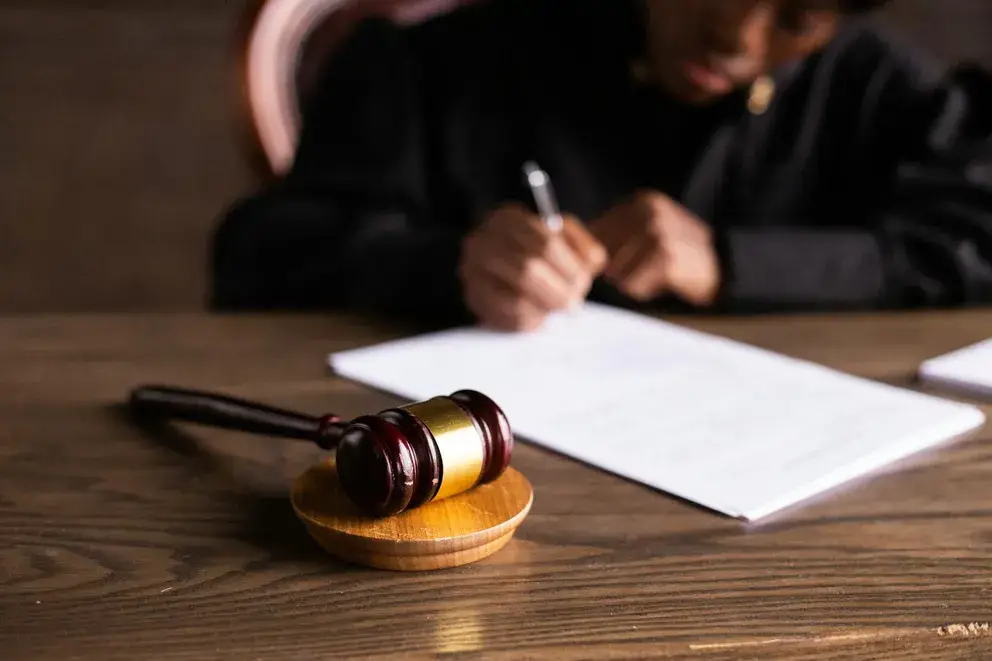
In the courtroom, my father looked proud.
He sat straight-backed in a navy suit, one hand resting on the table as if he were presenting quarterly numbers instead of fighting over a dead woman’s life work. My mother sat beside him in cream silk and pearls, her lipstick too bright for mourning, her smile thin and controlled.
“The seven vacation homes in the Florida Keys are ours,” she said to the judge with quiet confidence. “She doesn’t deserve a cent.”
The judge turned to me.
I stood, reached into my bag, and handed him the sealed envelope my grandmother had left behind. He broke the seal. His eyes moved down the first page.
Then, to everyone’s shock, he laughed.
Not loudly. Not cruelly. But with the startled, disbelieving laugh of someone who has just realized an entire case was built on a lie so sloppy it almost insulted the room.
“Well,” he said, glancing over his glasses, “this is interesting.”
My mother’s fingers slipped off her handbag. My father lost all color.
That moment had started three weeks too late.
The night my grandmother died, my parents did not ask if I had eaten, if I had slept, or if I had made it back from the fire line alive. My father’s first words on the phone were, “Please don’t come in here looking to make trouble again.”
I was standing outside a hangar in Montana when he said it, still in my flight suit, my clothes carrying the smell of jet fuel and smoke. Behind me, a mechanic dragged a hose across the concrete. Water hissed. Engines clicked as they cooled. The sky was going dark over a line of burned ridges, and I was still halfway inside the rhythm of wildfire season when my father’s voice cut across it.
“What are you talking about?” I asked.
He took one irritated breath, as if I were forcing him to explain something obvious. “Your grandmother passed. Everything’s been handled. Just come home and don’t make this worse.”
Passed. Handled. Worse.
Three flat words for the woman who had taught me to drive a skiff, patch drywall, tell the difference between greed and fear, and never trust a person who talked about property before they talked about grief.
“When?” I asked.
A pause. “Three weeks ago.”
My knees nearly gave out. Three weeks. Three weeks my grandmother, Lenora Vale, had been dead and no one had told me.
I spent the rest of the night in a kind of stunned machinery, turning in my gear, signing release forms, booking the first flight I could get. By the time I landed in Miami and rented a car, I felt hollowed out. It was close to midnight when I drove south, black water flashing beside the highway, islands rising in the headlights and falling away again.
I kept thinking of my grandmother’s hands, small, veined, always busy with something useful. Sanding porch rails. Labeling jam jars. Tapping the rim of a teacup when she was deciding whether to tell the truth gently or all at once.
Her house should have been my first stop. Instead, I drove to my parents’ place because my father had ordered me there.
The porch light was already on. My mother opened the door before I knocked, as if they had been watching through the blinds. Her face was powdered too carefully. My father stood in the dining room with his sleeves rolled up.
The house smelled wrong. Not like dinner or old air-conditioning or even stale coffee. It smelled scrubbed. Bleach. Vinegar. A desperate, biting clean that made the back of my throat tighten.
“You’re late,” my father said.
“I was on a fire line.”
He shrugged. “Everything’s been taken care of.”
“Taken care of how? Why didn’t anyone tell me Grandma was dying?”
My mother looked down at the counter.
“She didn’t want a scene,” my father said.
I laughed once, and it sounded ugly. “She wanted a scene less than she wanted me at her funeral?”
“Don’t start,” he snapped.
That was the first moment I knew they were hiding something. People telling the truth answer the question you asked. People who are cornered answer the safest version of it.
So I asked about the estate. My father said there was no will.
I asked about the seven cottages on Pelican Row in the Keys, the ones my grandmother had spent thirty years restoring after storms, one floorboard and window latch at a time.
He said, “Those are family assets. We’re handling them.”
We.
My grandmother never said we about those cottages. She spoke about them like beloved, difficult children. Cottage One was stubborn. Cottage Two leaked whenever it felt ignored. Cottage Seven, closest to the water, was dramatic and full of salt and moods.
“Handling them based on what?” I asked.
“Based on the fact that I’m her only son,” he said. “And based on the fact that you were nowhere to be found.”
“I was working.”
“You were gone,” my mother said softly. “Things had to be decided.”
Decided. Like my absence had been consent.
I barely slept. At sunrise I drove to my grandmother’s house. The hibiscus hedges needed trimming. Her blue heron mailbox still leaned slightly to the left because she said fixing it would ruin its personality.
But the second I stepped inside, I stopped cold.
The place had been searched. Not robbed. Robbers are messy in a different way. This was targeted. Drawers hung open. Filing tabs were bent. The rolltop desk in her study had been emptied. The cedar document box she kept under the side table was gone.
And the smell, bleach again.
My parents’ house. My grandmother’s house. They had been cleaning while they were hunting.
I stood in the center of the kitchen, staring at the empty space where her deed box used to live, when someone knocked on the screen door.
It was Cora Mendoza from two houses down. She and my grandmother had been neighbors for twenty years and enemies over bougainvillea placement for at least ten of them. In her hand was a brass key on a faded ribbon and a cream envelope with my name written in my grandmother’s slanted handwriting.
“She gave me this last spring,” Cora said. “Told me if Arthur started acting like those cottages belonged to him, I was to hand it over and tell you not to waste your breath arguing in kitchens.”
My throat tightened so hard I could barely say thank you.
Inside the envelope was one sentence. If Arthur says there is no will, don’t argue in kitchens. Go to First Island Trust. Box 214. Bring this key.
At ten-thirty that morning I sat in a quiet room at First Island Trust with a bank officer named Melissa Dane and a metal safe-deposit box open between us. My name was on the signature card. Of course it was. My grandmother had always prepared for weather.
Inside the box were certified copies of recorded deeds, trust documents, rental ledgers, neurologist paperwork, and two envelopes. One was addressed to me. The other said: To the judge, if my son lies.
I opened mine first.
Birdie, it began, using the nickname she’d given me because I climbed everything when I was little. If you’re reading this, then Arthur has done exactly what I expected him to do. There is no will for the cottages because the cottages are not part of my probate estate. Four years ago, after your father tried to pressure me into selling Cottage Seven to a developer, I transferred all seven Pelican Row properties into the Pelican Row Preservation Trust. You are successor trustee on my death and sole income beneficiary so long as the cottages remain intact for fifteen years. After that, any sale proceeds are to fund storm-recovery scholarships for local students.
She had underlined one line twice. Your father inherits nothing he can sell.
I sat there gripping the paper while tears blurred the ink.
The rest of the packet explained why. Four years earlier, after a mild stroke, my father had come to “help” with the rentals and bookkeeping. In reality, he had been skimming. Small amounts at first. Pet deposits. Cleaning fees. Then larger transfers labeled maintenance reimbursement. My grandmother had hired a forensic accountant quietly and documented all of it. The ledgers were in the box. So were screenshots from Cottage Seven’s exterior camera showing my father removing payment envelopes from the lockbox on weekends he later claimed he had never visited.
And because she knew exactly who he was, she had done something even smarter than creating a trust. She had asked her neurologist to evaluate her mental competency the same week she signed every transfer. The evaluation was in the packet too. Clear. Oriented. Fully competent.
By noon I had called Elias Quinn, the attorney whose card was clipped to the trust papers. He had been my grandmother’s lawyer for decades.
“I wondered when Arthur would force the issue,” he said after I explained. His voice was old and dry and utterly unsurprised. “He filed an emergency probate petition three days after your grandmother died. Conveniently omitted the trust. Claimed the cottages were wasting assets requiring immediate family management.”
“Can they do that?”
“They can try. Which they did. The hearing’s tomorrow morning. Bring the certified copies. Bring the sealed letter to the judge. And June?”
“Yes?”
“Let them speak first. Your grandmother earned that much.”
The next morning my parents arrived at probate court dressed like they were attending a charity luncheon. My father looked clipped and prepared. My mother carried grief on her face the way some women carry a matching scarf, carefully chosen, easy to remove.
Their lawyer, Bradley Soren, spoke smoothly and with expensive confidence. He described me as absent, volatile, and unfit to oversee valuable coastal property because my work kept me “transient and in hazardous environments.” He described my father as Lenora’s only son and natural heir, a dutiful man who had stepped in when his daughter had chosen distance over family.
My father didn’t look at me. My mother did. She gave me a tiny, pitying smile. Then she said the line that would later replay in my head for weeks.
“The seven vacation homes in the Florida Keys are ours. She doesn’t deserve a cent.”
The judge, a silver-haired woman named Miriam Holt, folded her hands and turned to me.
“Ms. Vale, do you wish to respond?”
I stood. My knees felt strangely steady. “Yes, Your Honor. I have one submission from the decedent.”
I walked forward and handed over the sealed envelope. Judge Holt broke the seal, unfolded the pages, and read silently for several seconds.
Then she laughed.
My father’s head jerked up.
Judge Holt read aloud. “If my son Arthur Vale is standing in this courtroom claiming ownership of my cottages, then he is either confused, dishonest, or both. The seven Pelican Row properties ceased to be part of my probate estate on April 12, 2020. Certified deeds and trust filings are enclosed. If Arthur has forgotten this, please see attached copies with recording numbers highlighted for his convenience.”
A sharp sound escaped someone behind me. It took me a second to realize it was my mother.
The judge continued. “My granddaughter June Vale is successor trustee and sole income beneficiary under the Pelican Row Preservation Trust. Arthur and his wife, Denise, are not trustees, not beneficiaries, and not authorized to manage, market, encumber, borrow against, or sell any cottage, no matter how hard they smile while trying.”
Even Judge Holt had to pause before the last line. Then she looked over the top of the pages at my father’s lawyer.
“Mr. Soren, did you verify title before filing this petition?”
He had gone pale. “Your Honor, my clients represented—”
“That is not what I asked.”
He swallowed. “No, Your Honor.”
Judge Holt’s voice chilled. “That is becoming obvious.”
My father suddenly found his voice. “She manipulated my mother! June was always in her ear. This is elder abuse.”
Judge Holt slid the competency evaluation from the packet onto the bench. “Is it elder abuse when the alleged victim obtains a neurological assessment certifying full capacity the week she signs the documents?” she asked. “Or when the transfers are notarized, witnessed, and recorded four years before death?”
My father said nothing.
Judge Holt opened the next attachment. Her expression changed. “And now we have rental ledgers,” she said. “Mr. Vale, would you like to explain why income from all seven cottages appears to have been redirected into an account under your sole control after Ms. Lenora Vale’s death?”
My mother’s face collapsed first. Not into sorrow. Into fear.
Their lawyer asked for a recess. Judge Holt denied it.
Then the side door opened and Melissa Dane from First Island Trust entered carrying a second certified file at the court’s request. The bailiff delivered it to the bench. Judge Holt reviewed the bank records, then looked back at my father with visible disbelief.
“You filed for emergency control over assets you did not own while simultaneously collecting rental income from them without authority. You also signed declarations under oath that no trust existed.”
My father said, very quietly, “I was trying to protect the family.”
“From what?” the judge asked. “The truth?”
What happened next was not theatrical. It was worse for them. It was procedural.
Judge Holt dismissed the petition as to all seven cottages with prejudice. She recognized the Pelican Row Preservation Trust and my authority as successor trustee effective on Lenora Vale’s death. She ordered my parents to surrender all keys, rental records, electronic access, and collected funds within forty-eight hours. She appointed a neutral personal representative for the tiny remainder of my grandmother’s probate estate so my father could not touch that either. And she referred the financial discrepancies, false declarations, and possible conversion of rental income to the state’s attorney for review.
When the hearing ended, my mother grabbed my arm in the hallway. Her voice shook. “June, don’t do this. Your father was under stress. We were grieving.”
I looked down at her hand until she let go. “You kept her death from me for three weeks,” I said. “You cleaned out her house. You filed papers to take what she’d already protected. Don’t call that grief.”
My father stood a few feet away, rigid and furious and suddenly much older. “She turned you against us,” he said.
I almost laughed then, because even after all of it, he still needed my grandmother to be the reason he was caught.
“No,” I said. “She finally left me proof that I was right about you.”
The civil part moved faster than I expected. My father’s attorney withdrew within a month. A forensic accountant confirmed what my grandmother had already suspected: he had been siphoning rental income and disguising it as maintenance reimbursements for nearly two years. Faced with bank records, camera stills, and sworn false filings, he agreed to a settlement returning the misappropriated funds, paying penalties, and resigning any claim to involvement with the trust. The state attorney declined felony prosecution after full repayment and age considerations, but the court sanctions were brutal enough that my father had to sell his boat and empty part of his retirement account.
My mother called twice after that. The first time, she cried. The second time, she spoke in the careful voice people use when they want forgiveness without confession. I let both calls go to voicemail.
A month later I unlocked Cottage Seven for the first time as its lawful trustee. Salt wind pushed through the screened porch. The old boards creaked under my shoes. My grandmother’s wind chime, the one shaped like silver fish, still hung crooked by the back steps.
I stood there with the keys in my hand and finally let myself cry the way I had not cried in court. Not only because I missed her. Because she had known. She had known exactly what my parents were capable of, and she had loved me enough to build a wall around what mattered before she was gone.
I kept the cottages. All seven. I hired Cora as local manager because she knew every storm scar and every guest worth welcoming. I restored the peeling trim on Cottage Three. I repaired the dock by Cottage Six. I turned one unit into an off-season discounted rental for teachers, nurses, and emergency crews. The scholarship language stayed in place, just as my grandmother wanted.
Sometimes, at sunset, the porches glow the exact color they did when I was twelve and handing her paintbrushes from the lawn. Sometimes I catch myself listening for her voice correcting the angle of a shutter or telling me not to overwater the jasmine.
I never did forgive my parents. Not because forgiveness was impossible, but because every apology they offered came after the money was gone. After the judge. After the records. After consequences. That changed the shape of it.
In the end, my grandmother’s last gift wasn’t the cottages. It was the certainty. The certainty that I had not imagined the coldness. Had not exaggerated the greed. Had not been cruel for refusing to surrender what she built.
People like to say death reveals character. What I learned is harsher than that. Death doesn’t reveal character. It reveals who was grieving you and who was waiting for the keys.

Specialty: Quiet Comebacks & Personal Justice
David Reynolds focuses on stories where underestimated individuals regain control of their lives. His writing centers on measured decisions rather than dramatic outbursts — emphasizing preparation, patience, and the long game. His characters don’t shout; they act.