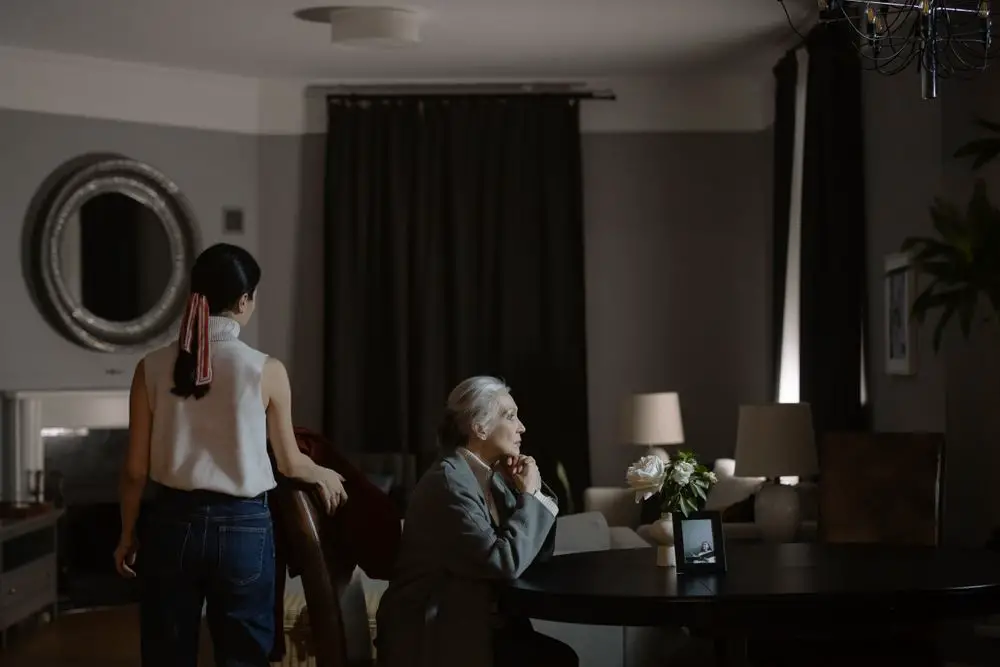
I never thought my own son would break my heart on a Tuesday morning, but there it was on my phone screen, arriving with the casual brutality of something that did not understand its own weight.
Don’t wait for us at Christmas. We’re going to Carol’s parents. They matter more than you do.
I read it three times. Four times. Five. Not because the words were confusing. They were perfectly clear. I read it over and over because some part of me kept expecting the sentence to change, to reveal itself as something less than what it was. It did not change. It sat there in its plain, small letters, and it said what it said.
They matter more than you do.
Not: we promised them first. Not: Carol’s family needs us this year. A direct declaration, aimed cleanly at its target.
My name is Margaret Harrison. I was sixty-eight years old, living alone in the house my late husband Robert and I had bought forty years ago in a neighborhood that had slowly grown old with us. Robert had been gone for three years, taken by cancer at the end of a long, honest life, and in his absence I had built a routine that held me together: morning coffee on the porch, volunteer shifts at the library on Tuesdays and Thursdays, Sunday dinners I cooked for Brad whenever he could make it, which lately was not often.
I had noticed the changes gradually, the way you notice weather shifting. Brad had called every few days when he was younger, then once a week, then every two weeks. When he did call, Carol was always present in the background, and the conversations felt rehearsed, like summaries of longer conversations they had already decided not to have with me. He asked how I was doing in a way that did not leave room for the real answer.
Still, I had told myself it was normal. He was thirty-four, building a career in real estate, married to a woman who worked in marketing. They were busy. Young couples needed their space. I remembered being that age, caught between the life I was building and the one I had come from.
Then came the requests.
Mom, could you help with the down payment for the new car? Just fifteen thousand. We’ll pay you back. I said yes. Robert’s life insurance and our savings meant I could manage it.
Mom, Carol’s student loans are overwhelming us. Could you help? Maybe twenty thousand. I said yes again. What else was the money for if not to help my child?
Mom, the kitchen renovation needs thirty thousand upfront. The contractor won’t start without it. That time I hesitated, because fifty-five thousand dollars in six months was a number that deserved consideration. But Brad’s voice had been so strained, so genuinely desperate-sounding, that I transferred the money.
After that, the calls stopped almost entirely. Three weeks of silence, then four. When I finally reached out, Carol answered Brad’s phone. He’s busy, Margaret. He’ll call you back. He never did.
I pushed the unease down and made excuses for him the way mothers do, because the alternative was something I was not ready to think about directly.
Then Thanksgiving. They went to Carol’s parents. I spent it alone reheating a store-bought turkey breast and watching old movies, and when I texted Brad, he responded two days later with a thumbs-up emoji. A single thumbs-up, sent to his mother, who had cooked him dinner every Sunday of his childhood.
I told myself Christmas would be different. Christmas had always been our special time. When Brad was small, we would stay up past midnight decorating the tree together. Even as an adult, he had always come home for Christmas. I spent weeks preparing: presents, a menu, his favorite snickerdoodle cookies with extra cinnamon. He texted confirmation. Yeah, Mom. We’ll be there. Relief moved through me like something medicinal.
Then Tuesday morning.
I sat at my kitchen table with my coffee going cold and my hands not quite steady and the message glowing on my phone, and I heard Robert’s voice as clearly as if he were sitting across from me. Near the end, when the cancer had stripped away everything but honesty, he used to say: Maggie, people show you who they are. Believe them the first time.
Brad had just shown me exactly who he was.
I did not cry. I did not call him. I did not text back.
I opened my laptop.
Over the thirty-four years since the day Brad was born, Robert and I had opened several accounts for him and deposited into them without exception, even in the tight years, even when we skipped our own vacations or drove our cars past the point of sense. This is for his future, Robert used to say. College, wedding, house, whatever he needs. After Robert died, I had continued. I had increased the deposits. What else did I have to spend money on? Brad was my only child, my only family.
The accounts totaled three hundred and forty-seven thousand dollars.
With three clicks, I transferred every penny into a new account with only my name on it. Then I found the joint account we had opened two years ago, the one Brad had called a practical necessity for emergencies, which held eighty-three thousand dollars I had deposited for just in case. I removed his name from it. I moved that money too.
Four hundred and thirty thousand dollars, now completely beyond his reach.
My heart was pounding. I sat back in my chair and looked at what I had done.
Then I opened a spreadsheet and documented everything: every loan, every transfer, every promise of repayment that had never materialized. Fifteen thousand for the car, never mentioned again. Twenty thousand for student loans, no confirmation they had even been paid. Thirty thousand for a kitchen renovation I had never been invited to see. Ten thousand the previous April, supposedly for taxes. Twelve thousand in June for medical bills that were never shown to me. Eighty-seven thousand dollars in eighteen months, none of it repaid, none of it even acknowledged in the casual, habitual way of people who have reclassified a relationship into something purely transactional.
I remembered Carol’s voice at Brad’s wedding five years ago, overheard through a half-open door where she was talking to her sister. Brad’s loaded, you know. His mom is sitting on Robert’s whole estate. At the time I had brushed it away. Of course he had told his fiancée about our finances. That was normal. Now the memory felt different. It felt like context I should have understood much sooner.
I needed a lawyer. I spent the rest of the evening organizing documents, finding three attorneys with strong reviews in family law and estate planning, writing down questions. By midnight I had a folder of everything and an appointment for the next morning.
My phone buzzed before I closed my laptop. A text from Brad.
See you soon.
He didn’t know yet. He thought everything was still the same.
I smiled, just a little, and went to bed.
Patricia Thornton’s office occupied the third floor of a renovated downtown building with large windows and framed Georgetown degrees and the organized calm of someone who had seen everything and remained unshaken by it. She listened to my full account without interrupting, her pen moving in quick precise strokes across a yellow legal pad.
When I finished, she looked up. “Mrs. Harrison, you did the right thing closing those accounts. But we need to move quickly. If he has access to any remaining joint accounts, any credit cards, any insurance policies where he’s named as a beneficiary, we need to review all of it today.”
We spent an hour going through my entire financial picture. Patricia’s expression grew careful with each page.
“This is financial exploitation,” she said. “Because you gave him the money willingly, it’s difficult to classify as elder abuse in the legal sense, but the pattern is clear. He and his wife have been systematically extracting your assets.” She outlined three immediate steps: change the will, removing Brad as both executor and beneficiary. Revoke any powers of attorney. Document every interaction going forward.
“He’s still my son,” I said.
“I know.” Her voice was gentle. “This isn’t about punishment. It’s about protection. You have the right to keep what’s yours. You have the right to be treated with respect.”
She paused before her next sentence, and in the pause I heard everything she did not say.
“One more thing. He texted last night. Said he’d see me soon.”
Patricia nodded. “He’s checking his accounts. When he realizes they’re closed, he’ll come. Be prepared, Mrs. Harrison. And don’t meet with him alone.”
I pulled into my driveway at noon and saw Brad’s BMW parked on the street.
He was on my front porch, pacing. I sat in my car for a moment, watching him through the rearview mirror, and texted Helen next door. Brad is here. If you hear shouting, please come over. Her reply came back in seconds. I’m watching. Say the word.
I got out. Brad turned at the sound of my car door, his face flushed, his jaw set.
“Mom,” he said, and it was not a greeting.
I walked toward my front door. He stepped into my path.
“What the hell did you do?”
“I don’t know what you mean,” I said, keeping my voice level.
“The accounts. The college fund, the investment account, the savings account. They’re gone.”
“They’re not gone. I moved them.”
“You moved three hundred thousand dollars without telling me.”
“I didn’t need to tell you,” I said. “It’s my money.”
“It’s my money. You saved it for me. You said it was for my future.”
I looked at him then, looked at him the way I had not allowed myself to in a long time, and saw something beneath the anger. Panic. Desperation. Something that looked, underneath everything, almost like shame.
“It was for your future,” I said. “But your future doesn’t include treating me like I don’t matter.”
Something flickered across his face. Then Carol’s voice cut through the air.
She was getting out of the passenger seat, her designer bag over her shoulder, her expression sharp and controlled. She crossed the driveway as if she owned it.
“Margaret,” she said. “We need to talk.”
I did not invite them inside. We stood on the porch in the December wind. Across the street I could see Helen’s curtains move.
Carol told me I had stolen three hundred thousand dollars from my son. I told her I had stolen nothing. She said I had promised it to him, that he had counted on it, that I could not simply take it back.
I said I could, and I had.
Brad put his hand on my arm, not hard but firmly enough to stop me moving. I looked at his hand, then at his face.
“Let go of me,” I said.
“Not until you explain.”
“Let go now.”
He released me. I stepped back.
“You want an explanation? I’m tired of being used. I’m tired of giving everything while you take it and offer nothing in return, not even basic respect. Eighty-seven thousand dollars in eighteen months, Brad. Car, student loans, kitchen renovation, taxes, medical bills. How much of that have you repaid?”
They were quiet.
“So then you send me a message saying Carol’s parents matter more than I do. Yes, I moved my money into accounts where only I have access. Because apparently I cannot trust my own son.”
Brad’s face moved through anger, confusion, and then something more calculating. He suggested we go inside and talk like adults.
“No,” I said. “You’re not coming into my house. Not today.”
Carol’s composure broke then, the pleasant surface dropping away. She told me I was being ridiculous, that I was playing the victim, that I made Brad feel terrible every time he called. Her voice rose past the point she had intended, and I heard in it the real shape of what she thought of me.
“Get off my property,” I said. “Both of you.”
Carol grabbed Brad’s arm. As she pulled him toward the car, she said I would regret this, that the money should be Brad’s, that they needed it.
“Why?” I asked. “What debts are you really in? Because this isn’t about student loans or kitchen renovations, is it?”
They both went very still.
“Get out. And don’t come back until you’re ready to tell me the truth.”
Carol stalked to the car. Brad lingered, his expression caught between impulse and calculation.
“Mom, please. Just give us a chance to explain.”
“You know where to find me,” I said. “But not today.”
He nodded slowly and followed Carol. I watched their car disappear around the corner, then went inside, locked the door, and slid down it to the floor. I sat there until my legs stopped shaking.
My phone buzzed. Helen: You okay? Want me to come over?
I’m okay. Thank you for watching.
I was not okay. But I had held the line, and that was enough for tonight.
Sunday morning a week later, I was on my porch with coffee when my phone rang from an unknown number. It was Detective Morris from the county sheriff’s office. He apologized for calling so close to the holidays and asked if we could meet. When I said yes, he was at my door in twenty minutes.
He sat in my living room with the tired, kind eyes of a man who had delivered too many hard things and said: were you aware that your son filed for bankruptcy seven months ago?
I was not.
Three hundred thousand dollars in debt. Credit cards, personal loans, a second mortgage on their house. The court had appointed a trustee to review their assets and liabilities, and during that review the trustee had found irregularities. Large cash deposits not declared to the court. Purchases made after the filing. Brad had claimed no family assets, no financial support.
Detective Morris opened a folder. Inside were Brad’s bank statements with my transfers highlighted in yellow.
Fifteen thousand. Twenty thousand. Thirty thousand.
“He didn’t report any of it to the court,” Morris said quietly. “That’s bankruptcy fraud. It’s a federal crime.”
I felt the room shift.
“I didn’t know,” I said. “I swear I didn’t know.”
“I believe you. That’s why I’m here.” He explained what they needed from me: documentation of every transfer, dates and amounts and purposes, and confirmation of whether Brad had coerced me or made false statements about why he needed the money.
He had lied about everything.
About the student loans. About the medical bills. About the kitchen I was never invited to see because it had never been renovated.
Before Morris left, he told me that closing those accounts when I did had probably saved me from losing considerably more. The bankruptcy trustee would have seized any joint assets. Brad may have been planning to drain them before the court discovered them.
It had not been merely greed. It had been calculated, premeditated theft.
After Morris left, I sat in silence for a long time. Then I called Patricia.
The following Monday Carol appeared at my door alone with a small wrapped gift, her voice soft and pleading through the wood. She said she wanted to apologize. She said Brad was miserable. She said the chocolates were my favorite. I watched her through the peephole and said nothing. After five minutes her expression changed, the softness draining away to frustration, and she set the gift down and left. I opened the door and picked up the box. The chocolates were a generic grocery-store brand, not anything I had ever mentioned liking. She had not even bothered to get that part right.
The next Tuesday I went to lunch with Helen and two friends from the library, Susan and Dorothy. I told them enough: the money, the message, the confrontation on my porch, the second visit and what Carol had said. Not the detective, not the fraud investigation. Just enough.
Susan set down her fork. “How much did you give him total?” she asked, not accusingly but with the direct practicality of a woman who respected the facts.
I told her. The number landed on the table between us and sat there.
Dorothy was quiet for a moment. Then she said, “You gave that to him because you loved him and because you trusted him. That is not something to be ashamed of.”
“But I should have seen it,” I said.
“Seen what?” Helen asked. “That your son was lying to you? Margaret, we spend our whole lives teaching our children that we are safe. We are the people they can come to. When they turn that against us, it is not because we were foolish. It is because they chose to exploit something sacred.”
Dorothy squeezed my hand across the table. “You did the right thing.”
“Did I?” I said.
Susan’s eyes had a hard, knowing quality. “My daughter tried something similar five years ago. I cut her off completely. It was the best decision I ever made. She got her life together eventually, came back and apologized. But she had to hit bottom first.”
“What if Brad doesn’t come back?” I said.
Helen’s voice was gentle and certain. “Then he doesn’t. Margaret, you can’t set yourself on fire to keep someone else warm. Not even your child. You deserve respect. If Brad can’t give you that, he doesn’t deserve your money or your time.”
Something in my chest broke open. I cried right there at the restaurant table and my friends surrounded me without judgment, without instructions to forgive, without any of the careful, distancing advice people give when they are more comfortable with composure than with grief.
You’re not alone, Dorothy said. We’re here. Whatever you need.
The week before Christmas, Brad and Carol came back together. I saw them through the window and opened the door but stood in the doorway, blocking entry.
They apologized. The words were rehearsed, the pacing of people who had worked out their script in the car. Carol said they wanted to start over, a clean slate. She said they would come for Christmas, spend the whole day.
“In exchange for what?” I asked.
Carol blinked. “What do you mean?”
“This doesn’t sound like an apology. It sounds like a negotiation. You’ve realized the accounts are closed and you need them reopened.”
Carol started to object.
“I spoke to Detective Morris,” I said.
The effect was immediate. Brad went white. Carol’s prepared expression collapsed.
“You talked to the police,” Brad said.
“They contacted me. About the bankruptcy fraud investigation. About the six hundred thousand dollars in debt you never told me about. About how you’ve been lying to the bankruptcy court while taking money from me.”
“Mom, I can explain.”
“Can you explain why you told the court you had no family assets while you were draining my accounts? Can you explain why you took money under false pretenses for loans and medical bills that didn’t exist?”
Carol’s composure shattered. She told me they had been drowning, that I had no idea what it was like, that they had done what they had to do.
“So you lied to me,” I said.
I looked at my son. “Brad. Look at me.”
He did. There were tears in his eyes now, real ones.
“Did you ever love me? Or was I just a bank account?”
“Of course I love you,” he said. “I was ashamed. I didn’t want you to know how badly I’d screwed up. So I took your money and told myself it was temporary, that I’d pay you back. But things kept getting worse and I needed more.” He stopped. “I’m sorry. I’m so sorry, Mom.”
For a moment I almost believed him. I almost reached out.
Then Carol stepped forward, her voice turning cold and instrumental. “This is all very touching. But if you testify against Brad, he could go to federal prison. Is that what you want? To destroy your own son’s life?”
“I didn’t destroy anything,” I said. “Brad did, by lying and committing fraud. He’s an adult who made choices. Now he has to face the consequences.”
“You’re sitting on Robert’s whole fortune while we’re losing everything, and you refuse to help”
“Both of you,” I said. “Get off my property right now.”
They left. I watched until the car disappeared, then locked every door, checked every window, and called Detective Morris to leave a voicemail describing the visit. Then I called Patricia.
“File for a restraining order tomorrow,” she said. “First thing. They threatened you. They’re under federal investigation. They’re desperate and angry. This is when people become dangerous.”
I agreed, and I meant it.
The restraining order hearing was the Monday before Christmas. I sat with Patricia and told the judge the truth, all of it: the documented transfers, the closed accounts, the message, the confrontations. The judge, a gray-haired woman named Rodriguez, was thorough and unhurried. She asked Brad whether he had sent the text message. He admitted he had. She asked whether he had accepted eighty-seven thousand dollars. He said she had offered to help. She asked whether he had repaid any of it. He was silent. She asked whether he had filed for bankruptcy without reporting the transfers to the court. His attorney touched his arm but Brad had already answered: no.
Carol tried to speak, calling me vindictive, saying I was punishing them for choosing to spend Christmas elsewhere. The judge asked whether Carol had called me selfish during the Wednesday visit. Carol said it had been taken out of context. The judge asked whether she had used those words. Carol said yes.
I stood when the judge asked if I wanted to add anything.
“I loved my son,” I said. “I gave him everything I could. I never asked for anything in return except respect and honesty. He couldn’t give me even that. He lied. He took advantage of my love. And when I finally protected myself, he and his wife came to my home twice to intimidate me.”
I looked at Brad. He was staring at the table.
“I don’t want to punish him. I want to be safe.”
The restraining order was granted. One year, five hundred feet, any violation resulting in immediate arrest.
I walked out of the courthouse into cold, clean winter air, and I stood on the steps and breathed.
I was free.
What followed over the next months came to me in pieces, through Patricia and Helen and the ordinary channels of a small town. The federal prosecutor charged Brad with three counts of bankruptcy fraud. Carol cooperated in exchange for immunity and testified against him. The bankruptcy trustee seized their house. The jury deliberated four hours and came back guilty on all counts. Three years in federal prison, eligible for parole in eighteen months with good behavior and restitution he did not have.
In February I received a letter from Brad, seven pages on yellow legal paper. He apologized and explained, at length and without deflection, about a gambling addiction that had started small and grown catastrophic, about the debts that mounted and the panic and the lies, and Carol’s pressure to ask me for more. He blamed himself. He blamed the addiction. He asked not for money or help, only for forgiveness.
I read the letter three times and put it in a drawer.
Perhaps someday.
Not today.
Today I was healing, and that was enough.
Summer arrived and with it a life I had not known I was capable of living. Helen’s book club met on Thursday evenings in a warm revolving living room and the women there were smart and funny and made me laugh until my sides ached. Susan convinced me to teach financial literacy classes at the women’s shelter, helping residents recognize the patterns of exploitation I now understood from the inside out. Dorothy and I took Saturday watercolor classes together. I was not good at watercolor but I found I did not care, which was itself a kind of progress.
In June I drove alone to Maine and spent five days in a coastal cottage reading and walking on the beach. I had been putting the trip off for years because I had been waiting for someone to go with me. I went alone and loved every minute.
I began seeing a retired teacher named Frank who had kind eyes and made me laugh and never once asked about my son.
I converted Brad’s old room into an art studio. I donated the childhood things I had been keeping for a son who had not been the person I believed him to be. I made the space mine.
In August, a second letter from Brad, shorter. He had been sober for six months. He was attending meetings. He was working on himself. He understood now what he had done to me, not just the money but the trust, the love. You deserved better, he wrote. I hope you’re happy, Mom.
I folded it carefully and put it with the first one. I did not respond. I was not ready, and I was learning that not being ready was allowed.
My sixty-ninth birthday came in September. Helen threw a surprise party, just my book club and neighbors in her backyard, with cake and champagne and gifts so silly I laughed until my face hurt. A coffee mug. A gift certificate for the art supply store. A T-shirt none of them expected me to actually wear.
That night, sitting alone on my porch with a glass of wine, I thought about the year behind me. I had lost my son, or the version of him I had believed in. But I had gained something that had always been there, waiting for me to finally claim it: myself. My own time, my own money, my own mornings, my own decisions about where and how and with whom.
I had learned that love without respect is a form of control. That family does not grant anyone the right to take advantage. That sometimes the bravest thing you can do is say no to the people you love most.
Helen had said it best, sitting across a restaurant table from me while I cried into a water glass: You can’t set yourself on fire to keep someone else warm. Not even your child.
I had believed, for thirty-four years, that giving was what mothers did. That the more I gave, the more I was loved. What I had actually been doing was teaching my son that I was available without limit, that my feelings were optional, that I could be managed with the right tone of voice and the right degree of desperation.
I was sixty-eight years old when I stopped.
I do not regret a single day of the life I built with Robert, or the son we raised, or the deposits we made without missing a month even when money was tight. That was love, and it was real.
I regret believing, long past the evidence, that Brad was still the child I had raised rather than the man he had chosen to become.
My son made his choices.
I made mine.
And on a September evening on my front porch, wine in hand, birdsong in the yard, the art studio light glowing through the window of what used to be his room, I was finally, completely, and without apology, happy.

Ethan Blake is a skilled Creative Content Specialist with a talent for crafting engaging and thought-provoking narratives. With a strong background in storytelling and digital content creation, Ethan brings a unique perspective to his role at TheArchivists, where he curates and produces captivating content for a global audience.
Ethan holds a degree in Communications from Zurich University, where he developed his expertise in storytelling, media strategy, and audience engagement. Known for his ability to blend creativity with analytical precision, he excels at creating content that not only entertains but also connects deeply with readers.
At TheArchivists, Ethan specializes in uncovering compelling stories that reflect a wide range of human experiences. His work is celebrated for its authenticity, creativity, and ability to spark meaningful conversations, earning him recognition among peers and readers alike.
Passionate about the art of storytelling, Ethan enjoys exploring themes of culture, history, and personal growth, aiming to inspire and inform with every piece he creates. Dedicated to making a lasting impact, Ethan continues to push boundaries in the ever-evolving world of digital content.