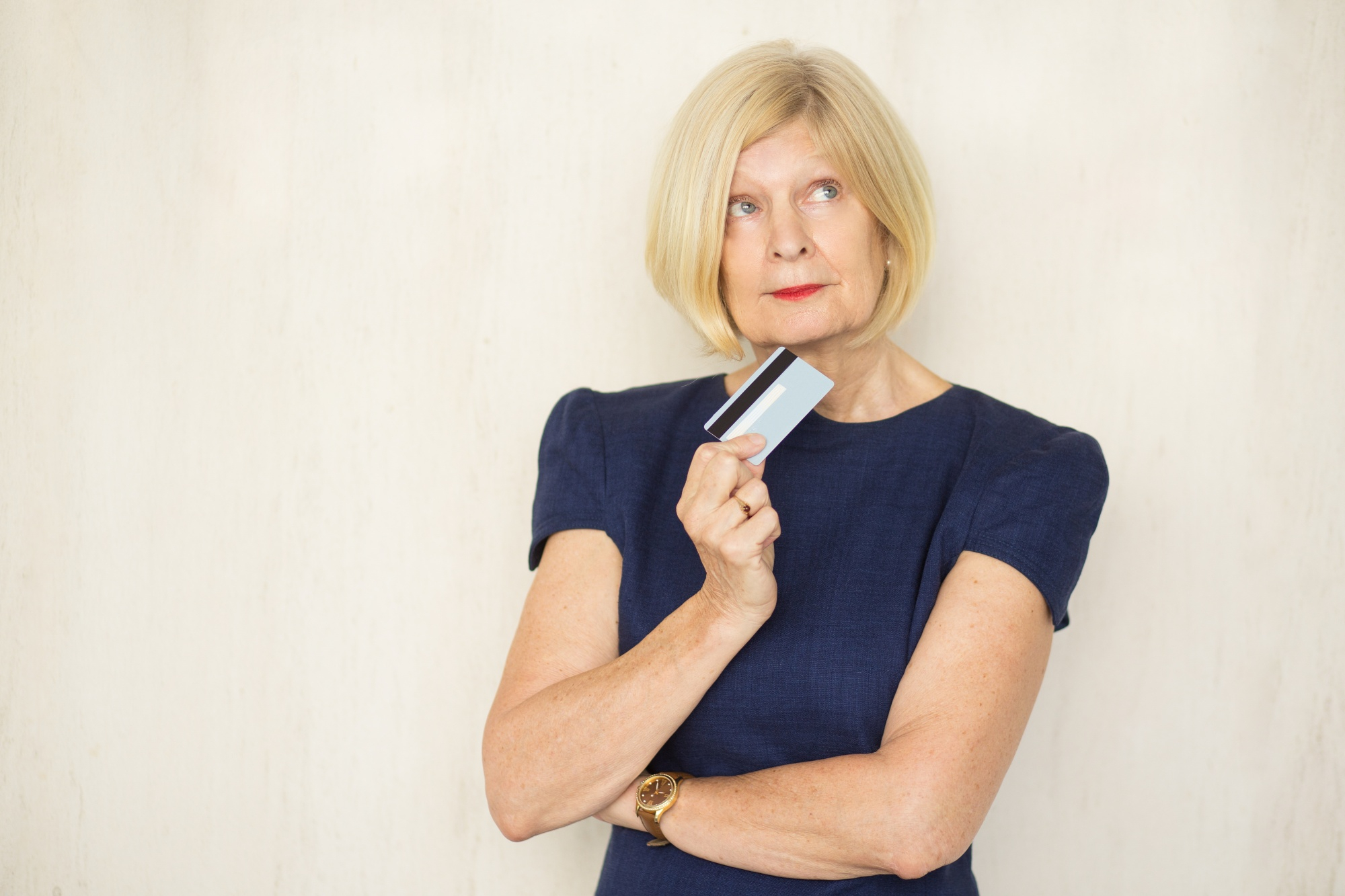
The debit card sat in a shoebox at the back of my closet for nearly four years.
Not because I forgot about it. You don’t forget a thing that was handed to you like a parting gift on the worst morning of your life. I knew exactly where it was. I knew the worn corner of the box where the cardboard had bent from being pushed behind a winter coat. I knew the way the card felt in my hand when I took it out in the middle of the night sometimes, when the apartment was quiet and I had counted coins for groceries and my back hurt in the low, persistent way that comes from cleaning other people’s floors for eight hours and sleeping on a mattress that was never quite right.
I would hold it. Look at it. Put it back.
It had a four-digit PIN written on a yellow sticky note folded into the box. I never used either of them. Not once, in four years, during which I worked every job I could find and rented a room above a garage and ate whatever was cheapest and told my children I was fine when they asked, which they did with the frequency of people who suspect the answer is a lie.
The card was not money to me. It was the last thing Bob ever gave me. And for a long time, using it would have felt like accepting something from him, and I was not ready to accept anything from the man who had sat across from me at our kitchen table six weeks after our thirty-seventh wedding anniversary and quietly asked for a divorce.
No one would have described our marriage as dramatic. We were not the kind of couple who made a story out of themselves. Bob Harper had been my high school sweetheart in the specific way of a thing that happens before you understand what sweetheart means and then turns out to have been exactly right anyway. We married young. We had two children, Chloe and then Jake, three years apart, and we raised them in a house in Seattle that needed work we could never quite afford to do all at once. We argued about bills and weather and whose turn it was to call the plumber. We celebrated birthdays with homemade cakes and too many candles. We survived bad years: a business that nearly collapsed, a pregnancy we lost between the children, a period in our early forties when we barely recognized each other and had to learn to be married again from something close to scratch. We had long stretches of ordinary days that, when I look back at them now, were the substance of everything.
Then, in November of what should have been an unremarkable year, Bob asked me to sit down and told me he wanted a divorce.
He did not say there was someone else. There wasn’t. He did not say I had done anything wrong. He offered no specific complaint, no accumulated grievance, no dramatic revelation. When I pressed him, which I did, repeatedly and at high volume, he said only that it was what he needed to do. That was the phrase he kept returning to. It is what I need to do. As if the marriage were a door he had been standing at for some time and had finally decided to walk through, and the reason was simply that the door existed.
Our daughter begged him to explain. Jake stopped returning his calls almost immediately, that particular silent withdrawal that is its own complete statement. Friends distributed themselves into camps, because people do that when a long marriage ends, and the silence between them becomes a territory they feel required to occupy. I moved through those weeks in the way you move through something you cannot believe is happening to you, half-present, performing the actions of someone whose life is being reorganized while the interior part of you has not yet accepted the reorganization.
I did not understand yet that Bob was sick.
Looking back, I can see it. He had lost weight over the months before the conversation at the kitchen table, not dramatically, but noticeably. His hands shook sometimes when he lifted his coffee cup. There were circles under his eyes that I attributed to poor sleep and the stress of whatever it was he was carrying that he would not name. I thought he was having some kind of late-life crisis, the kind that comes on men in their sixties and makes them do things that seem baffling from the outside. I was wrong about the cause and right about the crisis, just not in any way that would have been useful.
The divorce was finalized on a gray morning in November at a Seattle courthouse. We did not speak much. There is surprisingly little to say when the thing you are doing has already been decided and the only remaining task is to make it official. When the paperwork was complete and we were standing in the corridor outside the courtroom, Bob reached into his jacket and held out the debit card.
“Please keep this,” he said.
I looked at it without taking it.
“What is it?”
“A personal account. In case you ever need it.”
“I don’t want your charity.”
His expression changed in the way that expressions change when someone has heard a thing they knew was coming and still find it difficult. For a moment, I thought he was going to say something real. Something that would explain the past several months, or at least give me something to work with.
Instead he said, “Use it if you ever need to.”
Then he turned and walked away down the corridor, and I stood there holding a piece of plastic and a four-digit PIN and thirty-seven years of marriage that had apparently concluded.
That was the last time I saw him.
Three months later, he moved to Oregon without explanation. Six months after that, contact became sparse. When Chloe called, he answered less often. When he did answer, he said he was traveling, or busy, or tired, always tired. Jake had already mostly stopped trying. The gaps between conversations grew until the calls stopped, which can happen gradually enough that no one moment is the clear ending, just a slow fade that you only understand in retrospect.
Ten months after the divorce, a lawyer contacted us.
Bob had died in hospice care in a small town in Oregon. Stage-four pancreatic cancer. He had been diagnosed before he asked me for a divorce. By the time he had that conversation at our kitchen table, he had already known for some months what was happening inside him and had estimated, with the help of doctors who were not optimistic, how much time he likely had.
He had instructed hospice staff not to contact us until after his death. He had wanted us to find out from an attorney, in a controlled way, after the fact.
My first response was fury. Not the clean, propulsive kind that burns out quickly, but the deep, settling kind that finds its way into everything and changes the flavor of every memory you try to access. I was furious that he had made a decision about our family’s grief without consulting the people who were actually part of it. I was furious that he had spent his last months somewhere none of us could reach him and then given us no opportunity to say goodbye. I was furious that he had taken the explanation away from me by dying before he had to give it.
Then I was just devastated, which is what fury becomes when you’ve been carrying it long enough and it runs out of fuel.
The attorney gave us a short note. Two words on a piece of paper in Bob’s handwriting: I’m sorry. Whether this was meant as an explanation or an acknowledgment or simply the only thing left to say, I couldn’t determine. It was not enough, and it was also everything he had managed to leave in the moment of writing it, and I had to learn to live with both of those things being true simultaneously.
The years that followed were hard in the specific way of lives that have been suddenly restructured without anyone’s input. I found a room above a garage in a neighborhood that was affordable because it was inconvenient to everything. I cleaned houses. I stocked shelves at a grocery store two mornings a week. I scrubbed office floors in the evenings, when the buildings were empty and the work could be done without interacting with anyone, which suited me because I had lost the energy for interaction and had not yet found it again. I applied for every job I could do with a body that was aging and a resume that had stopped being updated in the years when I had been a wife and mother and had not been recording my experiences as professional accomplishments.
My children helped when they could. I accepted some of it and refused most of it, which I told myself was about protecting my independence. The truth was more tangled than that. I wanted to struggle. Not in the performative way of someone wanting to be noticed, but in the genuine way of someone for whom suffering has become the only activity that feels proportionate to the loss. Grief is not rational. It does not ask your permission before it makes decisions about how you will spend your days. Mine had decided that exhaustion and difficulty were the correct response to what Bob had done, and I was not yet at a place where I could argue with it effectively.
The debit card sat in its box. I looked at it sometimes. Put it back.
Four years after Bob died, I collapsed while carrying groceries up the steps to my room. It was summer, mid-afternoon, hot in the way Seattle occasionally manages in August, and I had been working too many hours and sleeping too few and eating whatever was available rather than whatever was adequate. A neighbor found me and called an ambulance.
The doctor who saw me in the emergency room was blunt in the manner of someone who has decided that directness is more useful than comfort in this particular situation.
“If you keep living this way,” he said, “you’ll be back here. And the next time may not have as simple an outcome.”
That night I sat alone in my apartment after they discharged me, in the particular silence of a place that has heard too many one-sided conversations and too much grieving and not enough laughter. At some point after midnight, I opened the closet.
I took out the shoebox.
I sat with it on the kitchen table for a while before I opened it.
Inside was the card and the sticky note and four years of whatever it was I had been preserving by not using them. I sat with it long enough for the stubbornness to exhaust itself, or for the exhaustion to become larger than the stubbornness, which amounts to the same thing.
In the morning, I went to the bank.
The teller who looked up the account frowned in a way that made my stomach contract. I had walked in expecting to be told the account was empty, which was part of the reason I had stayed away so long. If the money was gone, the gesture would have meant nothing. If it was there, I would have to confront what it meant that I had waited four years to accept it.
“There are special instructions attached to this account,” the teller said.
“What kind of instructions?”
She wrote a phone number on a slip of paper and slid it across the counter. “An attorney manages a trust connected to it. You’ll need to speak with him.”
An hour later I was sitting across a desk from a lawyer named Michael Harris, who had a careful quality about him, the manner of someone who has been waiting for a difficult conversation for a long time and has prepared for it. When I told him my name, he nodded slowly.
“I’ve been expecting this day,” he said.
He opened a file cabinet and removed several folders, each labeled in the precise handwriting of someone who understands that clarity matters when the person on the other side of the desk is going to receive information that changes her understanding of the last four years of her life. He laid a statement on the desk and turned it toward me.
I looked at the number.
Eight hundred and forty-two thousand dollars.
I pushed the paper back toward him.
“There’s been a mistake.”
“There hasn’t.”
“Bob wasn’t wealthy. We were comfortable at times, but nothing like this.”
He settled back in his chair with the expression of someone arranging a complicated fact for delivery. Five years before his diagnosis, he said, Bob had sold his ownership share in the construction company he had spent nearly two decades helping to build. The sale had been quiet, managed through a corporate attorney, and the proceeds had gone directly into investments that Bob managed separately from our shared finances. When the doctors told him what was happening in his pancreas and gave him the likely timeline, Bob spent several weeks with financial and estate planners establishing an irrevocable trust with me as the sole beneficiary.
“He was very specific about what he wanted,” Michael Harris said. “He wanted you to be financially secure for the rest of your life regardless of what decisions you made about the trust itself. He anticipated that you might not use it immediately.”
I laughed, but it was not a happy sound.
“He anticipated that correctly.”
“He said as much, in a note to me. He said he suspected it might be years before you came in, if you came in at all.” The lawyer paused. “He also left you a letter. He asked me to give it to you when you were ready.”
The envelope was standard white, sealed, and had my name on the front in handwriting I would have recognized in any context: slightly forward-leaning, the L larger than necessary, the way Bob had always written my name since he started writing it on notes and grocery lists and birthday cards thirty-seven years ago.
I held it for a moment without opening it.
Then I opened it.
Linda, the letter began.
If you’re reading this, then either you’ve finally been practical or your stubbornness has lost a battle with reality.
I pressed my fingers against my mouth. That was him. Exactly him. The slight teasing, the affection underneath the teasing, the way he could make me feel known and annoyed simultaneously and have that feel like intimacy.
The letter went on for several pages. He wrote about the diagnosis and the conversations with doctors, the ones that took place in small offices with too-bright lighting while he learned the names of things that were happening inside him. He wrote about standing in a parking lot afterward and trying to decide what to do with the information before bringing it to anyone who loved him. He wrote about his father’s illness, years earlier, the long terminal decline that had taken his mother apart piece by piece, leaving her smaller at the end than she had been at the beginning, diminished not just by grief but by the sustained labor of watching someone leave in slow motion. He remembered coming home for visits and seeing the toll of it in her face and in her body, how caregiving had consumed the remaining years of her own life in a way she had never questioned because questioning it would have felt like a betrayal of love.
He said he had thought about this constantly in the weeks after his own diagnosis. He thought about me. He thought about what he knew of my particular kind of love, which was the kind that does not negotiate and does not take breaks and does not allow for self-preservation when someone else needs something. He thought about what a prolonged illness would cost, not just financially, though the financial reality was significant, but in the currency of a person’s life, and he decided he could not be the cause of that expenditure.
So he made a decision, the letter said. One he admitted might have been wrong.
He left.
He managed it as cleanly as he could. He protected the finances without explaining them, because explaining them would have required explaining the illness, and explaining the illness would have ended the plan. He moved to Oregon, where he had friends from the construction years who could be present in a way that wouldn’t be visible to us. He arranged for hospice care through channels that kept us at a distance until it was over. He protected us, as he saw it, from the process of watching him die.
I know I had no right to make that choice for you.
Those words stopped me completely.
I read them again.
He wasn’t explaining himself. He wasn’t building a case for his own decisions. He was simply acknowledging that the decisions had been his to make in only the narrowest technical sense, that I had deserved to be part of them, that the right to choose whether to sit beside him at the end had belonged to me and he had taken it without asking.
If I could go back and change only one thing, it would be that I had told you the truth. Not the diagnosis. Not the prognosis. Just the truth about what I was feeling and what I was afraid of, before I made any decisions about what would happen next. You deserved that. I was afraid of what you would choose if I gave you the information, because I knew you well enough to know you would have chosen differently than I did. And I wanted to protect you. Even from yourself.
Even from yourself.
That sentence broke something open that had been sealed shut for four years, because it was the truest thing he had ever written about knowing me, and about the ways that being known by someone can also mean being failed by them in very specific and intimate ways.
The letter ended quietly.
You were the best thing that ever happened to me. Every good part of my life started with you. The years with you are the ones I would choose again if I could choose anything.
I love you. I always will.
I sat there in Michael Harris’s office for some time after I finished reading. He passed me a box of tissues without comment, which was the correct response.
When I was ready, he gave me two more envelopes. Letters for Chloe and Jake, written in the same handwriting, sealed, addressed to each of them in their own names.
That evening my children came to my apartment. We sat at the kitchen table and read the letters aloud, trading them around as we finished, sometimes stopping to sit with a particular sentence. Bob had written Chloe a letter about the day she was born and what he had felt holding her, the specific terrifying joy of it. He had written Jake a long letter about a camping trip they had taken when Jake was twelve, a trip I had not been part of, and what Bob had understood about his son during those four days that he had never managed to articulate in person. He apologized to both of them for the years of silence and the choice to disappear, not in abstract terms but specifically, naming the moments he had missed and the ways his absence had changed things he could see from a distance.
We argued about him. Chloe was more forgiving than Jake, which was consistent with who they had always been. Jake said that love did not give you the right to make decisions for other people about how they should grieve, and he was not wrong. Chloe said that fear makes people do things they cannot fully defend, and she was not wrong either. I said both things were true simultaneously and that I had arrived, somewhere in the reading of the letter, at a place that was not forgiveness exactly but was the beginning of understanding. Which is sometimes how forgiveness starts.
What I understood was this: Bob had been a frightened man who loved his family in a way he could not articulate without also showing them the fear, and he had made the wrong choice about how to handle that. But the wrong choice had come from a real place. He had watched his mother disappear into grief, and he had been terrified of being the cause of mine. He had been wrong about what I would have chosen. He had been right that I would have chosen it without protecting myself. The tragedy of it was not that he had not loved me. It was that he had loved me in a way that prioritized his own understanding of what I needed over my right to decide for myself.
I have spent a long time learning to hold both of those things.
The year after I finally walked into the bank and sat across from Michael Harris was genuinely different from the years before it. I paid off what I owed. I bought a modest house in a neighborhood with a garden, a real garden, not a container on a balcony. I started volunteering at a senior center two mornings a week and discovered that being useful in a place where other people were struggling was a better use of grief than carrying it alone had been. I spent more time with my grandchildren, who are at an age where they still believe grandmothers have interesting things to say, and I took that seriously while it lasted.
I forgave Bob. I did not arrive at this immediately or neatly. It took longer than I expected and was less dramatic when it finally happened than grief makes you imagine these moments will be. One day the anger was simply not the first thing I reached for when I thought about him, and I understood that this was probably what forgiveness looked like for people like me: not a resolution but a change in what you habitually select.
On the fifth anniversary of his death, I went to our diner.
For thirty years, Saturday mornings at that diner had been as much a part of our marriage as anything else. The booth near the back, the coffee that was always slightly too hot, the way Bob ordered the same eggs the same way every time and occasionally branched out with toast instead of biscuits as if this were a meaningful act of spontaneity. The diner had not changed. The vinyl seats were the same color they had always been. The coffee was still served in the same white mugs.
I ordered coffee and sat by the window and let myself remember.
I was thinking about a Saturday in our thirties when the children were small and we had argued all the way to the diner over something so forgettable that I cannot now reconstruct even the subject of the argument, and then sat down and ordered and looked at each other across the table and started laughing for no particular reason, the shared laughter of people who have been through enough together to find the absurdity of ordinary conflict genuinely funny. I was thinking about that when a young waitress I had not seen before came to my table.
“Excuse me,” she said. “Are you Linda Harper?”
I looked up. “Yes.”
She smiled the way people smile when they are pleased to be the person delivering something. “Someone left this for you at the counter. They said you’d be in today.”
She handed me an envelope.
Bob’s handwriting.
I stared at it for a long moment. My hands were not entirely steady when I turned it over.
Inside was a note, one page, and the handwriting was his but slightly different, written when his hands were less reliable than they had once been.
Linda, if you’re reading this, then you’ve made it farther than you probably thought you would when things were hardest. I know how you are. I know what the hard years looked like. I know you stayed standing. There is one more thing I wanted you to have. Not a secret. Not an apology. Something smaller and more important. Ask for Eleanor.
I looked up.
Near the far window of the diner, an elderly woman was sitting alone. She had white hair and glasses and a coffee cup in front of her, and when my eyes found her she stood slowly, with the deliberate care of someone who has learned to treat her own body with patience, and she smiled across the room at me.
Not the smile of a stranger.
The smile of someone who has been waiting to meet me for a long time.
I did not know yet what she would tell me, what piece of Bob’s life she had witnessed that I had not been present for, what she was carrying from him to me across all this distance of years and grief. I only knew that he had arranged it. That even from wherever the dead arrange their final gestures, he had found a way to leave one more story, one more piece of evidence that he had known me well enough to understand I would eventually arrive at this booth on this anniversary, ready to receive whatever came next.
I picked up my coffee and walked toward her.
The rain had started outside the window, soft and Seattle-specific, the kind that falls so gently it seems less like weather and more like the city remembering something. I sat down across from Eleanor and she smiled again and reached into her bag, and I thought about how strange and how true it is that love does not stop when a person does, that it leaves traces in the world the way water leaves traces in stone, patient and specific and entirely particular to the person who made them.
I do not know what she told me, except that I drove home that afternoon differently than I had driven to the diner. Not healed, exactly. Not resolved. But carrying something new alongside everything I had already been carrying, and finding, to my genuine surprise, that the addition made the weight easier rather than harder.
Which is, I suppose, what love is supposed to do, when it is done correctly.
And sometimes, even imperfectly, it manages it anyway.

Adrian Hawthorne is a celebrated author and dedicated archivist who finds inspiration in the hidden stories of the past. Educated at Oxford, he now works at the National Archives, where preserving history fuels his evocative writing. Balancing archival precision with creative storytelling, Adrian founded the Hawthorne Institute of Literary Arts to mentor emerging writers and honor the timeless art of narrative.