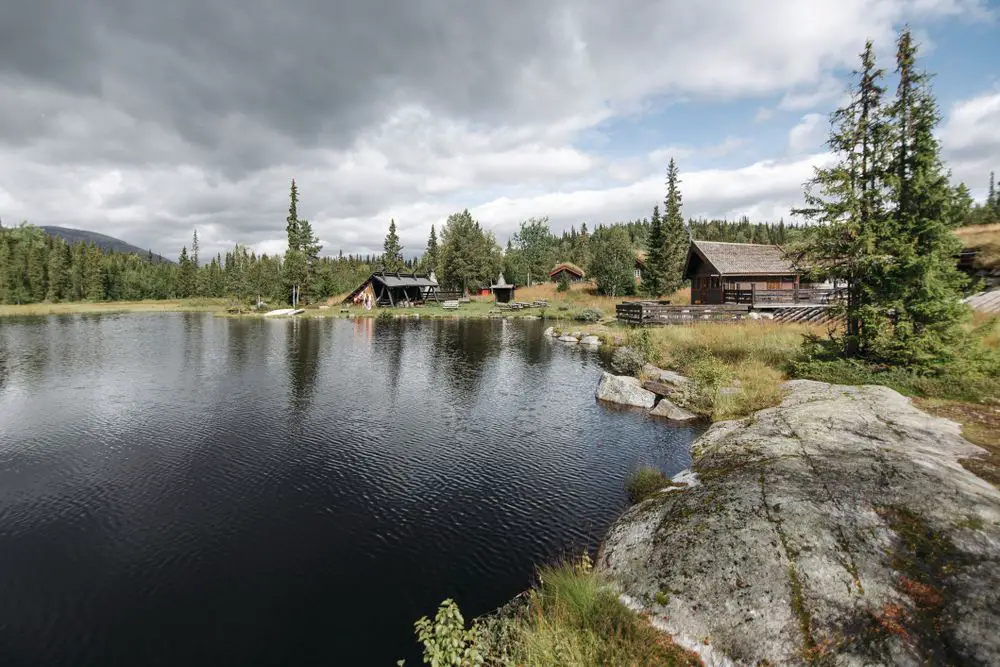
I had been retired for less than forty-eight hours when my daughter-in-law decided my new lake cabin was no longer mine in any practical sense.
She never said it that plainly, of course. People like Sienna rarely do. They use softer words, cleaner words, words that sound reasonable if you are not the one being erased. Solution. Useful. Family. Sacrifice.
I was sitting on the dock when she called, my boots on unfinished cedar planks, my coffee cooling beside me, and the lake moving in slow silver lines under the late afternoon light. For the first time in forty-one years, there was no machine screaming near me. No steel being cut. No forklifts backing through narrow lanes. No supervisor calling my name because something had jammed or cracked or overheated. Just wind in the pine trees and water touching stone.
That was all I had wanted.
My name is Frank Whitlock. I retired at sixty-four with sore knees, careful savings, and a hearing problem I had never admitted was as bad as it actually was. I had worked in a steel mill since I was twenty-three years old. Forty-one years of concrete floors will change a man’s body in ways he cannot always name. Forty-one years of industrial noise will change his nervous system in ways he does not notice until the noise is gone and the absence itself keeps waking him up. Even after my last shift, I woke twice in the dark because I thought I heard the plant whistle. There was no whistle. There was only the refrigerator and an upstairs neighbor dragging a chair across the floor after midnight.
When I bought the cabin, people kept asking what I planned to do with all that space. I never had a grand answer. I wanted to sand the porch myself. I wanted to hear rain on a metal roof without it competing with traffic. I wanted one room for books, one room for my son if he ever came up, and one room that could stay empty without anybody calling it waste.
The cabin was not grand. The cedar siding had weathered gray-brown over years of Wisconsin winters. The screen door slapped too hard when it closed. The boathouse smelled of rope and damp wood and gasoline from the old mower the previous owner had left behind. The dock needed stain. The stone chimney had a crack I planned to fix before winter. I loved every flaw. A house that needs care tells the truth about itself, and I have always trusted things that tell the truth about themselves more than things that look finished.
My son Elliot understood that better than most people do.
I raised him alone after his mother left when he was thirteen. There was no dramatic driveway scene worth retelling. No screaming, no smashed dishes, no confrontation that at least had the dignity of being honest about what it was. Just a suitcase in the hallway one morning, a note on the kitchen counter, and a boy who pretended for several weeks that he was old enough not to be hurt by it. He was not old enough. He was thirteen. Nobody is old enough at thirteen for the specific kind of wound that comes from a parent deciding to leave.
I decided early that he would not carry my bitterness on top of his own confusion. Those are two different weights and a child should not have to sort them out. His confusion belonged to him and needed to run its course. My bitterness belonged to me and needed to be handled privately, in the truck on the way home from night shifts when nobody could see it, or on Saturday afternoons when he was at a friend’s house and I could sit in my kitchen and be whatever I actually was for an hour before putting the face back on.
So I packed his lunches. I showed up for every game and conference and ceremony that mattered, including several that did not but that he mentioned once, which was enough. I worked overtime when we needed the money and still sat in cold metal bleachers with my hands tucked into my jacket sleeves when he played. I signed school forms at the kitchen counter with black dust still in the cracks of my knuckles, the kind of grime that comes from steel work and that soap never quite reaches all the way down to, and I never once made him feel that the forms were an inconvenience.
I taught him how to change the oil in an old pickup truck, which is a practical skill, and I taught him how to apologize without dragging an excuse behind the apology, which is a harder and more important one. I taught him that showing up on time is a form of respect, and that leaving without notice is a form of statement, and that both things communicate clearly even when you tell yourself you are being neutral.
When he graduated, I sat in the crowd with the paper program folded in my hand and tried to look like a man who had expected this all along and was simply pleased rather than overwhelmed. He looked back from the line before crossing the stage. Found me in the crowd, which is harder than it sounds in a gymnasium full of people. He grinned. That was my boy. Still is, despite everything.
So when he married Sienna, I made room for her the same way I had made room for most difficult things in my life: by deciding upfront that the adjustment was worth making, and then making it without complaint until the evidence suggested otherwise. At first I told myself she was simply polished. She had a sharp haircut and sharp shoes and sharp opinions, and a way of speaking that made people feel slightly behind before they had even answered. She worked in marketing and talked about branding at family dinners in the same tone other people use to discuss the weather, as though everyone in the room had been waiting to hear her thoughts on it. She corrected captions on social media when she found factual errors, which she found often. She called things “intentional” when she liked them and “rustic” when she did not, and I spent the first year trying to understand the distinction before deciding it did not actually have one.
The first Christmas after the wedding, I gave them a maple dining table I had restored myself. Not expensive. Solid. Old wood with good joints and a surface I had sanded by hand over three weekends, the kind of work that you can only do slowly and that shows in the finish when you have. Elliot ran his palm across the top and said, “Dad, this is beautiful,” and he meant it. Sienna tilted her head at the table the way she tilted her head at most things, the small gesture of consideration that preceded either endorsement or dismissal. “It’s very rustic,” she said. Then she asked whether there was a gift receipt for the chairs.
Elliot laughed in that uncomfortable way people laugh when they are hoping a moment will not become a problem. I let it pass.
That became my pattern and eventually my mistake. I let comments pass about my apartment, which was clean and functional and apparently not “curated,” whatever that meant to her. I let comments pass about my work clothes, which I wore because they were practical and because I had not yet purchased a retirement wardrobe because I had been retired for less than a week. I let comments pass when her father Gordon lectured me about investment strategy even though every business story he told ended with someone else failing to appreciate his vision. I let her mother Beverly sigh over my plain dishes as though plates required ambition.
I told myself peace mattered more than being right. And it does. But peace built on swallowing disrespect is not peace. It is storage. You can fill the room for a long time. Eventually the room is full.
The phone rang at 6:17 in the evening, a Thursday. I remember the exact time because I looked down after the second ring and genuinely considered not answering. Then I saw Sienna’s name and I answered because I was still trying to be decent, which is the condition that makes a certain kind of person believe you are available for any arrangement they have already decided on.
“Frank,” she said. No hello. No how is the place. Not even a perfunctory congratulations on finally getting out after four decades. Just my name, like she was calling a contractor she had used before and not particularly liked.
“Your son and I have decided my parents are moving into your cabin for the summer.”
I sat very still. The lake kept moving. A loon called once from somewhere near the reeds. The sound carried the way sounds carry over water, arriving cleaner than you expect.
Sienna continued reading from her internal list. The condo situation had dragged on. My place had three bedrooms. Beverly needed quiet. Gordon needed room for his files. And, she said, honestly, I was one man rattling around all that space. She said the main bedroom made sense for Beverly because of her back. She said Gordon would need a workspace. She said they would arrive Friday.
Then she said the sentence that stayed in my head all night.
“If that’s a problem for you, list it and move back where you can actually be useful.”
Actually be useful.
Not happy. Not rested. Not finally at peace with what the years had cost me. Useful.
After forty-one years of being useful to supervisors, payroll departments, furnace schedules, school calendars, mortgage payments, and a boy who needed one steady adult in his life, I had bought myself a little quiet. Sienna looked at that quiet and saw inventory waiting to be reassigned.
I did not shout. I did not remind her whose name was on the deed. I did not tell her that every board in that cabin represented overtime, missed weekends, early mornings when I drove to work so tired that I had to sit in the truck for a full ten seconds before I could make my legs carry me inside. I said, “I understand,” and the call ended, and I sat on the dock with the dark phone screen in my hand while the evening came slowly in from across the water.
Behind me, the cabin looked exactly the same. The kitchen window glowed. Cardboard boxes stood unopened against the walls inside. My father’s old level sat on the counter beside a roll of painter’s tape. Nothing physical had changed.
But something had stepped onto my porch without permission. Entitlement does not always kick down a door. Sometimes it arrives with plans already made and calls your shock selfishness.
I went inside, poured the cold coffee down the sink, and took out a yellow legal pad.
A clean no works with reasonable people. With entitled people, no is only the starting whistle for a longer argument they have been preparing for while you were assuming the conversation was finished. If I told Sienna no over the phone, she would convert it into a family meeting I had not agreed to attend. She would call Elliot first, framing the situation as Frank being difficult, Frank being isolated, Frank not adjusting well to the change. She would call Beverly and Gordon next, giving them a version of events in which they were doing me a kindness by coming and I was failing to appreciate it. She would call anyone willing to hear that Frank had become stubborn and strange since moving to the lake, that he was rattling around alone in all that space, that someone needed to check on him.
She would not say that she wanted her parents to live in my house for free without asking. She would say she was worried about me. That was one of Sienna’s genuine capabilities. She could fold a demand inside a concern so neatly that disagreeing with it made you look like a man who refused to be helped. I had watched her do it with Elliot more than once, and with his boss at a dinner where she managed to make a simple disagreement about scheduling sound like a mental health concern.
So I did not prepare an argument. I prepared clarity. Which is a different thing, and a harder thing, and the only thing that holds when you have multiple people in front of you at once.
At 7:04 I called the county clerk’s office and confirmed the recorded deed, because confirmed information is better than information you remember correctly. At 7:41 I printed the closing disclosure, the property tax receipt, and the insurance page, all three showing my name and only my name. At 8:12 Sienna sent a text: Don’t embarrass everyone over empty rooms. I read it twice and printed it and placed it in the folder, because the most useful things people say are usually things they say when they think they have already won. At 8:23 I sent Elliot a single question: Did you agree that Sienna’s parents were moving into my cabin for the summer?
Three dots appeared on my screen. Then disappeared. Then appeared again. Then nothing, for almost three hours. That silence told me everything I needed to know about the conversation that had happened in that house and what had been said to Elliot and how.
I slept badly that night. But not weakly. There is a difference that matters. Sleeping badly means a situation has cost you something real. Sleeping weakly means it has broken you. I was not broken. I was taking careful stock of what I had and what I was prepared to hold.
At 11:09 in the night, Elliot finally replied. No, Dad. I didn’t agree. She said she was only going to ask if they could visit for a week.
I sat in the dark with that message on my phone for a long time. Then I printed it and placed it at the back of the folder, behind the deed and the tax bill and the insurance page and Sienna’s text about empty rooms. That page, Elliot’s message in clean black letters, was the one I had been building toward without quite knowing it.
Friday came bright and warm, the kind of early summer morning that promises nothing about the afternoon.
I swept the porch. I set a paper coffee cup on the railing with the deliberateness of a man who is not in a hurry. I closed the main bedroom door. I did not make the beds. I did not clear the closets. I did not move my boots from the mudroom. This was not a guest house being prepared for guests. It was my home, which is a different category entirely, and the difference is not measured in square footage. A home is the place where you get to be exactly who you are without explaining yourself, and I had spent four decades earning the right to have one.
At 4:26 in the afternoon, the SUV turned off the road.
The small American flag clipped beside my mailbox snapped once in the breeze as they pulled in. Sienna sat in the passenger seat wearing sunglasses and the specific smile she wore when she believed the room had already surrendered. Beverly sat in the back with a travel pillow around her neck. Gordon had a banker’s box on his lap. The trunk popped open before anyone had said hello. That small mechanical sound made something settle inside me, a kind of finality. They had not come to ask. They had come to unload.
Sienna stepped out of the SUV first. She had the easy, certain movements of a person who has already decided how a scene ends. “Good,” she said, looking past me at the cabin behind me, assessing it the way she assessed most things, measuring distance between what existed and what she intended. “You’re ready.”
I opened the blue folder on the porch rail and set it so the contents were visible from where she stood.
Her smile faltered. Just faltered, not disappeared, not yet. The specific falter of someone who walked into a room expecting a certain arrangement and has found, instead, a piece of furniture they did not put there and cannot immediately move.
“Frank,” she said. “What is this?”
“The deed,” I said. I used the same voice I had used for forty-one years with machines that did not care about tone. Even. Ordinary. Factual. “The property tax record. The insurance page. Your message from last night telling me not to embarrass everyone over empty rooms.”
Gordon had one suitcase halfway out of the trunk. He stopped with his hand still on the handle, holding the weight of it while he looked at me on the porch and reconsidered something he had not known needed reconsidering.
Beverly looked from Sienna to me and back again. Her face had the look of a woman who has arrived at a party and is beginning to understand that the invitation she received described a different event than the one she is standing in.
Sienna laughed, quickly, the kind of laugh that is meant to communicate that the situation is beneath concern while actually confirming the opposite. “Okay. This is unnecessary. Nobody is stealing your cabin.”
“No,” I said. “You’re moving people into it without my knowledge or permission, which is adjacent but distinct.”
Gordon set the suitcase down on the gravel and straightened up. He was a man who had spent his career in a version of finance that required him to project confidence even when the numbers were not yet clear. He said, “Now hold on,” in a voice that had probably worked on colleagues for thirty years.
I looked at him steadily. He was not a villain in any simple sense. Most people are not. But accepting a benefit that was built on a lie makes you part of the structure even if you did not lay the foundation, and Gordon had packed a banker’s box full of files before anyone had asked me a single question. That was information.
Beverly said, quietly and directly, “Sienna told us you offered.”
That was the crack. The first real one.
Sienna turned on her. “I said Frank understood,” she said, with a sharpness aimed at her own mother that told me more about their household than any other sentence had. When someone is this quick to redirect blame toward the person who trusted them, the redirection has been practiced.
“No,” I said. “You said you and Elliot had decided.”
I lifted the last page from the folder. Elliot’s text, printed that morning in clean black letters in the time stamp that confirmed it arrived nearly three hours after the question. Sienna saw his name before I said anything. I watched the blood pull back from her face in the slow, particular way of someone who has been keeping a story together across multiple audiences simultaneously and has just learned that the stories have been compared.
My phone buzzed. Elliot. I put it on speaker and set it on the porch rail beside the folder, in the open, where everyone could hear clearly and there could be no question later about what was said.
For the first time in three years of knowing her, Sienna did not interrupt. I noted that.
“Dad,” Elliot said, rough-voiced the way he got when he had been thinking about something for a long time without being able to say it yet, “before she says anything else, there’s something you need to know.”
Sienna said, very quietly, “Elliot, don’t.”
That single whisper told all four of us more than any sentence she might have finished.
Beverly settled back into the SUV seat behind her. Gordon set the suitcase all the way down and let go of it.
Elliot said: “She told them you were lonely. She told them you were thinking of selling because the place was too much for you alone. She told them they’d be helping you by coming.”
I looked at Sienna. Her mouth was open. Nothing was coming out. In three years, I had never once seen her without something ready to say. I noted that too.
“And she told me they were only visiting for a week,” Elliot continued. “She said you’d invited them. She told me you two had already talked and worked it out.”
Beverly covered her mouth with one hand. The sound she made was small and involuntary.
Gordon looked at his daughter with the expression of a man receiving information that requires him to reorder something he was settled about. “Sienna,” he said, “is any of that true?”
She stared at the folder. Then at the porch planks. Then at me. “You’re making this humiliating,” she said.
“No,” I said. “I’m making it accurate. Humiliation and accuracy are two different things. Accurate only feels humiliating to the person who was counting on confusion.”
The porch went quiet in the way porches go quiet in the woods when the birds stop for no apparent reason. The lake moved behind the cabin. A sound came from the pine trees, small and dry. The SUV engine ticked as it cooled, settling into itself, relieved of its work.
I slid the blank rental agreement forward on the rail. “If your parents need a place for the summer, these are the terms. Market rent. Deposit. Written dates of occupancy. No use of the main bedroom. No storage of files. No access without my written agreement.”
Gordon picked up the page and read it in the way he read everything, with the performance of someone accustomed to having decisions placed in front of him. He understood what it meant before he finished the first paragraph. It meant this was no longer a family favor anyone could shame me into providing. It was a real arrangement with real costs and real terms, and the shame traveled in a different direction now.
Beverly said, very softly, “We should go.”
Sienna turned on her. “Mom.”
“No,” Beverly said. It was not a loud word but it landed. “I am not staying in a house where the owner was bullied into opening the door.” She said it looking straight at her daughter, and then she looked at me with something in her face that might have been apology, or might have been the recognition of one woman watching another woman’s mother stand her ground.
I had not expected to feel sorry for Beverly in that moment. I had come out to the porch prepared for a confrontation, not for the particular sadness of watching someone realize they were also being used. But I felt it anyway. Not enough to surrender my home. Enough to see that Sienna had not only lied to me. She had lied to everyone.
Gordon put the banker’s box back in the trunk. The suitcase followed. Sienna stood in my driveway with her arms crossed and her face set in the rigid expression of someone whose plan has failed and who has not yet decided how to absorb the failure.
Elliot was still on the phone.
“Sienna,” he said. “Get in the car.”
She laughed once, high and hard. “You’re taking his side?”
A pause that I felt from the dock to the treeline.
Then my son said: “I’m taking the side of the person who told the truth.”
I looked down at the phone on the porch rail. For a second, in the way certain moments collapse time, he was twelve years old again, looking for me in the stands before crossing the gym floor to accept an award he had won. Only this time he was the one being steady. He had found me in the crowd and was holding his ground on my behalf, and the pride I felt was the kind that comes without any reservation at all.
Sienna got into the SUV without looking at anyone. Beverly gave me a small nod through the window, private and real. Gordon paused at the driver’s side door. Men like Gordon often have difficulty placing an apology where it belongs. He said, “We were told something different.” That was as close as he was going to get.
“I know,” I said. I gave him that and nothing more.
They backed out slowly. Gravel shifted under the tires. The flag by the mailbox moved in the breeze. When the SUV disappeared down the road toward the highway, I stayed on the porch until the dust settled back to the ground.
Then Elliot said through the speaker, “Dad?”
“I’m here.”
“I’m sorry.”
Two words. No excuse tied to the back of them. He had listened to me say that more times than I could count over his childhood, and apparently it had stayed with him.
“I know,” I said.
He told me he and Sienna would be having a serious conversation. I did not ask for details or offer my opinion about what that conversation should contain. Their marriage was not mine to manage. My cabin was.
That evening I put the folder in the kitchen drawer beside the tape measure and my father’s level, which is where I keep things that are both practical and important. I made a sandwich and ate it at the table without the television on, listening to the house settle into the evening around me. The pine trees outside moved in the cooling air. The chimney needed repair. The dock needed sanding. The screen door still slapped too hard when it closed.
All honest problems. All problems I had chosen. Good.
After I washed the plate, I carried my coffee down to the dock. I sat on the unfinished cedar planks with my boots touching the water’s edge and watched the lake go copper and then black as the sun dropped behind the western tree line. A pair of loons moved near the far shore, unhurried, going wherever loons go in the evening, which is wherever they want to go.
Sienna had looked at my quiet and seen empty rooms. She had looked at my retirement and seen unused space, mismanaged inventory, wasted capacity. She had looked at a man who had spent four decades being useful to everyone else and had concluded that the moment he stopped being useful to her, his choices no longer counted.
She was wrong. The rooms were not empty. They were full of every morning I had earned and every year I had refused to let someone else spend on my behalf. They were full of the silence I had worked toward for a long time without ever being able to name it until I had it, and now that I had it I understood it: the sound of a man finally allowed to hear himself breathe.
The dock planks were rough under my palms. The coffee was warm. The lake made its patient, indifferent sound against the stone shore below me.
I had everything I had come here for.
Everything I had carried for forty-one years.
And not one thing in my home had been moved without my permission.

Adrian Hawthorne is a celebrated author and dedicated archivist who finds inspiration in the hidden stories of the past. Educated at Oxford, he now works at the National Archives, where preserving history fuels his evocative writing. Balancing archival precision with creative storytelling, Adrian founded the Hawthorne Institute of Literary Arts to mentor emerging writers and honor the timeless art of narrative.