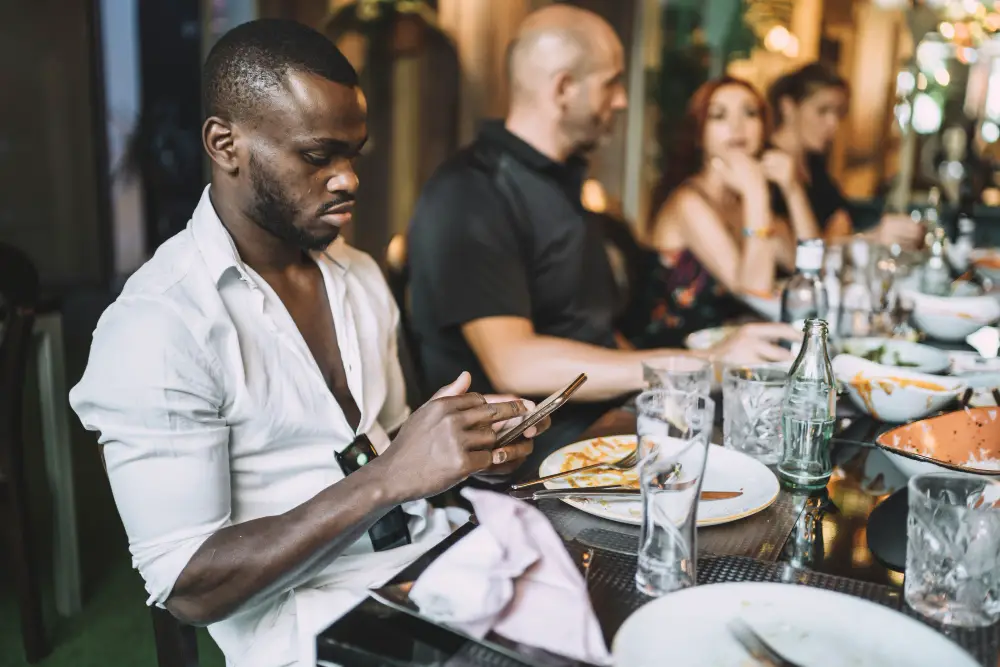
My mother said it with a smile so polished it could have cut glass. She let the words float across the white tablecloth at the steakhouse, right between the lobster tails and the truffle mashed potatoes, loud enough for anyone nearby to hear.
“Well, sweetheart, if you’re too broke to buy your own ticket, you can always skip the Maldives.”
My brother Trayvon smirked into his drink. His wife Jessica gave me a pitying look, the kind women give when they want everyone at the table to know they think they have won.
I sat with my hands folded in my lap and let the old heat rise in my chest. Not anger exactly. Recognition. My family had spent my entire life casting me in my assigned role. Trayvon was the brilliant son, the visionary, the future millionaire who was always between opportunities but somehow still deserved investment. I was Jada Washington, the practical daughter. The useful one. The one who could be called during emergencies, blamed during disappointments, and mocked when she refused to keep paying for everyone else’s dreams.
My mother swirled her wine and talked about overwater villas. “Business class,” she said. “Qatar Airways. Real luxury. We covered Trayvon and Jessica because he’s reinvesting everything into the company.”
Reinvesting. Trayvon had used that word for eight years. He had reinvested his way through two failed apps, a fake consulting agency, a sneaker resale operation that never sold sneakers, and something he called AI logistics even though he could barely explain what logistics meant. My father nodded solemnly like Trayvon was building the next great American company in his garage.
“You’ll need to cover yourself,” my father said. “Flight, villa share, activities. We can’t keep carrying grown people.”
I almost laughed. They had never carried me. At twenty-two I had paid my own rent. At twenty-five I had paid off every student loan. At thirty-two I was a senior forensic accountant at one of the most respected firms in Chicago. Companies hired me when executives stole millions and tried to hide the fingerprints. I had helped federal investigators untangle fraud rings worth eight and nine figures. My family knew I worked in finance. They imagined spreadsheets and a modest salary. They had no idea the quiet daughter they called broke made more in a year than my father had in three.
I kept it that way deliberately. Let them think less of me, because it kept them from asking for more.
“I can’t swing it,” I said calmly. “So I’ll stay behind.”
Jessica patted my hand. “Oh, Jada. Don’t feel bad. Maybe next year.”
My father leaned back, satisfied. “That’s maturity. Knowing your place.”
I paid for my salad, tipped the server generously, and left before dessert. Outside, downtown Chicago glittered in cold air that did not care who had hurt me over dinner. I drove home slowly and let my breathing settle.
My apartment was on the thirty-second floor of a glass building near the river. Floor-to-ceiling windows. Clean lines. Quiet walls. My family had never been invited there, and that was not an accident.
I changed into sweatpants and poured a glass of water. Then my phone buzzed.
Fraud Alert.
I opened the banking app. One pending charge. Qatar Airways. Ten thousand dollars. Four business-class tickets.
For a moment I simply stared. Not because I was confused. Because somewhere deep in my bones I had always known they were capable of this. Years earlier, when I first got approved for a premium travel card, I had used my parents’ address because I was between apartments. The card had arrived during a messy move after a fight with my father. I never activated it. I assumed it had been tossed with old mail.
Apparently someone had found it. Someone had kept it. Someone had waited.
There was a time when I would have called my mother first. I would have asked why. I would have listened to their outrage and their excuses and given them a chance to explain.
Not anymore.
Fraud was fraud. Theft was theft. Family did not transform a crime into a misunderstanding.
I tapped through the app with steady hands. Unauthorized. Card not in my possession. Report stolen. Lock account. The app asked me to confirm I was making a legal declaration. I thought about my mother’s voice. If you’re too broke, skip the Maldives.
I pressed Submit.
Somewhere, my family was probably celebrating. They thought they had finally found a way to make me pay for a trip I had been told I was too poor to attend. I poured one glass of wine, sat by the window, and waited for the consequences to find them.
Jessica went live on Instagram the next afternoon. Her glossy face filled the screen, designer sunglasses perched indoors, hair in perfect waves. “Hey, beautiful people. We are finally headed to the Maldives. Business class, baby. Work hard, play hard.” Behind her, Trayvon pushed a cart of designer luggage. My mother floated beside him in cream cashmere. My father wore the expression of a man who wanted strangers to assume he owned something large.
The Qatar Airways agent smiled, took the passports, and began typing. Then her smile tightened. She typed again. The live feed cut without warning.
Trayvon called four times before I answered.
“Jada, what did you do?”
“I’m sorry?”
“The card,” he snapped. “Mom found it in your old room. We used it for the tickets and now they’re saying it’s stolen.”
“That’s because it was stolen.”
“We’re family.”
“You took a credit card in my name and charged ten thousand dollars without asking.”
He lowered his voice, panic cracking through it. “You need to call the bank and tell them it was authorized.”
“No.”
My father grabbed the phone. Airport announcements hummed in the background. “You are humiliating us in public,” he said.
“You did that yourself.”
“You ungrateful little”
I hung up. Then I blocked them. All four. One by one, like turning locks on a door.
At two in the morning, the pounding started. Not on my phone. On my apartment door. My building had a doorman and cameras in every hall. No one got upstairs without my permission, which meant they had caused enough chaos downstairs that Earl, the night doorman, had called me. I checked the monitor. My father stood in the lobby, tie loose, face red. Trayvon paced. Jessica leaned against luggage, typing furiously. My mother dabbed her eyes.
“Send them up,” I said. “And keep the lobby camera running.”
I changed into a robe, turned on the small bookshelf camera in my living room, and waited.
My father came out of the elevator first. He didn’t knock. He kicked the door. I opened it before he could do real damage, and he stormed inside. Then he stopped. His eyes moved across the apartment. The windows. The view. The furniture. The quiet cost of everything. For the first time in years my father looked unsure.
Jessica saw it too. “Cute place,” she said, recovering quickly. “Cold, though.”
Trayvon pointed at me. “You ruined our trip.”
“You stole from me.”
My mother stepped forward. “Jada, please. Call the bank. Tell them it was a misunderstanding.”
“A misunderstanding is picking up the wrong coat at a restaurant,” I said. “This was credit card fraud.”
My father’s hand came up fast. I stepped aside. His palm cut through empty air and his momentum carried him into the edge of my kitchen island. He grunted, clutching his ribs.
In childhood, that raised hand had meant fear. At thirty-two, it meant evidence.
“Try that again,” I said quietly, “and you’ll leave in handcuffs.”
Jessica noticed the small red blinking light on my bookshelf first. “What is that?”
“A camera. It’s been recording since you walked in. Including your admission that you used the card. Including the attempted assault.”
My father went pale. My mother whispered my name like a prayer.
Jessica’s lips curled. “You people always have to make everything so ugly.”
The words landed like broken glass. You people. Trayvon said nothing. My parents said nothing. That silence told me everything I needed to know about who she was and who they allowed in their home.
“Get out,” I said.
They left. I saved the footage, backed it up twice, and emailed a copy to myself. Then I stood in my living room until sunrise, watching the city brighten. I knew they would not stop. People like my family never stopped when they were exposed. They escalated. And if they wanted war, I would not bring emotion.
I would bring evidence.
By morning my mother had posted a Bible verse on social media with a photo of herself looking wounded under perfect lighting. Some people will betray their own blood over a banking error. Pray for us. Cousins who owed me money called me selfish. Church friends said adult children had no respect anymore.
That same morning, Richard Sterling, senior partner at my firm, summoned me to his office. He was holding a printed email. The subject line read FRAUD ALERT EMPLOYEE JADA WASHINGTON. The message accused me of stealing from my family, abusing my elderly father, being mentally unstable, and facing a police investigation. It asked the firm to terminate me immediately.
“My family sent this,” I said.
“Our IT team traced the IP address to your parents’ home.” Sterling stood, walked to the shredder, and fed the page into it. The machine screamed as the paper disappeared. “We do not make career decisions based on anonymous emails written by amateurs.” He handed me a folder. Paid leave. One week. “Not because you’re weak. Because you’re good. Use the time. Follow the money.”
I went straight to the Cook County Recorder of Deeds.
Most people believe family secrets live in closets. They don’t. They live in public records, under stamps and dates and legal descriptions nobody bothers to read. I requested every document tied to my parents’ house. Original deed, first mortgage, refinance, loan modifications. I sat at a table under fluorescent lights and turned pages until I found it.
A home equity loan. One hundred and fifty thousand dollars. Dated three years earlier. Additional guarantor: Jada Washington.
I turned to the signature page.
My name. Looped in blue ink. Except I had not signed it. On that date I was in London auditing a hedge fund. I had passport stamps, hotel invoices, client emails, and transaction records proving every hour of it.
They had forged my signature.
The disbursement had gone to Trev Solutions LLC. Trayvon’s company. I bought certified copies of everything and went to find the notary.
Marcus Henderson was Trayvon’s friend, a loan officer who called me little sis at family barbecues. He smiled when I walked into his branch. The smile died in stages when I laid the certified documents on his desk.
“I’m here about the loan you notarized,” I said. “The one with my forged signature.”
He lowered his voice. “That was family business.”
“That was bank fraud.”
He swallowed. “Your parents said you knew.”
“I was in London.”
I slid my business card across the desk. Senior Forensic Accountant. Certified Fraud Examiner. Marcus stared at it like it had teeth. “Trayvon said you worked in admin,” he muttered.
“Trayvon lies.”
His hands shook as he typed. The printer behind him began spitting pages. Account statements. Transfer records. Disbursement reports. The money had not gone into product development. It had gone to casinos, sports betting apps, luxury stores, car leases, restaurants, and transfers to Jessica Miller.
I gathered the pages. “Am I going to prison?” Marcus whispered.
“That depends on how useful you become.”
By the time I left the bank, the whole picture had formed. My parents had borrowed against their house using my forged signature. Trayvon had funneled the money through his fake company. Jessica had helped spend it. Then, when the money ran low, they had stolen my unused credit card for one last performance of wealth.
I hired a private investigator named David Chen. Two days later he slid a folder across his desk. Jessica’s Connecticut estate was a rented house in Bridgeport. Her investment banker father had filed for bankruptcy. Her old-money background was invented wholesale. Her gambling debts were very real.
“She thought your family was rich,” David said. “Trayvon thought she was rich. Your parents thought Trayvon would make them rich. It’s a room full of people scamming each other.”
That night my mother called from a new number. Her voice was soft and wet with tears. “Jada, baby. Come to dinner. Let’s heal.”
I looked at the small recorder on my kitchen counter. “I’ll be there,” I said.
Because my mother did not want healing. She wanted my signature. And this time I was bringing my own witness.
My parents’ house smelled like lavender, roast chicken, and denial. My mother opened the door wearing pearls and a trembling smile. The good china was out. Candles burned. It looked like a family dinner. It felt like an ambush.
After thirty minutes of weather and church gossip, my father slid a leather portfolio across the table. The document inside was titled Retroactive Authorization and Debt Acknowledgment. It claimed I had authorized my parents to sign my name on the home equity loan, that I had given verbal consent, that I accepted responsibility for the debt.
A lie wearing a suit.
Jessica touched my wrist. “Jada, my father is liquidating part of his portfolio. Two hundred thousand dollars. We can make you whole.”
Her father had no portfolio. He had creditors. The recorder pinned inside my collar captured every word.
I picked up the pen. Everyone at the table held their breath. Then I set it down. “I’m not signing.”
My father’s fist hit the table hard enough to rattle the silverware. “You walk out that door, you are dead to this family.”
I stood. “Then bury me.”
I picked up the document and ripped it in half. Twice. The sound was clean and final. Then my father rose too fast. His face went wrong. His hand came to his chest. For one terrible second I thought it was theater. Then he collapsed.
At the hospital, doctors stabilized him. His medication levels were dangerously low. His insurance had been canceled three months earlier for nonpayment. Later, near the vending machines, I heard Trayvon and Jessica whispering.
“If he dies they’ll audit everything,” Jessica hissed.
“I know.”
“Did you pay the premiums?”
Silence. Then Trayvon’s voice broke. “I stopped three months ago. I needed the money.”
“For what?”
“For your bag. The Birkin. You said you’d leave me if I didn’t get it.”
I was already recording on my phone.
Jessica cursed. “We blame Jada. We isolate your mother. We get power of attorney. Then we sell the house before anyone figures it out.”
I stopped recording. My hands were completely steady. That scared me more than shaking would have.
My parents’ house had a red envelope on the front door when I went to collect a few things. Final Notice of Default. Sheriff’s sale scheduled in seven days. Inside, my father’s study was stacked with unopened bills, collection letters, canceled policies. Their life had not been stable. It had been staged. They were not wealthy. They were drowning in debt and lies and pride, and they had tried to use my name as a life raft.
By morning I had formed an anonymous LLC through my real estate attorney. Nemesis Holdings. Banks do not want houses. They want bad loans off their books. By the end of the next business day Nemesis Holdings had purchased the distressed note. Quietly. Legally. Completely. My family still thought the bank owned their future.
They were wrong. I did.
But I had not told them yet. I was waiting for witnesses.
My parents had scheduled an anniversary gala at Oak Park Country Club for Saturday. Lavish. Public. A celebration of legacy paid for with money they did not have. Trayvon called me the day before. “Mom says you can come,” he said. “Maybe help with setup or catering.”
“Of course,” I said. “I’ll help.”
I entered through the service door on Saturday night wearing black slacks and a white button-down. No one questioned me. People never question the help. I went to the AV booth, told the overwhelmed technician I was there to fix the slideshow, and he handed me the laptop without hesitation. Their tribute video was exactly what I expected. Wedding photos, church dinners, Trayvon posing beside rented cars, Jessica smiling like borrowed money was sunlight.
At the end, I added my own section. The Real Cost of Success. Foreclosure notice. Forged loan documents. Bank statements. Gambling transactions. The insurance recording. The dinner recording. I locked the file, then texted Detective Reynolds from the Economic Crimes Unit. Green light. His reply came back in thirty seconds. Units in position.
The ballroom filled with sequins, suits, perfume, and hypocrisy. My mother glided from table to table. My father shook hands like a mayor. I served champagne. Invisible. Patient.
The pastor took the microphone and praised my parents for their legacy of integrity. My father stepped onto the stage. “Tonight,” he said proudly, “we celebrate family.”
The lights dimmed and my gift began.
At first the guests smiled. Wedding photos. Trayvon as a little boy. Christmas mornings. People clapped softly. My mother dabbed her eyes. Then the music stopped. The screen went black. When it lit again, five words filled the wall.
THE REAL COST OF SUCCESS.
Gasps broke out across the room as the slides advanced. Foreclosure notice. Forged loan document with my signature circled in red. Disbursement to Trev Solutions LLC. Gambling transactions. Luxury boutiques. Transfers to Jessica Miller.
Trayvon stood so fast his chair fell backward. “Turn it off!”
“It’s locked,” the technician said, panicking.
Then the audio played through the ballroom speakers. Trayvon’s voice, unmistakable. I stopped paying Dad’s insurance. I needed the money. Jessica’s voice following. For what? Then Trayvon. For your bag. The Birkin.
The silence that followed was almost holy.
I walked onto the stage and took the microphone from my father’s unresisting hand. “Good evening. Since tonight is about family legacy, I thought everyone deserved the full accounting.”
The back doors opened. Detective Reynolds entered with four officers, the sound of their shoes on the ballroom floor clean and final. They arrested Trayvon for wire fraud, embezzlement, identity theft, and reckless endangerment. They arrested Jessica for conspiracy and fraud. They read my parents their rights in connection with bank fraud and identity theft.
Jessica snapped first. “You broke loser!” she screamed at Trayvon. “You told me you had money!” He lunged. They crashed into a table of champagne glasses. Glass shattered across the floor. Phones rose everywhere. The pastor backed away as if fraud were contagious.
I lifted the microphone one more time.
The screen changed. Sheriff’s sale status: resolved. Note holder: Nemesis Holdings LLC.
My father stared at the name. “What is Nemesis?” he whispered.
I looked directly at him. “Me.”
The front tables heard it. Then the room did. “I purchased the note,” I said. “The house no longer belongs to the bank. You have forty-eight hours to vacate. Pack what is yours. Leave what is not.”
My father’s lips trembled. “Jada…”
“You taught me to know my place,” I said. “I finally do.”
I set the microphone down and walked out into cold night air. For the first time in years I could breathe without feeling someone else’s hand in my pocket.
The legal process dragged through hearings and depositions and plea deals. Jessica sued me for defamation, which took remarkable courage from a woman whose entire defense depended on pretending bank statements were gossip. My attorney buried her in discovery. The lawsuit was dismissed with prejudice. Trayvon took a plea. My parents avoided prison but not consequences. Fines. Probation. Public disgrace. Financial counseling. Court-ordered restitution. Marcus lost his job and his license.
On eviction morning I pulled into my parents’ driveway in a new slate-gray Porsche. They both stared. Not because of the car. Because they finally understood that the daughter they had called broke had never been broke. She had simply stopped being available.
My mother rushed toward me. “We have nowhere to go.”
“You made decisions,” I said. “Mistakes are accidental.”
I unlocked the front door and handed them a lease. A rental agreement for the lower-level unit. Two bedrooms, one bath, two thousand a month, utilities theirs, no guests with felony charges or pending indictments.
My mother’s voice trembled. “Trayvon?”
“Never steps on this property again.”
“He’s your brother.”
“He’s a thief who nearly let Dad die for a handbag.”
My father closed his eyes. For once he did not defend Trayvon. He took the pen and signed. His hand shook. My mother signed after him. I checked both signatures carefully.
“No forgeries this time,” I said.
Neither of them answered.
I handed them one key. “Side entrance only. The front door is for the owner.”
Then I walked out. That night I did not celebrate. I scheduled therapy. Because winning a war does not heal the battlefield. It only clears the smoke enough to see what was destroyed.
Months passed through hearings, depositions, and slow institutional grind. Trayvon took a plea deal. My parents avoided prison but lived inside its shadow. Fines, probation, public disgrace. Financial counseling ordered by the court. Restitution that would take years. My mother stopped posting Bible verses aimed like knives. My father took his medication. They moved eventually into a modest apartment near her church, and I converted the house and transferred its note to a housing nonprofit that supported survivors of family financial abuse.
I did not do it for drama. I did it because I realized I did not want to own the battlefield anymore. Winning had been necessary. Living inside the victory was another kind of trap.
Two years after the gala, I took my first real vacation. Not the Maldives. I had no interest in a place my family had tried to steal their way to reach. I chose a small coastal town in California, where mornings smelled like salt and coffee and nobody knew my name.
On the third morning I found a breakfast spot wedged between a surf shop and a bookstore. Mismatched mugs. Uneven tables. Pancakes that tasted like someone’s grandmother had personally blessed the batter. I sat alone by the window and watched people move through ordinary lives, not calculating the cost of anything for the first time in years.
Someone said my name.
Malcolm Reeves had been in my accounting ethics seminar at Northwestern, junior year. Brilliant, calm, infuriatingly good at group projects. He had wanted to become a prosecutor. We had studied together for finals, shared terrible vending machine dinners, almost kissed once during a snowstorm. Then his mother got sick, he transferred for a semester, I graduated early, and we became social media ghosts liking each other’s career updates from a safe distance.
Now he was standing in a pancake restaurant in California, looking at me like no time had passed.
He had become an attorney, burned out on prosecution, and now ran a small legal aid clinic helping victims of financial abuse, elder fraud, and predatory lending.
“That is dangerously close to what I do now,” I said.
He told me he had seen the gala video. Most people who brought it up wanted details. They wanted the drama confirmed. Malcolm said only, “I’m sorry for what they did to you.” The simplicity of it almost broke me.
He asked if I would speak at a community workshop the following night. Financial boundaries, credit protection, identity theft. They were short a speaker.
“I’m on vacation,” I said.
“You said that like you were trying to convince yourself.”
I could not find an argument. I went to the workshop.
It was held in a converted storefront beside a laundromat. Folding chairs. A projector screen. A table with bottled water and free credit report forms. About thirty people: an elderly man in a cardigan, a young mother with two children coloring quietly beside her, a college student in a hoodie with exhausted eyes, a nurse in scrubs. Nobody looked like a victim. They never do.
I stood at the front with a marker and felt something inside me settle.
“Most financial abuse depends on three things,” I began. “Confusion, shame, and access. Confusion makes you think you’re too overwhelmed to fight back. Shame makes you think it’s your fault. Access lets the abuser keep reaching into your life.”
For ninety minutes I taught credit freezes, fraud alerts, how to speak to creditors without apologizing for someone else’s crime, how to say I dispute this debt and mean it.
The elderly man raised his hand. “My son took out a card in my name. I thought reporting him would make me a bad father.”
“Protecting yourself does not make you a bad father. It means the harm stops with you.”
When the room emptied, Malcolm handed me a bottle of water. “You were good,” he said.
“I know.”
He grinned. “There she is.”
We spent the rest of the week walking tide pools and eating at a taco truck that ruined all other tacos and arguing about whether deep dish was casserole. He did not push. That was what unsettled me most. He did not turn my silences into puzzles he was entitled to solve. He did not treat my boundaries like locked doors he had a right to open.
On my last night he said, “I’d like to see you again.”
I could have hidden behind my flight schedule or my trauma or my excellent list of reasons not to want anything. Instead I said, “I’d like that too.”
We kept seeing each other. Not perfectly. Perfect was suspicious. We argued sometimes, usually because I mistook uncertainty for danger or he mistook my silence for refusal when it was actually fear searching for language. But we repaired. That was the miracle. Not that we never hurt each other. That hurt did not become war.
Six months after California, Malcolm moved to Chicago for a clinic director position and got his own apartment first. His own place, his own lease, his own key. Because he knew me. Because he respected me.
“You got your own place,” I said when he told me.
“Yes.”
“Because you know me.”
“Because I respect you.”
I covered my face with both hands. He stepped closer but did not touch me until I lowered them.
“I want a life with you,” he said. “But I don’t want to take over yours. We can build slowly.”
Slowly. The safest word I had ever been offered.
I took the key from his palm and closed my fingers around it. Three months later he had two drawers in my apartment. Six months later a shelf. A year later, after much discussion and therapy and one minor disagreement about cookware and Earl the doorman’s unsolicited but wise opinion that a man who labels leftovers is worth considering, Malcolm moved in.
Not because I needed him. Because I chose him. There is a difference.
Trayvon wrote from prison at first with letters that blamed me, then blamed Jessica, then blamed the world. Eventually the letters changed. Less blame. More silence. More accountability. He made a list of nine people he had defrauded, including me, including my parents, including a woman named Denise Carter who had dated him briefly and co-signed an equipment lease for servers that never existed. He gave the list to his attorney and his parole officer voluntarily, before being caught, when the disclosure could cost him everything.
It nearly did. Additional charges were considered but folded into a revised restitution agreement because of his cooperation. He kept his freedom, barely. His wages were garnished. Visitation with his son continued, supervised.
His son. A boy named Isaiah, born in December to Jessica, who had resurfaced briefly in my conference room seven months pregnant and asking for twenty-five thousand dollars. I gave her nothing except a list of resources. Shelters, clinics, legal aid, paternity forms. I blocked her afterward and did not apologize for it.
Isaiah was Trayvon’s. Paternity results confirmed it. My mother called to tell me. Her voice was uneven in a way that had nothing to do with performance.
“He’s small,” she said. “Beautiful.”
“I’m glad he’s healthy.”
“Trayvon saw him through supervised visitation yesterday.”
“How was he?”
“Scared.”
I believed that. For once my brother was facing someone fragile who could not be charmed or borrowed from or impressed. A child did not need his potential. A child needed his presence.
Trayvon was released on parole the following January. I had written a letter to the board. Not a support letter and not an opposition. A boundaries letter. I described the fraud, the forged loan, the stolen card, the insurance payments, the public damage. I also described the letters he had sent and the accountability that seemed to be emerging. Then I wrote the line that cost me the most: I do not oppose my brother’s release if the board believes he has met the required standards, but I ask that any release include strict financial restrictions, continued restitution, mandatory counseling, and no direct contact with me unless I initiate it in writing.
I cried in my office with the blinds closed after I sent it. Not because I had forgiven him. Because I had told the truth without setting myself on fire to keep anyone warm.
At the launch event for the Washington Financial Safety Project, a partnership between my firm and Malcolm’s clinic and three nonprofits, my parents sat in the third row. They did not ask to sit in front. They did not introduce themselves as the founder’s parents. They did not perform pride like ownership.
They just came.
I stood at the podium in a navy suit and shoes that hurt but looked excellent.
“When someone steals your financial identity,” I said, “they are not only taking money. They are trying to rewrite your choices. They are using your future without permission.” I let the room settle. “For a long time I thought the answer was to become untouchable. To lock every door. To make sure no one ever needed me again.” I looked at Malcolm near the back. “But safety is not the same thing as isolation. And justice is not the same thing as healing.”
Afterward my father approached slowly. I saw the old man he had been and the older man he was becoming inside the same body.
“I wanted to say I was proud,” he said, struggling. “But I know that word may feel complicated from me. So I’ll just say I’m grateful I got to see it.”
Gratitude left me free in a way pride never could have. Pride still sounded like possession.
“I’m glad you came,” I said.
My mother hugged me carefully, giving me time to refuse. I did not refuse. Her arms were thinner than I remembered.
“I love you,” she whispered.
“I love you too,” I said. It was true. It was also not a key. That was the difference. Love could exist without handing someone unrestricted access to your life.
That evening Malcolm and I sat on my kitchen floor eating pizza from boxes. He looked around the apartment, slightly less perfect than it used to be and much more alive.
“Are you okay?” he asked.
I considered lying. Then I told the truth. “I’m terrified.”
He nodded. “Me too.”
That helped. Fear shared honestly did not become smaller exactly. But it became less lonely.
A year later I flew back to California. Malcolm came with me. Same hotel, blue shutters, bougainvillea in the courtyard. On our second morning I woke before sunrise and went to the balcony alone. The ocean was dark, then silver, then blue. Behind me, Malcolm slept. My phone buzzed with a message from Trayvon. I know today is the anniversary of the gala. I remember what I did. I hope you are somewhere peaceful.
I stared at the message. Then I typed: I am.
A minute later he replied: Good.
No demand. No opening. No emotional invoice. Just good.
I set the phone down and watched the sun rise over the water.
Peace had not arrived the way I imagined it would. Not in a courtroom, not in a public confession, not with a final door slammed. It had arrived in fragments. A split dinner check. A letter written with boundaries intact. A money order Trayvon had sent toward restitution when he could have kept the cash for himself. A father building a small wooden bookshelf with his own hands and carrying it to my apartment without asking to be praised. A mother learning that love was not the same thing as access.
Later that morning Malcolm and I walked to the breakfast place with the mismatched mugs. He reached across the table and took my hand. This time I did not brace.
“Penny for your thoughts?” he asked.
“I’m thinking I spent a long time trying to make sure nobody could ever steal from me again.”
“Reasonable.”
“But I also locked up things nobody was trying to take.”
His thumb moved slowly across my knuckles. “That’s also reasonable.”
“You’re too generous.”
“No. I just understand locks.”
I looked at him. He did. That was why this worked. Not because he had never been hurt. Because he knew the difference between asking for a key and breaking down a door.
After breakfast we walked to the bluff above the water. Wind came in hard off the ocean. Waves hit the rocks below with white force. Far out a boat crossed the horizon slowly, as if it had nowhere urgent to be.
Malcolm stood beside me and said, without preamble and without a speech, “I love you.”
The old version of me would have searched his face for hidden terms. Would have treated love like a loan document requiring forensic review. The woman I was becoming took a breath and let it out.
“I love you too,” I said.
The words frightened me. Then freed me. He kissed me there above the water and nothing bad happened. No debt appeared. No cage closed. No one demanded my future as collateral.
It was just a kiss. Warm and human and real.
For a woman who had spent half her life confusing safety with solitude, that felt like the most impossible luxury of all.
Back in Chicago on Monday, my assistant knocked at ten. “Your new client is here.”
“What case?”
“Identity theft. Family member. She specifically asked for you.”
A woman entered holding a folder against her chest like a shield. Late twenties. Eyes swollen from crying but jaw tight with the stubbornness of someone who had not yet surrendered.
“My mother opened three cards in my name,” she said before sitting. “Everyone says I should just forgive her.”
I stood and closed the door gently.
“Sit down,” I said. “You are safe here.”
She sank into the chair. I took out a blank legal pad.
“First,” I said, “we are going to separate forgiveness from access.”
She blinked.
I smiled faintly. “That lesson cost me a lot. You’re getting it for free.”
Outside my office, Chicago moved on the way it always had. Inside, another woman began learning that love did not require financial ruin. And I began understanding that the story had not ended with revenge, or with arrests, or with my name on a wall.
Those were only events.
The real ending was smaller. Harder. Less cinematic. It was waking up each morning and choosing not to become the people who hurt you. It was building boundaries without turning your heart into concrete. It was letting accountability do its work, then stepping away before justice became a cage.
The woman across from me opened her folder.
I picked up my pen.
We got started.

Laura Bennett writes about complicated family dynamics, difficult conversations, and the quiet moments that change everything. Her stories focus on real-life tensions — inheritance disputes, strained marriages, loyalty tests — and the strength people find when they finally speak up. She believes the smallest decisions often carry the biggest consequences.