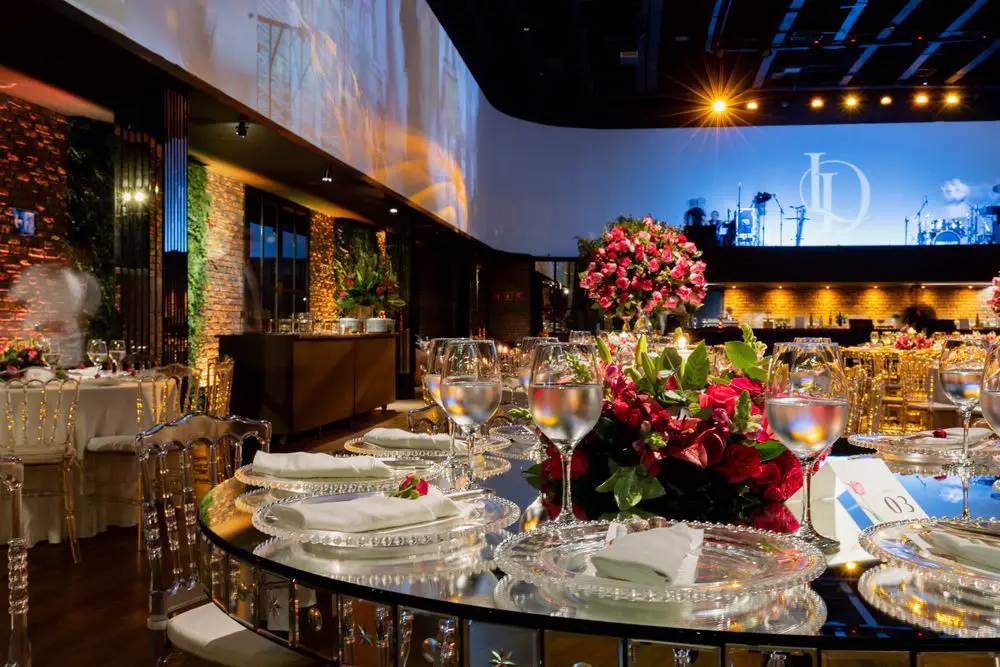
The ballroom smelled like polished wood, wet wool coats, and perfume expensive enough to announce itself before the person wearing it spoke.
Gabriel Townsend stood just inside the entrance with rain still clinging to the hem of her black dress. The chandelier light scattered across the champagne flutes, the white tablecloths, the gold-edged menus, and for one weak second she let herself believe her father had meant what he said.
Come tonight, Gabby. It matters that you are there.
She should have known better.
Daniel Townsend had spent sixteen years saying the right thing when no one was listening and doing the convenient thing when everyone was watching. After her mother died, Gabriel learned that grief did not always arrive as sobbing. Sometimes it arrived as a missing photograph. Sometimes as a plaque removed from the lobby wall. Sometimes as a brochure rewritten so carefully that the woman who had saved the hotel became a soft sentence about family legacy.
Her mother, Elaine, had built that place back from ruin with invoices spread across the kitchen table and cold coffee beside her elbow. She had called vendors at midnight. She had persuaded lenders who did not want to be persuaded. She had walked the halls in worn flats while contractors argued and Daniel made promises he could not keep.
Everybody remembered Daniel cutting the ribbon.
Gabriel remembered her mother at 2:00 in the morning, sitting under the yellow kitchen light, rubbing her temples while she circled overdue bills in red ink.
That was the difference between legacy and memory. Legacy belonged to whoever kept the microphone. Memory belonged to whoever had cleaned up after the speech.
Gabriel took three steps into the ballroom before Vivian noticed her.
Vivian Townsend crossed the room with the polished little smile she used when she wanted cruelty to look like manners. Her beige formal dress fit like armor. Her hair was smooth enough to make the rain outside look vulgar. She did not walk fast. Women like Vivian never rushed when they knew the room would wait for them.
“What are you doing here?” Vivian asked. Her voice carried just far enough for the nearest table to hear without appearing to have been aimed at them.
Gabriel looked at her without hurrying to respond. She had driven forty minutes in the rain and walked in wearing a dress that was still damp at the hem, and she was not going to be rattled by a woman who had spent three years treating her like furniture. She had been rattled before, by better people making larger efforts, and she had learned that the rattle always passed, that the steadiness underneath it was always still there when the noise stopped.
“My father invited me,” she said.
Vivian’s smile contracted by the smallest possible increment, the way a camera shutter moves so quickly you only know it happened because of what it captures afterward.
“Daniel invited the family,” she said. “I was under the impression we had all agreed this wasn’t the right occasion for personal complications.”
“Personal complications,” Gabriel repeated. “Is that what I am?”
“I only meant the timing,” Vivian said, her voice warming in the way it always did when she was performing patience for witnesses. The warmth was very good. Gabriel had watched her deploy it for three years and still occasionally found herself almost believing it. “This is a milestone for the hotel. The thirty-year anniversary. It’s an important night for the brand.”
The brand.
Her mother had operated the Townsend for decades without ever once calling it a brand. She had called it the hotel, or the property when she was being businesslike, or sometimes, in her most tired moments, the building that made me old before my time, though she said it with the particular affection of a person who loved something and did not pretend otherwise. She had treated the place as a living thing with needs and moods and a history worth honoring. She had never needed to reduce it to a word that belonged to marketing.
“I’ll try not to complicate anything,” Gabriel said, and stepped around her.
The ballroom was full of people who had money in common, which was the thing that passed for community among certain sets. Gabriel knew some of them. Former board members from the years when she had attended meetings as Elaine’s quiet shadow, taking notes because her mother said understanding a room required listening before you spoke. A city councilman who had attended the renovation opening and later claimed credit for a zoning adjustment that Elaine had lobbied for herself, in a meeting Gabriel had not attended but had heard described in specific and unimpressed terms. Several investors who had arrived after the worst years were over, when the risk had already been absorbed by someone else, and who still somehow understood themselves as the reason the place was thriving.
The ballroom was full of people who had money in common, which was the kind of thing that passed for community among certain sets. Gabriel recognized some of them. Former board members. A city councilman who had attended the renovation opening and pretended afterward not to remember it. Several investors who had arrived after the worst years were over and still somehow believed they had built what was standing.
She did not see her father immediately. She found a place near the edge of the room where the chandelier light did not quite reach and stood with a glass of water she had taken from a passing tray, watching the room operate with the particular efficiency of an event that had been planned by people who understood that the impression of ease required invisible labor.
The display boards were what she had come for. She had heard from Nora, one of the housekeeping managers who had worked at the Townsend since before Gabriel could read and who had worked beside her mother through three different renovations without once asking for credit, that the anniversary exhibit had been assembled by an outside firm. That the photographs and captions had been approved by Daniel through a review process that had apparently been thorough enough to approve but not thorough enough to correct. That Elaine’s name appeared three times in twenty-eight panels, once in a list of opening-night guests and twice in a combined caption that also listed Daniel.
Gabriel walked the exhibit slowly, the way her mother had taught her to walk through any space worth understanding. Elaine had believed that the right pace for looking at something was slower than felt natural, that most people moved past things before they had actually registered what they were seeing.
Panel one: the original 1958 opening, Daniel’s grandfather at the door with a set of keys he was holding incorrectly, as though he had grabbed them for the photograph and was not sure what to do with them once he had them. Panel two: a renovation in the 1970s, the hotel looking clean and slightly hopeful in the way of places that have been recently invested in. Panel three: the decline through the late 1980s and early 1990s, described in the passive voice of someone who did not want to assign responsibility. Occupancy challenges led to a period of significant difficulty. As though difficulty arrived on its own. As though decisions played no role.
Panel four was the turnaround. Daniel Townsend, pictured at what Gabriel recognized as the contractor signing ceremony, looking decisive in a way he had rarely managed in the actual meetings she had sat in on as a child. She remembered those meetings. Her mother had let her attend some of them, not because children belonged in contractor negotiations but because she believed Gabriel should understand early that competence was built from specific, unglamorous knowledge, and that the most important thing in any room was almost never the most confident person.
Her mother appeared in panel four as a small photograph in the lower right corner, captioned simply: with family.
Gabriel stood in front of that panel for a long time.
With family. As though Elaine had been an accessory to someone else’s accomplishment. As though she had been present the way certain objects were present in a room, providing scale and context without requiring any real attention.
With family. As though Elaine had been an accessory to someone else’s accomplishment. As though she had been present the way furniture was present, providing atmosphere.
Gabriel had a clear memory of being eleven years old and sitting on the stairs outside the hotel office while her mother negotiated with a lender who kept using the phrase too great a risk in different arrangements of the same sentence. Her mother had waited for the pauses and filled them with numbers, specific ones, occupancy rates and renovation projections and debt service ratios that she had memorized without appearing to have studied. Gabriel had not understood most of it. But she had understood that her mother was the only person in the conversation who was not afraid.
She had asked Elaine about it afterward, in the car, while the parking garage was releasing them back into the gray afternoon light.
“Were you nervous?” Gabriel asked.
Elaine had considered the question with the seriousness she brought to almost everything, the seriousness that Gabriel had sometimes misread as gravity and eventually understood was simply respect for the person asking. “Of course,” she said. “But there’s a difference between being nervous and being stopped by it. Nervous is information. What you do with it is the actual question.”
Panel twelve was the ribbon cutting. A larger photograph, prominently placed, Daniel in a dark suit holding the ceremonial scissors while a small crowd applauded. Gabriel was in the photograph, off to one side, ten years old and wearing the blue dress her mother had ironed twice because the iron was being difficult. Elaine was not in the photograph at all.
She had been the one holding the camera.
Gabriel had not known that was the reason for the absence until years later, when she found the contact sheets in a box in her mother’s closet. Every photograph from that day, carefully preserved. In none of them did Elaine appear as a subject. She had spent the ribbon cutting behind the lens, documenting an event she had made possible.
“Gabriel.”
Her father’s voice came from behind her.
Daniel Townsend looked well, which was the thing about Daniel. He always looked well. He was tall and silver-haired and carried himself with the particular ease of a man who had learned early that looking like the right person was nearly indistinguishable from being the right person. He had a glass of wine and a warm expression and nothing in his manner suggested that the panels behind Gabriel were anything other than straightforward history.
“You came,” he said, and he sounded genuinely pleased, which was what made him complicated. Daniel was not entirely performing. There was some real feeling underneath. It was simply that the real feeling had never been strong enough to change what he did.
“You invited me,” Gabriel said.
“I did.” He touched her shoulder briefly. “You look like your mother.”
It was the kindest thing he could have said, and she was not sure he knew it.
“I’ve been looking at the panels,” she said.
A pause. Small, but visible. “What do you think?”
“I think Mom is captioned as family.”
Daniel looked toward the display. His expression did not change dramatically, but something shifted in it, the slight contraction of a person who has been caught at something and is deciding how to characterize it.
“The exhibit was put together by an outside team,” he said. “I reviewed drafts, but not every detail.”
“You approved the final version.”
“There were a lot of panels.”
Gabriel looked at him. “Panel four, lower right corner. With family. That was Mom.”
He was quiet.
“She negotiated the Hargrove loan in 1994,” Gabriel said. “I was there. I sat on the stairs. She spent forty minutes talking a man out of walking away, and she did it with numbers she had memorized because she knew he would be more comfortable if she wasn’t reading from notes, because she wanted him to feel like he was dealing with someone who knew the place rather than someone who was desperate.”
Daniel swirled his wine gently. “She was remarkable.”
“She’s captioned as family.”
“Gabriel,” he began.
“I’m not yelling at you,” she said. “I’m not going to cause a scene at your party. I just need you to know that I saw it. That someone saw it.”
He nodded, slowly. The kind of nod that was not disagreement. “Your mother would not have wanted the attention.”
“She would have wanted the accuracy.”
Daniel looked at his wine glass. “I’ll speak to the team about updating the captions for the permanent installation.”
“I’d like to see the draft before it’s finalized.”
He looked up.
“If that’s alright,” she added.
“Of course,” he said, and she believed him. Not completely, not without reservation, but enough to leave it there.
Vivian reappeared at Daniel’s elbow the way she always did when conversations with Gabriel ran longer than a few minutes. She had developed a radar for it. Her smile was present and her posture communicated mild concern, as though she were simply checking in on things.
“Daniel, the Harmon table is asking for you,” she said. She did not look at Gabriel while she said it.
Daniel touched Gabriel’s arm. “I’ll find you later.”
He went.
Vivian stayed for a moment, long enough to let the silence become intentional.
“It was good of you to come,” Vivian said.
“You said that when I arrived,” Gabriel replied. “You said what are you doing here.”
Vivian’s expression remained entirely pleasant. “I think you misremember.”
“I think you know I don’t.”
A server passed between them with a tray of champagne flutes, and in the brief interruption Gabriel felt something clarify in her. Not anger. Something quieter and more durable. The understanding that this evening was not going to give her what she had come for, and that she did not need it to.
She had not come for an apology. She had come to see the panels. She had come because her father asked, and because some part of her had wanted to believe, one more time, that the invitation was something other than a formality. She understood now that it had been both. Daniel had wanted her there because he genuinely felt her absence and had no reliable vocabulary for saying so. Vivian had wanted her there because having Gabriel present made the family portrait look complete and unwilling to fight.
They had both gotten what they wanted. The question was what Gabriel wanted.
She thought about the contact sheets in her mother’s closet. All those photographs of the ribbon cutting, carefully preserved in a box that smelled like old paper and her mother’s perfume. Elaine behind every camera. Present at everything. In nothing.
There was a woman working the registration desk near the ballroom entrance named Margaret, who had been at the Townsend since before Gabriel was born. She remembered her as a constant presence in the lobby, someone who had known every guest’s name and every staff member’s birthday and had stood at the front desk through three renovations without once complaining about the noise.
Gabriel walked to the desk.
“Margaret.”
The older woman looked up, and her face opened into something warm and real, the kind of expression that had nothing to do with working an event.
“Miss Townsend. I wasn’t sure you’d come.”
“My father asked.”
Margaret nodded, understanding several things in that sentence.
“I wanted to ask you something,” Gabriel said.
“Of course.”
“The photographs from the 1994 renovation. The original set. Do you know if the hotel still has them?”
Margaret considered. “The archive boxes are in the basement storage room. I don’t know specifically what’s in them. But if your mother kept anything, it’ll be down there. She kept everything.”
Gabriel thanked her and went.
The basement storage room was exactly as unglamorous as hotel basements always are. Concrete floor, fluorescent lighting, metal shelving units running wall to wall. It smelled of old paper and cleaning supplies and the particular mustiness of things that were being preserved without anyone being certain why.
She found the archive boxes organized by year, which her mother had arranged and which no one had reorganized in the years since. Gabriel found the box labeled 1993 to 1995 and opened it on a folding table under the fluorescent light.
There were folders inside. Vendor contracts, correspondence, invoices. And at the back, a manila envelope labeled Renovation Documentation, Personal.
Inside the envelope were two sets of photographs.
The first set were prints, the official ones, the polished images of Daniel at the ceremony, the guests applauding, the ribbon being cut. These were the photographs that had been used for press materials and brochures and, Gabriel now understood, anniversary exhibits.
The second set were contact sheets. Her mother’s work. Every frame from the days surrounding the ceremony, hundreds of small images organized by roll. Gabriel could see herself as a ten-year-old in the blue dress. She could see staff members she had grown up knowing. She could see the hotel coming to life in real time, in the images that preceded and followed the ceremony, the messy honest moments that the official photographs had been designed to replace.
And in one frame, near the end of a roll from the morning before the ribbon cutting, she found her mother.
Elaine was in the kitchen, standing over a counter covered in paperwork, her hair still in the practical arrangement she wore when she was working rather than the careful version she wore for events. She was writing something, and whoever had taken the photograph had caught her unaware, the way you photograph someone when you want to preserve something true rather than something arranged.
On the back of the contact sheet, in her mother’s handwriting: The morning everything almost fell apart and then didn’t.
Gabriel stood in the basement for a long time.
The morning everything almost fell apart and then didn’t. An entire renovation, an entire rescue operation, reduced to that sentence. Her mother had always done that with difficulty. She did not deny it or minimize it, but she also did not let it expand beyond its actual shape. The catering crisis was the catering crisis and it lasted three hours and then it was over and then there was a ribbon cutting. That was the sentence it deserved.
Gabriel thought about how different that was from the version of the hotel’s story that existed upstairs in panel form. Up there the difficulty had no person attached to it and the resolution had a man in a dark suit and the woman who had negotiated, persuaded, circled, and documented was in the lower right corner, captioned as something you brought to a ceremony rather than someone who made the ceremony possible.
Her mother had known this would happen. Gabriel was almost certain of that now. Elaine had understood her husband with the specific, clear-eyed love of a woman who had watched the same man for thirty years and had stopped being surprised by his patterns while continuing to love him anyway. She had known the story would be told without her. So she had built her own archive, in a basement, in a manila envelope labeled personally, containing the contact sheets and the photographs and the caption she had written for herself.
The morning everything almost fell apart and then didn’t. It was not bitterness. It was not even accusation. It was simply the record she had chosen to make of her own endurance, set aside somewhere it might survive long enough to be found.
Gabriel took the contact sheets upstairs.
She did not interrupt the dinner. She sat at the assigned table and ate the meal and made quiet conversation with the people beside her, a retired architect who had worked on the original renovation and described her mother with the casual reverence of someone who had encountered genuine competence and not forgotten it, and a city council aide who kept apologizing for not knowing the family history well enough, which was kind of him but also suggested that the exhibit had been doing the job it was designed to do.
After the main course, Daniel stood to give a speech. He was good at speeches. He had the voice for it and the timing, and he knew how to make people feel included in something larger than themselves, which was a genuine gift even when the thing they were being included in was not entirely accurate.
He began with the history, with his grandfather’s original vision and the way the building had served the city for three decades before the difficulties arrived. He spoke about recovery with the careful language of a man who was not quite naming himself the protagonist but was also not naming anyone else. Then he paused, the way speakers pause when they are about to say something they have been preparing, or something that arrived on them unexpectedly, and Gabriel could not tell which this was.
He mentioned Elaine by name. Twice. Which was twice more than the exhibit had managed, and Gabriel wondered whether their earlier conversation had reached some part of him that the evening’s choreography had not prepared for, or whether he had always planned to say this and had simply never found the right room for it.
Then he said: “The hotel you see tonight was not built by one person. It was saved by one person, and that person was my wife.”
The room applauded.
Gabriel sat still.
He continued, and his voice was doing something it did not usually do, which was be uncertain: “I was better at vision than execution. Elaine was both. I know I have not said that as often as I should have, or in the right places, or with enough specificity. I have let other versions of the story stand when I should have corrected them. I am not going to do that tonight.”
He raised his glass.
Gabriel looked at the contact sheet on the table beside her plate. The photograph of her mother in the kitchen, the pen moving on the counter, the morning everything almost fell apart and then didn’t.
She raised her glass with everyone else, and when she drank, she was drinking to her mother, who had known all along that this moment might eventually come and had built the archive anyway, in a basement, in a manila envelope, in case it didn’t.
After the speeches, after the dessert course, after the dancing began and the room loosened into something more comfortable, Gabriel found Daniel near the bar. He was alone for a moment, which was rare at these events.
“That was well said,” she told him.
He looked at her. “I meant it.”
“I know.”
He glanced at the contact sheet she was still carrying. “What is that?”
She held it up so he could see the frame. Her mother in the kitchen. The morning everything almost fell apart.
Daniel was quiet for a moment. When he spoke, his voice was lower.
“Where did you find this?”
“The basement archive. Mom’s envelope.”
He looked at the image for a long time.
“She took that with the timer,” he said. “The morning before the ceremony. There was a problem with the catering contract that she had to solve in three hours, and she solved it, and then she set the camera on the counter and took that photograph herself. She said she wanted to remember what it actually looked like when things worked out.”
Gabriel looked at the image again.
“I want to use it,” she said. “For the permanent installation. Panel four.”
Daniel nodded.
“In place of the other caption,” she said.
He was quiet for a long moment. “What would the new caption say?”
Gabriel had been thinking about it since the basement.
“The morning everything almost fell apart and then didn’t. Elaine Townsend, 1994.”
Her father’s throat moved. He looked at the photograph again, and whatever complicated things were happening in him stayed mostly private, which was how Daniel Townsend had always operated, feeling more than he expressed and expressing more than he corrected, and leaving the gap between those two distances for other people to cross.
“Yes,” he said. “That’s the caption.”
Vivian appeared across the room, moving in their direction. Gabriel saw her coming and did not feel the familiar tightening.
“I should say goodbye,” Gabriel said.
“You don’t have to leave.”
“I know.” She picked up her bag. “But I drove in the rain and I want to get home before it gets worse.”
Daniel put his hand on her arm. “Gabriel.”
She waited.
“Thank you for coming.”
She looked at him, at the face that had spent so many years belonging to photographs while her mother belonged to kitchens and invoices and 2:00 in the morning conversations with bankers who needed convincing. He was not a villain. He was a man who had been comfortable with what was convenient and who was only now, at seventy-one, learning to be uncomfortable with it.
That was not nothing.
“Thank you for inviting me,” she said.
She walked out through the lobby, past the display panels, past the spot where her mother’s photograph had been captioned with family, past Margaret at the registration desk who gave her a small nod that contained an entire conversation, and through the heavy front doors into the rain.
It had eased while she was inside. The street was wet and reflective and the streetlights made the puddles look like something worth painting. She stood on the steps for a moment and breathed the cold air, the specific quality of night air after rain that smelled like cleared ground.
She thought about her mother in the kitchen, photographing herself by timer, keeping a record of the morning nobody else would remember correctly. She thought about the box in the basement, maintained in the careful alphabetical order her mother had always applied to things that mattered, the manila envelope labeled personally as though it were a reminder to whoever eventually opened it that this was something she had carried herself.
Some things mattered because they were witnessed.
Some things mattered because someone made sure the record survived.
Her mother had understood that, perhaps better than anyone in the building upstairs. She had been behind the camera at the ribbon cutting not because she was absent from the moment but because someone needed to document what was actually happening, and she was the person who understood that history required more than the ceremonial moments. It required the specific, imperfect, tired, determined truth of how things got done. And if she had to be the one behind the lens to preserve that truth, then she would be behind the lens, and she would preserve it carefully, and she would put it somewhere it would survive her.
Gabriel walked to her car.
She sat in the driver’s seat for a moment before starting the engine, the contact sheet on the passenger seat, the image of her mother in the kitchen visible in the light of the streetlamp. She would have it scanned at high resolution in the morning. She would send it to her father’s events coordinator with the caption written out in plain text so there could be no misreading, no interpretation, no smoothing of her mother’s words into something more suitable for a formal plaque.
The morning everything almost fell apart and then didn’t. Elaine Townsend, 1994.
She would send it, and the installation would be updated, and her mother’s face and her mother’s sentence would be in panel four of the permanent exhibition in the hotel her mother had saved, not in the lower right corner captioned as family but at the center of the thing, as the explanation for how the thing continued to exist.
She started the car and pulled out into the rain-quiet street.
The hotel receded in her rearview mirror, lit and warm against the wet night. Gabriel drove without music, listening to the sound of rain against the roof and the wipers moving steadily, clearing the view with every pass.
She thought about her mother saying there was a difference between being nervous and being stopped by it.
She thought about all the mornings that had not appeared in any exhibit. The calls at midnight. The red circles on overdue invoices. The forty-minute conversation with the lender that an eleven-year-old Gabriel had not fully understood but had understood well enough to know it was the kind of performance that required everything the performer had and left nothing comfortable behind.
She had opened the box.
The record would be corrected.
That was not justice, and it was not resolution, and it was not the same as having her mother back. But it was real and it was permanent, and it would remain in panel four of the permanent installation long after everyone in that ballroom tonight had died. A photograph of a woman alone in a kitchen, writing something with her whole attention, the morning after everything had almost ended and hadn’t.
Elaine Townsend had known exactly what she was doing when she set the timer.
She had saved the photograph because she understood that the people who built things were not always the people who got to name them, and that the only reliable protection against being erased was a very good archive.
Gabriel drove home through the rain, carrying her mother’s morning with her, and for the first time in years the grief felt like something she could hold rather than something that held her.

Ethan Blake is a skilled Creative Content Specialist with a talent for crafting engaging and thought-provoking narratives. With a strong background in storytelling and digital content creation, Ethan brings a unique perspective to his role at TheArchivists, where he curates and produces captivating content for a global audience.
Ethan holds a degree in Communications from Zurich University, where he developed his expertise in storytelling, media strategy, and audience engagement. Known for his ability to blend creativity with analytical precision, he excels at creating content that not only entertains but also connects deeply with readers.
At TheArchivists, Ethan specializes in uncovering compelling stories that reflect a wide range of human experiences. His work is celebrated for its authenticity, creativity, and ability to spark meaningful conversations, earning him recognition among peers and readers alike.
Passionate about the art of storytelling, Ethan enjoys exploring themes of culture, history, and personal growth, aiming to inspire and inform with every piece he creates. Dedicated to making a lasting impact, Ethan continues to push boundaries in the ever-evolving world of digital content.